
- FFmpeg Power: Offers unparalleled customization for advanced users in video enhancement.
- Usability Gap: FFmpeg's command-line interface creates a steep learning curve for beginners.
- Ideal Users: FFmpeg suits professionals for batch processing and automated workflows, not casual users.
- Feature Comparison: FFmpeg is free and highly customizable; UniConverter offers user-friendly AI enhancement.
- Risks: FFmpeg involves complexity, time investment, and lacks dedicated support, risking inconsistent quality.
- UniConverter Solution: Provides seamless, AI-powered video enhancement with an intuitive GUI, bypassing FFmpeg's complexities.
In this article
- Part 1: What is FFmpeg?
- Part 2: FFmpeg Video Enhancer: Core Features, Pros, and Cons
- Part 3: FFmpeg Video Enhancer: Ideal Users and Use Cases
- Part 4: FFmpeg and Alternatives Comparison
- Part 5: Risks and Pitfalls of Using FFmpeg for Video Enhancement
- Part 6: How to Use UniConverter for Seamless Video Enhancement
- Part 7: Conclusion
- Part 8: FAQs
FFmpeg Video Enhancer Review: A Deep Dive into Performance and Alternatives
FFmpeg, a powerful open-source multimedia framework, is widely recognized for its versatility in handling audio and video files. While primarily known for transcoding and streaming, its capabilities extend to various video enhancement tasks. This FFmpeg video enhancer review will delve into its core features, evaluate its strengths and weaknesses, and compare it with popular alternatives. We aim to provide a comprehensive guide for users seeking to optimize their video quality, helping them navigate the complex landscape of video enhancement tools and make informed decisions based on their specific needs and technical proficiency.
Part 1: What is FFmpeg?
FFmpeg is a leading open-source project that provides a comprehensive suite of libraries and programs for handling video, audio, and other multimedia files and streams. At its core, FFmpeg is a command-line tool, meaning users interact with it by typing commands into a terminal. This design philosophy grants it immense power and flexibility, allowing for highly customized operations across a vast array of formats and codecs. For video enhancement, FFmpeg offers a range of filters and options that can be applied to improve visual quality, such as deinterlacing, denoising, sharpening, and color correction. This review aims to clarify whether FFmpeg is the right tool for your video enhancement needs, especially when considering its learning curve against the convenience of GUI-based alternatives.
The Landscape of Video Enhancement Tools
* Diverse User Needs: From professional videographers to casual content creators, the demand for video enhancement varies widely, requiring tools that cater to different skill levels and project complexities.
* Balancing Power and Usability: The market offers a spectrum of tools, from highly customizable command-line interfaces like FFmpeg to intuitive, user-friendly applications with AI-powered features.
* Cost vs. Capability: Users often weigh the benefits of free, open-source solutions against the advanced features and dedicated support offered by paid software.
Part 2: FFmpeg Video Enhancer: Core Features, Pros, and Cons
FFmpeg's video enhancement capabilities stem from its extensive filtergraph system, allowing users to chain multiple processing steps. Key features include filters for noise reduction (denoise), deinterlacing (yadif), sharpening (unsharp), color correction (colorlevels, curves), and scaling (scale). It supports virtually every video and audio format imaginable, making it a universal tool for multimedia manipulation.
Pros:
* Unparalleled Customization and Control for Advanced Users: FFmpeg offers granular control over every aspect of video processing, allowing for highly specific and complex enhancement workflows.
* Open-Source and Cost-Effective Solution: Being free and open-source, FFmpeg is accessible to everyone, eliminating licensing costs and fostering a community-driven development environment.
* Extensive Codec and Format Support: Its ability to handle almost any video or audio format and codec makes it an incredibly versatile tool for diverse projects.
Cons:
* Steep Learning Curve for Beginners: The command-line interface and complex syntax can be daunting for users without prior technical experience.
* Lack of a User-Friendly Graphical Interface: The absence of a visual interface means users must rely on text commands, making intuitive adjustments difficult.
Part 3: FFmpeg Video Enhancer: Ideal Users and Use Cases
FFmpeg is a powerful tool best suited for users who are comfortable with command-line interfaces and require a high degree of control and customization over their video enhancement processes. It's particularly valuable for professionals and developers who integrate video processing into larger automated workflows.
Best Use Case: Batch Processing and Scripted Workflows for Professionals
For professionals dealing with large volumes of video files or repetitive enhancement tasks, FFmpeg shines. Its command-line nature allows for the creation of scripts that can automate complex enhancement sequences across multiple files, saving significant time and effort. For example, a video archivist might use FFmpeg to uniformly deinterlace and denoise hundreds of legacy video clips. Similarly, developers can embed FFmpeg commands within their applications for dynamic video processing.
Limited Use Case: Quick Edits and Intuitive Enhancement for Casual Users
Casual users looking for a quick and easy way to improve a single video's quality will find FFmpeg overly complex. Tasks like simply brightening a video or applying a basic sharpening filter require learning specific commands and syntax, which is a significant barrier compared to the drag-and-drop simplicity of GUI-based tools. For these users, the time investment in learning FFmpeg outweighs the benefit for simple, one-off enhancements.
Part 4: FFmpeg and Alternatives Comparison
When evaluating video enhancement tools, it's crucial to compare FFmpeg's command-line power against the user-friendliness and advanced features of its competitors.
| Feature/Tool | FFmpeg | UniConverter | Topaz Video AI | DaVinci Resolve |
| Ease of Use | Command-line | GUI-based | GUI-based | GUI-based |
| Customization | High | Moderate | Moderate | High |
| Cost | Free | Paid | Paid | Free (Lite), Paid (Studio) |
| AI Enhancement | Manual | Yes | Yes | Yes |
| Batch Processing | Excellent | Excellent | Good | Good |
| Output Quality | Varies (user skill) | High | Very High | High |
| Processing Speed | Fast (CPU/GPU) | Fast (GPU) | Fast (GPU) | Fast (GPU) |
| Customer Support | Community | Dedicated | Dedicated | Community/Dedicated |
Key Differentiators: Command-Line Power vs. User-Friendly Interfaces
FFmpeg's strength lies in its unparalleled flexibility and cost-effectiveness for users who master its command-line interface. For batch processing and integration into custom workflows, it's a powerhouse. However, for users prioritizing ease of use and AI-driven enhancements, tools like UniConverter and Topaz Video AI offer intuitive graphical interfaces and sophisticated algorithms that can achieve impressive results with minimal effort. DaVinci Resolve, while also GUI-based, provides a comprehensive suite of professional editing and color grading tools, making it suitable for more complex post-production tasks beyond simple enhancement. The choice ultimately depends on the user's technical proficiency, budget, and specific enhancement requirements.
Part 5: Risks and Pitfalls of Using FFmpeg for Video Enhancement
While FFmpeg offers immense power and flexibility, its command-line nature introduces several risks and pitfalls, especially for those not deeply familiar with its intricacies.
Complexity and Potential for Errors
The steep learning curve means that even a minor typo in a command can lead to unexpected results, corrupted files, or inefficient processing. Users must precisely understand the syntax and the effect of each filter, which can be overwhelming.
Time Investment for Learning and Implementation
Mastering FFmpeg for effective video enhancement requires a significant time commitment. This includes learning command structures, understanding filter options, and experimenting to achieve desired outcomes. For one-off tasks, this investment may not be justified.
Lack of Dedicated Technical Support
As an open-source project, FFmpeg relies on community support. While forums and documentation are extensive, direct, personalized technical support is not available. Troubleshooting complex issues can be time-consuming and frustrating without expert guidance.
Output Quality Inconsistencies Without Expertise
Achieving consistent, high-quality enhancement with FFmpeg demands a deep understanding of video codecs, bitrates, and filter parameters. Inexperienced users might apply filters incorrectly, leading to artifacts, over-processed visuals, or even a reduction in perceived quality rather than an improvement. The "best" settings often depend on the source material and desired output, requiring careful experimentation.
Part 6: How to Use UniConverter for Seamless Video Enhancement
When other tools fall short in batch processing, provide unstable enhancements, or deliver weak results, UniConverter emerges as a robust alternative. It bypasses the complexities of command-line interfaces, offering a user-friendly experience with powerful features. UniConverter excels in providing stable, lossless enhancements across various formats, leveraging GPU acceleration for speed, and supporting batch processing without ads or watermarks. It's an all-in-one solution for efficient and high-quality video enhancement.
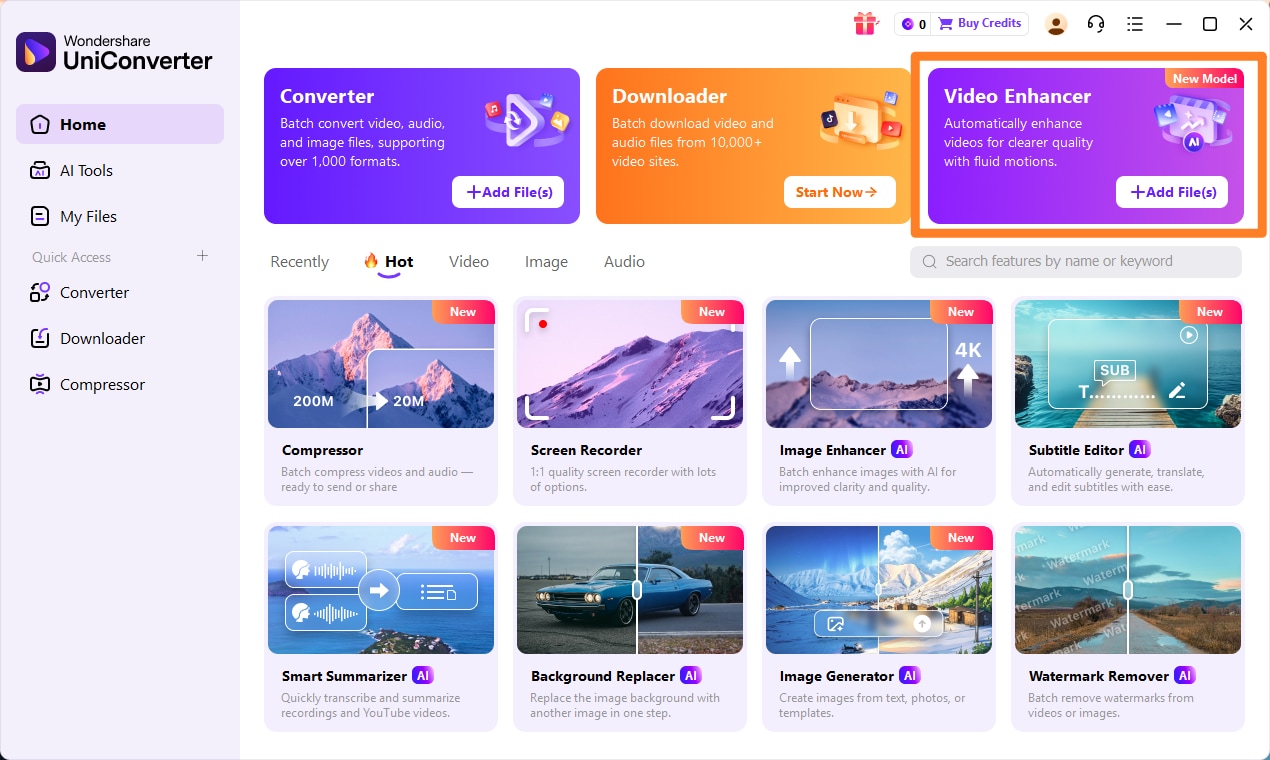
Step 1: Open UniConverter and Choose Video Enhancer
Launch UniConverter and navigate to the "Toolbox" section. Select the "Video Enhancer" feature to begin.
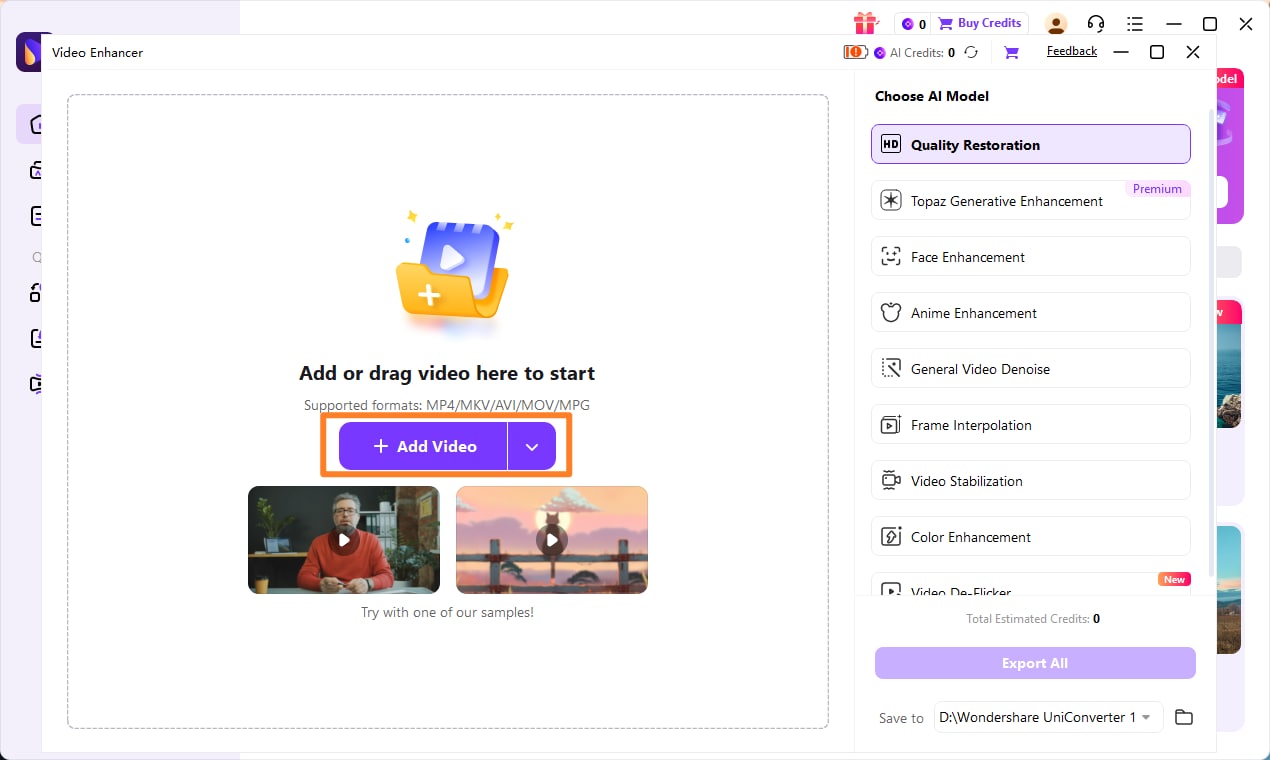
Step 2: Upload the Videos
Click on "Add Files" or drag and drop your video files into the UniConverter interface. You can add multiple videos for batch processing.
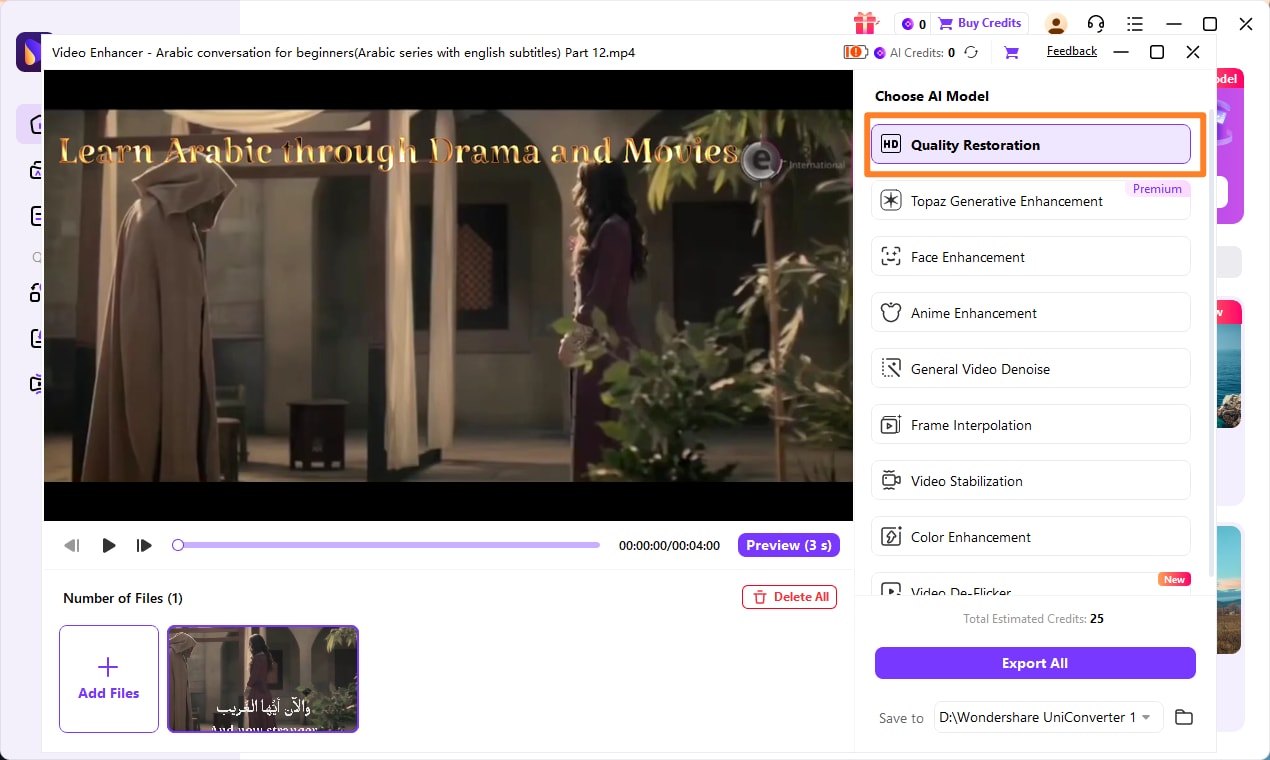
Step 3: Choose Enhancement Model
UniConverter offers various enhancement models, including AI-powered options for upscaling, denoising, and color correction. Select the model that best suits your video's needs. You can also adjust parameters like resolution, brightness, and contrast.
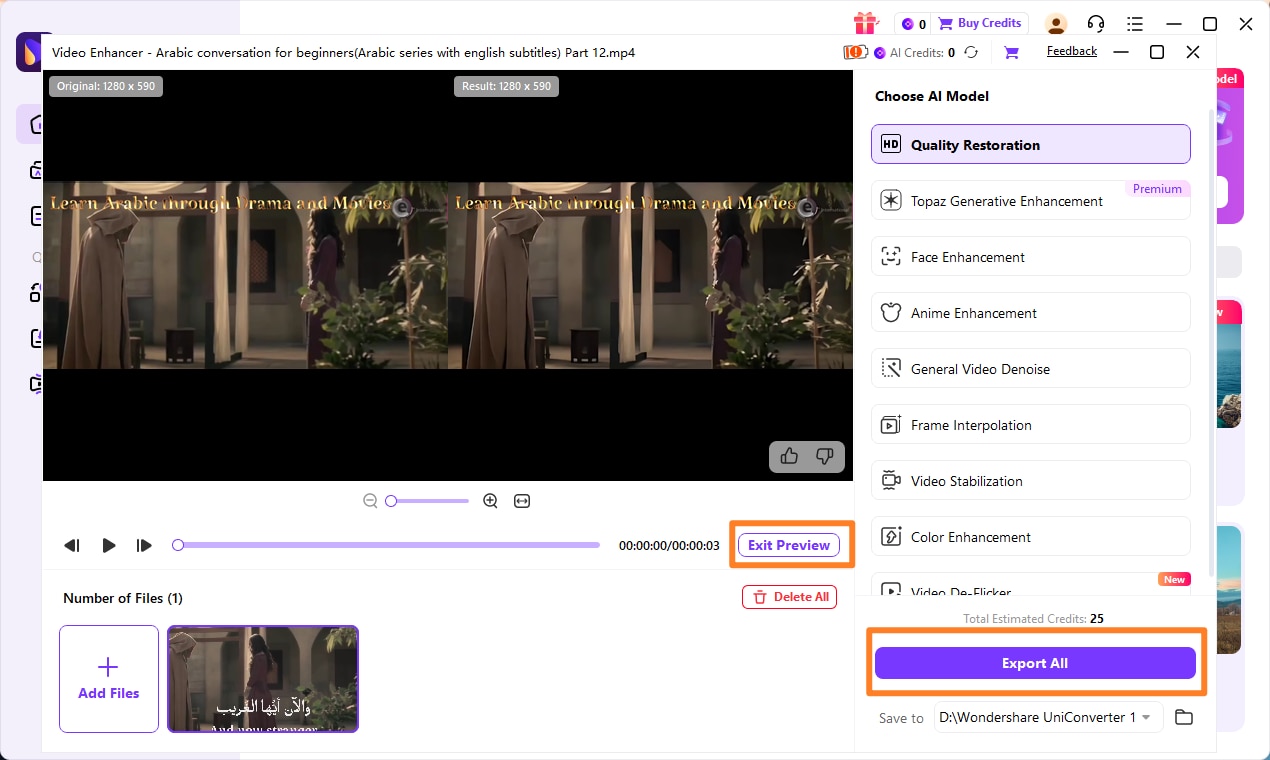
Step 4: Preview and Save the Enhanced Video
Before finalizing, use the preview function to compare the original and enhanced video. Once satisfied, choose your desired output format and click "Export" to save your enhanced video.

Enhance Videos Beyond FFmpeg's Limits?
Part 7: Conclusion
This FFmpeg video enhancer review highlights FFmpeg's undeniable power and flexibility, making it an indispensable tool for developers and command-line enthusiasts who require granular control over video processing and automation. Its open-source nature and extensive format support are significant advantages. However, the steep learning curve and lack of a graphical user interface present considerable barriers for beginners and casual users. For content creators seeking efficiency and ease of use, or for those who prioritize AI-driven enhancements and a streamlined workflow, alternative solutions like UniConverter offer a compelling proposition. UniConverter provides an intuitive GUI, powerful AI enhancement features, and robust batch processing capabilities, making it an excellent choice for achieving high-quality video enhancements without the technical complexities of FFmpeg. Ultimately, the best tool depends on the user's technical proficiency, project requirements, and willingness to invest time in learning.
Part 8: FAQs
-
1. Is FFmpeg truly free to use for video enhancement?
Yes, FFmpeg is completely free and open-source. You can download and use it for any purpose, including commercial projects, without licensing fees.
-
2. Can FFmpeg enhance video quality using AI?
FFmpeg itself does not natively incorporate AI for video enhancement. While it offers a wide range of traditional filters for denoising, sharpening, and upscaling, these are rule-based algorithms, not AI/machine learning models. For AI-powered enhancements, you would need to use specialized AI video enhancers.
-
3. What are the common challenges when using FFmpeg for video enhancement?
The primary challenges include a steep learning curve due to its command-line interface, the potential for errors from incorrect command syntax, the lack of a user-friendly GUI, and the time investment required to master its extensive filter options for optimal results.
-
4. How does UniConverter compare to FFmpeg in terms of output quality?
UniConverter, especially with its AI enhancement features, can often achieve superior output quality for general users due to its intelligent algorithms that automatically optimize various aspects of video. FFmpeg's output quality is highly dependent on the user's expertise in applying the correct filters and parameters.
-
5. Is there a learning curve for UniConverter?
UniConverter has a minimal learning curve. Its intuitive graphical user interface (GUI) makes it easy for beginners to navigate and utilize its features, including video enhancement, with straightforward drag-and-drop functionality and clear options.
