
- HandBrake's Role: Primarily a transcoder, not a true video enhancer. Ideal for format conversion and file size reduction.
- Enhancement Limits: HandBrake lacks AI for genuine quality improvement; it re-encodes, potentially losing quality.
- Ease of Use: HandBrake has a steep learning curve; UniConverter offers a more user-friendly experience.
- Value Comparison: HandBrake is free but limited; UniConverter offers advanced, AI-powered enhancement for a fee.
- Decision Factor: Choose HandBrake for basic conversions; opt for UniConverter for genuine video quality improvement.
In this article
- Part 1: What is HandBrake?
- Part 2: HandBrake: Core Features, Pros, and Cons
- Part 3: HandBrake: Ideal Users and Use Cases
- Part 4: HandBrake and Alternatives Comparison
- Part 5: Risks and Pitfalls When Using HandBrake
- Part 6: How to Use UniConverter for Efficient Video Enhancement
- Part 7: Final Verdict and Recommendations
- Part 8: FAQs
This HandBrake video enhancer review delves into the capabilities of this popular open-source tool, examining its strengths and weaknesses in the context of video enhancement. While widely recognized for its robust video transcoding features, a common misconception is its ability to truly "enhance" video quality in the same vein as dedicated enhancement software. This review will clarify HandBrake's role, compare it against specialized alternatives like UniConverter, and provide a comprehensive guide to help users make informed decisions about their video processing needs, addressing the market's demand for both free and premium solutions for improving video quality and compatibility.
Part 1: What is HandBrake?
HandBrake is a free and open-source video transcoder, originally developed in 2003. It's primarily designed to convert video from almost any format to a selection of modern, widely supported codecs. While often sought after for "video enhancement," its core function revolves around changing video formats, compressing file sizes, and making videos compatible with various devices. It's a powerful tool for those looking to manage their video library efficiently, but its capabilities for genuine quality improvement are often misunderstood. This review aims to dissect its true potential and limitations, especially when users are grappling with poor video quality or incompatible formats.
The Landscape of Video Enhancement Tools
The digital age has brought an explosion of video content, leading to several common user pain points:
* Incompatible Formats: Videos downloaded or recorded often don't play on all devices.
* Large File Sizes: High-resolution videos consume significant storage space, making sharing and archiving cumbersome.
* Suboptimal Quality: Older videos or those recorded in poor conditions often suffer from noise, blur, or low resolution.
* Desire for Improvement: Users frequently seek ways to "enhance" their videos, hoping for clearer images, better colors, or even upscaling.
Part 2: HandBrake: Core Features, Pros, and Cons
HandBrake is a versatile video transcoder known for its ability to convert video into various formats. Its core capabilities include converting video from nearly any format to MP4 or MKV, compressing file sizes, and applying basic filters. It offers extensive control over video and audio settings, allowing users to fine-tune aspects like resolution, bitrate, framerate, and audio codecs.
Pros
* Free and Open-Source for Wide Accessibility: HandBrake is completely free, making it an attractive option for budget-conscious users. Its open-source nature also fosters community development and transparency.
* Extensive Format Support for Versatile Conversions: It can accept almost any video format as input, providing excellent flexibility for users with diverse video libraries.
* Advanced Customization Options for Technical Users: HandBrake offers a plethora of settings for video and audio encoding, allowing experienced users to achieve precise control over their output.
Cons
* Steep Learning Curve for Beginners: The sheer number of options and technical jargon can be overwhelming for new users, leading to confusion and potentially suboptimal results.
* Limited True "Enhancement" Capabilities (More Transcoding): Despite its common association with "enhancement," HandBrake is primarily a transcoder. Its ability to genuinely improve video quality (e.g., noise reduction, de-blurring, intelligent upscaling) is minimal.
Part 3: HandBrake: Ideal Users and Use Cases
HandBrake is best suited for users who need a powerful, free tool for video format conversion and file size reduction. Its strength lies in its ability to process videos for compatibility across different devices and platforms, making it a staple for media management.
Best Use Case: Batch Transcoding for Archiving and Device Compatibility
HandBrake excels at converting large libraries of videos into a standardized format like MP4 (H.264 or H.265) for efficient storage and playback on various devices, from smartphones to smart TVs. Users can process multiple files simultaneously, making it ideal for archiving old DVDs, Blu-rays, or camera footage into a more manageable digital format. For example, converting a collection of AVI files to MP4 to save space and ensure playback on an iPad is a perfect scenario for HandBrake.
Limited Use Case: Professional-Grade Video Restoration and Upscaling
HandBrake is not designed for professional video restoration, noise reduction, or intelligent upscaling. While it can change resolution, it merely stretches pixels rather than intelligently rebuilding image detail. Users seeking to genuinely improve blurry, noisy, or low-resolution footage from old cameras or damaged sources will find HandBrake's "enhancement" features insufficient. For tasks requiring AI-powered algorithms to de-noise, de-interlace, or upscale video with genuine quality improvement, dedicated video enhancement software is necessary.
Part 4: HandBrake and Alternatives Comparison
When considering video processing tools, it's crucial to compare HandBrake with alternatives that offer different strengths, particularly in the realm of video enhancement.
| Feature/Tool | HandBrake | UniConverter | Topaz Video AI | DaVinci Resolve |
| Price | Free | Paid | Paid | Free/Paid |
| Enhancement | Limited (Transcoding) | Advanced (AI, Noise Reduction, Upscaling) | Professional (AI Upscaling, Deinterlacing, Stabilization) | Moderate (Color Grading, Noise Reduction) |
| Ease of Use | Difficult | Easy | Moderate | Difficult |
| Output Quality | Good (Transcoding) | Excellent (Enhanced) | Superior (AI Enhanced) | Excellent (Post-production) |
| Processing Speed | Good (CPU-based) | Excellent (GPU Accelerated) | Excellent (GPU Accelerated) | Very Good (GPU Accelerated) |
| Customer Support | Community Forums | Dedicated Support | Dedicated Support | Community Forums/Paid Support |
| Security | Open Source | Proprietary | Proprietary | Proprietary |
HandBrake stands out for its cost-free access and extensive transcoding capabilities, making it ideal for basic format conversions and file size reduction. However, for genuine video enhancement, UniConverter offers a more user-friendly experience with AI-powered features for noise reduction and upscaling, providing a significant step up in quality improvement. Topaz Video AI is a professional-grade tool, excelling in AI-driven upscaling and restoration, albeit with a steeper price and learning curve. DaVinci Resolve, while a powerful video editor, offers moderate enhancement features alongside its comprehensive editing suite. Users prioritizing true video enhancement and ease of use will find UniConverter or Topaz Video AI more suitable, while HandBrake remains a solid choice for free, versatile transcoding.
Part 5: Risks and Pitfalls When Using HandBrake
While HandBrake is a powerful and free tool, users should be aware of several risks and pitfalls, especially when attempting to "enhance" videos or expecting professional-grade results. Misunderstanding its capabilities can lead to frustration and suboptimal outcomes.
Potential for Quality Loss During Transcoding
HandBrake's primary function is transcoding, which often involves re-encoding video. This process, especially when reducing file size or changing codecs, can introduce compression artifacts and lead to a noticeable loss in video quality. Users aiming for "enhancement" might inadvertently degrade their video if settings are not carefully chosen, as each re-encoding step can chip away at the original fidelity.
Lack of AI-Powered Enhancement Features
Unlike dedicated video enhancement software, HandBrake lacks advanced AI or machine learning algorithms for tasks like intelligent noise reduction, de-blurring, or true upscaling. Its "enhancement" options are limited to basic filters (e.g., deinterlace, denoise) that are often less effective than modern AI solutions, potentially leaving users disappointed with the results for genuinely poor-quality footage.
User Interface Complexity Leading to Errors
The extensive array of settings and technical terminology in HandBrake's interface can be daunting for beginners. Incorrectly configuring parameters such as bitrates, framerates, or encoder presets can lead to unexpected output, including distorted video, audio sync issues, or files that fail to play correctly. This complexity increases the likelihood of user errors.
No Built-in Video Editing Tools
HandBrake is a transcoder, not a video editor. It does not offer features for cutting, merging, adding effects, or other common video editing tasks. Users requiring any form of editing alongside conversion will need to use separate software, adding an extra step to their workflow and potentially further re-encoding.
Dependence on External Codecs for Certain Formats
While HandBrake supports a wide range of input formats, some niche or proprietary codecs might not be natively supported. Users might need to install additional codec packs or convert their video to a more common format before HandBrake can process it, adding an extra layer of complexity and potential compatibility issues.
Part 6: How to Use UniConverter for Efficient Video Enhancement
When other tools fall short in batch processing, stable enhancement, or delivering noticeable improvements, UniConverter emerges as a robust solution. It bypasses the common issues of quality instability, weak enhancement effects, and lack of batch processing found in many free or less specialized tools. UniConverter offers a seamless, ad-free experience with extensive format support, GPU acceleration for speed, and lossless quality enhancement, positioning itself as an all-in-one ultimate solution for video processing needs.
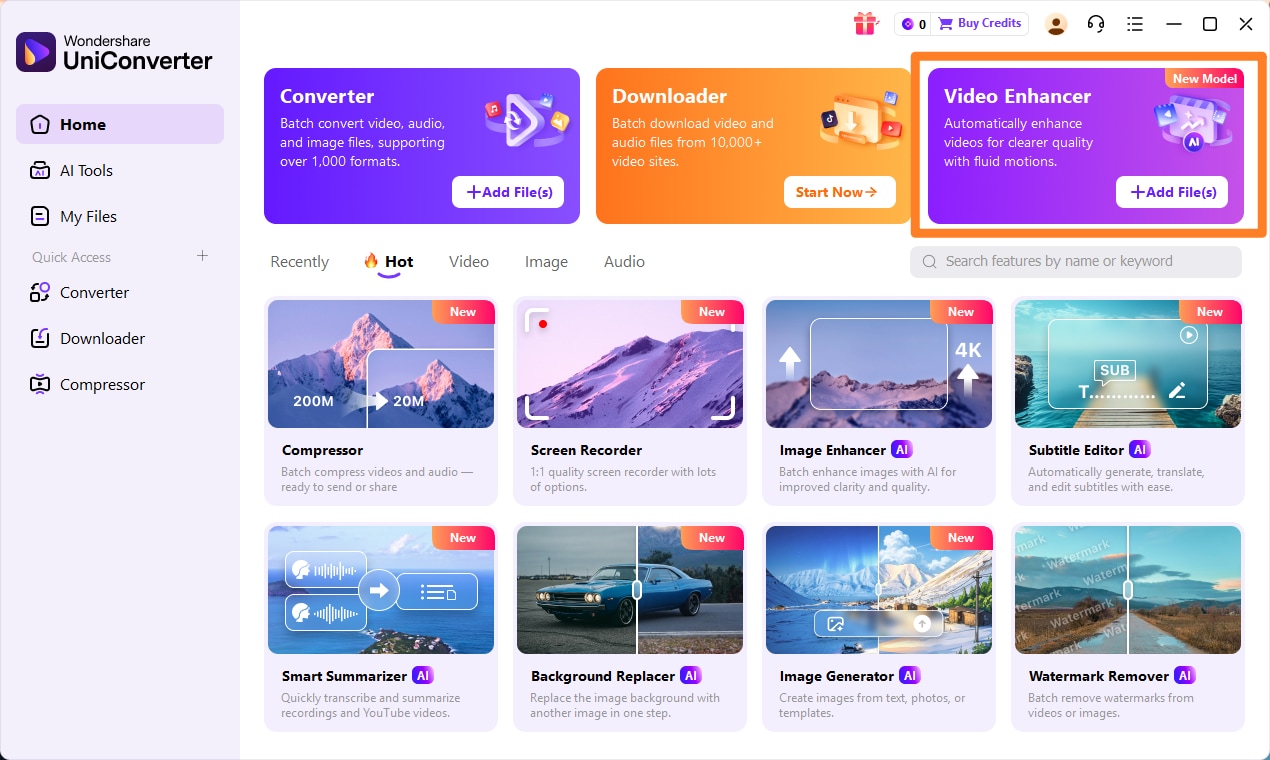
Step 1: Open UniConverter and Choose Video Enhancer
Launch UniConverter on your computer. From the main interface, navigate to the "Toolbox" section and select the "Video Enhancer" feature.
Step 2: Upload the Videos
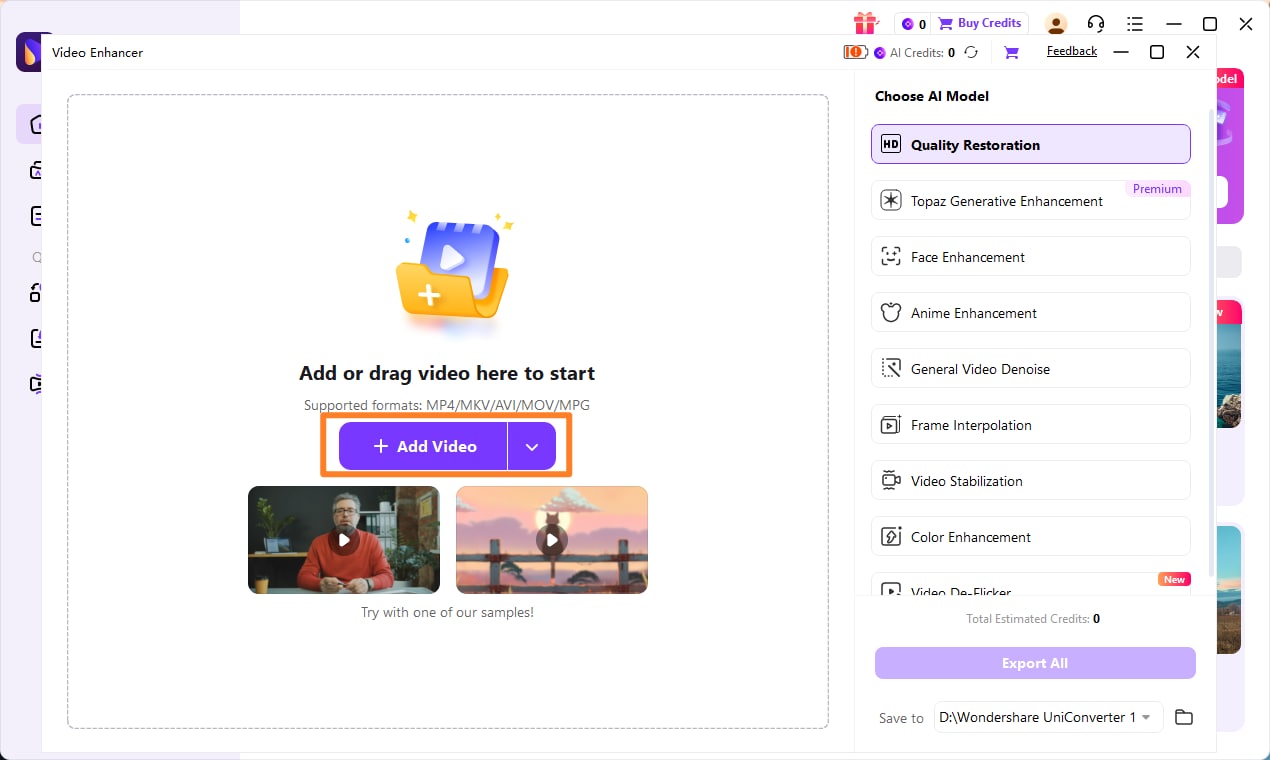
Click on the "Add Files" button or drag and drop your video files into the UniConverter interface. You can add multiple videos for batch enhancement.
Step 3: Choose Enhancement Model
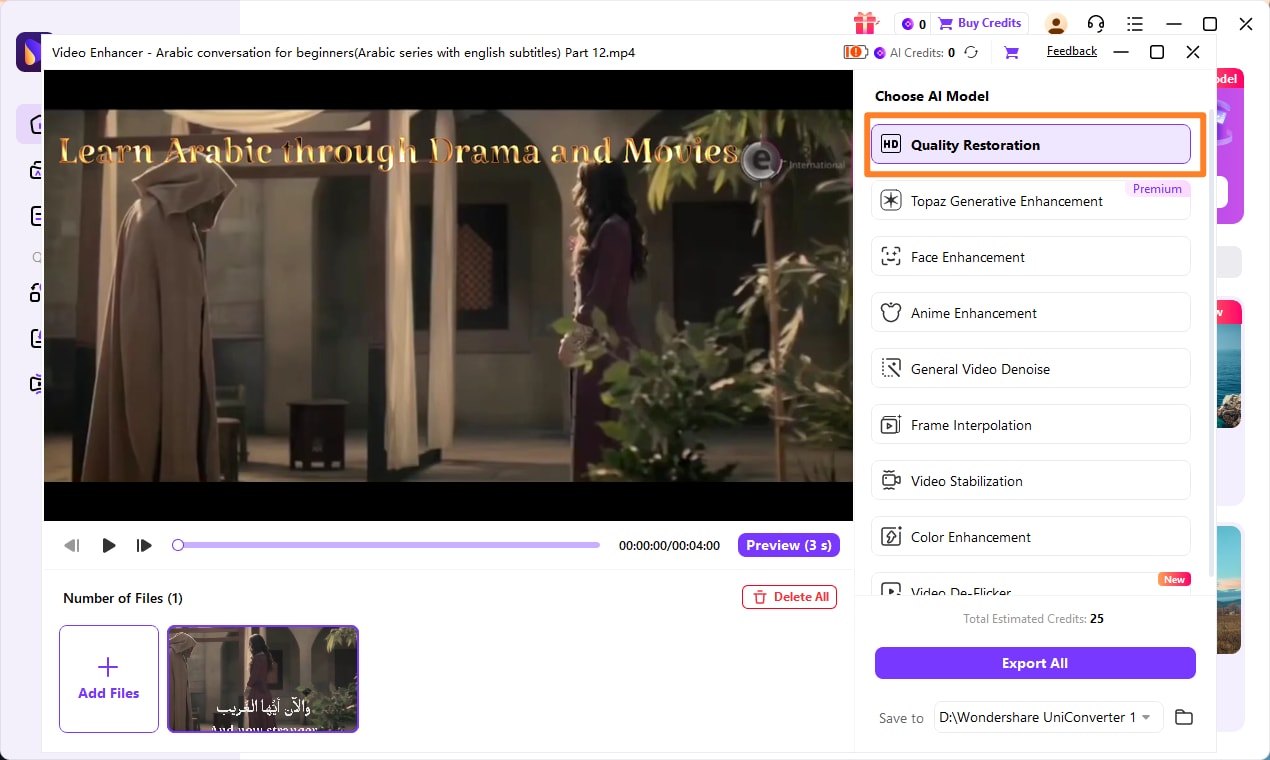
Once your videos are loaded, select the desired enhancement options. UniConverter offers various AI-powered models for noise reduction, upscaling, brightness/contrast adjustment, and de-shaking. Choose the model that best suits your video's needs. For instance, if you're looking to change video background, UniConverter provides dedicated tools for that. You can also explore options for a high-definition background remover or to remove background without losing quality.
Step 4: Preview and Save the Enhanced Video
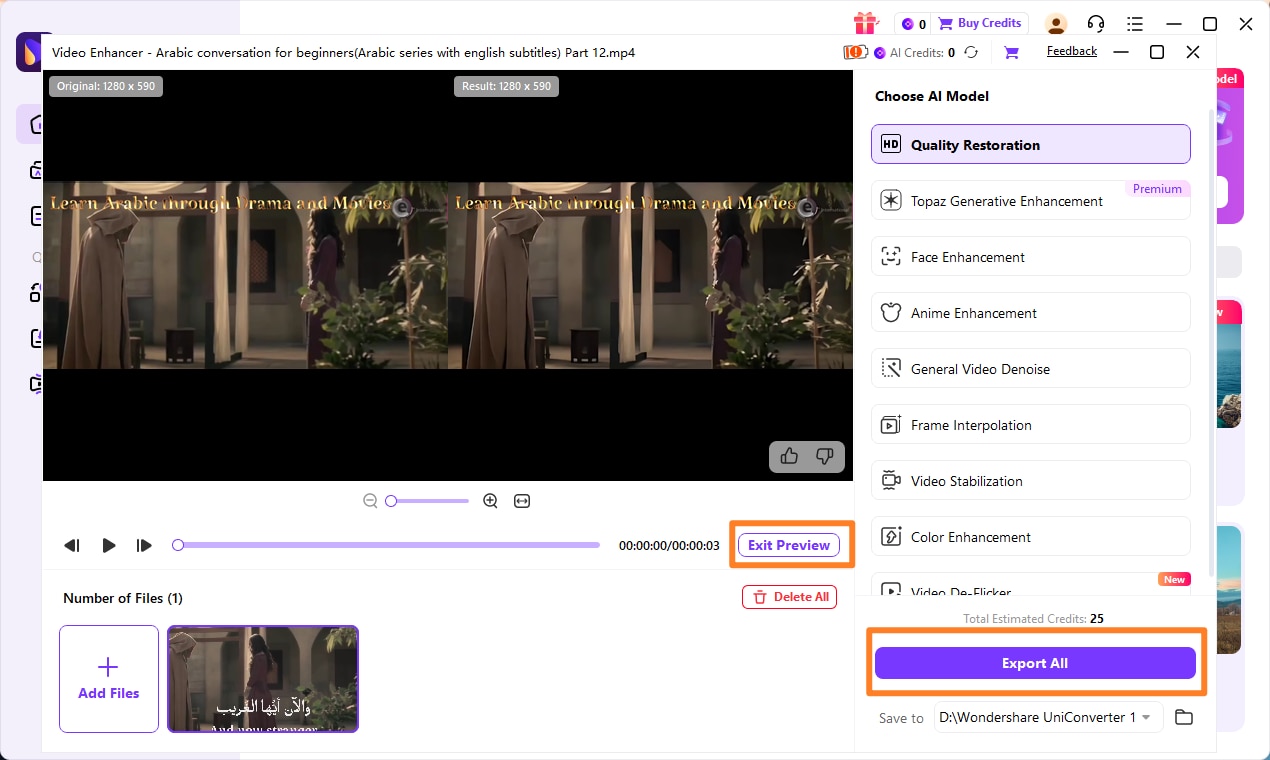
After selecting your enhancement settings, you can often preview the changes to ensure satisfaction. Once satisfied, click the "Enhance" or "Start All" button to begin processing. Choose your output folder and save your enhanced video. If you're working with images, UniConverter also offers an SVG background remover to refine your visuals.

Seeking a HandBrake Video Enhancer Alternative?
Part 7: Final Verdict and Recommendations
This HandBrake video enhancer review concludes that while HandBrake is an indispensable tool for video transcoding and format conversion, its capabilities as a true video enhancer are limited. It excels at making videos compatible and reducing file sizes, but it falls short when it comes to genuine quality improvement through advanced algorithms. For users on a tight budget or those primarily needing to convert video formats, HandBrake is an excellent, free choice. However, for individuals seeking significant video quality enhancement, such as noise reduction, intelligent upscaling, or professional-grade restoration, dedicated software like UniConverter or Topaz Video AI offers superior results. Professionals requiring comprehensive editing alongside enhancement will find DaVinci Resolve more suitable. Ultimately, the best tool depends on the user's specific needs, budget, and technical proficiency.
Part 8: FAQs
-
1. **Is HandBrake a true video enhancer?**
HandBrake is primarily a video transcoder, not a dedicated video enhancer. While it can improve video compatibility and reduce file size, its "enhancement" capabilities are limited compared to tools designed for quality restoration or upscaling.
-
2. **Can HandBrake improve video resolution?**
HandBrake can change the output resolution, but it doesn't genuinely "upscale" low-resolution video to a higher quality. It essentially stretches the existing pixels, which can lead to a blurry or pixelated image.
-
3. **Is HandBrake safe to download and use?**
Yes, HandBrake is generally safe to download and use from its official website. As an open-source project, it undergoes community scrutiny. However, always download from the official source to avoid modified or malicious versions.
-
4. **What are the main differences between HandBrake and paid video enhancers?**
Paid video enhancers often offer AI-powered algorithms for genuine quality improvement, noise reduction, deinterlacing, and upscaling. They also tend to have more user-friendly interfaces and dedicated customer support, which HandBrake, as a free tool, typically lacks.
-
5. **Does HandBrake support all video formats?**
HandBrake supports a wide range of input formats and can output to MP4 and MKV. While it handles most common formats, some niche or proprietary formats might require prior conversion or specific codec installations.
