
- Facetune Focus: Excels in AI-powered portrait and selfie video enhancement for quick social media edits.
- Feature Limitations: Lacks advanced editing features for professional use, unlike comprehensive alternatives.
- Subscription Model: Operates on a freemium model; many powerful features are locked behind a recurring subscription.
- Over-editing Risk: Easy to over-edit, leading to unnatural or 'plastic' results, diminishing authenticity.
- Data Privacy: Cloud processing raises concerns about data privacy; review their policy for sensitive content.
- UniConverter Advantage: Offers robust, stable, and comprehensive video enhancement with batch processing and lossless quality.
- Decision Factor: Choose Facetune for quick aesthetic touch-ups, UniConverter for overall video quality and versatile editing.
In this article
- Part 1: What is Facetune Video Enhancer?
- Part 2: Facetune Video Enhancer: Core Features, Pros, and Cons
- Part 3: Facetune Video Enhancer: Ideal Users and Use Cases
- Part 4: Facetune Video Enhancer and Alternatives Comparison
- Part 5: Risks and Pitfalls of Using Facetune Video Enhancer
- Part 6: How to Use UniConverter to Efficiently Enhance Videos
- Part 7: Conclusion
- Part 8: FAQs
The landscape of mobile video editing has dramatically shifted, with an increasing demand for sophisticated yet user-friendly tools. Among these, Facetune Video Enhancer has emerged as a prominent player, promising to bring professional-grade retouching to the palm of your hand. This Facetune Video enhancer review delves into its core functionalities, comparing it against leading competitors to help users make informed decisions. We will explore its strengths in AI-powered portrait enhancement, its limitations for advanced editing, and ultimately provide a comprehensive overview of whether it meets the diverse needs of today's content creators.
Part 1: What is Facetune Video Enhancer?
Facetune Video Enhancer is a mobile application designed to elevate the quality of video content, particularly focusing on personal appearance. Developed by Lightricks, the company behind the popular Facetune Photo editor, it extends similar AI-driven retouching capabilities to video. This review aims to dissect its performance, evaluate its value proposition, and position it within the competitive mobile video editing ecosystem. The core question this review seeks to answer is: does Facetune Video Enhancer truly deliver on its promise of effortless, high-quality video enhancement for the everyday user, or are there better alternatives for specific needs?
The Rise of Mobile Video Editing
* Accessibility and Convenience: Smartphones have become primary content creation tools, driving the need for powerful on-device editing.
* Social Media Demands: Platforms like TikTok and Instagram Reels necessitate quick, visually appealing video content.
* AI Integration: Artificial intelligence is increasingly being leveraged to automate complex editing tasks, making professional results more attainable for novices.
* User Empowerment: Mobile editing apps empower individuals to produce polished videos without extensive technical knowledge or expensive software.
Part 2: Facetune Video Enhancer: Core Features, Pros, and Cons
Facetune Video Enhancer focuses on refining visual elements within videos, particularly those involving human subjects. Its core capabilities revolve around AI-powered adjustments for skin, facial features, and overall video aesthetics. The app offers a streamlined interface, making it accessible even for users with minimal editing experience.
Core Features:
* Skin Smoothing: Reduces blemishes and evens out skin tone in real-time.
* Face Reshaping: Allows subtle adjustments to facial structure, such as jawline or nose.
* Teeth Whitening: Brightens smiles with a few taps.
* Eye Enhancement: Enlarges and brightens eyes, adding sparkle.
* Video Filters & Effects: A range of aesthetic filters and effects to change the mood and style.
Pros:
* Intuitive UI for Quick Edits on the Go: The user interface is exceptionally clean and easy to navigate, allowing for rapid enhancements.
* Specialized Tools for Portrait and Selfie Video Enhancement: Unmatched precision in retouching facial and bodily features in video.
* AI-Powered Smoothing and Retouching Capabilities: Advanced AI algorithms deliver natural-looking adjustments with minimal effort.
Cons:
* Limited Advanced Editing Features for Professional Use: Lacks multi-track editing, advanced color grading, or complex transitions.
* Subscription-Based Model for Full Functionality: Many powerful features are locked behind a paywall, requiring a recurring subscription.
Part 3: Facetune Video Enhancer: Ideal Users and Use Cases
Facetune Video Enhancer is primarily designed for individuals who prioritize quick, aesthetic enhancements for their video content, especially when the focus is on personal appearance. Its ease of use and specialized AI tools make it a go-to for specific demographics.
Best Use Case: Quick Social Media Content Creation
Facetune Video Enhancer shines brightest for social media influencers, vloggers, and casual users who frequently share short-form video content on platforms like Instagram, TikTok, or YouTube Shorts. Its ability to quickly smooth skin, whiten teeth, or subtly reshape features makes it perfect for "on-the-go" edits that need to look polished without consuming much time. For instance, a beauty influencer can quickly touch up a makeup tutorial video, or a lifestyle vlogger can enhance their appearance in a daily vlog snippet before uploading. The app's focus on portrait enhancement directly caters to the self-presentation aspect crucial for these platforms.
Limited Use Case: Professional-Grade Video Production
While excellent for quick touch-ups, Facetune Video Enhancer is not suitable for professional-grade video production. It lacks the comprehensive suite of tools required for complex projects, such as multi-track editing, precise audio synchronization, advanced color correction, motion graphics, or detailed special effects. A filmmaker working on a documentary, a marketing team producing a commercial, or a professional videographer editing an event would find its capabilities severely limited. These users require robust software like Adobe Premiere Pro or DaVinci Resolve, which offer granular control over every aspect of video production, far beyond what Facetune Video Enhancer provides.
Part 4: Facetune Video Enhancer and Alternatives Comparison
Understanding where Facetune Video Enhancer stands against its competitors is crucial for making an informed decision. While Facetune excels in AI-driven facial and body retouching for videos, a niche often overlooked by general editors, competitors like CapCut offer broader editing suites. The learning curve for Facetune is significantly lower for its core functions compared to more feature-rich apps, making it ideal for quick, specific enhancements. UniConverter, on the other hand, offers a more robust solution for overall video enhancement and conversion, catering to a different set of needs.
Comparison Table: Facetune Video Enhancer & Competitors
| Feature/App | Facetune Video Enhancer | CapCut | InShot | Adobe Premiere Rush |
| Primary Focus | Portrait/Selfie Enhancement | All-around Editing | Basic Editing | Professional Mobile Editing |
| Ease of Use | Very High | High | High | Medium |
| AI Enhancement | Yes (Strong) | Yes (Moderate) | No | Yes (Limited) |
| Subscription Model | Yes | Free (with Pro features) | Free (with Pro features) | Yes |
| Target Audience | Social Media Influencers | Casual Users, TikTokers | Casual Users | Content Creators, Vloggers |
Key Differentiators:
Facetune excels in AI-driven facial and body retouching for videos, a niche often overlooked by general editors. Competitors like CapCut offer broader editing suites, while Facetune focuses on specific enhancement tasks. * The learning curve for Facetune is significantly lower for its core functions compared to more feature-rich apps.
Part 5: Risks and Pitfalls of Using Facetune Video Enhancer
While Facetune Video Enhancer offers compelling features for quick video touch-ups, users should be aware of potential risks and pitfalls, especially concerning its business model and the nature of its enhancements.
Subscription Traps and Hidden Costs
Facetune Video Enhancer operates on a freemium model, enticing users with basic functionalities but locking most powerful features behind a subscription. This can lead to "subscription traps" where users might inadvertently sign up for recurring payments after a free trial, or find essential tools unavailable without upgrading. The cost can accumulate over time, potentially exceeding the value for casual users. Always review the subscription terms carefully and set reminders to cancel if not needed.
Potential for Over-Editing and Unnatural Results
The ease of use and powerful AI features can lead to over-editing, resulting in videos that look artificial or "plastic." Excessive skin smoothing, face reshaping, or teeth whitening can strip away natural textures and expressions, making the subject appear unrealistic. This not only diminishes the authenticity of the content but can also contribute to unrealistic beauty standards, especially among younger audiences. Users should exercise restraint and aim for subtle enhancements.
Data Privacy Concerns with Cloud Processing
Many of Facetune's advanced AI features likely involve cloud processing, meaning your video data might be uploaded to their servers for enhancement. This raises data privacy concerns, as users are entrusting their personal video content to a third-party service. It's crucial to read their privacy policy to understand how your data is stored, processed, and used. For sensitive content, this could be a significant deterrent.
Limited Export Options and Quality Control
While Facetune Video Enhancer focuses on enhancement, its export options might be limited compared to more comprehensive video editors. Users might find a lack of control over resolution, bitrate, or file formats, which can impact the final quality and compatibility of the enhanced video. This limitation can be frustrating for users who need specific output settings for different platforms or professional use cases.
Part 6: How to Use UniConverter to Efficiently Enhance Videos
When other tools fall short in batch processing, stable enhancement, or delivering noticeable improvements, UniConverter emerges as a robust alternative. It provides a comprehensive solution for video enhancement, free from ads and offering extensive format support, GPU acceleration for speed, lossless quality, and efficient batch processing. UniConverter is positioned as an all-in-one ultimate solution for your video needs.
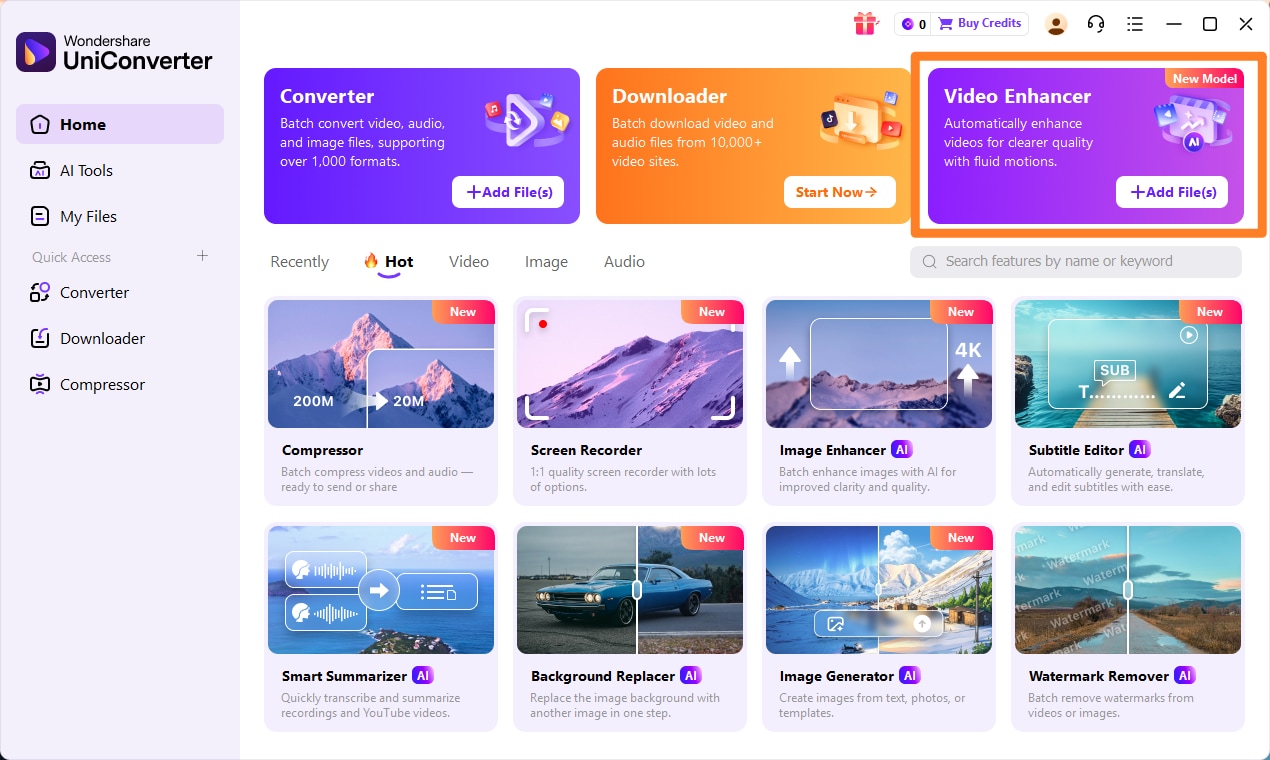
Step 1: Open UniConverter and Choose Video Enhancer
Launch UniConverter on your computer. From the main interface, navigate to the "Toolbox" section and select the "Video Enhancer" feature.
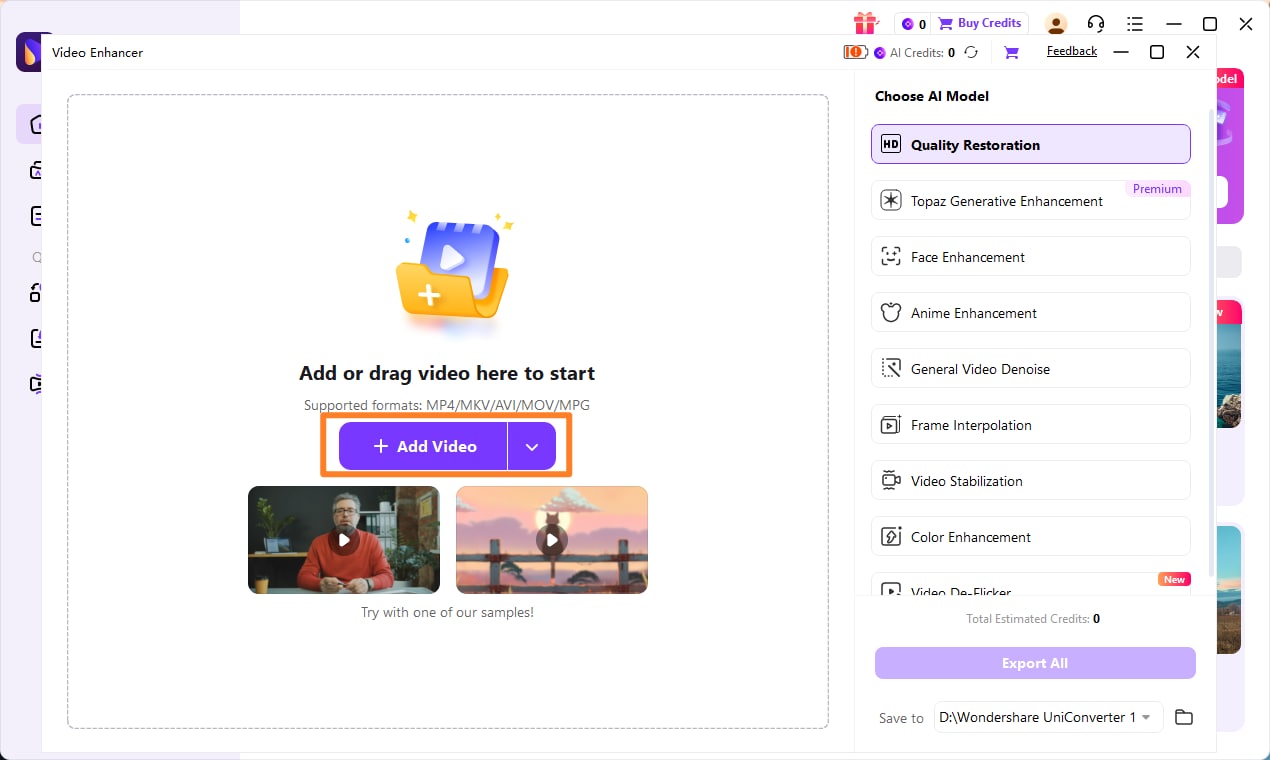
Step 2: Upload the Videos
Click on the "Add Files" button or drag and drop your video files into the UniConverter interface. You can add multiple videos for batch processing.
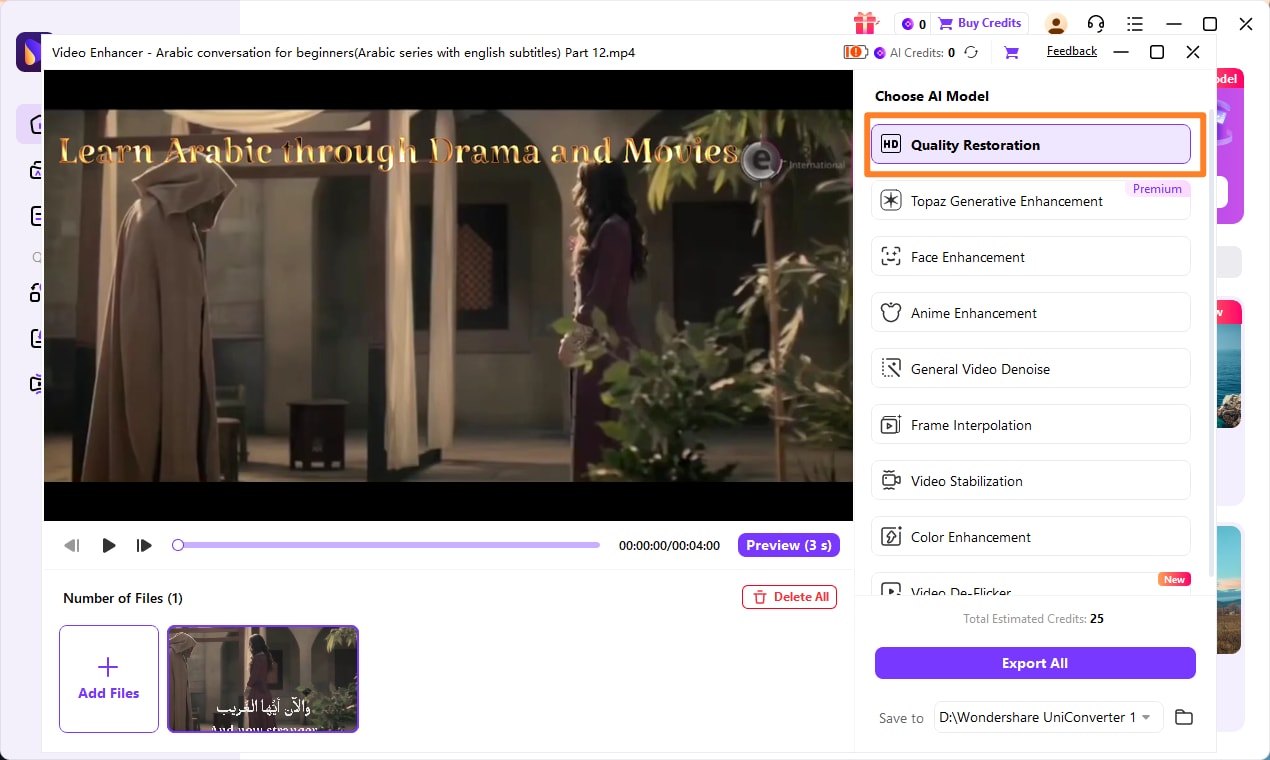
Step 3: Choose Enhancement Model
UniConverter offers various enhancement models. Select the one that best suits your needs, such as "AI Upscale," "Brightness/Contrast," or "Denoise." Adjust parameters as required. For instance, you might want to remove background without losing quality from your videos, or utilize its high-definition background remover capabilities. You can also explore options to change video background or use the online background remover for quick edits.
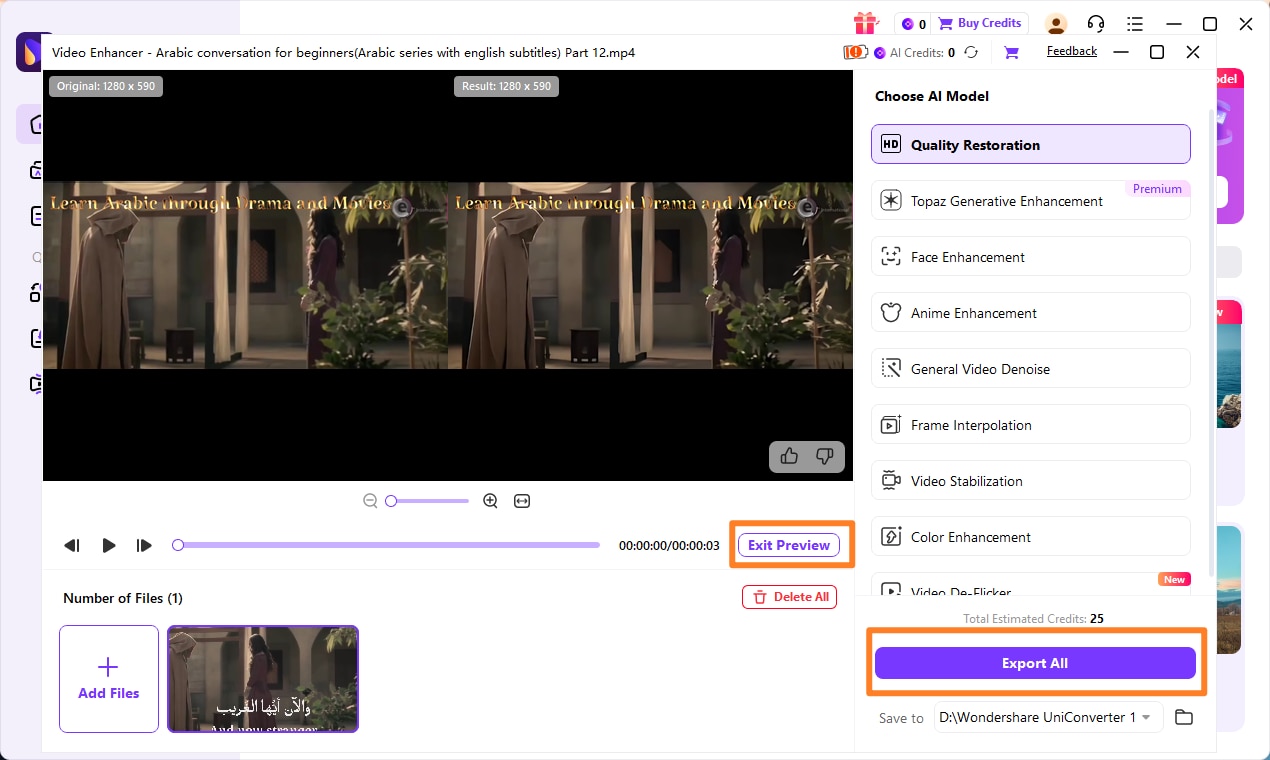
Step 4: Preview and Save the Enhanced Video
After selecting your enhancement settings, click "Preview" to see the changes. Once satisfied, choose your desired output format and destination folder, then click "Enhance" to save your improved video.

Seeking a Powerful Facetune Video Enhancer Alternative?
Part 7: Conclusion
This Facetune Video enhancer review highlights its strengths as a specialized tool for quick, AI-powered portrait and selfie video enhancements, making it ideal for social media enthusiasts and casual users. Its intuitive interface and focused feature set allow for rapid touch-ups, which is invaluable for short-form content creation. However, for those seeking comprehensive video editing capabilities, professional-grade control, or a broader range of features beyond facial retouching, Facetune Video Enhancer falls short. Users should carefully consider its subscription model, potential for over-editing, and data privacy implications. While excellent for its niche, complex projects or users prioritizing overall video quality and versatile editing tools would be better served by exploring alternatives like CapCut, Adobe Premiere Rush, or a more robust desktop solution such as UniConverter for stable, high-quality enhancements.
Part 8: FAQs
-
1. Is Facetune Video Enhancer free to use?
Facetune Video Enhancer offers a free trial, but most advanced features require a subscription.
-
2. Can Facetune Video Enhancer improve video quality significantly?
It can enhance specific aspects like facial features and lighting, but it's not a professional video upscaler for overall quality.
-
3. What are the main differences between Facetune Video Enhancer and Facetune Photo?
Facetune Video Enhancer focuses on video editing and retouching, while Facetune Photo is designed for still images.
-
4. Is my data safe when using Facetune Video Enhancer?
Like many apps, Facetune collects user data. It's advisable to review their privacy policy before use.
-
5. Can I use Facetune Video Enhancer for long videos?
While technically possible, its features are best suited for short-form content due to processing times and feature limitations.
