Navigating the world of digital video formats can be confusing, especially when dealing with older file types. Two formats that often come up in discussion are AVI and SWF. While both have been used to deliver video content, they were designed for vastly different purposes and have followed very different paths in the evolution of technology. Understanding the core distinctions in the AVI vs SWF debate is crucial for anyone working with video, from professional editors to casual users trying to play an old file. This guide will break down everything you need to know about these two formats.
In this article, you will learn:
- What AVI and SWF files are and their origins.
- A quick side-by-side comparison of their key features.
- A detailed analysis of which format is better for modern use.
- The specific use cases for AVI and the legacy context of SWF.
- How to easily convert files between these formats.
Part 1. What is AVI? What is SWF?
Before we can compare these two formats, it's essential to understand what each one is, what it was designed for, and its current status in the digital landscape. They hail from different eras of computing and served unique functions.
What is an AVI File?
AVI stands for Audio Video Interleave. Developed by Microsoft in November 1992 as part of its Video for Windows technology, AVI is one of the oldest and most established video container formats. A "container" format means that the file itself doesn't dictate the compression method; rather, it holds audio and video data that can be encoded with various codecs (compressor-decompressor algorithms). This flexibility is one of its key strengths.
Because of its long history, AVI enjoys widespread support across nearly all operating systems and media players, especially on Windows-based platforms. It is renowned for its ability to maintain high-quality video and audio, often with less compression compared to more modern formats like MP4. This focus on quality, however, comes at a cost: AVI files are typically much larger than other formats containing the same video content. This makes them excellent for editing and archiving but less ideal for streaming or sharing over the internet.
What is an SWF File?
SWF, which stands for Small Web Format (originally ShockWave Flash), is a file format developed by Macromedia, which was later acquired by Adobe. Unlike AVI, which is a pure video container, SWF was designed primarily for the web. It was the dominant format for delivering vector-based animations, interactive web applications, and online games during the height of the Adobe Flash Player era.
The main advantage of SWF was its incredibly small file size, which was perfect for the slow internet connections of the late 1990s and 2000s. It could contain not just video and audio but also ActionScript, a scripting language that allowed for rich user interactivity. However, the reliance on the proprietary Adobe Flash Player plugin, coupled with security vulnerabilities and poor performance on mobile devices, led to its decline. In 2020, Adobe officially ended support for Flash Player, rendering SWF files obsolete. Modern web browsers no longer support them, and playing an SWF file today is a significant challenge.
Part 2. Quick Comparison Table
For a quick overview of the fundamental differences between AVI and SWF, this side-by-side comparison table highlights their most important attributes.
| Feature | AVI | SWF |
| Developer | Microsoft | Adobe (originally Macromedia) |
| File Type | Video Container | Animation/Vector Graphics |
| Compression | Varies (can be low or uncompressed) | Highly compressed |
| Quality | High to very high | Variable, best for simple graphics |
| File Size | Large | Small |
| Compatibility | Excellent | Very poor (obsolete) |
Part 3. AVI vs SWF: Which One Is Better?
When choosing a file format, "better" always depends on the specific goal. However, in the context of 2026, the comparison between AVI and SWF yields a very clear winner for almost every conceivable scenario. Let's break down the comparison across several key factors.
Quality and Compression
The approach to quality and compression is one of the most significant differentiators between AVI and SWF. AVI files are built to prioritize video fidelity. They act as a container that can use a wide range of codecs, from uncompressed video to lightly compressed codecs like DivX or XviD. This flexibility allows creators to store video in near-lossless quality, preserving the maximum amount of detail from the original recording. This makes AVI an excellent choice for master copies and for use in a professional video editing workflow where maintaining quality through multiple edits is paramount.
SWF, on the other hand, was engineered for efficiency over the web. It uses strong compression techniques and relies heavily on vector graphics. Vector graphics define images using mathematical equations rather than pixels, which allows them to be scaled without losing clarity and results in tiny file sizes. While this is great for simple animations and logos, it's not suitable for complex, photorealistic video. Video embedded within an SWF file is often heavily compressed, leading to a noticeable reduction in quality compared to what an AVI file can offer.
File Size
File size is a direct consequence of the formats' different compression philosophies. SWF files are renowned for being exceptionally small. This was their killer feature in the early days of the internet, as it allowed rich, animated content to load quickly even on dial-up connections. A simple animation or a short video clip in SWF format could be a fraction of the size of its AVI counterpart.
Conversely, AVI files are notoriously large. Because they often use less aggressive compression to preserve quality, the resulting files can consume a significant amount of disk space. A few minutes of high-quality AVI video can easily run into gigabytes. This makes AVI files cumbersome for web streaming or for sharing via email but ideal for local storage on a hard drive where space is less of a concern and quality is the top priority.
Compatibility and Playback
In 2026, compatibility is the factor that definitively settles the debate. AVI is a universally recognized format. It plays natively on Windows Media Player and Apple's QuickTime Player (with the right codecs). It is supported by virtually every third-party media player like VLC Media Player, as well as smart TVs, game consoles, and video editing software. You can be confident that if you have an AVI file, you will be able to play it on almost any device you own.
SWF compatibility, in stark contrast, is virtually non-existent. Since Adobe officially discontinued Flash Player at the end of 2020, all major web browsers—including Chrome, Firefox, Edge, and Safari—have removed support for it. There is no native way to play an SWF file on a modern computer or mobile device. The only options are to use specialized, often outdated, standalone Flash players, which can pose security risks, or to convert the file to a modern format. For all practical purposes, SWF is an unusable format for content distribution today.
The Verdict: Which Format Wins?
For any modern video application—including recording, editing, storing, sharing, or playback—AVI is the overwhelmingly superior choice. Its high quality and universal compatibility make it a reliable and practical format. While its large file size can be a drawback, storage is cheaper than ever, and for web use, it can always be converted to a more efficient format like MP4.
SWF is an obsolete format. Its historical significance in the development of the interactive web is undeniable, but it has no place in a modern content strategy. Its primary relevance today is as a legacy file type. If you have old SWF files containing valuable animations or videos, the only practical course of action is to convert them into a usable format like AVI or MP4.
Part 4. Use Cases for AVI and B
Understanding the practical applications of each format helps solidify their respective roles. While one is a workhorse for today's video needs, the other is a relic whose main use is in data recovery.
When to Use AVI
AVI remains a relevant and powerful format for specific, high-quality applications. Its strengths lie in scenarios where preserving the integrity of the video data is more important than minimizing file size.
- Storing Master Copies: When you finish a video project, saving a master copy in a high-quality AVI format ensures you have a top-tier version for future use. This uncompressed or lightly compressed file serves as the definitive source from which other, more compressed versions (like MP4s for the web) can be created.
- Professional Video Editing: Many professional video editing suites, such as Adobe Premiere Pro and DaVinci Resolve, work more smoothly with less compressed files. AVI provides a robust container for codecs that are optimized for editing, allowing for faster rendering and fewer artifacts during the post-production process.
- Archiving Video Content: For long-term preservation of important video footage, AVI is an excellent choice. Its widespread, long-standing support means it is less likely to become obsolete in the near future compared to more niche or proprietary formats. Museums, libraries, and film archives often use AVI for digital preservation.
When to Use SWF (Legacy Use Cases)
As SWF is an obsolete format, there are no modern scenarios where you would choose to create a new SWF file. Its use cases are entirely centered on dealing with existing files from the past.
- File Conversion: The single most important "use case" for SWF in 2026 is conversion. If you discover old company training materials, website animations, or personal projects saved as SWF files, they are essentially locked in an unplayable format. To access this content, you must convert it into a modern, compatible format. Converting SWF to AVI allows you to preserve the video content in high quality, while converting to MP4 is better for sharing it on the web or social media. This act of conversion is a form of digital archaeology, rescuing valuable content from an abandoned technology.
Part 5. Step-by-Step Guide to Convert AVI to SWF Using UniConverter
While converting modern video to the obsolete SWF format is rare, you may have a legacy system that requires it. More commonly, you might need to convert old SWF files to a usable format like AVI. For any such task, a powerful tool is necessary. We recommend Wondershare UniConverter, a versatile video toolbox that supports over 1000 formats, including AVI and SWF, and makes conversion simple and fast.
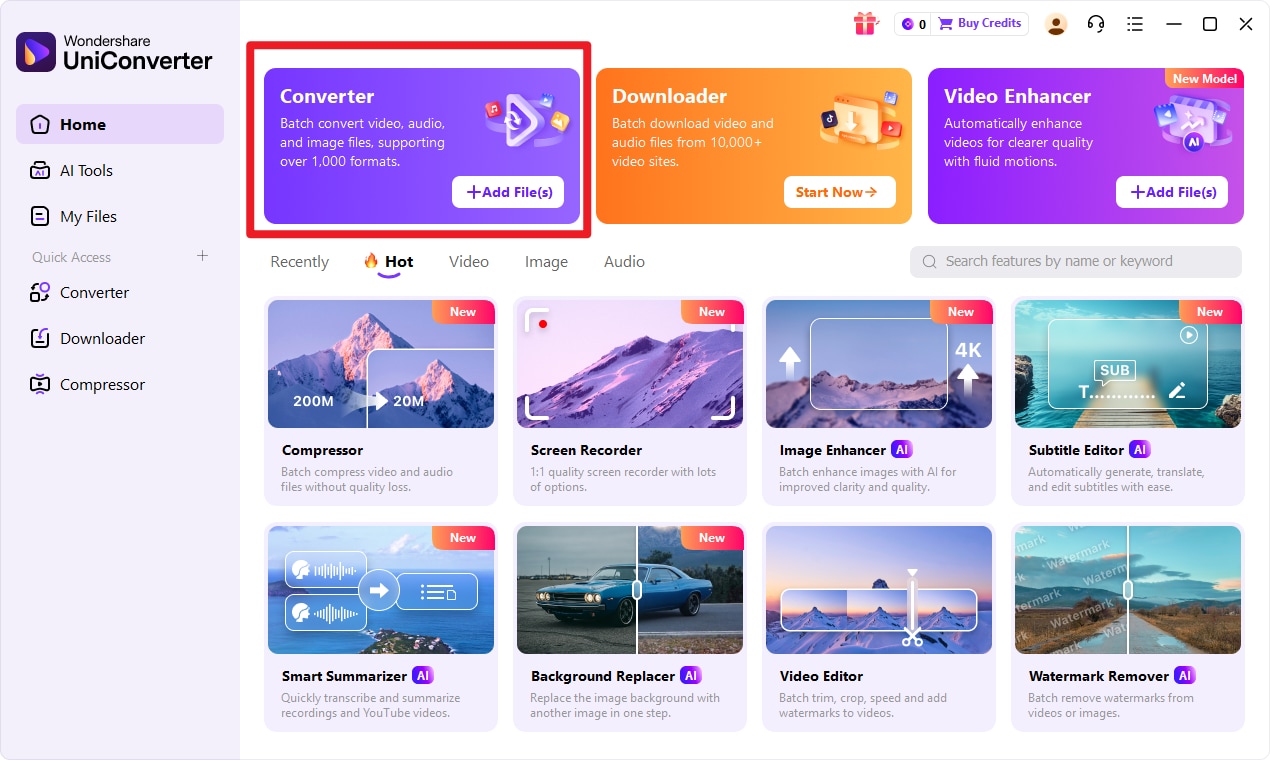
Step 1: Choose Converter in UniConverter
Launch Wondershare UniConverter on your computer after installation. From the main interface, look at the menu on the left side and select the Converter tool to open the conversion window.
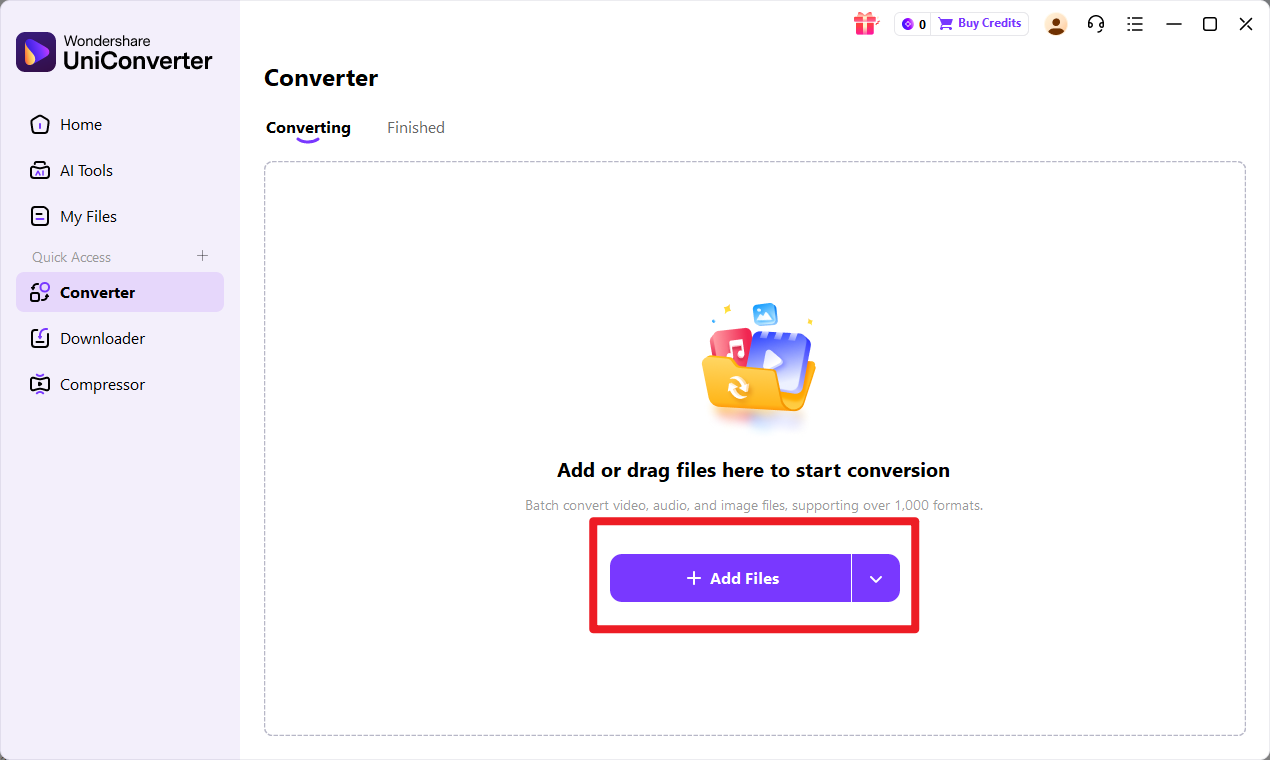
Step 2: Add Files to UniConverter
You can now import your files. Either drag your input format files directly from your folder and drop them onto the UniConverter window, or click the Add Files button in the top-left corner to open a file browser and select the videos you wish to convert.
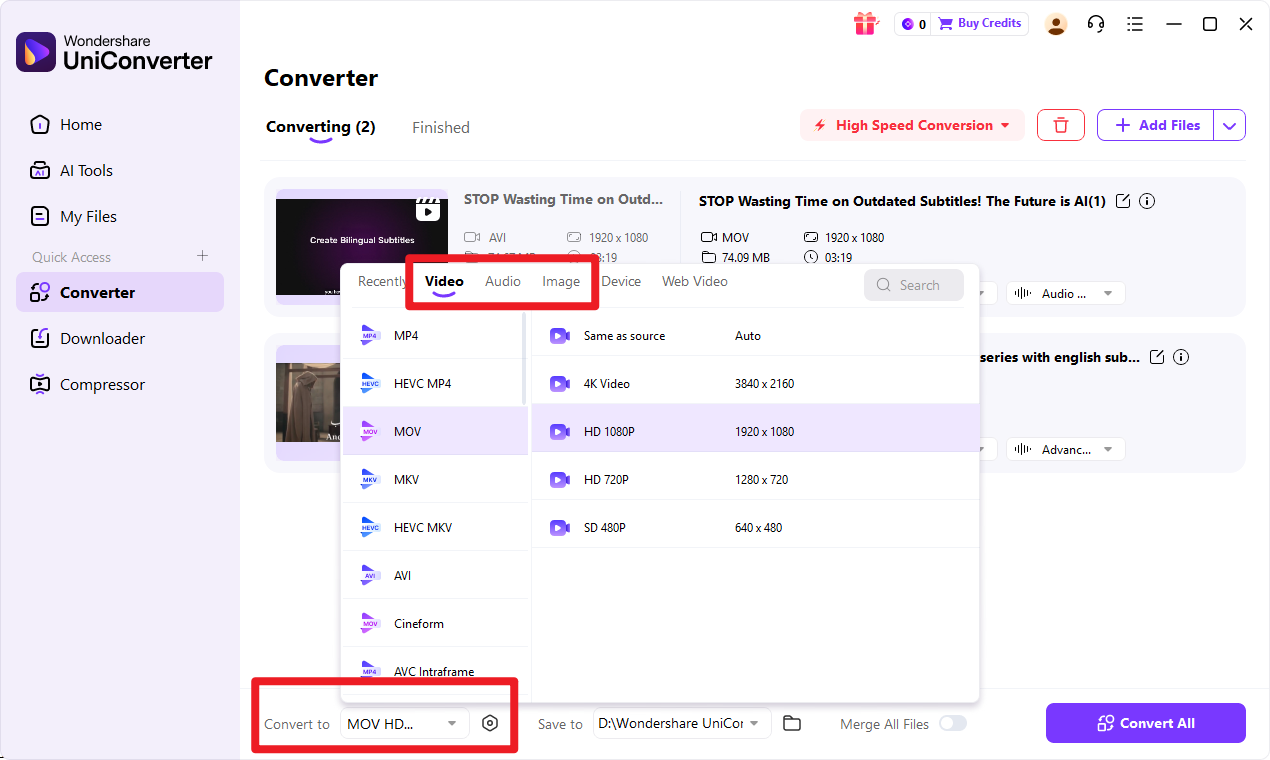
Step 3: Choose Output Format
At the bottom of the window, click on the Output Format tab. This will open a new window with a comprehensive list of supported formats. Go to the Video tab, select your desired target format from the list on the left, and then choose a resolution for your output file on the right.
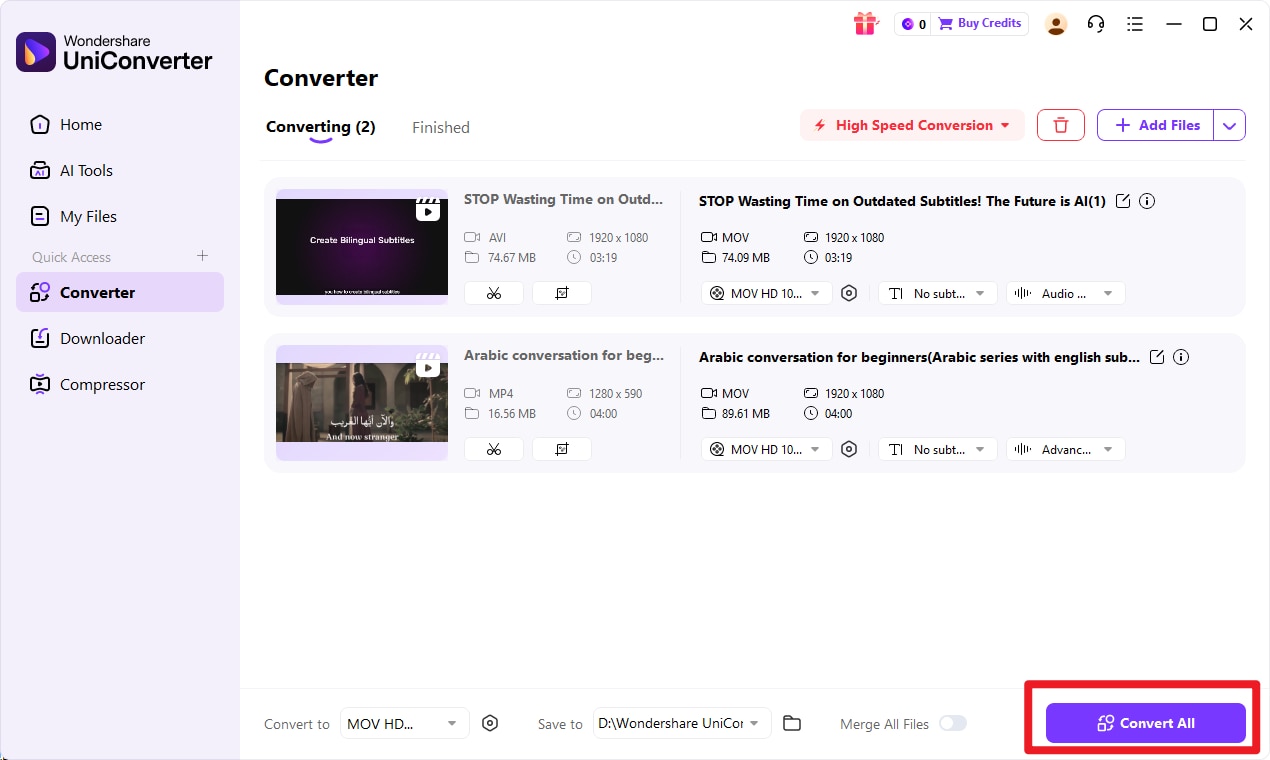
Step 4: Start the Conversion
Before starting, you can specify where to save the converted file by setting a path under the File Location tab at the bottom. Once you are ready, click the Start All button in the bottom-right corner to begin the conversion process. UniConverter will process your files quickly and efficiently.

More Than Just a Video Converter
Conclusion
In the AVI vs SWF comparison, the verdict for 2026 and beyond is unequivocally clear. AVI stands as a robust, high-quality, and universally compatible format that continues to serve valuable roles in video editing and archiving. In contrast, SWF is a legacy format from the bygone Flash era, with no practical application for modern content creation or distribution. Its incompatibility with current browsers and devices renders it obsolete. The primary interaction most users will have with SWF files today involves converting them to a usable format. For any video conversion needs—whether you are modernizing old SWF files to AVI, compressing AVI for the web, or managing any of the other 1,000+ supported formats—Wondershare UniConverter provides a fast, reliable, and user-friendly solution to handle all your media challenges.
FAQs
-
1. Is AVI better than MP4?
It depends on the use case. AVI often uses less compression, resulting in higher quality and much larger file sizes, which is excellent for the editing and archiving stages. MP4 uses more advanced compression to provide a better balance between good quality and small file size, making it the standard for web streaming, social media sharing, and general playback on mobile devices. For final delivery, MP4 is usually preferred. -
2. How can I play an SWF file today?
Playing SWF files is difficult and not recommended on modern systems due to security concerns. You could try to find a dedicated, offline Flash player application from a trusted source, but this is often risky. The safest and most practical solution is to convert the SWF file into a modern video format like MP4 or AVI. A reliable conversion tool like UniConverter can do this easily, allowing you to view the content on any standard media player. -
3. Can AVI files contain viruses?
Yes, like any file type downloaded from the internet, an AVI file can be a carrier for malware or viruses. The file format itself is not inherently dangerous, but a malicious file can be disguised as an AVI video. To stay safe, you should only download media files from reputable and trusted websites and always have active antivirus software on your computer to scan new files. -
4. Why is UniConverter recommended for video conversion?
UniConverter is recommended because it is a comprehensive and powerful video toolbox, not just a simple converter. It offers GPU-accelerated, high-speed conversion for over 1000 formats without quality loss. It also supports batch processing, allowing you to convert multiple files at once, which saves a significant amount of time. Beyond conversion, it includes a full suite of tools for video editing, compression, screen recording, downloading, and more, making it an all-in-one solution for all your media management needs.
