WebM vs VOB: A Detailed Comparison and Conversion Guide for 2026
Navigating the world of video formats can often feel like deciphering a complex code. You might have a collection of old DVDs you want to digitize or a video you need to embed on your website, only to be confronted with unfamiliar file extensions like .vob and .webm. This leads to a crucial question: what's the difference, and which one should you use? The WebM vs VOB debate is a classic case of old technology meeting new standards, where one is designed for physical media and the other is built for the internet age.
Understanding the fundamental characteristics of each format is key to making the right choice for your project. Whether you're a web developer aiming for fast-loading pages, a content creator sharing videos online, or a digital archivist preserving memories, knowing when to use WebM and when to stick with VOB (or convert it) is essential. This guide will break down everything you need to know, from technical specifications to practical use cases, and show you how to easily bridge the gap between these two distinct formats.
In this article:
- What is WebM? What is VOB?
- Quick Comparison Table
- WebM vs VOB: Which One Is Better?
- Use Cases for WebM and VOB
- Step-by-Step Guide to Convert VOB to WebM
- Frequently Asked Questions
Part 1. What is WebM? What is VOB?
Before we can compare these two formats, it's important to understand what they are, how they work, and what they were designed for. Their origins and underlying technology dictate their strengths and weaknesses.
What is a WebM File?
WebM is an open, royalty-free media file format developed by Google specifically for the web. First introduced in 2010, it was created to provide a high-quality, open-source alternative to proprietary formats for HTML5 video and audio. The goal was to create a format that was both efficient and universally accessible without licensing fees.
A WebM file uses a container structure based on the Matroska (.mkv) profile. Inside this container, it typically pairs modern, highly efficient video codecs like VP8 or VP9 with open-source audio codecs such as Vorbis or Opus. This combination is what makes WebM so effective at delivering excellent video quality at remarkably low bitrates, which is crucial for smooth streaming over the internet. Its primary purpose is to be the native video format for the web, and it is supported by all major browsers, including Google Chrome, Mozilla Firefox, Opera, and Microsoft Edge.
What is a VOB File?
A VOB (Video Object) file is a container format used in DVD-Video media. When you look at the files on a standard video DVD, you'll find several VOB files in a folder named VIDEO_TS. These files are the core of the DVD's content.
Each VOB file contains the actual video stream, audio tracks, subtitles, and DVD menu information. The video is typically compressed using the older MPEG-2 Part 2 codec, a standard that was prevalent during the peak of DVD technology. The audio can be in various formats, including AC-3 (Dolby Digital) or DTS. Because VOB files are part of the rigid DVD structure, they are often split into 1 GB segments to maintain compatibility with older file systems. Their primary and almost exclusive use is for storing and playing video content from physical DVD discs.
Part 2. Quick Comparison Table
To get a clear, at-a-glance overview of the differences between WebM and VOB, here is a side-by-side comparison of their key attributes.
| Feature | WebM | VOB (Video Object) |
| Developer | DVD Forum | |
| Primary Use | HTML5 web video, online streaming | Storing video, audio, and subtitles on DVD discs |
| Video Codec | VP8, VP9, AV1 | MPEG-2 Part 2 |
| Audio Codec | Vorbis, Opus | AC-3, DTS, MPEG-1 Audio Layer II, LPCM |
| Compression | High-efficiency, modern compression | Lower-efficiency, older compression |
| File Size | Significantly smaller for similar quality | Very large |
| Quality | Can store high-quality video (up to 4K and beyond) at low bitrates | Good quality, but less efficient (requires higher bitrates) |
| Compatibility | Native support in modern web browsers; requires codecs on some offline players | Requires specific DVD player software or codecs; not web-friendly |
Part 3. WebM vs VOB: Which One Is Better?
Determining which format is "better" depends entirely on your specific needs. However, when we evaluate them based on modern standards of efficiency, quality, and accessibility, a clear winner emerges for most contemporary applications.
Compression and File Size
This is where the most significant difference between WebM and VOB lies. WebM utilizes advanced video codecs like VP8 and, more notably, VP9. These codecs were designed to provide excellent compression, meaning they can drastically reduce file size while preserving a high level of visual quality. This is a critical advantage for web streaming, as smaller files mean faster loading times, reduced bandwidth consumption for the user, and lower hosting costs for the provider.
In contrast, VOB relies on the much older MPEG-2 codec. While MPEG-2 was a reliable standard for its time, its compression efficiency is far inferior to that of VP9. As a result, VOB files are notoriously large. A standard feature-length movie on a DVD can occupy several gigabytes of space. For any application outside of physical media, this large file size is a major drawback, making VOB files impractical for sharing, uploading, or streaming online.
Quality
Both formats are capable of storing high-quality video. A well-mastered DVD with a high bitrate VOB file can look excellent on a standard-definition display. However, the key is efficiency. WebM can achieve a visual quality that is comparable or even superior to VOB but at a fraction of the bitrate.
For example, a 1080p video encoded in WebM (using VP9) can look crisp and clear with a bitrate of just 2-3 Mbps. To achieve similar perceived quality with MPEG-2, you would need a much higher bitrate, resulting in a significantly larger file. Furthermore, WebM and its underlying codecs are designed to support modern resolutions like 4K and even 8K, whereas the VOB format is fundamentally tied to the standard-definition (480p/576p) limitations of the DVD specification.
Compatibility and Accessibility
WebM was built for the modern internet. It enjoys native support in the vast majority of web browsers, including Chrome, Firefox, Opera, and Edge. This means you can embed a WebM video directly into a webpage using the HTML5 <video> tag, and it will play for most users without any plugins or special software. This seamless integration makes it the ideal choice for any online video content.
VOB, on the other hand, has extremely poor native compatibility on modern operating systems and devices. You cannot simply drag a VOB file into a web browser and expect it to play. On a computer, playing a VOB file often requires a dedicated media player like VLC or a special codec pack that can handle the MPEG-2 video and AC-3 audio. Mobile devices almost never support VOB files out of the box. To overcome these significant compatibility issues, converting VOB files with a versatile tool like Wondershare UniConverter is a common and highly effective solution, allowing you to transform them into a universally playable format.
Part 4. Use Cases for WebM and VOB
Understanding the ideal scenarios for each format helps clarify their respective roles in the digital video landscape.
When to Use WebM
WebM is the go-to format for nearly all web-related video tasks. Its combination of high quality, small file size, and native browser support makes it incredibly versatile.
- Embedding Videos on Websites: If you want to add a video directly to your blog, portfolio, or company website using the HTML5
<video>tag, WebM is a perfect choice. It ensures fast loading and smooth playback for your visitors. - Online Video Streaming: For platforms that stream content, from educational courses to social media clips, WebM's efficiency helps minimize buffering and saves on bandwidth costs.
- Creating Web-Friendly Video Content: Anytime you create a video intended for online distribution—be it a tutorial, a marketing video, or a personal vlog—exporting it as a WebM file ensures maximum compatibility and performance on the web.
- Developing Web Applications and Games: Developers often use WebM for in-app video assets or animated backgrounds due to its open-source nature and efficient performance.
When to Use VOB
The use cases for VOB in 2026 are highly specific and almost entirely linked to its origin format, the DVD.
- Authoring DVD Discs: If your goal is to create a physical DVD that can be played in a standard, standalone DVD player, you must use the VOB format as part of the DVD-Video structure. This is its primary and intended function.
- Archiving Original DVD Content: For film enthusiasts or archivists who want to create a 1:1 digital backup of a DVD, preserving the VOB files along with the IFO and BUP files maintains the original disc structure, including menus, chapters, and multiple audio tracks.
- Working with Legacy Content: If you have a hard drive full of video content that was ripped directly from DVDs years ago, you will be working with VOB files. In most cases, the best course of action is to convert this legacy content to a more modern format like WebM or MP4 for easier playback and sharing.
Part 5. Step-by-Step Guide to Convert VOB to WebM Using UniConverter
To bridge the compatibility gap and prepare your DVD content for the web, you need a reliable video converter. UniConverter is a powerful tool that simplifies the process of converting VOB to WebM. Follow these four simple steps.
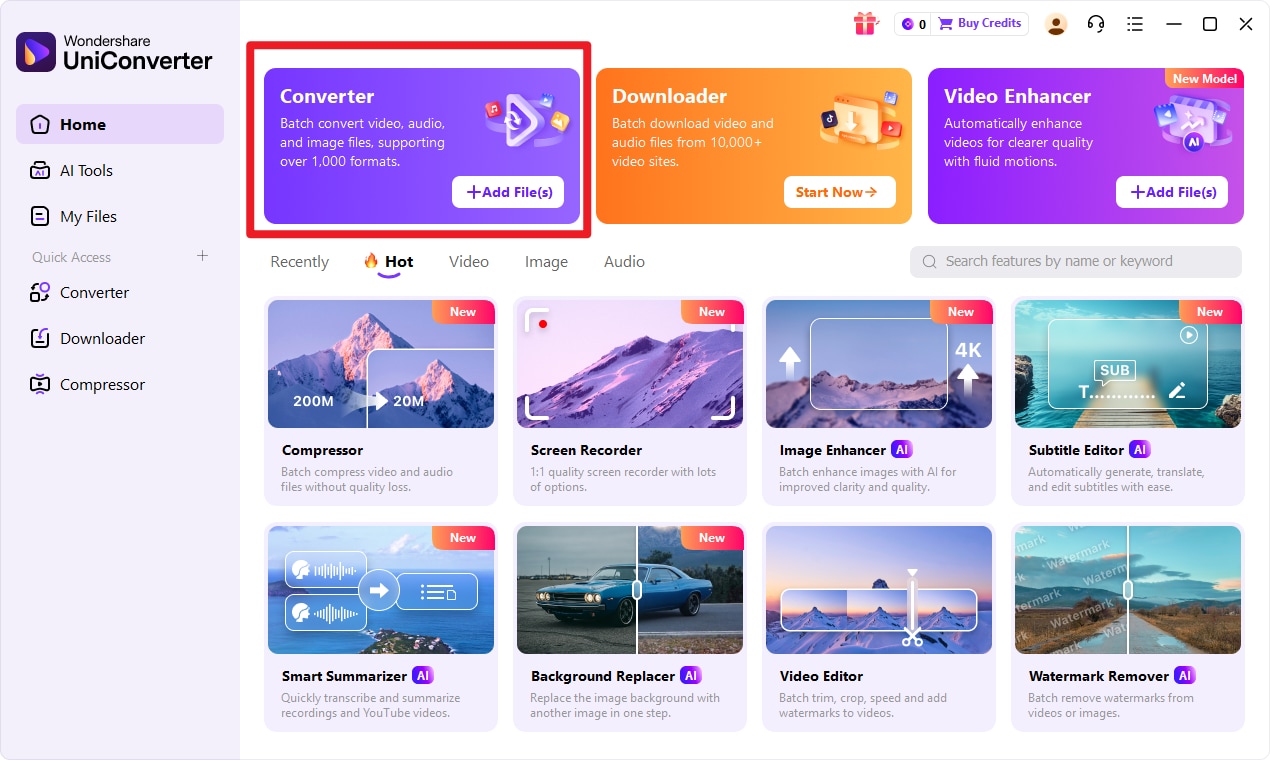
Step 1. Choose Converter in UniConverter
Launch the Wondershare UniConverter application on your computer. From the main interface, look at the menu on the left side and select the Converter tool to open the conversion window.
Step 2. Add Files to UniConverter
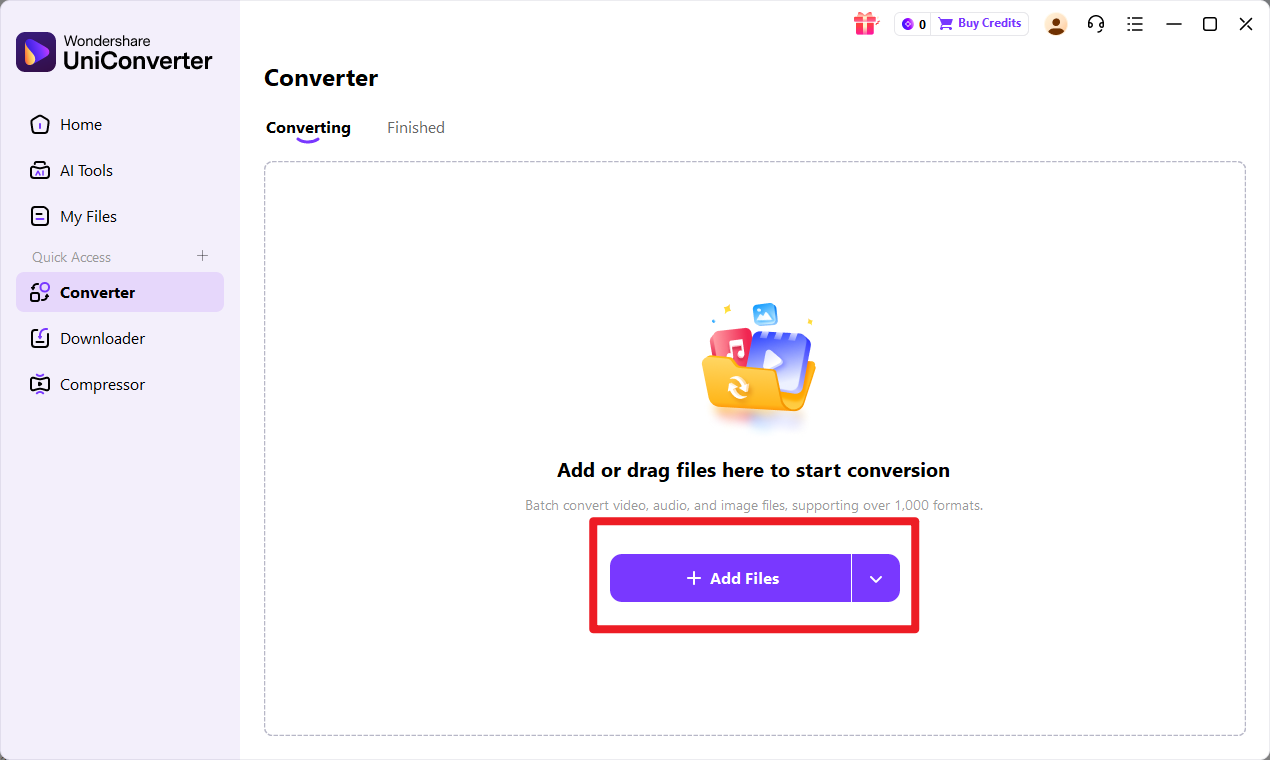
You can now add your VOB files. Either drag the input format files from your folder and drop them directly onto the converter interface or click the Add Files button in the top-left corner to browse your computer's storage and import the files you wish to convert.
Step 3. Choose Output Format
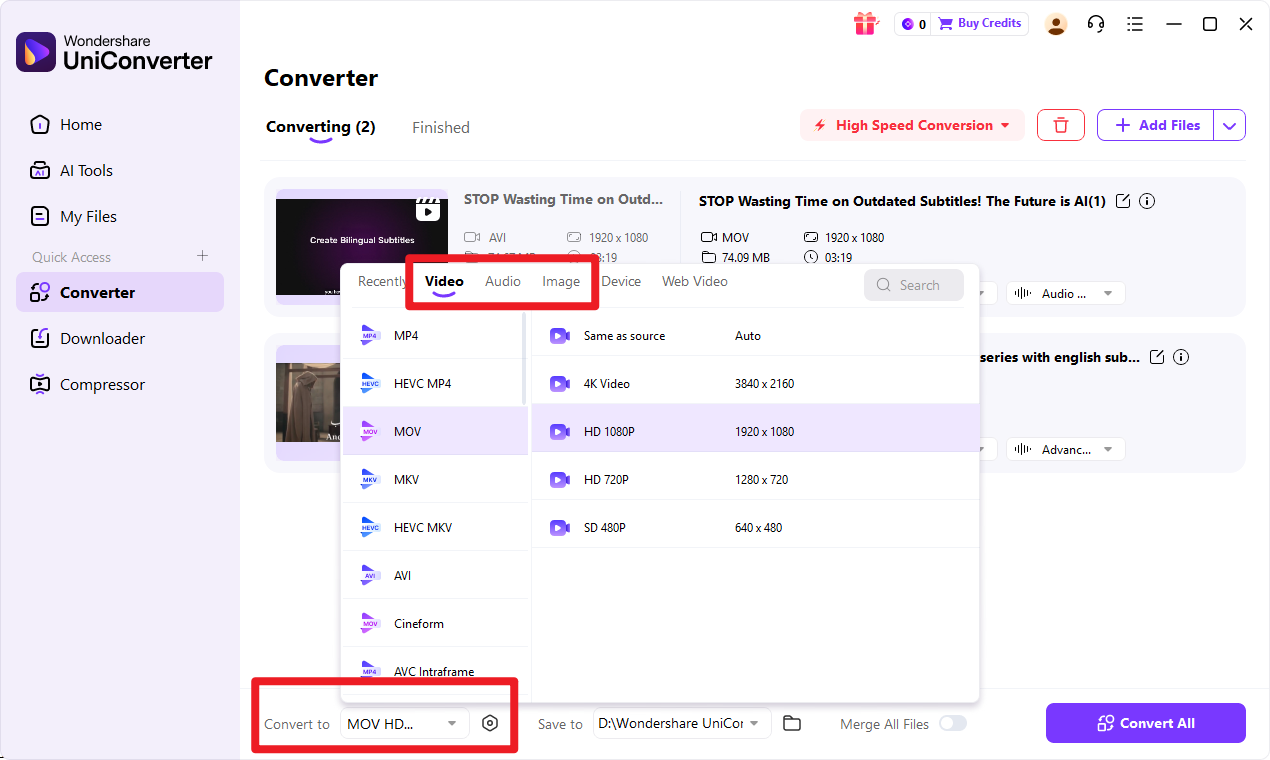
At the bottom of the window, click on the Output Format menu to open the format selection panel. Go to the Video tab. From the list of formats on the left, select the target format. On the right, you can choose your desired output resolution.
Step 4. Start the Conversion
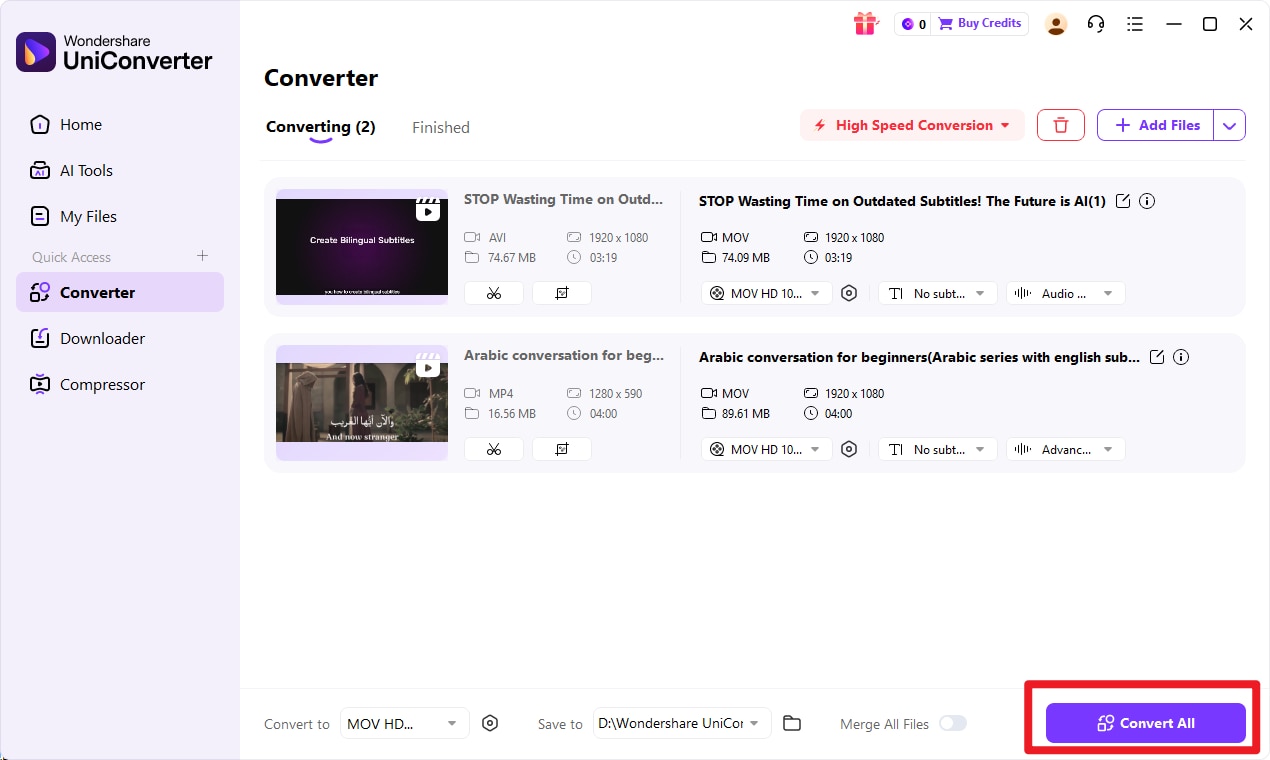
Before starting, you can set a destination for your converted file using the File Location option at the bottom. Once you have confirmed your settings, click the Start All button in the bottom-right corner to begin the VOB to WebM conversion process.

More Than Just a VOB to WebM Converter
Conclusion
In the WebM vs VOB comparison, it's clear that each format was designed for a very different era and purpose. VOB is a legacy format, intrinsically tied to the physical DVD medium. Its large file size and poor compatibility make it unsuitable for almost any modern application. WebM, by contrast, is the modern standard for web video, offering superior compression, excellent quality, and seamless browser integration.
For anyone looking to share videos online, embed them on a website, or simply store them in an efficient format, WebM is the undisputed winner. VOB's relevance is now confined to the niche tasks of authoring or archiving DVDs. When you find yourself with VOB files from old discs that you want to bring into the 21st century, converting them is not just an option—it's a necessity. For this crucial task, a reliable tool is indispensable. Wondershare UniConverter provides a fast, intuitive, and high-quality solution to handle all your VOB to WebM conversion needs, ensuring your videos are ready for the modern web.
FAQs
-
1. Is WebM smaller than VOB?
Yes, significantly. A WebM file will be much smaller than a VOB file containing the same video content at a similar quality level. This is because WebM uses more modern and efficient compression codecs (like VP9) compared to the older MPEG-2 codec used in VOB files. This size difference makes WebM far more suitable for streaming and online sharing. -
2. Can I upload a VOB file to YouTube?
While YouTube's uploader might technically accept a VOB file, it is highly discouraged. VOB files are extremely large, which will result in very long upload times. Furthermore, the format is not optimized for streaming. YouTube will have to re-encode the file anyway. It is much better to convert your VOB file to a web-optimized format like WebM or MP4 before uploading to ensure a faster process and better results. -
3. What is the best tool to convert VOB to WebM?
Wondershare UniConverter is an excellent choice for converting VOB to WebM. It is specifically designed to handle a wide range of formats with ease. Its key advantages include a simple, user-friendly interface, support for batch conversions (allowing you to convert multiple files at once), high-speed processing, and the ability to maintain excellent video quality after conversion. This makes the entire process quick, efficient, and hassle-free.
