WMV vs SWF: A Detailed Comparison and Conversion Guide for 2026
Navigating the world of digital video formats can often feel like alphabet soup, with countless acronyms representing different technologies. Two formats that frequently come up in discussions, albeit for very different reasons, are WMV and SWF. While one remains a functional part of a major operating system's ecosystem, the other is a relic of a bygone internet era. Understanding the distinction between them is crucial for anyone working with digital media, from video editors to web developers and casual users.
The WMV vs SWF debate is less about choosing a winner for new projects and more about understanding their history, purpose, and current relevance. Whether you're trying to play an old animation, manage a video library, or convert legacy files into a modern format, this guide will provide the clarity you need.
In this article:
- What is WMV (Windows Media Video)?
- What is SWF (Shockwave Flash)?
- Quick Comparison Table: WMV vs. SWF
- WMV vs SWF: Which One Is Better?
- Use Cases for WMV and SWF
- Step-by-Step Guide to Convert Files Using UniConverter
Part 1. What is A? What is B?
To understand the comparison, we first need to define each format individually. Their origins and intended purposes are fundamentally different, which explains their divergent paths in the tech world.
What is WMV (Windows Media Video)?
WMV stands for Windows Media Video. It is a video compression format developed by Microsoft as a core component of its Windows Media framework. First released in 1999, it was designed to be a competitor to other popular formats like RealVideo and later, QuickTime and MPEG-4.
WMV files are known for their strong compression capabilities, which allow for relatively small file sizes without a drastic loss in visual quality. This made them ideal for early internet streaming and video downloads. A key feature of the WMV format is its tight integration with the Windows operating system and its support for Digital Rights Management (DRM), which allows content creators to protect their work from unauthorized copying and distribution. While not as universally dominant as MP4, WMV remains a common format, especially within corporate environments and for users heavily invested in the Windows ecosystem.
What is SWF (Shockwave Flash)?
SWF, which originally stood for Shockwave Flash, is a file format that was once synonymous with the interactive web. Developed by Macromedia and later acquired by Adobe, SWF files were the backbone of web animations, browser-based games, and rich multimedia applications for nearly two decades.
Unlike WMV, which is primarily a video container, SWF is a multimedia format that can contain vector graphics, ActionScript code for interactivity, and embedded audio and video. Its use of vector graphics allowed for scalable animations with incredibly small file sizes, a critical advantage in the era of slow dial-up internet connections. From animated website intros to viral games, SWF powered a vibrant and dynamic period of internet history.
However, it's crucial to note that the SWF format is now obsolete. Due to persistent security vulnerabilities, a lack of support on mobile devices, and the rise of more powerful and open web standards like HTML5, Adobe officially ended support for its Flash Player on December 31, 2020. As a result, modern web browsers and operating systems no longer support SWF files, rendering them a piece of internet history.
Part2. Quick Comparison Table
For a clear, at-a-glance overview, this table breaks down the key differences between the WMV and SWF formats.
| Feature | WMV (Windows Media Video) | SWF (Shockwave Flash) |
| Developer | Microsoft | Macromedia (later Adobe) |
| Full Name | Windows Media Video | Shockwave Flash |
| File Type | Video Container | Multimedia, Animation, Application |
| Primary Use | Video streaming and storage, especially on Windows | Interactive web content, animations, browser games |
| Interactivity | None | High (its primary strength) |
| Compatibility | Good on Windows, requires specific players on other OS | Obsolete; not supported by modern browsers or OS |
| Modern Relevance | Functional for specific use cases, but less common than MP4 | None for new projects; exists only as a legacy format |
Part3. A vs B: Which One Is Better?
While the comparison table gives a quick summary, a deeper dive into their characteristics reveals a clear winner for any modern application. The question of "which is better" is answered decisively by technological progress.
Compatibility and Platform Support
WMV: As a Microsoft product, WMV files are natively supported on all Windows devices through Windows Media Player and the Movies & TV app. They play seamlessly without the need for additional software. On other platforms like macOS, Linux, or mobile devices, compatibility can be a bit more challenging. However, widely used third-party media players like VLC Media Player can easily handle WMV playback, making it a reasonably cross-platform format if you have the right software.
SWF: This is where the format's obsolescence becomes starkly apparent. SWF has virtually zero native support on any modern platform. Major web browsers like Chrome, Firefox, and Edge have completely removed the Flash plugin required to run SWF files. Operating systems do not support them out of the box. Attempting to run SWF content today requires using outdated, unsupported software or specialized standalone players, which can pose significant security risks to your system. For all practical purposes, SWF is a dead end in terms of compatibility.
Video Quality and File Size
WMV: The WMV format uses advanced compression codecs that provide a good balance between video quality and file size. It can deliver high-definition video that is suitable for local storage, streaming, and professional use. While modern codecs like H.265 may offer superior compression, WMV remains a competent format for maintaining visual fidelity at reasonable file sizes.
SWF: The file size of SWF files was one of its greatest strengths, but this was primarily for vector-based animations, not high-quality video. When video was embedded into an SWF file, it was often heavily compressed to keep the overall file size down for web delivery. Consequently, the video quality within an SWF is generally inferior to that of a dedicated video format like WMV or MP4 of a similar file size.
Interactivity
WMV: A WMV file is a pure video container. Its purpose is to store and play a linear sequence of video and audio frames. It contains no features for user interaction. You can play, pause, and seek, but you cannot click on elements within the video to trigger actions or navigate menus.
SWF: Interactivity was the very reason SWF existed. Using its built-in scripting language, ActionScript, developers could create complex applications, games with user input, interactive menus, clickable buttons, and dynamic animations that responded to the user. This capability is what made Flash the dominant platform for rich web content for so many years. However, this interactivity is now better and more securely achieved with modern web technologies like HTML5, CSS, and JavaScript.
The Verdict for Modern Users
For any user in 2026, the choice is clear. If you are creating, sharing, or storing video content, WMV is a functional, albeit somewhat dated, option. It works well within its intended ecosystem and can be used on other platforms with the right tools.
SWF, on the other hand, should not be used for any new projects. It is an obsolete format with no support and significant security concerns. The most common and legitimate need related to SWF today is not to use it, but to salvage content trapped within old files. This involves converting legacy SWF animations and videos into a modern, universally supported format like MP4. For this task, a powerful and reliable video converter is not just helpful—it's essential.
Part4. Use Cases for A and B
Understanding the intended applications of each format further clarifies their roles in the digital landscape—one in the present and one in the past.
Common Use Cases for WMV
While MP4 has become the de facto standard for web video, WMV still has several valid use cases, particularly in Windows-centric environments:
- Storing Video Libraries: For users who primarily use Windows PCs, storing a personal video library in WMV format is a practical choice due to its native support and good compression.
- Corporate Streaming: Many businesses that use Windows-based infrastructure utilize Windows Media Services for internal video streaming for training, meetings, and corporate communications. WMV is the native format for this platform.
- Archival Purposes: Some older video editing projects created on Windows may have used WMV as a primary or intermediate format. It remains relevant for accessing and working with these archives.
- Windows-Based Workflows: In some specific video editing workflows that rely exclusively on Windows software, WMV might be used as an intermediate format for rendering and passing files between applications.
Historical Use Cases for SWF
The use cases for SWF are now purely historical. These are the applications that defined the interactive web of the 2000s but have since been replaced by modern technologies:
- Interactive Web Advertisements: Before HTML5, nearly all animated and interactive banner ads were created in Flash and delivered as SWF files.
- Browser-Based Games: An entire generation of free-to-play games, from simple puzzles to complex multiplayer experiences, was built using Flash and played directly in the browser.
- Animated Websites: For a time, it was fashionable for companies and artists to have fully animated "splash" intros or even entire websites built in Flash.
- Rich Media Applications: SWF was used to create online tools like video players, photo galleries, and even early e-learning platforms.
Today, all of these use cases are served more effectively, securely, and accessibly by the combination of HTML5, CSS3, and JavaScript, which run natively in all modern browsers without requiring any plugins.
Part5. Step-by-Step Guide to Convert A to B Using UniConverter
While converting a modern video format to the obsolete SWF format is an extremely rare and niche task, managing video files often requires robust conversion capabilities. The more common and critical need today is converting legacy files, like SWF, into modern, usable formats like MP4, MOV, or even WMV. For these tasks, a comprehensive tool is indispensable.
Wondershare UniConverter is a powerful and user-friendly solution that excels in this area. It supports over 1,000 formats, allowing you to handle virtually any conversion need with high speed and without quality loss. Whether you're modernizing old SWF files or converting WMV for different devices, here's how you can do it in a few simple steps.
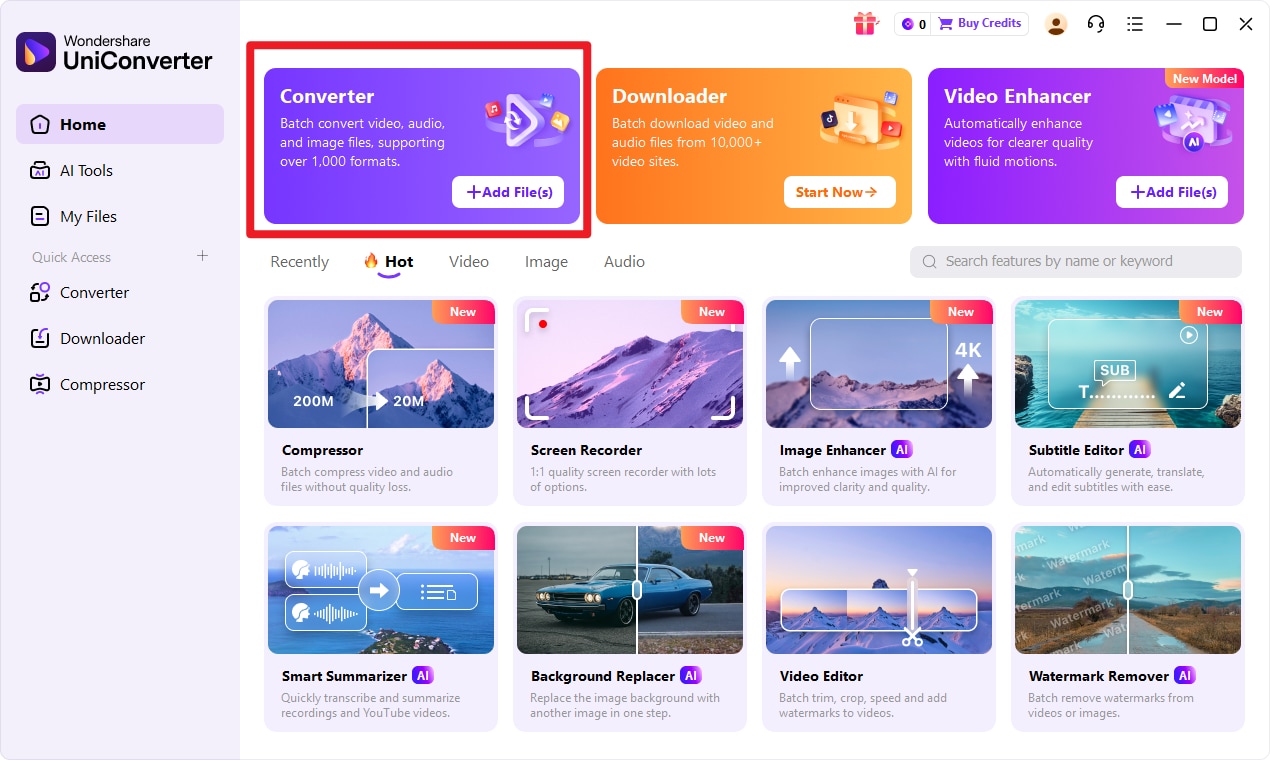
Step 1: Choose Converter in UniConverter
Launch Wondershare UniConverter on your computer. From the main home screen, navigate to the left-side menu and select the Converter tool. This is the primary workspace for all your file format conversions.
Step 2: Add Files to UniConverter
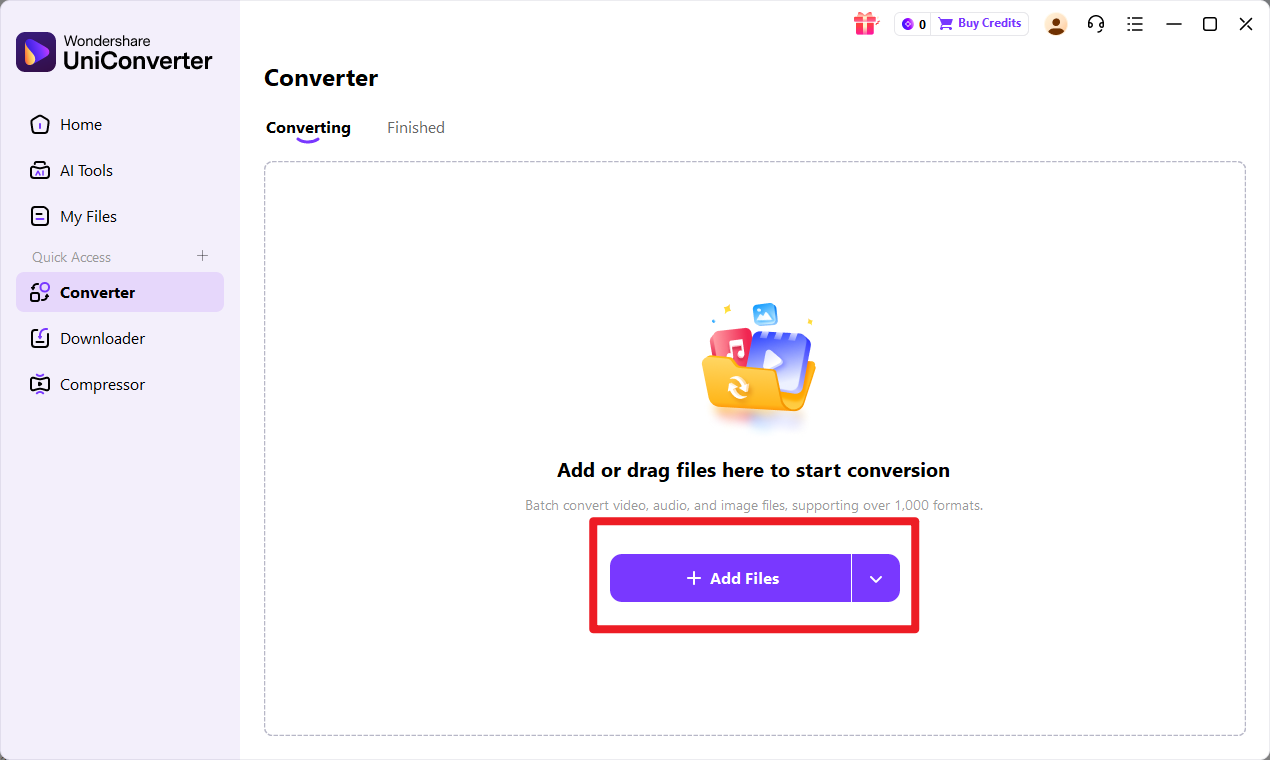
You can add your files in two easy ways. Click the Add Files icon in the upper-left corner to browse your computer for the input format files you want to convert. Alternatively, you can simply drag and drop your files directly from your folder into the center of the UniConverter window. The software supports batch conversions, so feel free to add multiple files at once.
Step 3: Choose Output Format
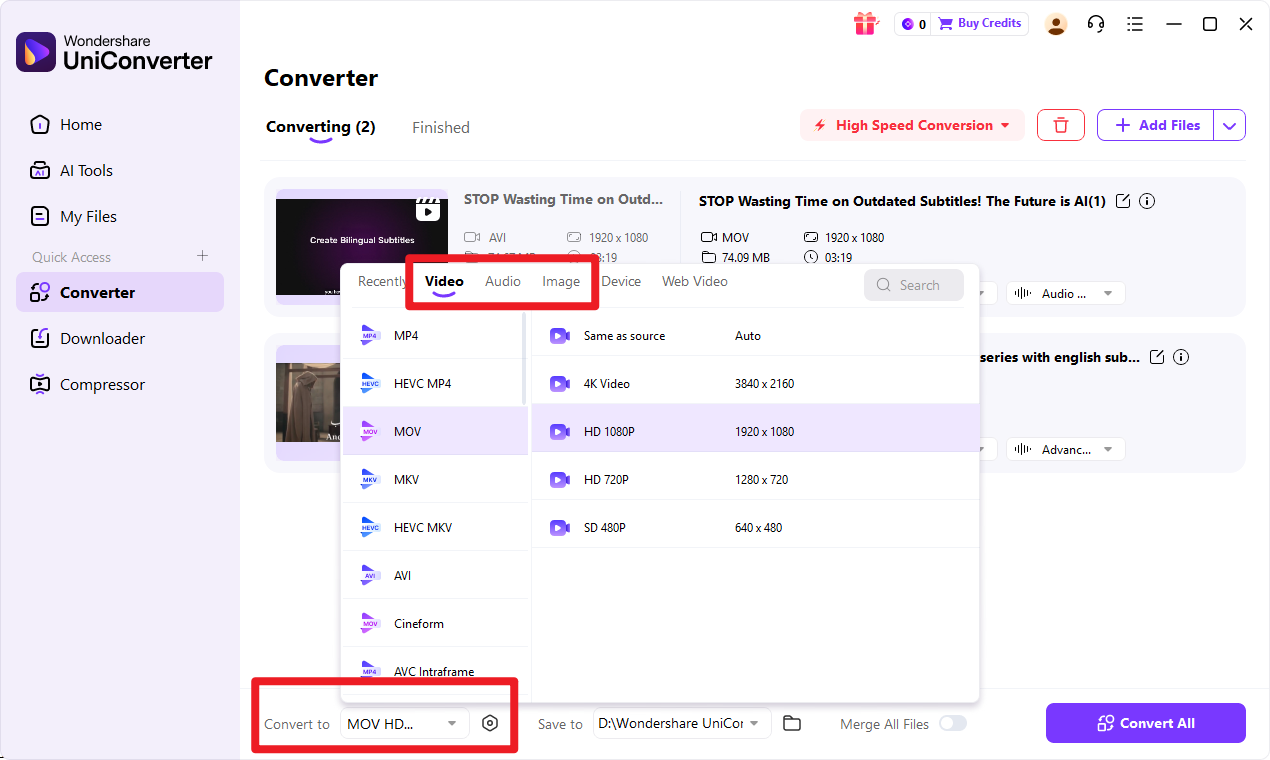
At the bottom of the window, click on the Output Format menu. This will open a new dialog box with a comprehensive list of supported formats. Go to the Video tab and select your desired target format from the list on the left. On the right, you can choose the specific resolution and quality for your output file.
Step 4: Start the Conversion
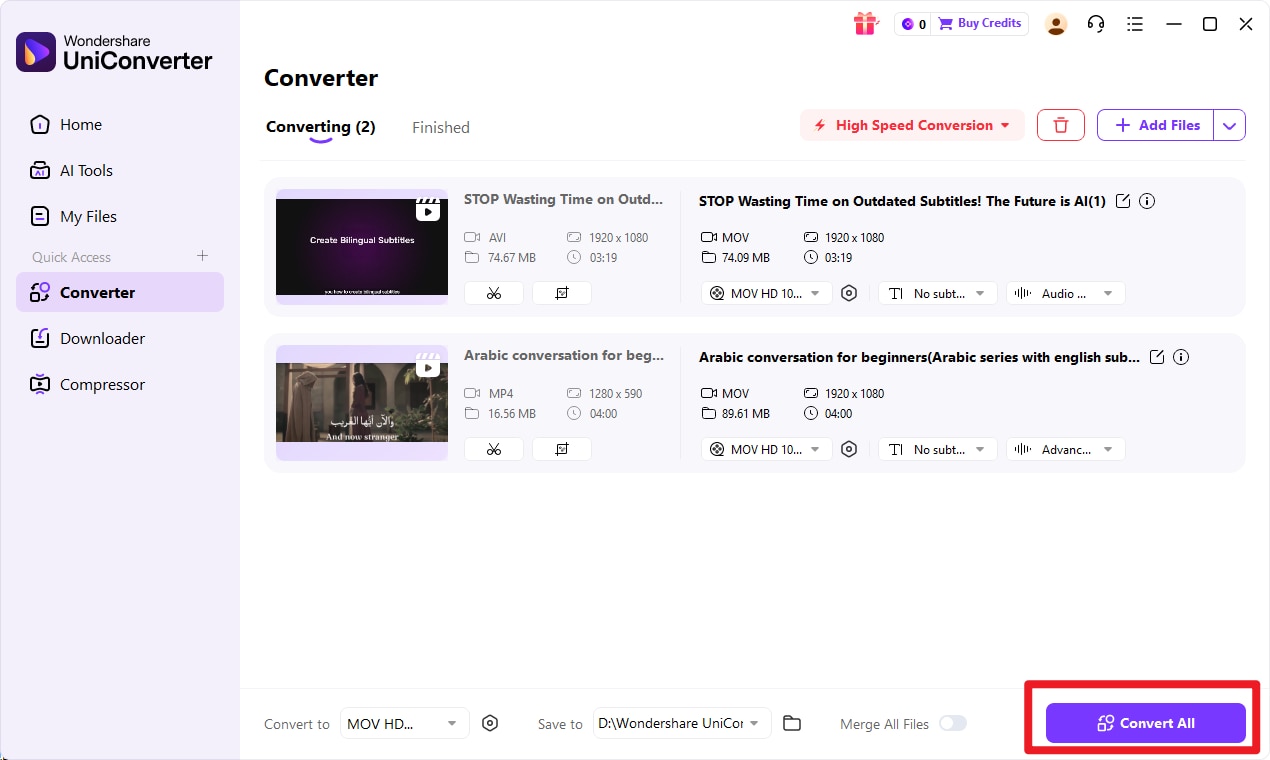
Before starting, you can specify where you want to save the converted files by using the File Location field at the bottom. Once you are satisfied with your settings, click the Start All button in the bottom-right corner. UniConverter will process all your files quickly and efficiently, placing the finished videos in your designated folder.

Your All-in-One Video Solution
Conclusion
The WMV vs SWF comparison is a clear illustration of technology's relentless march forward. WMV, while no longer the most popular format, remains a viable and functional choice for specific Windows-based applications and archival purposes. In stark contrast, SWF is an obsolete format. Its time has passed, and it holds no place in modern content creation due to a lack of support and inherent security risks.
For today's users, the primary challenge involving these formats is not choosing between them for new projects, but rather managing legacy content. The most pressing need is to convert old SWF files into modern, accessible formats like MP4 to preserve valuable animations and videos. For this crucial task, and for any other file format conversion, a versatile and reliable tool is essential. Wondershare UniConverter provides an all-in-one solution, empowering content creators, professionals, and everyday users to effortlessly bridge the gap between old and new formats, ensuring their media is accessible and future-proof.
FAQs
-
1. Is SWF a dead format?
Yes, SWF is definitively a dead or obsolete format. Its developer, Adobe, officially ended all support for the Flash Player on December 31, 2020. Following this, all major web browsers removed the ability to run Flash content. This was done due to long-standing security vulnerabilities and the universal adoption of superior, open-standard technologies like HTML5, which do not require a plugin. -
2. What is the best format to convert old SWF files into?
The universally recommended format for converting old SWF files is MP4 (using the H.264 codec). MP4 offers the best combination of high quality, efficient compression, and universal compatibility. An MP4 file will play on virtually any device, platform, and web browser without any issues. If your entire workflow is strictly Windows-based, WMV is also a viable option, but MP4 provides far greater flexibility. -
3. Why would someone need to convert WMV to SWF today?
This is an extremely niche and rare requirement. The only plausible scenario would be for maintaining or making minor updates to a legacy system that is entirely built on Flash technology. This could be an old internal corporate application or a closed-system kiosk that cannot be easily or cost-effectively modernized. For any new development or public-facing content, converting to SWF is not recommended.
