
- ZMO Overview: ZMO Watermark Remover is an AI-powered online tool for quick, efficient watermark removal from images and videos.
- Core Features: It offers AI detection, user-friendly interface, batch processing, and cloud-based operation for convenience.
- Ideal Users: Best for casual users and e-commerce for simple tasks; less suited for complex, high-fidelity restoration.
- ZMO vs. Alternatives: ZMO is web-based and freemium. UniConverter (desktop) offers superior quality, speed, and security for advanced needs.
- Risks & Pitfalls: Consider data privacy, potential quality loss, intrusive ads, and ethical implications of watermark removal.
- UniConverter Advantage: UniConverter provides robust, high-fidelity, GPU-accelerated watermark removal with enhanced privacy and comprehensive features.
In this article
- Part 1: What is ZMO Watermark Remover?
- Part 2: ZMO Watermark Remover: Core Features, Pros, and Cons
- Part 3: ZMO Watermark Remover: Ideal Users and Use Cases
- Part 4: ZMO Watermark Remover and Alternatives Comparison
- Part 5: Risks and Pitfalls to Consider
- Part 6: How to Use UniConverter to Efficiently Remove Watermarks
- Part 7: Conclusion
- Part 8: FAQs
ZMO Watermark Remover review offers a deep dive into its capabilities and limitations, positioning it against a competitive landscape of digital tools. This comprehensive analysis aims to dissect its core features, evaluate its performance in various scenarios, and highlight its suitability for different user needs. By comparing ZMO with other prominent solutions, we provide an objective perspective to help users make informed decisions regarding their watermark removal requirements. This ZMO Watermark Remover review will cover everything from its AI-powered detection to its batch processing capabilities, ensuring a thorough understanding of its value proposition in the market.
Part 1: What is ZMO Watermark Remover?
ZMO Watermark Remover is an online tool designed to intelligently detect and eliminate watermarks from images and videos. Leveraging advanced AI algorithms, it aims to provide a quick and efficient solution for users looking to clean up their media files. This review will address the core question of whether ZMO Watermark Remover effectively meets the diverse needs of its user base, from casual editors to professionals.
The Growing Need for Watermark Removal Tools
The digital age has amplified the demand for efficient watermark removal tools due to several key factors:
* Content Repurposing: Users often need to repurpose content for different platforms or projects, requiring the removal of obstructive watermarks.
* Copyright Compliance: While not endorsing copyright infringement, legitimate reasons exist for removing watermarks, such as when a user owns the original content but received a watermarked preview.
* Aesthetic Enhancement: Watermarks can detract from the visual appeal of an image or video, prompting users to seek tools that can seamlessly erase them for a cleaner look.
* E-commerce and Marketing: Businesses frequently need to present product images without distracting watermarks to maintain a professional brand image.
Part 2: ZMO Watermark Remover: Core Features, Pros, and Cons
ZMO Watermark Remover stands out with its focus on simplicity and AI-driven efficiency for media cleanup. Its primary function is to intelligently identify and remove various types of watermarks from both images and videos, making it accessible to a broad user base. The tool emphasizes a streamlined workflow, allowing users to achieve clean results without extensive technical knowledge.
Core Features:
* AI-powered intelligent detection and removal of various watermark types.
* User-friendly interface for quick and efficient processing.
* Batch processing capability for multiple images/videos.
* Support for a wide range of image and video formats.
* Cloud-based operation, requiring no software installation.
Pros:
* AI-powered intelligent detection and removal of various watermark types: This significantly enhances accuracy and reduces manual effort.
* User-friendly interface for quick and efficient processing: Its intuitive design makes it accessible even for beginners.
* Batch processing capability for multiple images/videos: A major time-saver for users with large volumes of media.
Cons:
* Limited advanced editing features beyond watermark removal: Users looking for comprehensive image/video editing will need additional software.
* Potential for quality degradation on highly complex watermarks or low-resolution media: The AI might struggle with intricate patterns or pixelated inputs.
Part 3: ZMO Watermark Remover: Ideal Users and Use Cases
ZMO Watermark Remover is ideally suited for individuals and small businesses seeking a straightforward and efficient solution for removing watermarks without delving into complex editing software. Its ease of use makes it particularly appealing to those who prioritize speed and simplicity over advanced customization.
Best Use Case: Removing Logos from Product Photos for E-commerce
E-commerce businesses frequently acquire product images from suppliers that often include watermarks or logos. ZMO Watermark Remover offers an excellent solution for quickly cleaning these images, ensuring a consistent and professional look across their online stores. The batch processing feature is particularly beneficial here, allowing for the rapid preparation of numerous product shots. This helps maintain brand identity and improves the overall shopping experience for customers.
Limited Use Case: Restoring Heavily Watermarked Archival Footage
While ZMO can remove watermarks, its capabilities are stretched when dealing with heavily watermarked archival footage, especially if the watermarks are deeply embedded, semi-transparent, or cover significant portions of the visual content. In such cases, the AI might struggle to accurately reconstruct the underlying image or video, potentially leading to noticeable artifacts, blurriness, or an unnatural appearance. For high-fidelity restoration of complex archival media, more specialized, manual editing tools and techniques are often required to achieve satisfactory results.
Part 4: ZMO Watermark Remover and Alternatives Comparison
This section provides a comparative analysis of ZMO Watermark Remover against its key competitors, highlighting their strengths and weaknesses across critical features.
ZMO Watermark Remover & Competitors: Feature Comparison
| Feature/Tool | ZMO Watermark Remover | UniConverter | HitPaw Watermark Remover | Apowersoft Watermark Remover |
| AI Detection | Yes | Yes | Yes | Yes |
| Batch Processing | Yes | Yes | Yes | Yes |
| Output Quality | Good | Very Good | Good | Good |
| Price Model | Freemium | Subscription | Subscription | Subscription |
| Platform | Web-based | Desktop | Desktop | Desktop/Web |
| Processing Speed | Fast | Very Fast (GPU Accelerated) | Fast | Moderate |
| Ease of Use | High | High | High | Moderate |
| Customer Support | 24/7 Live Chat & Email | |||
| Security | Standard | High (Local Processing) | Standard | Standard |
Key Differentiators: What Sets ZMO Apart (and Where It Falls Short)
ZMO Watermark Remover's primary differentiator is its web-based, AI-driven approach, offering significant convenience for quick, on-the-go watermark removal without software installation. Its freemium model also makes it accessible for casual users. However, it falls short in output quality compared to desktop applications like UniConverter, which often leverage local processing power for superior results and offer a broader suite of editing tools. While ZMO is excellent for simple, straightforward tasks, UniConverter excels in scenarios demanding higher fidelity, faster processing (due to GPU acceleration), and a more comprehensive feature set for professional users. HitPaw and Apowersoft offer similar desktop-based advantages but may vary in their specific AI capabilities and pricing structures.
Part 5: Risks and Pitfalls to Consider
While online watermark removal tools like ZMO offer convenience, users should be aware of several potential risks and pitfalls, especially concerning data privacy, output quality, and ethical considerations.
Data Privacy Concerns with Online Tools
Uploading sensitive or personal images and videos to online platforms for watermark removal raises significant data privacy concerns. Users should scrutinize the service's privacy policy to understand how their uploaded data is stored, processed, and whether it's shared with third parties. There's always a risk of data breaches or unauthorized access to personal media files when relying on cloud-based services.
Intrusive Ads and Upselling Tactics
Many freemium online tools, including some watermark removers, often employ intrusive advertising or aggressive upselling tactics. Users might encounter numerous pop-up ads, banners, or constant prompts to upgrade to a paid version, which can significantly detract from the user experience and slow down the workflow. These tactics can be frustrating and may lead users to accidentally click on malicious links.
Potential for Output Quality Loss
Despite AI advancements, online watermark removers can sometimes lead to a noticeable degradation in the quality of the output image or video. This is particularly true for complex watermarks, low-resolution source material, or when the watermark covers critical details. The AI might struggle to accurately reconstruct the underlying content, resulting in blurriness, artifacts, or an unnatural appearance, making the removed area look edited or patched.
Ethical Implications of Watermark Removal
Removing watermarks, especially from content that does not belong to the user, carries significant ethical and legal implications. Watermarks are often used to protect intellectual property and indicate ownership. Unauthorized removal can be considered copyright infringement. Users must ensure they have the legal right or permission to remove watermarks from any content they process to avoid potential legal repercussions.
Part 6: How to Use UniConverter to Efficiently Remove Watermarks
When other tools fall short with inconsistent results, lack of batch processing, or poor quality, UniConverter emerges as a robust solution. It bypasses common issues like intrusive ads and quality degradation, offering a stable, high-fidelity, and GPU-accelerated experience for watermark removal. UniConverter supports a vast array of formats, ensures lossless output, and excels in batch processing, making it an all-in-one ultimate solution for both images and videos. Its desktop-based operation also provides enhanced data privacy and security, as processing occurs locally without uploading sensitive files to the cloud. For those looking to remove watermarks from images or remove watermarks from videos, UniConverter offers a comprehensive toolkit. You can also explore its capabilities as a watermark editor for more advanced tasks.
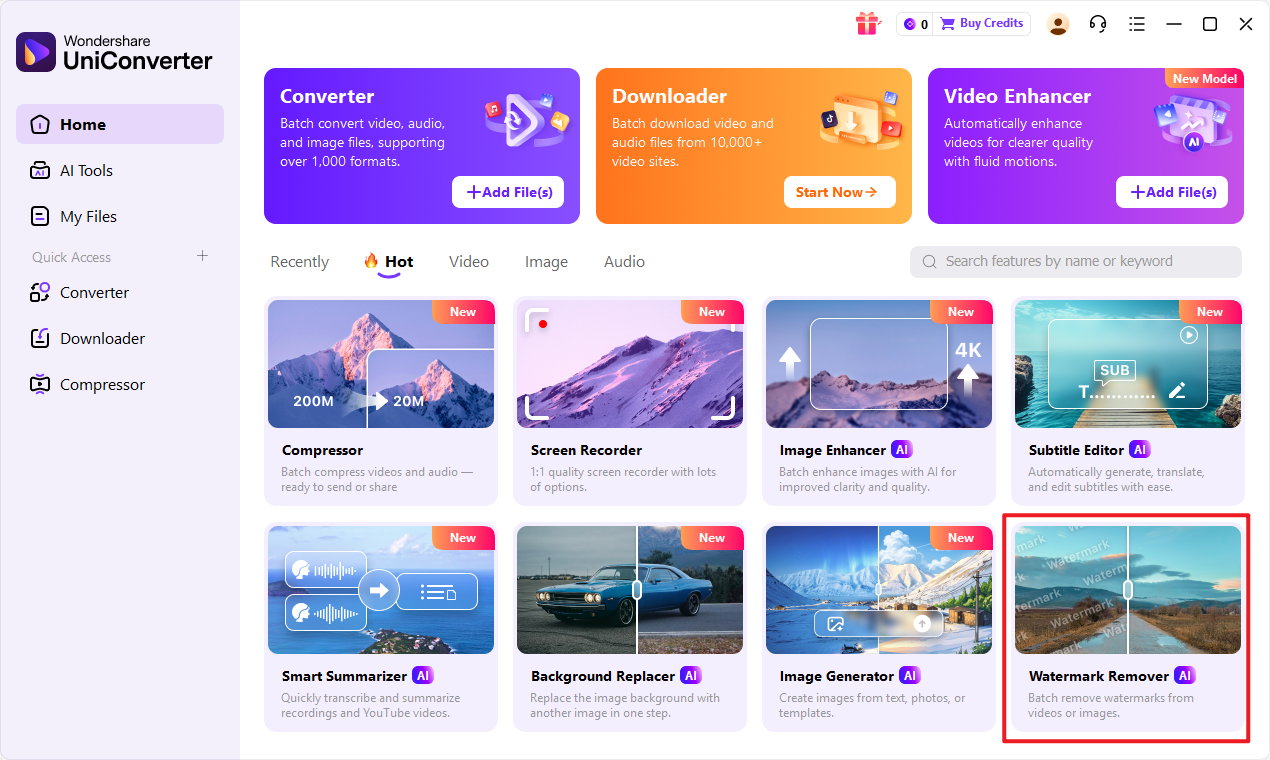
Step 1: Open UniConverter and Choose Watermark Remover
Launch UniConverter on your desktop. From the main interface, navigate to the "Toolbox" section and select the "Watermark Remover" feature.
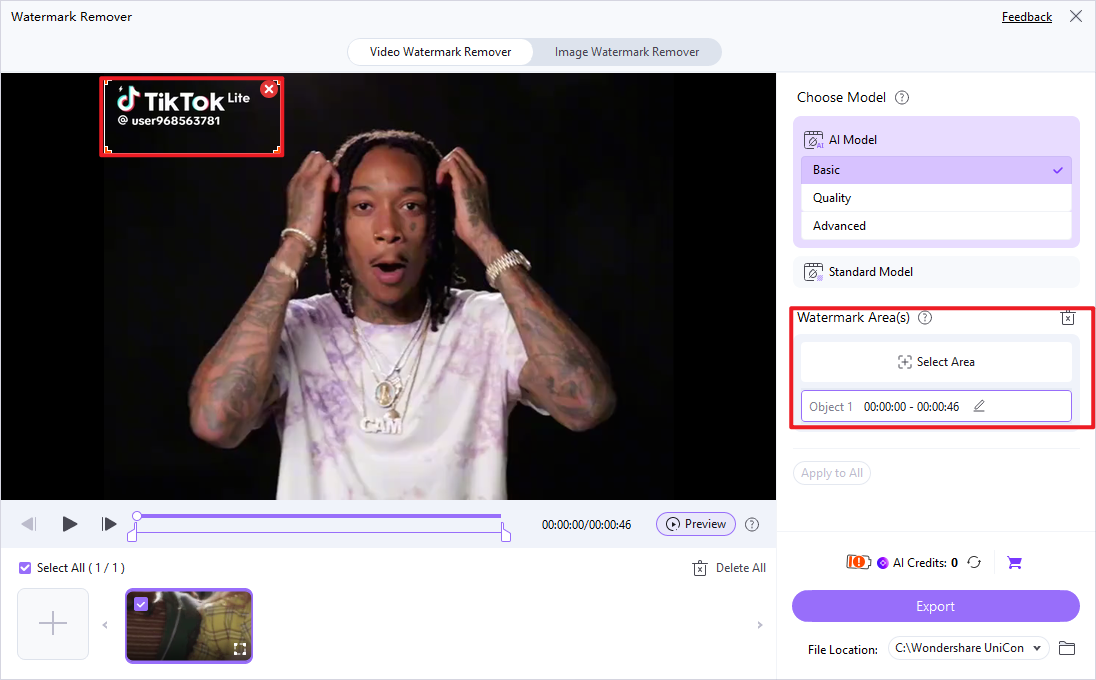
Step 2: Upload the Videos
Click on the "Add Files" button or drag and drop your video files into the UniConverter interface. You can add multiple videos for batch processing.
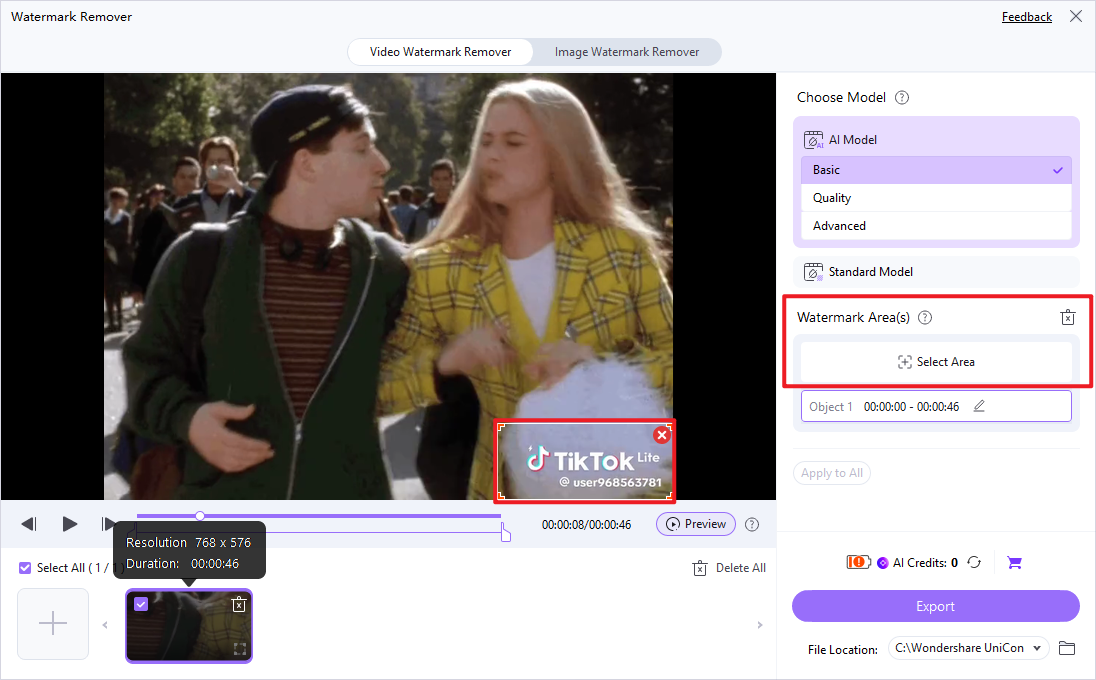
Step 3: Choose Selected Area
Once your video is loaded, a preview window will appear. Use your mouse to draw a selection box around the watermark you wish to remove. UniConverter's intelligent algorithm will then analyze the area.
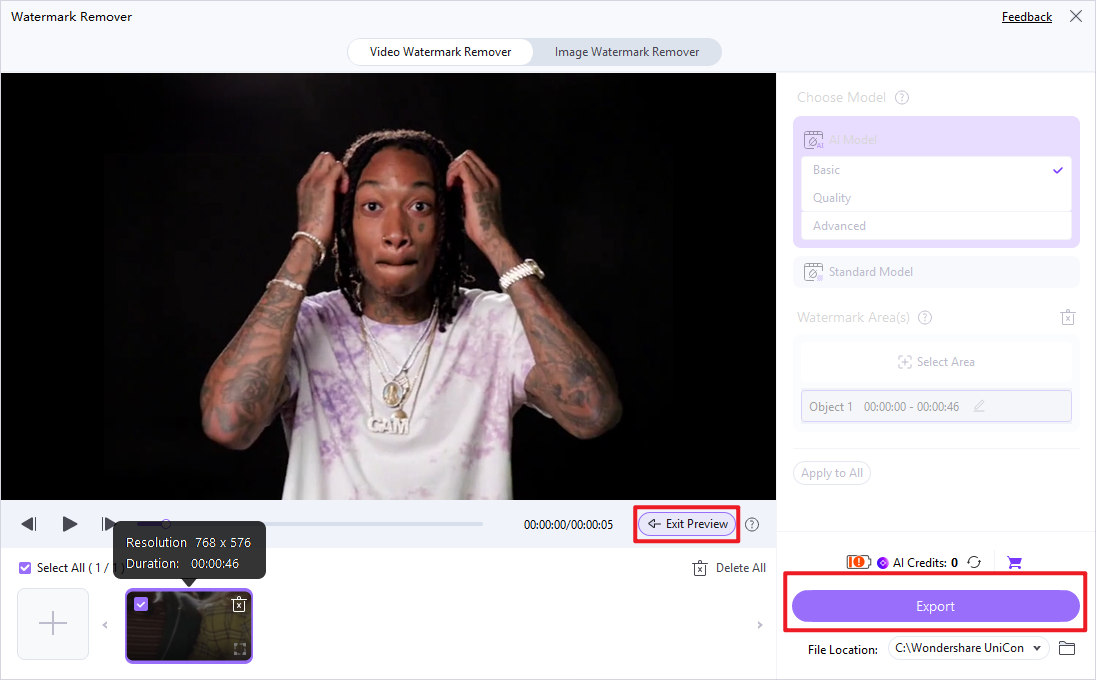
Step 4: Preview and Save the Video
After selecting the watermark area, click "Preview" to see the result. If satisfied, choose your desired output format and destination folder, then click "Remove Watermark" to save your cleaned video.

Seeking a ZMO Watermark Remover Alternative?
Part 7: Conclusion
The ZMO Watermark Remover review highlights its utility as a convenient, AI-powered online tool for quick watermark removal, particularly beneficial for casual users and e-commerce product photo clean-up. Its web-based platform and batch processing capabilities offer significant ease of use. However, for professionals demanding high fidelity, comprehensive editing features, and enhanced data security, desktop alternatives like UniConverter present a more robust solution. While ZMO excels in simplicity and accessibility, it may fall short in handling complex watermarks or preserving original quality in challenging scenarios. Users must also be mindful of data privacy and ethical implications when using any watermark removal tool. Ultimately, the choice depends on the user's specific needs, technical proficiency, and the importance of output quality versus convenience and cost.
Part 8: FAQs
-
1. Is ZMO Watermark Remover completely free to use?
ZMO Watermark Remover operates on a freemium model. While it offers some free functionalities, advanced features, higher resolution outputs, or batch processing might require a paid subscription or credits.
-
2. Can ZMO Watermark Remover remove watermarks from videos?
Yes, ZMO Watermark Remover is designed to remove watermarks from both images and videos, leveraging its AI capabilities to detect and erase them.
-
3. Does ZMO Watermark Remover compromise image quality?
There is a potential for quality degradation, especially with complex watermarks or low-resolution media. While ZMO's AI aims for seamless removal, artifacts or blurriness can sometimes occur.
-
4. Are there any legal implications of removing watermarks?
Yes, removing watermarks without proper authorization can lead to legal issues, including copyright infringement. Watermarks often signify intellectual property ownership, and their unauthorized removal is generally unethical and potentially illegal.
-
5. What is the best alternative to ZMO Watermark Remover for advanced users?
For advanced users requiring high fidelity, comprehensive features, faster processing, and enhanced data security, UniConverter is often considered a superior alternative due to its desktop-based operation, GPU acceleration, and broader suite of editing tools.
