
- SnapEdit Review: SnapEdit offers easy AI-powered watermark removal for casual users.
- Core Features: Enjoy intuitive design, AI object removal, and multi-platform access (web, mobile).
- Limitations: May degrade quality on complex backgrounds; premium features are paywalled.
- Best Use: Ideal for quickly removing simple watermarks from personal photos.
- Comparative Advantage: UniConverter excels for professional, high-quality, batch watermark removal.
- Risks: Be aware of privacy concerns, copyright infringement, and potential image quality loss.
- Decision: Choose SnapEdit for quick, casual edits; UniConverter for professional, secure, and high-volume tasks.
In this article
- Part 1: What is SnapEdit Watermark Remover?
- Part 2: SnapEdit Watermark Remover: Core Features, Pros, and Cons
- Part 3: Who is SnapEdit Watermark Remover For? Use Cases and Limitations
- Part 4: SnapEdit Watermark Remover and Alternatives: A Comparative Analysis
- Part 5: Risks and Pitfalls When Using Watermark Removers
- Part 6: How to Use UniConverter for Professional Watermark Removal
- Part 7: Conclusion
- Part 8: FAQs
SnapEdit Watermark Remover: A Comprehensive Review and Comparison
In the digital age, where visual content reigns supreme, the need to modify and enhance images has become ubiquitous. From casual social media users to professional content creators, everyone occasionally encounters watermarks that obscure desired elements or detract from an image's aesthetic appeal. This SnapEdit Watermark Remover review delves into a popular AI-powered tool designed to address this common pain point, offering a detailed analysis of its features, performance, and suitability for various users. We will explore its core functionalities, weigh its advantages and disadvantages, and critically compare it against leading competitors to help you make an informed decision about your watermark removal needs.
Part 1: What is SnapEdit Watermark Remover?
SnapEdit Watermark Remover emerges as a user-friendly, AI-driven solution specifically engineered to eliminate unwanted watermarks, objects, and imperfections from images. Leveraging advanced artificial intelligence algorithms, it aims to seamlessly blend removed areas with the surrounding pixels, striving for a natural and unblemished result. This tool has gained traction for its accessibility, offering both web-based and mobile applications, making it convenient for on-the-go edits. Our comprehensive review will address the core question: How effectively does SnapEdit meet the growing demand for efficient and high-quality watermark removal across diverse user needs and scenarios?
The Growing Need for Efficient Watermark Removal
* Protecting Personal Privacy: Users often need to remove watermarks from personal photos to share them without revealing sensitive information or branding.
* Enhancing Visual Content: Content creators and marketers frequently require clean images for presentations, websites, and social media to maintain a professional aesthetic.
* Restoring Old Photos: Digitizing and restoring old photographs often involves removing timestamps, logos, or other unwanted elements that have accumulated over time.
* Streamlining Workflow: Efficient watermark removal tools save valuable time for individuals and businesses by automating a task that would otherwise require manual, time-consuming editing.
Part 2: SnapEdit Watermark Remover: Core Features, Pros, and Cons
SnapEdit Watermark Remover distinguishes itself with its intuitive design and AI-driven capabilities, making the often-complex task of image manipulation accessible to a broader audience. Its core strength lies in its ability to intelligently detect and remove various types of watermarks, from simple text overlays to more intricate logos, with minimal user input. The tool supports multiple image formats, ensuring compatibility with most common photo files. Furthermore, its cross-platform availability means users can seamlessly transition between devices, maintaining workflow continuity.
Pros:
* Intuitive User Interface for Quick Edits: The clean and straightforward design allows users to quickly understand and utilize the tool without a steep learning curve.
* AI-Powered Smart Object Removal: The underlying AI effectively identifies and removes watermarks, often filling in the background intelligently.
* Multi-Platform Availability (Web, Mobile): Accessible on web browsers, iOS, and Android, offering flexibility for users on different devices.
Cons:
* Occasional Quality Degradation on Complex Backgrounds: In scenarios with intricate patterns or highly textured backgrounds, the AI may struggle, leading to noticeable artifacts or blurring.
* Limited Free Usage with Premium Features Paywall: While offering a free tier, advanced features and higher-resolution exports are often locked behind a subscription.
Part 3: Who is SnapEdit Watermark Remover For? Use Cases and Limitations
SnapEdit Watermark Remover is primarily designed for individuals seeking a quick and easy solution for basic watermark removal. Its user-friendly interface and AI-powered automation make it ideal for those without extensive photo editing experience. The tool excels in scenarios where the watermark is relatively simple and the background is not overly complex, providing satisfactory results for casual use. However, its limitations become apparent when precision and pixel-perfect restoration are paramount, making it less suitable for professional-grade tasks.
Best Use Case: Casual Users Removing Simple Watermarks from Personal Photos
Imagine a scenario where you've downloaded a stock image for a personal project, but it has a small, unobtrusive watermark. SnapEdit allows you to quickly upload the image, highlight the watermark, and remove it within seconds, making the image suitable for your personal blog or social media post without requiring advanced software or skills.
Limited Use Case: Professional Photographers Requiring Pixel-Perfect Restoration
Consider a professional photographer who needs to remove a complex watermark from a high-resolution client photo with intricate details and subtle color gradients. SnapEdit might struggle to achieve the flawless, undetectable removal required, potentially introducing slight blurring or color shifts that would be unacceptable for professional deliverables. In such cases, more specialized and manual editing tools are often necessary.
Part 4: SnapEdit Watermark Remover and Alternatives: A Comparative Analysis
When evaluating watermark removal tools, it's crucial to consider various factors beyond just the core functionality. SnapEdit Watermark Remover offers a compelling package, particularly for its ease of use and AI capabilities. However, other tools like UniConverter, Photopea, and Inpaint present different strengths, catering to a broader spectrum of user needs and technical proficiencies. Understanding these distinctions is key to selecting the most appropriate solution.
| Feature/Product | SnapEdit Watermark Remover | UniConverter | Photopea | Inpaint |
| AI Accuracy | High | High | Medium | High |
| Ease of Use | Excellent | Excellent | Good | Good |
| Output Quality | Good | Excellent | Good | Excellent |
| Pricing Model | Freemium | One-time Purchase/Subscription | Free (Ads)/Subscription | One-time Purchase |
| Platform Support | Web, iOS, Android | Desktop (Windows, macOS) | Web | Desktop (Windows, macOS) |
| Processing Speed | Fast | Very Fast | Moderate | Fast |
| Batch Processing | Limited (Premium) | Yes | No | Yes |
| Customer Support | Email, Live Chat, Knowledge Base | Forum | ||
| Security | Standard Encryption | High (Local Processing) | Standard Encryption | High (Local Processing) |
Key Differentiators: AI-Powered Simplicity vs. Advanced Control
SnapEdit excels in its AI-powered simplicity, making it incredibly easy for anyone to remove watermarks with minimal effort. Its multi-platform support further enhances accessibility. UniConverter, on the other hand, stands out for its robust desktop performance, superior output quality, and comprehensive feature set, including batch processing and a focus on local processing for enhanced security, making it ideal for users who prioritize quality and efficiency. Photopea offers a powerful web-based alternative, mimicking Photoshop's capabilities, which is excellent for those needing more control without software installation, though it has a steeper learning curve. Inpaint provides a dedicated and highly effective solution for object removal, often yielding excellent results, but is primarily a desktop application. For quick, casual edits, SnapEdit is a strong contender, while for professional-grade, high-volume tasks, UniConverter or Inpaint might be more suitable.
Part 5: Risks and Pitfalls When Using Watermark Removers
While watermark removers offer convenience, their use, especially with free or less reputable tools, comes with inherent risks that users should be aware of. These pitfalls can range from privacy breaches to legal complications and compromised image quality, ultimately undermining the intended benefit.
Data Privacy Concerns
Many online watermark removers require users to upload their images to a server for processing. This raises significant data privacy concerns, as the uploaded images could potentially be accessed, stored, or even misused by the service provider. Users should always review the privacy policy of any tool they use to understand how their data is handled.
Potential for Copyright Infringement
Removing a watermark from an image, particularly if it's a copyrighted work, can lead to legal issues related to copyright infringement. Watermarks are often placed to protect intellectual property, and their unauthorized removal can be a violation of the creator's rights. Users must ensure they have the legal right or permission to modify the image.
Unwanted Advertisements and Pop-ups
Many free online watermark removers rely on advertising revenue. This often translates to a user experience riddled with intrusive ads, pop-ups, and redirects, which can be frustrating and even lead to accidental clicks on malicious content.
Image Quality Compromises
While AI has advanced significantly, not all watermark removers deliver perfect results. Complex watermarks or intricate backgrounds can lead to noticeable quality degradation, such as blurring, pixelation, or unnatural color shifts in the affected areas. This compromises the overall aesthetic and usability of the image.
Subscription Traps and Hidden Costs
Some "free" watermark removers may entice users with basic functionality but then gate crucial features, higher resolution exports, or unlimited usage behind a premium subscription. Users might find themselves unexpectedly paying for a service they initially believed was free, or facing recurring charges they didn't fully understand.
Part 6: How to Use UniConverter for Professional Watermark Removal
When other tools fall short in batch processing, stable watermark removal, or maintaining image quality, UniConverter emerges as a robust and reliable alternative. It offers a comprehensive solution for various media tasks, including efficient and high-quality watermark removal, free from ads and with excellent format support. Leveraging GPU acceleration, UniConverter ensures fast and stable processing, preserving the original quality of your images and videos. It's an all-in-one ultimate solution for your media conversion and editing needs.
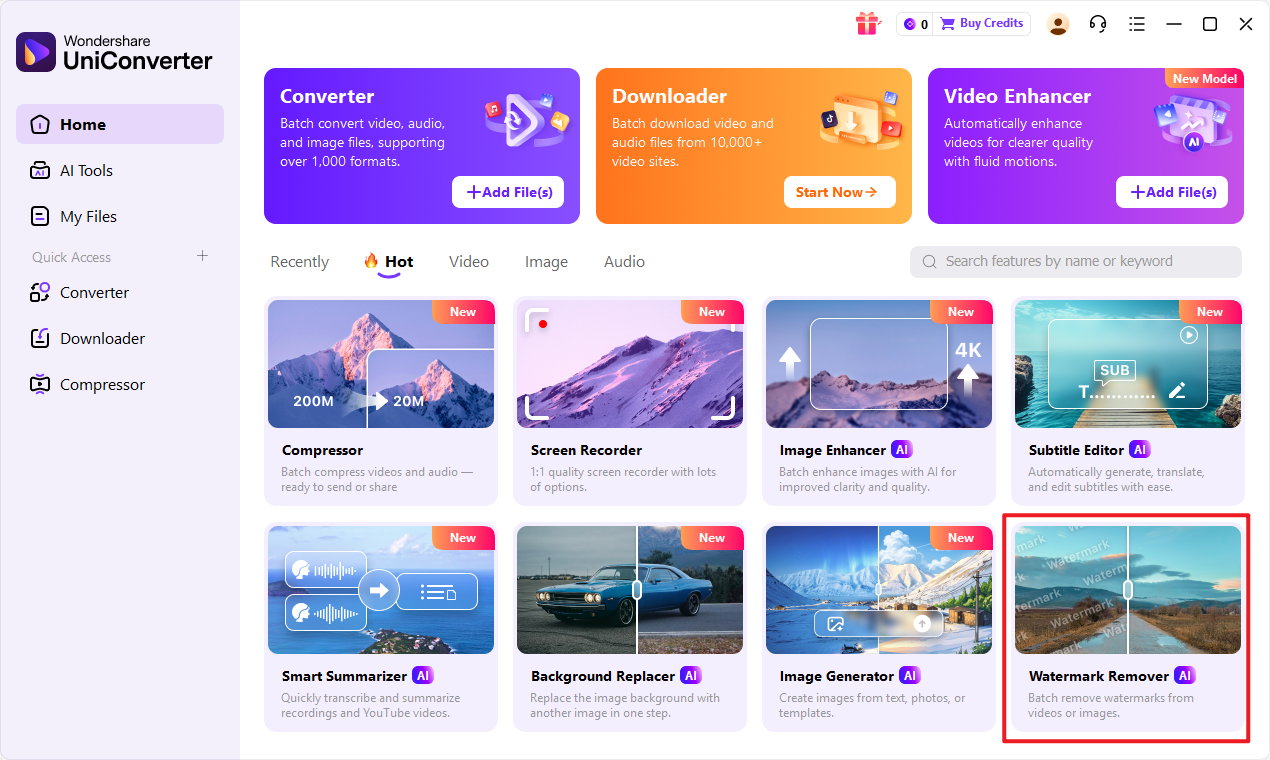
Step 1: Open UniConverter and Choose Watermark Remover
Launch Wondershare UniConverter on your computer. From the main interface, navigate to the "Toolbox" section and select the "Watermark Editor" feature. This will open a dedicated window for watermark management.
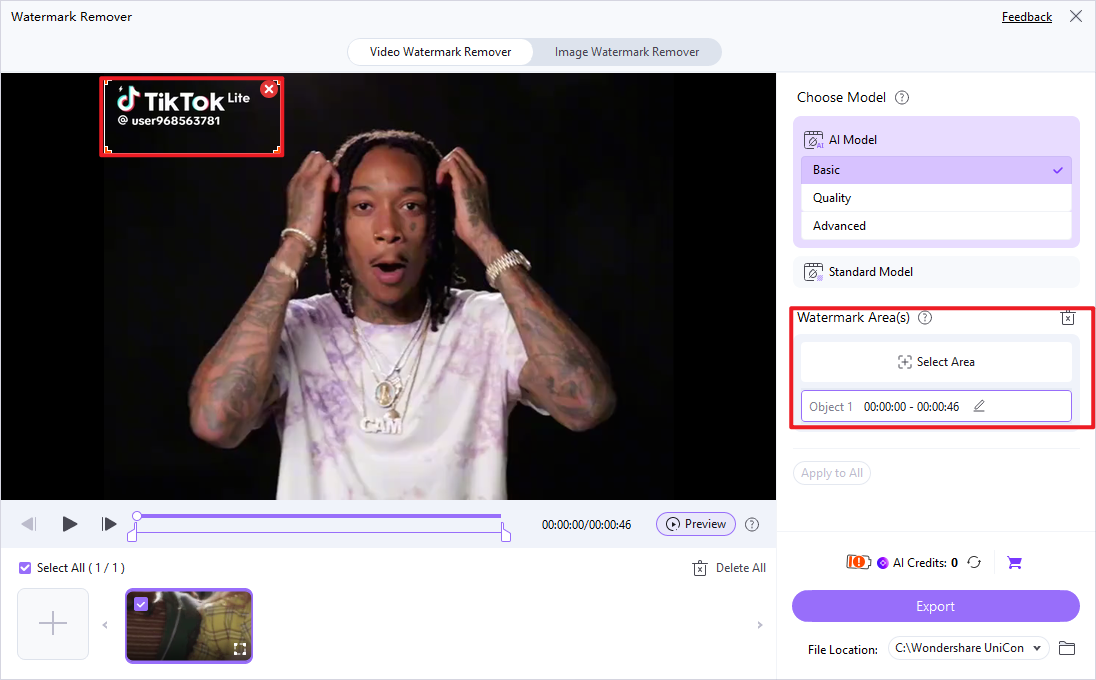
Step 2: Upload the Videos
Click on the "Add Files" button or simply drag and drop the image or video file you wish to edit into the UniConverter interface. You can add multiple files for batch processing if needed.
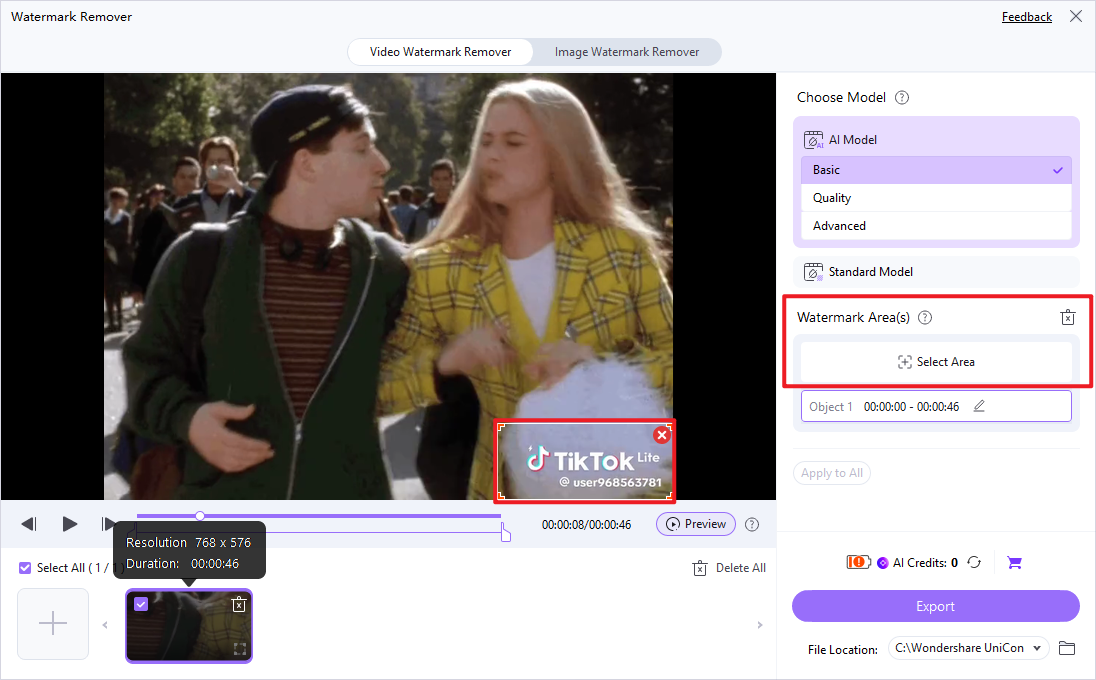
Step 3: Choose Selected Area
Once your file is loaded, select the "Remove Watermark" tab. A selection box will appear on your image/video preview. Drag and resize this box to precisely cover the watermark you want to remove. UniConverter's intelligent algorithms will then analyze the selected area.
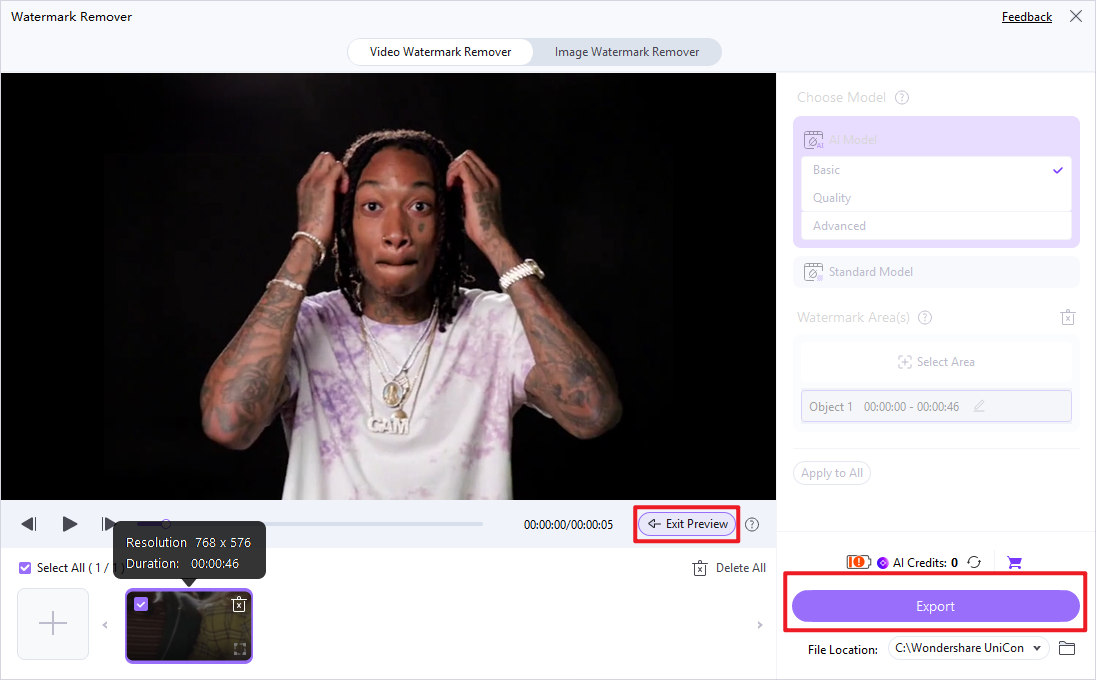
Step 4: Preview and Save the Video
After selecting the watermark area, click the "Remove Watermark" button. UniConverter will process the file. You can then preview the result to ensure satisfaction. Once satisfied, choose your desired output format and destination folder, then click "Start All" to save your clean file.

Need a SnapEdit Watermark Remover Alternative?
Part 7: Conclusion
In conclusion, the SnapEdit Watermark Remover review reveals it to be a highly accessible and effective tool for casual users seeking quick and straightforward watermark removal. Its AI-powered simplicity and multi-platform availability make it a convenient choice for personal photos and simple edits. However, for professional photographers, graphic designers, or anyone requiring pixel-perfect restoration, batch processing, or guaranteed output quality, tools like UniConverter offer a more robust and reliable solution. UniConverter stands out with its advanced features, superior output quality, and commitment to data security through local processing, making it ideal for demanding tasks. Ultimately, the best choice depends on your specific needs, technical proficiency, and the importance of image quality and data privacy. Always consider the legal and ethical implications of removing watermarks and prioritize tools that safeguard your data.
Part 8: FAQs
-
1. Is it legal to remove watermarks from images?
It depends on the image's copyright status and your intended use. Removing watermarks from copyrighted images without permission can be illegal. It's generally legal for personal images or those you have the rights to.
-
2. Can SnapEdit remove watermarks from videos?
No, SnapEdit Watermark Remover is primarily designed for images. For video watermark removal, you would need a dedicated video editing tool like UniConverter.
-
3. Does SnapEdit offer a free trial for its premium features?
SnapEdit typically offers a freemium model, allowing limited free usage with basic features. Access to premium features, higher resolution exports, or unlimited usage usually requires a paid subscription.
-
4. What are the common reasons for image quality loss after watermark removal?
Image quality loss can occur due to complex backgrounds, intricate watermark designs, or the limitations of the AI algorithm. The tool might struggle to accurately reconstruct the underlying pixels, leading to blurring, artifacts, or color inconsistencies.
-
5. How does AI-powered watermark removal work?
AI-powered watermark removal tools use machine learning algorithms trained on vast datasets of images. They analyze the pixels surrounding the watermark, identify patterns, and then intelligently "fill in" the marked area with generated pixels that blend seamlessly with the background, effectively making the watermark disappear.
