
- Pixlr Overview: Pixlr Watermark Remover is an online, browser-based tool for quick image watermark removal.
- Pros & Cons: Easy to use and accessible, but struggles with complex watermarks and may degrade quality.
- Ideal User: Best for casual users removing simple watermarks from personal photos, not professional restoration.
- Comparative Value: Pixlr offers accessibility; UniConverter provides superior quality and advanced features for professionals.
- Online Risks: Be aware of data privacy, intrusive ads, potential quality loss, and ethical concerns with online tools.
- UniConverter Advantage: UniConverter offers comprehensive, high-quality, offline watermark removal for images and videos.
In this article
- Part 1: What is Pixlr Watermark Remover?
- Part 2: Pixlr Watermark Remover: Core Features, Pros, and Cons
- Part 3: Who is Pixlr Watermark Remover For? (Use Cases)
- Part 4: Pixlr Watermark Remover & Alternatives: A Comparative Look
- Part 5: Risks and Pitfalls When Using Online Watermark Removers
- Part 6: How to Use UniConverter for Comprehensive Watermark Removal
- Part 7: Conclusion
- Part 8: FAQs
Pixlr, a long-standing name in online photo editing, offers a Pixlr Watermark Remover tool designed to help users clean up their images. This Pixlr Watermark Remover review will delve into its capabilities, comparing it against other popular solutions in the market. We'll explore its core features, identify its ideal use cases, and highlight potential pitfalls of using online watermark removal services. By the end of this comprehensive analysis, you'll have a clear understanding of whether Pixlr's offering is the right fit for your needs, or if a more robust alternative like UniConverter would be a better choice for professional-grade results.
Part 1: What is Pixlr Watermark Remover?
Pixlr Watermark Remover is an online, browser-based tool that allows users to remove unwanted watermarks, logos, or other superimposed elements from their digital images. As part of the broader Pixlr suite of photo editing applications, it leverages AI and image processing algorithms to detect and erase watermarks, aiming to restore the underlying image content. Its primary appeal lies in its accessibility and ease of use, requiring no software installation and being available directly through a web browser. This review will critically assess its effectiveness, particularly in comparison to dedicated desktop software and other online alternatives, to determine its true value proposition for various user needs.
The Rise of Online Image Editing Tools
The proliferation of online image editing tools has transformed how individuals and professionals approach photo manipulation. This trend is driven by several key factors:
* Accessibility: Online tools are available from any device with an internet connection, eliminating the need for expensive software or powerful hardware.
* Ease of Use: Many online editors feature intuitive interfaces, making complex tasks like watermark removal accessible to users with minimal technical skills.
* Cost-Effectiveness: A significant number of these tools offer free tiers or affordable subscription models, democratizing access to image editing capabilities.
* Cloud Integration: Seamless integration with cloud storage services allows for easy access and sharing of edited images.
Part 2: Pixlr Watermark Remover: Core Features, Pros, and Cons
Pixlr Watermark Remover provides a straightforward solution for cleaning up images. Its core capability revolves around intelligently identifying and removing watermarks, often using content-aware fill techniques. Users simply upload their image, select the watermarked area, and the tool attempts to erase it. It supports various image formats, making it versatile for common use cases. While it excels in simplicity, its performance can vary depending on the complexity and size of the watermark.
Pros:
* Intuitive Interface for Quick Edits: The user interface is clean and easy to navigate, allowing for rapid watermark removal.
* Browser-Based Accessibility from Anywhere: No downloads or installations are required, making it highly convenient.
* Free Tier for Basic Watermark Removal: Users can access fundamental watermark removal features without any cost.
Cons:
* Limited Advanced Features for Complex Watermarks: Struggles with intricate or highly integrated watermarks.
* Potential Quality Degradation on Heavily Watermarked Images: May introduce artifacts or blurriness when dealing with challenging watermarks.
Part 3: Who is Pixlr Watermark Remover For? (Use Cases)
Pixlr Watermark Remover is designed for users who prioritize convenience and simplicity over advanced features and absolute perfection. Its browser-based nature and intuitive interface make it an excellent choice for quick, on-the-go edits. However, its limitations become apparent when dealing with more demanding scenarios.
Best Use Case: Casual Users Removing Simple Watermarks from Personal Photos
For individuals looking to remove a small, unobtrusive watermark from a personal photo—perhaps a timestamp or a small logo from a stock image preview—Pixlr Watermark Remover is an ideal solution. It's perfect for quick fixes for social media posts or personal albums where minor imperfections are acceptable. The free tier makes it highly attractive for occasional use without financial commitment.
Limited Use Case: Professional Photographers Needing Flawless Restoration
Professional photographers, graphic designers, or anyone requiring pristine image quality for commercial or high-stakes projects will find Pixlr Watermark Remover insufficient. Its algorithms may struggle with complex watermarks that blend seamlessly with the image, leading to noticeable artifacts, blurring, or an unnatural appearance. For flawless restoration, dedicated desktop software with more sophisticated algorithms and manual control is essential.
Part 4: Pixlr Watermark Remover & Alternatives: A Comparative Look
| Feature/Tool | Pixlr Watermark Remover | UniConverter | Fotor | Watermark Remover.io |
| Ease of Use | High | Medium | High | High |
| Output Quality | Good | Excellent | Good | Fair |
| Price | Free/Premium | Premium | Free/Premium | Free |
| Advanced Features | Limited | Extensive | Moderate | Limited |
| Offline Access | No | Yes | No | No |
Pixlr Watermark Remover excels in its ease of use and accessibility, making it a strong contender for quick, simple tasks. However, for superior output quality and extensive advanced features, UniConverter stands out, offering a more robust solution, albeit at a premium. Fotor provides a good balance of ease of use and decent output quality, often with a free tier. Watermark Remover.io, while free and easy, often sacrifices output quality, especially with complex watermarks. Pixlr's key differentiator is its balance of accessibility and simplicity, making it a go-to for casual users, while UniConverter caters to those needing professional-grade results and offline capabilities.
Part 5: Risks and Pitfalls When Using Online Watermark Removers
While online watermark removers offer convenience, they come with a set of inherent risks and potential pitfalls that users should be aware of before uploading their sensitive or valuable images.
Data Privacy Concerns with Uploaded Images
When you upload an image to an online tool, you are essentially entrusting your data to a third-party server. Many free services may have vague privacy policies, or even explicitly state that they can use your uploaded images for various purposes, including training their AI models. This poses a significant risk for personal photos, confidential documents, or proprietary intellectual property.
Intrusive Ads on Free Tiers
The business model for many free online tools relies heavily on advertising. Users often encounter numerous pop-up ads, banner ads, or even video ads that can disrupt the workflow and diminish the user experience. Some ads might even be misleading or lead to malicious websites, posing a security risk.
Potential for Image Quality Loss
Online watermark removers, especially free ones, often employ less sophisticated algorithms compared to professional desktop software. This can result in noticeable degradation of image quality after watermark removal. Common issues include blurring, artifacts, color shifts, or an unnatural appearance in the areas where the watermark was removed, making the image unsuitable for professional use.
Ethical Considerations of Watermark Removal
Removing watermarks, particularly from copyrighted images, raises significant ethical and legal questions. Watermarks are often used to protect intellectual property and indicate ownership. Removing them without permission can be a violation of copyright law and lead to legal repercussions. Users should always ensure they have the right to modify an image before removing its watermark.
Dependence on Internet Connectivity
As browser-based tools, online watermark removers are entirely dependent on a stable internet connection. Any interruption in connectivity can halt the editing process, leading to frustration and lost work. This also means that batch processing large numbers of images can be slow and inefficient compared to offline desktop applications.
Part 6: How to Use UniConverter for Comprehensive Watermark Removal
When online tools fall short, especially with batch processing, complex watermarks, or concerns about quality and privacy, UniConverter emerges as a powerful desktop alternative. It offers a robust solution for watermark removal, ensuring high-quality, lossless results without the compromises often associated with free online services. UniConverter boasts a user-friendly interface, supports a wide range of formats, and leverages GPU acceleration for fast processing. It's an all-in-one media toolkit that provides a reliable and efficient way to remove watermarks from both images and videos, making it an ideal choice for professionals and users who demand superior output.
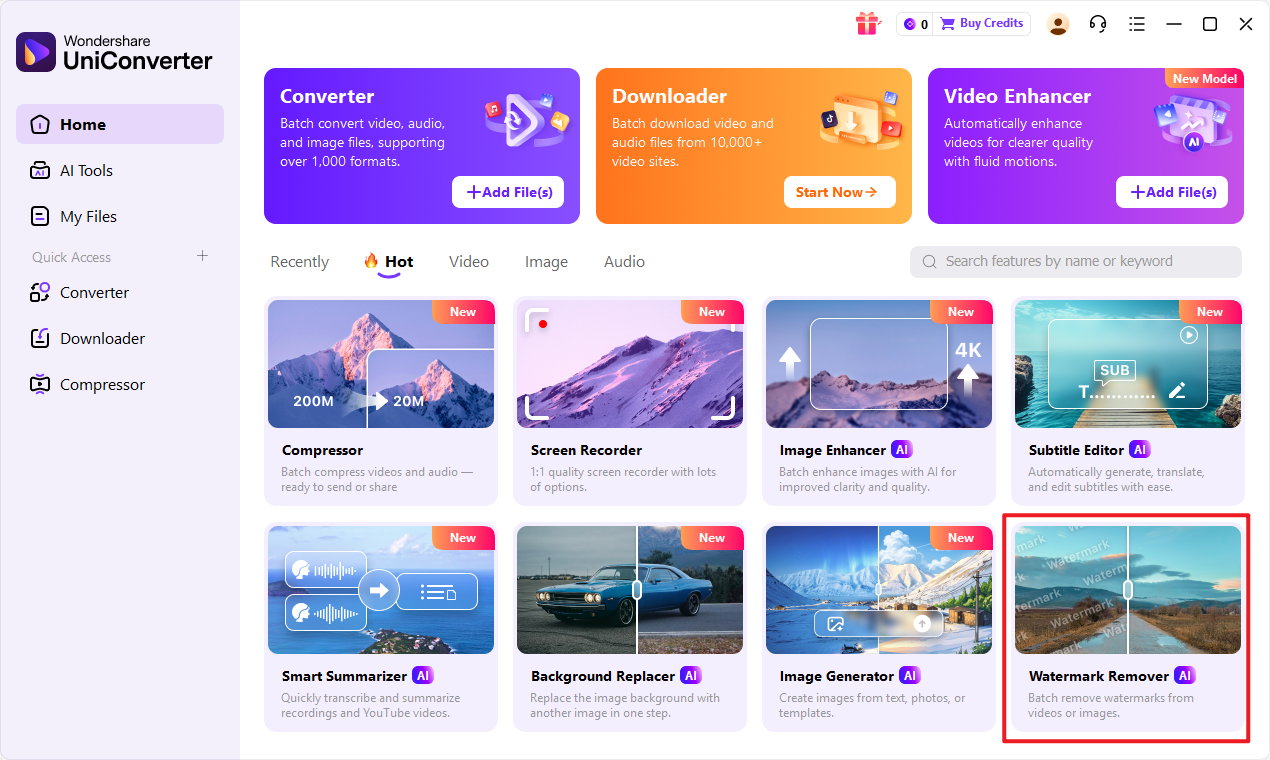
Step 1: Open UniConverter and Choose Watermark Remover
Launch UniConverter on your desktop. From the main interface, navigate to the "Toolbox" section and select the "Watermark Editor" feature. This will open the dedicated watermark removal module.
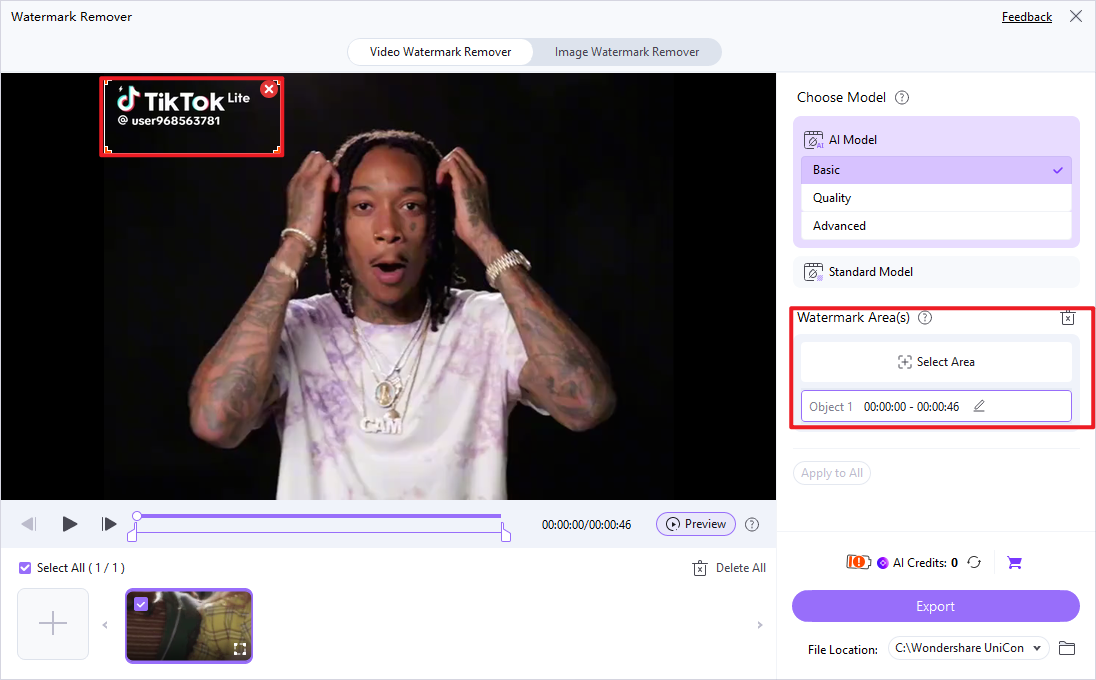
Step 2: Upload the Videos
Within the Watermark Editor, click on the "Add Files" button or simply drag and drop the images or videos from which you want to remove watermarks. You can add multiple files for batch processing.
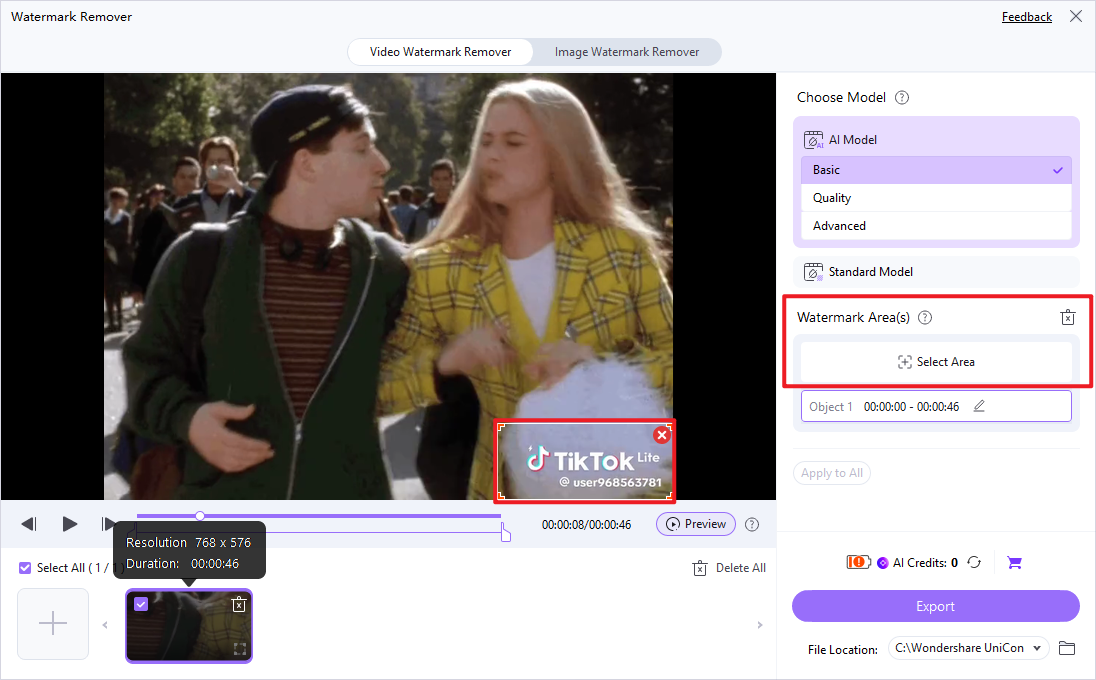
Step 3: Choose Selected Area
After uploading your files, select the "Remove Watermark" tab. Use the selection tool to draw a box precisely around the watermark you wish to remove. UniConverter's intelligent algorithms will then analyze the surrounding pixels to seamlessly fill the selected area.
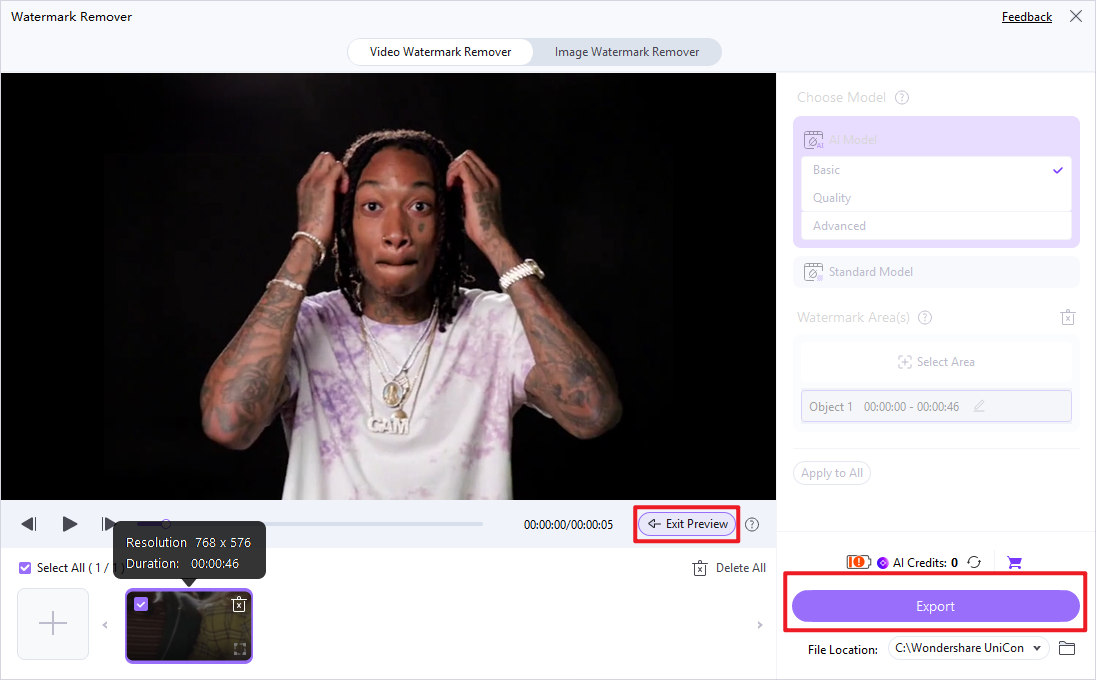
Step 4: Preview and Save the Video
Once the watermark removal process is complete, you can preview the output to ensure satisfaction. If the result is as desired, click the "Start All" button to save your watermark-free images or videos to your desired output folder.

Seeking a Better Pixlr Watermark Remover Alternative?
Part 7: Conclusion
The Pixlr Watermark Remover review reveals it as a highly accessible and user-friendly tool, particularly well-suited for individuals needing to remove simple watermarks from personal images quickly and without cost. Its browser-based nature and intuitive interface make it a convenient option for casual users. However, for professional-grade results, complex watermarks, or batch processing, its limitations become apparent, often leading to quality degradation or insufficient removal. Users must also be mindful of the inherent risks associated with online tools, such as data privacy concerns and potential image quality loss. For those prioritizing pristine output, advanced features, and offline capabilities, dedicated desktop software like UniConverter offers a more comprehensive and reliable solution. Ultimately, the choice between Pixlr and its alternatives hinges on your specific needs, balancing the desire for convenience and cost-effectiveness against the demand for quality, control, and data security.
Part 8: FAQs
-
1. Is Pixlr Watermark Remover completely free to use?
Pixlr offers a free tier that allows for basic watermark removal. However, for advanced features, higher resolution exports, and an ad-free experience, a premium subscription is required.
-
2. Can Pixlr remove watermarks from videos?
No, Pixlr Watermark Remover is specifically designed for images. It does not support video watermark removal. For video watermarks, dedicated video editing software or tools like UniConverter would be necessary.
-
3. What are the ethical considerations of removing watermarks?
Removing watermarks, especially from copyrighted material without permission, can be a violation of intellectual property rights and copyright law. It's crucial to ensure you have the legal right or permission to modify an image before removing its watermark.
-
4. Does Pixlr store my uploaded images?
Pixlr's privacy policy states that user content is stored temporarily for processing. While they aim to delete content after a certain period, users should always review the most current privacy policy for precise details and exercise caution with sensitive images.
-
5. How does UniConverter compare to Pixlr in terms of output quality?
UniConverter generally offers superior output quality for watermark removal, especially for complex cases, due to its more advanced algorithms and desktop-based processing power. Pixlr's online tool may sometimes result in noticeable artifacts or quality degradation, particularly on heavily watermarked images.
