
- Pixelcut Overview: Pixelcut Watermark Remover uses AI for easy, cloud-based watermark removal from images.
- Pros & Cons: Enjoy intuitive AI-powered removal and batch processing, but face limited free features and occasional artifacts.
- Target Users: Ideal for social media creators and small businesses needing quick, clean images, not for pro photographers.
- Comparison: Pixelcut offers ease; UniConverter excels in quality, speed, and batch processing for comprehensive needs.
- Risks: Be aware of data privacy, potential quality loss, ads, subscription lock-in, and ethical implications.
- UniConverter Advantage: UniConverter provides a robust, ad-free, GPU-accelerated solution for lossless, batch watermark removal.
- Final Verdict: Pixelcut is good for quick edits; UniConverter is superior for high-quality, professional, and batch processing tasks.
In this article
- Part 1: What is Pixelcut Watermark Remover?
- Part 2: Pixelcut Watermark Remover: Core Features, Pros, and Cons
- Part 3: Target Users and Use Cases
- Part 4: Pixelcut Watermark Remover and Alternatives Comparison
- Part 5: Potential Risks and Pitfalls
- Part 6: How to Use UniConverter to Efficiently Remove Image Watermarks
- Part 7: Final Verdict and Recommendations
- Part 8: FAQs
Pixelcut Watermark Remover: A Comprehensive Review and Comparison
In the digital age, visual content reigns supreme, and watermarks often stand as unwelcome intruders on otherwise perfect images. Whether you're a social media influencer, a small business owner, or simply someone who occasionally needs to clean up a photo, the demand for effective watermark removal tools has never been higher. This Pixelcut Watermark Remover review delves deep into one such solution, analyzing its features, performance, and comparing it against its rivals. We aim to provide a clear, scenario-based assessment to help you determine if Pixelcut is the right tool for your specific needs, or if alternative solutions offer a more compelling package.
Part 1: What is Pixelcut Watermark Remover?
Pixelcut Watermark Remover is a cloud-based tool designed to effortlessly remove unwanted watermarks, logos, and other distractions from images. Leveraging advanced AI algorithms, it aims to deliver clean, professional-looking photos without requiring extensive editing skills. This review will address the core question of its effectiveness and suitability for various user groups.
The Growing Need for Efficient Watermark Removal Tools
* Protecting Intellectual Property: Watermarks are often used to protect copyrighted material, making their removal a delicate balance between utility and ethical considerations.
* Enhancing Visual Appeal: For many, watermarks detract from the aesthetic quality of an image, especially when used for marketing or personal sharing.
* Streamlining Content Creation: Content creators and businesses frequently encounter images with watermarks that need to be cleaned up for their projects, demanding quick and efficient solutions.
* Accessibility for Non-Professionals: The rise of user-friendly tools democratizes photo editing, allowing individuals without professional software or skills to achieve desired results.
Part 2: Pixelcut Watermark Remover: Core Features, Pros, and Cons
Pixelcut Watermark Remover offers a streamlined approach to image cleanup, focusing on ease of use and AI-driven efficiency. Its core capabilities revolve around identifying and intelligently erasing unwanted elements from photographs.
Pros:
* Intuitive User Interface for Quick Edits: The platform is designed for simplicity, allowing users to upload images and initiate watermark removal with minimal clicks, making it ideal for those new to photo editing.
* AI-Powered Smart Object Removal: Pixelcut utilizes sophisticated AI to analyze image content and seamlessly fill in the removed areas, often resulting in natural-looking edits.
* Batch Processing Capability for Multiple Images: For users with numerous images to clean, the batch processing feature significantly saves time and effort, enhancing productivity.
Cons:
* Limited Free Tier Functionality: The free version often comes with restrictions on usage, output quality, or file size, pushing users towards paid subscriptions for full capabilities.
* Occasional Artifacts on Complex Backgrounds: While generally effective, the AI can sometimes struggle with highly intricate backgrounds, leading to minor distortions or noticeable artifacts in the edited image.
Part 3: Target Users and Use Cases
Pixelcut Watermark Remover caters to a broad audience, but its strengths and limitations define its most suitable applications. Understanding these scenarios is crucial for potential users.
Best Use Case: Social Media Content Creators and Small Businesses
Social media content creators and small businesses often require quick, visually appealing images for their posts, advertisements, and online presence. Pixelcut's intuitive interface and efficient AI-driven removal make it an excellent choice for rapidly cleaning up images without needing advanced editing software or skills. They can quickly remove unwanted logos from product photos, clean up stock images, or prepare visuals for campaigns, saving valuable time and resources. The batch processing feature is particularly beneficial for managing a high volume of visual content.
Limited Use Case: Professional Photographers Requiring Pixel-Perfect Precision
While convenient, Pixelcut Watermark Remover may not meet the stringent demands of professional photographers. These professionals often require pixel-perfect precision, absolute fidelity to the original image, and complete control over every aspect of the editing process. The occasional artifacts on complex backgrounds or the potential for slight image degradation, even if minor, can be unacceptable for high-resolution prints, commercial advertising, or fine art photography where every detail matters. For such critical applications, more robust, manual editing tools like Adobe Photoshop are typically preferred.
Part 4: Pixelcut Watermark Remover and Alternatives Comparison
- Pixelcut Overview: Pixelcut Watermark Remover uses AI for easy, cloud-based watermark removal from images.
- Pros & Cons: Enjoy intuitive AI-powered removal and batch processing, but face limited free features and occasional artifacts.
- Target Users: Ideal for social media creators and small businesses needing quick, clean images, not for pro photographers.
- Comparison: Pixelcut offers ease; UniConverter excels in quality, speed, and batch processing for comprehensive needs.
- Risks: Be aware of data privacy, potential quality loss, ads, subscription lock-in, and ethical implications.
- UniConverter Advantage: UniConverter provides a robust, ad-free, GPU-accelerated solution for lossless, batch watermark removal.
- Final Verdict: Pixelcut is good for quick edits; UniConverter is superior for high-quality, professional, and batch processing tasks.
In this article
- Part 1: What is Pixelcut Watermark Remover?
- Part 2: Pixelcut Watermark Remover: Core Features, Pros, and Cons
- Part 3: Target Users and Use Cases
- Part 4: Pixelcut Watermark Remover and Alternatives Comparison
- Part 5: Potential Risks and Pitfalls
- Part 6: How to Use UniConverter to Efficiently Remove Image Watermarks
- Part 7: Final Verdict and Recommendations
- Part 8: FAQs
Pixelcut Watermark Remover: A Comprehensive Review and Comparison
In the digital age, visual content reigns supreme, and watermarks often stand as unwelcome intruders on otherwise perfect images. Whether you're a social media influencer, a small business owner, or simply someone who occasionally needs to clean up a photo, the demand for effective watermark removal tools has never been higher. This Pixelcut Watermark Remover review delves deep into one such solution, analyzing its features, performance, and comparing it against its rivals. We aim to provide a clear, scenario-based assessment to help you determine if Pixelcut is the right tool for your specific needs, or if alternative solutions offer a more compelling package.
Part 1: What is Pixelcut Watermark Remover?
Pixelcut Watermark Remover is a cloud-based tool designed to effortlessly remove unwanted watermarks, logos, and other distractions from images. Leveraging advanced AI algorithms, it aims to deliver clean, professional-looking photos without requiring extensive editing skills. This review will address the core question of its effectiveness and suitability for various user groups.
The Growing Need for Efficient Watermark Removal Tools
* Protecting Intellectual Property: Watermarks are often used to protect copyrighted material, making their removal a delicate balance between utility and ethical considerations.
* Enhancing Visual Appeal: For many, watermarks detract from the aesthetic quality of an image, especially when used for marketing or personal sharing.
* Streamlining Content Creation: Content creators and businesses frequently encounter images with watermarks that need to be cleaned up for their projects, demanding quick and efficient solutions.
* Accessibility for Non-Professionals: The rise of user-friendly tools democratizes photo editing, allowing individuals without professional software or skills to achieve desired results.
Part 2: Pixelcut Watermark Remover: Core Features, Pros, and Cons
Pixelcut Watermark Remover offers a streamlined approach to image cleanup, focusing on ease of use and AI-driven efficiency. Its core capabilities revolve around identifying and intelligently erasing unwanted elements from photographs.
Pros:
* Intuitive User Interface for Quick Edits: The platform is designed for simplicity, allowing users to upload images and initiate watermark removal with minimal clicks, making it ideal for those new to photo editing.
* AI-Powered Smart Object Removal: Pixelcut utilizes sophisticated AI to analyze image content and seamlessly fill in the removed areas, often resulting in natural-looking edits.
* Batch Processing Capability for Multiple Images: For users with numerous images to clean, the batch processing feature significantly saves time and effort, enhancing productivity.
Cons:
* Limited Free Tier Functionality: The free version often comes with restrictions on usage, output quality, or file size, pushing users towards paid subscriptions for full capabilities.
* Occasional Artifacts on Complex Backgrounds: While generally effective, the AI can sometimes struggle with highly intricate backgrounds, leading to minor distortions or noticeable artifacts in the edited image.
Part 3: Target Users and Use Cases
Pixelcut Watermark Remover caters to a broad audience, but its strengths and limitations define its most suitable applications. Understanding these scenarios is crucial for potential users.
Best Use Case: Social Media Content Creators and Small Businesses
Social media content creators and small businesses often require quick, visually appealing images for their posts, advertisements, and online presence. Pixelcut's intuitive interface and efficient AI-driven removal make it an excellent choice for rapidly cleaning up images without needing advanced editing software or skills. They can quickly remove unwanted logos from product photos, clean up stock images, or prepare visuals for campaigns, saving valuable time and resources. The batch processing feature is particularly beneficial for managing a high volume of visual content.
Limited Use Case: Professional Photographers Requiring Pixel-Perfect Precision
While convenient, Pixelcut Watermark Remover may not meet the stringent demands of professional photographers. These professionals often require pixel-perfect precision, absolute fidelity to the original image, and complete control over every aspect of the editing process. The occasional artifacts on complex backgrounds or the potential for slight image degradation, even if minor, can be unacceptable for high-resolution prints, commercial advertising, or fine art photography where every detail matters. For such critical applications, more robust, manual editing tools like Adobe Photoshop are typically preferred.
Part 4: Pixelcut Watermark Remover and Alternatives Comparison
| Feature/Tool | Pixelcut Watermark Remover | UniConverter | PhotoDirector | Inpaint |
|---|---|---|---|---|
| AI Accuracy | High | High | Medium | High |
| Batch Processing | Yes | Yes | No | No |
| Pricing Model | Freemium | One-time Purchase | Subscription | One-time Purchase |
| Output Quality | Good | Excellent | Good | Good |
| Ease of Use | Excellent | Excellent | Good | Good |
| Processing Speed | Fast | Very Fast (GPU) | Moderate | Moderate |
| Customer Support | 24/7 Live Chat | Email/Forum | ||
| Security | Cloud-based | Local Processing | Cloud-based | Local Processing |
Pixelcut excels in ease of use and offers good AI accuracy for quick edits, making it a strong contender for casual users. UniConverter stands out with its exceptional output quality, very fast processing due to GPU acceleration, and robust batch processing, positioning it as a comprehensive solution. PhotoDirector, while offering good output, lacks batch processing for this specific task. Inpaint provides high AI accuracy but also lacks batch processing, making it less efficient for bulk tasks. For users prioritizing speed and quality for multiple images, UniConverter presents a superior option.
Part 5: Potential Risks and Pitfalls
While convenient, using online watermark removers, especially free or freemium versions, comes with inherent risks that users should be aware of.
Data Privacy Concerns with Cloud-Based Processing
Many online watermark removers, including Pixelcut, operate on a cloud-based model. This means that when you upload your images, they are temporarily stored on the company's servers. This raises significant data privacy concerns, especially for sensitive or proprietary images. Users should carefully review the service's privacy policy to understand how their data is handled, stored, and if it's used for AI training or shared with third parties.
Impact on Image Quality and Resolution
While AI-powered tools aim for seamless removal, there's always a risk of degradation to the original image quality or resolution. Complex backgrounds or intricate watermarks can sometimes result in blurry patches, color shifts, or a noticeable reduction in sharpness. This can be particularly problematic for images intended for high-resolution printing or professional use.
Unwanted Advertisements or Upsells
Free or freemium versions of these tools often come with embedded advertisements or aggressive upsell tactics. These can disrupt the user experience, redirect to unrelated websites, or constantly prompt users to upgrade to a paid plan, making the "free" experience less appealing and potentially frustrating.
Subscription Model Lock-in
Many services, including Pixelcut, operate on a subscription model. While this provides continuous access to features, it can lead to "lock-in" where users feel compelled to continue paying even if their usage decreases. Canceling subscriptions can sometimes be cumbersome, and users might end up paying for services they no longer fully utilize.
Ethical and Legal Implications
Removing watermarks from copyrighted images without permission can have serious ethical and legal consequences. Users must ensure they have the right to modify and use any image they process through these tools to avoid potential infringement issues.
Part 6: How to Use UniConverter to Efficiently Remove Image Watermarks
When other tools fall short with unstable removal, poor quality, or lack batch processing, UniConverter emerges as a robust alternative. It offers a comprehensive, ad-free solution with GPU acceleration for speed, lossless quality, and efficient batch processing, making it an all-in-one ultimate solution for your watermark removal needs.
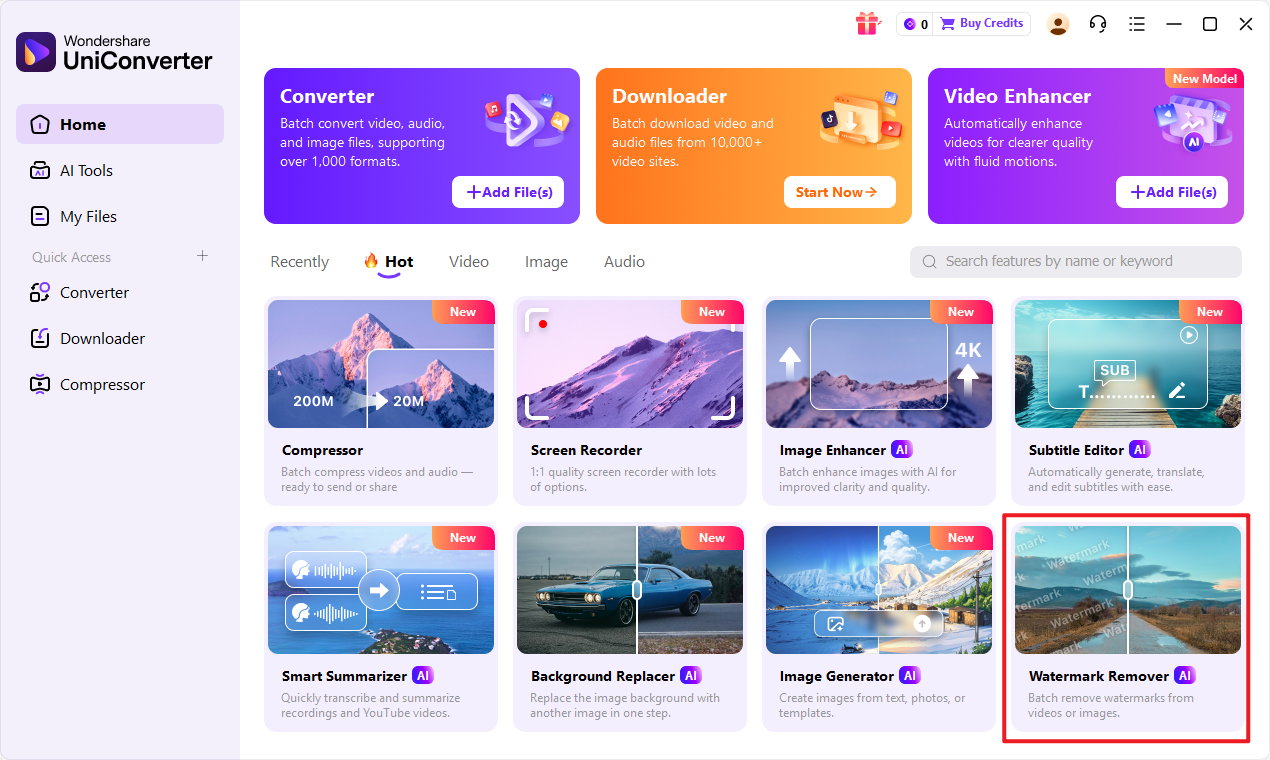
Step 1: Open UniConverter and Choose Watermark Remover
Launch UniConverter on your computer. From the main interface, navigate to the "Toolbox" section and select the "Watermark Remover" option. This dedicated feature is designed for precise and effective watermark removal.
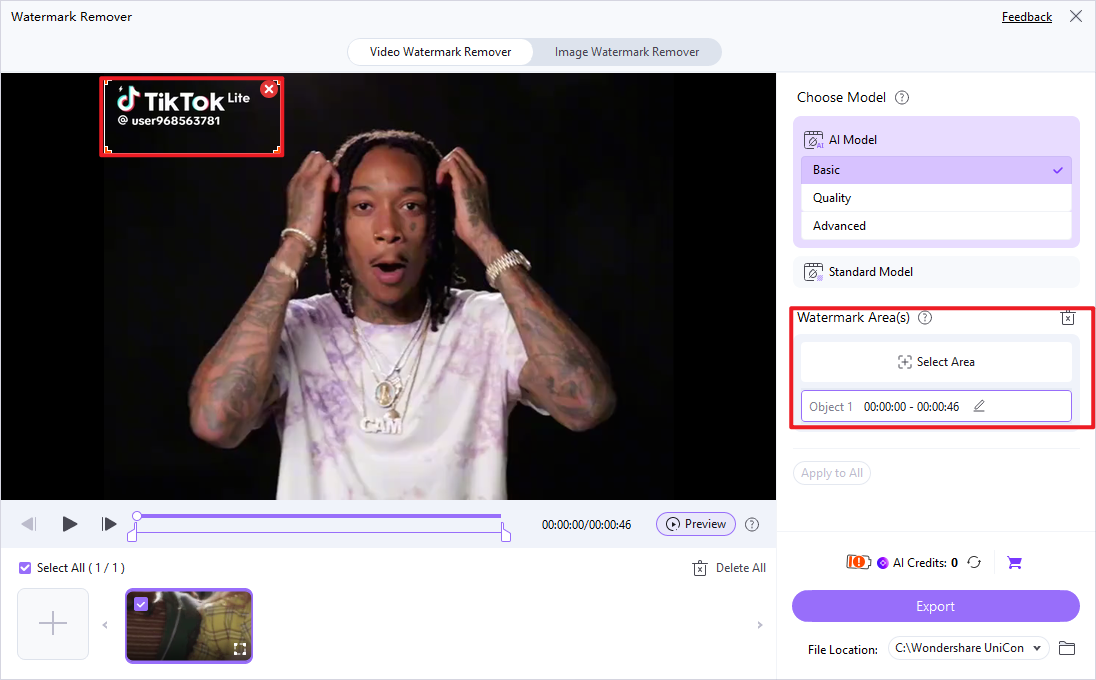
Step 2: Upload the Videos
Click on the "Add Files" button or simply drag and drop the image file containing the watermark into the UniConverter interface. You can add multiple images for batch processing if needed, making it an ideal image watermark remover.
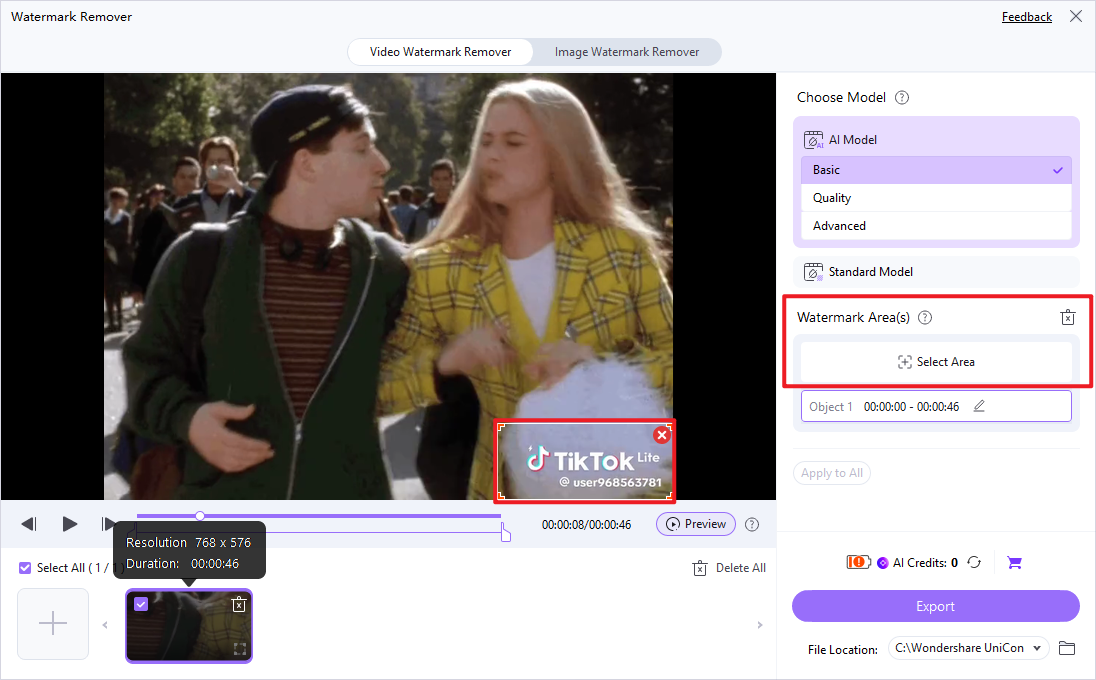
Step 3: Choose Selected Area
Once your image is loaded, a selection box will appear. Drag and resize this box to precisely cover the watermark area you wish to remove text from image. Ensure the selection accurately encompasses the entire watermark for optimal results.
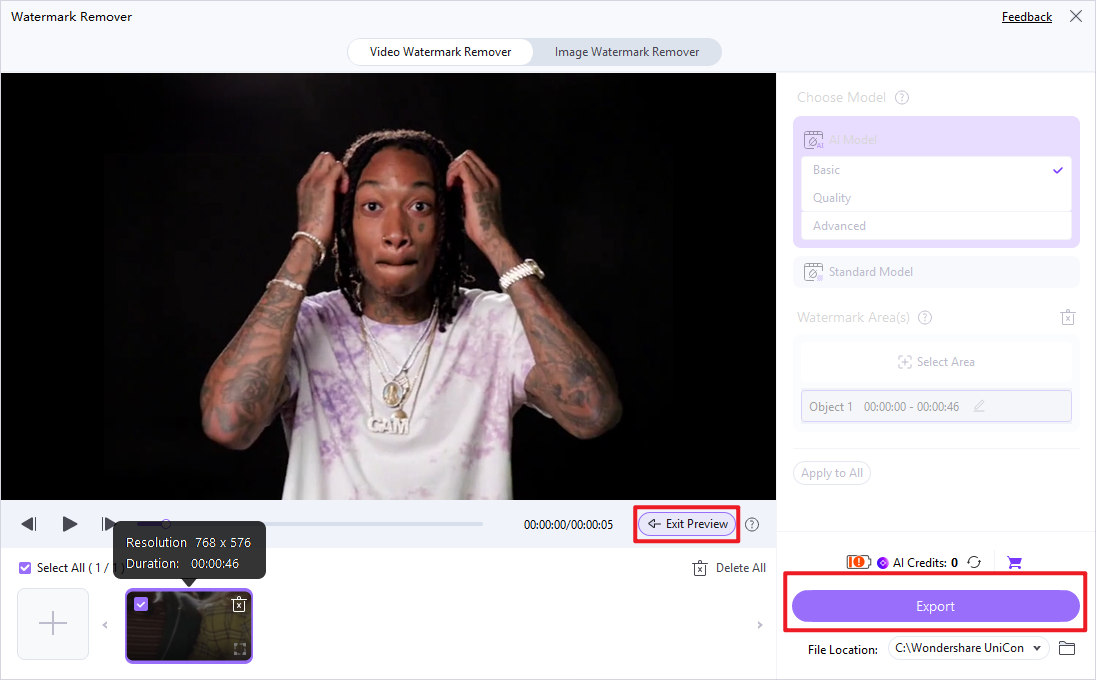
Step 4: Preview and Save the Video
After selecting the area, click the "Remove Watermark" button. UniConverter will process the image. You can then preview the result to ensure satisfaction. Once confirmed, choose your desired output format and click "Save" to export your clean image.

Seeking a Better Pixelcut Watermark Remover Alternative?
Part 7: Final Verdict and Recommendations
The Pixelcut Watermark Remover review reveals it to be a highly accessible and efficient tool for quick, AI-driven watermark removal, particularly benefiting social media content creators and small businesses due to its intuitive interface and batch processing capabilities. However, its limitations in handling complex backgrounds and potential for minor artifacts mean it falls short for professional photographers demanding pixel-perfect precision. For casual users and those needing rapid edits, Pixelcut offers a compelling freemium model. For professionals or users requiring consistent, high-quality, and lossless output across various media types, UniConverter presents a superior, comprehensive solution with its advanced features and local processing. Ultimately, the choice depends on the user's specific needs, budget, and tolerance for potential quality compromises versus the convenience offered by cloud-based AI tools.
Part 8: FAQs
-
1. Is Pixelcut Watermark Remover completely free to use?
No, Pixelcut offers a freemium model. While basic functionality is available for free, advanced features, higher resolution outputs, and unlimited usage typically require a paid subscription.
-
2. How accurate is Pixelcut's AI watermark removal?
Pixelcut's AI is generally highly accurate for simple watermarks and backgrounds. However, its performance can vary with complex patterns or intricate backgrounds, where it might occasionally leave minor artifacts.
-
3. Can Pixelcut remove watermarks from videos?
No, Pixelcut Watermark Remover is specifically designed for images. It does not support video watermark removal. For videos, you would need a dedicated video editing software with watermark removal capabilities.
-
4. What are the best alternatives to Pixelcut Watermark Remover?
Strong alternatives include UniConverter for comprehensive media handling and high-quality output, PhotoDirector for photo editing with some removal tools, and Inpaint for dedicated image object removal.
-
5. Does removing watermarks affect image resolution?
While the goal is to maintain resolution, AI-based removal can sometimes lead to a slight perceived decrease in sharpness or introduce minor distortions, especially if the original watermark was large or complex.
