
- PicWish Overview: AI-powered online tool for quick watermark removal from images.
- Core Features: Intuitive UI, effective AI for simple watermarks, batch processing included.
- Limitations: Lacks advanced editing, can produce artifacts on complex backgrounds.
- Best Use: Ideal for casual users removing simple watermarks from personal photos.
- Not For: Professional restoration or complex object removal due to quality limitations.
- Comparison: Faster than desktop tools for simple tasks, but less versatile than UniConverter.
- Risks: Data privacy concerns with cloud processing, potential quality loss on detailed images.
- Pricing: Freemium model; subscription needed for full features, consider cost vs. usage.
- UniConverter Alternative: Offers robust, offline, high-quality watermark removal with broader features.
- Decision: Choose PicWish for quick, simple tasks; UniConverter for professional, secure, versatile needs.
In this article
- Part 1: What is PicWish Watermark Remover?
- Part 2: PicWish Watermark Remover: Core Features, Pros, and Cons
- Part 3: Who is PicWish Watermark Remover For? Use Cases and Limitations
- Part 4: PicWish Watermark Remover vs. Competitors
- Part 5: Potential Risks and Pitfalls to Consider
- Part 6: How to Use UniConverter for Efficient Image Watermark Removal
- Part 7: Final Verdict and Recommendations
- Part 8: Frequently Asked Questions (FAQs)
In today's digital age, images are ubiquitous, but often come marred by unwanted watermarks that detract from their visual appeal or intended use. This comprehensive PicWish Watermark Remover review delves into a popular solution designed to tackle this common problem. We will explore its features, assess its performance against competitors, and provide a detailed analysis to help users make informed decisions. From casual users looking to clean up personal photos to content creators seeking professional-grade results, understanding the nuances of watermark removal tools is crucial. This review aims to provide a clear picture of PicWish Watermark Remover's capabilities and limitations within the broader market of image editing software.
Part 1: What is PicWish Watermark Remover?
PicWish Watermark Remover is an AI-powered online tool designed to effortlessly remove unwanted watermarks, logos, dates, and other superimposed objects from images. It leverages advanced algorithms to intelligently detect and erase these elements, aiming to restore the original clarity of the photograph without leaving noticeable traces. The tool positions itself as a quick and accessible solution for anyone needing to clean up their digital images, from social media enthusiasts to small business owners. This review will critically examine its effectiveness, ease of use, and overall value proposition in a crowded market.
The Growing Need for Watermark Removal Tools
The proliferation of digital content has led to an increased demand for tools that can refine and enhance visual media. Watermarks, while serving a purpose for copyright and branding, often hinder the aesthetic or functional use of an image. This has driven the development of various watermark removal solutions, each with its own approach and capabilities.
* Copyright Protection vs. Usability: Watermarks protect intellectual property but can impede legitimate use or personal enjoyment of images.
* Content Repurposing: Users often need to remove watermarks to repurpose images for different platforms or projects, requiring a clean slate.
* Restoring Old Photos: Many old scanned photos contain timestamps or other unwanted markings that users wish to remove for restoration purposes.
* Enhancing Visual Appeal: A clean, watermark-free image generally looks more professional and appealing, whether for personal albums or commercial presentations.
Part 2: PicWish Watermark Remover: Core Features, Pros, and Cons
PicWish Watermark Remover is primarily focused on its namesake function, offering a streamlined experience for removing watermarks. Its core capability lies in its AI-driven detection and removal process, which attempts to intelligently fill in the removed areas with surrounding pixels. The tool supports various image formats and aims for a high success rate even with complex watermarks.
Pros:
* Intuitive User Interface for Quick Edits: The platform is designed for ease of use, allowing users to upload an image, select the watermark area, and process it with minimal steps.
* Effective AI-Powered Watermark Detection and Removal: Its AI algorithms are generally capable of identifying and removing watermarks with reasonable accuracy, especially on simpler backgrounds.
* Batch Processing Capability for Multiple Images: PicWish offers the convenience of processing several images at once, saving time for users with large volumes of photos.
Cons:
* Limited Advanced Editing Features Beyond Watermark Removal: The tool is highly specialized; it lacks broader image editing functionalities like cropping, color correction, or object manipulation beyond watermarks.
* Occasional Artifacts on Complex Backgrounds: While generally effective, complex textures or patterns behind a watermark can sometimes result in visible smudges or distortions post-removal.
Part 3: Who is PicWish Watermark Remover For? Use Cases and Limitations
PicWish Watermark Remover caters to a broad audience, primarily individuals and small businesses who need a quick and efficient way to clean up images without investing in professional-grade editing software. Its simplicity makes it accessible to users with varying levels of technical expertise.
Best Use Case: Removing Simple Watermarks from Personal Photos
PicWish Watermark Remover excels when dealing with straightforward watermarks on relatively uniform backgrounds. For instance, removing a date stamp from a personal vacation photo, a small logo from a product image for e-commerce, or a simple text overlay from a screenshot are ideal scenarios. Its ease of use means casual users can achieve satisfactory results without a steep learning curve. The batch processing feature further enhances its utility for personal photo collections.
Limited Use Case: Professional Image Restoration and Complex Object Removal
While effective for simple tasks, PicWish Watermark Remover is not designed for professional-grade image restoration or the removal of complex objects that are deeply integrated into an image's composition. For example, attempting to remove a large, intricate watermark that spans across a subject's face or a highly textured background may result in noticeable blurring, smudging, or unnatural-looking patches. Professionals requiring pixel-perfect accuracy, seamless blending, or the ability to reconstruct missing image data will find its capabilities limited and would need more robust, feature-rich editing software.
Part 4: PicWish Watermark Remover vs. Competitors
To provide a comprehensive perspective, let's compare PicWish Watermark Remover with other prominent tools in the market.
| Feature / Product | PicWish Watermark Remover | UniConverter (Watermark Editor) | PhotoDirector (Watermark Removal) | InPaint (Watermark Removal) |
| Processing Speed | Fast (online) | Very Fast (desktop, GPU accel.) | Moderate (desktop) | Moderate (desktop) |
| Output Quality | Good (simple backgrounds) | Excellent (AI + manual refine) | Very Good (AI + content-aware) | Good (content-aware) |
| Ease of Use | Very High | High | Moderate | High |
| Customer Support | Email/FAQ | 24/7 Live Chat, Email | Email/Forum | Email/FAQ |
| Security | Cloud-based (potential concerns) | Offline processing (high) | Offline processing (high) | Offline processing (high) |
| Pricing Model | Freemium/Subscription | One-time purchase/Subscription | Subscription | One-time purchase |
| Batch Processing | Yes | Yes | Yes | No |
| Additional Features | Minimal | Full video/audio/image suite | Comprehensive photo editing | Object removal, photo repair |
PicWish Watermark Remover stands out for its speed and extreme ease of use, making it ideal for quick, simple tasks. UniConverter, while offering watermark removal, is a more comprehensive multimedia toolkit, providing excellent output quality and offline processing for enhanced security and speed. PhotoDirector offers a broader range of photo editing features alongside watermark removal, appealing to users who need more than just a single function. InPaint is a dedicated object removal tool, similar to PicWish in its focus but typically offering more granular control for complex removals. Users prioritizing speed and simplicity for basic watermark removal might lean towards PicWish, while those needing a versatile tool with high-quality output and privacy assurance might prefer UniConverter or PhotoDirector.
Part 5: Potential Risks and Pitfalls to Consider
While PicWish Watermark Remover offers a convenient solution, users should be aware of several potential risks and limitations, especially when using online or freemium tools. These considerations are crucial for making an informed decision and protecting one's data and output quality.
Data Privacy Concerns and Cloud Processing
As an online tool, PicWish Watermark Remover requires users to upload their images to its servers for processing. This raises legitimate data privacy concerns. Users should be mindful of uploading sensitive or confidential images, as there's always an inherent risk when data is transmitted and stored on third-party servers. While most reputable services claim to delete uploaded data after processing, the possibility of data breaches or unauthorized access remains a concern for privacy-conscious individuals.
Output Quality Degradation on Highly Detailed Images
The AI-powered removal process, while often effective, can struggle with highly detailed images or watermarks that are intricately blended with complex backgrounds. In such cases, the tool might produce noticeable artifacts, blurring, or color inconsistencies in the removed area. This degradation in output quality can render the image unusable for professional purposes or situations where pristine visual integrity is paramount.
Subscription Model vs. One-Time Purchase Value
PicWish Watermark Remover typically operates on a freemium or subscription model. While a free tier might be available, it often comes with limitations such as lower resolution output, watermarked results, or a limited number of free removals. The subscription model, while offering full functionality, might not be cost-effective for users who only occasionally need watermark removal. Comparing this to one-time purchase software, users need to evaluate their usage frequency against the recurring cost.
In-App Advertisements and User Experience
Free versions of online tools often rely on advertisements to sustain their services. This can lead to a cluttered user interface, distracting pop-ups, or even misleading ads that detract from the overall user experience. While not directly impacting the removal quality, a barrage of ads can make the process frustrating and less efficient, pushing users towards paid subscriptions to avoid them.
Compatibility Issues with Specific File Formats
While most common image formats (JPEG, PNG) are supported, some niche or less common file types might not be compatible with PicWish Watermark Remover. Users working with specific professional formats (e.g., TIFF, RAW) might encounter issues, requiring them to convert their images first, which adds an extra step and can potentially lead to quality loss.
Part 6: How to Use UniConverter for Efficient Image Watermark Removal
When other tools fall short with batch processing, unstable removal effects, or poor output quality, UniConverter emerges as a robust alternative. It offers a comprehensive solution for various multimedia needs, including efficient and high-quality watermark removal. UniConverter provides a stable, ad-free experience with GPU acceleration, ensuring fast and lossless processing for multiple images. It's an all-in-one toolkit that goes beyond simple image watermark removal, offering extensive format support and advanced editing capabilities, making it a superior choice for those seeking a reliable and versatile solution. For those looking to remove watermarks from videos, UniConverter also offers powerful features. You can also explore its capabilities as a watermark editor for various media types. If you need to remove text from video, this tool can handle that too. For more general guidance on how to remove watermarks easily, UniConverter is an excellent resource.
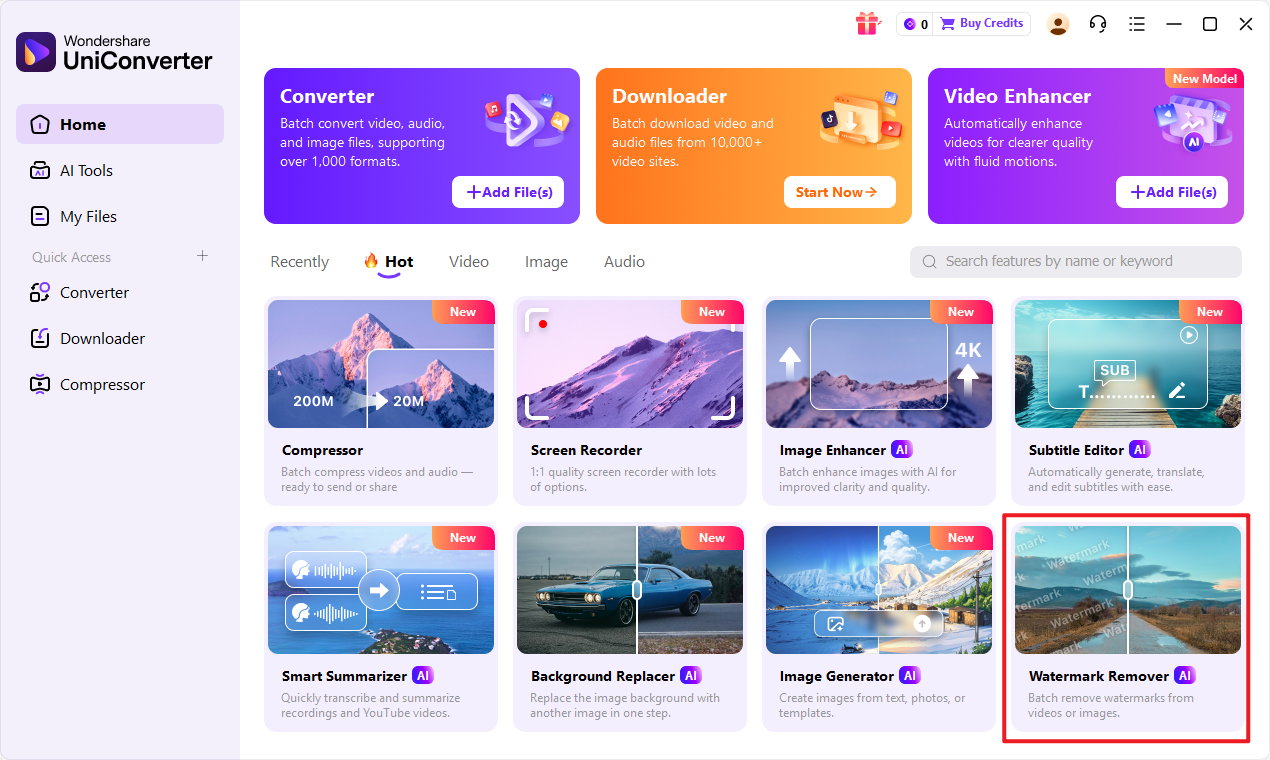
Step 1: Open UniConverter and Choose Watermark Remover
Launch UniConverter on your desktop. Navigate to the "Toolbox" section and select the "Watermark Editor" feature.
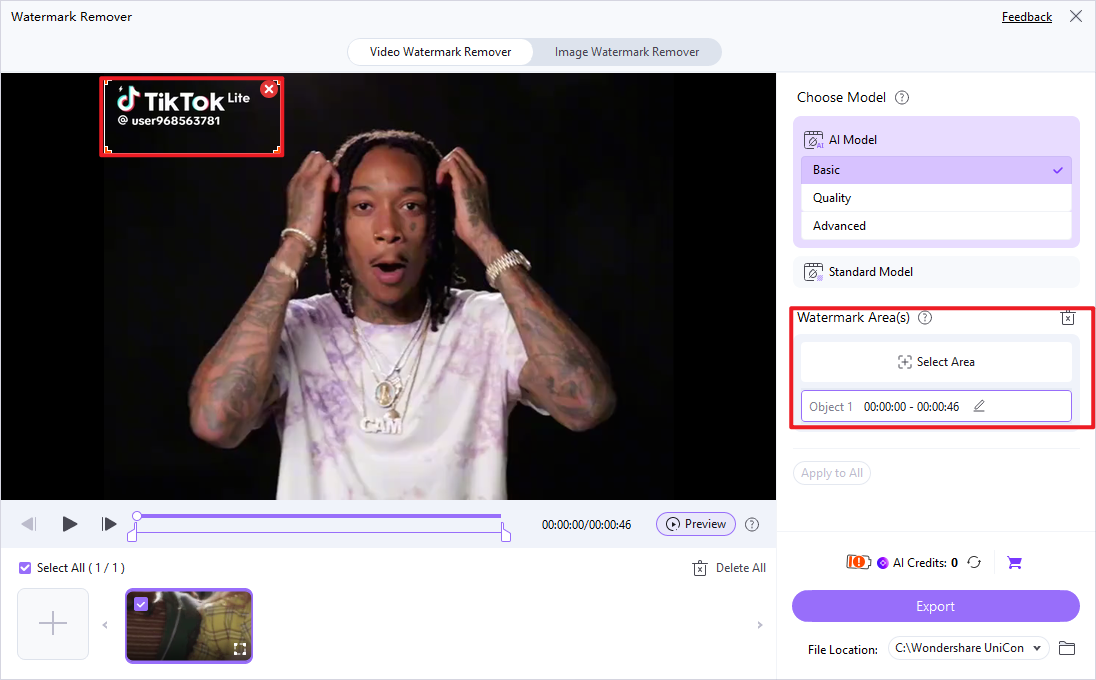
Step 2: Upload the Videos
Click on the "Add Files" button or drag and drop your image files into the UniConverter interface. You can add multiple images for batch processing.
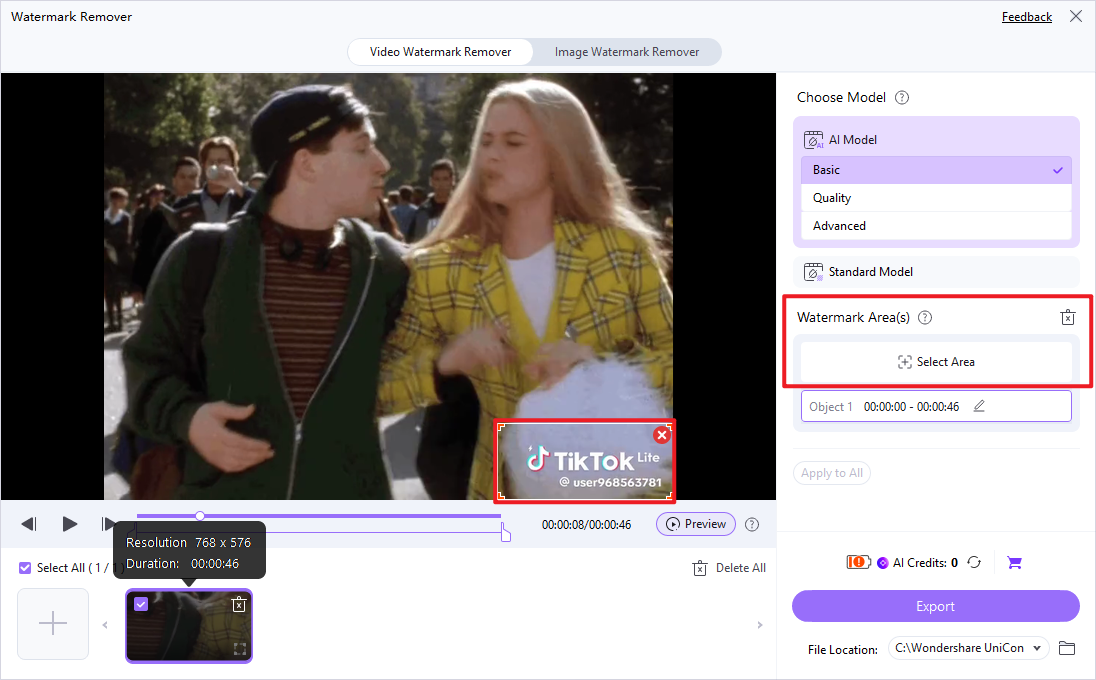
Step 3: Choose Selected Area
Once your image is loaded, select the "Remove Watermark" option. Use the intuitive selection tool to precisely draw a box around the watermark you wish to remove.
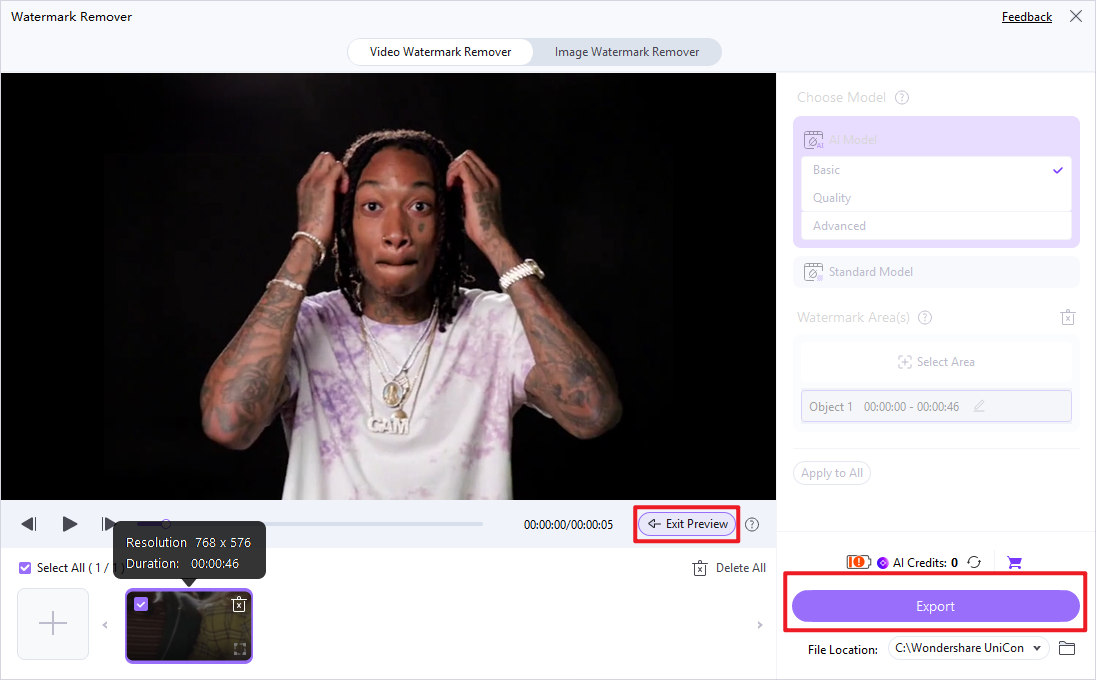
Step 4: Preview and Save the Video
After selecting the watermark area, click "Remove Watermark" to process the image. Preview the result to ensure satisfaction, then choose your desired output format and click "Save" to export your clean image.

Seeking a Better PicWish Watermark Remover Alternative?
Part 7: Final Verdict and Recommendations
The PicWish Watermark Remover review concludes that it is a highly accessible and user-friendly tool, particularly well-suited for individuals and small businesses requiring quick and simple watermark removal from personal photos or basic product images. Its intuitive interface and AI-powered capabilities make it an excellent choice for non-technical users who prioritize speed and ease of use over advanced editing functionalities. However, its limitations become apparent when dealing with complex backgrounds, intricate watermarks, or professional-grade image restoration, where output quality can be compromised.
For users who frequently encounter simple watermarks and value a straightforward, online solution, PicWish Watermark Remover offers good value, especially if they opt for a subscription to unlock full features and avoid ads. Conversely, for professionals, content creators, or anyone dealing with sensitive images, the potential for privacy concerns, output quality degradation, and the lack of comprehensive editing tools make it less ideal. In such scenarios, investing in more robust desktop software like UniConverter or PhotoDirector, which offer offline processing, higher precision, broader editing capabilities, and a one-time purchase option, would be a more prudent decision. Balancing cost, features, and ease of use against specific needs is crucial for making the right choice in the diverse landscape of watermark removal tools.
Part 8: Frequently Asked Questions (FAQs)
-
1. Is PicWish Watermark Remover free to use?
PicWish Watermark Remover typically offers a freemium model. There's often a free trial or a limited free version that allows a certain number of removals or lower resolution output. Full features and unlimited usage usually require a subscription.
-
2. Does PicWish Watermark Remover support video watermark removal?
No, PicWish Watermark Remover is specifically designed for image watermark removal. For video watermark removal, you would need a dedicated video editing tool that offers such functionality, like UniConverter.
-
3. How accurate is PicWish Watermark Remover in removing watermarks?
Its accuracy is generally good for simple watermarks on uniform or less complex backgrounds, thanks to its AI algorithms. However, on highly detailed images or with intricate watermarks, it may sometimes leave artifacts or smudges.
-
4. Are there any limitations on file size or type with PicWish Watermark Remover?
While it supports common image formats like JPG and PNG, there might be limitations on file size, especially for the free version. Less common or very large image files might not be supported or could take longer to process.
-
5. What are the best practices for achieving optimal results with watermark removal tools?
For optimal results, choose a tool with advanced AI or content-aware fill capabilities. Select the watermark area as precisely as possible. If the background is complex, consider using a tool that allows for manual refinement. Always preview the result before saving, and if possible, work with high-resolution source images.
