
- Magic Eraser Review: Learn about Magic Eraser's features, pros, and cons for watermark removal.
- Target Users: Discover if Magic Eraser suits your needs, from quick social media edits to professional restoration.
- Tool Comparison: See how Magic Eraser stacks up against UniConverter and other alternatives in features and quality.
- Risks & Pitfalls: Understand privacy concerns, quality loss, and inconsistent results with watermark removers.
- UniConverter Solution: Explore UniConverter for efficient, high-quality batch watermark removal from images and videos.
In this article
- Part 1: What is Magic Eraser Watermark Remover?
- Part 2: Magic Eraser Watermark Remover: Core Features, Pros, and Cons
- Part 3: Target Users and Usage Scenarios
- Part 4: Magic Eraser Watermark Remover and Alternatives Comparison
- Part 5: Risks and Pitfalls to Consider
- Part 6: How to Use UniConverter for Efficient Watermark Removal
- Part 7: Conclusion
- Part 8: FAQs
Magic Eraser Watermark Remover: A Comprehensive Review and Comparison
The digital age has ushered in an unprecedented era of content creation and sharing. From professional photographers to casual social media users, images are the universal language. However, the prevalence of watermarks—often used for copyright protection or branding—can detract from an image's aesthetic appeal or intended use. This has fueled a significant demand for effective watermark removal tools. This Magic Eraser Watermark Remover review delves into one such popular solution, examining its features, strengths, and weaknesses. We will also conduct a head-to-head comparison with leading competitors, providing a comprehensive analysis to help users make informed decisions about the best tool for their specific needs, whether for quick personal edits or professional-grade image restoration.
Part 1: What is Magic Eraser Watermark Remover?
Magic Eraser Watermark Remover is a digital tool designed to help users eliminate unwanted watermarks, logos, and other superimposed elements from their images. It leverages AI and image processing algorithms to detect and remove these overlays, aiming to restore the original appearance of the underlying picture. The tool's primary appeal lies in its promise of simplicity and efficiency, catering to a broad audience from casual users to content creators who frequently deal with watermarked images. This review aims to dissect its capabilities, comparing it against industry benchmarks to determine its true value and identify scenarios where it truly shines or falls short.
The Growing Need for Watermark Removal Tools
The proliferation of digital content has made watermark removal tools indispensable for several reasons:
* Copyright Protection & Branding: While watermarks serve to protect intellectual property, they can sometimes interfere with the aesthetic or functional use of an image for legitimate purposes (e.g., using a stock photo after licensing).
* Content Repurposing: Social media managers and content creators often need to adapt images for various platforms, where watermarks might be distracting or inappropriate.
* Restoring Old Photos: Digitizing and restoring old photographs frequently involves removing timestamps or other embedded marks that were not originally intended to be permanent.
* Improving Visual Aesthetics: For personal use, removing a small, intrusive watermark can significantly enhance the visual appeal of a cherished photograph.
Part 2: Magic Eraser Watermark Remover: Core Features, Pros, and Cons
Magic Eraser Watermark Remover positions itself as an accessible solution for clearing images of unwanted watermarks. Its core functionality revolves around intelligent object removal, allowing users to select and erase elements from their photos. The tool aims for a balance between ease of use and effective results, particularly for less complex scenarios.
Core Features:
* Smart Selection Tool: Allows users to highlight the watermark area for removal.
* AI-Powered Algorithm: Attempts to intelligently fill in the removed area with surrounding pixels.
* Adjustable Brush Size: Provides flexibility for precise selection of various watermark sizes.
* Undo/Redo Functionality: Offers control over the editing process.
* Direct Export Options: Facilitates saving the cleaned image in common formats.
Pros:
* Intuitive User Interface for Quick Edits: The tool is incredibly easy to navigate, making it suitable for beginners.
* Effective Removal of Simple Watermarks: Performs well on small, transparent, or uniformly colored watermarks on plain backgrounds.
* Batch Processing Capability for Efficiency: Users can process multiple images at once, saving considerable time.
Cons:
* Struggles with Complex or Embedded Watermarks: Intricate watermarks, especially those integrated into detailed textures, often result in noticeable artifacts.
* Potential for Image Degradation on Detailed Backgrounds: When removing watermarks from busy or patterned backgrounds, the tool may blur or distort the underlying image.
Part 3: Target Users and Usage Scenarios
Magic Eraser Watermark Remover is primarily designed for users who need a quick and straightforward solution for basic watermark removal. Its simplicity makes it appealing to individuals without extensive photo editing experience, yet its limitations mean it's not a one-size-fits-all solution.
Best Use Cases:
* Removing Small, Non-Intrusive Logos from Personal Photos: Ideal for clearing personal snapshots of minor branding or dates without requiring professional-grade perfection.
* Quick Edits for Social Media Content Creators: For influencers or marketers who need to rapidly clean up images for posts where absolute pristine quality isn't the top priority.
Limited Scenarios:
* Professional Photo Restoration Requiring Flawless Results: For tasks demanding pixel-perfect restoration, such as historical photo archives or high-end commercial photography, its output often falls short.
* Removing Watermarks from Highly Textured or Patterned Images: When watermarks are superimposed on complex textures like fabric, water, or intricate patterns, the tool struggles to seamlessly blend the removed area, leading to visible patching or blurring.
Part 4: Magic Eraser Watermark Remover and Alternatives Comparison
Choosing the right watermark remover depends heavily on your specific needs, balancing ease of use with output quality and cost. Here's a comparison of Magic Eraser Watermark Remover against some prominent alternatives.
| Feature/Tool | Magic Eraser Watermark Remover | UniConverter | PhotoDirector | Inpaint |
| Ease of Use | High | High | Medium | Medium |
| Watermark Complexity Handling | Low-Medium | High | High | Medium-High |
| Output Quality | Good (Simple) | Excellent | Very Good | Good |
| Price Model | Freemium | One-time Purchase/Subscription | Subscription | One-time Purchase |
| Batch Processing | Yes | Yes | Yes | No |
| Processing Speed | Fast | Very Fast (GPU Accelerated) | Fast | Medium |
| File Format Support | Limited (JPG, PNG) | Extensive (Image & Video) | Extensive (Image) | Limited (Image) |
Key Differentiators:
Magic Eraser excels in user-friendliness for basic tasks, making it a go-to for quick, simple removals. However, for more advanced and complex watermarks, tools like UniConverter and PhotoDirector offer superior algorithms that produce cleaner, more natural results, especially on intricate backgrounds. UniConverter stands out with its comprehensive support for both image and video watermark removal, alongside GPU acceleration for faster processing. In terms of pricing, Magic Eraser's freemium model is attractive for casual users, while UniConverter offers a compelling one-time purchase option for a more robust, all-in-one solution.
Part 5: Risks and Pitfalls to Consider
While watermark removal tools offer convenience, users should be aware of potential risks and pitfalls, especially when opting for free or less reputable solutions. These concerns can impact everything from data privacy to the quality of your final output.
Privacy Concerns with Online Tools
Many free online watermark removers require users to upload their images to a third-party server. This raises significant privacy concerns, as there's often no clear indication of how these images are stored, processed, or if they are shared with other entities. For sensitive or personal photographs, this can be a major risk. Users should always review the privacy policy of any online tool before uploading their data.
Intrusive Ads and Upselling Tactics
Freemium models, while appealing, often come with a trade-off. Many free watermark removers bombard users with intrusive advertisements, pop-ups, and constant prompts to upgrade to a paid version. This can significantly disrupt the user experience and make the process frustrating rather than efficient.
Potential Loss of Image Quality
Even with advanced algorithms, removing a watermark involves altering the original image data. This process can sometimes lead to a noticeable degradation in image quality, especially if the watermark is complex or the background is detailed. Users might experience blurring, pixelation, or unnatural color shifts in the affected areas, making the "cleaned" image appear less professional or authentic.
Inconsistent Results Across Different Image Types
Watermark removers often perform inconsistently depending on the image's characteristics. A tool that works perfectly for a simple, transparent watermark on a plain background might utterly fail on a complex, embossed watermark on a textured surface. This variability means users might need to experiment with multiple tools or techniques to achieve satisfactory results for diverse image types.
Limited File Format Support
Some watermark removal tools, particularly the simpler ones, may only support a limited range of image file formats (e.g., JPEG and PNG). This can be a significant drawback for users working with less common formats like TIFF, RAW, or even GIF, forcing them to convert files, which can further complicate workflows and potentially reduce image quality.
Part 6: How to Use UniConverter for Efficient Watermark Removal
When other tools fall short with batch processing, unstable results, or weak removal effects, UniConverter emerges as a robust solution. It bypasses common issues by offering a stable, high-quality, and efficient watermark removal experience, free from ads and supporting a wide array of formats with GPU acceleration. UniConverter is an all-in-one toolkit for all your media conversion and editing needs.
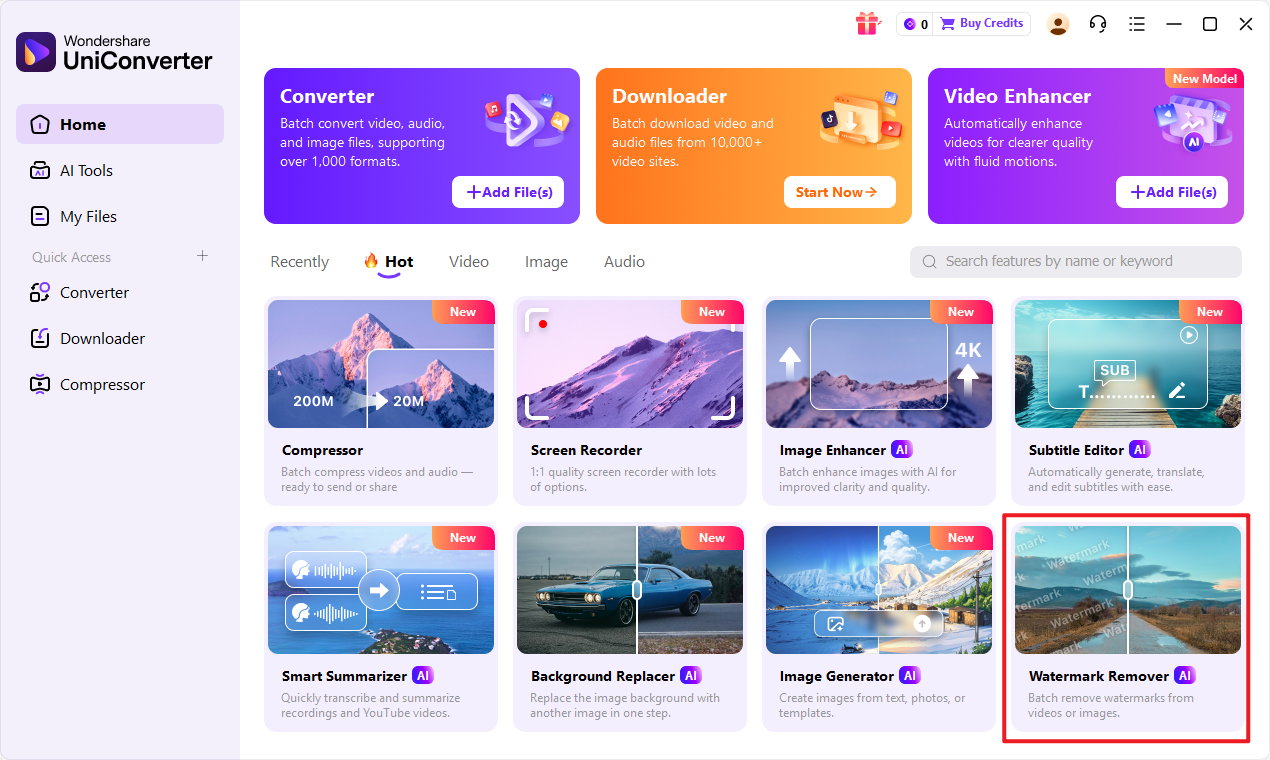
Step 1: Open UniConverter and Choose Watermark Remover
Launch UniConverter and navigate to the "Toolbox" section. Select the "Watermark Remover" feature.
Step 2: Upload the Videos
Click on "Add Files" or drag and drop your image or video files into the interface. You can add multiple files for batch processing.
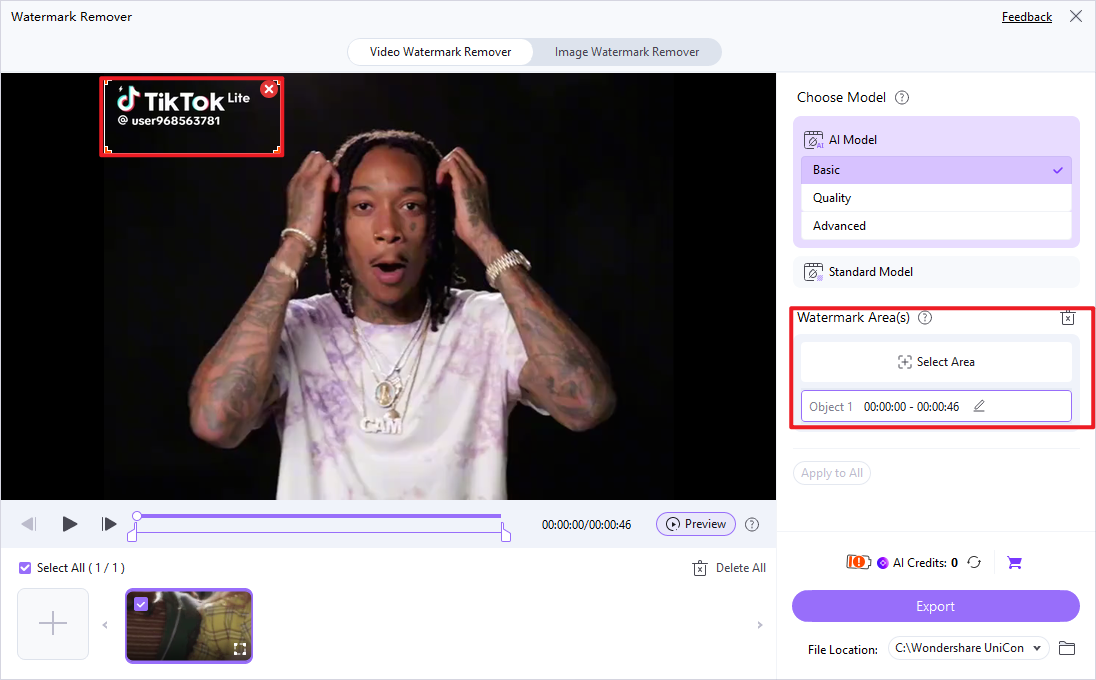
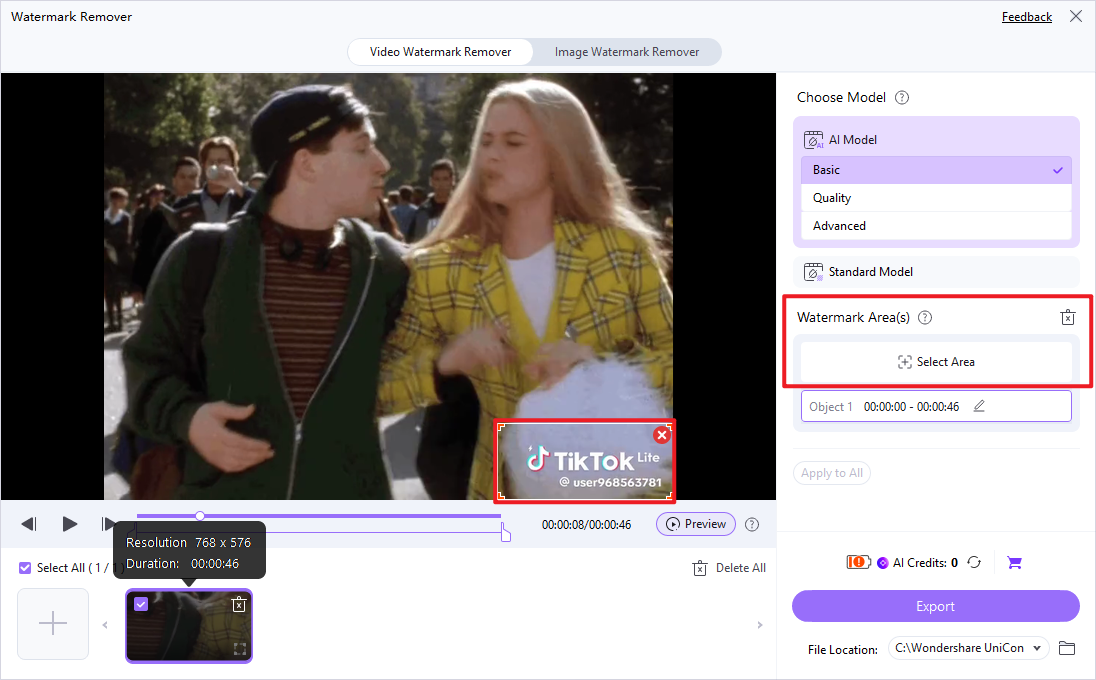
Step 3: Choose Selected Area
For images, use the selection tool to precisely draw a box around the watermark you wish to remove. For videos, you can specify the duration for which the watermark should be removed.
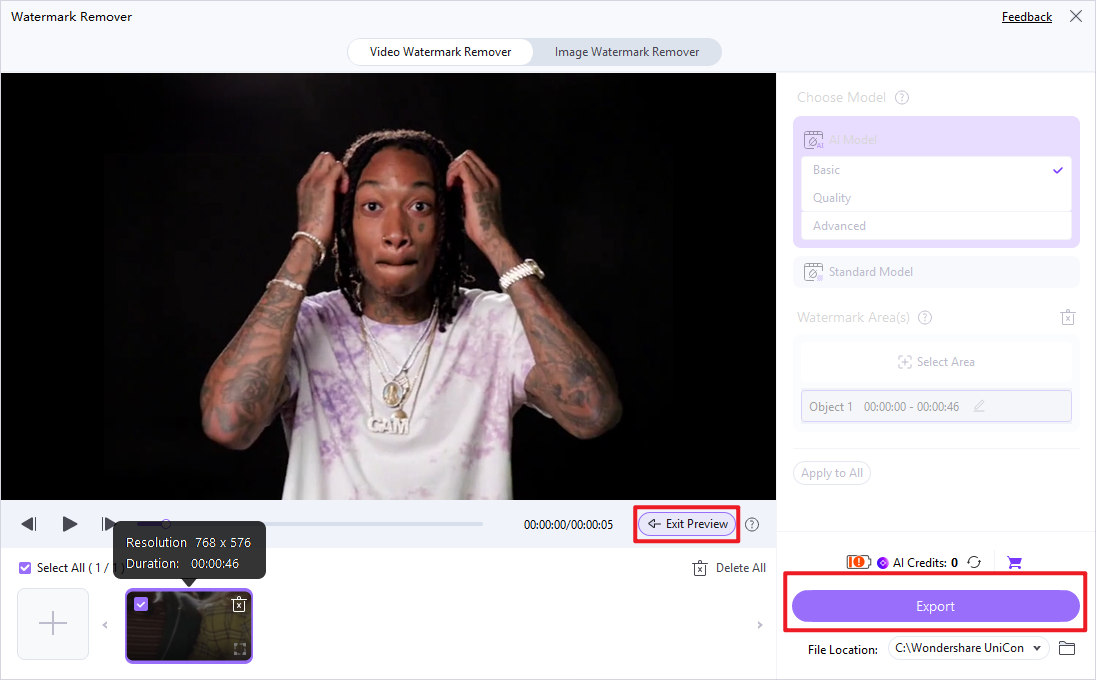
Step 4: Preview and Save the Video
After selecting the watermark, click "Preview" to see the result. If satisfied, choose your desired output format and destination folder, then click "Remove Watermark" to save your clean file.

Beyond Magic Eraser: Advanced Watermark Removal
Part 7: Conclusion
The Magic Eraser Watermark Remover review reveals it to be a commendable tool for casual users and those needing quick, simple watermark removals. Its intuitive interface and batch processing capabilities make it efficient for basic tasks, particularly for social media content creators dealing with non-intrusive logos. However, its limitations become apparent when tackling complex watermarks or detailed backgrounds, often leading to noticeable image degradation. For professionals or users demanding flawless results, investing in more advanced software like UniConverter or PhotoDirector is advisable. These alternatives offer superior algorithms, broader format support, and consistent high-quality output, albeit often at a higher cost. Ultimately, the choice hinges on balancing budget, desired quality, and the complexity of the watermarks you frequently encounter. As watermark removal technology continues to evolve, we can anticipate more sophisticated AI-driven solutions that offer even greater precision and seamless integration in the future.
Part 8: FAQs
-
1. Is Magic Eraser Watermark Remover completely free to use?
Magic Eraser Watermark Remover typically operates on a freemium model. While it offers basic functionalities for free, advanced features, higher resolution exports, or unlimited usage often require a subscription or one-time purchase.
-
2. Can Magic Eraser remove watermarks from videos?
No, Magic Eraser Watermark Remover is primarily designed for image files (photos). For video watermark removal, you would need a dedicated video editing tool with such capabilities, like UniConverter.
-
3. What are the common reasons for poor results with watermark removers?
Poor results often stem from complex watermarks (e.g., textured, highly transparent, or integrated into busy backgrounds), low-resolution source images, or the use of less sophisticated removal algorithms that struggle to accurately reconstruct the underlying image data.
-
4. How do I choose the best watermark remover for my specific needs?
Consider the complexity of the watermarks you typically encounter, your budget, the importance of output quality, and whether you need batch processing or video support. For simple tasks, freemium tools might suffice; for professional needs, invest in comprehensive software.
-
5. Is it legal to remove watermarks from copyrighted images?
Removing watermarks from copyrighted images without permission from the copyright holder is generally illegal and constitutes copyright infringement. Watermark removal tools are intended for legitimate uses, such as removing your own watermarks or those from licensed stock photos after purchase.
