
- Luminar Watermark Remover: AI-powered, part of Luminar Neo, removes watermarks from images seamlessly.
- Core Features: AI object removal, context-aware reconstruction, non-destructive editing for natural results.
- Pros & Cons: Intuitive interface, batch processing (pros); subscription cost, struggles with complex backgrounds (cons).
- Target Users: Ideal for professionals needing high-quality, efficient batch removal; less for casual, one-off users.
- Comparison: Luminar offers excellent quality, UniConverter excels in speed/batch processing, Photoshop for pro editing, Inpaint for simplicity.
- Risks: Cloud privacy concerns, potential for AI over-reliance, subscription fatigue, image degradation on complex watermarks.
- UniConverter Alternative: Offers efficient, lossless, GPU-accelerated local processing for images and videos.
- Decision: Choose based on usage frequency, budget, privacy needs, and complexity of watermark removal tasks.
In this article
- Part 1: What is Luminar Watermark Remover?
- Part 2: Luminar Watermark Remover: Core Features, Pros, and Cons
- Part 3: Target Users and Use Cases
- Part 4: Luminar Watermark Remover and Alternatives Comparison
- Part 5: Potential Risks and Pitfalls to Consider
- Part 6: How to Use UniConverter to Efficiently Remove Watermarks from Images
- Part 7: Conclusion
- Part 8: FAQs
Luminar Watermark Remover: A Comprehensive Review and Comparison
The digital age has ushered in an unprecedented demand for high-quality visual content, making photo editing tools indispensable for professionals and enthusiasts alike. Among the myriad challenges faced by content creators, the presence of unwanted watermarks often disrupts the aesthetic and integrity of an image. This Luminar Watermark Remover review delves into a specialized solution designed to tackle this very issue, leveraging advanced AI to deliver clean, watermark-free images. This review will provide a detailed analysis of its features, compare it against leading alternatives, and offer insights into its optimal use cases, helping users make an informed decision in their quest for pristine visual content.
Part 1: What is Luminar Watermark Remover?
Luminar Watermark Remover is a dedicated feature within the broader Luminar Neo photo editing suite, specifically engineered to intelligently detect and remove unwanted watermarks, logos, and other superimposed elements from images. It harnesses sophisticated AI algorithms to analyze the surrounding pixels and reconstruct the underlying image data, aiming for a seamless and natural-looking result. This tool positions itself as a powerful solution for photographers, designers, and content creators who frequently encounter watermarked images and require a high degree of precision in their removal efforts. The core problem it addresses is the time-consuming and often imperfect manual removal process, offering an automated and more efficient alternative.
The Rise of AI-Powered Photo Editing
* Growing Need for Efficiency: Manual watermark removal is tedious and often yields suboptimal results, especially for complex backgrounds.
* Advancements in AI: Modern AI can analyze image context and intelligently fill in missing information, revolutionizing object removal.
* Demand for Professional Results: Users expect flawless image quality, making AI-powered tools a necessity for achieving professional-grade edits.
* Accessibility of Complex Tools: AI simplifies previously complex tasks, making advanced editing features accessible to a wider audience.
Part 2: Luminar Watermark Remover: Core Features, Pros, and Cons
Luminar Watermark Remover, as part of Luminar Neo, offers a robust set of functionalities centered around its AI-driven object removal capabilities. Its primary strength lies in its ability to intelligently analyze and reconstruct image areas where watermarks once resided, aiming for a natural and undetectable outcome. The tool is integrated within a user-friendly interface, making the process accessible even for those with limited photo editing experience. Its core capabilities extend beyond simple watermark removal to encompass general object removal, providing a versatile solution for various image clean-up tasks.
Core Features:
* AI-powered Intelligent Object Removal: Utilizes advanced algorithms to seamlessly erase unwanted elements.
* Context-Aware Reconstruction: Analyzes surrounding pixels to fill in removed areas naturally.
* Brush and Lasso Selection Tools: Provides flexible selection methods for precise watermark targeting.
* Adjustable Brush Size and Feathering: Allows for fine-tuning of selection and blending.
* Non-Destructive Editing: Edits are applied on a separate layer, preserving the original image.
Pros
* AI-powered intelligent object removal for seamless results
* Intuitive user interface for ease of use
* Batch processing capabilities for efficiency
Cons
* Subscription-based model can be costly for occasional users
* May struggle with complex or highly textured backgrounds
Part 3: Target Users and Use Cases
Luminar Watermark Remover is primarily designed for individuals and businesses that regularly work with digital images and require high-quality watermark removal. Its advanced AI capabilities and integrated workflow make it particularly appealing to specific user groups, while its subscription model and potential learning curve might limit its appeal for others. Understanding its ideal applications and limitations is crucial for potential users.
Best Use Case: Professional Photographers and Content Creators
Professional photographers, graphic designers, and digital content creators who frequently acquire images from various sources (stock photos, client submissions, historical archives) often encounter watermarks that need to be removed for commercial or artistic purposes. Luminar Watermark Remover's AI precision and batch processing capabilities significantly streamline their workflow, allowing them to clean multiple images efficiently while maintaining high output quality. For these users, the investment in a subscription is justified by the time savings and professional results.
Limited Use Case: Quick, One-Off Watermark Removal for Casual Users
For casual users who only occasionally need to remove a watermark from a personal photo, the subscription-based model of Luminar Neo, which includes the Watermark Remover, might be an overkill. While the tool is effective, the cost and the need to install a comprehensive photo editing suite for a single task may not be practical. Simpler, free online tools or basic photo editors might be more suitable for these infrequent, less demanding needs, even if the output quality is not as refined.
Part 4: Luminar Watermark Remover and Alternatives Comparison
When it comes to watermark removal, users have several options, ranging from dedicated AI tools to comprehensive editing suites. Understanding how Luminar Watermark Remover stacks up against its competitors is crucial for making an informed decision. Here, we compare Luminar with UniConverter, Adobe Photoshop, and Inpaint.
| Feature/Tool | Luminar Watermark Remover | UniConverter | Adobe Photoshop | Inpaint |
| AI-Powered Removal | Yes | Yes (Smart AI) | Yes (Content-Aware Fill) | Yes |
| Batch Processing | Yes | Yes | No (requires scripting) | No |
| Ease of Use | High | High | Medium | High |
| Pricing Model | Subscription | One-time purchase | Subscription | One-time purchase / Free (limited) |
| Output Quality | Excellent | Excellent | Excellent | Good |
| Processing Speed | Fast | Very Fast (GPU acceleration) | Medium | Medium |
| Customer Support | Good | Excellent | Excellent | Fair |
| Security | Cloud-based (optional) | Local processing | Cloud-based (optional) | Local processing |
Luminar Watermark Remover excels with its dedicated AI and user-friendly interface, making it a strong contender for those prioritizing ease of use and good output quality within a subscription model. UniConverter stands out for its exceptional processing speed, especially with GPU acceleration, and its one-time purchase model, offering a cost-effective and highly efficient solution for batch processing. Adobe Photoshop, while offering excellent output quality with its Content-Aware Fill, requires a steeper learning curve and lacks native batch processing for this specific task. Inpaint provides a simple, direct approach but may not match the precision or batch capabilities of the AI-driven alternatives. For users needing a versatile, fast, and secure local solution, UniConverter presents a compelling alternative.
Part 5: Potential Risks and Pitfalls to Consider
While Luminar Watermark Remover offers powerful capabilities, users should be aware of potential risks and pitfalls, particularly concerning its operational model and the nature of AI-driven editing. These considerations can impact user experience, data security, and the ultimate quality of the edited images.
Data Privacy Concerns with Cloud-Based Processing
Luminar Neo, while primarily a desktop application, may utilize cloud-based services for certain AI enhancements or features. This raises potential data privacy concerns, especially for users handling sensitive or proprietary images. Uploading images to external servers, even temporarily, introduces a risk of unauthorized access or data breaches, depending on the service provider's security protocols. Users should carefully review Luminar's privacy policy and understand how their data is handled when using cloud-dependent features.
Over-reliance on AI for Critical Edits
While AI is powerful, over-reliance on automated tools for critical edits can lead to unexpected or undesirable results. AI algorithms, though sophisticated, are not infallible and may sometimes misinterpret image context, leading to artifacts, blurry areas, or unnatural reconstructions, especially in complex scenarios. For professional work, it's crucial to review AI-generated edits meticulously and be prepared to perform manual touch-ups or use alternative methods when the AI falls short.
Subscription Fatigue and Hidden Costs
Luminar Neo operates on a subscription model, which, while offering continuous updates and access to new features, can contribute to "subscription fatigue" for users already managing multiple software subscriptions. The recurring cost can become a significant expenditure over time, especially for occasional users who might not fully utilize all features. Additionally, there might be hidden costs associated with premium add-ons, cloud storage, or future feature upgrades that are not explicitly covered by the base subscription.
Potential for Image Degradation on Complex Watermarks
Despite its advanced AI, Luminar Watermark Remover may struggle with highly complex watermarks, especially those that are intricately blended into textured backgrounds, have varying opacities, or cover critical details of the image. In such cases, the AI might not be able to perfectly reconstruct the underlying image, leading to noticeable blurring, smudging, or an overall degradation of image quality in the affected areas. Users should manage expectations and understand that not all watermarks can be removed flawlessly without some level of compromise to the original image integrity.
Part 6: How to Use UniConverter to Efficiently Remove Watermarks from Images
When other tools fall short with batch processing, unstable removal effects, or weak results, UniConverter emerges as a robust solution for efficient and high-quality watermark removal. It bypasses common issues like intrusive ads, limited format support, and inconsistent output, offering a stable, lossless, and GPU-accelerated experience. UniConverter is an all-in-one solution that ensures your images are clean and pristine, making it an excellent alternative for both single and batch watermark removal tasks.
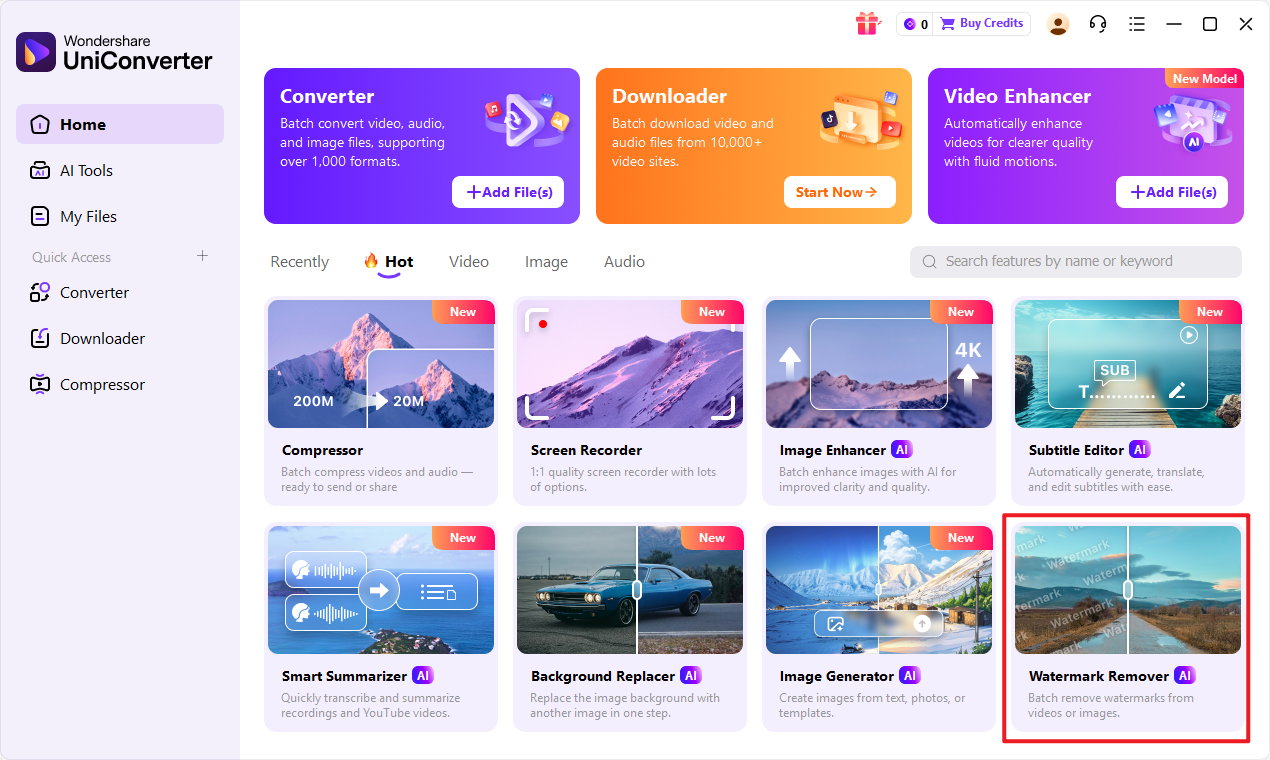
Step 1: Open UniConverter and Choose Watermark Remover
Launch Wondershare UniConverter on your computer. From the main interface, navigate to the "Toolbox" section and select the Watermark Remover feature. This will open a dedicated window for image watermark removal.
Step 2: Upload the Videos
Click on the "Add Files" button or drag and drop your image files directly into the UniConverter interface. You can add multiple images for batch processing.

Step 3: Choose Selected Area
Once your image is loaded, use the selection tool to precisely draw a box around the watermark you wish to remove. UniConverter's smart AI will analyze the selected area and its surroundings.
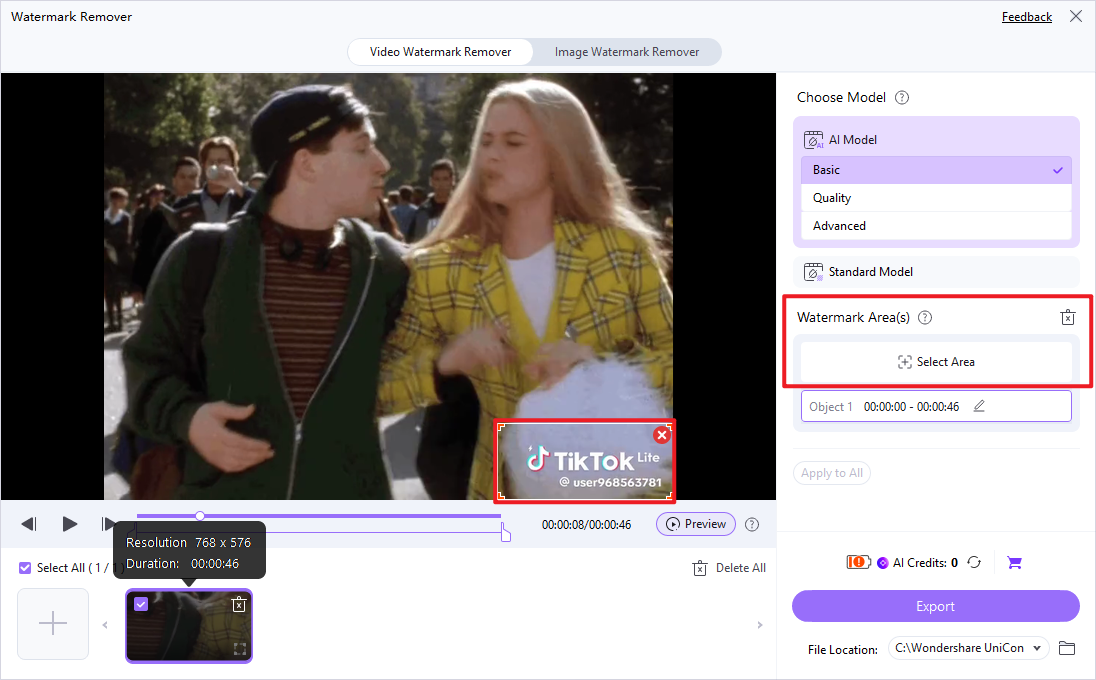
Step 4: Preview and Save the Video
After selecting the watermark, click the "Remove Watermark" button. UniConverter will process the image. You can then preview the result to ensure the watermark is seamlessly removed before saving your clean image to your desired output folder.


Luminar Watermark Remover Alternative?
Part 7: Conclusion
This Luminar Watermark Remover review has explored the capabilities, advantages, and limitations of Luminar's AI-powered watermark removal feature, positioning it within the broader landscape of photo editing tools. For professional photographers and content creators who regularly deal with watermarked images and require high-quality, efficient batch processing, Luminar offers a compelling solution with its intuitive interface and advanced AI. However, its subscription model and potential struggles with highly complex watermarks might make it less ideal for casual users or those with very specific, challenging removal needs. For users prioritizing a versatile, secure, and cost-effective one-time purchase solution with excellent batch processing and GPU acceleration, UniConverter stands out as a superior alternative, offering a robust and efficient workflow without the concerns of cloud privacy or recurring costs. Ultimately, the best choice depends on individual usage patterns, budget, and the specific demands of the watermark removal tasks at hand.
Part 8: FAQs
-
1. Is Luminar Watermark Remover truly free?
Luminar Watermark Remover is part of Luminar Neo, which operates on a subscription model. While there might be free trials available, the full functionality requires a paid subscription.
-
2. Can Luminar Watermark Remover remove watermarks from videos?
No, Luminar Watermark Remover is designed specifically for images. For video watermark removal, you would need a dedicated video editing tool.
-
3. How does Luminar's AI compare to other tools?
Luminar's AI is highly advanced, offering excellent context-aware removal for most watermarks. It generally performs on par with or slightly better than many general-purpose photo editors but may be challenged by extremely complex or heavily textured backgrounds where specialized tools might offer more granular control.
-
4. Are there any privacy concerns when using Luminar?
While Luminar Neo is primarily a desktop application, some AI features or cloud integrations might involve data processing on external servers. Users should review Skylum's privacy policy to understand how their image data is handled, especially if working with sensitive content.
-
5. What are the best alternatives to Luminar Watermark Remover?
Top alternatives include UniConverter for its batch processing and local security, Adobe Photoshop with its Content-Aware Fill for professional-grade results, and Inpaint for simple, direct watermark removal. Each offers different strengths depending on user needs and budget.
