
- DeepAI Overview: AI-powered online tool for quick watermark removal.
- Core Features: AI-driven, user-friendly interface, batch processing for efficiency.
- Pros & Cons: Fast and easy, but can produce artifacts on complex images.
- Ideal Users: Best for social media creators needing quick, non-professional edits.
- Comparison: DeepAI balances speed/accuracy; UniConverter offers superior quality/features.
- Risks: Data privacy, potential image alterations, subscription value, quality degradation.
- UniConverter Alternative: Stable, lossless, high-quality watermark removal with GPU acceleration.
- Decision: Choose based on need: DeepAI for quick, UniConverter for professional results.
In this article
- Part 1: What is DeepAI Watermark Remover?
- Part 2: DeepAI Watermark Remover: Core Features, Pros, and Cons
- Part 3: DeepAI Watermark Remover: Ideal Users and Use Cases
- Part 4: DeepAI Watermark Remover and Alternatives Comparison
- Part 5: Risks and Pitfalls to Consider
- Part 6: How to Use UniConverter to Efficiently Remove Image Watermarks
- Part 7: Conclusion
- Part 8: FAQs
DeepAI Watermark Remover: A Comprehensive Review and Comparison
The digital landscape is awash with visual content, and with it, the pervasive presence of watermarks. These digital signatures, while serving their purpose of copyright protection, often hinder the seamless use and enjoyment of images. This DeepAI Watermark Remover review delves into a solution designed to address this common pain point. We will explore its capabilities, compare it against leading alternatives, and provide a nuanced perspective on its suitability for various users. This analysis aims to equip you with the insights needed to make an informed decision regarding watermark removal tools in an increasingly AI-driven image editing world.
Part 1: What is DeepAI Watermark Remover?
DeepAI Watermark Remover is an online, AI-powered tool designed to intelligently detect and eliminate watermarks from images. Leveraging advanced machine learning algorithms, it aims to reconstruct the underlying image content, offering a quick and often effective solution for removing unwanted overlays. This review seeks to evaluate its performance, user experience, and overall value proposition in a market saturated with image editing tools. Our core objective is to determine if DeepAI Watermark Remover lives up to its promise of efficient and high-quality watermark removal, especially when compared to other established and emerging solutions.
The Rise of AI-Powered Image Editing
* Growing demand for quick and easy image manipulation: Users increasingly seek tools that simplify complex editing tasks.
* Advancements in AI and machine learning: These technologies enable automated and sophisticated image processing.
* Proliferation of watermarked content: The need for effective watermark removal solutions is ever-present.
* Accessibility of online tools: Cloud-based platforms offer convenience and reduce the need for specialized software.
Part 2: DeepAI Watermark Remover: Core Features, Pros, and Cons
DeepAI Watermark Remover offers a streamlined approach to a common image editing challenge. Its core capability lies in its AI-driven engine, which attempts to intelligently analyze and remove watermarks. The tool primarily focuses on simplicity and speed, making it accessible to users without extensive graphic design experience. It supports various image formats and aims to deliver clean, watermark-free outputs. The user interface is minimalist, guiding users through a straightforward upload-and-process workflow.
Pros:
* High-efficiency AI-driven watermark removal for various image types.
* User-friendly interface for quick and easy processing.
* Batch processing capabilities for multiple images.
Cons:
* Potential for artifacts or unnatural results on complex watermarks or backgrounds.
* Limited customization options for fine-tuning removal.
Part 3: DeepAI Watermark Remover: Ideal Users and Use Cases
DeepAI Watermark Remover caters primarily to individuals and small businesses seeking a fast and straightforward solution for watermark removal. Its ease of use makes it particularly appealing to those who lack professional editing software or the expertise to perform manual watermark removal. The tool excels in scenarios where quick results are prioritized over absolute pixel-perfect precision.
Best Use Case: Quick Removal for Social Media Content Creators
Social media managers, influencers, and small business owners often need to quickly prepare images for online platforms. DeepAI Watermark Remover provides a rapid solution for removing watermarks from stock photos, promotional materials, or user-generated content, allowing for faster content creation and deployment without significant editing overhead.
Limited Use Case: Professional Photography Restoration
For professional photographers or graphic designers involved in high-stakes image restoration or archival work, DeepAI Watermark Remover's limitations in precision and customization can be a significant drawback. Complex watermarks, intricate backgrounds, or the need for perfect image integrity often necessitate more advanced, manual editing techniques or specialized software that offers granular control over the removal process.
Part 4: DeepAI Watermark Remover and Alternatives Comparison
| Feature/Product | DeepAI Watermark Remover | UniConverter | PhotoDirector | Inpaint |
| AI Accuracy | High | High | Medium-High | Medium |
| Speed | Fast | Very Fast | Medium | Medium-Fast |
| Output Quality | Good | Excellent | Good-Excellent | Fair-Good |
| Ease of Use | Excellent | Excellent | Good | Good |
| Pricing Model | Freemium | Subscription | Subscription | One-time purchase |
Key Differentiators:
DeepAI's strength lies in its balance of speed and AI-driven accuracy, offering a quick solution for many users. UniConverter distinguishes itself with superior output quality, especially for intricate details, alongside a comprehensive suite of other editing tools. PhotoDirector provides a more feature-rich editing environment beyond just watermark removal, while Inpaint offers a cost-effective, one-time purchase option for occasional users, though its AI accuracy might not match the others.
Part 5: Risks and Pitfalls to Consider
When utilizing online tools like DeepAI Watermark Remover, users must be aware of several potential risks and pitfalls. While the convenience is undeniable, the trade-offs can sometimes impact image quality, data privacy, and overall user experience, particularly with free or freemium models that often come with hidden costs or limitations.
Data Privacy Concerns with Cloud-Based Processing
Uploading images to cloud-based services inherently raises questions about data privacy. Users should be mindful of the terms of service regarding how their uploaded images are stored, processed, and potentially used by the service provider. Sensitive or proprietary images should be handled with extreme caution.
Potential for Unwanted Image Alterations
AI-driven tools, while powerful, are not infallible. There's a risk that the watermark removal process might inadvertently alter other parts of the image, leading to unnatural textures, blurred areas, or color shifts. This is particularly true for complex images with intricate details or watermarks that blend seamlessly with the background.
Subscription Model Value vs. Usage Frequency
Many online tools operate on a freemium or subscription model. For infrequent users, a subscription might represent poor value. Conversely, the free tiers often come with significant limitations, such as reduced processing quality, file size restrictions, or the inability to batch process, pushing users towards paid plans.
Impact on Original Image Resolution and Quality
Some online watermark removers, especially free versions, may downscale images or apply compression during the removal and export process. This can lead to a noticeable degradation in the original image's resolution and overall quality, making it unsuitable for professional printing or high-resolution displays.
Part 6: How to Use UniConverter to Efficiently Remove Image Watermarks
When other tools fall short with inconsistent results, limited batch processing, or noticeable quality degradation, UniConverter emerges as a robust and versatile solution. It offers a comprehensive suite of video and image editing tools, including a highly effective watermark remover, ensuring stable, lossless, and high-quality results. UniConverter leverages GPU acceleration for fast processing and supports a wide array of formats, all within an ad-free environment, making it an ultimate all-in-one solution for your media editing needs.
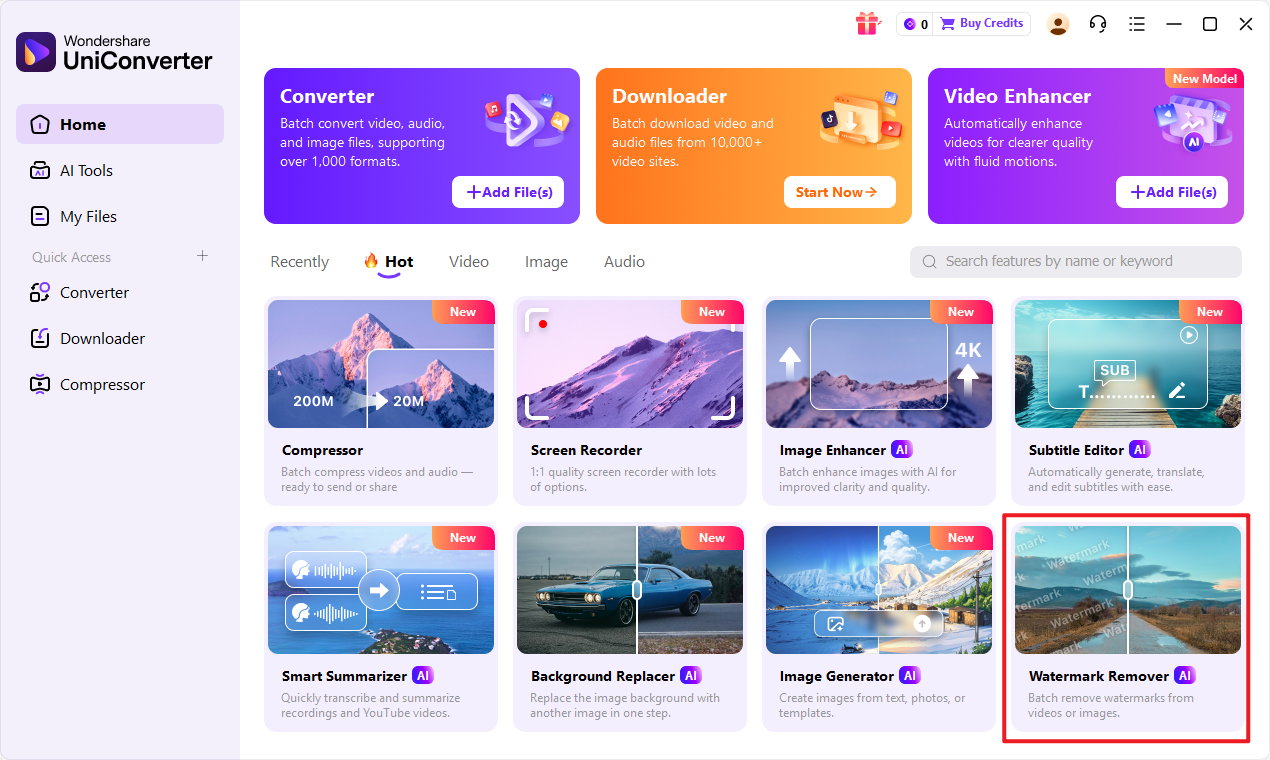
Step 1: Open UniConverter and Choose Watermark Remover
Launch UniConverter on your computer. Navigate to the 'Toolbox' section and select the 'Watermark Editor' feature.
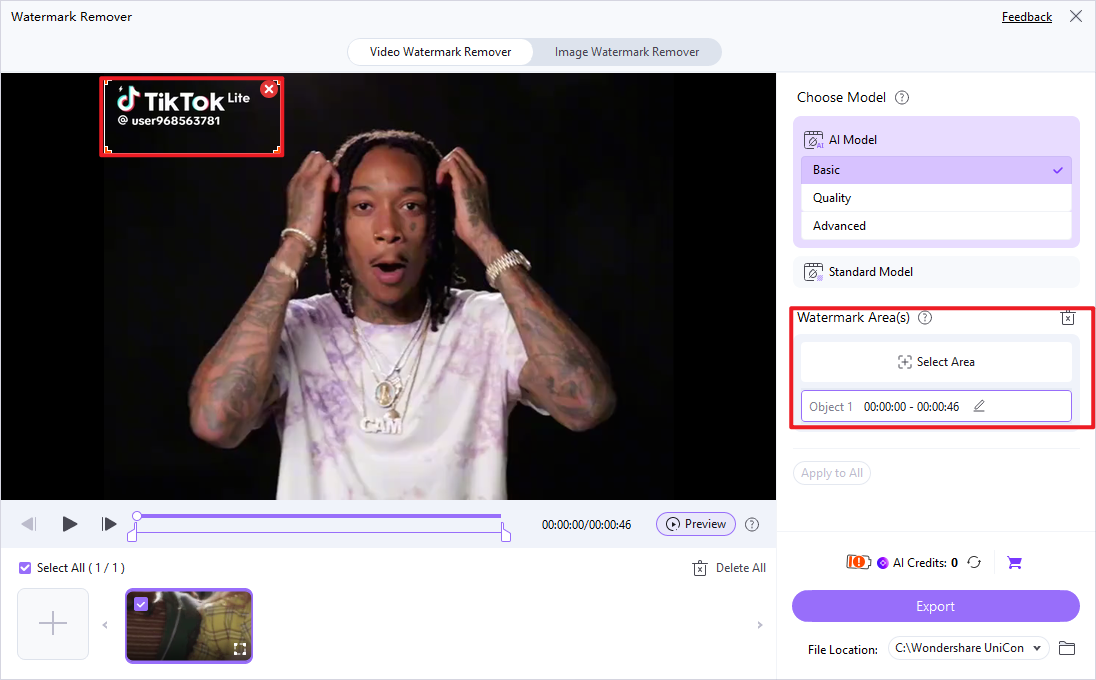
Step 2: Upload the Videos Choose Selected Area
Click on 'Remove Watermark' and then drag and drop your image file into the interface, or click 'Add Files' to browse and select your image. For efficient image watermark removal, this step is crucial.
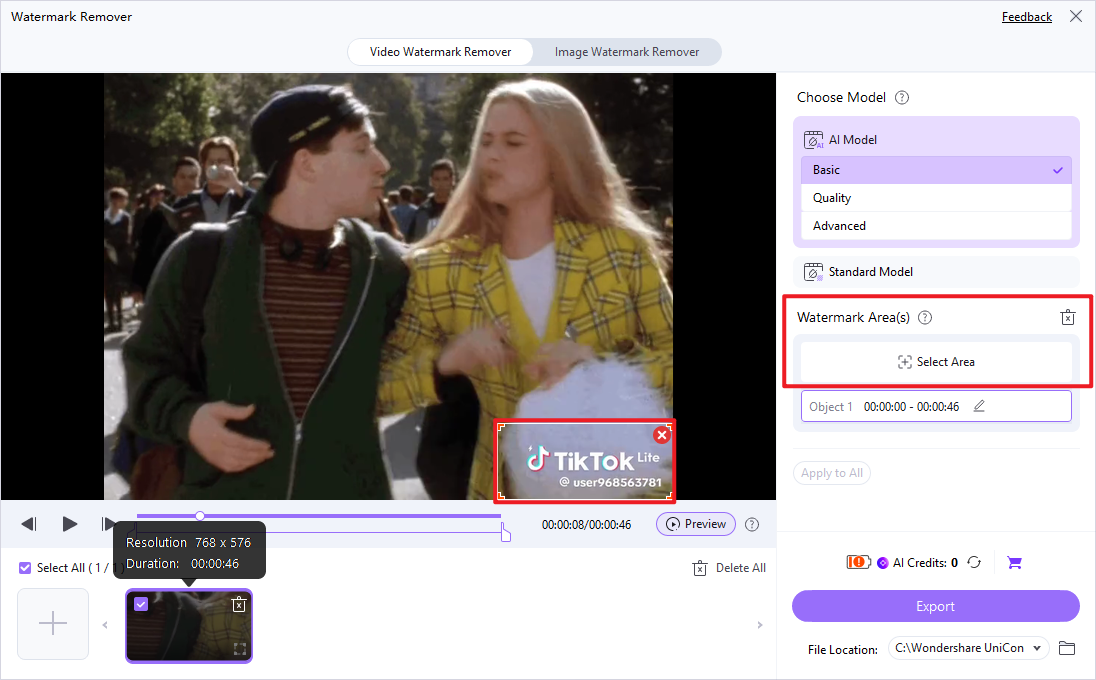
Step 3: Preview and Save the Video
Once the image is loaded, use the selection tool to precisely highlight the watermark area. UniConverter's AI will then process the removal of text from video.
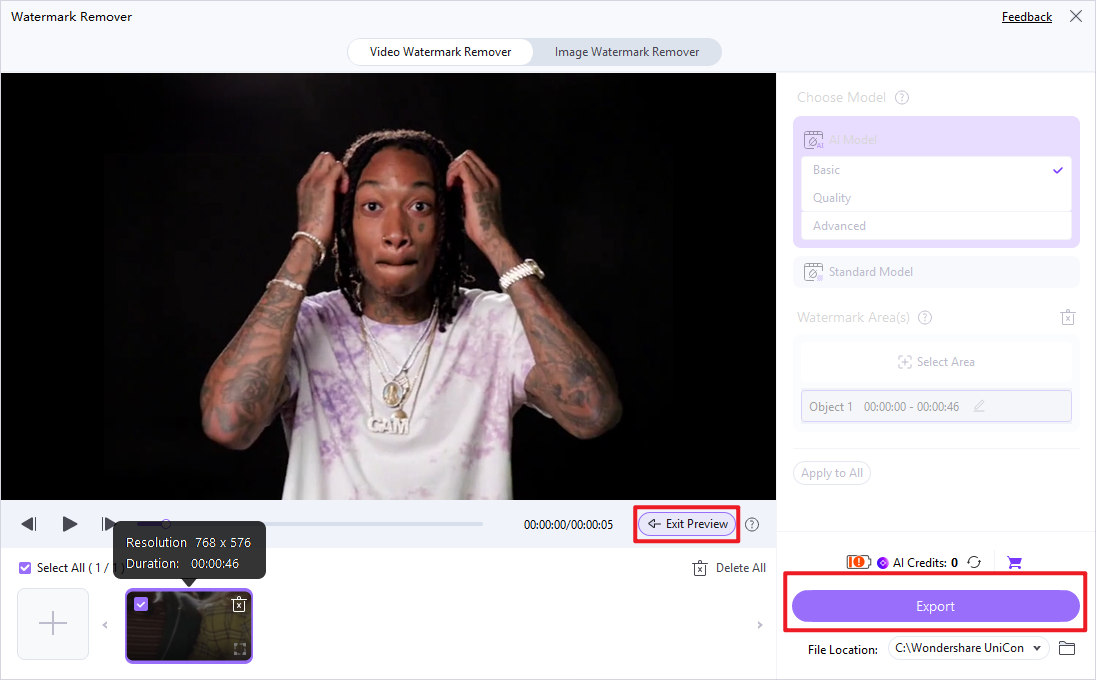
Step 4: Preview and Save the Video
After the removal process, preview the result. If satisfied, click 'Export' to save your clean image to your desired location without any loss in quality. This process ensures you can remove watermarks easily.

DeepAI Watermark Remover Alternative for Better Results?
Part 7: Conclusion
The DeepAI Watermark Remover review reveals a tool that offers a convenient and often effective solution for removing watermarks, particularly for casual users and social media content creators who prioritize speed and ease of use. Its AI-driven approach can deliver good results for straightforward watermarks. However, for professionals requiring pixel-perfect precision, intricate detail preservation, or handling complex watermarks, its limitations in customization and potential for artifacts become apparent. For those seeking a more robust, versatile, and high-quality solution, especially with batch processing capabilities and a broader suite of editing tools, alternatives like UniConverter present a compelling option. Ultimately, the best choice depends on individual needs, the complexity of the task, and the desired balance between convenience and professional-grade output.
Part 8: FAQs
-
1. Is DeepAI Watermark Remover completely free to use?
DeepAI Watermark Remover operates on a freemium model. While it offers some free usage, there are typically limitations on the number of images, file size, or processing quality, requiring a subscription for full access.
-
2. How accurate is DeepAI Watermark Remover compared to manual editing?
DeepAI Watermark Remover offers good accuracy for simple watermarks, often outperforming basic manual attempts. However, for complex watermarks or intricate backgrounds, manual editing by a skilled professional can achieve superior, more precise results.
-
3. Can DeepAI Watermark Remover remove watermarks from videos?
No, DeepAI Watermark Remover is specifically designed for images. For video watermark removal, you would need a dedicated video editing tool that offers such functionality.
-
4. What are the privacy implications of uploading images to DeepAI?
As a cloud-based service, uploading images to DeepAI involves transmitting your data to their servers. Users should review DeepAI's privacy policy to understand how their uploaded images are handled, stored, and used.
-
5. Are there any limitations on image file size or type?
Yes, free tiers often impose limitations on image file size and supported formats. Larger files or less common formats might require a premium subscription or may not be supported at all.
