
- Affinity Photo Value: Offers powerful, precise watermark removal for complex cases, a strong Photoshop alternative with a one-time purchase.
- Core Features: Utilizes advanced tools like Inpainting, Clone, and Healing brushes for meticulous, non-destructive watermark removal.
- Limitations: Steep learning curve and lacks AI-powered, one-click, or efficient batch processing for simple or multiple watermarks.
- Target Users: Ideal for professionals (photographers, designers) needing high precision for intricate watermarks on valuable images.
- Comparison: Excels in precision over UniConverter and Fotor, but UniConverter surpasses it in ease of use and batch processing.
- Risks: Potential for image degradation, time-consuming for batches, and significant copyright infringement concerns if misused.
- UniConverter Solution: Provides an efficient, user-friendly alternative with AI-powered batch processing for quick, high-quality results.
- Decision Factor: Choose Affinity Photo for ultimate control; UniConverter for speed, ease, and batch efficiency.
In this article
- Part 1: What is Affinity Photo
- Part 2: Affinity Photo's Core Features and Limitations for Watermark Removal
- Part 3: Target Users and Usage Scenarios
- Part 4: Affinity Photo and Alternatives Comparison
- Part 5: Risks and Pitfalls When Removing Watermarks with Affinity Photo
- Part 6: How to Use UniConverter for Efficient Watermark Removal
- Part 7: Conclusion
- Part 8: FAQs
Affinity Photo Watermark Remover: A Comprehensive Scenario-Based Review
In the dynamic world of digital imagery, the need for precise and powerful photo editing tools is paramount. Affinity Photo has carved out a significant niche, positioning itself as a formidable alternative to industry giants, offering a one-time purchase model against subscription-based competitors. This review delves into Affinity Photo's capabilities, particularly its utility as a watermark remover, and critically compares it against various alternatives. We will explore its strengths, weaknesses, and ideal use cases, providing a multi-dimensional perspective for both professional editors and casual users seeking efficient solutions for image manipulation.
Part 1: What is Affinity Photo
Affinity Photo, developed by Serif Europe, is a professional raster graphics editor that has gained considerable traction since its initial release. It's often lauded as a powerful, more affordable alternative to Adobe Photoshop, offering a comprehensive suite of tools for photo retouching, image manipulation, and graphic design. This review specifically focuses on its efficacy in removing unwanted watermarks from images, a common task for photographers, designers, and content creators. We aim to address the core problem of finding a reliable and efficient method for watermark removal, balancing precision with ease of use.
The Rise of Professional Photo Editing Tools
The digital age has ushered in an unprecedented demand for high-quality visual content, making professional photo editing tools indispensable.
* Market Demand: The proliferation of online platforms and visual media has driven a continuous need for image refinement and manipulation.
* User Pain Points: Users frequently encounter watermarked images, either for legitimate restoration purposes or when needing to clean up personal photos.
* Technological Advancements: The evolution of software capabilities, including AI, has transformed how image editing tasks, like watermark removal, are approached.
* Cost-Effectiveness: The desire for powerful tools without recurring subscription fees has fueled the popularity of one-time purchase software like Affinity Photo.
Part 2: Affinity Photo's Core Features and Limitations for Watermark Removal
Affinity Photo boasts a robust set of features that make it a strong contender for various image editing tasks, including the intricate process of watermark removal. Its core strength lies in providing users with granular control over their edits.
Core Capabilities for Watermark Removal:
* Inpainting Tool: Similar to content-aware fill, this tool intelligently fills selected areas based on surrounding pixels.
* Clone Brush Tool: Allows users to sample pixels from one area of an image and paint them over another, ideal for blending out watermarks.
* Healing Brush Tool: Automatically matches the texture, lighting, and shading of the sampled pixels to the source, seamlessly blending the repair.
* Selection Tools: A variety of precise selection tools (e.g., Pen Tool, Selection Brush, Flood Select Tool) enable accurate isolation of watermarks.
* Layer Masks: Non-destructive editing through layer masks allows for flexible and reversible adjustments during the removal process.
Pros
* Advanced Selection Tools for Precise Watermark Isolation: Affinity Photo offers a wide array of selection tools, from pixel-perfect selections to intelligent brush-based selections, allowing for highly accurate isolation of watermarks, even those with complex shapes or transparent effects.
* Non-Destructive Editing Capabilities for Reversibility: The software's robust layer system and non-destructive editing features mean users can experiment with different removal techniques without permanently altering the original image data, providing flexibility and peace of mind.
* Integration with Other Affinity Suite Products for Workflow Efficiency: For users already invested in the Affinity ecosystem (Designer, Publisher), Affinity Photo offers seamless integration, streamlining workflows for projects that involve multiple design elements.
Cons
* Steep Learning Curve for Beginners: The extensive feature set and professional-grade interface can be overwhelming for new users, requiring a significant time investment to master its various tools and techniques for effective watermark removal.
* Lack of Dedicated AI-Powered Watermark Removal Tools: Unlike some newer solutions, Affinity Photo relies primarily on manual and semi-manual tools for watermark removal, lacking a one-click, AI-driven solution that could automate the process for simpler cases.
Part 3: Target Users and Usage Scenarios
Affinity Photo's capabilities for watermark removal cater to specific user profiles and scenarios, excelling in some areas while being less suitable for others. Understanding these distinctions is crucial for making an informed decision.
Best Use Case: Professional Image Restoration and Complex Watermark Removal
Affinity Photo truly shines when dealing with intricate watermarks on high-value images where precision and quality are paramount. This includes:
* Professional Photographers: Restoring old photographs or preparing images for client delivery where watermarks need to be meticulously removed without any trace of degradation.
* Graphic Designers: Integrating images into designs where watermarks would detract from the aesthetic, requiring seamless removal that blends perfectly with the surrounding content.
* Archivists and Conservators: Digitizing and cleaning up historical documents or artworks that may contain stamps or watermarks, demanding the highest level of detail and non-destructive editing.
* Complex Watermarks: When watermarks are semi-transparent, textured, or placed over detailed areas of an image, Affinity Photo's manual tools offer the control needed to achieve a flawless result.
Limited Use Case: Batch Processing and Quick, Simple Watermark Removal
For users who need to remove simple watermarks from a large number of images quickly, or who are looking for a one-click solution, Affinity Photo might not be the most efficient choice.
* Casual Users: Individuals who occasionally need to remove a basic watermark from a personal photo and are not familiar with complex editing software will find the learning curve too steep and the process too time-consuming.
* Batch Processing: Affinity Photo lacks robust built-in batch processing capabilities specifically for watermark removal, making it inefficient for handling hundreds or thousands of images with similar watermarks. Each image typically requires individual attention.
* Simple, Uniform Watermarks: While capable, using Affinity Photo's advanced tools for a simple, solid-color watermark on a plain background is overkill and less efficient than dedicated, simpler tools.
Part 4: Affinity Photo and Alternatives Comparison
When considering Affinity Photo Watermark Remover, it's essential to compare its performance and features against leading alternatives to understand its position in the market.
| Feature/Scenario | Affinity Photo | Adobe Photoshop | UniConverter | Fotor |
| Precision Watermark Removal | High | High | Moderate | Moderate |
| Ease of Use | Moderate | Moderate | High | High |
| Batch Processing | Low | Moderate | High | Moderate |
| Cost | One-time purchase | Subscription | One-time/Subscription | Free/Subscription |
| Learning Curve | Steep | Steep | Low | Low |
| Processing Speed | Fast (desktop) | Fast (desktop) | Very Fast (GPU accel.) | Moderate (online) |
| Output Quality | Excellent | Excellent | Very Good | Good |
| Customer Support | Good | Excellent | Excellent | Good |
| Security | Local processing | Local processing | Local processing | Cloud processing |
Affinity Photo excels in providing high-precision, manual control for intricate watermark removal, making it ideal for professionals. Adobe Photoshop offers similar capabilities with a more established ecosystem and extensive third-party plugins, but at a subscription cost. UniConverter stands out for its exceptional ease of use, batch processing capabilities, and fast, AI-powered removal, making it perfect for quick and efficient work on multiple files. Fotor, an online tool, offers a user-friendly interface for simpler tasks, though its precision and batch capabilities are more limited.
Part 5: Risks and Pitfalls When Removing Watermarks with Affinity Photo
While Affinity Photo offers powerful tools for watermark removal, users must be aware of potential risks and pitfalls that can arise, especially if not approached with care and understanding.
Potential for Image Degradation if Not Done Carefully
One of the primary risks is inadvertently degrading the image quality. If the inpainting, cloning, or healing tools are not used meticulously, they can introduce artifacts, blurriness, or unnatural patterns into the image. This is particularly true when dealing with watermarks over complex textures, gradients, or fine details. Over-processing or using incorrect brush settings can leave noticeable patches that detract from the original image's integrity, making the removal attempt worse than the watermark itself.
Time-Consuming for Multiple Images
Affinity Photo's strength in precision often translates into a time-intensive process. For individual, complex watermarks, this investment is justified. However, when faced with a large batch of images, each requiring individual attention and meticulous manual adjustments, the process becomes incredibly time-consuming. There isn't a robust, automated batch processing feature specifically for watermark removal, meaning users must repeat similar steps for every image, which can lead to fatigue and reduced efficiency.
Copyright Infringement Concerns
A significant ethical and legal pitfall is the potential for copyright infringement. Removing a watermark from an image, especially one that is not your own or for which you do not have explicit permission, can constitute a violation of copyright law. Watermarks are often placed to assert ownership and prevent unauthorized use. Users must ensure they have the legal right to modify and use the image after watermark removal to avoid legal repercussions. This tool should be used responsibly and ethically.
Learning Curve Frustration
For beginners or casual users, the steep learning curve of Affinity Photo can be a major source of frustration. The software's professional-grade interface and extensive array of tools, while powerful, require significant time and effort to master. Users might struggle to achieve satisfactory results, leading to wasted time and a sense of inadequacy. Without proper guidance or prior experience, the complexity of the software can hinder effective watermark removal, making simpler, more intuitive tools more appealing for quick tasks.
Part 6: How to Use UniConverter for Efficient Watermark Removal
While some tools struggle with batch processing, inconsistent results, or weak removal effects, UniConverter offers a robust and efficient alternative. It's an all-in-one solution that provides a seamless experience for various media tasks, including powerful watermark removal. UniConverter excels with its ad-free experience, extensive format support, GPU acceleration for speed, stable and lossless processing, and efficient batch watermark removal capabilities. It positions itself as the ultimate solution for users seeking quick, high-quality results without the hassle.
Step 1: Open UniConverter and Choose Watermark Remover
Launch UniConverter on your computer. From the main interface, navigate to the "Toolbox" section and select the "Watermark Remover" option. This will open the dedicated watermark removal module.

Step 2: Upload the Videos
Click on the "Add Files" button or drag and drop the image(s) you wish to process into the UniConverter interface. You can add multiple images for batch processing.

Step 3: Choose Selected Area
Once your image is loaded, a selection box will appear. Drag and resize this box to precisely cover the watermark you want to remove. For multiple watermarks, you can add additional selection boxes.
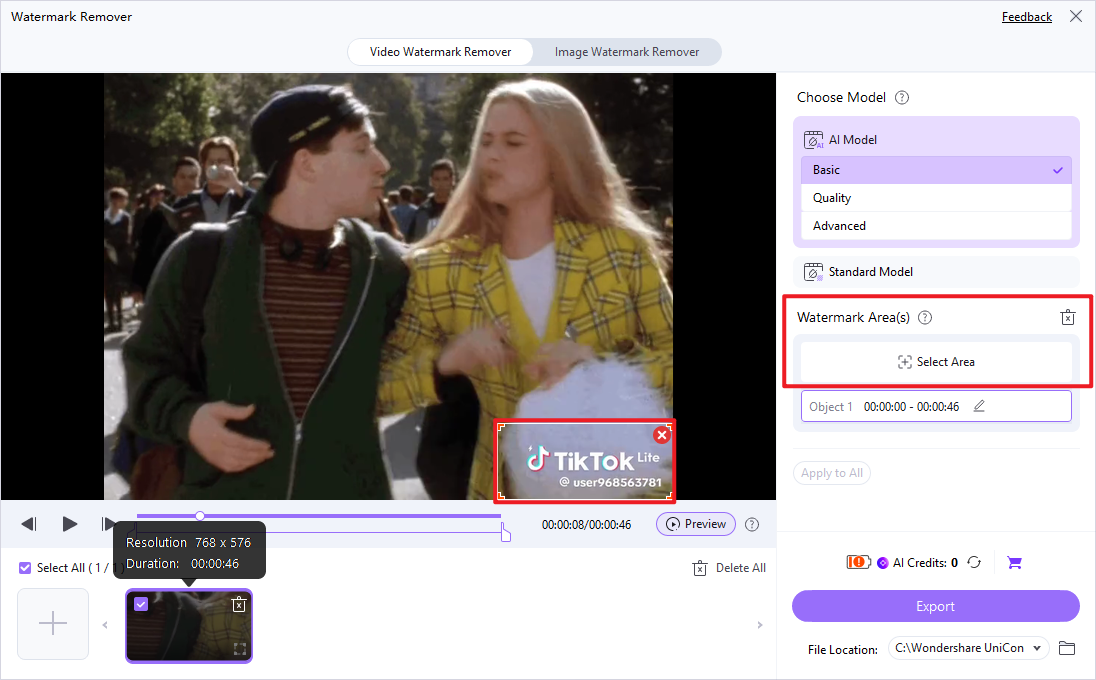
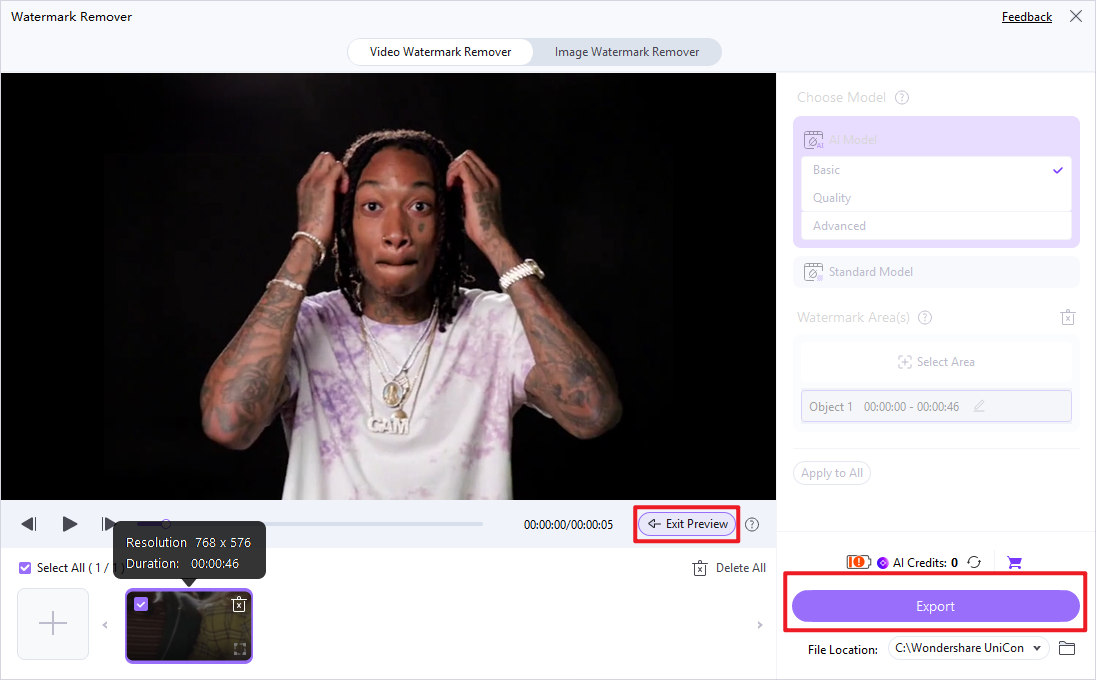
Step 4: Preview and Save the Video
After selecting the watermark area, click the "Remove Watermark" button. UniConverter will process the image. You can then preview the result to ensure satisfaction before saving the clean image to your desired location.

Need an Easier Way to Remove Watermarks?
Part 7: Conclusion
The Affinity Photo Watermark Remover review reveals it as a highly capable tool for precise and professional watermark removal, particularly suited for complex scenarios and users who demand granular control. Its one-time purchase model and non-destructive editing features make it an attractive option for professional editors and designers. However, its steep learning curve and lack of dedicated batch processing for watermark removal limit its appeal for casual users or those needing quick, automated solutions for multiple images. For such users, or when efficiency and ease of use are paramount, alternatives like UniConverter offer a compelling solution with their intuitive interfaces, AI-powered capabilities, and robust batch processing. Ultimately, the best choice depends on the user's skill level, the complexity of the watermark, the volume of images, and the desired balance between cost, control, and convenience.
Part 8: FAQs
-
1. Is Affinity Photo good for removing watermarks?
Yes, Affinity Photo is very good for removing watermarks, especially complex ones, due to its advanced selection, inpainting, cloning, and healing tools, which offer precise control.
-
2. Can I remove watermarks from multiple photos at once in Affinity Photo?
Affinity Photo does not have a dedicated batch processing feature specifically for automated watermark removal. Each image typically requires individual attention and manual adjustments, making it less efficient for large batches.
-
3. What are the legal implications of removing watermarks?
Removing watermarks from images without proper authorization can lead to copyright infringement. It is crucial to ensure you have the legal right or permission to modify and use the image after watermark removal.
-
4. Are there free alternatives to Affinity Photo for watermark removal?
Yes, there are free online tools and basic image editors that offer watermark removal features, though their precision and capabilities might be limited compared to professional software like Affinity Photo. GIMP is a free, open-source desktop alternative.
-
5. How does AI-powered watermark removal compare to manual methods?
AI-powered watermark removal tools are generally faster and easier to use, especially for simple watermarks or batch processing. However, manual methods in tools like Affinity Photo offer superior precision and control, often yielding better results for complex or intricate watermarks where AI might struggle with artifacts or unnatural blending.
