
- Stencil Value: Stencil excels in speed and simplicity for quick social media graphic creation.
- Comparison: Stencil is ideal for rapid content, while Canva offers broader versatility for diverse design needs.
- Decision Factor: Choose Stencil for fast, impactful social media posts; consider alternatives for complex projects.
- Limitations: Stencil lacks advanced editing, making it unsuitable for professional print or intricate branding.
- Risk Awareness: Be mindful of data privacy, vendor lock-in, and image quality limitations with online tools.
- UniConverter Solution: For advanced tasks like batch background removal, UniConverter offers robust, high-quality processing.
In this article
- Part 1: What is Stencil?
- Part 2: Stencil Core Strengths and Weaknesses
- Part 3: Stencil Ideal Users and Use Cases
- Part 4: Stencil and Alternatives Comparison
- Part 5: Risks and Pitfalls to Consider
- Part 6: How to Use UniConverter to Efficiently Replace Image Backgrounds
- Part 7: Conclusion
- Part 8: FAQs
Stencil: The Ultimate Guide to Streamlined Graphic Design
When I first started dabbling in online graphic design, I was overwhelmed by the sheer number of tools available. Many promised professional results but often came with steep learning curves or hefty price tags. That's when I discovered Stencil, a tool that positions itself as a fast and easy way to create stunning graphics. This Stencil review aims to cut through the marketing hype and give you a real-world perspective on its capabilities, comparing it to other popular options, and helping you decide if it's the right fit for your design needs. I'll share my experiences, highlight its strengths and weaknesses, and even suggest alternatives for different scenarios.
Part 1: What is Stencil?
Stencil is an online graphic design tool primarily focused on speed and simplicity, especially for social media content creation. It's designed for individuals and small businesses who need to produce visually appealing graphics quickly without extensive design experience. I remember feeling frustrated with complex software, and Stencil immediately appealed to me because it promised a straightforward approach. It felt like a breath of fresh air compared to the steep learning curves of more professional tools. This review will delve into how well it delivers on that promise and where it stands in the crowded market of online design platforms.
The Evolving Landscape of Online Graphic Design Tools
The demand for accessible graphic design tools has surged, driven by:
* The rise of social media marketing: Everyone needs engaging visuals to stand out.
* The growth of content creation: Bloggers, YouTubers, and podcasters all require consistent branding.
* The need for quick turnaround times: Businesses can't afford to wait days for a simple graphic.
* The democratization of design: Tools are becoming easier for non-designers to use effectively.
Part 2: Stencil Core Strengths and Weaknesses
From my experience, Stencil's core strength lies in its ability to get you from idea to finished graphic in minutes. It's like a fast-food restaurant for design – quick, efficient, and gets the job done.
Pros:
* Intuitive Interface for Rapid Design Creation: The drag-and-drop functionality and clear layout mean I rarely get lost. I can pick it up and start designing almost instantly.
* Extensive Library of Stock Photos and Icons: This is a huge time-saver. I don't have to hunt for royalty-free images elsewhere; Stencil has a massive collection built right in.
* Seamless Social Media Sharing Capabilities: Once my graphic is done, sharing it directly to various social media platforms is incredibly convenient. It cuts out several steps in my workflow.
Cons:
* Limited Advanced Editing Features for Complex Projects: When I need to do something more intricate, like precise layering or custom vector shapes, Stencil quickly shows its limitations. It's not built for that.
* Subscription Model Can Be Costly for Infrequent Users: If I only need to create a few graphics a month, the recurring subscription can feel a bit much compared to free alternatives or one-off purchases.
Part 3: Stencil Ideal Users and Use Cases
I've found that Stencil shines brightest for specific types of users and scenarios. It's not a one-size-fits-all solution, and understanding its sweet spot is key to avoiding frustration.
Best Use Case: Quick Social Media Content Creation for Small Businesses
For me, Stencil is a lifesaver when I need to whip up a quick Instagram post, a Facebook ad, or a Twitter header. If you're a small business owner, a social media manager, or a blogger who needs to maintain a consistent online presence with minimal fuss, Stencil is probably perfect for you. I can quickly select a template, swap out text and images, and have a professional-looking graphic ready to go in under five minutes. It's all about speed and efficiency for daily content needs.
Limited Use Case: Professional Print Design or Complex Branding Projects
However, if I'm working on a client's brand guide, designing a multi-page brochure for print, or creating intricate illustrations, Stencil simply doesn't cut it. The lack of advanced typography controls, precise alignment tools, and vector editing capabilities means it's not suitable for professional print design or projects requiring a high degree of customization and detail. I've tried to push its limits for these kinds of tasks, and it always leads to frustration and a subpar result.
Part 4: Stencil and Alternatives Comparison
When I look at Stencil alongside its competitors, it's clear each tool has its own niche. Here's how I see them stacking up:
| Feature/Scenario | Stencil | Canva | Piktochart | Adobe Express |
| Social Media Graphics | Excellent | Excellent | Good | Good |
| Infographics | Good | Excellent | Excellent | Good |
| Print Materials | Fair | Good | Fair | Good |
| Ease of Use | High | High | Medium | High |
| Advanced Editing | Low | Medium | Medium | Medium |
Key Differentiators:
Stencil excels in speed and simplicity for social media-focused content. It's my go-to for quick, impactful posts. Canva offers a broader range of templates and design types. If I need more versatility beyond social media, Canva is often my next choice. Piktochart specializes in data visualization and infographics. When I have a lot of data to present visually, Piktochart's dedicated features are invaluable. Adobe Express provides a more integrated experience within the Adobe ecosystem. If I'm already using other Adobe products, Express feels like a natural extension.
Part 5: Risks and Pitfalls to Consider
While online design tools offer incredible convenience, I've learned that they also come with their own set of potential headaches. It’s important to be aware of these before committing to a platform.
Data Privacy and Security Concerns
When I upload my own images or sensitive project details to a cloud-based platform, I always wonder about data privacy. How secure is my information? Are my designs truly private, or could they be accessed by others? This is a common concern with any online service, and it's something I always consider, especially when working on client projects.
Intrusive Advertising and Upselling
Some free versions of these tools can be quite aggressive with ads or constant prompts to upgrade. While Stencil's paid model avoids this, I've seen it with other platforms. It can really disrupt the creative flow and make the experience less enjoyable if I'm constantly battling pop-ups.
Image Quality and Resolution Limitations
I've occasionally run into issues where images exported from some online tools aren't quite as sharp or high-resolution as I'd like, especially for print. What looks good on screen might pixelate when printed large. This can be a significant limitation if you need professional-grade output.
Vendor Lock-in and Export Restrictions
One thing I've learned to be wary of is vendor lock-in. If I create all my designs within one platform, what happens if I want to switch? Are my designs easily exportable in a universally usable format, or am I tied to that specific tool's ecosystem? Some platforms make it difficult to export editable files, forcing me to recreate work elsewhere.
Part 6: How to Use UniConverter to Efficiently Replace Image Backgrounds
Sometimes, despite the convenience of online tools, I encounter situations where they fall short – especially with specific tasks like background removal. If I find that a tool doesn't support batch processing for background replacement, or if the exported images are blurry, or the edges of the replaced background look unnatural, I turn to a more robust solution. This is where UniConverter comes in handy as a versatile, all-in-one multimedia toolkit that offers a reliable and high-quality background removal feature, among many others. It's a great alternative to avoid issues like intrusive ads, inconsistent quality, or limited formats, providing a stable and lossless experience with GPU acceleration for speed and efficiency, especially for batch operations.
Step 1: Open UniConverter and Choose Background Replacer
First, I launch UniConverter and navigate to the "Toolbox" section. From there, I select the "Background Remover" option. It's usually quite prominent and easy to find.
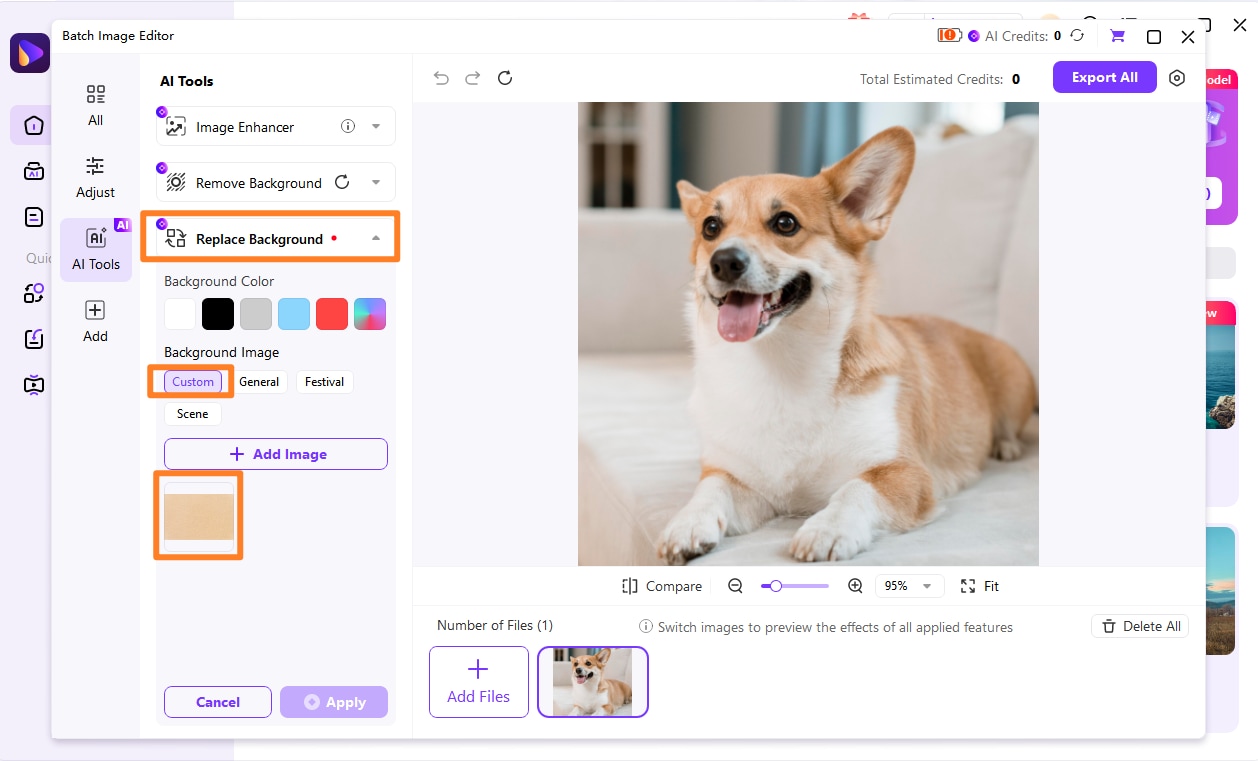
Step 2: Upload the Images
Next, I simply drag and drop the images I want to process into the UniConverter interface. I can upload multiple images at once, which is a huge time-saver for batch processing.
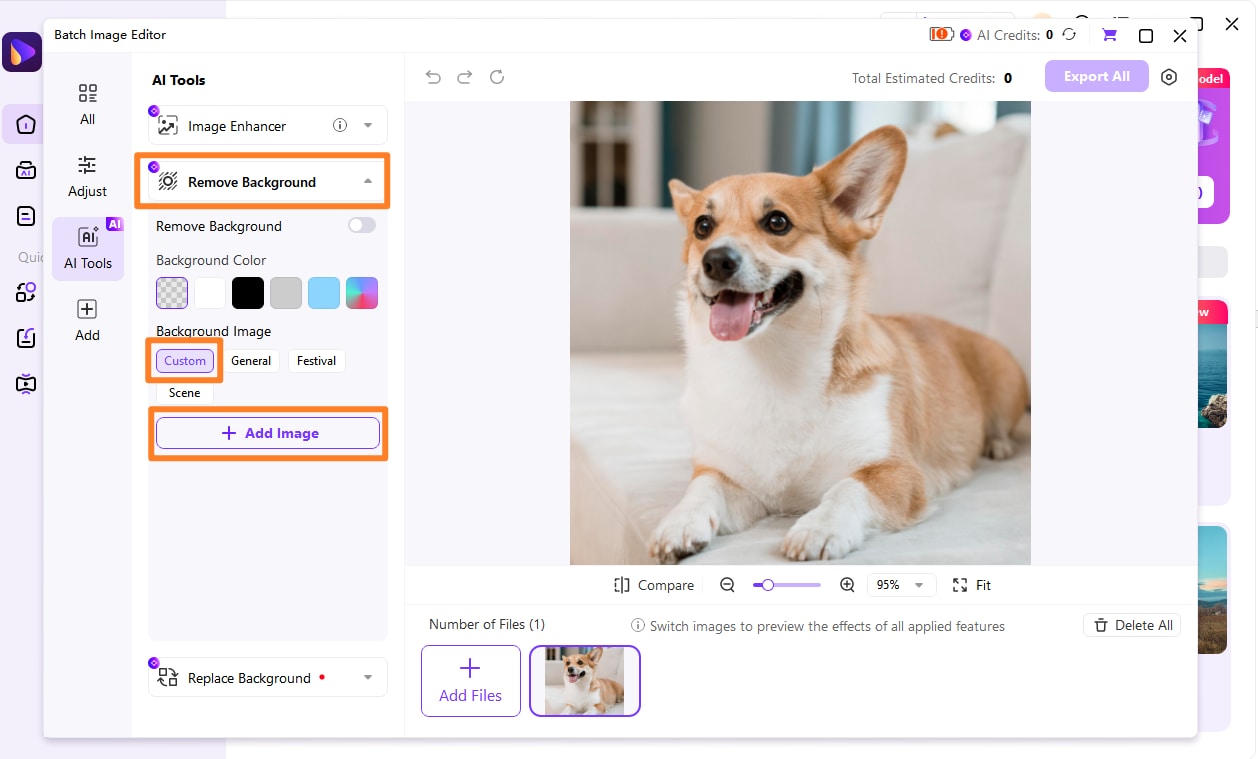
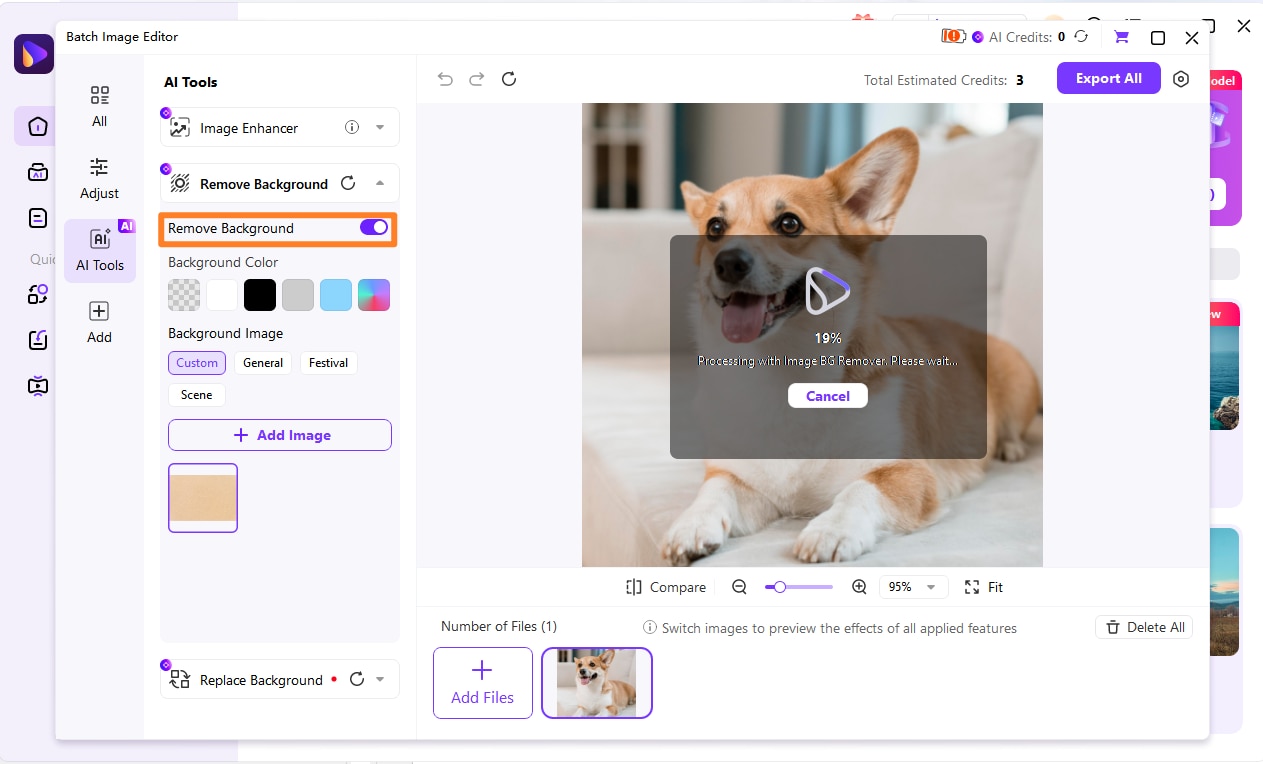
Step 3: Preview and Export Images
UniConverter automatically processes the images, removing the backgrounds. I can then preview each image to ensure the result is satisfactory. If needed, I can make minor adjustments.
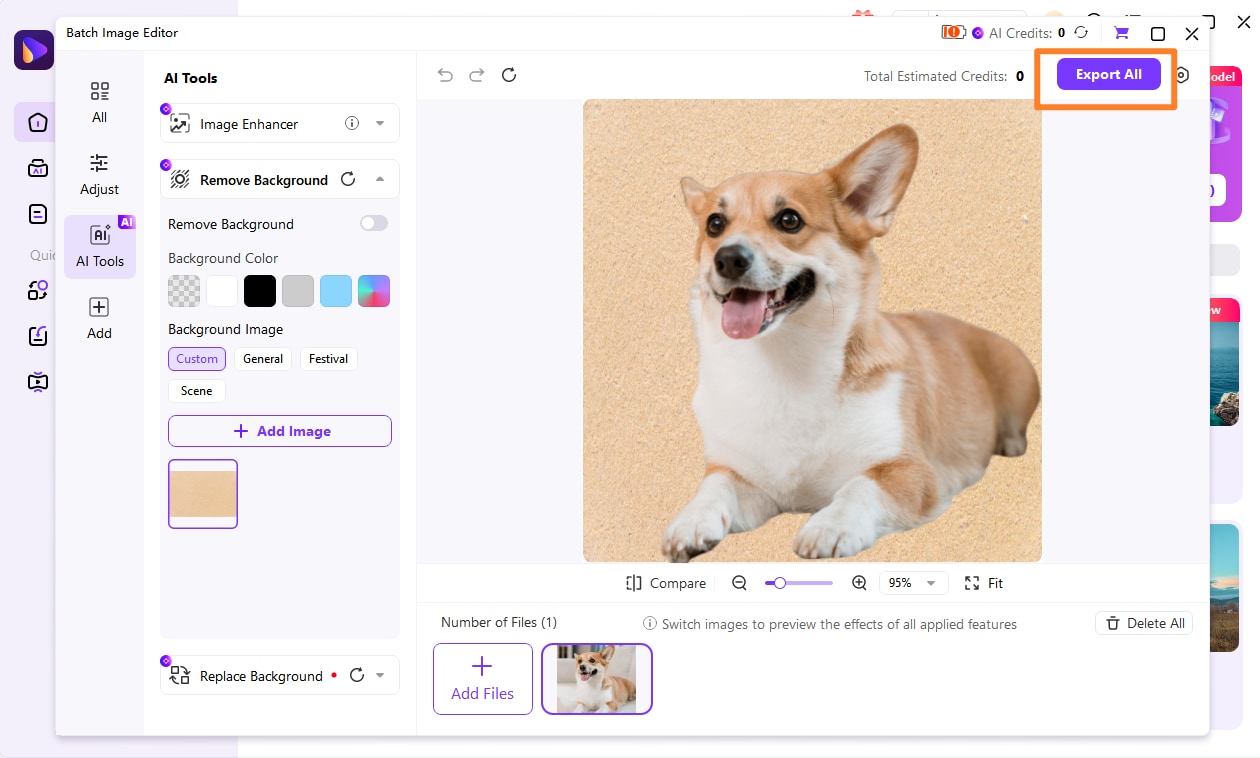
Step 4: Export and Share Your Creations
Once I'm happy with the results, I click the "Export" button. UniConverter allows me to choose the output format and destination, ensuring I get high-quality images ready for any project.

Need a Stencil Alternative for Video Editing?
Part 7: Conclusion
After spending considerable time with Stencil and exploring its capabilities, my overall impression is that it's an excellent tool for specific needs. It truly excels in providing a fast, user-friendly experience for creating social media graphics and other quick visual content. If your primary goal is to churn out engaging posts for platforms like Instagram, Facebook, or Twitter without getting bogged down in complex design software, Stencil will serve you very well. However, for more intricate design projects, professional print materials, or detailed branding work, its limitations become apparent. For those requiring a broader range of design capabilities or advanced editing features, alternatives like Canva offer more versatility. If you're already deeply embedded in the Adobe ecosystem, Adobe Express provides a seamless extension of that experience. And for specialized tasks like data visualization, Piktochart remains a strong contender. Ultimately, the best tool depends on your specific workflow and design demands.
Part 8: FAQs
-
1. Is Stencil completely free to use?
Stencil offers a limited free plan, but many of its premium features, including access to the full stock photo and icon library, require a paid subscription. I found the free version to be quite restrictive for consistent use.
-
2. Can I use my own images and fonts in Stencil?
Yes, Stencil allows you to upload your own images and fonts. This is a crucial feature for maintaining brand consistency, and I've used it extensively to incorporate client assets.
-
3. How does Stencil compare to Photoshop for graphic design?
They are fundamentally different tools. Stencil is designed for quick, template-based graphic creation, while Photoshop is a professional-grade image manipulation and editing software. Comparing them is like comparing a bicycle to a car – both get you places, but for very different journeys.
-
4. What are the best practices for optimizing images created with Stencil for SEO?
When I create images with Stencil, I always make sure to use descriptive filenames, add relevant alt text when uploading them to my website, and compress them to optimize loading speed without sacrificing too much quality.
-
5. Does Stencil offer team collaboration features?
While Stencil is primarily designed for individual use, some of its higher-tier plans offer limited team features, allowing for shared access to designs and assets. However, it's not as robust for collaboration as some other dedicated team design platforms.
