
- Retoucher Online Value: Quick, AI-powered object removal for casual photo fixes. Ideal for social media sharing.
- Limitations Identified: Lacks advanced editing, requires internet, and raises privacy concerns for sensitive images.
- Comparison Insight: Retoucher Online excels in speed; UniConverter offers depth, offline access, and comprehensive features.
- Decision Factor: Choose Retoucher Online for simple tasks; UniConverter for professional, private, and quality-focused editing.
In this article
- Part 1: What is Retoucher Online?
- Part 2: Retoucher Online: Core Features, Pros, and Cons
- Part 3: Target Users and Use Cases
- Part 4: Retoucher Online and Alternatives Comparison
- Part 5: Risks and Pitfalls When Using Online Retouching Tools
- Part 6: How to Use UniConverter for Comprehensive Image Editing
- Part 7: Final Verdict and Recommendations
- Part 8: FAQs About Online Image Retouching
When it comes to perfecting your digital images, the options seem endless. From complex desktop software to quick online fixes, finding the right tool can be a challenge. Today, I'm diving deep into Retoucher Online review, a popular web-based solution, to see if it truly lives up to its promise of effortless image perfection. I'll be sharing my hands-on experience, comparing it with other leading tools, and ultimately helping you decide if it's the right fit for your photo editing needs.
Part 1: What is Retoucher Online?
I remember when I first stumbled upon Retoucher Online, I was looking for a quick way to clean up some vacation photos without having to fire up my heavy-duty photo editor. It promised an easy, AI-powered solution right in my browser. Essentially, Retoucher Online is a web-based image editing tool primarily focused on object removal and basic retouching, leveraging artificial intelligence to simplify what used to be a tedious manual process. My goal with this review is to explore whether this convenience comes at a cost, or if it genuinely offers a viable solution for everyday photo enhancements.
Understanding the Rise of Online Image Retouching Tools
The demand for accessible photo editing has skyrocketed, driven by:
* The ubiquity of smartphones: Everyone's a photographer now, and they need tools to match their on-the-go lifestyle.
* Social media's visual demands: High-quality, blemish-free images are almost a prerequisite for platforms like Instagram and Facebook.
* The complexity of traditional software: Not everyone has the time or desire to learn professional-grade editing programs.
* Advancements in AI: AI has made sophisticated editing tasks, like object removal, much more automated and user-friendly.
Part 2: Retoucher Online: Core Features, Pros, and Cons
From my experience, Retoucher Online's main draw is its simplicity and speed. It's designed for quick fixes rather than deep, intricate edits.
* AI-Powered Object Removal: This is the star feature. You simply brush over an unwanted element, and the AI attempts to seamlessly remove it.
* Basic Image Adjustments: It offers fundamental adjustments like brightness, contrast, and saturation.
* Batch Processing: For me, this was a pleasant surprise, allowing me to apply similar edits to multiple images at once.
* Intuitive Interface: The layout is clean and easy to navigate, even for first-time users.
* Web-Based Access: No downloads, no installations – just open your browser and go.
- Pros:
- Intuitive User Interface for Quick Edits: I found myself getting the hang of it in minutes.
- AI-Powered Object Removal with High Accuracy: For simpler objects, it's surprisingly good.
- Batch Processing for Efficiency: This saved me a lot of time when dealing with multiple similar photos.
- Cons:
- Limited Advanced Editing Capabilities: If you need layers or complex masking, you'll hit a wall quickly.
- Dependency on Internet Connection: No internet, no editing – a significant drawback if you're on the go.
Part 3: Target Users and Use Cases
After spending some time with Retoucher Online, I've got a pretty clear picture of who it's for and who might need something more robust.
- Best Use Case: Quick removal of unwanted objects or blemishes from personal photos for social media sharing or casual use. For example, I used it to erase a stray photobomber from a beach selfie, and it worked wonders for that specific purpose. It's perfect for those "oops, something's in the background" moments where you just need a fast, clean result without much fuss. If you're just looking to spruce up your holiday snaps before uploading them to Instagram, this tool is genuinely convenient.
- Limited Use Case: Professional photographers requiring precise, high-fidelity retouching for client work or large-scale commercial projects. I tried to use it for a product shot where I needed to remove a subtle reflection, and it just couldn't achieve the level of precision and control I needed. The AI, while good, isn't perfect for intricate details or complex textures, and the lack of fine-tuning options means you're often stuck with whatever the algorithm decides. For anything that demands pixel-perfect results or extensive manipulation, you'll definitely need to look elsewhere.
Part 4: Retoucher Online and Alternatives Comparison
When I started looking at online photo editing, I quickly realized Retoucher Online wasn't the only player. Here's how it stacks up against some other popular options I've tried.
| Feature/Tool | Retoucher Online | Photopea | Adobe Express | UniConverter |
| Object Removal Accuracy | High | Medium | High | High |
| Ease of Use | Excellent | Good | Excellent | Excellent |
| Advanced Editing | Limited | Extensive | Moderate | Extensive |
| Pricing Model | Freemium | Free | Freemium | Paid (Trial Available) |
| Offline Access | No | Yes | No | Yes |
| Customer Support | Forum | Chat/Email | 24/7 Chat/Email | |
| Security | Standard | Standard | High | High |
Key Differentiators: Speed vs. Depth of Editing
For me, the biggest takeaway is the trade-off between speed and depth. Retoucher Online excels at quick, simple object removal. If you just need to zap something out of a photo in seconds, it's fantastic. Photopea, on the other hand, is almost a full-fledged Photoshop clone in your browser; it offers incredible depth but has a steeper learning curve. Adobe Express strikes a balance, providing more creative tools than Retoucher Online but still aiming for ease of use. UniConverter, while primarily a video tool, surprised me with its robust image editing capabilities, offering a comprehensive suite for those who need more than just quick fixes, especially with its offline access and advanced features.
Part 5: Risks and Pitfalls When Using Online Retouching Tools
While the convenience of online retouching tools like Retoucher Online is undeniable, I've learned that they come with their own set of potential drawbacks. It's crucial to be aware of these before you upload your precious memories.
Data Privacy Concerns with Uploaded Images
This is a big one for me. When I upload a photo to an online tool, I'm essentially handing over my data to a third party. I always wonder: who has access to my images? How long are they stored? What are they used for? Many free or freemium services might use your uploaded images for AI training or other purposes, which isn't always explicitly clear in their privacy policies. I've heard stories of users finding their personal photos in unexpected places, so I'm always cautious, especially with sensitive content.
Intrusive Advertisements and Pop-ups
Let's be real, many "free" online tools have to make money somehow. This often translates to a barrage of ads and annoying pop-ups. I've experienced situations where I'm trying to fine-tune an edit, and suddenly an ad covers half the screen, disrupting my workflow. It's not just an inconvenience; it can be genuinely frustrating and make the editing process feel less professional and more like a battle against distractions.
Potential Loss of Image Quality Post-Processing
I've noticed that sometimes, after an image goes through an online tool, the exported version isn't quite as sharp or vibrant as the original. This can happen due to compression algorithms or processing limitations. While Retoucher Online generally does a decent job, I've definitely seen a slight degradation in quality on occasion, especially with intricate details or subtle color gradients. It's a trade-off for the convenience, but one to be mindful of if image fidelity is paramount.
Subscription Traps and Hidden Costs
Many online tools operate on a freemium model. You get a taste of the features for free, but then you hit a paywall for higher resolution exports, more advanced tools, or batch processing. I've almost fallen into the trap of signing up for a subscription after a "free trial" only to realize the recurring cost wasn't worth the limited features I was actually using. Always read the fine print and understand the pricing structure before committing.
Lack of Customer Support for Issues
If something goes wrong – an edit doesn't look right, the tool crashes, or you have billing issues – getting help can be a nightmare with free online services. I've found that customer support is often minimal, relying on FAQs or community forums, which isn't ideal when you're on a deadline or dealing with a critical image. This lack of direct support can be a significant risk if you rely heavily on these tools.
Part 6: How to Use UniConverter for Comprehensive Image Editing
Sometimes, when I find that online tools just aren't cutting it – maybe the batch processing is too slow, the exported image quality is inconsistent, or the background replacement leaves jagged edges – I turn to a more robust desktop solution. UniConverter has been a surprisingly powerful alternative for me, not just for video, but for image editing too. It offers a wider range of tools, including advanced retouching, format conversion, and even video editing, all within a desktop application. This means better control, enhanced privacy, and no reliance on an internet connection for core tasks. If you're looking for an all-in-one solution that avoids the pitfalls of many online tools – no ads, extensive format support, GPU acceleration for speed, stable and lossless processing, and reliable batch background replacement – UniConverter is a strong contender.
Step 1: Open UniConverter and Choose Background Replacer
First, launch UniConverter on your computer. Navigate to the "Toolbox" section, and you'll find the "Background Replacer" option. Click on it to open the dedicated image background editing module.
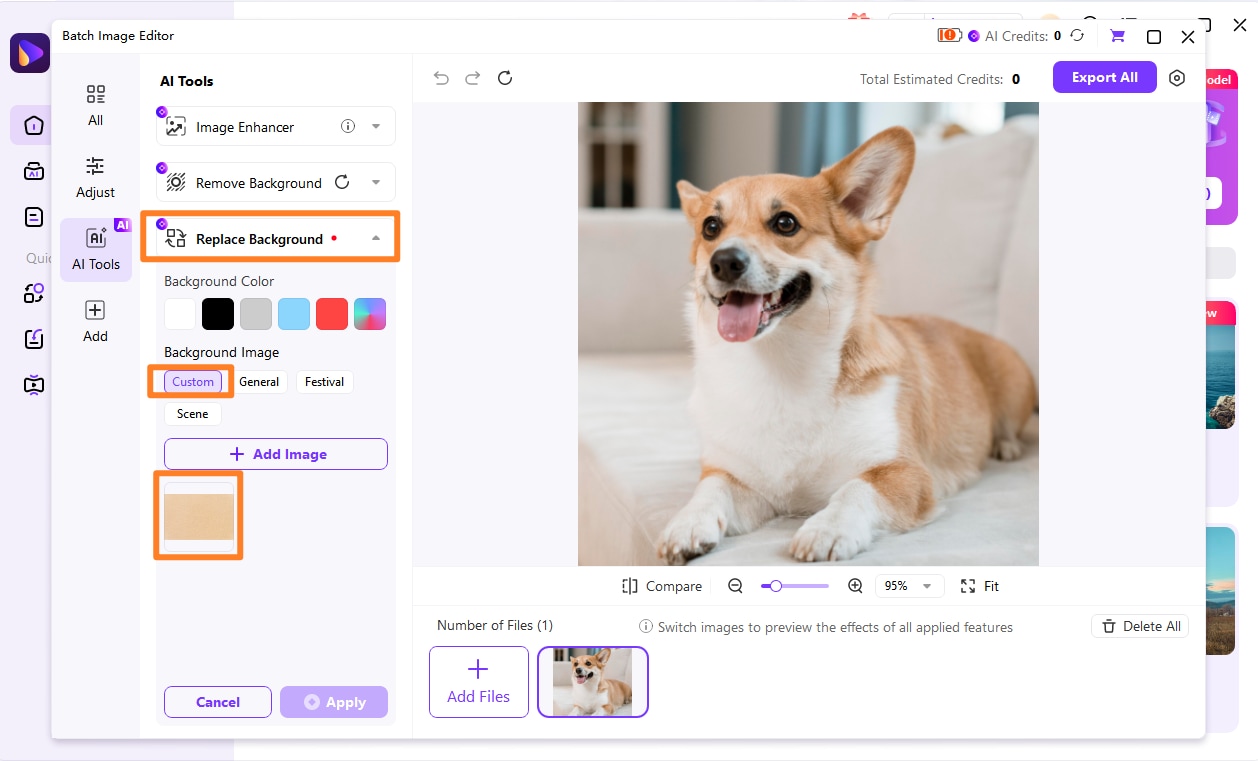
Step 2: Upload the Images
Next, you'll need to import your images. You can either drag and drop your photos directly into the interface or click the "Add Files" button to browse and select them from your computer. UniConverter supports various image formats.
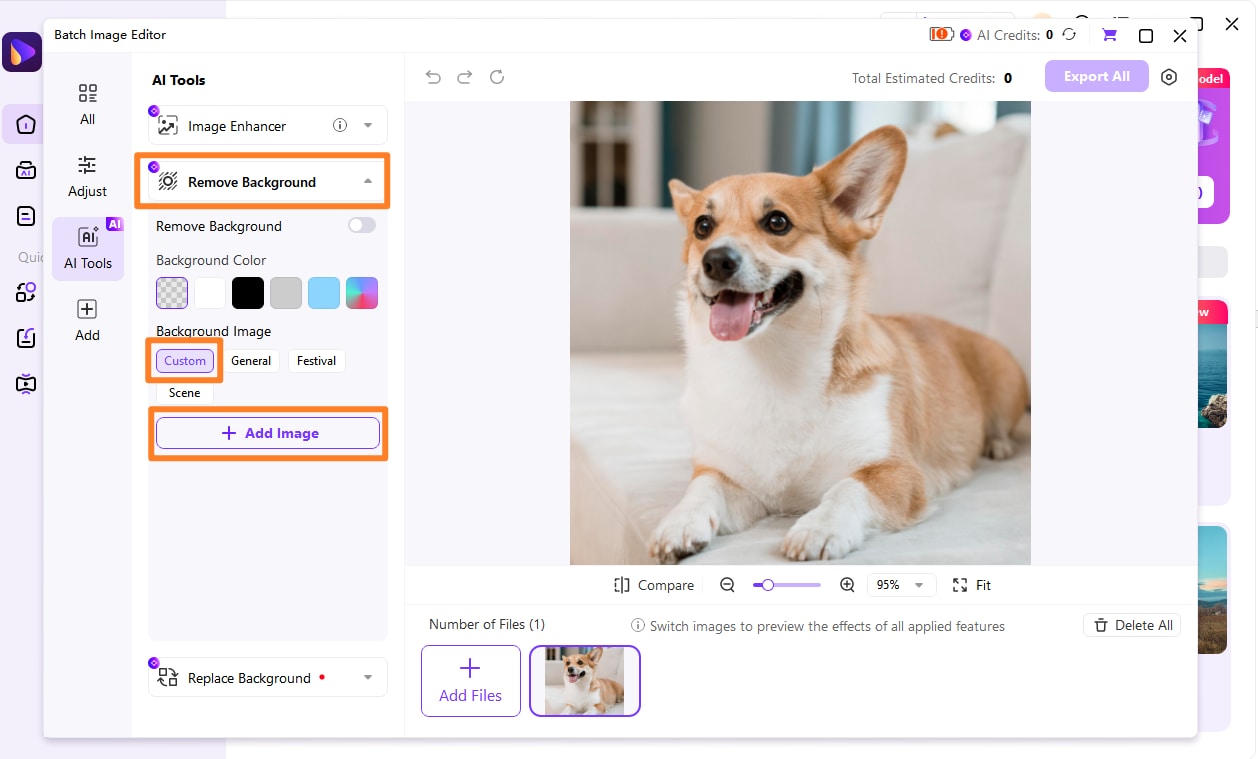
Step 3: Utilize the Retouching Tools (e.g., Blemish Remover, Object Eraser)
Once your images are loaded, you can start editing. For background replacement, select the image and choose your desired background (solid color, transparent, or another image). UniConverter also offers other retouching tools within its photo editor module for tasks like blemish removal or object erasing. For high-definition results, consider using its high-definition background remover feature.
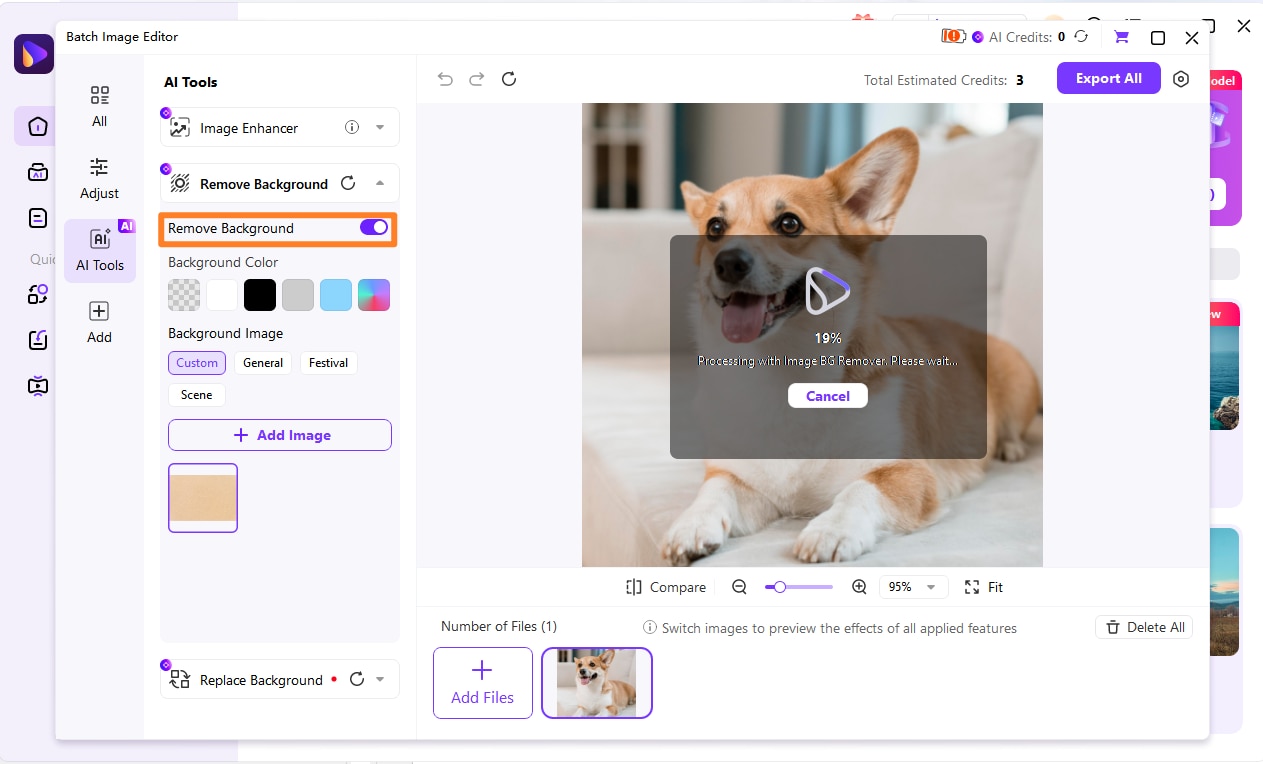
Step 4: Preview and Export Images
After making your edits, you can preview the results to ensure everything looks perfect. Once satisfied, select your desired output format and destination folder, then click "Export" to save your retouched images. This process ensures you can remove background without losing quality.
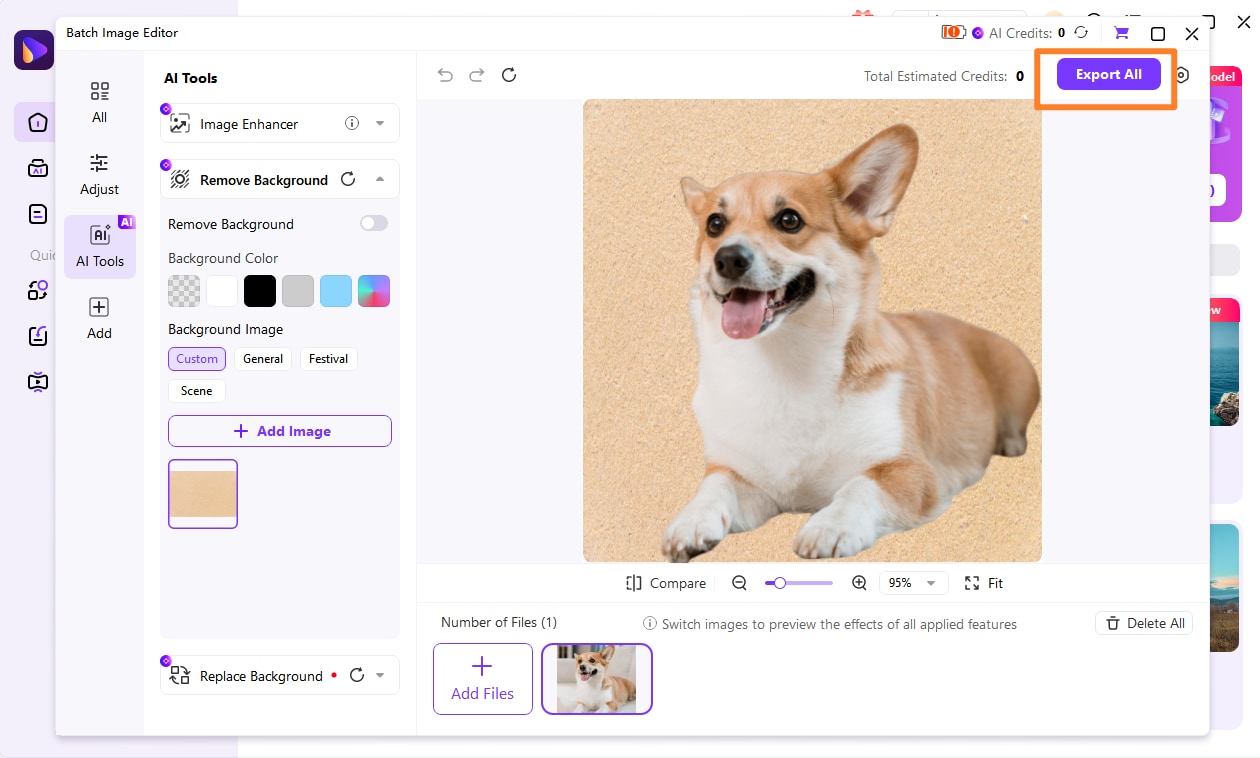

Seeking a Powerful Retoucher Online Alternative?
Part 7: Final Verdict and Recommendations
After extensively exploring Retoucher Online review and comparing it with its competitors, my conclusion is clear: its utility largely depends on your specific needs. For casual users who need a quick fix – like removing a photobomber from a vacation picture or erasing a small blemish for social media – Retoucher Online is an excellent, convenient option. Its intuitive interface and AI-powered object removal are genuinely impressive for simple tasks. However, if you're a professional photographer, a graphic designer, or anyone who requires precise, high-fidelity retouching, extensive editing capabilities, or offline access, Retoucher Online will quickly show its limitations. For those demanding more control, advanced features, and a commitment to privacy and quality, desktop solutions like Adobe Photoshop, GIMP, or a comprehensive tool like UniConverter are far superior. Always consider your workflow, the importance of image quality, and your privacy concerns before settling on an online tool. And remember, always keep a backup of your original images!
Part 8: FAQs About Online Image Retouching
-
1. Is Retoucher Online truly free to use?
Retoucher Online typically operates on a freemium model. You can access basic features and perform a limited number of edits for free, but advanced functionalities, higher resolution exports, or batch processing usually require a paid subscription.
-
2. How accurate is the AI object removal in Retoucher Online?
The AI object removal in Retoucher Online is generally highly accurate for simple, well-defined objects against relatively uniform backgrounds. However, it may struggle with complex scenes, intricate details, or objects that blend seamlessly with their surroundings, sometimes leaving noticeable artifacts.
-
3. Can I use Retoucher Online without an internet connection?
No, Retoucher Online is a web-based tool, meaning it requires an active internet connection to function. All processing happens on their servers, so offline access is not possible.
-
4. Are there any privacy concerns when uploading photos to online retouching tools?
Yes, there can be significant privacy concerns. When you upload photos to online tools, you're entrusting your data to a third party. It's crucial to review the privacy policy of any service before uploading sensitive images to understand how your data is stored, used, and protected.
-
5. What are the best alternatives to Retoucher Online for professional use?
For professional-grade image editing, desktop software like Adobe Photoshop, Affinity Photo, or GIMP (a free, open-source option) are highly recommended. For a more comprehensive solution that includes advanced image editing alongside other multimedia tools, UniConverter is also a strong alternative.
