
- RelayThat Value: Automates high-volume visual content, ensuring brand consistency across platforms efficiently.
- Core Strength: Rapidly resizes and adapts designs, saving countless hours compared to manual adjustments.
- Ideal User: Perfect for small businesses and marketers needing consistent social media visuals without design expertise.
- Limitations: Lacks advanced customization; not suitable for intricate, bespoke design projects or print media.
- Comparison: Faster for bulk designs than Canva/Adobe Express, but offers less creative control.
- UniConverter Role: Complements RelayThat for media conversion and high-quality background removal, enhancing design workflow.
In this article
- Part 1: What is RelayThat?
- Part 2: RelayThat: Core Features, Pros, and Cons
- Part 3: Who is RelayThat For? Ideal Scenarios and Limitations
- Part 4: RelayThat and Alternatives Comparison
- Part 5: Risks and Pitfalls to Consider
- Part 6: How to Use UniConverter to Efficiently Replace Image Backgrounds
- Part 7: Final Verdict and Recommendations
- Part 8: FAQs
When I first stumbled upon RelayThat review, I was intrigued by its promise of rapid, AI-powered design generation. As someone who constantly juggles content creation for various platforms, the idea of a tool that could churn out professional-looking visuals with minimal effort sounded like a godsend. This RelayThat review aims to cut through the marketing hype and provide a practical, scenario-based comparison, helping you understand where RelayThat truly shines and where its limitations might lead you to explore alternatives. We'll delve into its core features, weigh its pros and cons, and pit it against some key competitors to see if it lives up to its claims.
Part 1: What is RelayThat?
RelayThat positions itself as an AI-powered design automation platform, primarily focused on helping businesses and marketers create a high volume of visual content quickly and consistently. My initial impression was that it was just another Canva clone, but I soon realized its unique selling proposition lies in its ability to instantly resize and adapt designs across numerous platforms and formats, all while maintaining brand consistency. It's designed to take your brand assets – logos, colors, fonts – and automatically generate a multitude of design variations, saving you countless hours that would otherwise be spent manually adjusting layouts.
The Rise of Automated Design Tools
The digital landscape demands a constant stream of fresh, engaging visuals, and the traditional design process often struggles to keep up. This has led to a surge in automated design tools, addressing several key pain points:
* Time Constraints: Manually designing for every social media platform, ad format, and email campaign is incredibly time-consuming.
* Brand Consistency Challenges: Maintaining a unified brand identity across diverse visual assets can be a nightmare without dedicated tools.
* Limited Design Skills: Many small businesses and marketers lack the budget for professional designers or the skills to create compelling visuals themselves.
* Scalability Issues: As content needs grow, scaling design production becomes a significant bottleneck.
Part 2: RelayThat: Core Features, Pros, and Cons
From my experience, RelayThat's core strength lies in its automation capabilities. You upload your brand assets once, and it essentially becomes your personal design assistant, generating a plethora of options.
Core Features:
* One-Click Resizing: This is a game-changer. I can create a design for Instagram and with a single click, instantly have it adapted for Facebook, Twitter, LinkedIn, and even various ad sizes.
* Brand Asset Management: It stores your logos, color palettes, and fonts, ensuring every design adheres to your brand guidelines.
* Template Library: A decent selection of pre-designed templates provides a starting point for various content types.
* Image Library Integration: Access to stock photos helps in quickly finding relevant visuals.
* Text and Layout Customization: While automated, it still allows for adjustments to text, fonts, and basic layout elements.
Pros:
* Rapidly generates design variations for multiple platforms: This is its biggest selling point. I've been able to create dozens of unique visuals in minutes, something that would have taken hours manually.
* Streamlined brand asset management: Once your brand kit is set up, consistency is almost guaranteed, which is a huge relief for anyone managing multiple brands or campaigns.
* Intuitive interface for quick content creation: I found it surprisingly easy to pick up and start using effectively, even without prior experience with similar tools.
Cons:
* Limited advanced customization options: If you're looking for intricate design control or unique artistic flourishes, RelayThat can feel restrictive. It's more about efficiency than bespoke design.
* Occasional generic design outputs: Sometimes, the automated designs can feel a bit "cookie-cutter." While consistent, they might lack that unique spark that a human designer brings.
Part 3: Who is RelayThat For? Ideal Scenarios and Limitations
I've found RelayThat to be incredibly useful in specific contexts, but it's definitely not a one-size-fits-all solution.
Best Use Case: High-Volume Social Media Content Creation for Small Businesses
For small business owners or solo marketers who need to maintain a consistent and active social media presence but lack dedicated design resources, RelayThat is a lifesaver. I use it constantly for daily social media posts, quick ad creatives, and even blog post headers. The ability to generate multiple variations for A/B testing without spending hours on design is invaluable. If your goal is to push out a lot of visually appealing content quickly and consistently, this is where RelayThat truly shines.
Limited Use Case: Highly Customized Branding Projects for Large Agencies
However, if you're a large agency working on a high-end branding project that requires intricate design, unique illustrations, or highly specific visual storytelling, RelayThat will fall short. I wouldn't recommend it for creating a brand identity from scratch or for projects where every pixel needs to be meticulously crafted. Its automation, while efficient, inherently limits the level of bespoke creativity you can achieve. For those projects, you'll still need a professional designer or more robust design software.
Part 4: RelayThat and Alternatives Comparison
When I started looking for a design automation tool, I naturally explored a few options. Here's how RelayThat stacks up against some of its competitors, including UniConverter, which I've found to be a surprisingly versatile alternative for certain tasks.
| Feature/Scenario | RelayThat | UniConverter | Canva | Adobe Express |
| Social Media Ad Creation | Excellent | N/A (Focus on media conversion) | Excellent | Good |
| Brand Consistency | Excellent | N/A | Good | Good |
| Advanced Customization | Fair | N/A | Good | Excellent |
| Learning Curve | Low | Low | Low | Medium |
| Primary Function | Automated Design Generation | Media Conversion & Basic Editing | General Graphic Design | Quick Design & Editing |
Key Differentiators: Speed vs. Customization
RelayThat's key differentiator is its speed and automation for generating multiple design variations. If you need to churn out a high volume of consistent visuals, it's hard to beat. Canva and Adobe Express offer more customization and a wider range of design tools, making them better for projects requiring more creative control. UniConverter, while not a direct design competitor, excels in media conversion and offers some surprisingly robust editing features that can complement your design workflow, especially when dealing with various media formats before or after design.
Part 5: Risks and Pitfalls to Consider
While RelayThat offers significant advantages, I've learned that it's crucial to be aware of its potential drawbacks. Like any tool, it comes with its own set of risks and limitations that could impact your workflow or the quality of your output.
Data Privacy and Security Concerns
As a cloud-based tool, you're entrusting your brand assets and potentially sensitive campaign information to RelayThat's servers. While they likely have robust security measures, it's always wise to review their privacy policy and terms of service. I always consider what kind of data I'm uploading and if I'm comfortable with it residing on a third-party platform.
Potential for Generic-Looking Designs
This is a big one for me. While RelayThat is fantastic for consistency, the automated nature can sometimes lead to designs that feel a bit "safe" or generic. If every business uses similar tools and templates, the risk of your content blending in rather than standing out increases. I've found it's essential to inject some unique elements or carefully select templates to avoid this trap.
Subscription Model Value Proposition
Before committing, I always evaluate if the subscription cost aligns with the value I'm getting. If you only need a few designs here and there, the monthly fee might not be justified. However, if you're a heavy user generating hundreds of visuals, the time savings easily outweigh the cost. It's about understanding your actual usage needs.
Integration Limitations with Existing Workflows
RelayThat is a standalone tool. While it exports designs, it doesn't always seamlessly integrate with every social media scheduler, project management tool, or CRM. I've had to manually download and upload designs to some platforms, which can add a small, but noticeable, friction to the workflow. Check if it plays well with your existing tech stack.
Output Quality for Print Media
While excellent for digital, I've found RelayThat's output to be less ideal for high-resolution print media. The focus is on web-optimized graphics, and while you can export at higher resolutions, the underlying design structure might not be as robust as something created in professional print design software. If you're planning large-format prints, I'd exercise caution and possibly use a different tool.
Part 6: How to Use UniConverter to Efficiently Replace Image Backgrounds
Sometimes, even with tools like RelayThat, you might encounter situations where you need to process images in a way that goes beyond simple design generation – perhaps batch processing, higher quality background removal, or converting formats. When I've faced issues like blurry exports, inconsistent quality, or edge artifacts from other background removal tools, I've often turned to UniConverter. It's not a design tool in the same vein as RelayThat, but it's an incredibly powerful media toolkit that can be a lifesaver for pre- or post-design image manipulation, especially for tasks like background replacement. It offers a stable, lossless, and GPU-accelerated solution for batch processing, ensuring high-quality results without ads or watermarks, making it an ultimate all-in-one solution for media conversion and basic editing. For those looking to remove backgrounds without losing quality, this tool is particularly effective. Its background replacer feature is designed for precision and efficiency.
Step 1: Open UniConverter and Choose Background Replacer
First, launch UniConverter on your computer. From the main interface, navigate to the "Toolbox" section and select the "Background Replacer" feature.
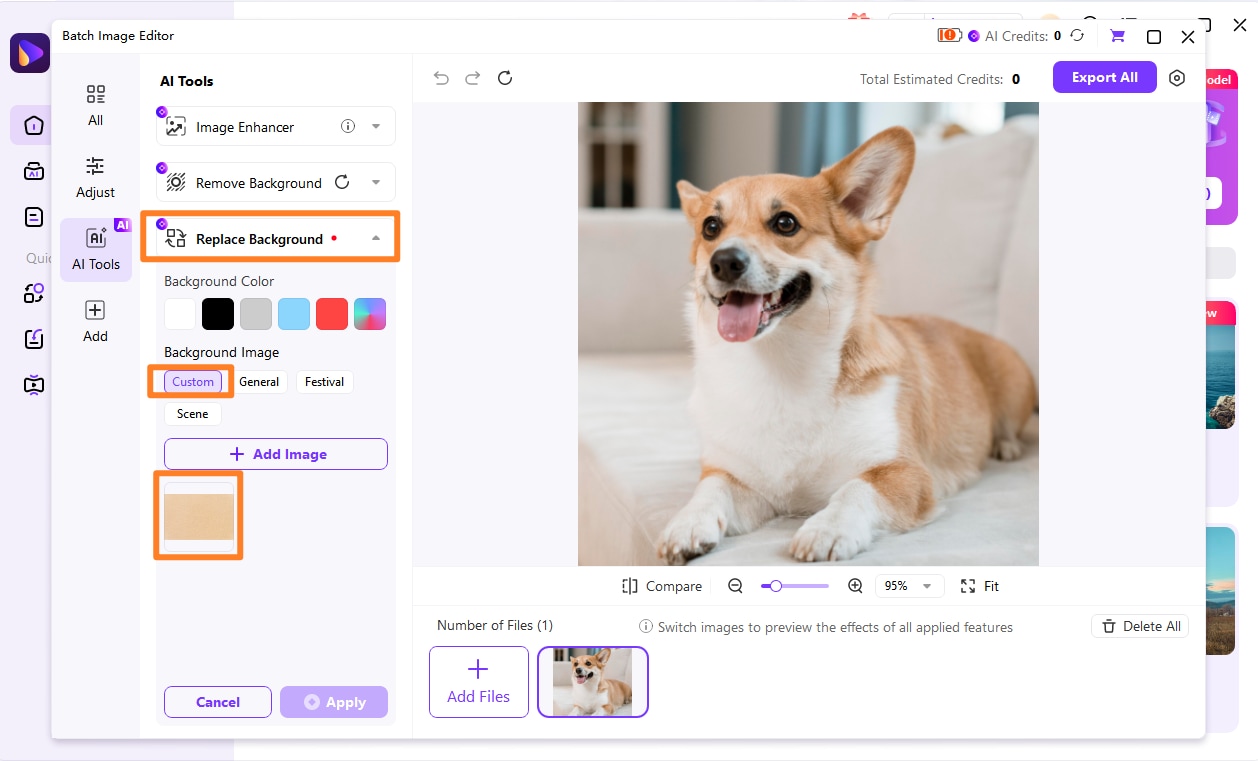
Step 2: Upload the Images
Click on the "Add Files" button or simply drag and drop the images you want to process into the UniConverter window. You can upload multiple images for batch processing.
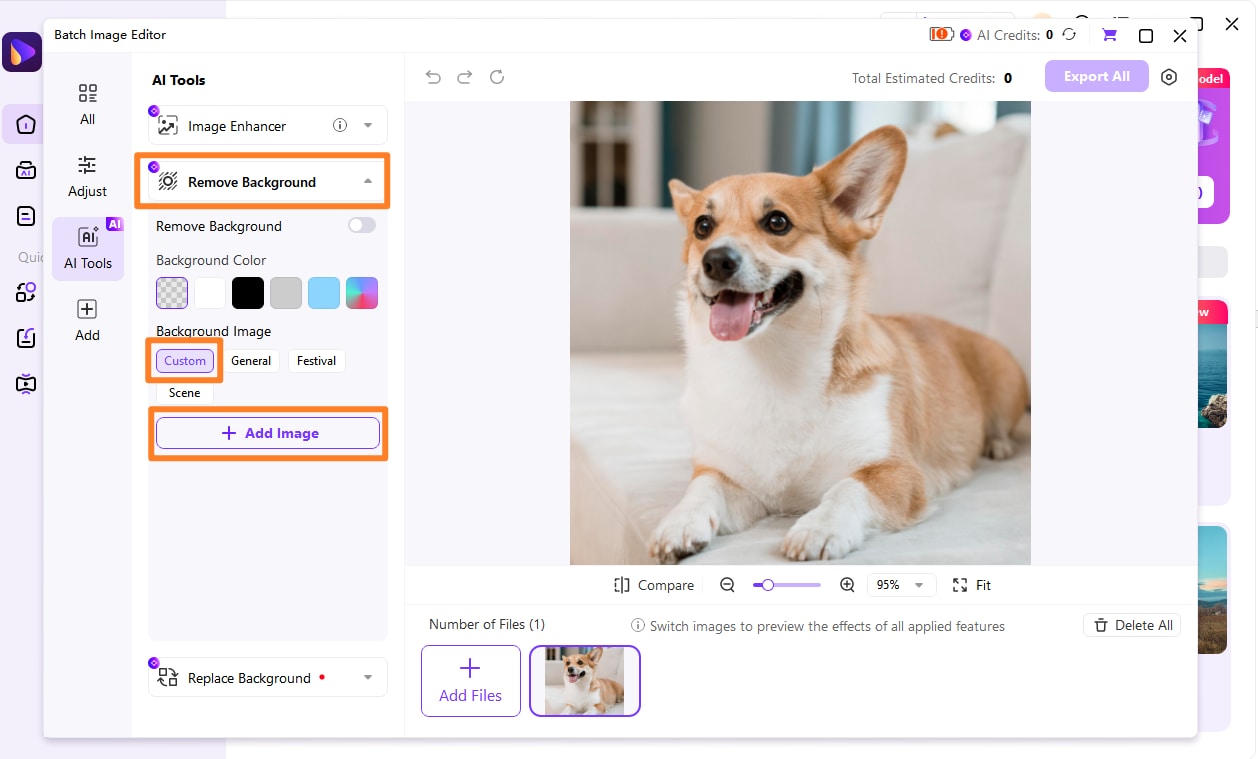
Step 3: Click to Preview Images
Once your images are uploaded, UniConverter will automatically start processing them. You can click on each image thumbnail to preview the background replacement result and make any necessary adjustments.
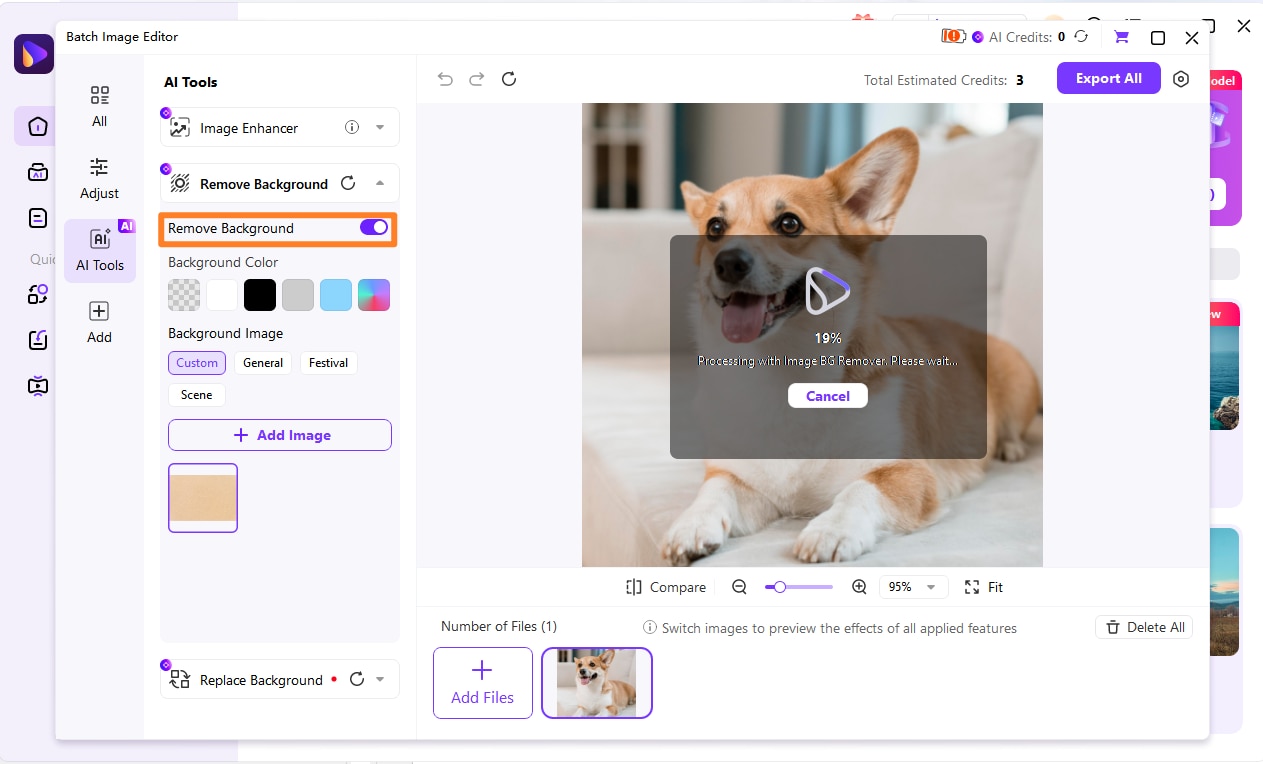
Step 4: Preview and Export Images
After reviewing and making any final tweaks, click the "Export" button to save your images with their new backgrounds. You can choose your desired output folder and format.
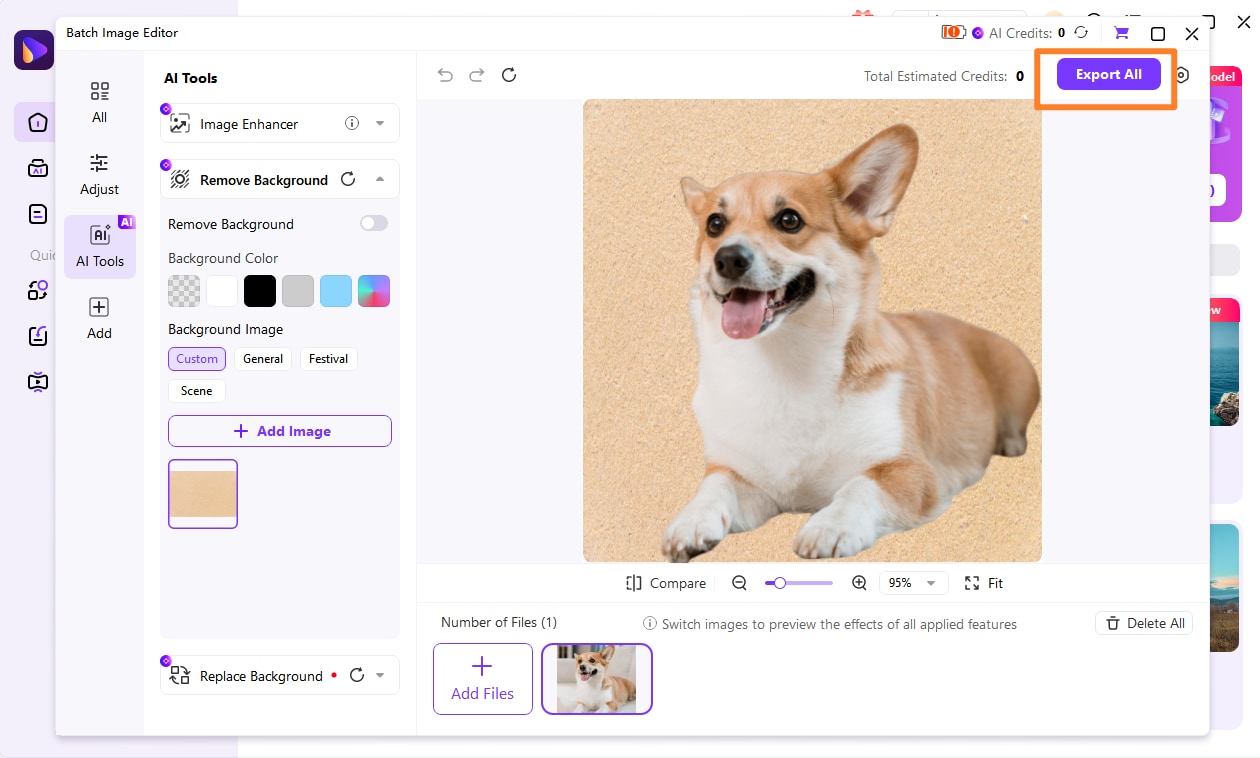

Seeking a RelayThat Alternative?
Part 7: Final Verdict and Recommendations
After extensive use, my RelayThat review concludes that it is a powerful tool, but its utility is highly dependent on your specific needs. It's not a replacement for a professional designer or comprehensive design software, but rather a specialized tool for a particular set of tasks.
For marketers needing speed and volume, RelayThat is an absolute workhorse. If your primary goal is to churn out a high quantity of consistent social media posts, ad creatives, or blog headers across various platforms without spending hours on design, then RelayThat will deliver immense value. Its automation and brand consistency features are truly impressive for this use case. For designers seeking creative control, however, you'll likely find RelayThat too restrictive. Its strength lies in automation, not in providing granular control over every design element. You'll still need tools like Adobe Photoshop or Illustrator for highly customized, unique, and intricate design work. For small businesses with limited design resources, RelayThat is a fantastic investment. It empowers you to create professional-looking visuals without needing a design background or a large budget for a designer. It bridges the gap between needing good visuals and lacking the means to produce them efficiently. For agencies managing multiple brands, RelayThat can be a valuable asset for maintaining brand consistency across numerous client accounts and for rapidly generating initial concepts or high-volume campaign assets. However, it should be seen as a complementary tool, not the sole design solution for all client needs.
Part 8: FAQs
-
1. Is RelayThat suitable for video content creation?
No, RelayThat is primarily focused on static image design. It does not offer features for video editing or animation. For video content, you would need a dedicated video editing tool.
-
2. How does RelayThat handle brand guidelines?
RelayThat allows you to set up a "Brand Kit" where you upload your logos, define your brand colors, and select your preferred fonts. Once these are set, all designs generated by RelayThat will adhere to these guidelines, ensuring strong brand consistency across your visuals.
-
3. Can I integrate RelayThat with my existing social media scheduler?
RelayThat typically allows you to download your designs in various formats (JPG, PNG). While it doesn't have direct, native integrations with all social media schedulers, you can easily download your creations and then upload them to your preferred scheduling platform.
-
4. What are the pricing tiers for RelayThat?
RelayThat usually offers different subscription tiers, often based on features, number of brands, and user access. They typically have monthly and annual plans, with annual plans offering a discount. It's best to check their official website for the most up-to-date pricing information.
-
5. Is there a free trial available for RelayThat?
Yes, RelayThat often provides a free trial period, allowing you to test out its features and see if it fits your workflow before committing to a subscription. This is a great way to experience its capabilities firsthand.
