
- Value: Topaz Photo AI excels at rescuing noisy, blurry, or low-resolution images, saving otherwise unusable shots.
- Comparison:It outperforms general editing tools in specialized AI noise reduction, sharpening, and upscaling, especially for extreme cases.
- Decision: Ideal for professionals and enthusiasts needing advanced image restoration; potentially overkill for casual users with pristine photos.
- Alternative: UniConverter offers versatile media solutions, including efficient background removal and basic photo enhancement, as a practical alternative.
In this article
Topaz Photo AI Review: A Scenario-Based Comparison
When I first heard about Topaz Photo AI, I was skeptical. Another AI tool promising magic? My photo editing workflow is already pretty solid, but the claims of effortlessly rescuing noisy, blurry, or low-resolution images piqued my interest. As a photographer who often shoots in challenging conditions, I'm always on the lookout for tools that can genuinely save a shot. This Topaz Photo AI review aims to cut through the marketing hype and provide a practical, scenario-based comparison, helping you understand if this AI powerhouse truly deserves a spot in your toolkit, especially when stacked against established players like Lightroom, DxO PhotoLab, and Luminar Neo.
Part 1: What is Topaz Photo AI?
Topaz Photo AI is an all-in-one AI-powered image enhancement software designed to automatically detect and correct common image quality issues. It combines the functionalities of Topaz Labs' popular DeNoise AI, Sharpen AI, and Gigapixel AI into a single application. My initial thought was, "Do I really need another standalone app?" But the promise of a unified workflow for noise reduction, sharpening, and upscaling from a single interface was compelling. It's positioned as a smart assistant that analyzes your image and applies the most appropriate enhancements without much manual intervention.
The Rise of AI in Photo Editing
The photo editing landscape has been dramatically reshaped by artificial intelligence, addressing several persistent pain points for photographers:
* Battling Imperfections: AI excels at identifying and correcting flaws like noise, blur, and low resolution that traditionally required tedious manual work.
* Streamlining Workflows: Automated enhancements save significant time, allowing photographers to focus more on creative aspects rather than technical corrections.
* Democratizing Quality: AI tools make professional-level image enhancement accessible to a broader audience, even those without extensive editing experience.
Part 2: Topaz Photo AI: Core Features, Pros & Cons
Topaz Photo AI's core strength lies in its integrated AI models. It automatically analyzes your image upon import and suggests optimal settings for noise reduction, sharpening, and upscaling. For me, the real magic happens when dealing with high ISO shots or slightly out-of-focus images. It's not just about applying a filter; it's about intelligently reconstructing detail.
Core Capabilities:
* AI-Powered Noise Reduction: Effectively removes digital noise while preserving fine details.
* Intelligent Sharpening: Corrects blur from camera shake or soft focus without introducing artifacts.
* Super-Resolution Upscaling: Enlarges images by up to 6x, adding detail rather than just stretching pixels.
* Autopilot Feature: Automatically detects issues and applies suggested enhancements.
* Batch Processing: Allows for applying settings to multiple images simultaneously.
Pros:
* AI-powered noise reduction and sharpening for challenging photos are truly impressive, often salvaging shots I'd otherwise discard.
* Seamless integration with existing workflows (Lightroom, Photoshop) means I don't have to completely change my editing habits.
* Batch processing capabilities for efficiency are a lifesaver when dealing with large shoots.
Cons:
* High price point for casual users might be a barrier if you're not a professional or serious enthusiast.
* Can sometimes over-process images, leading to an artificial or "plastic" look if you're not careful with the intensity sliders.
Part 3: Target Users & Usage Scenarios
From my experience, Topaz Photo AI isn't for everyone, but for specific scenarios, it's a game-changer. If you're a professional photographer constantly battling difficult lighting or needing to enlarge images for large prints, this tool will likely pay for itself quickly. However, if your photos are consistently well-lit and sharp, you might find its benefits less pronounced.
Best Use Case: Professional Photographers Enhancing Low-Light or Old Photos
I've found Topaz Photo AI invaluable for wedding photographers shooting in dimly lit venues, wildlife photographers dealing with fast-moving subjects and high ISO, or anyone needing to restore old, scanned photographs. The ability to pull detail out of a noisy, slightly blurry image is genuinely impressive. For instance, I recently used it to enhance some old family photos that were scanned at a low resolution, and the results were far better than I expected.
Limited Use Case: Casual Users with Well-Lit, High-Quality Images
If you're primarily shooting in good light with a modern camera and rarely encounter significant noise or blur, Topaz Photo AI might be overkill. Your camera's native processing or basic adjustments in Lightroom might be sufficient. I've found that for already pristine images, the AI can sometimes introduce a subtle "processed" look that detracts from the natural feel. It's like using a sledgehammer to crack a nut when a nutcracker would suffice.
Part 4: Topaz Photo AI vs. Alternatives
When I compare Topaz Photo AI to its competitors, I look at how it performs in real-world scenarios, not just on paper. Each tool has its strengths, and choosing one often comes down to your specific needs and existing workflow.
| Feature/Scenario | Topaz Photo AI | Adobe Lightroom | DxO PhotoLab | Skylum Luminar Neo |
| Noise Reduction | Excellent (AI-driven, best for extreme noise) | Good (Manual adjustments, integrated) | Excellent (DeepPRIME, highly effective) | Good (AI-based, user-friendly) |
| Sharpening | Excellent (AI-driven, recovers lost detail) | Good (Manual adjustments, standard) | Very Good (Optics Modules, lens-specific) | Good (AI-based, creative options) |
| Upscaling | Excellent (AI-driven, significant enlargement) | Limited (Basic resizing) | Limited (Basic resizing) | Limited (Basic resizing) |
| Workflow Integration | High (Plugins for PS/LR) | Native (All-in-one) | High (Plugins for LR) | Moderate (Standalone/Plugin) |
| Ease of Use | Moderate (Autopilot, but fine-tuning needed) | Moderate (Comprehensive, but learning curve) | Moderate (Powerful, but can be complex) | High (Intuitive, AI presets) |
| Price | Premium (One-time purchase) | Subscription (Creative Cloud) | Premium (One-time purchase) | Subscription/One-time |
From my perspective, Topaz Photo AI shines in its specialized AI capabilities for noise reduction, sharpening, and especially upscaling. While Lightroom offers a comprehensive editing suite, its noise reduction and sharpening are more traditional and require more manual finessing. DxO PhotoLab's DeepPRIME is a formidable competitor for noise reduction, often producing incredibly clean results, but it lacks the upscaling prowess of Topaz. Luminar Neo, while strong in AI-driven creative edits and ease of use, doesn't quite match Topaz Photo AI's dedicated focus on technical image quality restoration. If you're primarily battling noise and blur, Topaz Photo AI or DxO PhotoLab are your top contenders. If upscaling is critical, Topaz Photo AI is the clear winner.
Part 5: Risks and Pitfalls to Consider
While Topaz Photo AI is powerful, it's not without its quirks and potential downsides. I've learned a few things the hard way that I want to share to help you avoid common pitfalls.
Potential for Over-Processing and Loss of Natural Texture
My biggest concern with any AI enhancement tool is the risk of making an image look artificial. Topaz Photo AI, especially if you let the Autopilot run wild or push the sliders too far, can sometimes smooth out skin textures or fine details in a way that looks unnatural. I've found it's crucial to always review the results and dial back the intensity if needed. Less is often more.
Data Privacy Concerns with Cloud-Based AI Processing
While Topaz Photo AI primarily processes images locally on your machine, some AI models or updates might involve cloud components. It's always a good practice to be aware of what data is being shared, if any, especially if you're working with sensitive client images. For me, local processing is a big plus for privacy.
High System Requirements for Optimal Performance
This software is demanding. If you don't have a relatively modern computer with a decent GPU, you'll experience slow processing times. I initially tried running it on an older laptop, and it was painfully slow, making the workflow frustrating rather than efficient. A powerful machine is almost a prerequisite for a smooth experience.
Subscription Model vs. One-Time Purchase Value
Topaz Photo AI operates on a one-time purchase model with a year of free updates, after which you can renew for continued updates. This is different from Adobe's subscription model. For me, a one-time purchase feels more transparent, but you need to factor in the cost of future updates if you want to stay current.
Learning Curve for Advanced Features
While the Autopilot makes it easy to get started, mastering the fine-tuning controls for specific scenarios (e.g., subtle sharpening for portraits vs. aggressive sharpening for landscapes) does require some experimentation and a bit of a learning curve. It's not entirely a "set it and forget it" tool if you want the best results.
Part 6: How to Use UniConverter for Efficient Photo Enhancement
Sometimes, you might find yourself needing a more versatile tool for various media tasks, including basic photo enhancement, especially if other tools are giving you issues with batch processing, pixelation, or edge quality when replacing backgrounds. In such cases, UniConverter can be a surprisingly effective alternative, offering a robust all-in-one solution. It's particularly useful if you're looking for a tool that handles not just photos but also video and audio, all while maintaining high quality and efficiency.
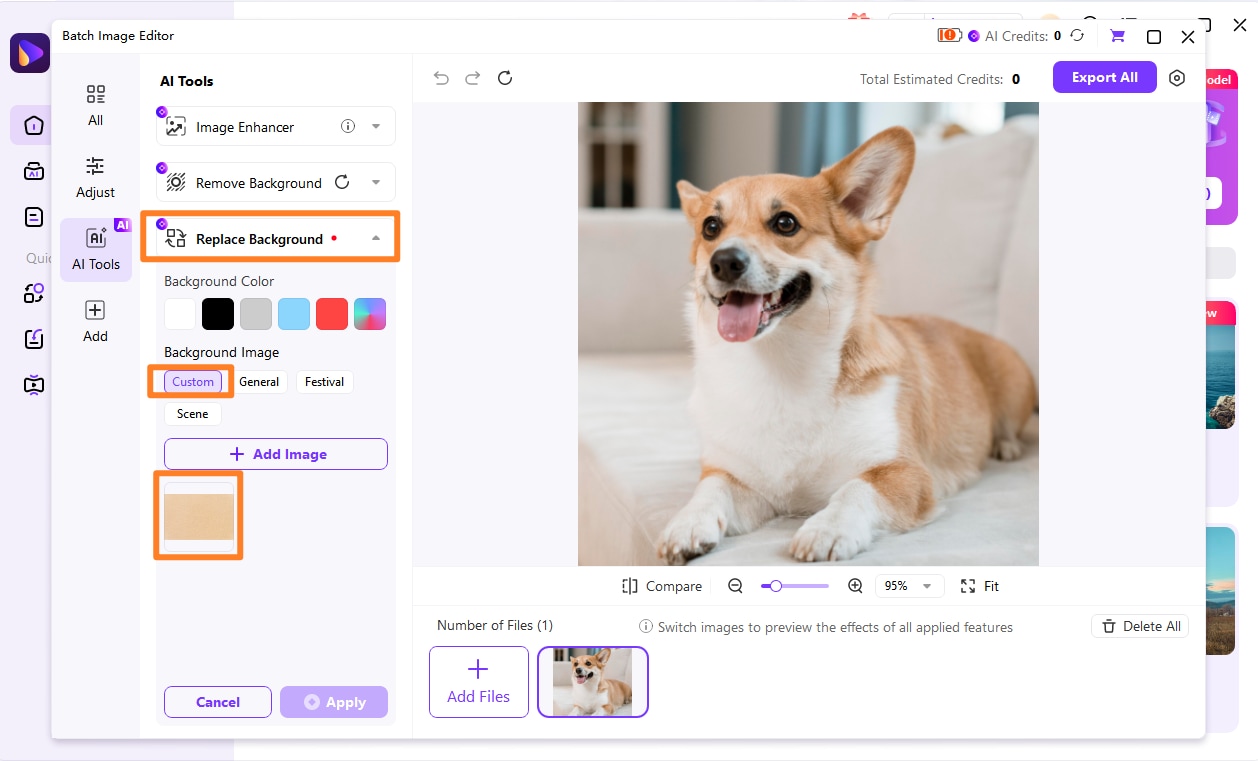
Step 1: Open UniConverter and Choose Background Replacer
Launch UniConverter and navigate to the 'AI Lab' section. Here, you'll find the Background Replacer tool, which is perfect for isolating subjects and creating clean images. This feature allows you to remove background without losing quality from your images.
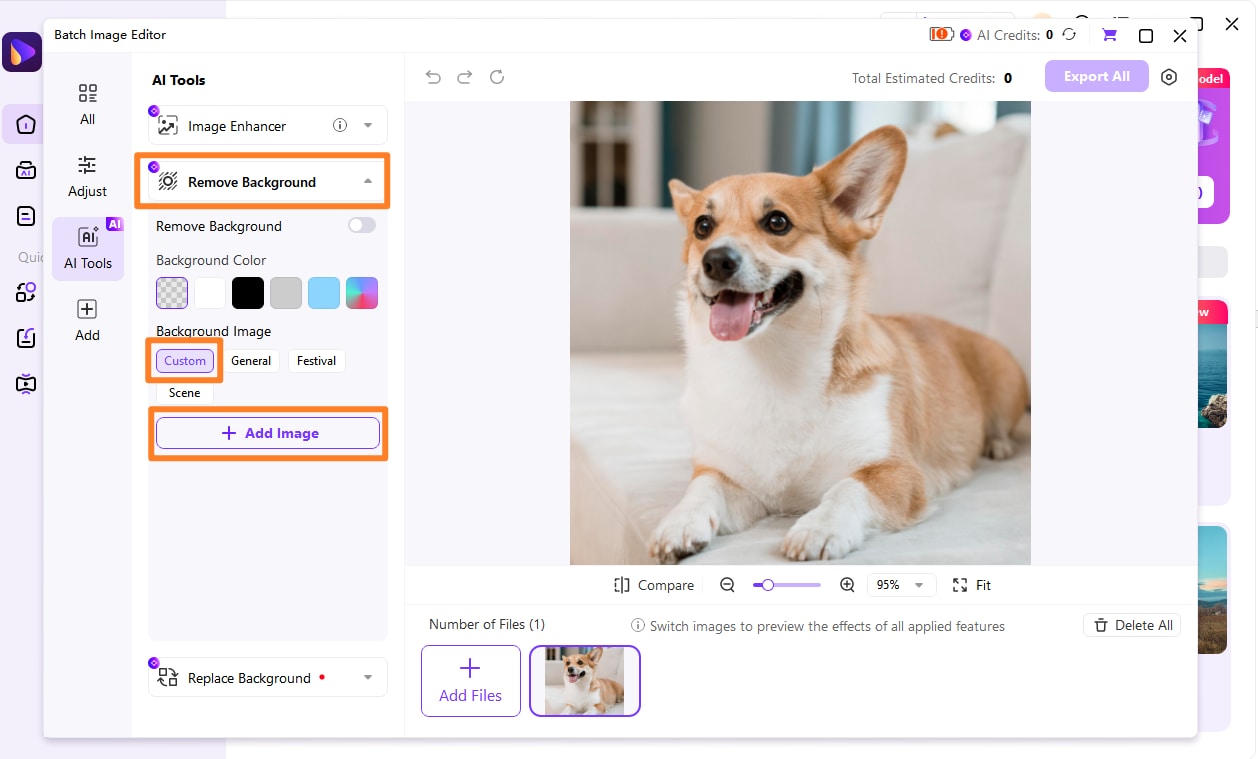
Step 2: Upload the Images
Drag and drop your photos into the UniConverter interface. You can upload multiple images for batch processing, saving you a lot of time. This tool is also capable of handling high-definition background remover tasks.
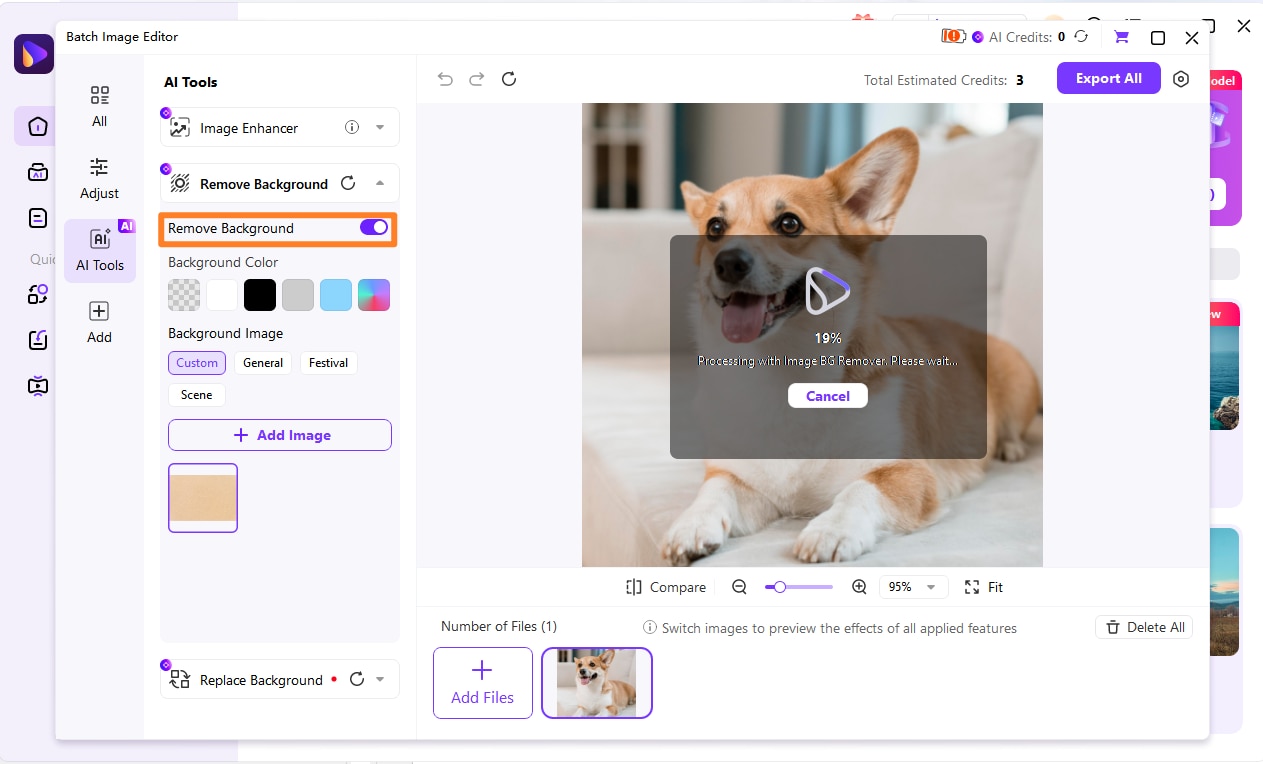
Step 3: Preview and Adjust Settings
UniConverter will automatically process your images. You can preview the results and make any necessary adjustments to ensure the background replacement is perfect. Whether you need to work with standard images or even SVG background remover, UniConverter provides precise control.
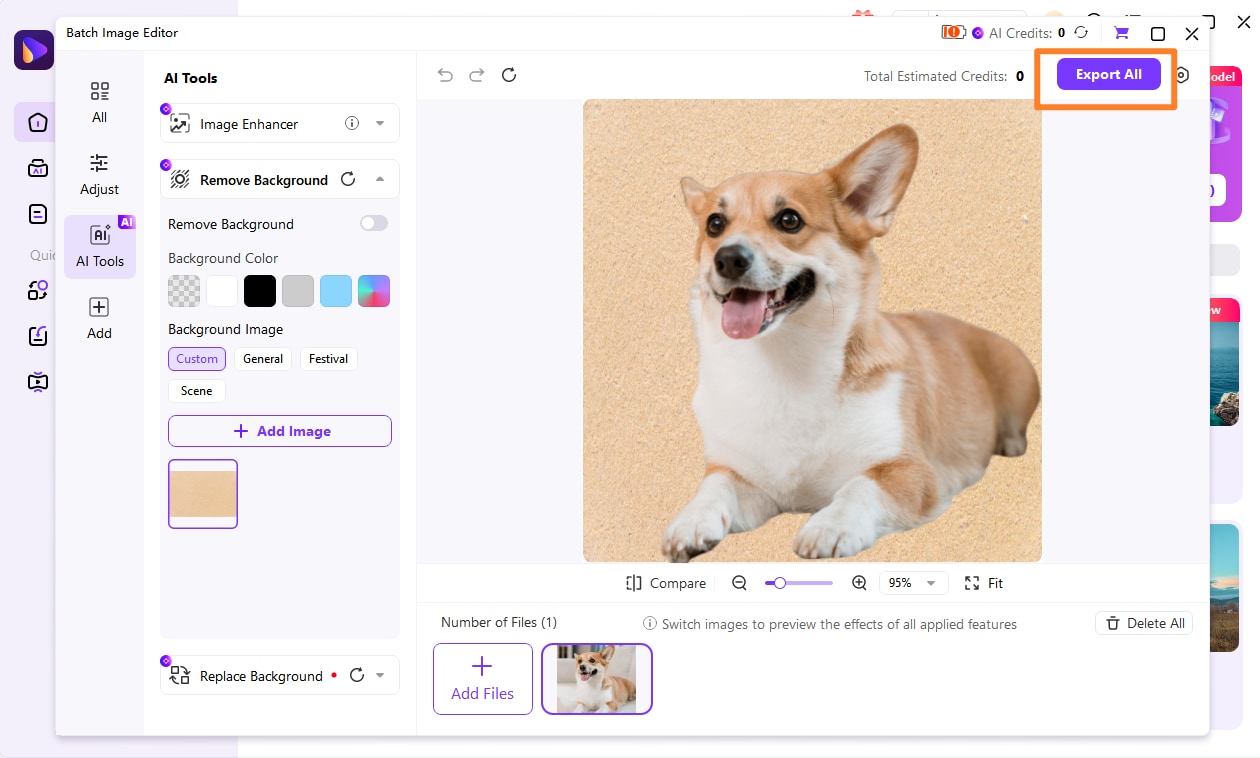
Step 4: Export Your Enhanced Images
Once you're satisfied with the results, simply click 'Export' to save your enhanced images. UniConverter ensures stable, lossless output with GPU acceleration for speed.

Seeking a Topaz Photo AI Alternative?
Part 7: Conclusion
After spending considerable time with Topaz Photo AI, my Topaz Photo AI review concludes that it's a powerful and often indispensable tool for specific photographic challenges. For professionals who frequently encounter noisy, blurry, or low-resolution images, the investment is easily justified by the time saved and the quality of the recovered details. It excels where traditional editing tools struggle, particularly in its AI-driven noise reduction, sharpening, and upscaling capabilities. However, for casual users with consistently high-quality images, the high price point and potential for over-processing might make it less appealing. It requires a powerful system to run smoothly, and while the autopilot is helpful, achieving the best results often demands a bit of manual fine-tuning. Ultimately, if you're looking to rescue challenging shots and streamline your workflow for image quality enhancement, Topaz Photo AI is a strong contender, but be mindful of its limitations and your specific needs.
Part 8: FAQs
-
1. Is Topaz Photo AI a standalone application or a plugin?
Topaz Photo AI functions as both a standalone application and a plugin for popular photo editors like Adobe Photoshop and Lightroom Classic. This flexibility allows me to integrate it seamlessly into my existing workflow, whether I'm doing a quick batch process or fine-tuning a single image within Photoshop.
-
2. Can Topaz Photo AI improve the quality of old, scanned photos?
Absolutely, and this is where I've found it to be incredibly effective. Its AI upscaling and noise reduction capabilities can significantly enhance the detail and reduce grain in old, scanned photos, making them look much clearer and more vibrant than their original state. It's like breathing new life into cherished memories.
-
3. How does Topaz Photo AI compare to Adobe's built-in AI features?
While Adobe Lightroom and Photoshop have incorporated AI features for tasks like noise reduction and sharpening, Topaz Photo AI's specialized AI models often provide superior results for extreme cases. Adobe's tools are good for general enhancements, but Topaz Photo AI goes deeper, particularly in its ability to reconstruct lost detail and upscale images without introducing artifacts.
-
4. What are the system requirements for running Topaz Photo AI?
To get the most out of Topaz Photo AI, you'll need a robust system. I recommend at least 16GB of RAM, a modern CPU (Intel i7 or AMD Ryzen 7 equivalent or better), and crucially, a dedicated GPU with at least 4GB of VRAM (NVIDIA or AMD). Without these, processing can be quite slow and frustrating.
-
5. Is Topaz Photo AI worth the investment for a hobbyist photographer?
For a hobbyist, it really depends on the type of photography you do. If you frequently shoot in low light, use older lenses, or need to crop heavily and enlarge images, then yes, it can be a worthwhile investment. However, if your images are generally well-exposed and sharp, and you're on a tight budget, you might find that the built-in tools in your existing software are sufficient.
