
- Value: Affinity Photo offers professional-grade editing as a one-time purchase, saving significant long-term costs versus subscriptions.
- Comparison: It rivals Photoshop in features and performance but lacks Adobe's integrated cloud ecosystem for collaborative workflows.
- Decision: Ideal for budget-conscious professionals and hobbyists prioritizing powerful tools over Adobe Creative Cloud integration.
- Consideration: Expect a learning curve, especially if transitioning from Photoshop; invest time for mastery.
- Alternative: UniConverter excels in efficient batch image background removal, complementing photo editors for specific tasks.
In this article
- Part 1: What is Affinity Photo?
- Part 2: Affinity Photo: Core Features, Pros, and Cons
- Part 3: Target Users and Use Cases
- Part 4: Affinity Photo and Alternatives Comparison
- Part 5: Risks and Pitfalls to Consider
- Part 6: How to Use UniConverter to Efficiently Replace Image Backgrounds
- Part 7: Final Verdict and Recommendations
- Part 8: FAQs
When I first started diving deep into professional photo editing, Affinity Photo review was a name that kept popping up, often whispered as the "Photoshop killer" due to its one-time purchase model. This review aims to cut through the hype and provide a practical, hands-on comparison of Affinity Photo against its established rivals. We'll explore its core features, ideal use cases, and where it truly shines, as well as its limitations. My goal is to help you, whether you're a seasoned professional or an aspiring enthusiast, make an informed decision about whether Affinity Photo is the right tool for your creative workflow.
Part 1: What is Affinity Photo?
Affinity Photo emerged as a powerful contender in the photo editing software market, developed by Serif Europe. It positions itself as a professional-grade raster graphics editor, offering a comprehensive suite of tools for image manipulation, retouching, and graphic design. When I first heard about it, I was skeptical that a non-subscription model could truly compete with the industry giant, Photoshop. However, after spending considerable time with it, I realized it addresses a significant pain point for many creatives: the ever-increasing cost of subscription-based software.
This review aims to tackle the core question: Can Affinity Photo genuinely serve as a viable, long-term alternative for professionals and serious hobbyists?
Addressing Market Needs and User Pain Points:
* Subscription Fatigue: Many users are tired of recurring monthly or annual fees for software.
* Performance Demands: Creatives need responsive software that can handle large files and complex edits without bogging down their systems.
* Professional Toolset: The expectation is for a full range of advanced editing capabilities, from precise selections to sophisticated retouching.
* Value for Money: Users are seeking powerful tools that offer excellent value without compromising on quality or features.
Part 2: Affinity Photo: Core Features, Pros, and Cons
Affinity Photo, in my experience, delivers a robust set of core capabilities that truly stand up to professional demands. Its strength lies in its comprehensive toolkit for image manipulation, offering everything from advanced layer management and non-destructive adjustments to sophisticated retouching brushes and precise selection tools. I've found its RAW development engine to be quite capable, providing excellent control over initial image processing. The ability to work with unlimited layers, blend modes, and live filter layers means I can experiment freely without committing to changes.
Core Capabilities:
* Non-destructive Editing: All adjustments and filters are applied as live layers, allowing for infinite revisions.
* Professional Retouching Tools: Includes frequency separation, inpainting brush, and liquify persona for detailed image manipulation.
* Advanced Selection Tools: Offers a range of precise selection methods, including refine selection for intricate details.
* RAW Development Persona: Dedicated workspace for processing RAW files with extensive control over exposure, color, and detail.
* Live Filter Layers: Apply filters non-destructively, with real-time previews and adjustable parameters.
Pros:
* Professional-grade photo editing tools at a one-time purchase price. This was a game-changer for my budget.
* Non-destructive editing workflow for maximum flexibility. I love being able to go back and tweak anything at any time.
* Excellent performance and responsiveness, even with large files. It rarely stutters, even with complex projects.
Cons:
* Steeper learning curve for beginners compared to some alternatives. It took me a while to get comfortable with its unique interface.
* Limited integration with other Adobe Creative Cloud applications. This can be a hurdle if you work in an Adobe-centric environment.
Part 3: Target Users and Use Cases
From my perspective, Affinity Photo truly shines for a specific segment of the creative market. It's not a one-size-fits-all solution, but where it fits, it fits perfectly.
Best Use Case: Professional Photographers and Graphic Designers on a Budget
If you're a professional photographer or a graphic designer who needs powerful, high-quality image editing capabilities but can't justify the ongoing subscription cost of Adobe products, Affinity Photo is your champion. I found myself using it extensively for client work involving high-resolution photo retouching, complex composites, and even some print-ready graphic elements. The non-destructive workflow is a lifesaver for client revisions, and the performance keeps my projects moving smoothly. For anyone building a portfolio or running a small creative business, the one-time purchase is a significant financial advantage that doesn't compromise on professional output.
Limited Use Case: Collaborative Workflows Requiring Adobe Ecosystem Integration
However, if your workflow heavily relies on seamless integration with other Adobe Creative Cloud applications – think InDesign for layout, Illustrator for vector graphics, or Premiere Pro for video – then Affinity Photo presents a hurdle. While it can open and save PSD files, the round-trip editing and dynamic linking that Adobe offers within its ecosystem are simply not there. I've encountered situations where collaborating with teams who exclusively use Adobe products becomes cumbersome, requiring more manual file exports and imports. If your projects demand constant back-and-forth between different Adobe applications, you might find yourself battling compatibility issues more often than you'd like.
Part 4: Affinity Photo and Alternatives Comparison
When I was looking for a new photo editor, I didn't just consider Affinity Photo in isolation. I weighed it against the established giants and the free alternatives. Here's how I see them stack up:
| Feature/Aspect | Affinity Photo | Adobe Photoshop | GIMP | UniConverter |
| Pricing Model | One-time purchase | Subscription | Free | One-time/Subscription |
| Professional Tools | High | High | Medium | Medium (Multimedia) |
| Learning Curve | Medium | Medium | High | Low |
| Cloud Integration | Limited | Extensive | None | Limited (Local focus) |
| Performance | Excellent | Excellent | Good | Excellent |
| Output Quality | High | High | Good | High |
| Batch Processing | Yes | Yes | Limited | Yes |
| Security | High (Local) | High (Cloud/Local) | Medium (Open Source) | High (Local) |
Key Differentiators:
Affinity Photo truly stands out as a powerful, subscription-free alternative to Photoshop. For me, the one-time purchase was a huge draw, offering professional tools without the recurring cost. Photoshop, on the other hand, remains the industry standard, especially for its extensive cloud integration and seamless ecosystem. If you're deeply embedded in an Adobe workflow, it's hard to beat. GIMP provides a free, open-source option for basic to intermediate editing, but its interface and learning curve can be quite challenging. UniConverter, while not a direct photo editor, excels in multimedia conversion and batch processing, offering a different kind of utility that can complement a photo editing workflow, especially for preparing images for various platforms or converting formats efficiently.
Part 5: Risks and Pitfalls to Consider
Even with its many advantages, diving into Affinity Photo isn't without its potential snags. Based on my own experience, here are some risks and pitfalls I've identified that you should definitely consider before making the switch.
Data Privacy and Cloud Storage Concerns
Unlike Adobe's extensive cloud services, Affinity Photo doesn't offer its own integrated cloud storage. This means your files are primarily stored locally on your machine. While this can be a privacy benefit for some, it also means you're solely responsible for your backup strategy. I've had to be very diligent about setting up my own cloud sync (like Dropbox or Google Drive) for my project folders, which is an extra step compared to Photoshop's built-in Creative Cloud syncing. If you're used to seamless cloud access and collaboration directly within your editing suite, this requires a shift in workflow.
Potential for Feature Overlap with Existing Software
If you're already using other specialized software for certain tasks, you might find some feature overlap. For instance, if you have a dedicated RAW processor you love, Affinity Photo's Develop Persona might feel redundant or less powerful in comparison. I initially thought I'd use Affinity Photo for everything, but I still find myself occasionally jumping to a different tool for specific, niche functions where I prefer its workflow or results. It's important to assess if Affinity Photo truly fills a gap or just duplicates functionality you already have.
Learning Curve and Time Investment
While I appreciate Affinity Photo's power, I won't lie – there's a learning curve, especially if you're coming from Photoshop. Many keyboard shortcuts are different, and some tools operate in slightly unique ways. I spent a good amount of time watching tutorials and experimenting to get comfortable. If you're on a tight deadline and need to be productive immediately, the initial time investment required to master Affinity Photo might be a pitfall. It's not insurmountable, but it's definitely something to factor into your decision.
Compatibility Issues with Legacy Files
Affinity Photo generally handles PSD files well, but I've encountered occasional minor compatibility quirks with very old or highly complex Photoshop files, especially those with obscure layer styles or smart objects. While it's rare, sometimes a text layer might not render perfectly, or a specific effect might look slightly different. For the most part, it's excellent, but if you work with a vast archive of legacy Photoshop files, it's worth testing a few of your most complex ones before fully committing.
Part 6: How to Use UniConverter to Efficiently Replace Image Backgrounds
Sometimes, you just need a quick, clean background replacement without diving into a full-fledged photo editor. Or perhaps you're dealing with a batch of images where other tools fall short, producing pixelated edges or inconsistent quality. This is where I've found UniConverter to be an incredibly useful tool, especially when other solutions struggle with batch processing, blurry exports, or jagged edges. It’s an ad-free, fast, and stable solution for various multimedia tasks, including precise background removal, offering extensive format support and GPU acceleration for lossless processing. For those seeking to remove background without losing quality, this feature is particularly beneficial.
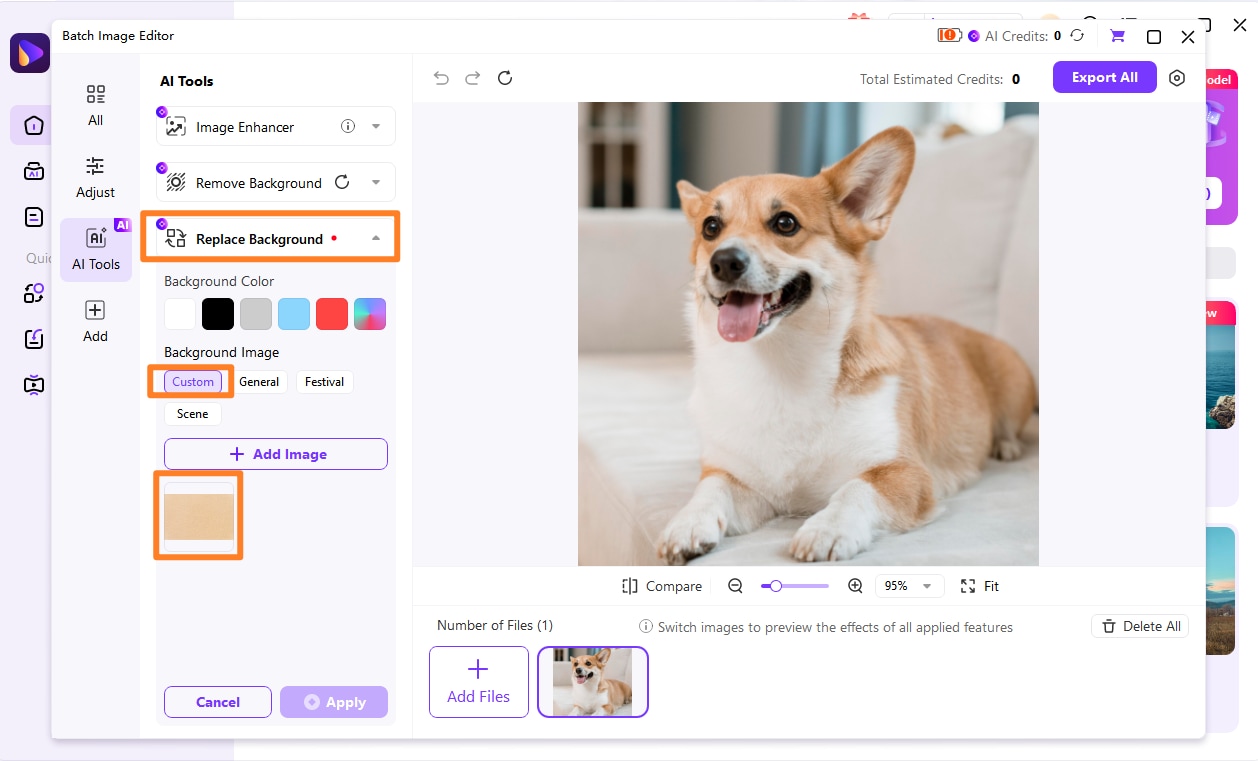
Step 1: Open UniConverter and Choose Background Replacer
Launch UniConverter and navigate to the "Toolbox" section. From there, select the "Background Replacer" option. This tool is designed to help you change video background with ease.
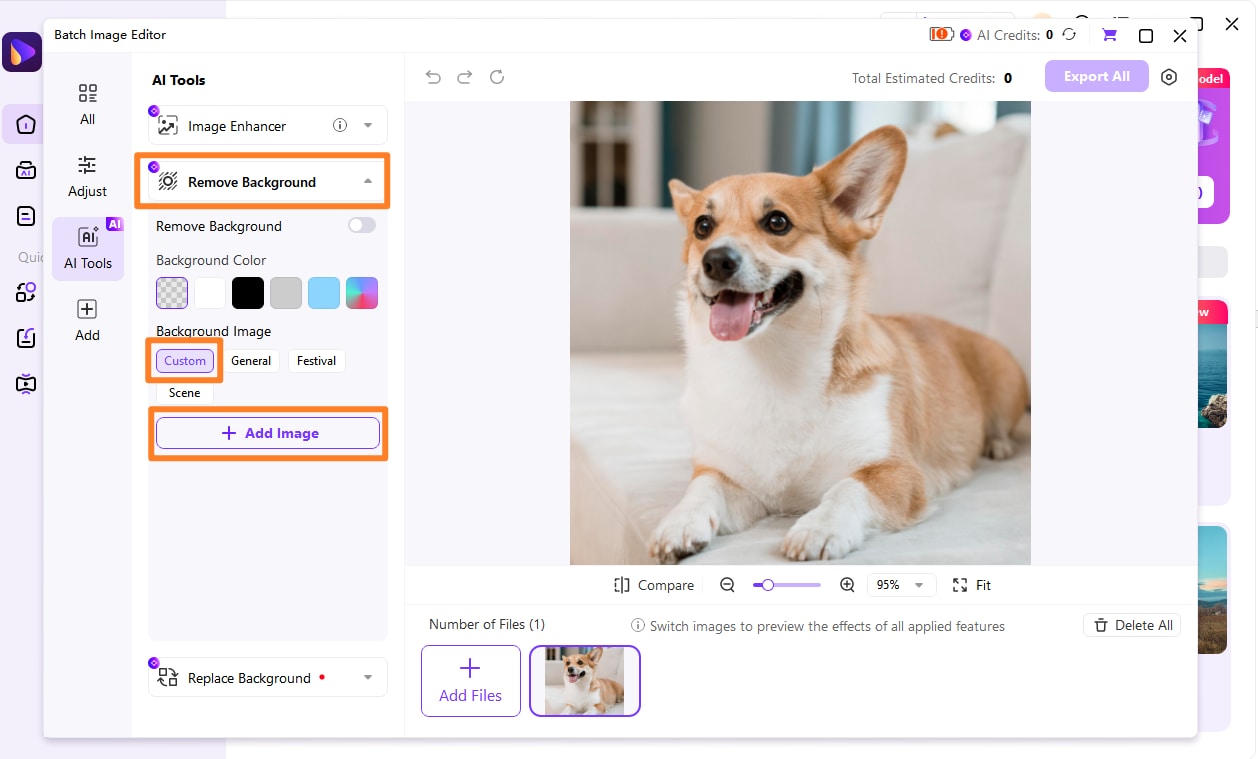
Step 2: Upload the Images
Drag and drop your images directly into the UniConverter interface, or click the "Add Files" button to browse and select them. You can add multiple images for batch processing.
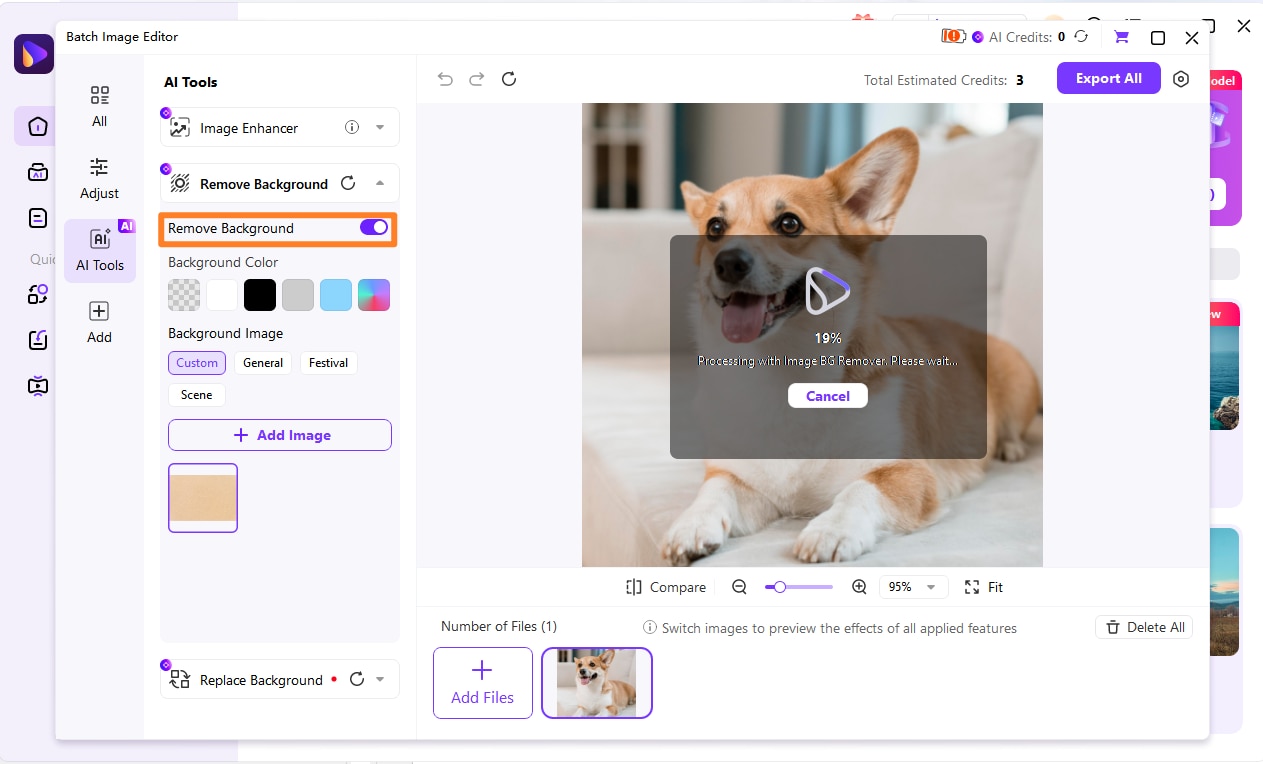
Step 3: Click to Preview Images
Once your images are uploaded, UniConverter will automatically process them. Click on each image to preview the background replacement results. You can fine-tune the output if needed. This feature ensures high-definition background remover capabilities.
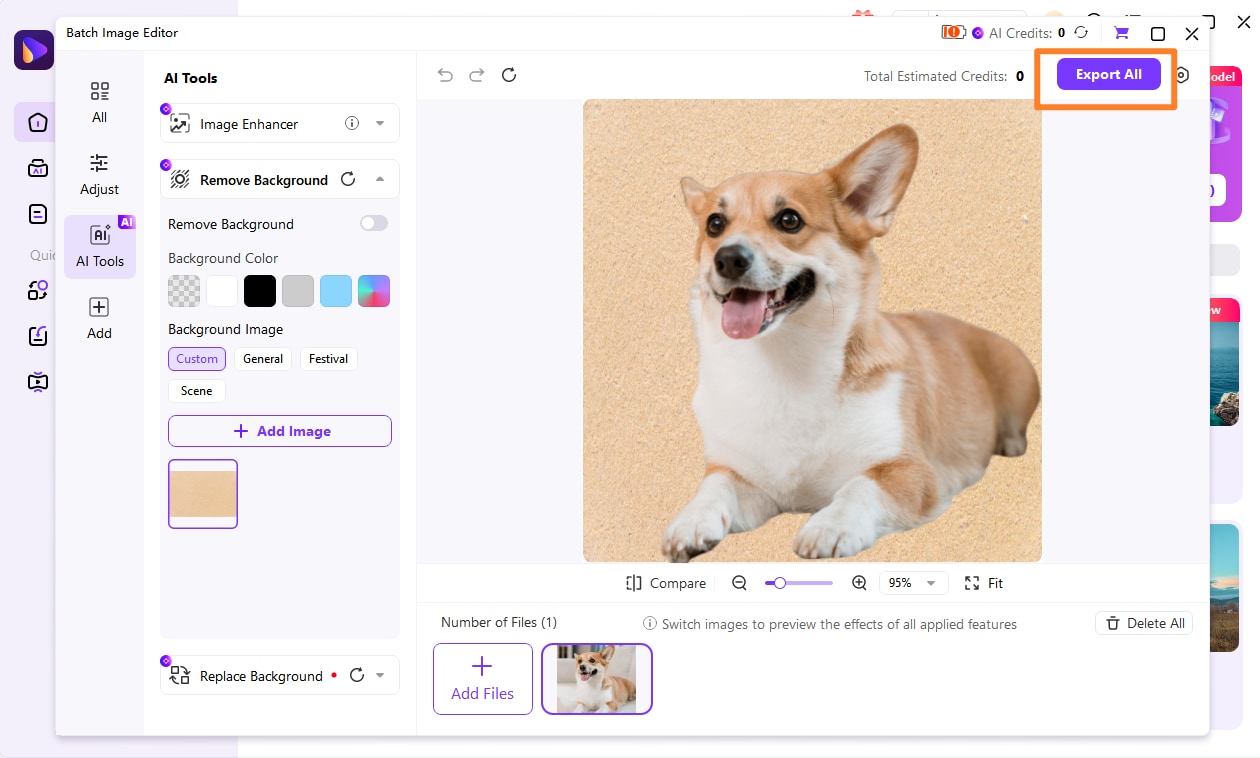
Step 4: Preview and Export Images
After reviewing and making any necessary adjustments, choose your desired output format and destination folder. Finally, click "Export" to save your images with their new backgrounds.

Seeking an Alternative to Affinity Photo?
Part 7: Final Verdict and Recommendations
After extensive use and comparison, my Affinity Photo review concludes that it’s a truly formidable tool, especially for those seeking a powerful, professional-grade photo editor without the subscription model. For budget-conscious professionals, it's an incredibly strong contender, offering nearly all the capabilities of its more expensive rivals at a fraction of the long-term cost. I’ve personally found it to be a reliable workhorse for everything from intricate retouching to complex composites, and the non-destructive workflow is a huge advantage. However, for those deeply embedded in an Adobe ecosystem, where seamless integration with other Creative Cloud applications is paramount for collaborative projects, Adobe Photoshop remains the dominant choice. Its industry-standard status and extensive cloud features are hard to beat in that specific scenario. Finally, for basic editing needs or for enthusiasts who prefer open-source software, GIMP is a viable and free option, though its interface and learning curve can be more challenging. Ultimately, your choice should align with your budget, workflow, and specific project requirements.
Part 8: FAQs
-
1. Is Affinity Photo a one-time purchase or subscription?
Affinity Photo is a one-time purchase, offering a perpetual license. You buy it once and own it forever, with free updates within the major version.
-
2. Can Affinity Photo open Photoshop (PSD) files?
Yes, Affinity Photo has excellent compatibility with PSD files. You can open, edit, and save PSD files, generally retaining layers, masks, and adjustment layers.
-
3. Is Affinity Photo suitable for beginners?
While powerful, Affinity Photo has a steeper learning curve than some entry-level editors. However, there are numerous high-quality tutorials available, and with dedication, beginners can certainly master it.
-
4. What are the main advantages of Affinity Photo over Photoshop?
The primary advantages are the one-time purchase price, which offers significant long-term savings, and its robust non-destructive workflow. Many users also praise its performance and responsiveness.
-
5. Does Affinity Photo offer cloud storage or synchronization?
Affinity Photo does not offer its own proprietary cloud storage or synchronization service. However, it integrates well with third-party cloud services like Dropbox or Google Drive for file storage and syncing.
