
- Value: ACDSee Photo Studio excels in managing vast photo libraries with speed and robust non-destructive editing.
- Comparison: It's a strong alternative to Adobe Lightroom, especially for users prioritizing speed and comprehensive DAM outside the Adobe ecosystem.
- Decision: Ideal for professional photographers and advanced enthusiasts needing powerful organization and editing for large collections.
- Consideration: Be aware of the steep learning curve, hardware demands, and subscription costs before committing.
- Alternative: For specific tasks like batch background removal, UniConverter offers an efficient, high-quality, and user-friendly solution.
In this article
- Part 1: What is ACDSee Photo Studio?
- Part 2: ACDSee Photo Studio: Core Features, Pros, and Cons
- Part 3: ACDSee Photo Studio: Ideal Users and Use Cases
- Part 4: ACDSee Photo Studio and Alternatives Comparison
- Part 5: Risks and Pitfalls to Consider
- Part 6: How to Use UniConverter for Efficient Image Background Replacement
- Part 7: Conclusion
- Part 8: FAQs
When it comes to managing and editing vast photo libraries, ACDSee Photo Studio review often comes up as a strong contender. I've spent countless hours navigating its features, and I can tell you it's a powerful tool, especially if you're drowning in digital images. This review aims to cut through the noise, offering a practical, scenario-based comparison to help you decide if it's the right fit for your workflow. We'll dive deep into its capabilities, weigh its pros and cons, and pit it against its closest rivals, giving you the insights you need to make an informed choice.
Part 1: What is ACDSee Photo Studio?
ACDSee Photo Studio is a comprehensive digital asset management (DAM) and photo editing software designed for photographers of all levels, though it truly shines for those with extensive collections. It originated as a fast image viewer in the early days of digital photography and has evolved into a robust suite offering everything from RAW processing to advanced organizational tools. My initial impression was that it was just another photo editor, but I quickly realized its strength lies in its ability to handle large volumes of images with remarkable speed and efficiency. This review aims to address the common dilemma faced by photographers: how to efficiently manage, edit, and share their ever-growing photo libraries without getting bogged down by slow software or complex interfaces.
Market Position and Target Audience
* Addressing the "Photo Overload" Problem: Many photographers, myself included, struggle with organizing thousands of images, making it hard to find specific shots or track edits.
* The Need for Non-Destructive Editing: Preserving original image quality while making extensive edits is crucial for professionals and serious enthusiasts.
* Balancing Speed and Features: Photographers often have to choose between fast, basic viewers and powerful, but often slow, editors. ACDSee tries to bridge this gap.
* Cost-Effective Professional Tools: While Adobe products dominate, many seek alternatives that offer similar professional-grade features without the same subscription commitment.
Part 2: ACDSee Photo Studio: Core Features, Pros, and Cons
From my experience, ACDSee Photo Studio truly excels in its ability to manage and process a large volume of photos. Its core strength lies in its comprehensive digital asset management (DAM) system, which allows me to quickly catalog, search, and organize my entire photo library. The non-destructive editing tools are incredibly powerful, letting me fine-tune RAW files with precision without ever altering the original image. I've found its speed, especially when browsing through thousands of images, to be a significant advantage over some competitors.
* Advanced Digital Asset Management (DAM): I can tag, rate, categorize, and keyword my photos with incredible detail, making it easy to find specific shots years later.
* Robust Non-Destructive Photo Editing: The RAW processing engine is top-notch, allowing for detailed adjustments to exposure, color, and tone without committing to permanent changes.
* Batch Processing Capabilities: This is a lifesaver for me; I can apply edits, watermarks, or renames to hundreds of photos at once, saving immense time.
* Facial Recognition and Geotagging: These automated features help me organize photos by who's in them or where they were taken, which is surprisingly useful.
* Layered Editing: For more complex composites or detailed retouching, the layer support provides a lot of flexibility, similar to dedicated image editors.
- Pros:
- Advanced Digital Asset Management (DAM) capabilities for large photo libraries.
- Robust non-destructive photo editing tools, including RAW processing.
- Fast performance and efficient workflow for professional photographers.
- Cons:
- Steep learning curve for beginners due to extensive features.
- Subscription model can be costly compared to some alternatives.
Part 3: ACDSee Photo Studio: Ideal Users and Use Cases
From my perspective, ACDSee Photo Studio is a beast designed for a specific kind of photographer. If you're like me, constantly shooting and accumulating thousands of images, its organizational prowess is a game-changer. I've found it indispensable for managing client shoots, where I need to quickly cull, edit, and deliver large batches of photos. It's not just about editing; it's about the entire workflow from import to export, making it perfect for anyone whose livelihood depends on efficient image handling.
- Best Use Case: Professional photographers and advanced enthusiasts managing vast photo collections and requiring powerful editing and organization tools. For example, I use it extensively after a wedding shoot to import, tag, rate, and then batch-process hundreds of RAW files before diving into detailed edits. Its ability to quickly preview and sort through thousands of images saves me hours.
- Limited Use Case: Casual users or those needing quick, simple edits without extensive cataloging. If you're just looking to crop a few vacation photos or apply a basic filter for social media, ACDSee Photo Studio would be overkill. The interface and feature set can feel overwhelming, and you'd be paying for a lot of power you simply don't need. For quick touch-ups, I'd probably reach for something much simpler.
Part 4: ACDSee Photo Studio and Alternatives Comparison
When I look at the landscape of photo editing and management software, ACDSee Photo Studio holds its own, but it's crucial to understand where it stands against the giants. I've spent time with all these platforms, and each has its unique flavor. For large library management, ACDSee is right up there with Lightroom Classic, both excelling at keeping thousands of images organized. However, when it comes to sheer RAW editing power, Capture One Pro often feels like it has an edge, especially with its color science. The user interface complexity is a big one for me; ACDSee and Lightroom are moderately complex, but Capture One can be a bit of a beast to learn initially. Performance with large files is where I often see differences; Capture One Pro tends to be incredibly snappy, while ACDSee is very good, and Lightroom can sometimes lag.
| Feature/Scenario | ACDSee Photo Studio | Adobe Lightroom Classic | Capture One Pro |
| Large Library Management | Excellent | Excellent | Good |
| RAW Editing Power | High | High | Very High |
| User Interface Complexity | Moderate-High | Moderate | High |
| Subscription Model | Yes | Yes | Yes (Perpetual available) |
| Performance (Large Files) | Very Good | Good | Excellent |
| Processing Speed (Batch) | Fast | Moderate | Very Fast |
| Output Quality (JPEG) | Excellent | Excellent | Excellent |
| Ease of Use (Beginner) | Moderate | Moderate | Low |
| Customer Support | Good | Excellent | Good |
| Security (Cloud) | Good | Excellent | N/A (Local focus) |
Key Differentiators
For me, ACDSee's key differentiator is its balance of speed and comprehensive DAM features without being as resource-intensive as some of its competitors. While Lightroom is deeply integrated into the Adobe ecosystem, ACDSee offers a powerful standalone solution. Capture One Pro, on the other hand, often feels like it's built from the ground up for the absolute highest quality RAW processing, which is why many studio photographers swear by it. If you're heavily invested in the Adobe ecosystem, Lightroom is a no-brainer. But if you want a powerful, fast, and feature-rich alternative for managing a massive photo collection, ACDSee is a very strong contender. If ultimate RAW quality and tethered shooting are your top priorities, Capture One Pro is probably your best bet.
Part 5: Risks and Pitfalls to Consider
When diving into a powerful software like ACDSee Photo Studio, or any similar tool, it's easy to get excited about the features and overlook potential downsides. I've learned this the hard way with various software over the years. For ACDSee, while it's a desktop product, there are still several risks and pitfalls I think you should be aware of before committing your precious photo library to it.
Data Privacy and Cloud Integration
While ACDSee Photo Studio is primarily a desktop application, it does offer cloud integration features for sharing and backup. This means you're entrusting your images to a third-party server. I always recommend being mindful of what you upload and understanding their privacy policies. For me, sensitive client work rarely leaves my local drives unless absolutely necessary and encrypted. Always assume that anything in the cloud has a potential, however small, for exposure.
Learning Curve and Time Investment
I remember when I first started with ACDSee, I was overwhelmed. It's not a simple point-and-click editor. The sheer number of features, menus, and customization options can be daunting. You'll need to invest significant time to truly master its workflow, especially if you're coming from a simpler editor. If you're looking for instant gratification, this might not be the tool for you. It's a commitment, but one that pays off if you stick with it.
Hardware Requirements for Optimal Performance
While ACDSee is generally efficient, running it with a massive RAW library and performing complex edits can still be demanding on your system. I've noticed that if my RAM isn't sufficient or my processor is older, the experience can become sluggish, especially during batch processing or when applying multiple layers. Make sure your computer meets or exceeds the recommended specifications, otherwise, you might find yourself frustrated by slow loading times and choppy performance.
Subscription Cost vs. Value Proposition
ACDSee Photo Studio has moved towards a subscription model, which is a common trend in software. While it offers continuous updates and support, it's an ongoing cost. I always weigh whether the features I actually use justify the recurring expense. If you're only using a fraction of its capabilities, a one-time purchase of a simpler tool might be more cost-effective in the long run. Evaluate your needs carefully to ensure you're getting enough value for your money.
Part 6: How to Use UniConverter for Efficient Image Background Replacement
Sometimes, even with powerful tools, you encounter situations where batch processing for specific tasks like background replacement is clunky, or the output quality isn't consistent. I've found that when other tools struggle with pixelated exports, blurry edges, or simply don't offer efficient batch processing for background removal, UniConverter can be a surprisingly effective alternative. It's not a full-fledged photo editor, but for specific media tasks, it's a streamlined, no-fuss solution. UniConverter offers a clean, ad-free experience, supports a rich variety of formats, leverages GPU acceleration for speed, and ensures stable, lossless processing, especially for tasks like batch background replacement. It's my go-to for a quick, high-quality, and efficient solution when I need to remove backgrounds from multiple images without the hassle.
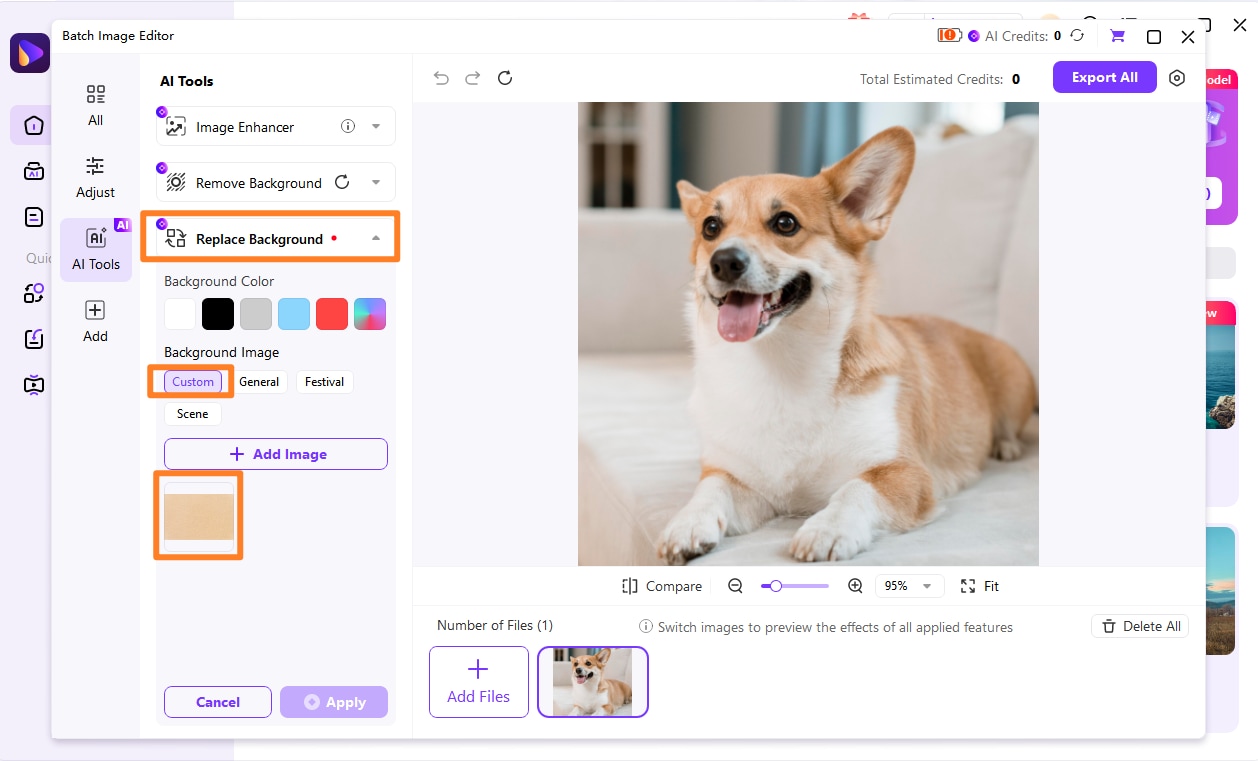
Step 1: Open UniConverter and Choose Background Replacer
Launch UniConverter on your computer and navigate to the "Toolbox" section. From there, select the "Background Replacer" option.
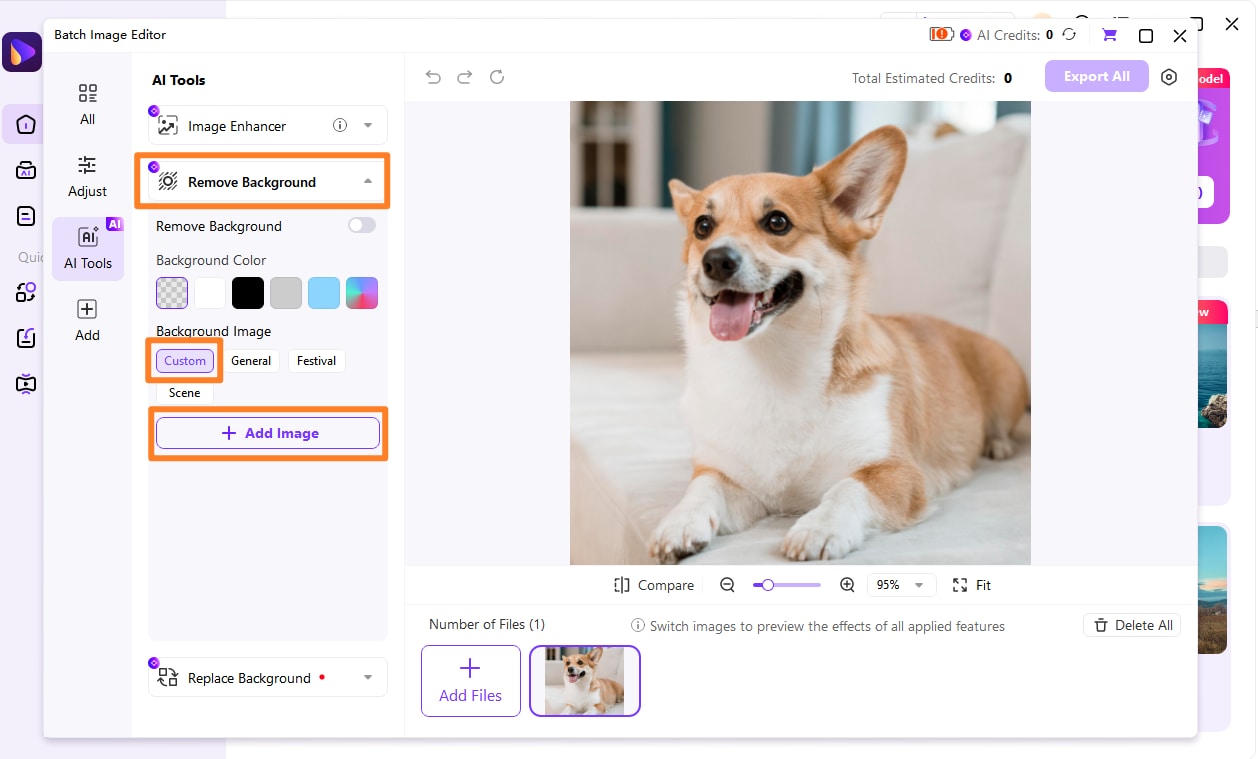
Step 2: Upload the Images
Drag and drop the images you want to process into the designated area, or click "Add Files" to browse and select them.
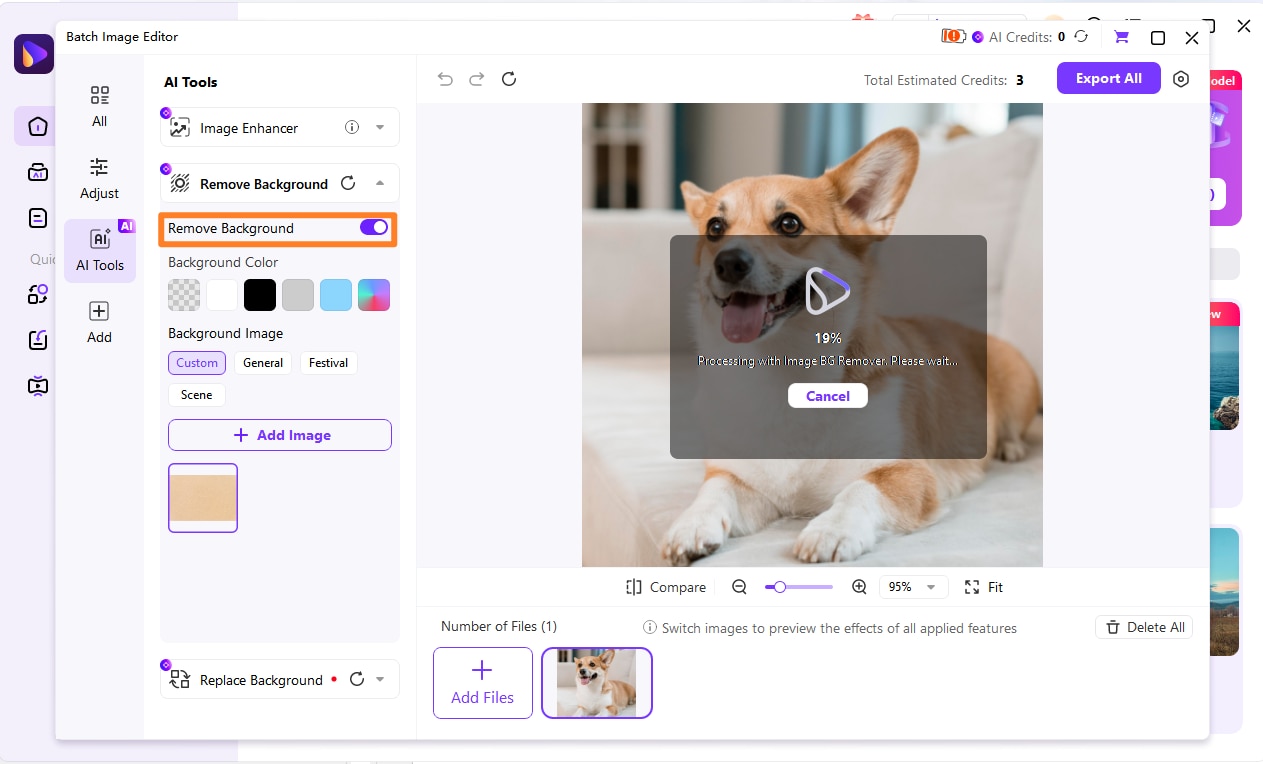
Step 3: Click to Preview Images
Once uploaded, UniConverter will automatically process the images. Click on each image to preview the background replacement result.
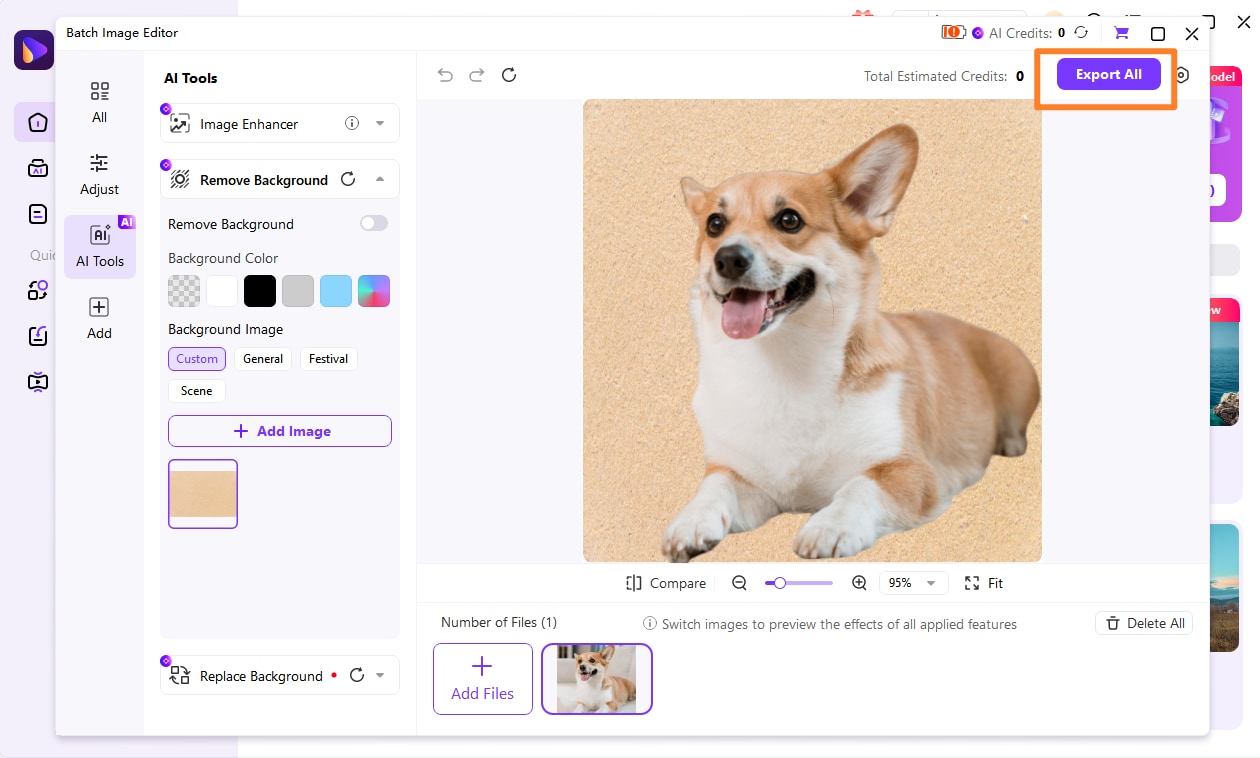
Step 4: Export in Preferred Format
After reviewing, choose your desired output format and click "Export" to save your images with the new backgrounds.

Seeking an ACDSee Photo Studio Alternative?
Part 7: Conclusion
After spending considerable time with ACDSee Photo Studio review, it's clear that this software carves out a significant niche in the crowded photo editing and management market. It's a robust, feature-rich solution that truly shines for photographers grappling with extensive image libraries and demanding workflows. While its learning curve can be steep and the subscription model requires careful consideration of its value proposition, its speed, comprehensive DAM capabilities, and powerful non-destructive editing tools make it a formidable contender. For those who prioritize efficient organization and high-quality RAW processing without being tied solely to the Adobe ecosystem, ACDSee Photo Studio offers a compelling alternative. However, for casual users or those seeking quick, simple edits, its extensive feature set might be an unnecessary complexity and cost. Ultimately, the best choice depends on your specific needs, workflow, and willingness to invest time in mastering a powerful tool.
Part 8: FAQs
-
1. Is ACDSee Photo Studio suitable for beginners?
ACDSee Photo Studio has a significant learning curve due to its extensive features and professional-grade tools. While beginners can certainly use it, they might find the interface overwhelming initially. For simple edits, there are much more user-friendly options available.
-
2. How does ACDSee Photo Studio compare to Adobe Lightroom Classic in terms of features?
ACDSee Photo Studio offers comparable digital asset management and non-destructive editing capabilities to Adobe Lightroom Classic. ACDSee often boasts faster browsing speeds for large libraries, while Lightroom benefits from deeper integration within the Adobe Creative Cloud ecosystem and a vast community for tutorials and presets.
-
3. Can I use ACDSee Photo Studio for video editing?
No, ACDSee Photo Studio is specifically designed for photo management and editing. It does not include video editing capabilities. For video editing, you would need dedicated video editing software.
-
4. What are the system requirements for ACDSee Photo Studio?
While specific requirements vary by version, generally, ACDSee Photo Studio requires a 64-bit operating system (Windows 7 SP1 or newer), a multi-core processor, at least 4GB of RAM (8GB recommended), and a decent graphics card for optimal performance, especially with RAW files and complex edits.
-
5. Does ACDSee Photo Studio offer a perpetual license?
Historically, ACDSee offered perpetual licenses. However, like many software companies, they have increasingly shifted towards a subscription model for their flagship Photo Studio products, offering continuous updates and support. It's always best to check their official website for the most current licensing options.
