
- Zyro AI Review: Explores Zyro's AI video enhancement capabilities, comparing strengths and weaknesses for informed decisions.
- Core Features: Zyro offers AI upscaling, noise reduction, color correction, and stabilization for broader audience accessibility.
- Ideal Users: Best for beginners, social media creators, and online instructors needing quick, easy video quality boosts.
- Limitations: Lacks advanced customization for professionals; can introduce artifacts on very low-quality source footage.
- Comparison: Zyro excels in ease for social media; UniConverter offers versatile, high-quality local processing; Topaz/DaVinci for pros.
- Risks: Cloud-based processing raises data privacy concerns; over-processing can lead to unnatural results; subscription lock-in.
- UniConverter Alternative: Provides efficient, GPU-accelerated, lossless enhancement with batch processing and diverse AI models.
In this article
- Part 1: What is Zyro AI Video Enhancer?
- Part 2: Zyro AI Video Enhancer: Core Features, Pros, and Cons
- Part 3: Zyro AI Video Enhancer: Ideal Users and Use Cases
- Part 4: Zyro AI Video Enhancer and Alternatives Comparison
- Part 5: Risks and Pitfalls to Consider
- Part 6: How to Use UniConverter to Efficiently Enhance Videos
- Part 7: Conclusion
- Part 8: FAQs
Zyro AI Video Enhancer review delves into the burgeoning field of AI-powered video enhancement, a technology rapidly transforming how we perceive and interact with digital media. This comprehensive review will explore Zyro AI Video Enhancer's capabilities, pitting it against key competitors to provide a nuanced understanding of its strengths and weaknesses. We will analyze its core features, identify ideal user profiles and use cases, and highlight potential pitfalls, ultimately guiding users toward informed decisions in their video enhancement journeys. This article aims to offer a clear, scenario-based comparison to help you determine if Zyro AI Video Enhancer is the right tool for your specific needs.
Part 1: What is Zyro AI Video Enhancer?
Zyro AI Video Enhancer emerges as a promising contender in the rapidly expanding market of artificial intelligence-driven video processing tools. Designed to elevate video quality through sophisticated algorithms, it aims to make professional-grade enhancements accessible to a broader audience. This tool leverages AI to perform tasks such as upscaling, noise reduction, color correction, and stabilization, promising to transform ordinary footage into visually stunning content. Our review will critically assess its performance across various scenarios, evaluating its effectiveness in delivering on these promises and addressing common user pain points in video production.
The Rise of AI-Powered Video Enhancement
The demand for high-quality video content has never been greater, driven by the proliferation of social media, online learning platforms, and digital marketing. However, achieving professional video quality often requires expensive equipment and specialized skills. AI-powered video enhancement tools address this gap by:
* Democratizing video production: Making advanced editing features accessible to users without extensive technical knowledge.
* Saving time and resources: Automating complex enhancement processes that would otherwise require significant manual effort.
* Revitalizing old or low-quality footage: Breathing new life into archival material or content shot with less advanced cameras.
* Meeting evolving content standards: Helping creators keep pace with the ever-increasing visual expectations of online audiences.
Part 2: Zyro AI Video Enhancer: Core Features, Pros, and Cons
Zyro AI Video Enhancer is built around a suite of AI algorithms designed to automatically improve video quality. Its core capabilities include resolution upscaling, which intelligently adds pixels to lower-resolution footage, and noise reduction, which cleans up grainy or pixelated videos. The tool also offers basic color correction to enhance vibrancy and contrast, along with stabilization features to smooth out shaky camera work. Its primary focus is on simplifying the enhancement process, making it approachable for users without extensive video editing expertise.
Core Features:
* AI-powered Resolution Upscaling
* Intelligent Noise Reduction
* Automatic Color Correction
* Video Stabilization
* Batch Processing Capability
Pros:
* Effortless Upscaling for Social Media Content Creators: Significantly improves the visual quality of videos destined for platforms like Instagram, TikTok, and YouTube, making content appear more professional without requiring complex manual adjustments.
* Intuitive Interface for Beginners in Video Editing: The user-friendly design allows individuals with minimal video editing experience to achieve noticeable enhancements quickly and easily.
* Batch Processing for Efficient Workflow Management: Users can process multiple video files simultaneously, saving considerable time and streamlining workflows, especially for creators with large volumes of content.
Cons:
* Limited Advanced Customization Options for Professional Editors: Lacks the granular control and specialized tools that experienced video editors often require for precise, artistic adjustments.
* Occasional Artifacts on Highly Compressed Source Footage: While generally effective, the AI can sometimes introduce minor visual artifacts or a "plastic" look when attempting to enhance extremely low-quality or heavily compressed source material.
Part 3: Zyro AI Video Enhancer: Ideal Users and Use Cases
Zyro AI Video Enhancer is primarily designed for users who prioritize ease of use and quick results over intricate control. Its automated nature makes it particularly appealing to individuals and small businesses that need to produce visually appealing video content without investing heavily in professional software or specialized skills. The tool excels in scenarios where a significant quality boost is needed for existing footage, especially for online distribution.
Best Use Case: Boosting Visuals for Online Course Instructors
Online course instructors frequently record lectures, tutorials, and demonstrations using standard cameras or webcams. Often, this footage might be slightly blurry, noisy, or lack vibrant colors. Zyro AI Video Enhancer can be a game-changer here, automatically upscaling lower-resolution recordings to full HD or even 4K, reducing background noise, and enhancing visual clarity. This allows instructors to present more polished and engaging educational content, improving the overall learning experience for their students without requiring them to become video editing experts.
Limited Use Case: High-End Cinematic Post-Production
For professional filmmakers, cinematographers, and high-end post-production studios, Zyro AI Video Enhancer falls short. These professionals require absolute control over every pixel, demanding features like precise color grading, advanced masking, complex visual effects integration, and support for high bit-depth, uncompressed video formats. Zyro's automated, "one-click" approach, while convenient, lacks the nuanced customization and artistic freedom essential for cinematic quality work, where every detail contributes to the director's vision.
Part 4: Zyro AI Video Enhancer and Alternatives Comparison
| Feature/Scenario | Zyro AI Video Enhancer | UniConverter | Topaz Video AI | DaVinci Resolve |
| Social Media Uploads | Excellent | Excellent | Good | Fair |
| Old Footage Restoration | Good | Excellent | Excellent | Good |
| Ease of Use | Excellent | Excellent | Good | Fair |
| Advanced Controls | Fair | Good | Excellent | Excellent |
| Pricing Model | Subscription | One-time Purchase | One-time Purchase | Freemium/Studio |
| Processing Speed | Moderate (Cloud) | Fast (Local, GPU) | Very Fast (Local, GPU) | Fast (Local, GPU) |
| Output Quality | Good | Excellent | Excellent | Excellent |
| Customer Support | Email/Chat | 24/7 Email/Chat | Email/Forum | Forum/Paid Support |
| Security | Cloud-based | Local Processing | Local Processing | Local Processing |
Zyro AI Video Enhancer shines in ease of use for social media content, offering quick enhancements. UniConverter stands out as a versatile all-rounder, excelling in both ease of use and output quality across various scenarios, especially with its local processing and GPU acceleration. Topaz Video AI is the undisputed leader for professional-grade old footage restoration and advanced controls, though it comes with a steeper learning curve. DaVinci Resolve, while offering unparalleled advanced controls and output quality, is more suited for professional editors due to its complexity. For users prioritizing simplicity and quick social media boosts, Zyro is a strong choice. For comprehensive, high-quality local processing and a balance of features, UniConverter is highly recommended. Professionals needing ultimate control will lean towards Topaz Video AI or DaVinci Resolve.
Part 5: Risks and Pitfalls to Consider
While AI video enhancers like Zyro offer compelling benefits, users must be aware of potential risks and pitfalls that can impact their experience and the quality of their output. These issues range from data security to the inherent limitations of AI processing.
Data Privacy Concerns with Cloud-Based Processing
Many AI video enhancers, including Zyro, operate as cloud-based services. This means users upload their video files to the company's servers for processing. This raises significant data privacy concerns, especially for sensitive or proprietary content. Users should carefully review the service's privacy policy to understand how their data is stored, processed, and secured. There's always a risk of data breaches or unauthorized access when files are handled by third-party servers.
Potential for Over-Processing and Unnatural Results
AI enhancement, while powerful, isn't always perfect. Aggressive enhancement settings or poor-quality source footage can lead to over-processing. This can manifest as an unnatural "plastic" or "painted" look, loss of fine details, or the introduction of new, unwanted artifacts. Instead of improving the video, it can make it look artificial and less appealing. Finding the right balance between enhancement and preserving natural aesthetics is crucial.
Subscription Model Lock-in and Hidden Costs
Many AI video enhancers operate on a subscription model. While this provides continuous updates and cloud access, it can lead to "lock-in" if users become reliant on the service. Canceling a subscription might mean losing access to features or even previously enhanced files. Furthermore, some services might have hidden costs, such as limits on processing time, file size, or resolution, requiring users to upgrade to more expensive tiers for full functionality.
Compatibility Issues with Niche Video Formats
While most AI enhancers support common video formats (MP4, MOV), users working with niche or less common codecs and containers might encounter compatibility issues. The service might not recognize the format, or the enhancement process could fail or produce corrupted output. This can be a significant hurdle for professionals or hobbyists dealing with diverse video sources.
Part 6: How to Use UniConverter to Efficiently Enhance Videos
When other tools fall short in batch processing, stable enhancement, or delivering noticeable improvements, UniConverter emerges as a robust solution. It bypasses common issues like ads, limited format support, and inconsistent results, offering a comprehensive, GPU-accelerated, and lossless enhancement experience. UniConverter is designed as an all-in-one toolkit to ensure your videos are always at their best. Whether you need to upscale video or fix pixelated videos, this software provides the tools you need.
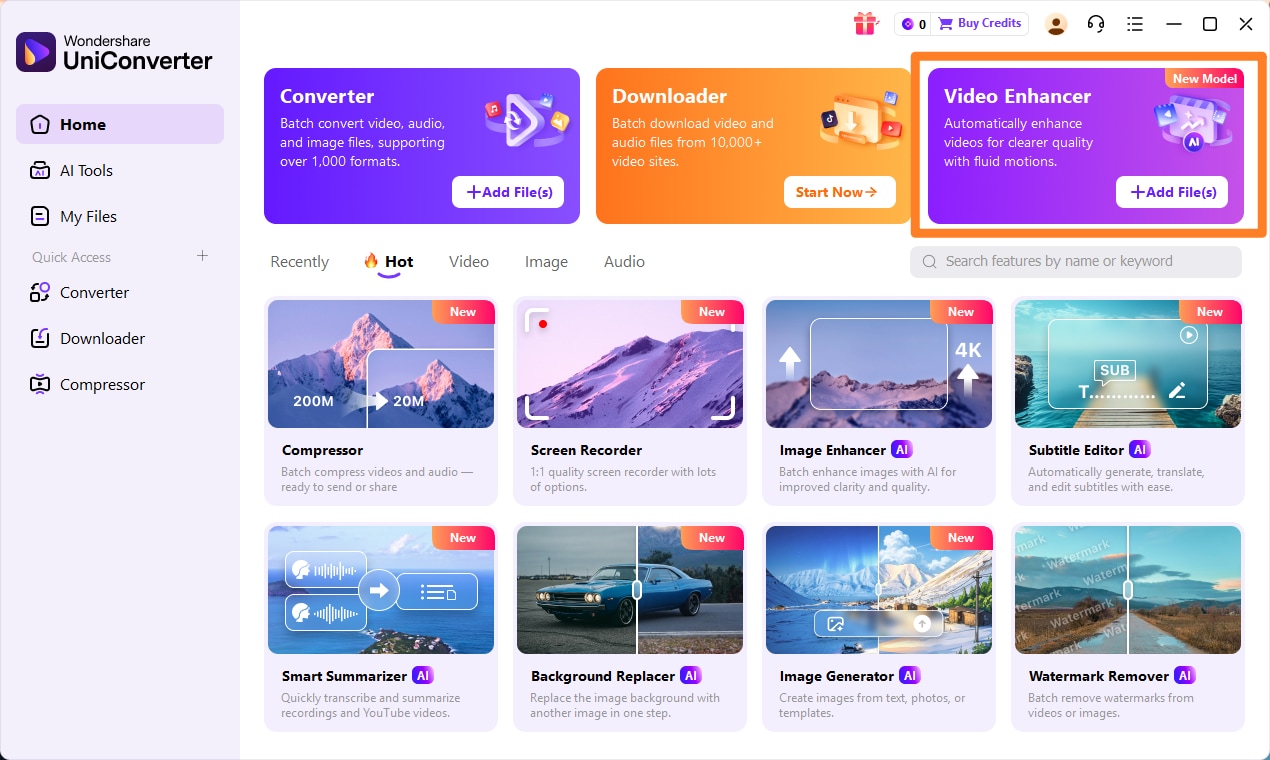
Step 1: Open UniConverter and Choose Video Enhancer
Launch UniConverter on your computer. On the main interface, navigate to the "AI Lab" section and select the "Video Enhancer" tool. This feature allows you to enhance video quality with ease.
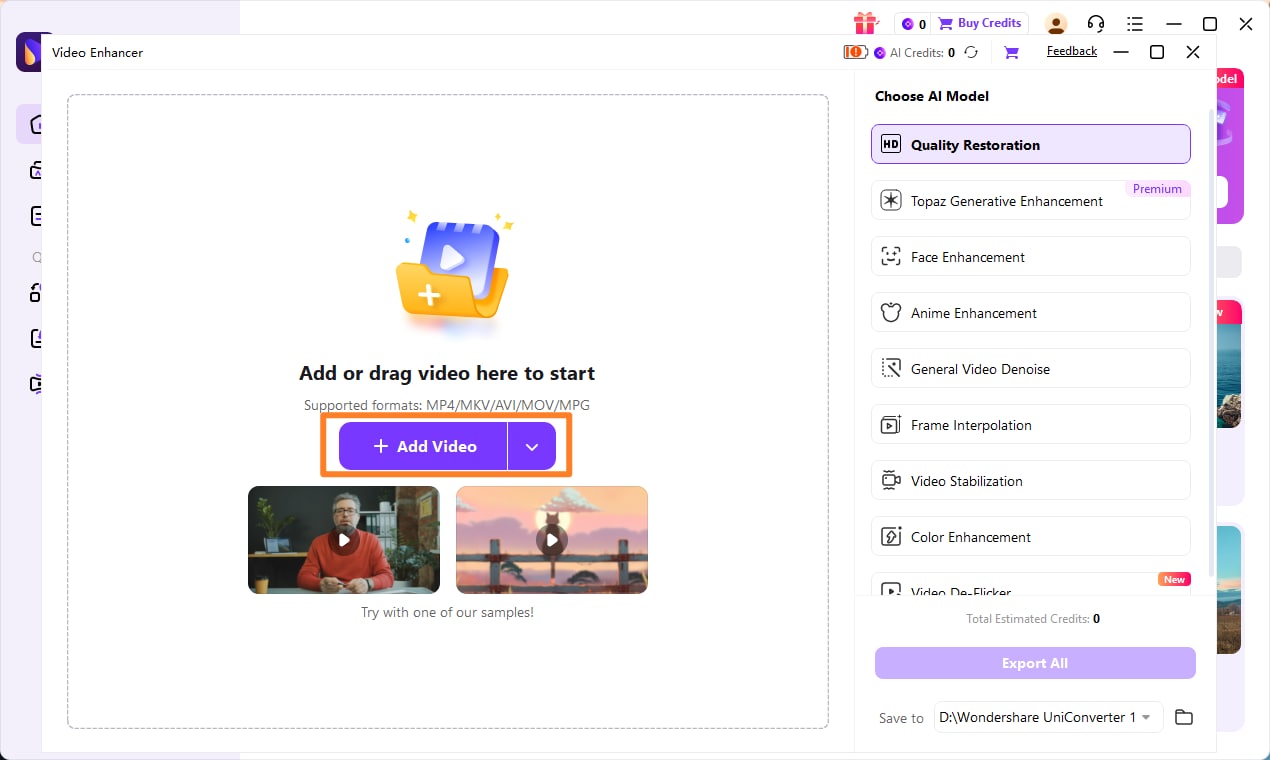
Step 2: Upload the Videos
Click the "Add Files" button or drag and drop your video files into the UniConverter interface. You can add multiple videos for batch processing.
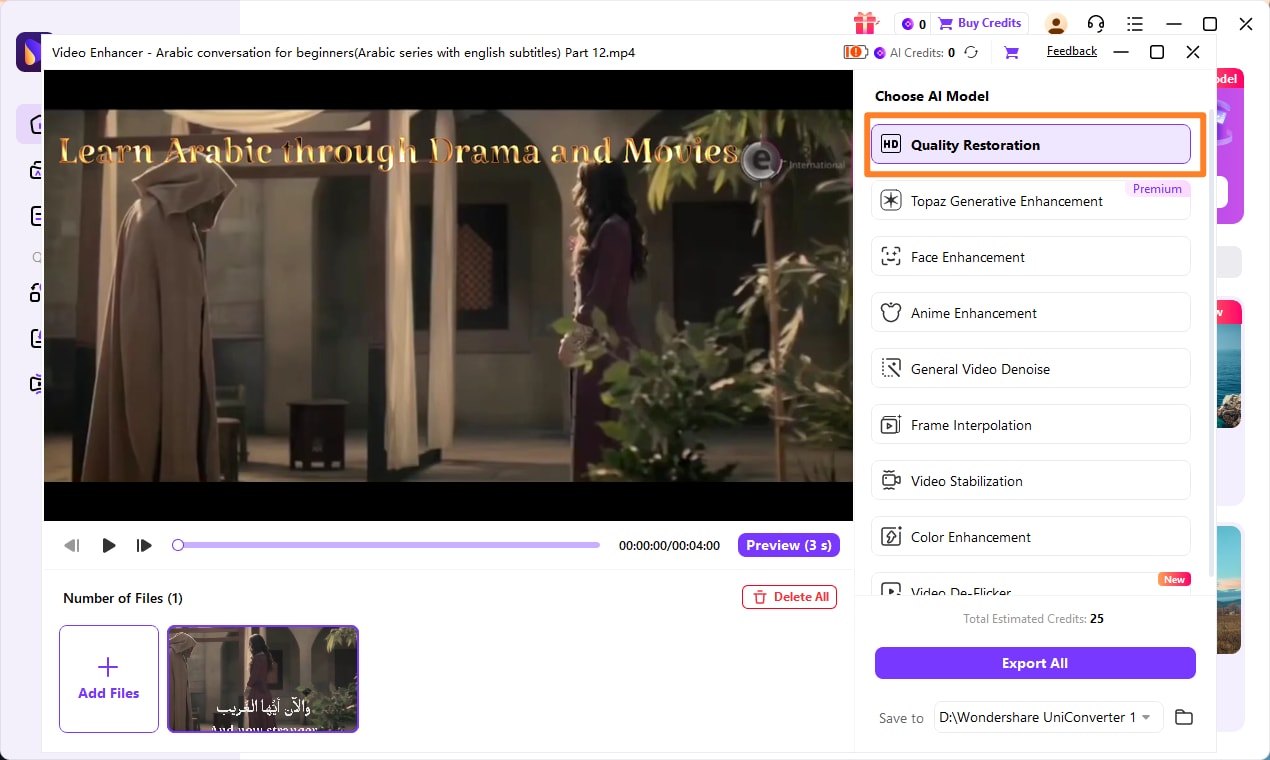
Step 3: Choose Enhancement Model
UniConverter offers various AI enhancement models. Select the most suitable model based on your video's needs, such as "AI Upscale," "AI Denoise," or "AI Color Correction." Adjust settings like output resolution or quality if necessary. For instance, you can unblur a video using the denoising capabilities.
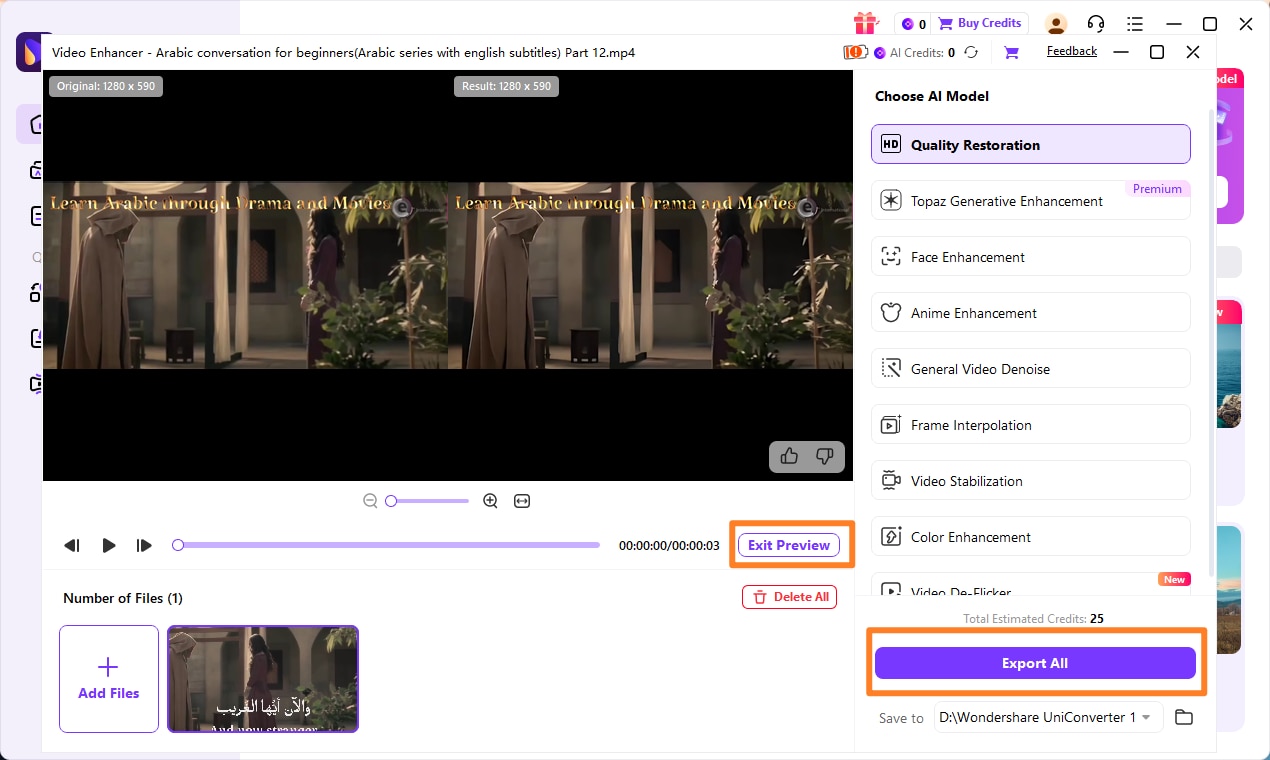
Step 4: Preview and Save the Enhanced Video
Before exporting, use the "Preview" feature to see the enhanced result. Once satisfied, choose your desired output format and destination folder, then click "Export" to save your high-quality video.

Seeking a Zyro AI Video Enhancer Alternative?
Part 7: Conclusion
The Zyro AI Video Enhancer review reveals a tool well-suited for a specific segment of the market. Its intuitive interface and automated processes make it an excellent choice for casual users, social media enthusiasts, and small businesses seeking quick and effective video quality improvements without deep technical knowledge. However, its limitations in advanced customization and potential for artifacts on highly compressed footage mean it may not satisfy the stringent demands of professional editors. For those requiring more granular control, broader format support, or robust local processing, alternatives like UniConverter or Topaz Video AI offer more comprehensive solutions. Ultimately, the best tool depends on individual needs, technical proficiency, and the desired level of control over the enhancement process.
Part 8: FAQs
-
1. Is Zyro AI Video Enhancer suitable for professional film editing?
No, Zyro AI Video Enhancer is generally not suitable for professional film editing. It lacks the advanced customization, granular control, and specialized tools required for high-end cinematic post-production, which often involves precise color grading, complex visual effects, and support for uncompressed formats.
-
2. How does Zyro AI Video Enhancer handle low-light footage?
Zyro AI Video Enhancer can improve low-light footage by reducing noise and enhancing brightness and contrast. However, its effectiveness depends on the severity of the low-light conditions. Extremely dark or noisy footage might still show limitations, potentially leading to an artificial look or remaining artifacts despite enhancement.
-
3. What are the pricing plans for Zyro AI Video Enhancer?
Zyro AI Video Enhancer typically operates on a subscription-based pricing model. Specific plans and features vary, often including different tiers based on processing limits, output resolution, and access to premium features. Users should check the official Zyro website for the most current pricing details.
-
4. Can I use Zyro AI Video Enhancer offline?
No, Zyro AI Video Enhancer is a cloud-based service, meaning it requires an active internet connection to upload videos for processing and download the enhanced results. It cannot be used offline.
-
5. What is the difference between video upscaling and video enhancement?
Video upscaling specifically refers to increasing the resolution of a video (e.g., from 720p to 1080p or 4K) by intelligently adding pixels. Video enhancement is a broader term that encompasses various improvements beyond just resolution, including noise reduction, color correction, stabilization, sharpening, and artifact removal, all aimed at improving the overall visual quality of the footage. Upscaling is a form of enhancement, but enhancement includes many other processes.
