
- ZMO.AI Overview: AI-powered tool for quick image enhancement, upscaling, noise reduction, and color improvement.
- Pros & Cons: Easy to use with advanced AI for detail, but can over-sharpen and lacks customization.
- Target Audience: Ideal for social media and quick fixes; not for professional print requiring precision.
- Comparison: ZMO.AI excels in natural AI enhancement; UniConverter offers offline use and broader formats.
- Risks: Cloud processing raises privacy concerns; potential for unnatural results; subscription model limitations.
- UniConverter Alternative: Provides stable, private, offline enhancement with batch processing and GPU acceleration.
In this article
- Part 1: What is ZMO.AI Image Enhancer?
- Part 2: ZMO.AI Image Enhancer: Core Features, Pros, and Cons
- Part 3: Target Audience and Use Cases
- Part 4: ZMO.AI Image Enhancer and Alternatives Comparison
- Part 5: Risks and Pitfalls of Using ZMO.AI Image Enhancer
- Part 6: How to Use UniConverter to Efficiently Enhance Images
- Part 7: Conclusion
- Part 8: FAQs
ZMO.AI Image Enhancer: A Deep Dive into AI-Powered Image Enhancement
When I first heard about ZMO.AI Image Enhancer, I was skeptical. Another AI tool promising magic? But as someone constantly dealing with less-than-perfect photos for social media and client presentations, the allure of effortlessly transforming blurry, low-res images into crisp, vibrant ones was too strong to ignore. This review aims to cut through the marketing hype and give you a real-world perspective on its capabilities, comparing it against other tools I've used, and ultimately helping you decide if it's the right fit for your image enhancement needs. We'll explore its core features, weigh its pros and cons, identify its ideal users, and even highlight potential pitfalls, all to provide a comprehensive and honest assessment.
Part 1: What is ZMO.AI Image Enhancer?
ZMO.AI Image Enhancer is an AI-powered online tool designed to automatically improve the quality of digital images. It leverages sophisticated artificial intelligence algorithms to upscale resolution, reduce noise, sharpen details, and enhance colors, all with minimal user input. My initial impression was that it aimed to democratize image enhancement, making professional-grade results accessible to everyone, not just those with advanced Photoshop skills. This review will delve into whether it truly delivers on that promise and how it stacks up against the broader market.
The Rise of AI in Image Processing
The landscape of image processing has been dramatically reshaped by AI, addressing several common pain points for creators and businesses alike:
* Tackling Low-Resolution Woes: We've all been there – a perfect shot, but the resolution just isn't cutting it for a larger display or print. AI offers a seemingly magical solution to this.
* Simplifying Complex Editing: Traditional image editing software can be daunting. AI tools aim to automate tedious tasks, freeing up creative time.
* Meeting the Demand for High-Quality Visuals: In today's visual-first world, crisp, clear images are non-negotiable for engagement and professionalism.
* Bridging the Skill Gap: Not everyone is a graphic designer. AI enhancement tools promise to level the playing field, allowing anyone to produce impressive visuals.
Part 2: ZMO.AI Image Enhancer: Core Features, Pros, and Cons
From my time experimenting with ZMO.AI Image Enhancer, I've found its core strength lies in its ability to quickly transform images. It's not just about upscaling; it intelligently reconstructs details, which is where the AI really shines. I've uploaded everything from old scanned photos to recent phone snaps, and the results have often surprised me.
* Resolution Upscaling: This is its bread and butter. It can significantly increase image dimensions without pixelation.
* Noise Reduction: It effectively cleans up grainy photos, especially those taken in low light.
* Detail Sharpening: Blurry edges and soft textures become noticeably crisper.
* Color Enhancement: It often breathes new life into dull or faded images, making colors pop.
* Face Retouching: For portraits, it can subtly smooth skin and enhance facial features.
Pros:
* Advanced AI Algorithms for Detail Restoration: I've seen it bring back details in old, faded photos that I thought were lost forever. It's genuinely impressive how it "guesses" what should be there.
* User-Friendly Interface for Quick Enhancements: Seriously, it's drag-and-drop simple. I can get an enhanced image in seconds, which is a huge time-saver when I'm on a deadline.
* Batch Processing Capability for Efficiency: This is a lifesaver. When I have a folder of images from an event that all need a boost, I can process them all at once instead of one by one.
Cons:
* Occasional Over-Sharpening or Artifacts: Sometimes, especially with very low-quality originals, it can go a bit overboard, leading to an unnatural, almost "painted" look or introducing weird artifacts.
* Limited Customization Options for Advanced Users: As much as I appreciate the simplicity, there are times I wish I had more fine-tuned control over the enhancement parameters. It's mostly an "on or off" switch for certain effects.
Part 3: Target Audience and Use Cases
Based on my experience, ZMO.AI Image Enhancer is definitely not a one-size-fits-all solution, but it excels in specific scenarios. If you're someone who needs quick, decent results without diving deep into complex software, this tool is probably for you.
Best Use Case: Enhancing Low-Resolution Photos for Social Media
For me, this is where ZMO.AI truly shines. I often get photos from friends or clients that are perfectly composed but just too small or blurry for a decent Instagram post or a quick blog graphic. Uploading them to ZMO.AI usually gives me a perfectly usable image that looks much more professional. It's fantastic for content creators, small business owners managing their own social media, or anyone who wants their personal photos to look their best online without much effort.
Limited Use Case: Professional Print Production Requiring Precise Color Control
However, I wouldn't recommend it for high-stakes professional print jobs. When I'm preparing images for a client's brochure or a large-format poster, I need absolute control over color profiles, sharpness, and every minute detail. ZMO.AI's automated approach, while convenient, doesn't offer that level of precision. I've found that the color enhancements can sometimes be a bit too aggressive or not quite match my brand guidelines, and there's no way to adjust it. For those critical tasks, I'll always revert to tools that offer granular control.
Part 4: ZMO.AI Image Enhancer and Alternatives Comparison
When I look at ZMO.AI Image Enhancer in the broader market, it sits comfortably as a strong contender for automated enhancements. But it's crucial to understand where it stands against its peers. I've tried several, and here's how I see it stacking up against some popular choices: UniConverter, Topaz Gigapixel AI, and VanceAI Image Enhancer.
ZMO.AI Image Enhancer & Competitors Comparison Table
| Feature/Tool | ZMO.AI Image Enhancer | UniConverter | Topaz Gigapixel AI | VanceAI Image Enhancer |
| AI Enhancement Quality | High | High | Very High | Medium-High |
| Ease of Use | Excellent | Excellent | Good | Good |
| Batch Processing | Yes | Yes | Yes | Yes |
| Price | Moderate | Moderate | High | Moderate |
| Customization | Basic | Basic | Advanced | Basic |
| Processing Speed | Fast | Fast | Moderate | Fast |
| Output Formats | JPG, PNG | JPG, PNG, TIFF, BMP, WebP | JPG, PNG, TIFF | JPG, PNG |
| Offline Functionality | No | Yes | Yes | No |
Key Differentiators:
For me, ZMO.AI's superior AI for natural-looking enhancements is its biggest draw, especially for quick social media posts. It often produces results that don't scream "AI-enhanced." UniConverter, on the other hand, offers a fantastic balance of quality and features, with the added benefit of offline processing, which is a huge plus for privacy-conscious users like me. Topaz Gigapixel AI is the king for granular control and pushing the absolute limits of enhancement, but its price and slightly steeper learning curve make it more suited for professionals. VanceAI Image Enhancer is a solid, affordable option, but I've found its enhancement quality to be a step below ZMO.AI's in terms of naturalness. If you just want quick, decent results without much fuss, ZMO.AI is great. If you need more control or offline capabilities, UniConverter or Topaz are better bets.
Part 5: Risks and Pitfalls of Using ZMO.AI Image Enhancer
While ZMO.AI Image Enhancer offers compelling benefits, my experience has also highlighted several risks and potential pitfalls that I think you should be aware of before committing to it. It's not all sunshine and perfectly enhanced images.
Data Privacy Concerns with Cloud Processing
Since ZMO.AI is a cloud-based tool, every image I upload gets sent to their servers for processing. This immediately raises red flags for me regarding data privacy, especially if I'm working with sensitive client images or personal photos. I always wonder who has access to these files and how long they're stored. While they state they use industry-standard security, the fact that my data leaves my machine is a concern I can't ignore.
Potential for Over-Processed, Unnatural-Looking Images
I've definitely run into situations where ZMO.AI, in its attempt to "enhance," has gone too far. What started as a slightly blurry photo ended up looking like a plasticine model, with overly smooth skin or unnaturally sharp edges. This "AI look" is something I actively try to avoid, as it can make images look fake or amateurish, especially when viewed closely. It's a fine line between enhancement and artificiality, and ZMO.AI sometimes crosses it.
Subscription Model Lock-in and Hidden Costs
Like many SaaS products, ZMO.AI operates on a subscription model. While they offer a free trial, getting serious results means paying up. I've found that the pricing tiers can sometimes feel restrictive, and if I don't use it consistently, I feel like I'm paying for something I'm not fully utilizing. Plus, sometimes the "best" features are locked behind higher tiers, leading to a feeling of being nickel-and-dimed if my needs evolve.
Inconsistent Results on Highly Damaged Photos
While ZMO.AI does a decent job with moderately damaged or low-resolution photos, I've noticed its limitations when dealing with truly ancient or severely degraded images. Photos with significant tears, missing sections, or extreme fading often come out looking... well, still pretty bad, just a bit sharper. The AI can only "guess" so much, and sometimes the original data simply isn't there to reconstruct effectively. I initially thought it could work miracles, but it's not a magic wand for every situation.
Limited Offline Functionality
This is a big one for me. As ZMO.AI is entirely cloud-based, I need a stable internet connection to use it. This becomes a problem when I'm working remotely, traveling, or experiencing spotty Wi-Fi. I can't just fire it up and enhance images whenever inspiration strikes. This reliance on connectivity can be a significant bottleneck for my workflow, especially when dealing with large files that take time to upload and download.
Part 6: How to Use UniConverter to Efficiently Enhance Images
When I've hit the limits of online tools like ZMO.AI, especially with their inconsistent results, privacy concerns, or lack of offline functionality, I often turn to UniConverter. It’s a robust desktop solution that avoids many of those pitfalls, offering stable, high-quality enhancements without needing an internet connection. If you're looking for a reliable, all-in-one tool that supports batch processing, offers GPU acceleration for speed, and maintains image quality without compromise, UniConverter is a fantastic alternative. It’s my go-to for ensuring my enhanced images are consistently good, private, and ready for any use case. For those interested in image upscaler 4K capabilities, this tool provides excellent results.
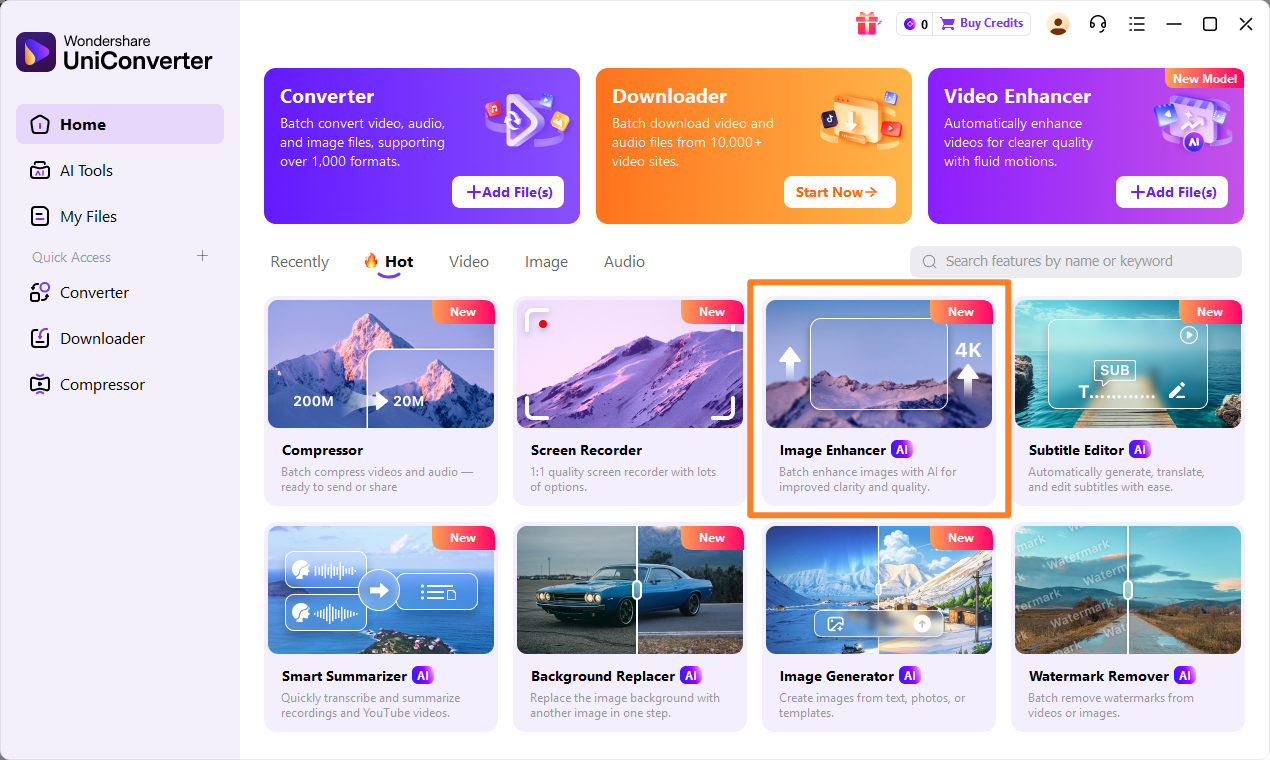
Step 1: Open UniConverter and Choose Image Enhancer
First, launch UniConverter on your computer. On the main interface, navigate to the 'Toolbox' section. Within the Toolbox, you'll find the 'Image Enhancer' feature. Click on it to open the dedicated enhancement module.
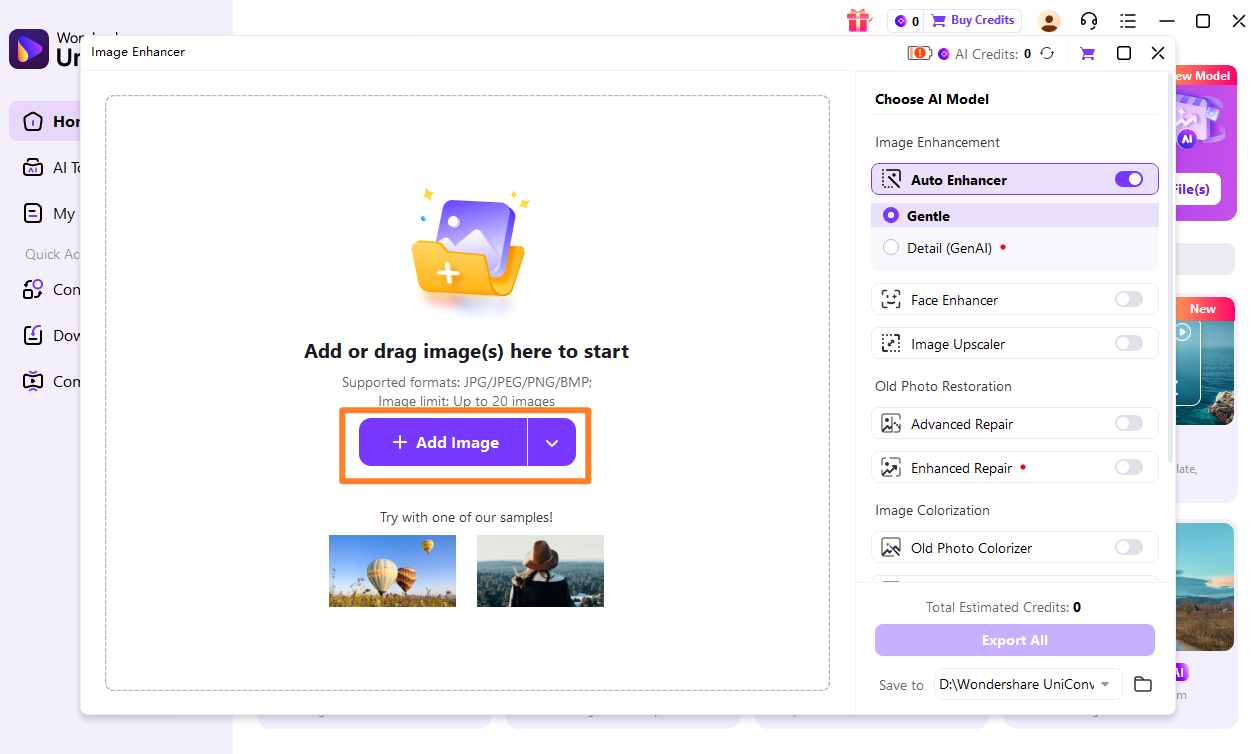
Step 2: Upload the Images
Once the Image Enhancer module is open, you can easily add your images. Either drag and drop your desired photos directly into the interface or click the 'Add Files' button to browse and select them from your computer. UniConverter supports batch processing, so feel free to upload multiple images at once.
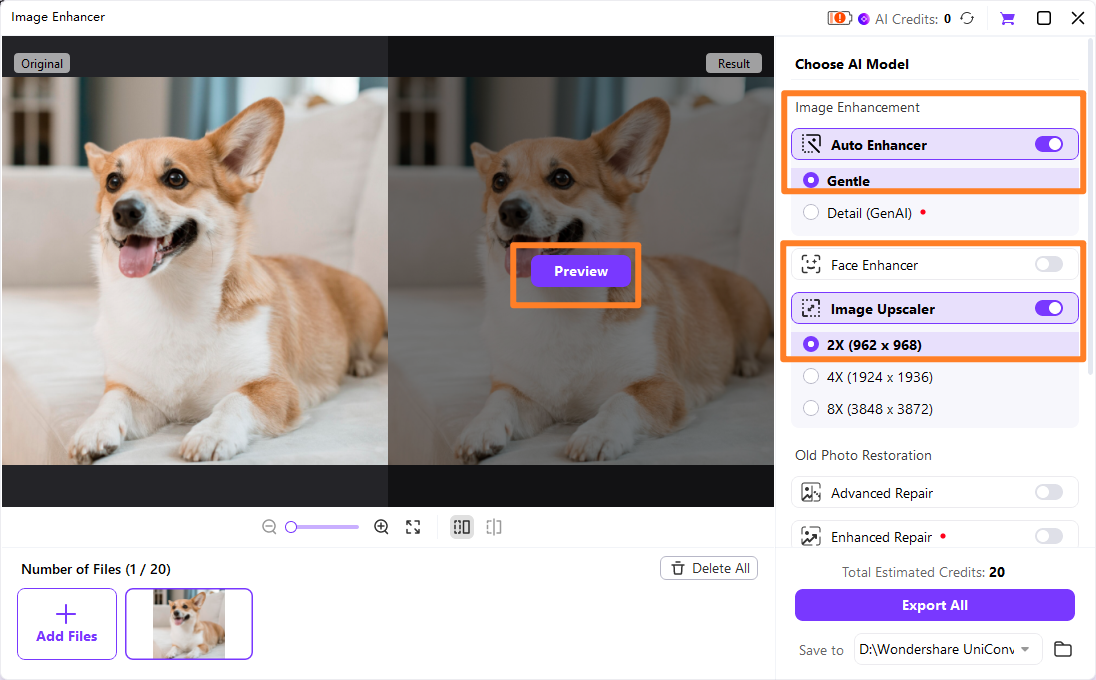
Step 3: Choose Enhancement Model
After uploading, UniConverter will present you with various enhancement models. These models are designed for different types of improvements, such as general enhancement, face enhancement, or noise reduction. Select the model that best suits your image and the kind of improvement you're looking for. You can also adjust parameters like resolution and quality if needed.
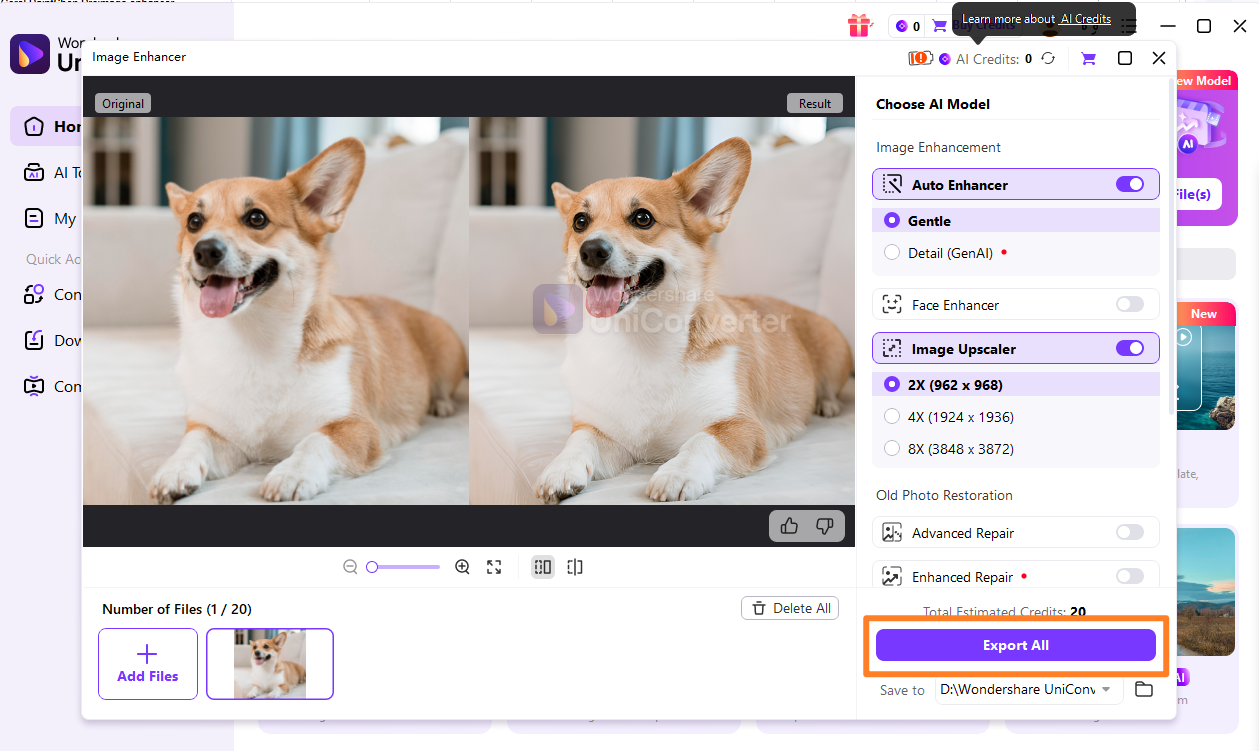
Step 4: Preview and Save the Enhanced Images
Before saving, UniConverter allows you to preview the enhanced image alongside the original. This side-by-side comparison helps you assess the quality of the enhancement. If you're satisfied with the result, click the 'Save' or 'Export' button. You can choose your desired output format and destination folder. UniConverter will then process and save your newly enhanced images.

Enhance Images Beyond ZMO.AI
Part 7: Conclusion
After spending considerable time with ZMO.AI Image Enhancer, I can confidently say it's a powerful tool for specific needs. For casual users, social media enthusiasts, and small businesses looking for quick, decent-quality image enhancements without a steep learning curve, it's an excellent choice. Its AI algorithms do a commendable job of upscaling and sharpening, often delivering impressive results with minimal effort. However, for professional photographers, designers, or anyone requiring precise control, offline functionality, or absolute data privacy, its limitations become apparent. The potential for over-processing, the cloud-based nature, and the subscription model are aspects to consider. While it excels at making low-resolution photos presentable, it's not a magic bullet for severely damaged images or tasks demanding pixel-perfect accuracy. Ultimately, your choice should align with your specific workflow, budget, and tolerance for automated results versus manual control. For those who prioritize privacy and robust, offline capabilities, alternatives like UniConverter offer a more comprehensive and trustworthy solution.
Part 8: FAQs
-
1. Is ZMO.AI Image Enhancer free to use?
ZMO.AI offers a free trial with limited features, but full functionality, including higher resolution outputs and batch processing, requires a paid subscription.
-
2. Can ZMO.AI Image Enhancer improve very old and damaged photos?
While it can improve many old photos by enhancing detail and reducing noise, heavily damaged ones with significant missing data or severe degradation might still show limitations, as the AI can only reconstruct so much.
-
3. How does ZMO.AI Image Enhancer handle privacy?
ZMO.AI states it uses industry-standard security measures for data uploaded to its cloud servers. However, as with any cloud-based service, users should review their privacy policy to understand how their images are stored and processed.
-
4. What are the main differences between ZMO.AI and Photoshop's enhancement tools?
ZMO.AI is primarily AI-driven, offering quick, automated enhancements with minimal user input. Photoshop, conversely, provides extensive manual, precise control over every aspect of image editing, requiring more skill and time but offering unparalleled customization.
-
5. Does ZMO.AI Image Enhancer support batch processing?
Yes, ZMO.AI supports batch processing, allowing you to upload and enhance multiple images simultaneously, which is a significant time-saver for users with large volumes of photos.
