
- Value: XMedia Recode offers extensive, free video enhancement for tech-savvy users needing precise control over codecs and settings.
- Comparison: While powerful, its complexity contrasts with user-friendly alternatives like UniConverter, which provides AI-powered, accessible enhancements.
- Decision: Choose XMedia Recode for deep customization if you're an advanced user; opt for UniConverter for ease, stability, and AI-driven quality.
- Risks: Be aware of XMedia Recode's steep learning curve, potential quality degradation with incorrect settings, and lack of dedicated support.
In this article
- Part 1: What is XMedia Recode Video Enhancer?
- Part 2: XMedia Recode Video Enhancer: Core Features, Pros, and Cons
- Part 3: Target Users and Usage Scenarios
- Part 4: XMedia Recode Video Enhancer and Alternatives Comparison
- Part 5: Risks and Pitfalls of Using XMedia Recode Video Enhancer
- Part 6: How to Use UniConverter for Seamless Video Enhancement
- Part 7: Conclusion
- Part 8: FAQs
XMedia Recode Video Enhancer: A Deep Dive into Its Capabilities
This XMedia Recode Video Enhancer review delves into the intricate world of a powerful yet often overlooked video processing tool. XMedia Recode, while primarily known for its extensive format conversion capabilities, also offers a suite of features that can be leveraged for video enhancement. This review will dissect its core functionalities, weigh its pros and cons, and provide a comparative analysis against popular alternatives like HandBrake and DaVinci Resolve. We will explore its ideal use cases, potential pitfalls, and ultimately help users determine if XMedia Recode is the right tool for their specific video enhancement needs, or if a more user-friendly solution like UniConverter might be a better fit.
Part 1: What is XMedia Recode Video Enhancer?
XMedia Recode is a free, open-source video and audio transcoder for Windows. While its primary function is to convert almost any audio or video format into another, it includes a range of filters and settings that can be utilized for video enhancement. These features allow users to adjust various aspects of their video, from basic color correction to more complex deinterlacing and noise reduction. Its strength lies in its profound control over codecs and output parameters, making it a go-to for users who require precise customization. This review aims to clarify its effectiveness as a video enhancer and identify its place in a crowded market.
Market Position and Target Audience
XMedia Recode occupies a niche in the video processing market, catering primarily to:
* Tech-savvy users: Individuals comfortable with technical jargon and manual configuration.
* Users with specific codec requirements: Those needing to convert or enhance videos for particular devices or platforms.
* Budget-conscious users: As a free tool, it appeals to those unwilling to invest in paid software.
* Archivists: Users looking to standardize or improve older video footage.
Part 2: XMedia Recode Video Enhancer: Core Features, Pros, and Cons
XMedia Recode's core capabilities extend beyond simple format conversion, offering a robust set of tools for video manipulation. Its primary strength lies in its extensive format support and granular control over output settings.
* Comprehensive Format Support: Handles nearly every video and audio format imaginable.
* Advanced Customization: Offers detailed control over codecs, bitrates, resolutions, and aspect ratios.
* Filtering Options: Includes deinterlacing, noise reduction, sharpening, and color correction filters.
* Chapter Editing: Allows for the creation and manipulation of video chapters.
* Batch Processing: Efficiently processes multiple files simultaneously.
Pros:
* Comprehensive Format Support for Diverse Conversion Needs: XMedia Recode can handle an unparalleled range of input and output formats, making it incredibly versatile for various projects.
* Advanced Customization Options for Granular Control: Users have deep control over every aspect of the conversion and enhancement process, from codec selection to intricate filter adjustments.
* Free and Open-Source Nature for Budget-Conscious Users: Being completely free, it offers powerful functionalities without any financial investment, appealing to a wide user base.
Cons:
* Steep Learning Curve for Beginners: The sheer number of options and the non-intuitive interface can be overwhelming for new users.
* Outdated User Interface and Occasional Stability Issues: The interface feels dated, and the software can sometimes be prone to crashes, especially with complex tasks.
Part 3: Target Users and Usage Scenarios
XMedia Recode Video Enhancer is not a one-size-fits-all solution; its strengths become apparent in specific user scenarios. Understanding these helps in determining if it's the right tool for your needs.
Best-Fit Scenario: Advanced Users Requiring Specific Codec Control
XMedia Recode shines brightest for advanced users, such as video enthusiasts, independent filmmakers, or archivists, who need precise control over video codecs and intricate output parameters. For example, if you need to convert an obscure video format to a specific codec for an older device, or meticulously deinterlace archival footage while maintaining specific quality settings, XMedia Recode offers the granular control necessary to achieve these exact specifications. Its ability to fine-tune every aspect of the conversion and enhancement process makes it invaluable for those with technical expertise and specific requirements that off-the-shelf solutions cannot meet.
Limited Scenario: Quick Enhancements for Casual Users
For casual users looking for quick, one-click video enhancements, XMedia Recode presents a significant hurdle. Imagine someone wanting to simply brighten a dark video or apply a basic filter without delving into complex settings. The overwhelming interface and the necessity for manual tweaking make it an inefficient choice. Tools with intuitive interfaces and preset enhancement options would be far more suitable for such users, as XMedia Recode's complexity would likely lead to frustration rather than a quick fix.
Part 4: XMedia Recode Video Enhancer and Alternatives Comparison
When evaluating XMedia Recode Video Enhancer, it's crucial to compare its capabilities against other prominent tools in the market.
| Feature/Scenario | XMedia Recode Video Enhancer | HandBrake | DaVinci Resolve | UniConverter |
| Video Enhancement Quality | Good, but requires manual tweaking | Decent, with some presets | Excellent, professional-grade | Excellent, AI-powered presets |
| Ease of Use | Complex | Moderate | Very Complex | Very Easy |
| Supported Formats | Extensive | Good | Good | Extensive |
| Price | Free | Free | Free (paid Studio version) | Paid (free trial available) |
| Specific Enhancement Features | Manual filters, basic color correction, deinterlacing | Basic filters, deinterlacing, denoise | Advanced color grading, noise reduction, stabilization, visual effects | AI upscaling, noise reduction, stabilization, color correction, watermark removal |
| Processing Speed | Moderate, depends on settings | Fast, optimized for common codecs | Fast, GPU accelerated | Very Fast, GPU accelerated |
| Customer Support | Community forums | Community forums | Extensive documentation, paid support | Dedicated 24/7 support |
Key Differentiators:
XMedia Recode excels in codec flexibility, offering unparalleled control for users who understand the technical intricacies. However, its manual approach to enhancement means the quality is highly dependent on user expertise. HandBrake provides a more streamlined experience for common conversions and basic enhancements, making it a good middle ground for many. DaVinci Resolve, while offering professional-grade enhancement, comes with a steep learning curve and is overkill for most casual users. UniConverter stands out with its user-friendly interface and AI-powered enhancement features, making high-quality video improvement accessible to all skill levels.
Part 5: Risks and Pitfalls of Using XMedia Recode Video Enhancer
While XMedia Recode offers powerful features for video enhancement, its complexity and nature as a free, open-source tool come with several potential risks and pitfalls that users should be aware of.
Potential for Quality Degradation with Incorrect Settings
The extensive customization options in XMedia Recode are a double-edged sword. Incorrectly configured settings, such as choosing an inappropriate codec, setting a too-low bitrate, or applying filters without understanding their impact, can easily lead to significant video quality degradation. Users might end up with pixelated footage, artifacts, or a washed-out appearance, negating any intended enhancement.
Lack of Dedicated Customer Support
As a free and open-source tool, XMedia Recode does not offer dedicated customer support. Users encountering issues or needing guidance must rely on community forums or online tutorials. This can be a significant drawback for less tech-savvy individuals who prefer direct assistance when troubleshooting problems or understanding complex features.
Occasional Software Crashes and Instability
While generally stable, XMedia Recode can occasionally experience software crashes, especially when processing large files, applying multiple complex filters, or running on less powerful hardware. These crashes can lead to lost progress, corrupted files, and frustration, requiring users to restart their work.
Limited Advanced Enhancement Features Compared to Dedicated Tools
While XMedia Recode offers basic enhancement filters like deinterlacing and noise reduction, it lacks the sophisticated, AI-driven, or professional-grade enhancement capabilities found in dedicated video editing or enhancement software. For advanced tasks like intelligent upscaling, complex stabilization, or cinematic color grading, users will find its features limited and less effective.
User Interface Can Be Overwhelming
The user interface of XMedia Recode is dense with options and tabs, which can be overwhelming and confusing for new users. Navigating through the myriad of settings to find the desired enhancement feature requires patience and a willingness to learn, often leading to a frustrating experience for those accustomed to more intuitive software.
Part 6: How to Use UniConverter for Seamless Video Enhancement
When other tools fall short with batch processing, unstable enhancements, or weak results, UniConverter emerges as a robust and user-friendly alternative. It bypasses the common issues of ads, limited formats, and quality loss, offering a stable, lossless, and GPU-accelerated solution for batch video enhancement. UniConverter acts as an all-in-one toolkit, ensuring your videos are enhanced efficiently and effectively, making it the ultimate solution for both casual and professional users. For instance, if you're looking to change video background, UniConverter provides advanced features to achieve this with ease. You can even remove background without losing quality from your videos, ensuring a professional finish. This powerful software also allows you to replace background in your footage, offering creative flexibility. Whether you need to remove background from an image or a video, UniConverter handles it all.
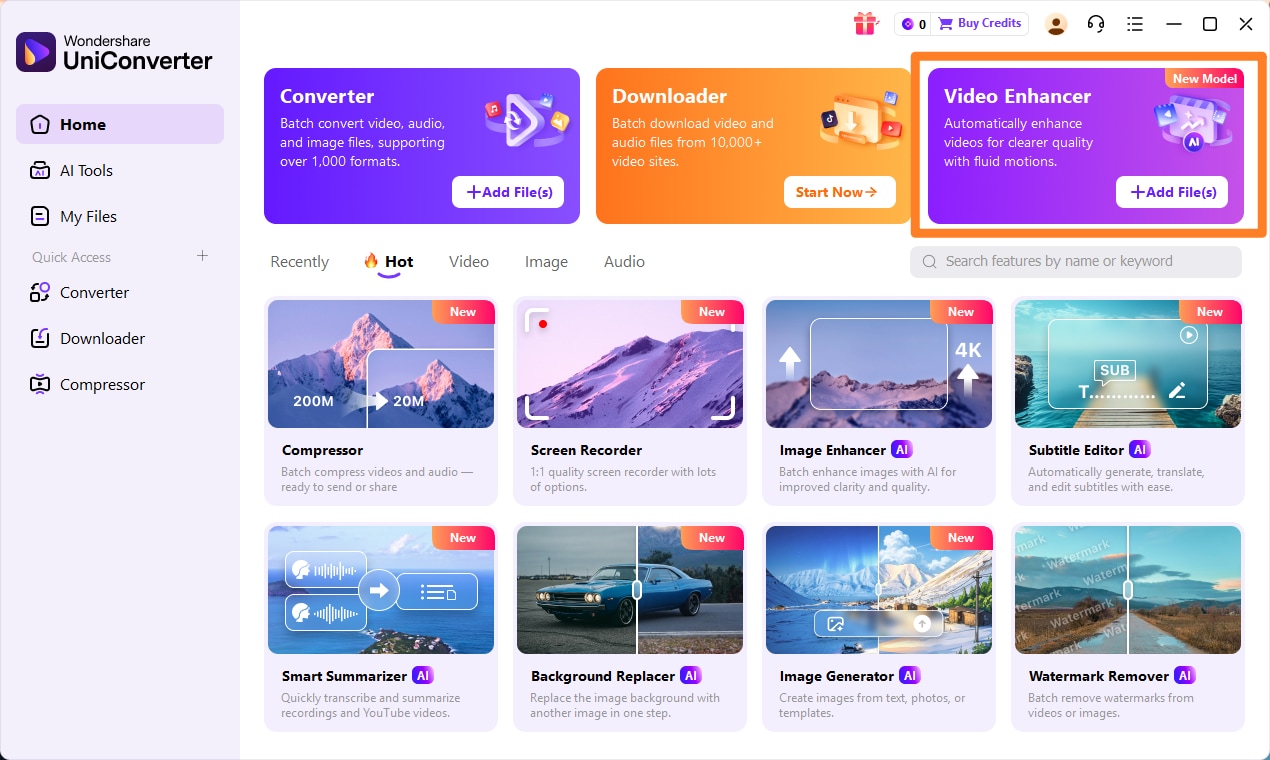
Step 1: Open UniConverter and Choose Video Enhancer
Launch Wondershare UniConverter on your computer. From the main interface, navigate to the "AI Lab" section and select the "Video Enhancer" tool.
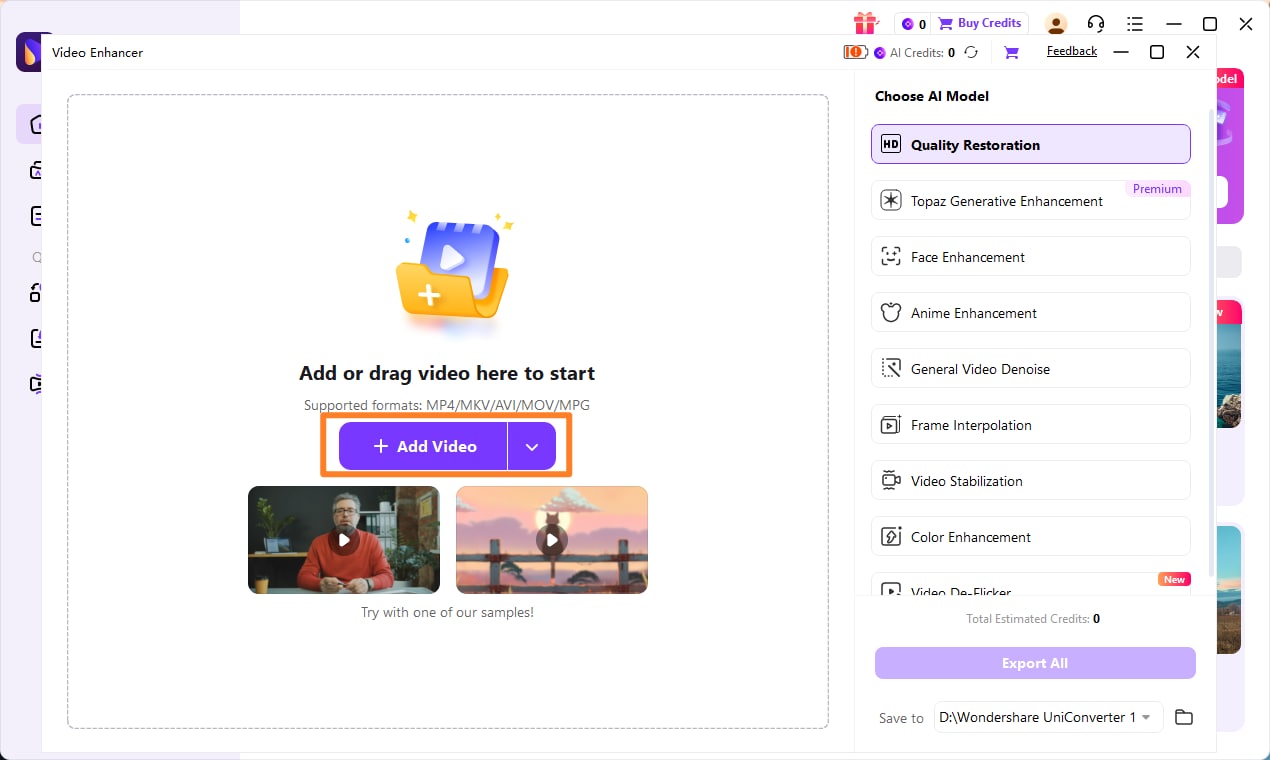
Step 2: Upload the Videos
Click the "Add Files" button or drag and drop your video files directly into the UniConverter interface. You can add multiple videos for batch enhancement.
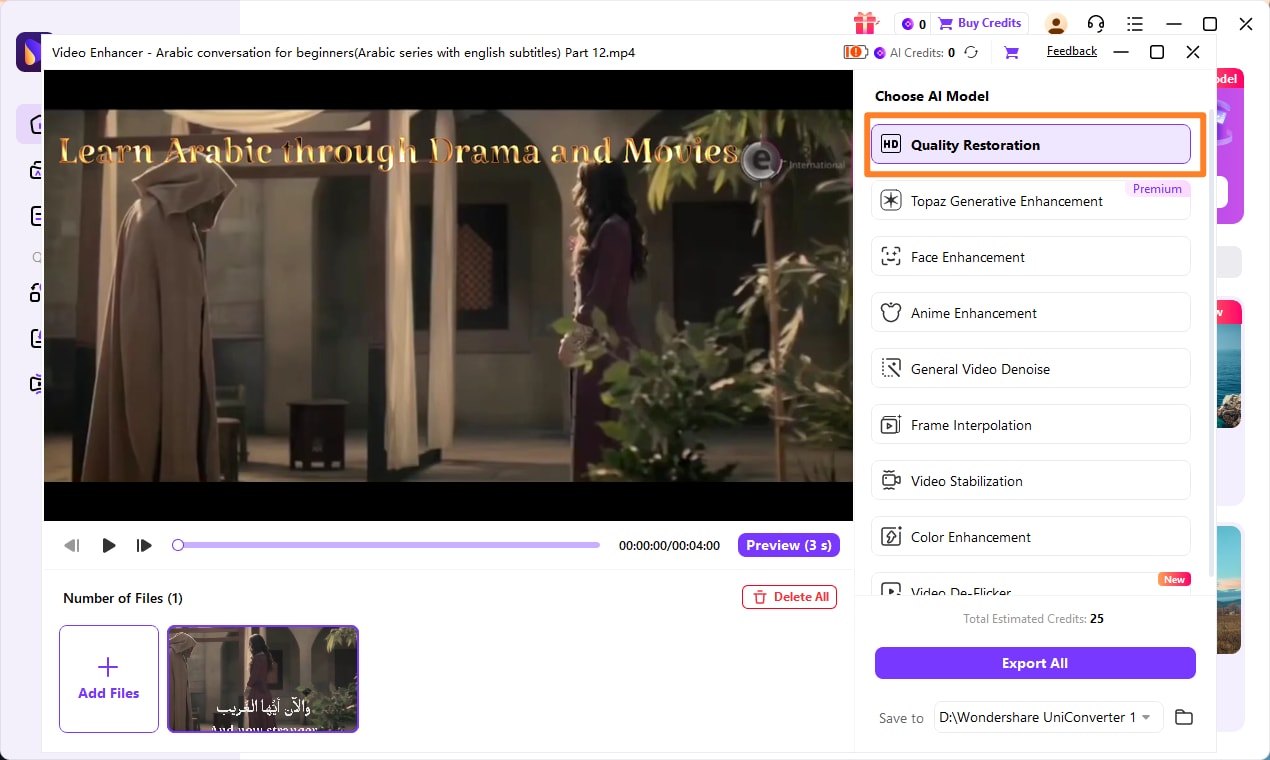
Step 3: Choose Enhancement Model
UniConverter offers various AI enhancement models. Select the model that best suits your video's needs, such as "AI Upscale," "AI Denoise," or "AI Color Correction." Adjust any specific settings like resolution or intensity as required.
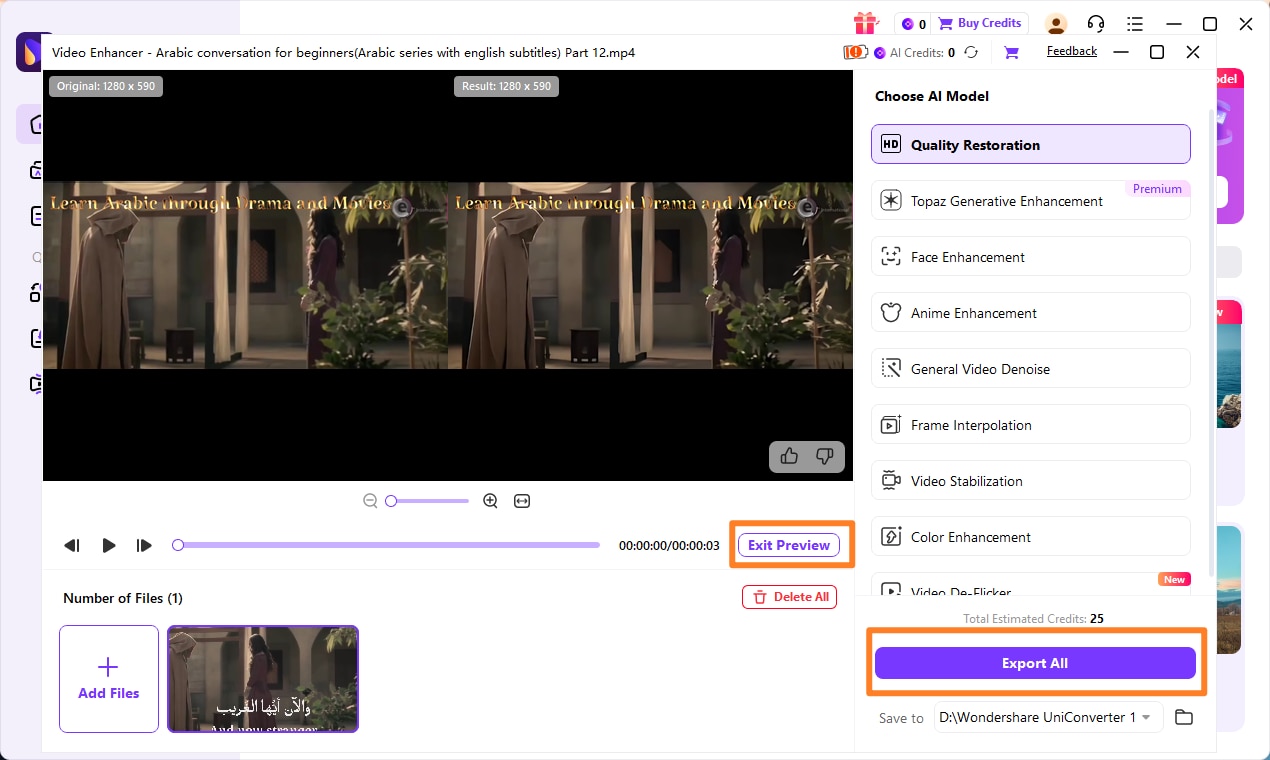
Step 4: Preview and Save the Enhanced Video
After selecting your enhancement model, click "Preview" to see the changes. Once satisfied, choose your desired output format and destination folder, then click "Export" to save your enhanced video.

Enhance Videos Beyond XMedia Recode's Limits?
Part 7: Conclusion
This XMedia Recode Video Enhancer review highlights its position as a powerful, free, and highly customizable tool, particularly for users with a deep understanding of video codecs and a need for granular control. Its extensive format support and advanced settings make it an excellent choice for tech-savvy individuals and archivists. However, its steep learning curve, outdated interface, and occasional instability present significant barriers for casual users seeking quick and easy enhancements. For those prioritizing ease of use, intuitive AI-powered features, and a stable, comprehensive toolkit, alternatives like UniConverter offer a more balanced and efficient solution. Ultimately, the best choice depends on your technical proficiency, specific enhancement requirements, and willingness to navigate complex software.
Part 8: FAQs
-
1. Can XMedia Recode truly "enhance" video quality?
XMedia Recode offers tools to improve perceived quality through adjustments like deinterlacing, noise reduction, and color correction, but it cannot create detail that isn't present in the original footage.
-
2. Is XMedia Recode safe to download and use?
Yes, XMedia Recode is generally safe. However, always download it from the official website to avoid modified versions that might contain malware.
-
3. What are the main differences between XMedia Recode and HandBrake for video enhancement?
XMedia Recode offers more granular control over codecs and filters, making it suitable for highly specific tasks. HandBrake focuses on simpler, preset-driven conversions and basic enhancements, offering a more user-friendly experience for common needs.
-
4. Does using a video enhancer always improve video quality?
Not always. Incorrect settings or over-processing can sometimes degrade video quality by introducing artifacts or making the footage look unnatural. It's crucial to understand the tools and preview changes before finalizing.
-
5. What kind of video issues can a video enhancer fix?
Video enhancers can address issues like low resolution (upscaling), excessive noise or grain, shaky footage (stabilization), poor lighting (brightness/contrast adjustments), and color imbalances.
