
- Winxvideo AI Review: This article provides a comprehensive review of Winxvideo AI Video Enhancer, exploring its features, pros, and cons.
- AI Enhancement Power: Winxvideo AI excels at upscaling, stabilizing, and noise reduction, transforming ordinary footage into high-quality content.
- Ideal Users: Best for beginners and intermediate users, content creators, and archivists seeking easy-to-use, effective video enhancement.
- Key Strengths: Outstanding for revitalizing old footage and stabilizing shaky videos, making it perfect for family archives.
- Limitations: Resource-intensive for high resolutions and offers limited customization, not suitable for real-time live streaming.
- Comparison Insights: Winxvideo AI balances quality and ease, while UniConverter offers a comprehensive, versatile alternative for all needs.
- Potential Risks: Be aware of privacy concerns with cloud processing, manage expectations for AI output, and ensure hardware compatibility.
- UniConverter Alternative: UniConverter provides efficient, stable, and lossless video enhancement with broad format support and GPU acceleration.
In this article
- Part 1: What is Winxvideo AI Video Enhancer?
- Part 2: Winxvideo AI Video Enhancer: Core Features, Pros, and Cons
- Part 3: Winxvideo AI Video Enhancer: Ideal Users and Use Cases
- Part 4: Winxvideo AI Video Enhancer and Alternatives Comparison
- Part 5: Risks and Pitfalls to Consider
- Part 6: How to Use UniConverter to Efficiently Enhance Videos
- Part 7: Conclusion
- Part 8: FAQs
In today's visually-driven world, the demand for high-quality video content is skyrocketing. From professional filmmakers to casual content creators, everyone seeks tools that can elevate their video's visual appeal. This Winxvideo AI Video Enhancer review delves into a powerful solution designed to meet this need. This comprehensive review will explore its core features, analyze its strengths and weaknesses, compare it with leading competitors, and provide scenario-based insights to help you make an informed decision. We will assess its effectiveness in various use cases, from restoring vintage footage to stabilizing shaky action camera clips, offering a clear picture of where Winxvideo AI stands in the crowded market of video enhancement software.
Part 1: What is Winxvideo AI Video Enhancer?
Winxvideo AI Video Enhancer is a software solution developed by Digiarty Software, designed to improve the quality of videos using artificial intelligence. It aims to address common video imperfections such as low resolution, shakiness, and noise, transforming ordinary footage into visually stunning content. This review will critically evaluate its capabilities, focusing on its performance across different enhancement tasks and its suitability for various user needs. The core problem it seeks to solve is the widespread availability of suboptimal video quality, often due to older recording devices, challenging shooting conditions, or simply the desire to achieve a more polished, professional look.
The Growing Demand for AI-Powered Video Enhancement
- Revitalizing Legacy Content: There's a significant need to upscale and restore old videos, be it family archives or historical footage, bringing them up to modern viewing standards.
- Improving User-Generated Content: With the proliferation of smartphones and action cameras, much user-generated content suffers from shakiness, poor lighting, and low resolution, necessitating enhancement tools.
- Streamlining Post-Production for Creators: Video creators constantly seek efficient ways to improve their footage without extensive manual editing, making AI-driven solutions highly attractive.
- Meeting High Visual Standards: Audiences today expect crisp, clear, and stable video, pushing creators and archivists to adopt advanced enhancement technologies.
Part 2: Winxvideo AI Video Enhancer: Core Features, Pros, and Cons
Winxvideo AI Video Enhancer is engineered to tackle common video quality issues through its AI-driven algorithms. Its core capabilities revolve around upscaling, stabilization, and noise reduction, aiming to deliver a polished output. The software boasts an intuitive interface, making it accessible even for users without extensive video editing experience. It supports a wide array of video formats, ensuring compatibility with most source materials.
Pros:
- AI-Powered Upscaling for Vintage Footage Restoration: Excels at intelligently increasing video resolution, making old or low-resolution footage appear sharper and more detailed.
- Stabilizing Shaky Handheld Videos for Professional Output: Effectively smooths out camera shake, transforming unstable footage into watchable, professional-looking clips.
- Intelligent Noise Reduction for Low-Light Recordings: Significantly reduces visual noise and grain in videos shot under challenging low-light conditions, improving clarity.
Cons:
- Resource-Intensive Processing for High-Resolution Outputs: Can demand substantial CPU/GPU resources, leading to longer processing times for 4K or higher resolution enhancements.
- Limited Customization Options for Advanced Users: While user-friendly, it offers fewer granular controls and advanced settings compared to professional-grade video editing suites, potentially limiting creative freedom for experts.
Part 3: Winxvideo AI Video Enhancer: Ideal Users and Use Cases
Winxvideo AI Video Enhancer is primarily designed for users who want to improve their video quality without diving deep into complex video editing software. Its AI-driven approach makes it particularly appealing to beginners and intermediate users who prioritize ease of use and effective results. This includes content creators, family archivists, and small businesses looking to enhance their video assets.
Best Use Case: Revitalizing Old Family Videos and Archival Footage
Imagine discovering a trove of old VHS tapes or digital files from decades past. These videos often suffer from low resolution, color degradation, and general fuzziness. Winxvideo AI excels in this scenario, leveraging its AI upscaling and noise reduction features to breathe new life into these cherished memories. It can transform blurry, pixelated footage into clearer, more vibrant videos suitable for modern displays, making it an invaluable tool for preserving family history or digitizing historical archives.
Limited Use Case: Real-time Live Streaming Enhancement
While Winxvideo AI is powerful for post-processing, it is not designed for real-time video enhancement during live streaming. Its resource-intensive processing means it cannot instantly apply its sophisticated algorithms to live feeds. Streamers looking for on-the-fly improvements for their live broadcasts would need to explore dedicated real-time enhancement plugins or hardware solutions, as Winxvideo AI's strength lies in offline, pre-rendered video improvement.
Part 4: Winxvideo AI Video Enhancer and Alternatives Comparison
| Feature/Scenario | Winxvideo AI Video Enhancer | Topaz Video AI | DaVinci Resolve Studio | UniConverter |
| Upscaling Quality (Old Footage) | Excellent | Very Good | Good | Excellent |
| Stabilization (Action Cam) | Excellent | Good | Excellent | Very Good |
| Noise Reduction (Low Light) | Very Good | Excellent | Good | Excellent |
| Ease of Use (Beginner) | Excellent | Good | Moderate | Excellent |
| Price Point | Moderate | High | High (with hardware) | Moderate |
| Processing Speed | Fast (GPU accelerated) | Moderate (GPU dependent) | Very Fast (GPU optimized) | Fast (GPU accelerated) |
| Output Formats | MP4, MOV, MKV, AVI | MP4, MOV, ProRes | Wide range, professional codecs | Wide range, including web formats |
| Customer Support | Email, FAQs | Email, Forum | Forum, Documentation | Email, Live Chat, FAQs |
Winxvideo AI Video Enhancer stands out for its exceptional balance of upscaling quality and user-friendliness, making it a strong contender for casual users and those focused on revitalizing old footage. Topaz Video AI offers slightly superior noise reduction, particularly in challenging low-light scenarios, but comes at a higher price point and can be more demanding on system resources. DaVinci Resolve Studio, while offering excellent stabilization and a vast array of professional editing tools, has a steeper learning curve and a high entry cost, often requiring dedicated hardware. UniConverter provides a comprehensive suite of tools, including excellent upscaling and noise reduction, coupled with broad format support and ease of use, positioning it as a versatile and strong alternative, especially for users seeking an all-in-one solution.
Part 5: Risks and Pitfalls to Consider
When utilizing video enhancement software, especially those leveraging AI, it's crucial to be aware of potential risks and pitfalls that can impact your workflow, output quality, and even data security. These concerns range from the practical limitations of the technology to broader issues surrounding data handling and creative control.
Potential Privacy Concerns with Cloud Processing
While Winxvideo AI is primarily a desktop application, some users might be tempted by cloud-based alternatives or features that involve uploading video data. Cloud processing inherently carries privacy risks, as your sensitive or personal video content is transmitted and stored on third-party servers. It's essential to scrutinize the privacy policies of any cloud service to understand how your data is handled, stored, and protected, and whether it complies with relevant data protection regulations.
Misleading Marketing Claims vs. Actual Output Quality
Many video enhancement tools, including some AI-powered ones, often make bold claims about transforming low-resolution video into pristine 4K or 8K. While significant improvements are possible, it's a pitfall to expect a complete metamorphosis. AI can intelligently interpolate pixels and reduce artifacts, but it cannot magically create information that was never present in the original footage. Users should manage their expectations and critically evaluate demo videos, understanding that results can vary greatly depending on the source material's original quality.
Over-reliance on AI for Creative Control
AI video enhancers are powerful tools, but over-reliance on them can sometimes lead to a loss of creative control. These tools operate based on algorithms and pre-trained models, which might not always align with a user's specific artistic vision or subtle aesthetic preferences. For professional users who require precise control over every aspect of their video's look and feel, relying solely on automated AI enhancements might result in a generic or unintended outcome, potentially requiring additional manual adjustments or a different workflow.
Compatibility Issues with Older Hardware
AI video enhancement, particularly upscaling and noise reduction, is computationally intensive. This means that older computers or systems without dedicated GPUs (Graphics Processing Units) might struggle to run Winxvideo AI or similar software efficiently. Users might experience slow processing times, software crashes, or an inability to process high-resolution files. It's crucial to check the minimum system requirements and ideally have a modern system with a capable GPU to fully leverage the software's potential and avoid frustrating performance bottlenecks.
Part 6: How to Use UniConverter to Efficiently Enhance Videos
When other tools fall short in batch processing, stable enhancement, or delivering noticeable improvements, UniConverter emerges as a robust alternative. It offers a comprehensive suite of video tools, including powerful AI-driven enhancement features, without the common drawbacks like ads, watermarks, or inconsistent quality. UniConverter supports a vast array of formats, leverages GPU acceleration for faster processing, ensures stable and lossless enhancement, and excels in batch processing, making it an all-in-one ultimate solution for all your video enhancement needs.
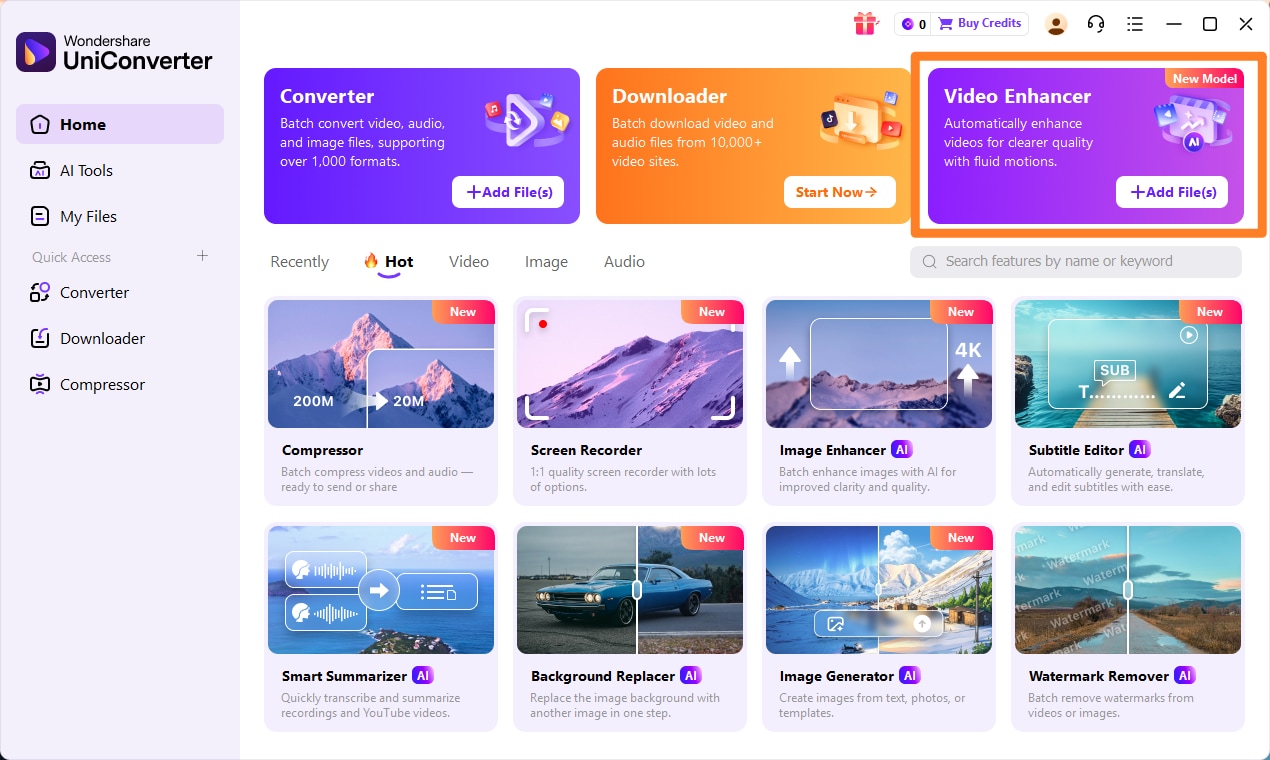
Step 1: Open UniConverter and Choose Video Enhancer
Launch UniConverter on your computer. From the main interface, navigate to the "AI Lab" section and select the "Video Enhancer" tool.
Step 2: Upload the Videos
Click on the "Add Files" button or drag and drop the video files you wish to enhance into the UniConverter interface. You can add multiple videos for batch processing.
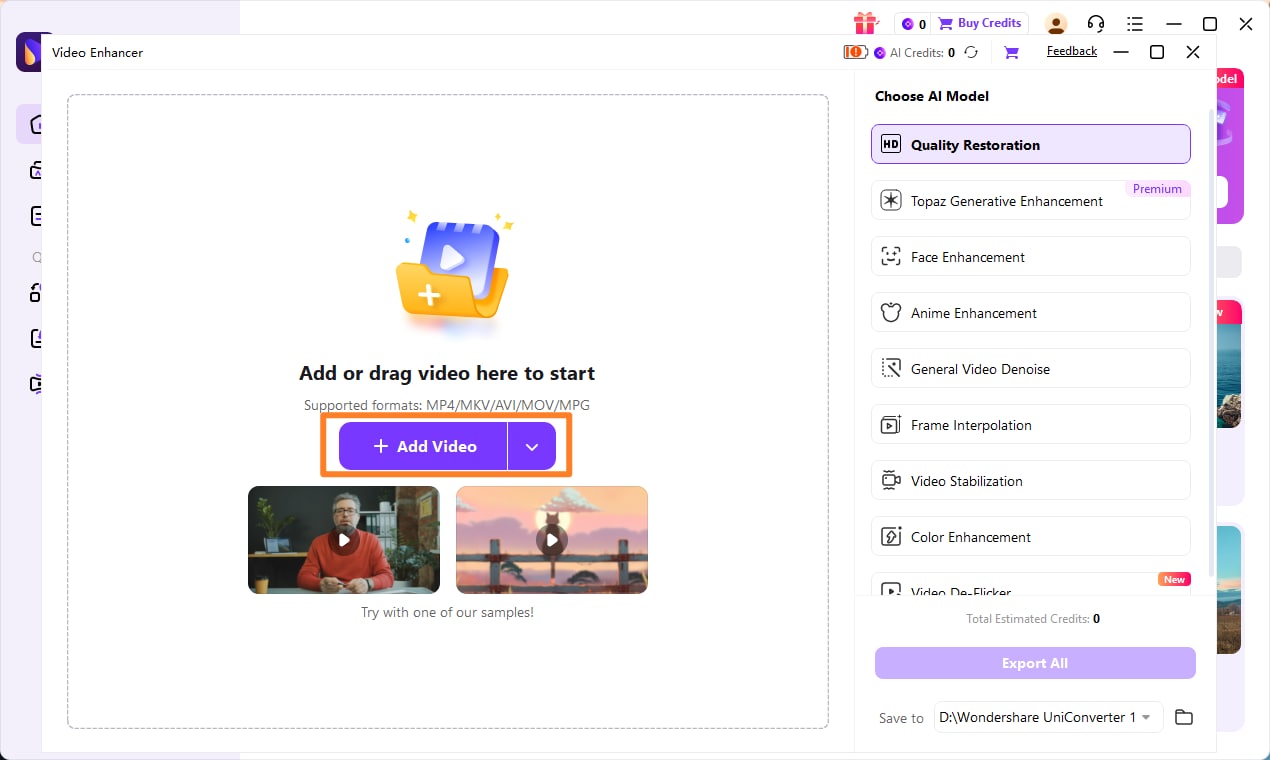
Step 3: Choose Enhancement Model
Select the desired enhancement model based on your needs, such as "AI Upscale," "AI Denoise," or "AI Stabilization." Adjust any specific parameters like output resolution or noise reduction intensity.

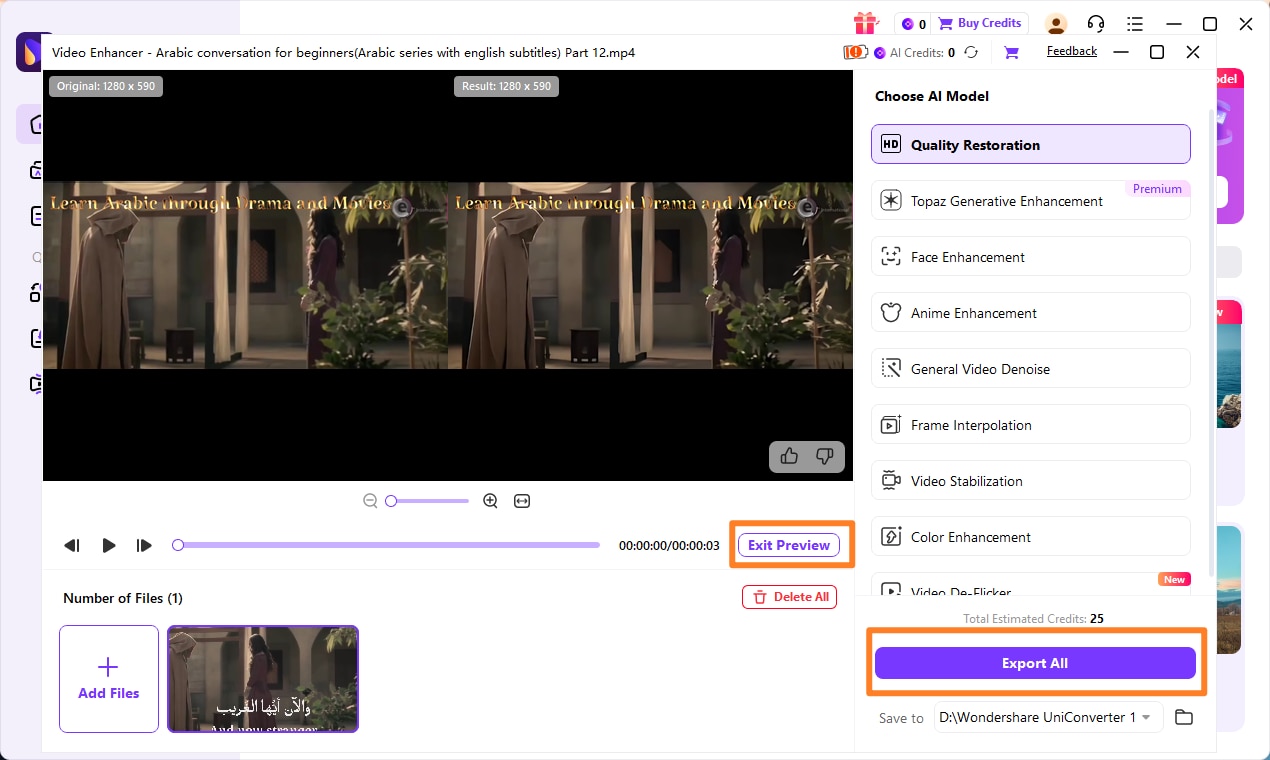
Step 4: Preview and Save the Enhanced Video
Preview the enhanced video to ensure the results meet your expectations. Once satisfied, choose your desired output format and destination folder, then click "Export" to save your high-quality video.

Seeking a Winxvideo AI Video Enhancer Alternative?
Part 7: Conclusion
The Winxvideo AI Video Enhancer review reveals a highly capable tool that effectively addresses common video quality issues through its AI-powered features. It excels in upscaling vintage footage, stabilizing shaky videos, and reducing noise in low-light recordings, all within a user-friendly interface. While it offers significant improvements for many users, its resource-intensive nature for high-resolution outputs and limited customization options for advanced users are points to consider. For casual users and beginners looking to revitalize old family videos or improve everyday footage, Winxvideo AI is a solid and accessible choice. However, professionals requiring granular control over every aspect of their video or those needing real-time enhancement for live streaming might find its capabilities somewhat constrained and should explore more specialized alternatives like DaVinci Resolve Studio or UniConverter. Ultimately, the decision hinges on balancing ease of use, desired output quality, system resources, and budget.
Part 8: FAQs
-
1. Can Winxvideo AI Video Enhancer truly turn low-resolution video into 4K?
Winxvideo AI can significantly upscale low-resolution video, making it appear much sharper and more detailed, often to a 4K resolution. However, it uses AI interpolation to fill in missing pixels, so it cannot create information that wasn't originally present. The quality of the 4K output heavily depends on the quality of the source material.
-
2. Is Winxvideo AI Video Enhancer suitable for professional film restoration projects?
For basic restoration tasks like upscaling and noise reduction of older footage, Winxvideo AI can be very effective. However, for highly specialized professional film restoration projects that require precise color grading, extensive artifact removal, or frame-by-frame manual adjustments, dedicated professional tools like DaVinci Resolve Studio or specialized restoration software would offer more comprehensive control and capabilities.
-
3. How does Winxvideo AI handle different types of video noise?
Winxvideo AI utilizes intelligent algorithms to identify and reduce various types of video noise, including luminance noise (graininess) and chrominance noise (color speckles), particularly effective in low-light conditions. It aims to remove noise while preserving as much detail as possible, though aggressive noise reduction can sometimes lead to a slight loss of fine detail.
-
4. What are the minimum system requirements for Winxvideo AI Video Enhancer?
While specific requirements can vary, generally, Winxvideo AI benefits greatly from a modern multi-core processor (Intel i5 or equivalent), at least 8GB of RAM (16GB recommended), and a dedicated GPU (NVIDIA, AMD, or Intel Arc) with at least 4GB of VRAM for efficient processing, especially for high-resolution videos.
-
5. Does Winxvideo AI offer a free trial, and what are its limitations?
Yes, Winxvideo AI typically offers a free trial version. The limitations usually include watermarks on exported videos, restrictions on the length of videos that can be processed, or a limited number of features available. The free trial allows users to test the software's capabilities before committing to a purchase.
