
- Value: Wave.video Enhancer offers AI-powered video quality improvement, perfect for social media creators needing quick, polished content.
- Comparison: It excels in ease of use and cloud integration but lacks advanced customization compared to professional desktop tools.
- Decision: Consider Wave.video for fast, simple enhancements; for granular control or offline work, explore robust alternatives like UniConverter.
- Risks: Be aware of data privacy, potential over-processing, subscription costs, and internet dependency with cloud-based solutions.
- Alternative: UniConverter provides comprehensive, stable, and efficient video enhancement with batch processing and GPU acceleration for diverse needs.
In this article
- Part 1: What is Wave.video Enhancer?
- Part 2: Wave.video Enhancer: Core Features, Pros & Cons
- Part 3: Target Users & Use Scenarios
- Part 4: Wave.video Enhancer and Alternatives Comparison
- Part 5: Risks & Pitfalls to Consider
- Part 6: How to Use UniConverter for Efficient Video Enhancement
- Part 7: Conclusion
- Part 8: FAQs
This Wave.video Enhancer review delves into the capabilities of this AI-powered tool, designed to elevate video quality with minimal effort. In an era where visual content dominates digital platforms, the demand for high-quality video is paramount. This review will provide a comprehensive overview of Wave.video Enhancer's features, evaluate its strengths and weaknesses, and compare it against leading competitors to help users make informed decisions about their video enhancement needs. We will explore its ideal use cases, potential pitfalls, and offer a final verdict to guide both casual creators and professionals.
Part 1: What is Wave.video Enhancer?
Wave.video Enhancer is an AI-driven online tool integrated within the broader Wave.video platform, specifically designed to improve the visual quality of videos. It leverages artificial intelligence to upscale resolution, reduce noise, and enhance overall clarity, making it particularly appealing for content creators who frequently publish on social media. This review aims to dissect its performance, ease of use, and value proposition in a competitive market.
The Rise of AI-Powered Video Enhancement Tools
The proliferation of video content across various digital platforms has created a significant demand for tools that can quickly and effectively enhance video quality.
* User-Generated Content: The sheer volume of user-generated content often suffers from suboptimal recording conditions or lower-resolution devices.
* Social Media Standards: Platforms like Instagram, TikTok, and YouTube increasingly favor high-definition content, pushing creators to seek enhancement solutions.
* Accessibility: Traditional video editing software can be complex and time-consuming, driving the need for more accessible, AI-powered alternatives.
* Efficiency: AI tools promise to automate tedious enhancement processes, saving creators valuable time and resources.
Part 2: Wave.video Enhancer: Core Features, Pros & Cons
Wave.video Enhancer is built to simplify the video enhancement process, offering a suite of features that cater to quick and effective improvements. Its core capabilities revolve around leveraging AI to automatically adjust and refine video elements.
Core Features:
* AI-Powered Upscaling: Automatically increases video resolution to higher definitions (e.g., 720p to 1080p or 4K).
* Noise Reduction: Intelligent algorithms identify and minimize visual noise, grain, and artifacts.
* Color Correction: Enhances color vibrancy, contrast, and overall visual appeal.
* Sharpening: Improves edge definition and detail without over-processing.
* Batch Processing: Allows for the enhancement of multiple video files simultaneously, streamlining workflow.
Pros:
* AI-Powered Upscaling for Social Media Content Creators: Excels at quickly preparing videos for social media platforms, ensuring a polished look without deep technical knowledge.
* Intuitive Interface for Quick Edits and Enhancements: The user-friendly design allows even beginners to navigate and apply enhancements effortlessly.
* Seamless Integration with Wave.video Ecosystem: Benefits existing Wave.video users by providing an integrated solution for creation and enhancement.
Cons:
* Limited Advanced Customization Options for Professional Editors: Lacks the granular control and fine-tuning capabilities required by professional video editors.
* Dependency on Internet Connection for Processing: As a cloud-based tool, a stable and fast internet connection is crucial for efficient processing and uploading/downloading.
Part 3: Target Users & Use Scenarios
Wave.video Enhancer is designed with specific user groups and scenarios in mind, offering significant value where speed and ease of use are prioritized over intricate control.
Best Use Scenario:
* Social Media Managers & Marketers Enhancing Short-Form Video Ads: For professionals managing social media campaigns, Wave.video Enhancer is ideal for quickly upscaling and polishing short video ads, promotional clips, or engaging stories. Its ability to rapidly improve visual quality ensures content stands out in a crowded feed, making it perfect for enhancing user-generated content for marketing purposes or quickly preparing existing footage for new campaigns. The intuitive interface means less time spent on technical adjustments and more on strategic content deployment.
Limited Use Scenario:
* Professional Filmmakers Requiring Granular Control Over Post-Production: While effective for quick enhancements, Wave.video Enhancer falls short for professional filmmakers, videographers, or cinematographers who demand precise control over every aspect of post-production. These professionals often require advanced features like specific color grading tools, detailed noise reduction algorithms, motion stabilization, and frame interpolation, which are beyond the scope of this tool. For projects where artistic vision and technical precision are paramount, a more robust, desktop-based solution is necessary.
Part 4: Wave.video Enhancer and Alternatives Comparison
Comparing Wave.video Enhancer with its alternatives reveals distinct strengths and weaknesses, guiding users to the best tool for their specific needs.
| Feature/Scenario | Wave.video Enhancer | Topaz Video AI | DaVinci Resolve Studio | UniConverter |
| Ease of Use for Quick Enhancements | Excellent | Good | Moderate | Very Good |
| AI Upscaling Quality (General) | Very Good | Excellent | Good (with plugins) | Very Good |
| Advanced Customization | Limited | Extensive | Extensive | Moderate |
| Integration with Video Editing Suite | Native (Wave.video) | Standalone | Native (DaVinci Resolve) | Standalone (with editor) |
| Pricing Model | Subscription | One-time purchase | One-time purchase | Subscription/One-time |
| Processing Speed | Cloud-dependent | GPU-dependent | GPU-dependent | GPU-dependent |
| Offline Functionality | No | Yes | Yes | Yes |
Key Differentiators:
Wave.video Enhancer prioritizes speed and ease for social media content, making it a go-to for quick, cloud-based improvements. Topaz Video AI focuses on maximum quality and professional-grade upscaling, offering unparalleled detail recovery and advanced algorithms. DaVinci Resolve Studio offers comprehensive post-production capabilities with enhancement as one feature, ideal for full-fledged video editing workflows. UniConverter provides a robust suite of video tools, including powerful enhancement features, balancing ease of use with strong performance for various tasks.
Part 5: Risks & Pitfalls to Consider
When utilizing cloud-based video enhancement tools like Wave.video Enhancer, several risks and potential pitfalls warrant consideration to ensure a smooth and secure workflow.
Data Privacy Concerns with Cloud Processing
Uploading sensitive or proprietary video content to cloud servers always carries inherent data privacy risks. Users must trust the platform's security measures to protect their intellectual property and personal data from unauthorized access or breaches. Reviewing Wave.video's privacy policy and data handling practices is crucial before committing to the service, especially for commercial or confidential projects.
Potential for Over-Processed, Unnatural Results
While AI enhancement aims to improve video quality, aggressive application of upscaling, noise reduction, or sharpening can lead to unnatural, "plastic," or overly smooth results. This can strip away natural film grain or texture, making the video appear artificial. Users should always preview enhanced videos and exercise moderation to maintain a natural aesthetic, especially for footage that requires a specific look or feel.
Subscription Cost vs. Usage Frequency
Wave.video Enhancer is typically part of a subscription model. Users need to evaluate if the recurring cost aligns with their actual usage frequency. For infrequent users, a one-time purchase desktop solution might be more cost-effective in the long run. Overpaying for features that are rarely utilized is a common pitfall, so a clear understanding of personal or business needs is essential.
Internet Speed Dependency for Efficient Workflow
As a cloud-based service, the performance and efficiency of Wave.video Enhancer are heavily reliant on the user's internet connection speed. Slow or unstable internet can significantly prolong upload and download times, making the enhancement process cumbersome and time-consuming, especially for larger video files. This dependency can be a major bottleneck for users in areas with poor connectivity.
Limited Offline Functionality
The complete reliance on an internet connection means Wave.video Enhancer offers no offline functionality. This can be a significant limitation for users who need to work on the go, in locations without internet access, or prefer to process sensitive files locally without uploading them to the cloud. Desktop alternatives provide the flexibility of working offline, ensuring uninterrupted workflow regardless of internet availability.
Part 6: How to Use UniConverter for Efficient Video Enhancement
When other tools fall short in batch processing, stable enhancement, or delivering noticeable improvements, UniConverter offers a robust and versatile solution. It serves as an all-in-one ultimate solution, providing powerful enhancement features without ads, supporting a wide range of formats, leveraging GPU acceleration for speed, ensuring stable and lossless processing, and enabling efficient batch enhancement. For instance, you can easily fix pixelated videos or even upscale anime with remarkable clarity. Whether you need to unblur a video or perform a comprehensive video upscaler, UniConverter is equipped to handle it.
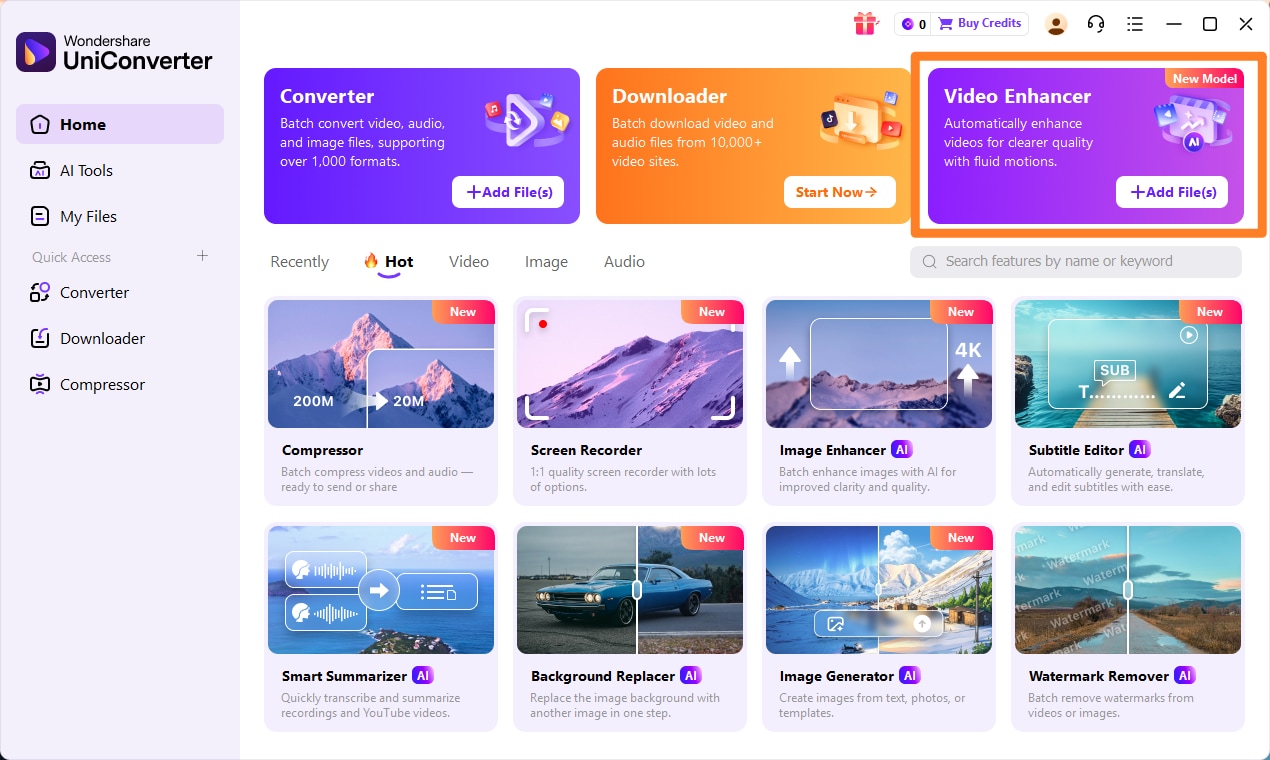
Step 1: Open UniConverter and Choose Video Enhancer
Launch UniConverter on your computer. From the main interface, navigate to the "Toolbox" section and select the "Video Enhancer" option. This will open the dedicated enhancement module.
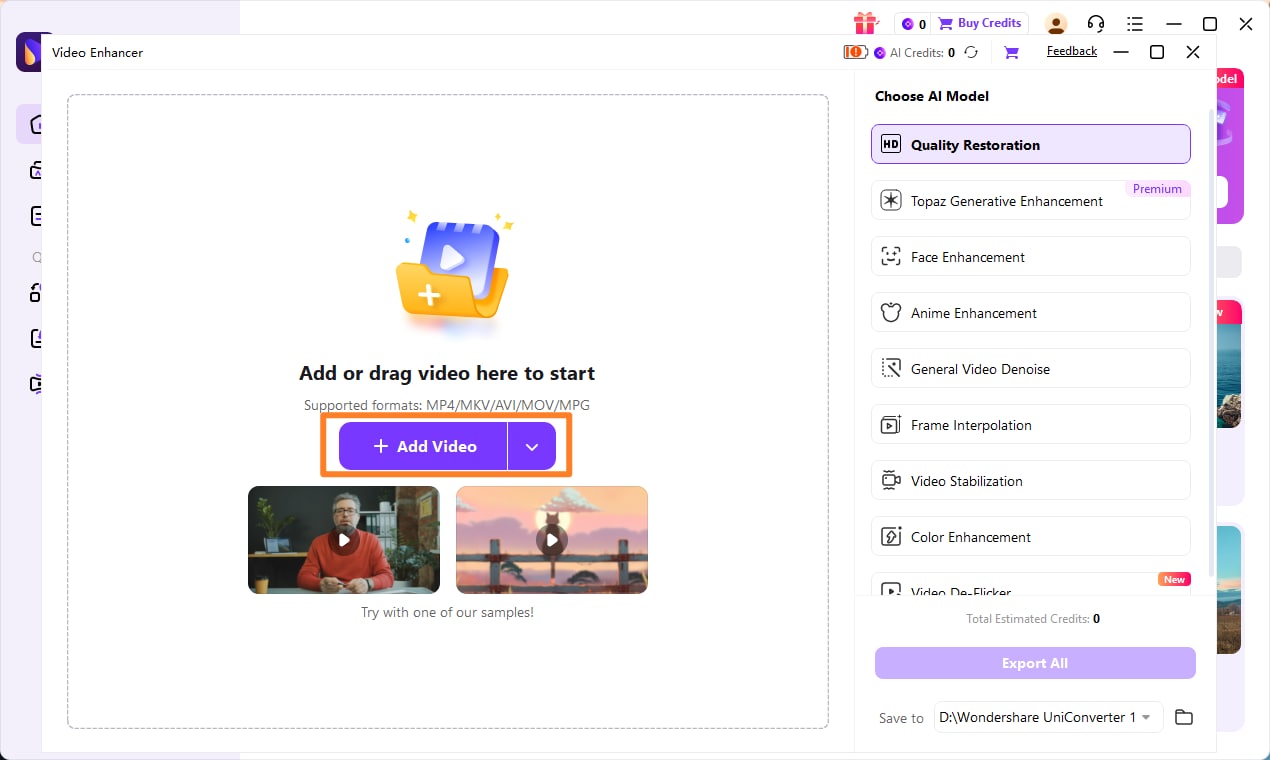
Step 2: Upload the Videos
Click on the "Add Files" button or drag and drop your video files directly into the UniConverter interface. You can add multiple videos for batch processing.
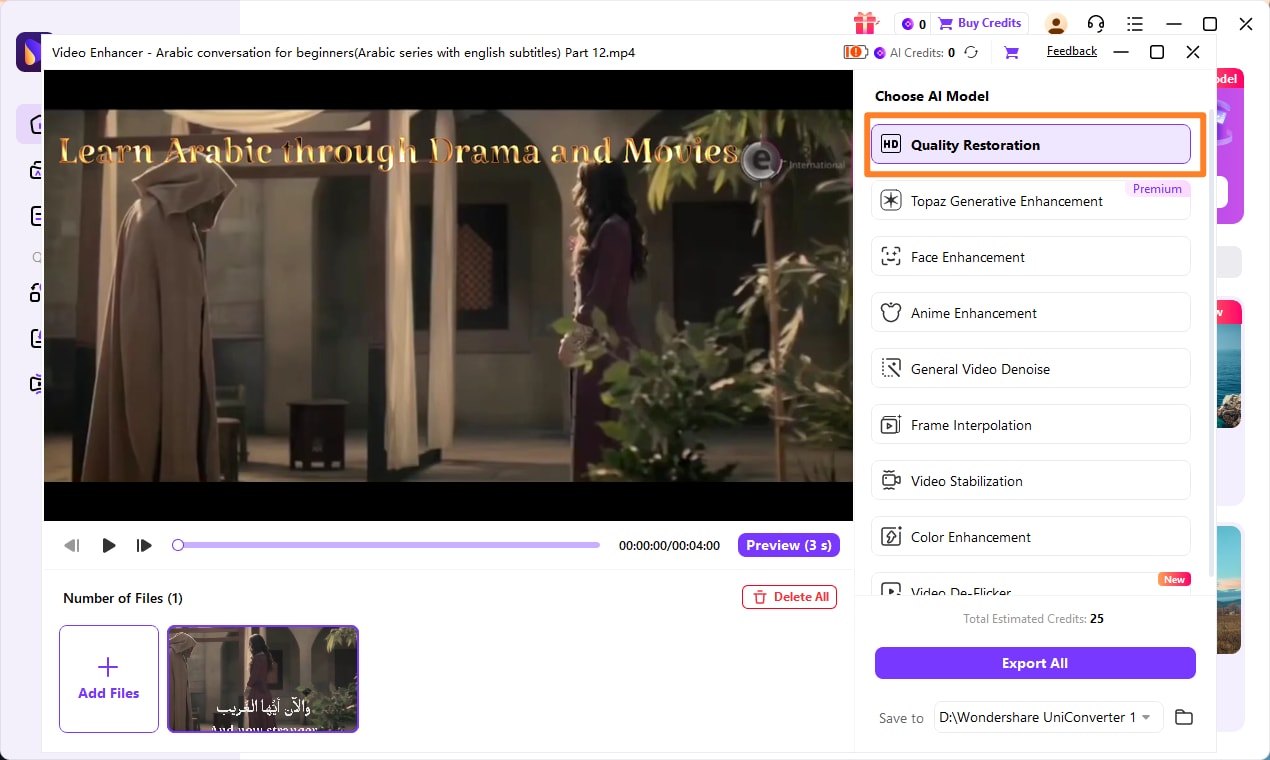
Step 3: Choose Enhancement Model
UniConverter offers various enhancement models, such as "AI Upscale," "Brightness & Contrast," "Denoise," and "Stabilization." Select the model that best suits your video's needs. You can also adjust parameters like resolution, frame rate, and bitrate.
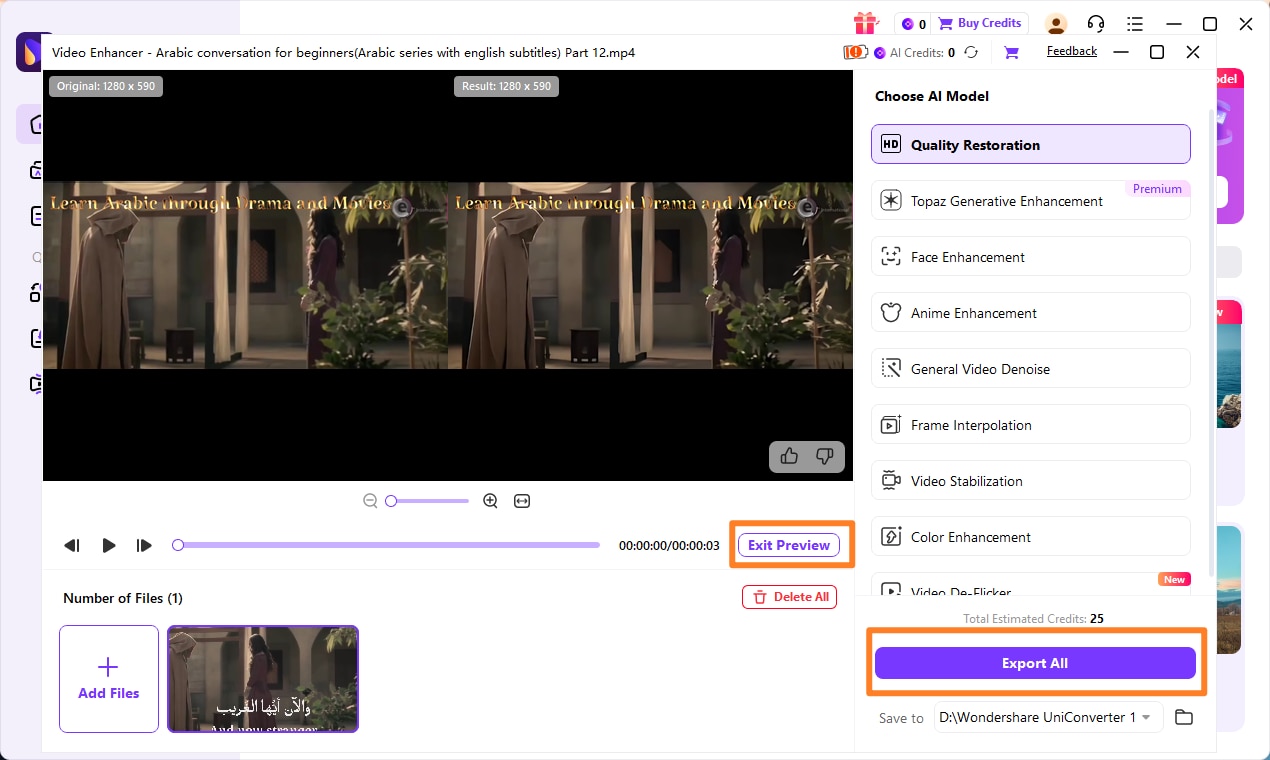
Step 4: Preview and Save the Enhanced Video
After selecting your enhancement options, click "Preview" to see the changes. Once satisfied, choose your desired output format and destination folder, then click "Enhance" or "Start All" to process and save your enhanced video.

Wave.video Enhancer Alternative? Try This!
Part 7: Conclusion
The Wave.video Enhancer review reveals it as a highly accessible and efficient tool, particularly for social media content creators and marketers who prioritize speed and ease of use. Its AI-powered capabilities offer significant improvements for short-form video, seamlessly integrating into the Wave.video ecosystem. However, for professional editors requiring granular control, advanced customization, or offline functionality, it presents limitations. Users should weigh the benefits of its intuitive cloud-based approach against potential risks like data privacy, internet dependency, and the possibility of over-processed results. While excellent for quick enhancements and casual creators, those with more demanding needs or a preference for desktop solutions might find better value in alternatives like Topaz Video AI, DaVinci Resolve Studio, or UniConverter. Ultimately, the best choice depends on individual workflow, budget, and specific enhancement requirements.
Part 8: FAQs
-
1. Is Wave.video Enhancer free to use?
Wave.video Enhancer is typically part of a Wave.video subscription plan, with varying tiers offering different features and access levels.
-
2. Can Wave.video Enhancer improve old, low-resolution videos significantly?
While it can improve quality, the extent of improvement depends heavily on the original video's quality. Significant enhancements are more likely for moderately low-resolution videos rather than extremely degraded footage.
-
3. Does Wave.video Enhancer support 4K video output?
Yes, it supports upscaling to 4K, but the quality of the upscaled 4K will depend on the input resolution and the effectiveness of the AI algorithms on that specific footage.
-
4. How does Wave.video Enhancer compare to desktop-based video enhancers in terms of speed?
Cloud-based enhancers like Wave.video can be faster for shorter videos due to server processing power, but desktop tools often offer more consistent speed for larger files without internet dependency, especially when leveraging powerful local GPU resources.
-
5. Is my data secure when using Wave.video Enhancer?
Wave.video generally adheres to industry standards for data security and privacy. However, users should always review their privacy policy and terms of service regarding uploaded content to understand how their data is handled and protected.
