
- VSCO's Appeal: Offers artistic filters and community, ideal for quick, aesthetic mobile photo edits.
- Feature Strengths: Intuitive interface, extensive filter library, and community sharing are key VSCO benefits.
- Limitations: Subscription model and limited advanced tools compared to desktop software are notable drawbacks.
- Target Audience: Best for casual mobile photographers and social media influencers seeking consistent visual branding.
- VSCO vs. Alternatives: VSCO excels in aesthetics; Lightroom for pro control; Snapseed for free versatility; UniConverter for AI enhancement and batch processing.
- Considerations: Be aware of VSCO's subscription cost, potential for over-processing, and data privacy policies.
- UniConverter's Role: A powerful alternative for comprehensive, AI-driven image enhancement, upscaling, and batch processing.
- Decision Factor: Choose based on your priorities: artistic filters, professional control, free tools, or AI-powered efficiency.
In this article
- Part 1: What is VSCO Image Enhancer?
- Part 2: VSCO Image Enhancer: Core Features, Pros, and Cons
- Part 3: Target Users and Usage Scenarios
- Part 4: VSCO Image Enhancer and Alternatives Comparison
- Part 5: Potential Pitfalls and Considerations
- Part 6: How to Use UniConverter for Comprehensive Image Enhancement
- Part 7: Conclusion
- Part 8: FAQs
VSCO Image Enhancer: A Deep Dive into Its Capabilities and Alternatives
When I first started exploring mobile photography, I quickly realized that a great shot often needs a little extra polish. That's where image enhancers come in. Among the myriad of options, VSCO Image Enhancer review has consistently popped up in discussions, promising artistic filters and a vibrant community. This review aims to dissect its core offerings, compare it against its key competitors like Adobe Lightroom Mobile and Snapseed, and ultimately help you decide if it’s the right tool for your creative workflow. We’ll also explore potential pitfalls and introduce a robust alternative for comprehensive image enhancement.
Part 1: What is VSCO Image Enhancer?
VSCO, originally Visual Supply Company, emerged as a pioneer in mobile photo editing, quickly gaining a reputation for its sophisticated film-like filters and a more artistic approach compared to the often over-saturated and artificial looks prevalent elsewhere. For me, it was a breath of fresh air, offering a nuanced way to enhance my photos without making them look overly processed. It's not just about slapping on a filter; it's about subtle adjustments that elevate the mood and aesthetic of an image. This review will delve into whether VSCO still holds its ground in a rapidly evolving landscape of powerful mobile editing applications and if its "enhancer" capabilities truly stand out.
The Evolving Landscape of Mobile Photo Editing
* The Rise of Smartphone Photography: My phone has become my primary camera, making mobile editing apps indispensable.
* Demand for Professional-Grade Tools on Mobile: I've noticed a growing desire for desktop-level editing power right on our devices.
* The Blurring Lines Between Casual and Professional: It's no longer just pros who care about image quality; everyone wants their photos to look good.
Part 2: VSCO Image Enhancer: Core Features, Pros, and Cons
From my experience, VSCO's core strength lies in its curated collection of presets, which are essentially sophisticated filters designed to emulate classic film stocks. Beyond that, it offers a suite of basic editing tools like exposure, contrast, saturation, and sharpness. What I find particularly useful is the "Recipes" feature, allowing me to save my favorite editing sequences for consistent application across multiple photos. The "Journal" section also serves as a source of inspiration, showcasing how other users are utilizing VSCO's tools.
Pros:
* Intuitive Interface for Quick Edits: I find it incredibly easy to navigate and make quick, impactful edits on the go.
* Extensive Filter Library for Artistic Styles: The sheer variety and quality of filters are what initially drew me in and keep me coming back.
* Community Sharing and Inspiration: Seeing how others use VSCO's tools sparks my own creativity.
Cons:
* Subscription-Based Model for Full Access: I was a bit disappointed that many of the best filters and tools are locked behind a paywall.
* Limited Advanced Editing Tools Compared to Desktop Software: For really granular control, I still find myself reaching for desktop alternatives.
Part 3: Target Users and Usage Scenarios
I've found that VSCO truly shines for specific types of users and in particular situations. If you're someone who values aesthetic consistency and artistic expression without getting bogged down in complex technical details, VSCO is probably for you. It's less about pixel-peeping and more about creating a mood.
Scenario 1: The Casual Mobile Photographer Seeking Aesthetic Filters
This is me on a daily basis. I snap a photo of my coffee, a scenic view, or a moment with friends, and I want to quickly apply a beautiful, consistent filter that elevates the image. VSCO's presets make this incredibly easy, giving my everyday photos a polished, cohesive look without much effort. It's perfect for those who want their photos to look good on social media without spending hours editing.
Scenario 2: The Social Media Influencer Needing Consistent Visual Branding
For anyone building a personal brand online, visual consistency is key. VSCO allows me to develop a signature look with specific filters and adjustments, which I can then apply to all my content. This ensures my feed has a recognizable and professional aesthetic, which is crucial for attracting and retaining followers. The ability to save "Recipes" is a game-changer for maintaining this consistency.
Scenario 3: The Hobbyist Photographer Looking for Quick Enhancements on the Go (Limitations)
While I use VSCO for quick edits, I've learned its limitations. If I've shot a RAW file on my mirrorless camera and transferred it to my phone, VSCO can open it, but its editing capabilities for RAW are quite basic. For serious color grading or complex retouching on a RAW file, I find it falls short. It's great for a quick fix or a stylistic overlay, but not for deep, technical photo manipulation.
Part 4: VSCO Image Enhancer and Alternatives Comparison
When I look at the mobile photo editing landscape, VSCO isn't alone. I've spent time with several apps, and each has its own strengths. Here's how I see VSCO stacking up against some of its prominent competitors, including UniConverter, which I've found to be a surprisingly powerful option for comprehensive enhancement.
| Feature/Aspect | VSCO Image Enhancer | Adobe Lightroom Mobile | Snapseed | UniConverter |
| Primary Focus | Filters, Aesthetics | Pro-level Editing | Versatility | AI Enhancement, Batch Processing |
| Ease of Use | High | Medium | Medium | High |
| Subscription Model | Yes | Yes | No | No (for image enhancer) |
| Advanced Tools | Limited | Extensive | Good | AI-driven enhancement |
| Community | Strong | Moderate | None | None |
| Processing Speed | Fast | Moderate | Fast | Very Fast (GPU accelerated) |
| Output Quality | Excellent (stylistic) | Excellent (technical) | Very Good | Excellent (AI-upscaling) |
| Batch Processing | Limited | Yes | No | Yes |
| Security | Standard | High | Standard | High |
Key Differentiators: Subscription Value, Editing Depth, and Community Integration
From my perspective, VSCO's strength lies in its curated filters and the community aspect, which is great for inspiration. However, the subscription model can feel a bit steep if you only use it occasionally. Adobe Lightroom Mobile, on the other hand, offers unparalleled editing depth, especially if you're already in the Adobe ecosystem, but it comes with a steeper learning curve and a similar subscription. Snapseed is a fantastic free option, offering a good balance of tools and ease of use, making it a solid all-rounder. UniConverter, while not a traditional photo editor, stands out for its AI-driven enhancement and batch processing capabilities, which I find incredibly useful for quickly improving a large number of photos without manual tweaking. If you're looking for stylistic filters and community, VSCO is strong. If you need professional-grade control, Lightroom is your go-to. For versatile free editing, Snapseed is excellent. And for efficient, high-quality AI enhancement and upscaling, UniConverter is a dark horse that truly impresses me.
Part 5: Potential Pitfalls and Considerations
While I genuinely enjoy using VSCO, I've learned that no tool is perfect, and there are definitely some aspects to be mindful of, especially when considering its free versus paid tiers and how it handles your precious photos.
Data Privacy and User Information
Like many apps, VSCO collects data. I always make it a point to review their privacy policy, as I'm conscious of what information I'm sharing. While they state they don't sell personal data, understanding how my usage patterns or uploaded images might be utilized is important to me. It's not necessarily a pitfall unique to VSCO, but a general consideration for any cloud-connected service.
In-App Advertisements and Upsells
The free version of VSCO can be a bit aggressive with its upsells to the paid subscription. While I understand they need to monetize, the constant nudges to upgrade can sometimes interrupt my creative flow. It's a minor annoyance, but something to be aware of if you're trying to stick to the free features.
Image Quality Degradation with Over-Processing
This isn't just a VSCO issue, but a general warning for any image editor. It's easy to get carried away with filters and adjustments. I've definitely over-processed images in the past, leading to artifacts, color banding, or a generally unnatural look. With VSCO's strong filters, it's particularly tempting to push them too far, so I've learned to use a lighter touch to maintain image integrity.
Learning Curve for Advanced Features
While the basic interface is intuitive, some of VSCO's more nuanced tools, like HSL adjustments or split toning, can take a bit of practice to master. I initially thought I could just jump in and create masterpieces, but truly understanding how each slider impacts the image requires experimentation. It's not as steep as, say, Photoshop, but it's more than just a one-click solution.
Part 6: How to Use UniConverter for Comprehensive Image Enhancement
When I find myself needing to enhance a large batch of photos, or if I'm dealing with images that are a bit too blurry or low-resolution for VSCO to handle effectively, I often turn to UniConverter. It's not a direct competitor in terms of artistic filters, but it excels at fundamental image improvement, especially when other tools fall short with unstable enhancements or weak effects. UniConverter offers a robust, ad-free solution with extensive format support, GPU acceleration for speed, and stable, lossless batch enhancement, making it an all-in-one powerhouse for image and video needs. For those looking to upscale images to 4K or enhance image resolution, this tool provides powerful capabilities.
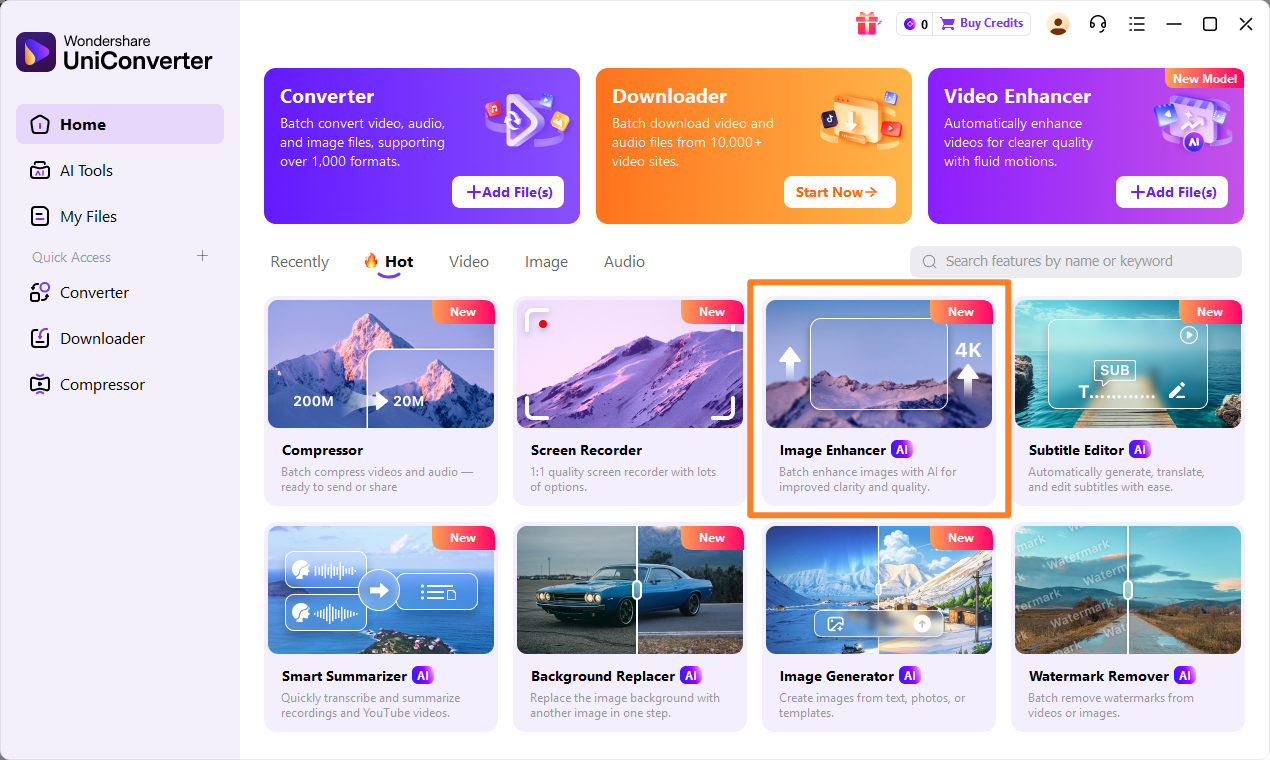
Step 1: Open UniConverter and Choose Image Enhancer
First, I launch UniConverter on my desktop. On the main interface, I navigate to the "Toolbox" section and select the "Image Enhancer" feature. It's usually quite prominent and easy to find.
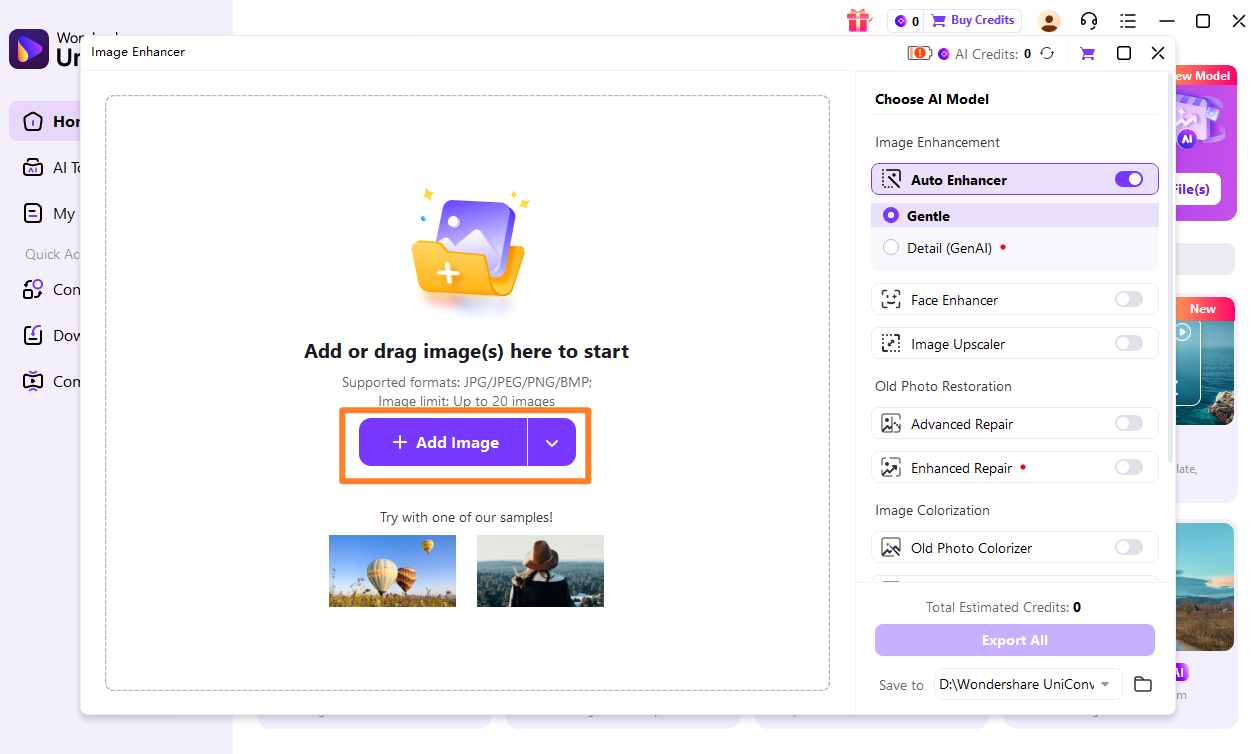
Step 2: Upload the Images
Next, I simply drag and drop the images I want to enhance directly into the UniConverter window. Alternatively, I can click the "Add Files" button to browse and select them from my computer. This is where its batch processing capability truly shines for me.
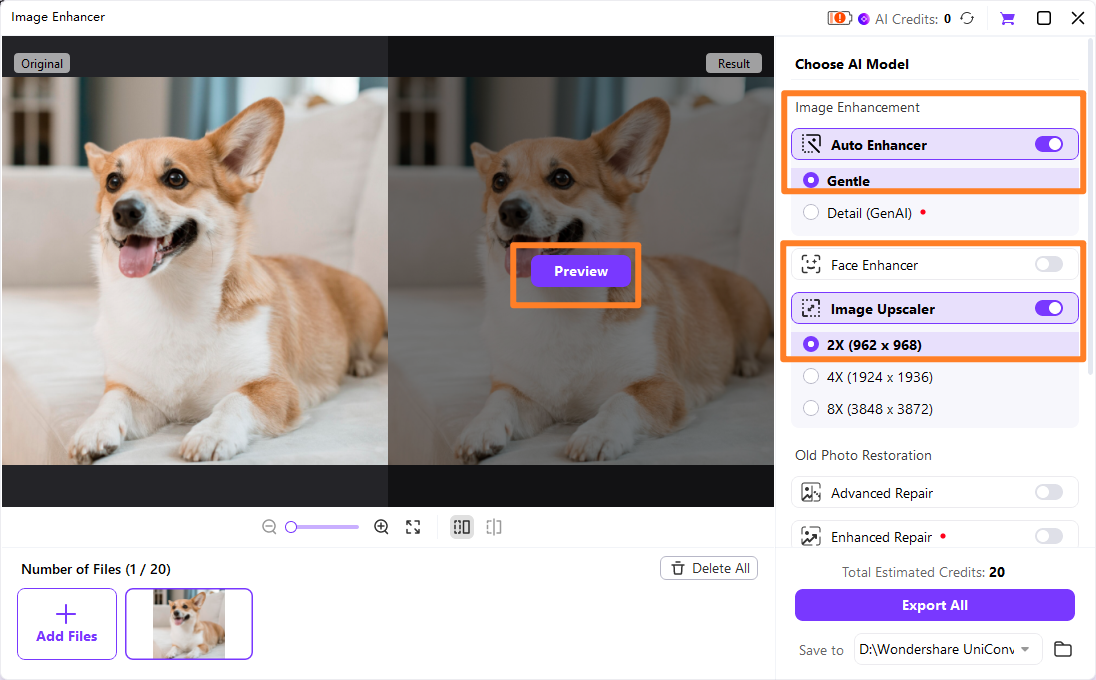
Step 3: Choose Enhancement Model
Once my images are loaded, I choose the enhancement model. UniConverter offers various AI models tailored for different needs, such as general enhancement, upscaling, or deblurring. I select the one that best fits the issues I want to address in my photos.
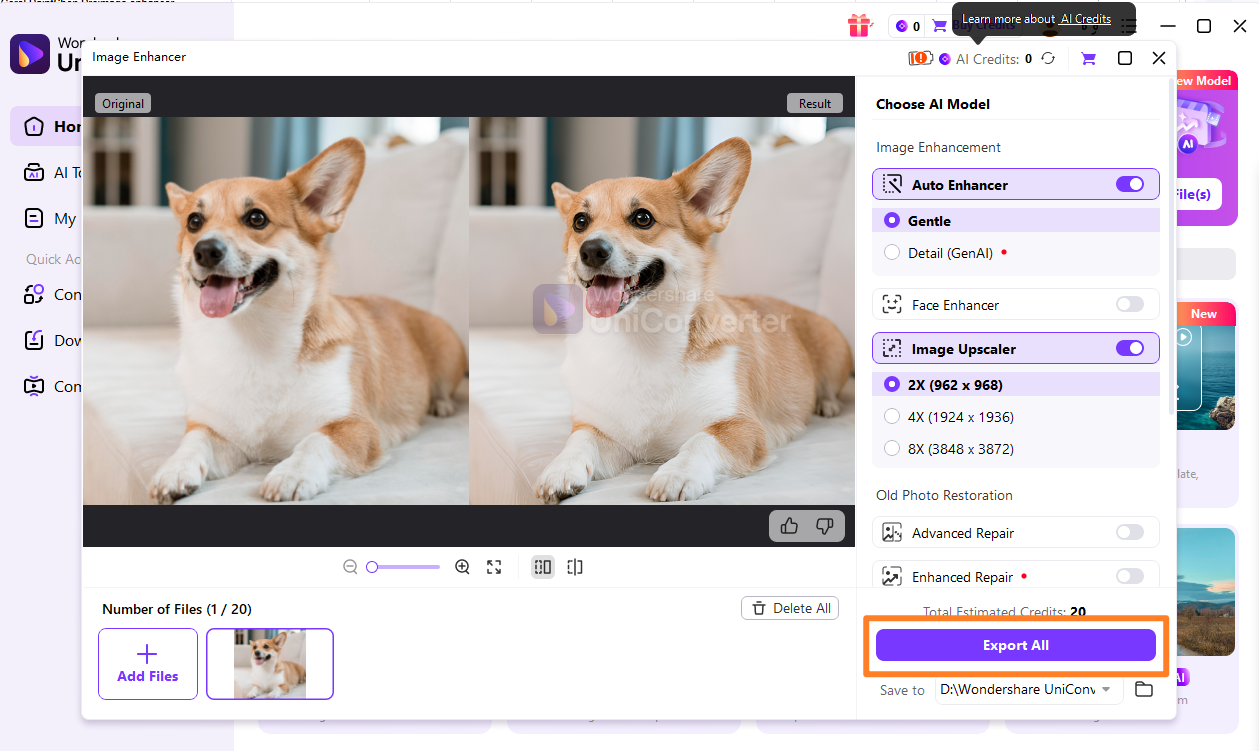
Step 4: Preview and Save the Enhanced Images
Before finalizing, I always use the preview feature to compare the original and enhanced versions side-by-side. This allows me to make any final adjustments if needed. Once satisfied, I click "Start" to process and save my enhanced images to my desired output folder.

Enhance VSCO Images Beyond Limits
Part 7: Conclusion
After spending considerable time with VSCO Image Enhancer review and its alternatives, I can confidently say that its value largely depends on your specific needs and priorities. For me, if I'm looking for quick, aesthetically pleasing edits with a strong emphasis on film-like filters and a sense of community, VSCO remains a top contender. It's fantastic for social media creators and casual photographers who want to maintain a consistent visual style without getting bogged down in complex tools. However, if my goal is professional-grade editing, granular control over every aspect of an image, or robust RAW file processing, I find myself gravitating towards Adobe Lightroom Mobile. For those on a budget who still desire powerful editing capabilities, Snapseed is an excellent free alternative that offers a surprising amount of versatility. And when it comes to fundamental image improvement, especially for batch processing, upscaling, or deblurring, UniConverter has proven to be an indispensable tool in my arsenal, offering a different but equally valuable kind of "enhancement" that complements the more artistic editors. Ultimately, there's no single "best" option; it's about choosing the tool that best fits your workflow and creative vision.
Part 8: FAQs
-
1. Is VSCO Image Enhancer free to use?
VSCO offers a free version with limited features, but full access to its extensive filter library and advanced editing tools requires a paid subscription, known as VSCO X.
-
2. Can VSCO enhance raw image files?
While VSCO can import and perform basic edits on raw image files, its enhancement capabilities are primarily optimized for JPEGs and mobile-captured images. For comprehensive raw file editing, more specialized software like Adobe Lightroom is generally recommended.
-
3. How does VSCO compare to Instagram's built-in editor?
VSCO offers a significantly more extensive and nuanced filter library, along with finer control over various editing parameters such as HSL, split toning, and grain, compared to Instagram's more basic and limited set of editing tools.
-
4. Is my privacy protected when using VSCO?
VSCO has a privacy policy that outlines how user data is collected, used, and shared. Users should review this policy to understand their data handling practices. Like any cloud-based service, there's an inherent level of data sharing involved.
-
5. What are the best alternatives to VSCO for professional photo editing?
For professional-grade photo editing with extensive control and advanced features, Adobe Lightroom Mobile is a leading alternative. Snapseed offers a robust set of tools for free, and for AI-driven enhancement and batch processing, UniConverter is a strong contender.
