
- Value: Vmake AI simplifies video enhancement for casual users, offering quick AI-driven improvements like upscaling and noise reduction.
- Comparison: Vmake excels in ease of use and affordability, but lacks the customization and offline capabilities of alternatives like UniConverter.
- Decision: Consider Vmake for social media and quick fixes. For professional control, data privacy, or diverse formats, explore UniConverter or Topaz Video AI.
- Pitfalls: Be aware of Vmake's potential for AI artifacts, limited customization, subscription lock-in, and reliance on cloud processing.
In this article
- Part 1: What is Vmake AI Video Enhancer?
- Part 2: Vmake AI Video Enhancer: Core Features, Pros & Cons
- Part 3: Vmake AI Video Enhancer: Ideal Users & Use Cases
- Part 4: Vmake AI Video Enhancer and Alternatives Comparison
- Part 5: Risks & Pitfalls to Consider
- Part 6: How to Use UniConverter for Efficient Video Enhancement
- Part 7: Final Verdict & Recommendations
- Part 8: FAQs
The digital landscape is awash with content, and video stands out as a dominant medium. However, not all video footage is created equal, often suffering from low resolution, noise, or poor color. This is where AI-powered video enhancement tools like Vmake AI Video Enhancer review come into play, promising to breathe new life into mediocre clips. This comprehensive Vmake AI Video Enhancer review will delve into its capabilities, comparing it against key competitors and exploring its ideal use cases, potential pitfalls, and offering a robust alternative for those seeking a more versatile solution. Our goal is to provide a clear, scenario-based analysis to help users make informed decisions about their video enhancement needs.
Part 1: What is Vmake AI Video Enhancer?
Vmake AI Video Enhancer is an online tool designed to automatically improve video quality using artificial intelligence. It aims to simplify the complex process of video editing and enhancement, making it accessible to users without extensive technical knowledge. By leveraging AI algorithms, Vmake promises to upscale low-resolution footage, reduce noise, and correct colors with minimal user input. This review will critically assess its performance, user experience, and overall value proposition in the crowded market of video enhancement solutions.
The Rise of AI-Powered Video Enhancement Tools
The demand for high-quality video content has surged, driven by social media, online streaming, and professional production needs. This has led to a proliferation of AI-powered tools addressing common video quality issues.
* Addressing Common Video Flaws: Many videos suffer from low resolution, graininess, or poor lighting, making them less engaging.
* Democratizing Professional Enhancement: AI tools aim to bring professional-grade enhancement capabilities to a broader audience, removing the need for specialized software or skills.
* Meeting Content Creation Demands: Content creators, especially those on social media, constantly seek efficient ways to improve their output without significant time investment.
Part 2: Vmake AI Video Enhancer: Core Features, Pros & Cons
Vmake AI Video Enhancer positions itself as an accessible solution for improving video quality. Its core capabilities revolve around automated AI processing, aiming to simplify tasks that traditionally require significant manual effort and expertise.
Core Capabilities:
* AI-driven Upscaling: Enhances video resolution from lower to higher definitions (e.g., 720p to 1080p or 4K).
* Intelligent Noise Reduction: Automatically identifies and removes visual noise and grain from footage.
* One-Click Color Correction: Adjusts brightness, contrast, and saturation to improve overall color vibrancy and accuracy.
* Sharpening and Detail Restoration: Enhances fine details and reduces blurriness for a clearer image.
* Frame Interpolation (Limited): Some versions offer basic frame rate improvement for smoother playback.
Pros:
* AI-driven Upscaling for Low-Resolution Footage: Effectively boosts resolution, making older or lower-quality videos suitable for modern displays.
* Intelligent Noise Reduction for Cleaner Visuals: Significantly reduces visual clutter, resulting in a much cleaner and more professional appearance.
* One-Click Color Correction for Enhanced Aesthetics: Simplifies the color grading process, delivering more vibrant and balanced visuals with minimal effort.
Cons:
* Limited Customization Options for Advanced Users: Lacks granular controls for specific adjustments, which can be frustrating for professionals.
* Potential for "AI Artifacts" in Highly Degraded Videos: In some cases, aggressive enhancement on very poor footage can introduce unnatural visual distortions.
Part 3: Vmake AI Video Enhancer: Ideal Users & Use Cases
Vmake AI Video Enhancer is primarily designed for users who prioritize ease of use and quick results over extensive customization. Its automated nature makes it suitable for specific scenarios where speed and simplicity are paramount.
Best Use Case: Social Media Content Creators Enhancing Smartphone Footage
For social media influencers, vloggers, and casual content creators who frequently shoot videos on smartphones, Vmake AI Video Enhancer offers a quick and effective way to improve the visual quality of their content before uploading. Whether it's a TikTok video, an Instagram Reel, or a YouTube Short, Vmake can upscale blurry clips, reduce ambient noise, and apply basic color corrections to make the footage more appealing to their audience without requiring complex editing software or skills. This allows them to maintain a consistent level of quality and engagement with minimal effort.
Limited Use Case: Professional Filmmakers Requiring Granular Control and Specific Codec Support
Professional filmmakers, videographers, and post-production studios will find Vmake AI Video Enhancer's capabilities too restrictive. Their workflows often demand precise control over every aspect of video enhancement, including advanced color grading, specific noise reduction algorithms, and support for high-bitrate, professional codecs (like ProRes or DNxHD). Vmake's automated, one-click approach lacks the depth and flexibility needed for cinematic projects, broadcast quality, or intricate visual effects work. Furthermore, its potential for introducing AI artifacts on highly critical footage makes it unsuitable for projects where absolute fidelity and artistic control are paramount.
Part 4: Vmake AI Video Enhancer and Alternatives Comparison
| Feature/Scenario | Vmake AI Video Enhancer | UniConverter | Topaz Video AI | DaVinci Resolve Studio |
| Ease of Use for Beginners | High | High | Medium | Low |
| AI Upscaling Quality | Good | Very Good | Excellent | Good (with manual tweaking) |
| Price Point | Affordable (subscription) | Affordable (one-time/subscription) | Premium (one-time) | High (one-time purchase) |
| Customization Depth | Limited | Moderate | Extensive | Extensive |
| Real-time Processing | Moderate | Fast (GPU accelerated) | Fast (GPU dependent) | Fast (GPU dependent) |
| Output Formats | MP4, MOV | 1000+ formats | MP4, MOV, ProRes | All professional formats |
| Offline Processing | No | Yes | Yes | Yes |
Vmake AI Video Enhancer excels in simplicity and affordability, making it ideal for quick enhancements. UniConverter offers a balanced approach with strong AI capabilities, broad format support, and offline processing, providing a more versatile solution for a wider range of users. Topaz Video AI leads in raw AI upscaling quality and customization, catering to professionals who demand the best. DaVinci Resolve Studio is the industry standard for comprehensive post-production, offering unparalleled control but with a steep learning curve.
Part 5: Risks & Pitfalls to Consider
When utilizing AI video enhancement tools, especially cloud-based or freemium models, users must be aware of several potential risks and limitations. These can impact data security, output quality, and long-term cost-effectiveness.
Data Privacy Concerns with Cloud Processing
Many AI video enhancers, including Vmake, operate as cloud-based services. This means users must upload their video files to the company's servers for processing. This raises significant data privacy concerns, especially for sensitive or proprietary content. Users should scrutinize the service's privacy policy to understand how their data is stored, processed, and secured, and whether it's used for AI model training. Without robust encryption and clear data retention policies, there's a risk of unauthorized access or misuse of personal or professional footage.
Potential for Over-Processed, Unnatural-Looking Results
While AI enhancement aims to improve video quality, aggressive application, particularly on already degraded footage, can lead to "AI artifacts." These can manifest as a plastic-like appearance, exaggerated details, or a loss of natural texture, making the video look artificial and unnatural. This is especially true for facial features or complex textures. Users might find that the "enhanced" video loses its original aesthetic or becomes less appealing than the unenhanced version, requiring careful judgment and often, manual adjustments or a different tool.
Subscription Model Lock-in and Hidden Costs
Many AI video enhancement tools operate on a subscription model, which can lead to long-term financial commitments. While an initial low price might seem attractive, users can become "locked in" if they rely heavily on the service. Furthermore, some services might have hidden costs, such as limitations on video length, resolution, or the number of exports per month, requiring users to upgrade to more expensive tiers. This can make budgeting unpredictable and potentially more costly than a one-time purchase of a desktop application.
Inconsistent Performance Across Different Video Formats
AI models are trained on specific datasets, and their performance can vary significantly depending on the input video format, codec, and original quality. Vmake AI Video Enhancer might perform exceptionally well on common formats like MP4, but struggle with less common codecs, older video files, or highly compressed footage. This inconsistency can lead to unpredictable results, where some videos are enhanced beautifully, while others show little improvement or even degradation, forcing users to convert formats or seek alternative solutions.
Lack of Offline Processing Capability
As a predominantly cloud-based service, Vmake AI Video Enhancer requires an active internet connection for all processing. This lack of offline capability can be a major drawback for users with unreliable internet access, those working in remote locations, or professionals who prefer to keep their sensitive data off the cloud. Offline processing offers greater control, faster turnaround times (especially with powerful local hardware), and enhanced data security, which Vmake currently cannot provide.
Part 6: How to Use UniConverter for Efficient Video Enhancement
When other tools fall short with unstable enhancements, poor quality, or lack of batch processing, UniConverter emerges as a robust alternative. It provides a comprehensive solution for video enhancement, offering stable, high-quality results without ads, watermarks, or hidden costs. With extensive format support, GPU acceleration, and batch processing capabilities, UniConverter is an all-in-one ultimate solution for all your video and image enhancement needs. You can even upscale video free using its powerful features. For those dealing with blurry footage, it can also unblur a video effectively.
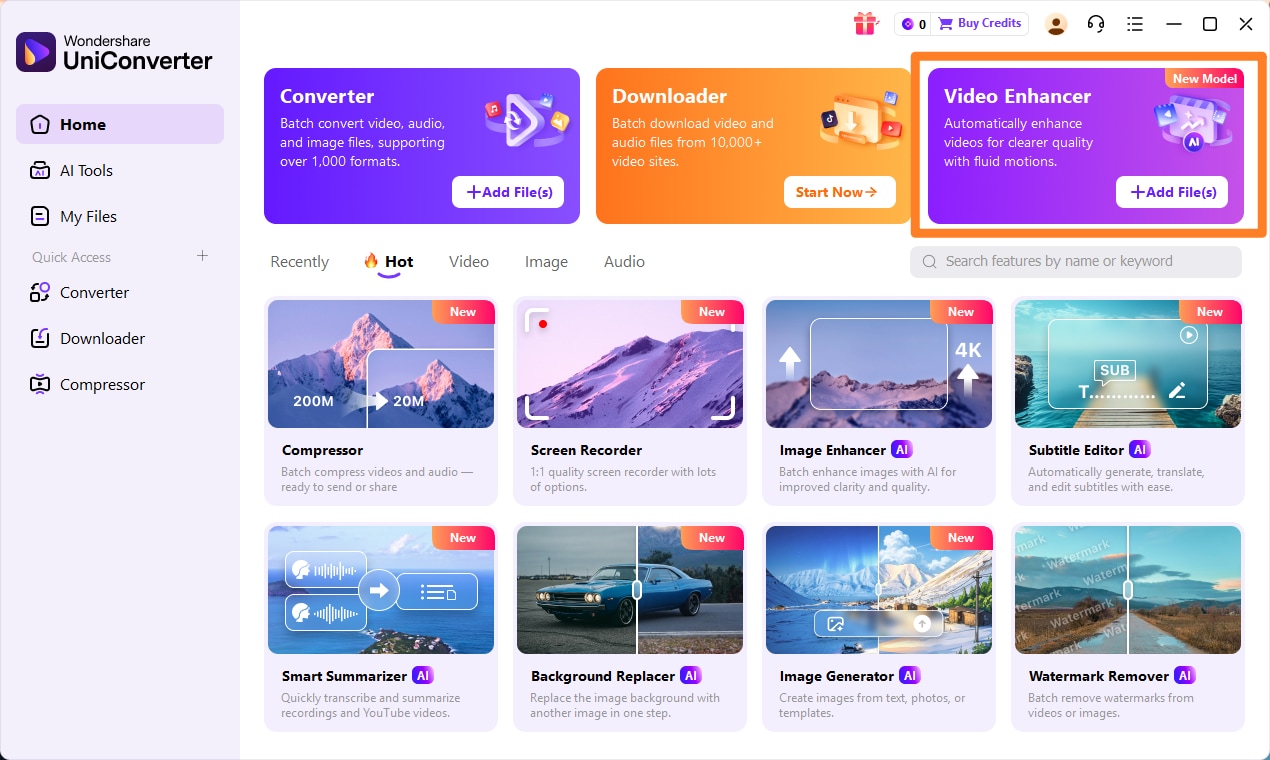
Step 1: Open UniConverter and Choose Video Enhancer
Launch UniConverter on your computer. Navigate to the "Toolbox" section and select the "Video Enhancer" feature.
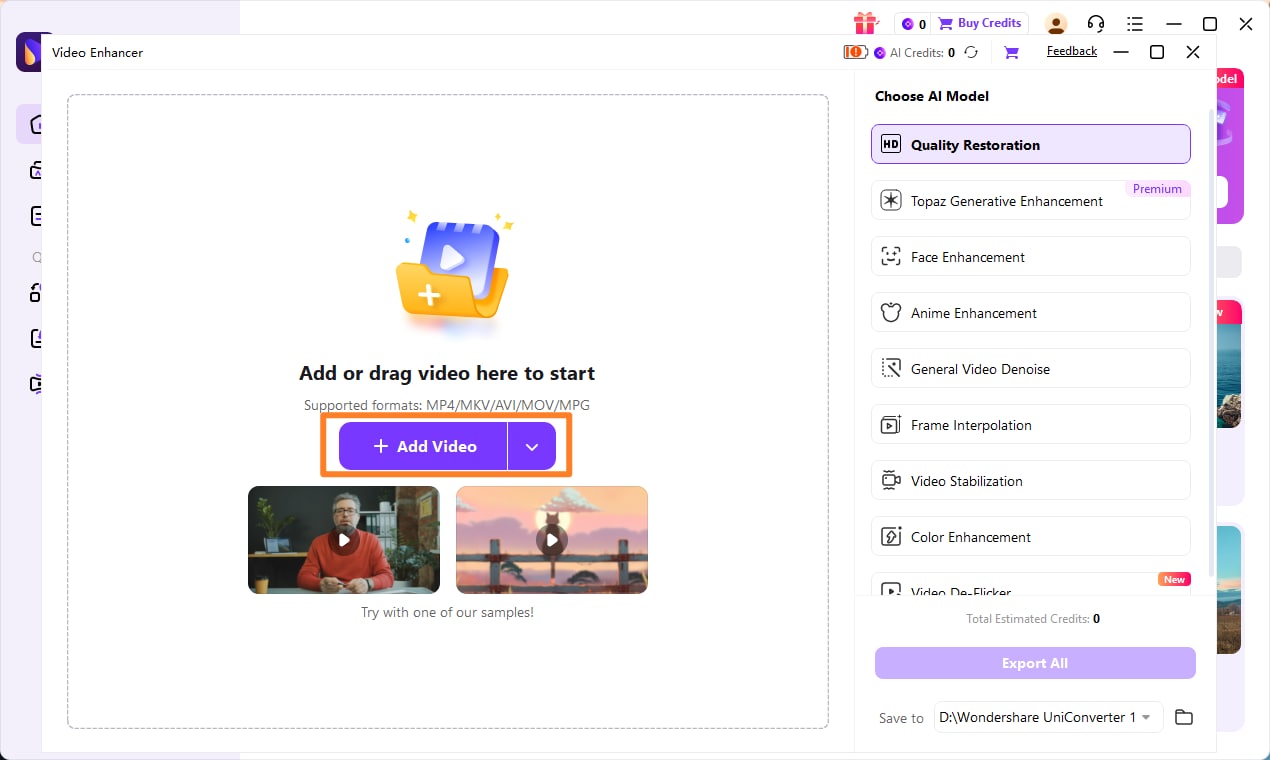
Step 2: Upload the Videos
Click the "Add Files" button or drag and drop your video files into the UniConverter interface. You can add multiple videos for batch processing.
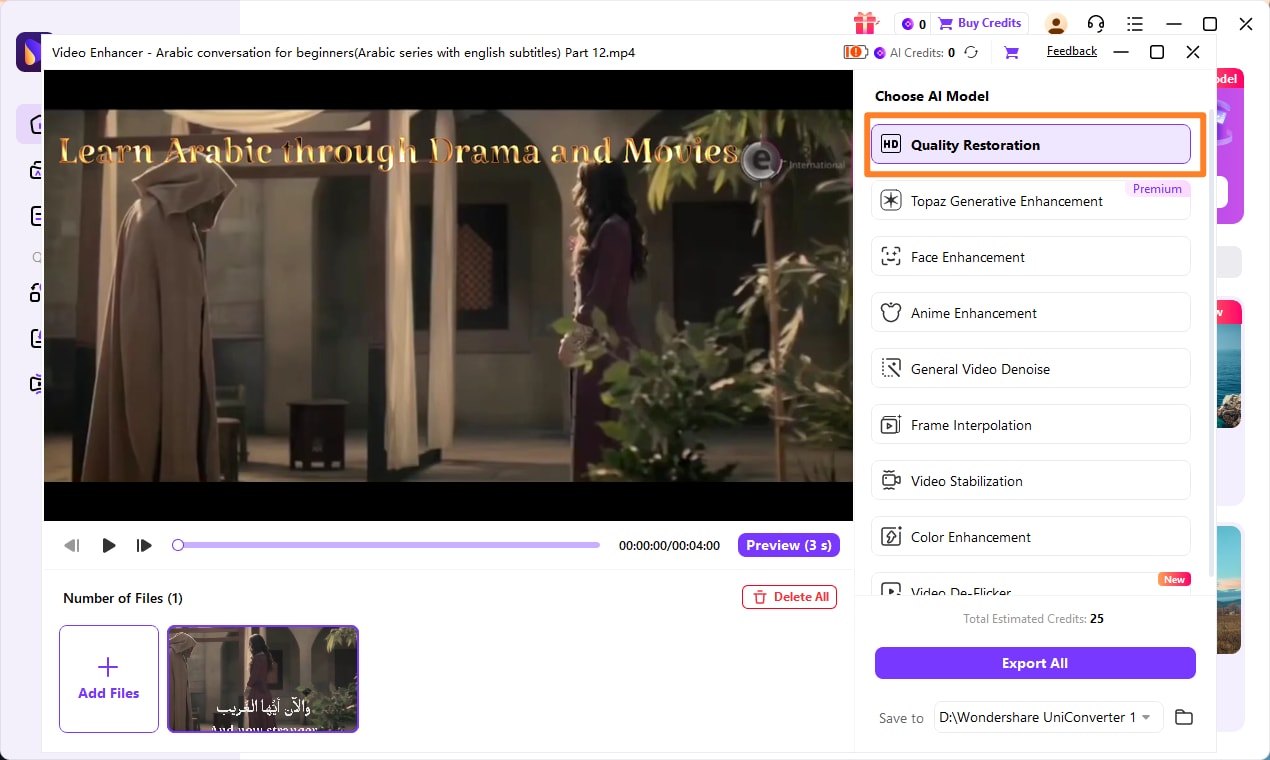
Step 3: Choose Enhancement Model
Select the desired enhancement model (e.g., AI Upscaling, Noise Reduction, Color Correction) and adjust parameters as needed. UniConverter offers various options to fine-tune your enhancement.
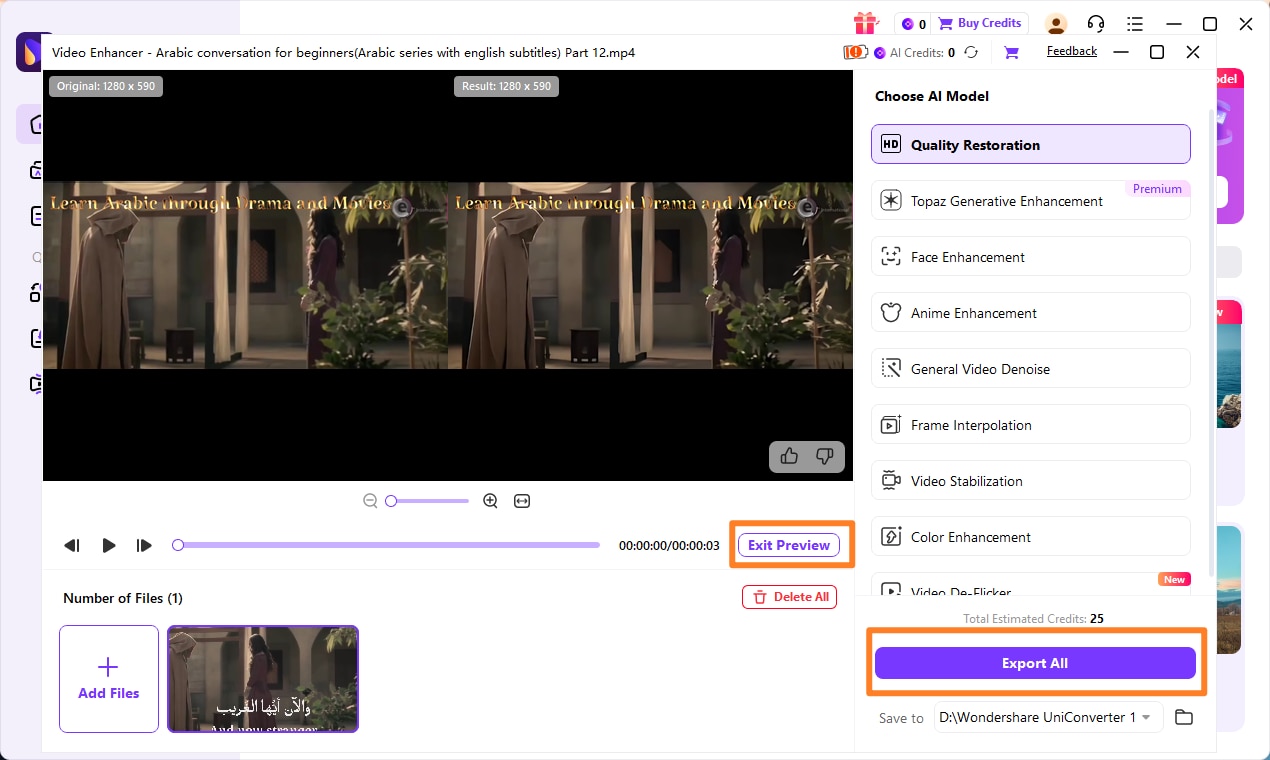
Step 4: Preview and Save the Enhanced Video
Preview the enhanced video to ensure satisfaction. Once satisfied, choose your output format and destination folder, then click "Export" to save your high-quality video.

Seeking a Vmake AI Video Enhancer Alternative?
Part 7: Final Verdict & Recommendations
The Vmake AI Video Enhancer review reveals it as a convenient tool for quick, automated video improvements, particularly for casual users. Its AI-driven upscaling, noise reduction, and one-click color correction simplify the enhancement process, making it accessible to those without extensive editing skills. However, its limitations in customization, potential for AI artifacts, and reliance on cloud processing present significant drawbacks for more demanding applications. For casual users and social media enthusiasts, Vmake offers a straightforward solution to elevate everyday footage. For budget-conscious creators, its subscription model can be appealing, but they must be wary of potential lock-in and hidden costs. Professionals seeking advanced control, specific codec support, and consistent, artifact-free results will find Vmake insufficient. In such cases, alternatives like UniConverter, Topaz Video AI, or DaVinci Resolve Studio offer the necessary depth and flexibility. Ultimately, the choice depends on individual needs, technical proficiency, and the desired level of control over the enhancement process.
Part 8: FAQs
-
1. Is Vmake AI Video Enhancer free to use?
Vmake AI Video Enhancer typically offers a free trial or a limited free version with watermarks or restrictions on video length/resolution. Full features usually require a paid subscription.
-
2. What video formats does Vmake AI Video Enhancer support?
Vmake generally supports common video formats like MP4 and MOV. Support for less common or professional codecs might be limited, requiring users to convert files beforehand.
-
3. Can Vmake AI Video Enhancer improve old, grainy footage significantly?
While Vmake can reduce noise and upscale resolution, highly degraded or extremely grainy footage may still show limitations. Over-processing can sometimes introduce AI artifacts, making the results look unnatural.
-
4. How does Vmake AI Video Enhancer compare to professional video editing software?
Vmake AI Video Enhancer is designed for simplicity and automation, offering one-click enhancements. Professional software like DaVinci Resolve Studio provides extensive, granular control over every aspect of video editing and enhancement, but requires a much steeper learning curve and more powerful hardware.
-
5. Is my data safe when using Vmake AI Video Enhancer?
As a cloud-based service, data privacy is a key concern. Users should review Vmake's privacy policy to understand how their uploaded videos are stored, processed, and protected. For sensitive content, offline desktop solutions are generally more secure.
