
- Vmake AI Overview: Vmake offers accessible, AI-driven image enhancement for resolution, clarity, and color.
- Core Features: Key features include AI upscaling, noise reduction, sharpening, color correction, and batch processing.
- Pros & Cons: Vmake excels in detail recovery and ease of use, but can over-smooth and lacks advanced customization.
- Ideal Users: Best for casual users and small businesses needing quick, simple enhancements; less suited for professionals.
- Risks: Consider data privacy, potential over-processing, subscription costs, and limited format compatibility.
- UniConverter Alternative: UniConverter provides stable, lossless enhancement with GPU acceleration and robust batch processing.
- Decision Point: Choose Vmake for speed and simplicity; UniConverter for balanced quality; advanced tools for granular control.
In this article
- Part 1: What is Vmake AI Image Enhancer?
- Part 2: Vmake AI Image Enhancer: Core Features, Pros, and Cons
- Part 3: Vmake AI Image Enhancer: Ideal Users and Use Cases
- Part 4: Vmake AI Image Enhancer and Alternatives: A Comparative Analysis
- Part 5: Risks and Pitfalls to Consider
- Part 6: How to Use UniConverter for Efficient Image Enhancement
- Part 7: Conclusion
- Part 8: FAQs
When I first started dabbling in digital photography, I quickly realized that not every shot is perfect straight out of the camera. That's where AI image enhancers come in, promising to magically fix imperfections and bring photos to life. Among the myriad options, Vmake AI Image Enhancer review caught my eye with its claims of simplicity and powerful AI capabilities. This review will dive deep into its features, compare it with leading alternatives, and help you decide if it's the right tool for your image enhancement needs, offering a comprehensive look at its strengths and weaknesses in various real-world scenarios.
Part 1: What is Vmake AI Image Enhancer?
Vmake AI Image Enhancer positions itself as an accessible, AI-driven solution designed to breathe new life into your digital photos. It leverages advanced artificial intelligence algorithms to automatically improve image quality, focusing on aspects like resolution, clarity, and color accuracy. My initial impression was that it aimed to democratize professional-grade photo enhancement, making it available to anyone without requiring extensive editing skills. This review aims to address whether it truly delivers on that promise and how it stacks up against more established players in the market.
The Rise of AI-Powered Image Enhancement Tools
The landscape of image editing has been dramatically reshaped by AI, driven by several key factors:
* Growing Demand for High-Quality Visuals: With social media and e-commerce dominating our digital lives, the need for visually appealing content has never been higher.
* Accessibility for Non-Professionals: Traditional photo editing software often has a steep learning curve. AI tools offer a simpler alternative, allowing everyday users to achieve impressive results.
* Advancements in AI Technology: Continuous improvements in machine learning and computer vision have made it possible for AI to intelligently analyze and enhance images with remarkable precision.
Part 2: Vmake AI Image Enhancer: Core Features, Pros, and Cons
From my experience, Vmake AI Image Enhancer focuses on delivering a streamlined enhancement process. Its core capabilities revolve around automatically detecting and correcting common image flaws. I found it particularly adept at sharpening blurry images and upscaling lower-resolution photos without introducing significant artifacts. The interface is clean and intuitive, making it easy to jump in and start enhancing immediately.
Core Features:
* AI Upscaling: Intelligently increases image resolution without pixelation.
* Noise Reduction: Smooths out grain and digital noise for cleaner images.
* Sharpening: Enhances edge definition and overall clarity.
* Color Correction: Automatically adjusts colors for better vibrancy and accuracy.
* Batch Processing: Allows for enhancing multiple images simultaneously.
Pros:
* Exceptional detail recovery for low-resolution images.
* User-friendly interface for quick enhancements.
* Batch processing capability for efficiency.
Cons:
* Occasional over-smoothing of textures, leading to an artificial look.
* Limited customization options for advanced users.
Part 3: Vmake AI Image Enhancer: Ideal Users and Use Cases
I've found that Vmake AI Image Enhancer truly shines for users who prioritize speed and simplicity over granular control. If you're not a professional photographer but still want your photos to look their best, this tool is definitely worth considering. It's perfect for those quick fixes before sharing on social media or for giving old photos a new lease on life.
Best Use Case: Revitalizing Old Family Photos for Digital Archiving
I used Vmake to enhance some faded, low-resolution scans of my grandparents' old photos, and the results were surprisingly good. It managed to sharpen faces, reduce color cast, and generally make them look much more presentable for digital archiving and sharing with family. The ease of use meant I didn't have to spend hours learning complex software.
Limited Use Case: Professional Photography Requiring Granular Control
However, if you're a professional photographer who needs precise control over every aspect of an image – from specific color curves to localized sharpening and noise reduction – Vmake will likely feel restrictive. I tried using it for some of my landscape shots, and while it did a decent job, I quickly missed the fine-tuning capabilities offered by more comprehensive editing suites. It's not designed for that level of professional artistry.
Part 4: Vmake AI Image Enhancer and Alternatives: A Comparative Analysis
When I compare Vmake AI Image Enhancer to other tools I've used, its strengths and weaknesses become clearer. It's a solid contender for certain tasks, but it doesn't try to be everything to everyone.
| Feature/Scenario | Vmake AI Image Enhancer | UniConverter | Topaz Photo AI | Luminar Neo |
| Ease of Use | Very High | High | Moderate | Moderate |
| Detail Recovery | Excellent | Excellent | Superior | Good |
| Batch Processing | Yes | Yes | Yes | Yes |
| Customization | Limited | Good | Extensive | Extensive |
| Pricing Model | Subscription | One-time purchase/Subscription | One-time purchase/Subscription | Subscription |
| AI Model Sophistication | Good | Advanced | Advanced | Advanced |
| Output Quality (General) | High | Very High | Very High | High |
Key Differentiators:
Vmake excels in simplicity and quick results for everyday users. If you just want to click a button and get a better-looking photo, it's fantastic. Topaz Photo AI offers unparalleled detail and noise reduction for professionals. I've found its ability to recover fine textures and eliminate noise without blurring to be truly impressive, though it comes with a steeper learning curve and price tag. Luminar Neo provides a broader suite of editing tools beyond enhancement. It's more of a full-fledged photo editor with AI capabilities integrated, offering creative control that Vmake doesn't aim for. UniConverter stands out for its balanced approach, offering excellent enhancement quality, robust batch processing, and a good level of customization, all within a user-friendly interface, making it a strong all-rounder.
Part 5: Risks and Pitfalls to Consider
While Vmake AI Image Enhancer offers convenience, I've learned that it's crucial to be aware of potential downsides, especially when dealing with cloud-based services and AI-driven tools. My experience has shown me that not all that glitters is gold.
Data Privacy Concerns with Cloud-Based Processing
Since Vmake often processes images in the cloud, I always have a slight concern about data privacy. When I upload personal or sensitive photos, I'm essentially entrusting them to a third-party server. While most reputable services have strong privacy policies, it's a factor I always consider, especially if the images are commercially sensitive or contain personal information. I'd recommend checking their privacy policy thoroughly before uploading anything critical.
Potential for Over-Processing and Unnatural Results
One of the biggest pitfalls I've encountered with Vmake, and indeed many AI enhancers, is the tendency for over-processing. Sometimes, the AI tries too hard to enhance, leading to images that look artificial or "plasticky." Faces can lose natural skin texture, and details can become unnaturally sharp. I've had instances where a photo looked better before enhancement because the AI stripped away its natural character. It's a fine line between enhancement and distortion.
Subscription Model Value Proposition vs. One-Time Purchase
Vmake operates on a subscription model, which means ongoing costs. While this can be fine for regular users, I often weigh this against one-time purchase options like Topaz Photo AI. If I only need to enhance images occasionally, a subscription can feel like I'm paying for something I'm not fully utilizing. For heavy users, it might be cost-effective, but for sporadic use, I often find myself questioning the long-term value compared to a perpetual license.
Compatibility Issues with Specific Image Formats
While Vmake generally handles common formats like JPG and PNG well, I've occasionally run into issues with less common or proprietary RAW formats. This can be frustrating if I'm working with images from different cameras or specialized equipment. It means I sometimes have to convert files first, adding an extra step to my workflow, which defeats the purpose of a quick enhancement tool.
Advertising and Upselling within the Application
I've noticed that some free or lower-tier versions of AI enhancers, including Vmake, can sometimes include in-app advertising or persistent prompts to upgrade to a premium subscription. While understandable from a business perspective, it can disrupt the user experience. I prefer a clean interface without constant distractions, especially when I'm trying to focus on editing.
Part 6: How to Use UniConverter for Efficient Image Enhancement
Sometimes, when other tools fall short with batch processing, unstable enhancements, or just plain weak results, I turn to UniConverter. It's been a reliable alternative for me, offering a robust and stable platform for enhancing images without the headaches of ads, inconsistent quality, or limited format support. UniConverter is a comprehensive solution that handles a wide array of formats, leverages GPU acceleration for speed, ensures stable and lossless enhancements, and excels at batch processing, making it an all-in-one tool for my image and video needs. For those looking to enhance image resolution or perform a general image enhancer operation, this tool provides a powerful solution. Similarly, it offers robust capabilities as a video enhancer for improving video quality.
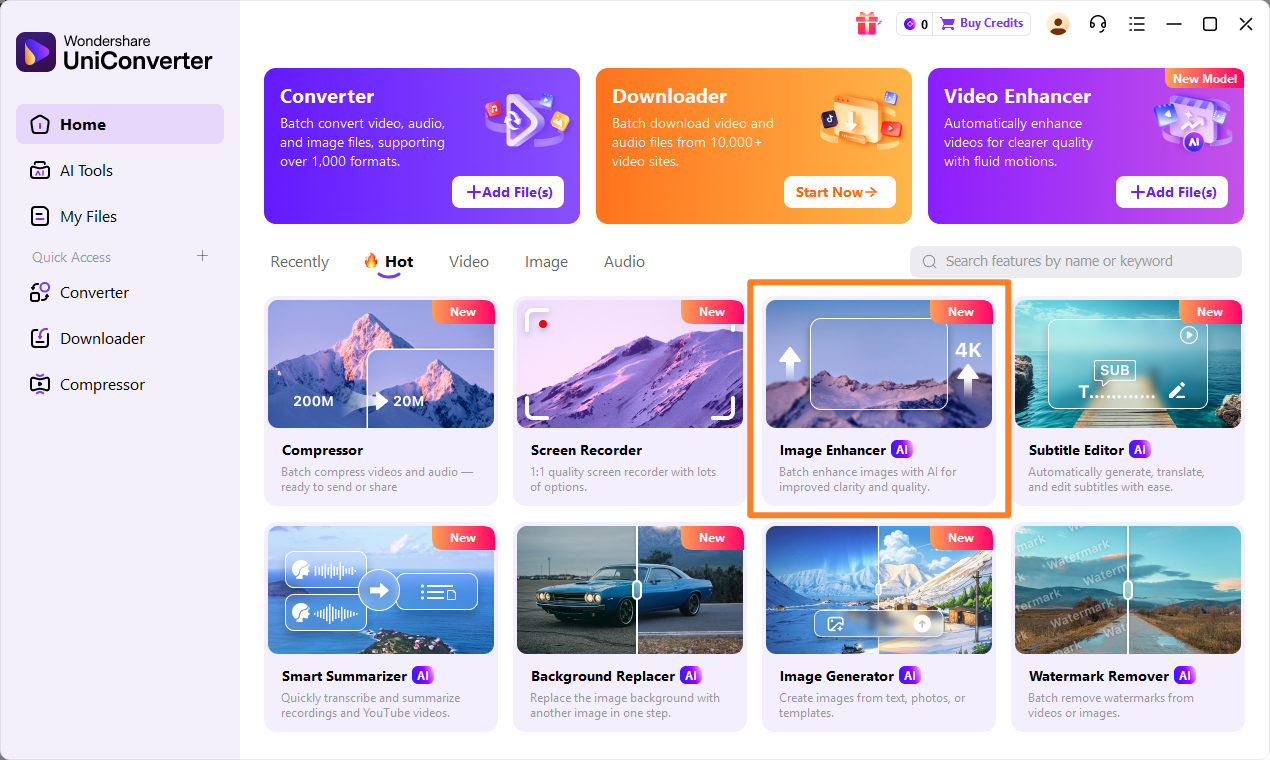
Step 1: Open UniConverter and Choose Image Enhancer
Launch UniConverter on your computer. On the main interface, navigate to the "Toolbox" section and select the "Image Enhancer" feature. This will open the dedicated enhancement module.
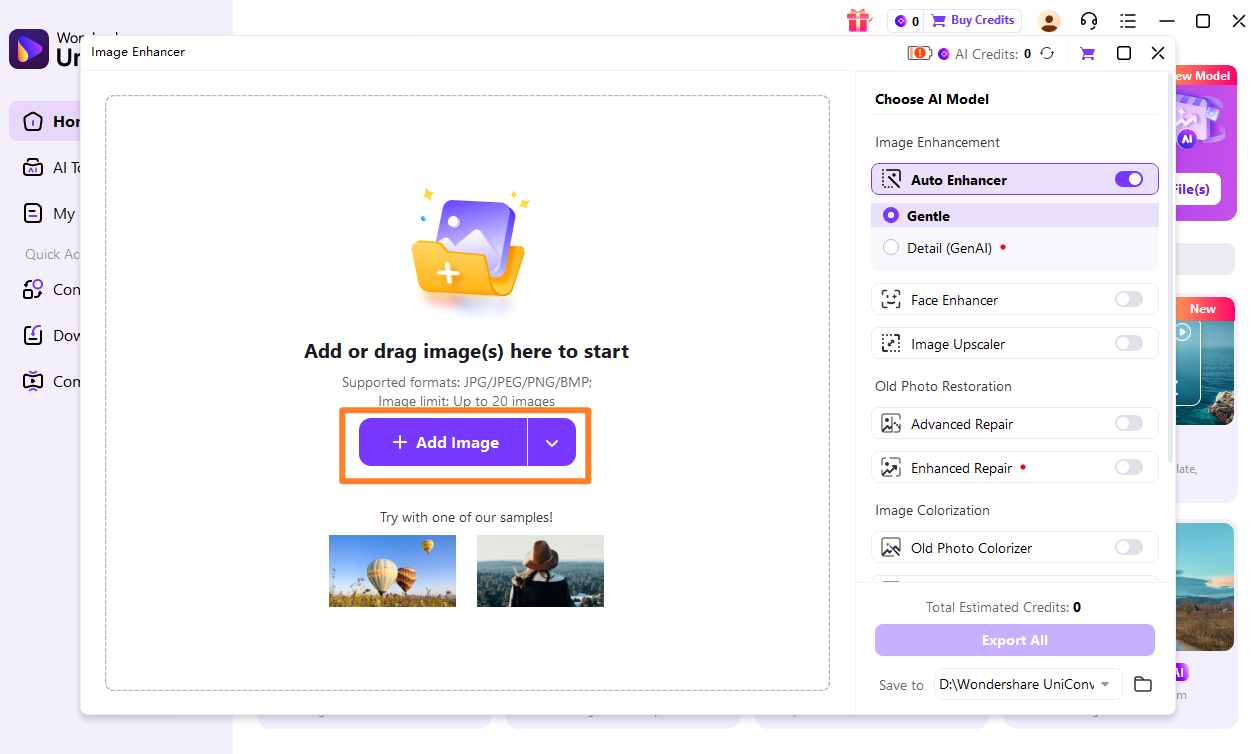
Step 2: Upload the Images
Click on the "Add Files" button or simply drag and drop the images you wish to enhance into the UniConverter window. You can add multiple images for batch processing.
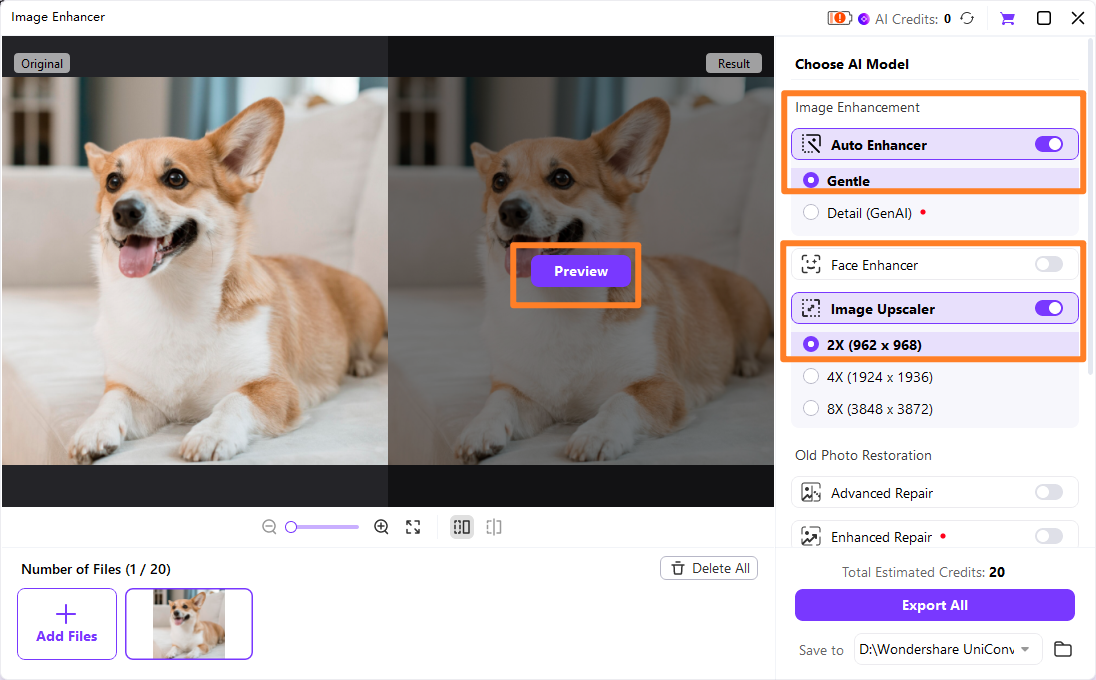
Step 3: Choose Enhancement Model
Once your images are loaded, UniConverter will present various AI enhancement models. Select the model that best suits your needs (e.g., general enhancement, face enhancement, or detail recovery). You can also adjust parameters like output resolution to upscale video or images effectively.
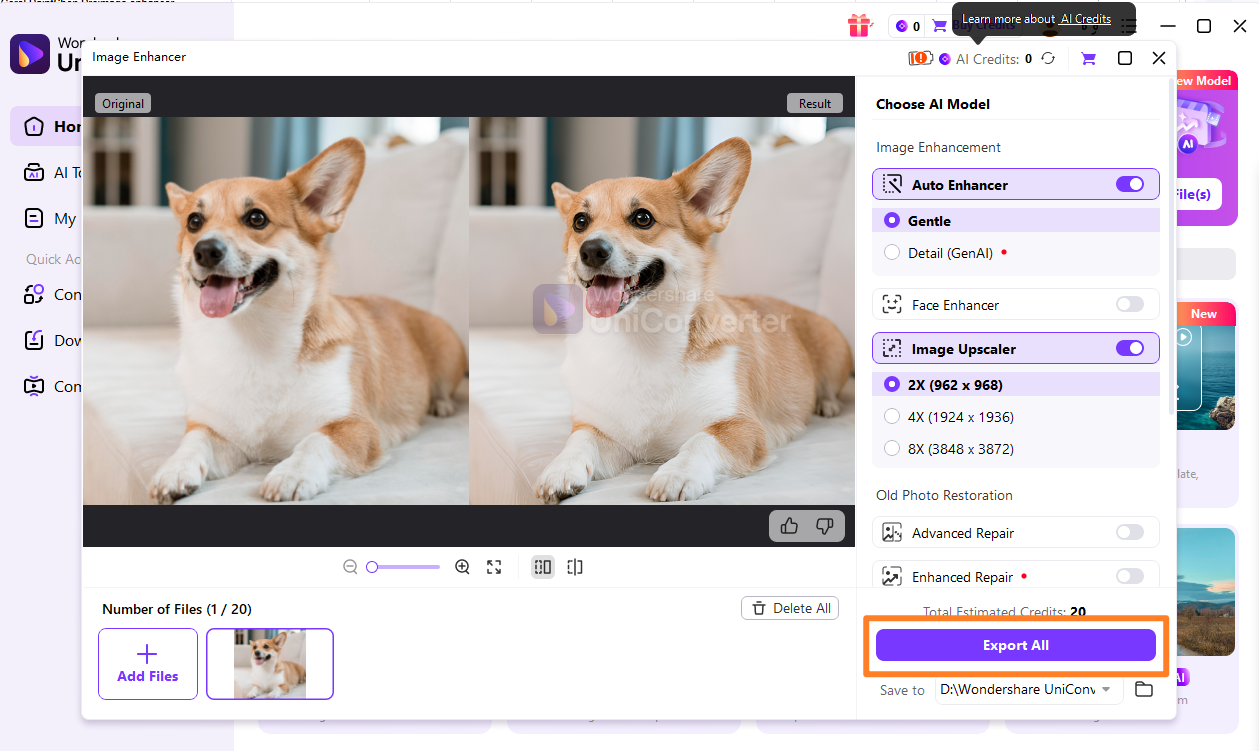
Step 4: Preview and Save the Enhanced Images
After selecting your enhancement options, click "Preview" to see the potential results. If you're satisfied, click "Start" to begin the enhancement process. Once completed, you can save your high-quality enhanced images to your desired location.

Seeking a Vmake AI Image Enhancer Alternative?
Part 7: Conclusion
After spending considerable time with Vmake AI Image Enhancer review and comparing it against its peers, my conclusion is that it carves out a valuable niche for itself. For casual users, social media enthusiasts, or small businesses needing quick, decent-quality enhancements for product photos, Vmake is a strong contender due to its unparalleled ease of use and efficient batch processing. It’s perfect if you prioritize simplicity and speed over deep customization. However, for professional photographers or those requiring granular control and absolute fidelity in their images, the limitations in customization and occasional over-smoothing might be a deal-breaker. In such cases, tools like Topaz Photo AI or Luminar Neo offer the advanced features needed, albeit with a steeper learning curve and often a higher price point. UniConverter emerges as a robust middle-ground, providing excellent enhancement quality and batch processing capabilities without the complexity or the risk of over-processing, making it a highly recommended alternative for a wide range of users seeking a balanced solution.
Part 8: FAQs
-
1. What is Vmake AI Image Enhancer and how does it work?
Vmake AI Image Enhancer is an online tool that uses artificial intelligence to automatically improve the quality of your images. It analyzes photos for common issues like blurriness, low resolution, and poor lighting, then applies AI algorithms to sharpen details, reduce noise, upscale resolution, and correct colors, all with minimal user input.
-
2. Is Vmake AI Image Enhancer free to use?
Vmake AI Image Enhancer typically offers a freemium model. This means you might get a few free enhancements or a trial period, but full features, batch processing, and higher output resolutions usually require a paid subscription. Always check their current pricing and plans for the most accurate information.
-
3. Can Vmake AI Image Enhancer improve very blurry images?
While Vmake AI Image Enhancer can significantly improve moderately blurry images by sharpening edges and recovering some detail, it has limitations. Extremely blurry images where essential details are lost may not be fully recoverable, and the enhancement might result in an unnatural or "painted" look. It works best when there's still some underlying detail for the AI to work with.
-
4. How does Vmake AI Image Enhancer compare to Photoshop's enhancement tools?
Vmake AI Image Enhancer is designed for simplicity and automation, making it ideal for quick fixes without extensive editing knowledge. Photoshop, on the other hand, offers a vast array of manual and AI-assisted tools that provide far more granular control over every aspect of an image. If you need professional-level editing and customization, Photoshop is superior, but for quick, automated enhancements, Vmake is much faster and easier to use.
-
5. What are the best practices for using Vmake AI Image Enhancer?
To get the best results with Vmake AI Image Enhancer, I recommend starting with the highest quality original image you have. Avoid enhancing an already heavily compressed or previously enhanced image. Always preview the results before saving to check for over-processing or unnatural artifacts. For critical images, consider making a backup of the original before enhancement.
