
In this article
- Part 1: What is VLC Media Player?
- Part 2: VLC Video Enhancer: Core Features, Pros, and Cons
- Part 3: VLC Video Enhancer: Ideal Users and Use Cases
- Part 4: VLC Video Enhancer vs. Competitors
- Part 5: Risks and Pitfalls of Using VLC for Video Enhancement
- Part 6: How to Use UniConverter for Comprehensive Video Enhancement
- Part 7: Conclusion
- Part 8: FAQs
This VLC video enhancer review delves into the capabilities of VLC Media Player for improving video quality, a feature often overlooked by its users. While VLC is renowned for its versatile playback and format support, its built-in video enhancement tools offer a free and accessible option for basic visual adjustments. This review will explore VLC's strengths and weaknesses in this domain, compare it against dedicated video enhancement software, and ultimately help users determine if VLC is the right tool for their specific enhancement needs. We will provide a comprehensive analysis, considering various use cases and potential pitfalls, to guide your decision-making process.
Part 1: What is VLC Media Player?
VLC Media Player is a free and open-source, portable, cross-platform media player and streaming media server developed by the VideoLAN project. It is celebrated for its ability to play virtually any video or audio format without the need for additional codecs, making it a staple for media consumption worldwide. Beyond simple playback, VLC offers a surprisingly robust set of features, including media conversion, streaming capabilities, and, notably, a suite of video and audio effects designed to enhance the viewing experience. This VLC video enhancer review aims to scrutinize these enhancement functionalities, assessing their effectiveness and practicality for everyday users. The core question we seek to answer is whether VLC can genuinely serve as a viable tool for improving video quality, or if its enhancement features are merely superficial additions.
The Landscape of Video Enhancement Tools
The need for video enhancement tools stems from several common user pain points:
* Suboptimal Source Quality: Many videos, especially older recordings or those from less-than-ideal capture conditions, suffer from poor resolution, noise, or color inaccuracies.
* Desire for Improved Viewing Experience: Users often seek to optimize videos for specific display devices or personal preferences, aiming for sharper images, better contrast, or more vibrant colors.
* Accessibility of Free Solutions: The market is flooded with expensive, professional-grade software, leaving a gap for accessible, free, or low-cost options that can still deliver noticeable improvements.
Part 2: VLC Video Enhancer: Core Features, Pros, and Cons
VLC Media Player, while primarily known as a media player, incorporates a range of video enhancement capabilities accessible through its "Tools" menu under "Effects and Filters." These features allow users to adjust various visual parameters directly during playback or for conversion. Its core capabilities include color adjustments (hue, saturation, brightness, contrast), image sharpening, deinterlacing, and noise reduction. It also offers more specialized effects like "film grain" and "water effect." The strength of VLC's enhancement lies in its immediate availability and integration within a widely used media player, eliminating the need for separate software installations for basic tweaks.
Pros:
* Free and Open-Source Accessibility: VLC is completely free, making its enhancement features available to everyone without any financial barrier.
* Wide Range of Built-in Enhancement Filters: Offers a variety of filters for color correction, sharpening, and noise reduction, catering to common enhancement needs.
* Cross-Platform Compatibility: Available on Windows, macOS, Linux, Android, and iOS, ensuring consistency across different operating systems.
Cons:
* Steep Learning Curve for Advanced Enhancements: Navigating and understanding the various filters and their optimal settings can be challenging for beginners.
* Limited Real-time Performance for High-Resolution Content: Applying multiple complex filters to 4K or high-bitrate videos can strain system resources, leading to stuttering playback.
Part 3: VLC Video Enhancer: Ideal Users and Use Cases
VLC's video enhancement features are best suited for users who require quick, on-the-fly adjustments to their video playback without delving into complex editing software. It caters to individuals looking to improve the viewing experience of personal videos, downloaded content, or older recordings that might suffer from minor visual imperfections. Its free nature and integrated functionality make it an attractive option for casual users.
Best Use Case: Quick Fixes for Everyday Playback
Imagine you've downloaded a movie or recorded a family video that appears a bit dark or lacks vibrancy. VLC allows you to instantly open the "Effects and Filters" panel, tweak the brightness, contrast, and saturation, and see the changes applied in real-time. This is perfect for improving the immediate viewing experience without needing to re-encode the video or use dedicated editing software. For instance, adjusting the gamma to brighten a dimly lit scene or applying a slight sharpen filter to a slightly blurry home video can significantly enhance enjoyment.
Limitations: Professional Post-Production and Batch Processing
However, VLC falls short for professional post-production tasks or scenarios requiring precise, high-quality enhancements. Its filters are generally basic and lack the granular control offered by specialized software. For content creators needing to color grade footage, remove significant noise, or upscale videos for a professional output, VLC is inadequate. Furthermore, it lacks robust batch processing capabilities, meaning applying the same enhancements to multiple videos is a tedious, manual process, making it unsuitable for large-scale projects.
Part 4: VLC Video Enhancer vs. Competitors
When evaluating VLC's video enhancement capabilities, it's crucial to compare it against both general-purpose media tools and specialized enhancement software. While VLC offers basic adjustments, dedicated tools often provide more sophisticated algorithms, better performance, and a wider array of features.
Comparison Table: VLC vs. Top Video Enhancers
| Feature/Tool | VLC Media Player | UniConverter | Topaz Video AI | DaVinci Resolve |
| Price | Free | $49.99/year | $299 (one-time) | Free (Studio $295) |
| Ease of Use | Moderate | Easy | Moderate | Difficult |
| Real-time Enhancement | Limited | Good | Excellent | Excellent |
| Advanced Features | Basic | Comprehensive | AI Upscaling, Denoising | Professional Editing, Grading |
| Output Quality | Good | Excellent | Superior | Superior |
| Processing Speed | Manual | Fast (GPU Accel.) | Very Fast (GPU Accel.) | Very Fast (GPU Accel.) |
| Customer Support | Community | Email, Live Chat | Email, Forum | Forum, Paid Support |
| Security | High | High | High | High |
Key Differentiators: Why Choose or Avoid VLC for Enhancement
VLC is an excellent choice for users seeking free, quick, and basic video adjustments for personal viewing. Its strength lies in its accessibility and immediate application during playback. However, for users requiring professional-grade output, advanced AI-powered enhancements like upscaling or denoising, or efficient batch processing, dedicated software like UniConverter, Topaz Video AI, or DaVinci Resolve offers significantly more power and precision. UniConverter stands out for its balance of ease of use, comprehensive features, and affordability, making it a strong contender for users who need more than VLC but aren't ready for professional-grade complexity.
Part 5: Risks and Pitfalls of Using VLC for Video Enhancement
While VLC's built-in enhancement features offer a convenient way to tweak video playback, relying on them for serious enhancement tasks comes with several inherent risks and limitations. Users should be aware of these potential pitfalls before committing to VLC as their primary enhancement tool.
Potential for Quality Degradation with Over-Processing
One of the most significant risks is the potential for quality degradation. VLC's filters, while effective for minor adjustments, are not designed for heavy-duty processing. Applying too much sharpening, contrast, or noise reduction can introduce artifacts, posterization, or a "digital" look that detracts from the original video quality. Without precise controls and advanced algorithms, it's easy to over-process and inadvertently worsen the video.
Lack of Dedicated Enhancement Presets
VLC lacks a robust system for saving and applying custom enhancement presets. Each time you want to apply a specific set of adjustments, you have to manually navigate through the filters and re-enter the values. This makes consistent application across multiple videos or even different viewing sessions cumbersome and inefficient, especially for users who frequently apply similar adjustments.
Resource Intensive for Complex Filters
While VLC is generally lightweight, applying multiple complex filters simultaneously, especially to high-resolution videos (e.g., 4K), can be very resource-intensive. This can lead to stuttering playback, dropped frames, or even crashes, making the real-time enhancement experience frustrating and impractical. The lack of optimized GPU acceleration for its enhancement filters further exacerbates this issue.
No Built-in AI-Powered Enhancement
In an era where AI-powered video enhancement is becoming increasingly sophisticated, offering features like intelligent upscaling, advanced noise reduction, and motion interpolation, VLC remains firmly rooted in traditional, rule-based filters. It lacks any built-in AI capabilities, meaning it cannot intelligently analyze and improve video quality in ways that dedicated AI software can, such as recovering detail from blurry footage or seamlessly upscaling low-resolution content.
Part 6: How to Use UniConverter for Comprehensive Video Enhancement
When VLC's basic enhancements fall short, or you encounter issues like inconsistent quality, lack of batch processing, or resource intensity, UniConverter emerges as a robust alternative. It offers a comprehensive suite of video enhancement tools designed to address these limitations, providing stable, lossless, and often AI-powered improvements. UniConverter supports a vast array of formats, leverages GPU acceleration for faster processing, and ensures no ads or watermarks disrupt your workflow, making it an all-in-one solution for superior video quality.
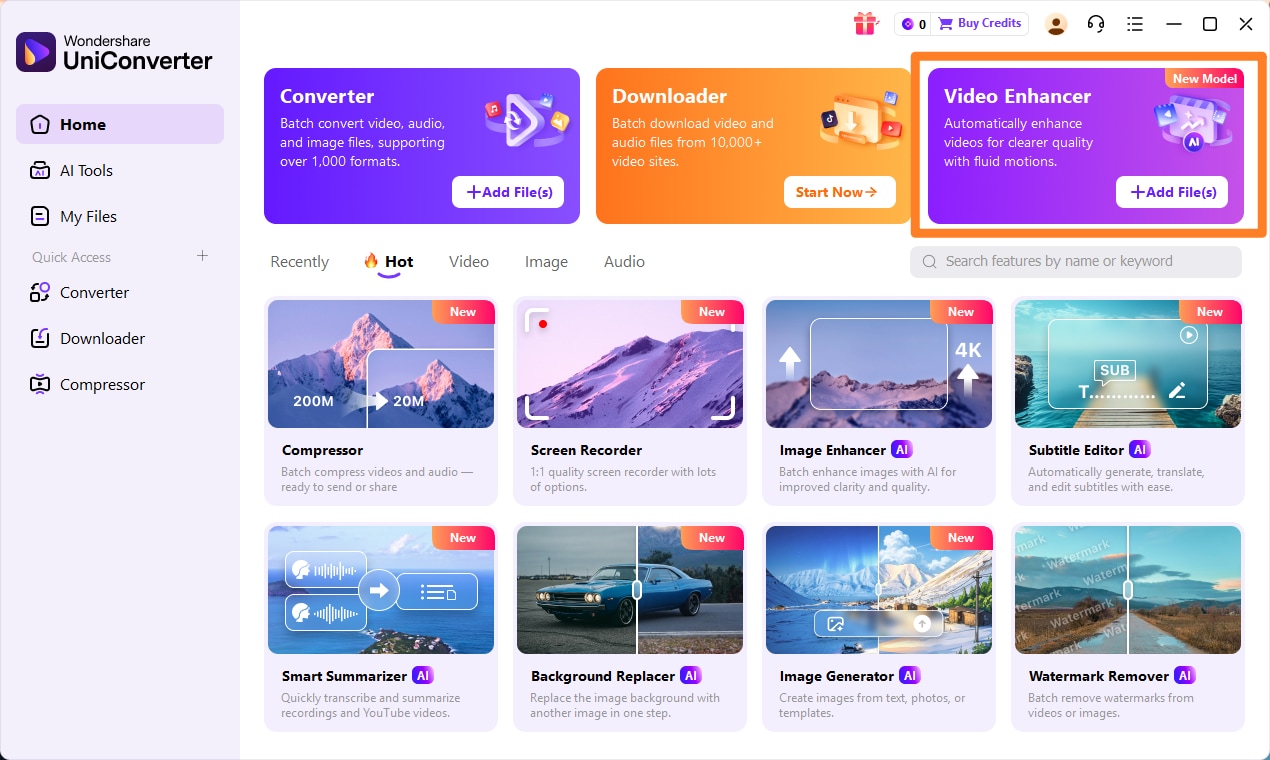
Step 1: Open UniConverter and Choose Video Enhancer
Launch UniConverter on your computer. From the main interface, navigate to the "Toolbox" section and select "Video Enhancer."
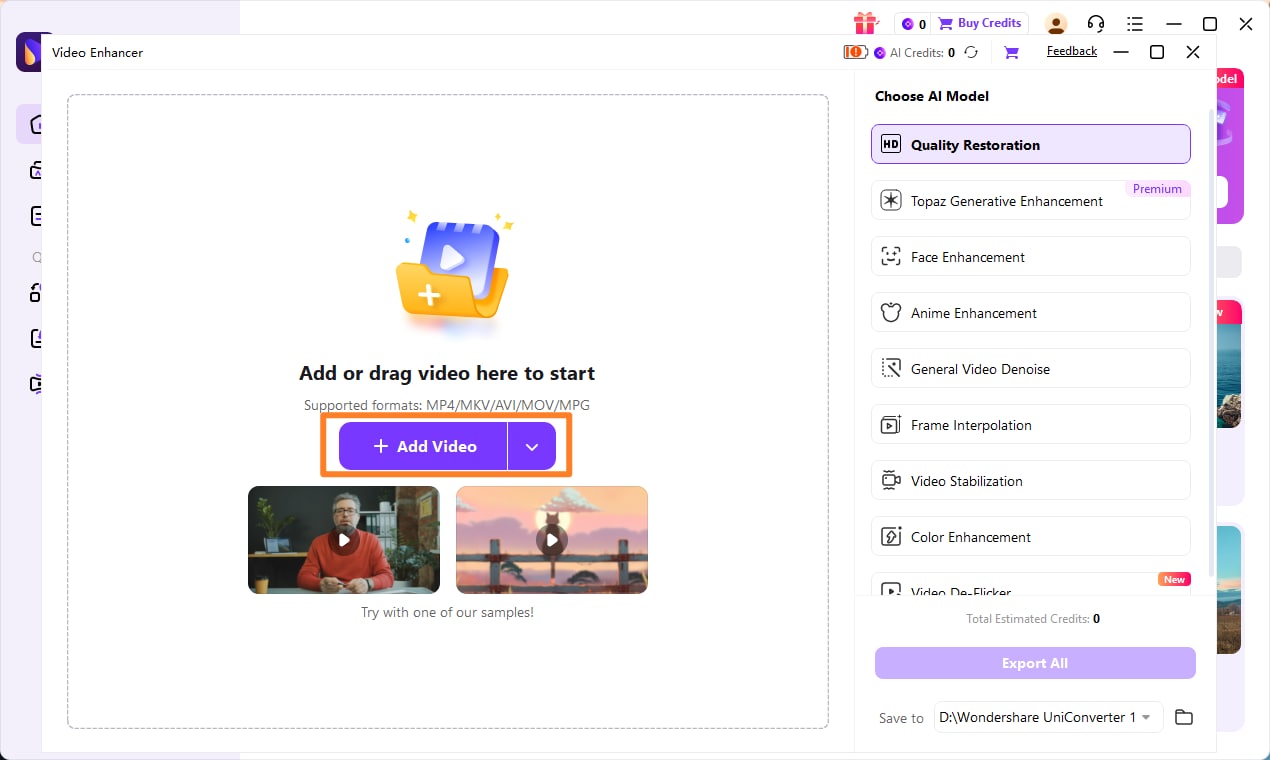
Step 2: Upload the Videos
Click on the "Add Files" button or drag and drop your video files into the UniConverter interface. You can add multiple videos for batch processing.
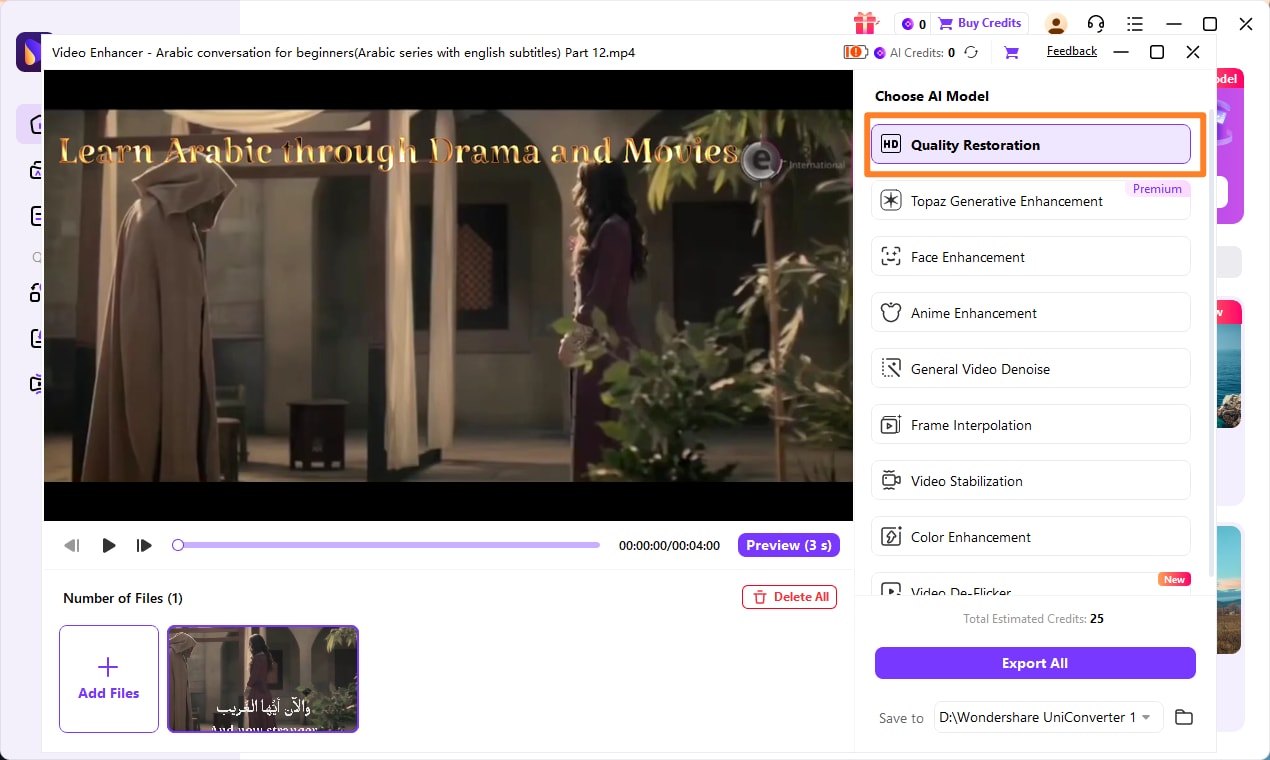
Step 3: Choose Enhancement Model
UniConverter offers various enhancement models, including AI Upscaling, Denoising, Brightness Adjustment, and more. Select the desired enhancement features and adjust parameters as needed. For instance, you can easily remove background without losing quality from your videos or utilize the video background changer feature for creative edits. If you're looking to change video background, UniConverter provides intuitive tools for this.
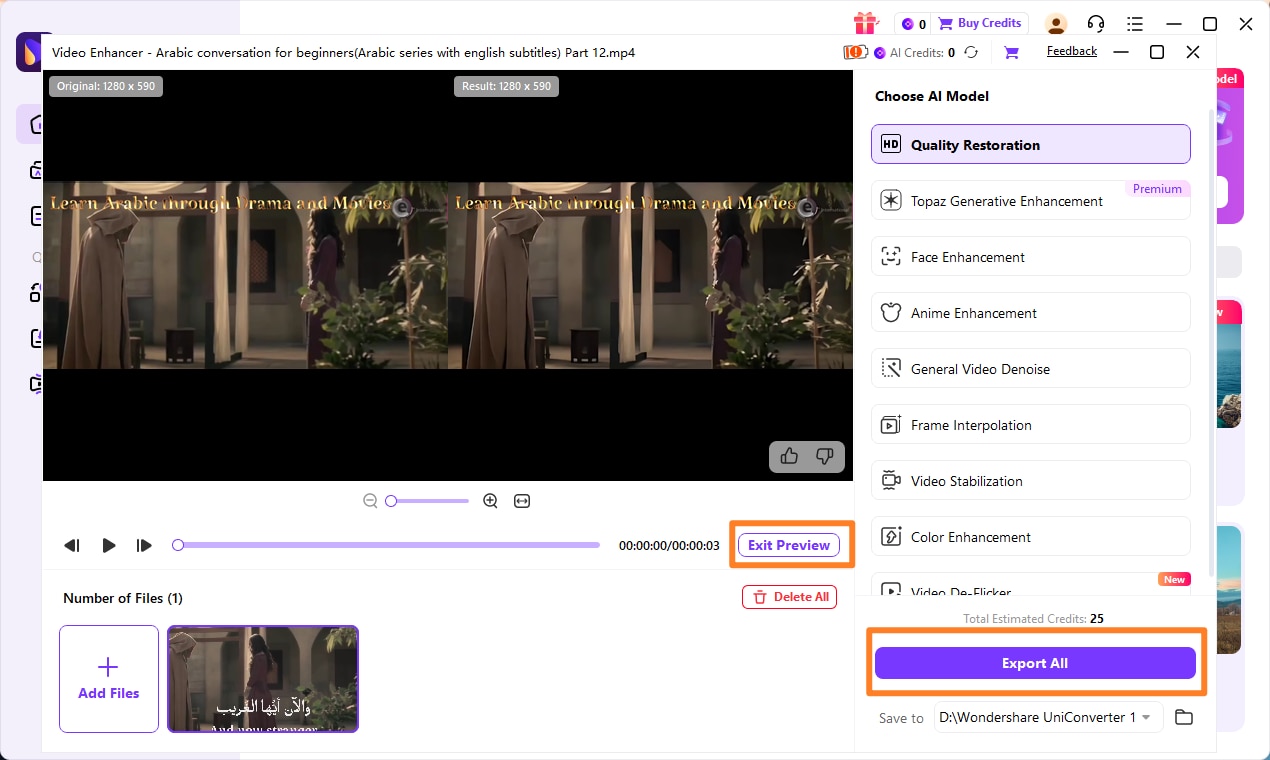
Step 4: Preview and Save the Enhanced Video
Preview the enhanced video to ensure the quality meets your expectations. Once satisfied, choose your desired output format and destination folder, then click "Export" to save your enhanced video. You can also achieve high-definition background removal with UniConverter's advanced capabilities.

Seeking a Better VLC Video Enhancer Alternative?
Part 7: Conclusion
This VLC video enhancer review has thoroughly examined VLC Media Player's capabilities for improving video quality. For casual users seeking free, quick, and basic adjustments to enhance their immediate viewing experience, VLC's built-in filters are a convenient and accessible option. It excels at on-the-fly tweaks for brightness, contrast, and minor sharpening, making it suitable for personal consumption of everyday videos. However, for content creators, professionals, or anyone requiring advanced, precise, or AI-powered enhancements, VLC falls short. Its limitations include a steep learning curve for complex adjustments, potential for quality degradation with over-processing, lack of dedicated presets, and resource intensiveness for high-resolution content. In such scenarios, dedicated video enhancement software like UniConverter, Topaz Video AI, or DaVinci Resolve offers superior control, advanced algorithms, and efficient workflows. Ultimately, the choice depends on your specific needs: VLC for simple, free adjustments, or specialized software for professional-grade results and comprehensive enhancement capabilities.
Part 8: FAQs
-
1. Can VLC truly enhance video quality?
Yes, VLC can enhance video quality to a certain extent by applying basic filters like brightness, contrast, saturation, and sharpening. These adjustments can improve the visual appearance of videos, especially those with minor imperfections, but it cannot perform advanced tasks like AI-powered upscaling or significant noise reduction as effectively as dedicated software.
-
2. Are there any hidden costs associated with VLC's enhancement features?
No, VLC Media Player is completely free and open-source. There are no hidden costs, subscriptions, or in-app purchases associated with its video enhancement features. All functionalities are available to users without any financial commitment.
-
3. What are the best VLC settings for video enhancement?
The best VLC settings depend on the specific video and desired outcome. Generally, for basic enhancement, navigate to "Tools" > "Effects and Filters" > "Video Effects." Experiment with "Image adjust" for brightness, contrast, hue, and saturation. For sharpness, use the "Sharpen" filter. Always make small adjustments and preview the changes in real-time to avoid over-processing.
-
4. How does VLC compare to AI-powered video enhancers?
VLC's enhancement features are traditional, rule-based filters, which differ significantly from AI-powered video enhancers. AI enhancers use machine learning algorithms to intelligently upscale resolution, reduce noise, and even interpolate frames, often achieving much more impressive and natural-looking results, especially for low-quality or old footage. VLC lacks these advanced AI capabilities.
-
5. Is it safe to use third-party plugins for VLC video enhancement?
While VLC supports plugins, using third-party plugins for video enhancement carries potential risks. Unofficial plugins may contain malware, introduce instability, or not perform as expected. It's generally safer to stick to VLC's built-in features or use reputable, dedicated video enhancement software if you require more advanced functionalities. Always download plugins from trusted sources if you choose to use them.
