
- VLC Limitations:VLC offers basic video enhancement, but lacks advanced features for significant quality improvement.
- Enhancement Comparison:VLC is free but basic; UniConverter balances ease, quality; Topaz AI excels in AI upscaling; DaVinci Resolve is professional-grade.
- Ideal Use Cases:VLC suits casual users for minor, real-time adjustments on older hardware, not professional enhancement.
- Risks & Pitfalls:VLC's simplistic filters can cause over-processing and artifacts; it lacks AI and granular control.
- UniConverter Advantage:UniConverter provides comprehensive, stable, and efficient video enhancement beyond VLC's capabilities.
- Decision Factor:Choose based on needs: free basic tweaks (VLC), balanced enhancement (UniConverter), or professional tools (Topaz AI/DaVinci Resolve).
In this article
- Part 1: What is VLC Video Enhancer?
- Part 2: VLC Video Enhancer: Core Features, Pros, and Cons
- Part 3: VLC Video Enhancer: Ideal Users and Use Cases
- Part 4: VLC Video Enhancer and Alternatives Comparison
- Part 5: Risks and Pitfalls When Using VLC for Video Enhancement
- Part 6: How to Use UniConverter for Comprehensive Video Enhancement
- Part 7: Conclusion
- Part 8: FAQs
The demand for high-quality video content has never been greater, driven by advancements in display technology and the proliferation of user-generated content. As more individuals and professionals engage with video, the need for effective enhancement tools becomes paramount. This VLC Video Enhancer review delves into the capabilities of VLC Media Player as a video enhancement tool, comparing it against dedicated solutions to provide a comprehensive understanding of its strengths and limitations. We will explore its core features, ideal use cases, and pit it against leading competitors like Topaz Video AI and DaVinci Resolve, ultimately guiding users toward the most suitable choice for their specific video enhancement needs.
Part 1: What is VLC Video Enhancer?
VLC Media Player, developed by VideoLAN, is a free and open-source, portable, cross-platform media player and streaming media server. While primarily known for its robust playback capabilities and extensive codec support, VLC also offers a suite of built-in features that can be leveraged for basic video enhancement. This review aims to dissect these enhancement functionalities, evaluating their effectiveness and comparing them with more specialized tools in the market. The core question we seek to answer is: can VLC truly serve as a viable video enhancement solution, or is it merely a stopgap for quick fixes?
The Growing Demand for Video Quality Improvement
The increasing ubiquity of video content, from casual social media clips to professional productions, has fueled a significant demand for tools that can improve video quality. This demand stems from several key factors:
* Ubiquitous High-Resolution Displays: With 4K and even 8K displays becoming common, imperfections in lower-resolution videos are more noticeable.
* User-Generated Content (UGC) Proliferation: A vast amount of video content is captured on mobile devices, often requiring enhancement to meet audience expectations.
* Archival and Restoration Needs: Older footage, often of lower quality, benefits greatly from modern enhancement techniques for preservation and renewed viewing.
* Professional and Creative Demands: Filmmakers, videographers, and content creators constantly seek ways to refine and elevate the visual appeal of their work.
Part 2: VLC Video Enhancer: Core Features, Pros, and Cons
VLC Media Player, while not a dedicated video enhancement suite, offers several built-in functionalities that can be utilized for basic video adjustments. Its primary strength lies in its versatility as a media player, extending to these rudimentary enhancement options.
Core Features:
* Image Adjustment Filters: Includes controls for brightness, contrast, hue, saturation, and gamma.
* Sharpen Filter: A basic filter to increase the apparent sharpness of video.
* Denoise Filter: Attempts to reduce visual noise in video footage.
* Colorization Filter: Allows for basic color tinting and adjustments.
* Crop and Aspect Ratio Adjustments: Enables users to modify the video's frame and aspect ratio.
Pros:
* Comprehensive Codec Support for Diverse Video Formats: VLC can play almost any video format, making it a universal tool for accessing and then enhancing videos.
* Real-time Playback with Basic Enhancement Options: Users can apply and preview basic enhancements in real-time during playback, offering immediate feedback.
* Open-Source and Free to Use, Offering Community-Driven Development: Being free and open-source makes it accessible to everyone, with continuous improvements from a global community.
Cons:
* Limited Advanced Enhancement Capabilities Compared to Dedicated Tools: VLC lacks sophisticated algorithms for upscaling, AI-powered denoising, or intelligent motion compensation.
* Steep Learning Curve for Optimizing Enhancement Settings: Achieving desirable results often requires trial and error, as the filters lack intuitive presets or AI guidance.
Part 3: VLC Video Enhancer: Ideal Users and Use Cases
VLC's video enhancement capabilities are best suited for a specific demographic and set of scenarios, primarily those requiring quick, superficial adjustments rather than deep, transformative enhancements.
Ideal Users:
* Casual Viewers: Individuals who want to slightly improve the viewing experience of their personal videos or downloaded content without investing in specialized software.
* Users with Legacy Hardware: Those with older computers that may struggle to run resource-intensive dedicated video enhancement applications.
* Students and Budget-Conscious Users: Anyone needing basic enhancement tools without incurring costs.
Scenario 1: Casual Viewer Seeking Quick Playback and Minor Adjustments
Imagine a user who has recorded a family video on their phone, and the lighting was slightly off, making the video appear a bit dark. They can quickly open the video in VLC, navigate to the "Effects and Filters" menu, and adjust the brightness and contrast sliders. This provides an immediate, albeit basic, improvement to the video's visual appeal for personal viewing or sharing with family, without the need for complex editing software.
Scenario 2: Users with Legacy Hardware and Basic Enhancement Needs
Consider a user with an older laptop who wants to watch an old, low-resolution video file that appears grainy. They can use VLC's denoise and sharpen filters. While not as effective as AI-powered solutions, these filters can offer a noticeable improvement on their less powerful machine, making the video more watchable without taxing their system or requiring expensive software. The goal here is readability and watchability, not professional-grade restoration.
Part 4: VLC Video Enhancer and Alternatives Comparison
When evaluating video enhancement tools, it's crucial to compare VLC's basic offerings against more specialized solutions. This table highlights the key differences between VLC Video Enhancer and leading competitors.
| Feature/Aspect | VLC Video Enhancer | UniConverter | Topaz Video AI | DaVinci Resolve |
| Primary Use Case | Playback & Basic Enhancement | All-in-One Video Toolkit & Enhancement | AI-Powered Upscaling & Restoration | Professional Color Grading & Editing |
| Ease of Use | Moderate | Easy | Moderate to Advanced | Advanced |
| Enhancement Quality | Basic | Good to Excellent | Excellent | Excellent |
| Price | Free | Premium | Premium | Free (Basic) / Premium (Studio) |
| System Requirements | Low | Moderate | High | High |
| Processing Speed | Real-time (playback) | Fast (GPU acceleration) | Slow (AI processing) | Moderate to Fast (GPU acceleration) |
| Batch Processing | No | Yes | Yes | Yes |
| AI Features | None | Limited (Smart Trimmer) | Extensive (Upscaling, Denoising, Stabilization) | Limited (Magic Mask, Depth Map) |
Analysis: VLC Video Enhancer excels in its accessibility and real-time basic adjustments, making it ideal for quick fixes on the fly. UniConverter stands out as a versatile all-in-one solution, offering a balance of ease of use, good enhancement quality, and efficient processing, making it suitable for users who need more than basic adjustments but aren't ready for professional-grade tools. Topaz Video AI is the clear winner for superior AI-powered enhancement, particularly for upscaling and restoration, albeit at a higher cost and with demanding system requirements. DaVinci Resolve is the professional's choice, offering unparalleled color grading and editing capabilities, but with a steep learning curve. When to choose which depends entirely on your specific needs, budget, and technical proficiency.
Part 5: Risks and Pitfalls When Using VLC for Video Enhancement
While VLC's free and open-source nature makes it an attractive option for basic video adjustments, relying on it for significant enhancement carries several risks and limitations. These pitfalls often lead to suboptimal results or frustration for users expecting more from the software.
Potential for Over-Processing and Artifact Introduction
VLC's enhancement filters are relatively simplistic. Aggressively applying filters like sharpen or denoise can easily lead to over-processing, introducing unwanted artifacts such as halos around edges, blockiness, or a "plastic" look, rather than genuinely improving the video quality. Without sophisticated algorithms, it's difficult to achieve a natural-looking enhancement.
Lack of Dedicated AI-Powered Enhancement Algorithms
One of the biggest drawbacks is VLC's complete absence of AI-powered enhancement. Modern video enhancement relies heavily on artificial intelligence for tasks like intelligent upscaling, advanced noise reduction that distinguishes between noise and detail, and motion interpolation. VLC's filters are purely algorithmic and lack the intelligence to analyze and adapt to the video content, resulting in less effective and often less natural enhancements compared to dedicated AI tools.
Limited Control Over Specific Enhancement Parameters
VLC offers basic sliders for adjustments like brightness, contrast, and saturation. However, it lacks granular control over specific parameters that are crucial for professional-grade enhancement. For instance, its denoise filter doesn't allow for frequency-specific noise reduction, and its sharpening filter doesn't offer control over radius or threshold, limiting the user's ability to fine-tune the effect precisely.
Dependence on User's Technical Knowledge for Optimal Results
Achieving even decent results with VLC's enhancement features often requires a good understanding of video processing principles and a lot of trial and error. There are no intelligent presets or guided workflows. Users must manually adjust multiple sliders and filters, which can be daunting and time-consuming for those without technical expertise, often leading to frustration and unsatisfactory outcomes.
Part 6: How to Use UniConverter for Comprehensive Video Enhancement
When VLC's basic enhancements fall short, or you encounter issues like inconsistent quality, weak effects, or the inability to batch process, UniConverter emerges as a robust alternative. It provides a more stable, efficient, and higher-quality solution for video enhancement, leveraging GPU acceleration and offering a wider range of features without ads or loss of quality. UniConverter is an all-in-one toolkit designed to handle various video needs, including comprehensive enhancement, making it an ultimate solution for users seeking reliable and powerful video processing.
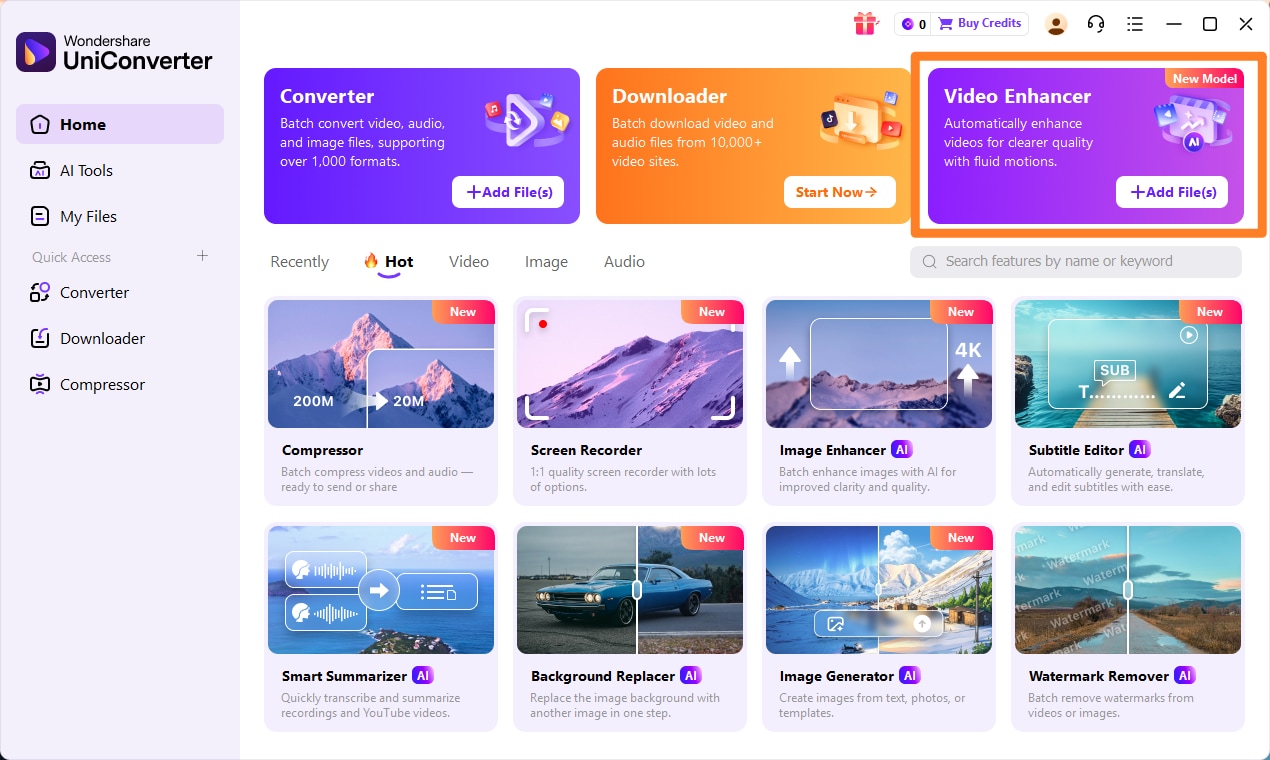
Step 1: Open UniConverter and Choose Video Enhancer
Launch UniConverter on your computer. From the main interface, navigate to the "Toolbox" section and select the "Video Enhancer" option.
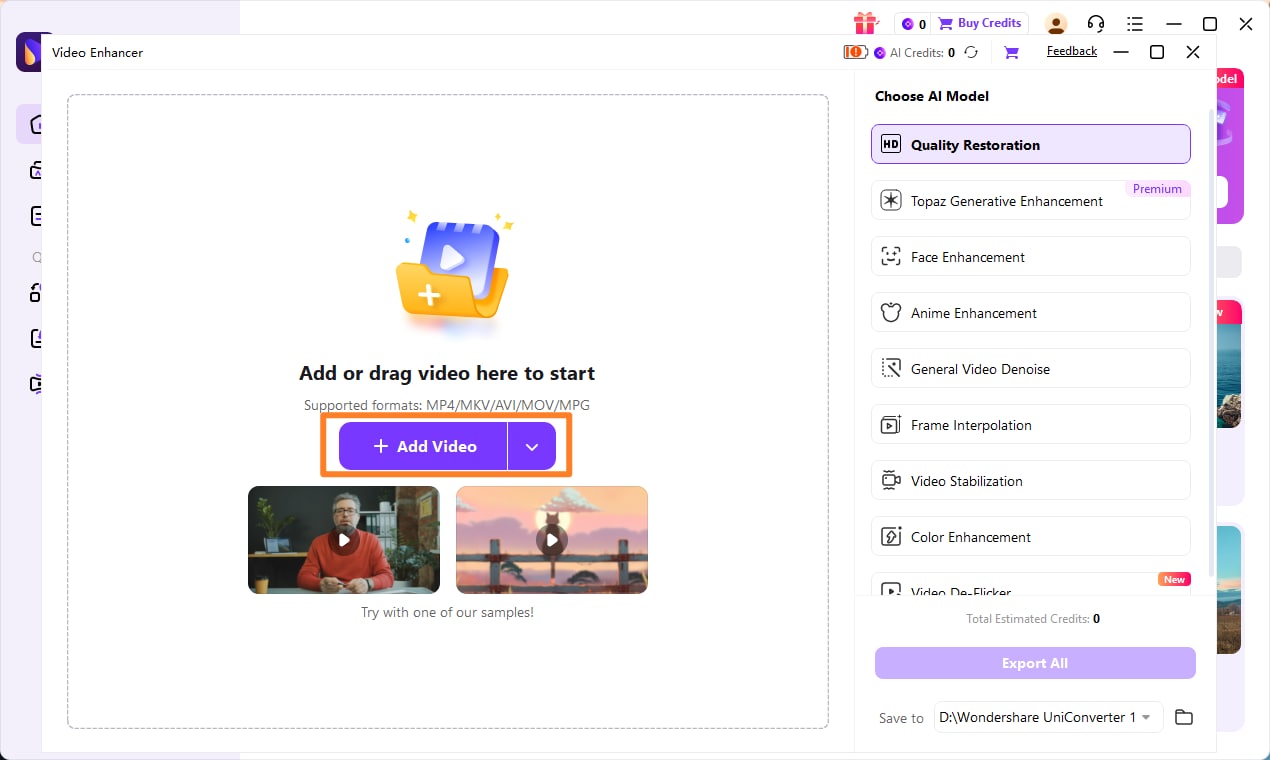
Step 2: Upload the Videos
Click on the "Add Files" button or drag and drop your video files into the UniConverter interface. You can add multiple videos for batch processing.
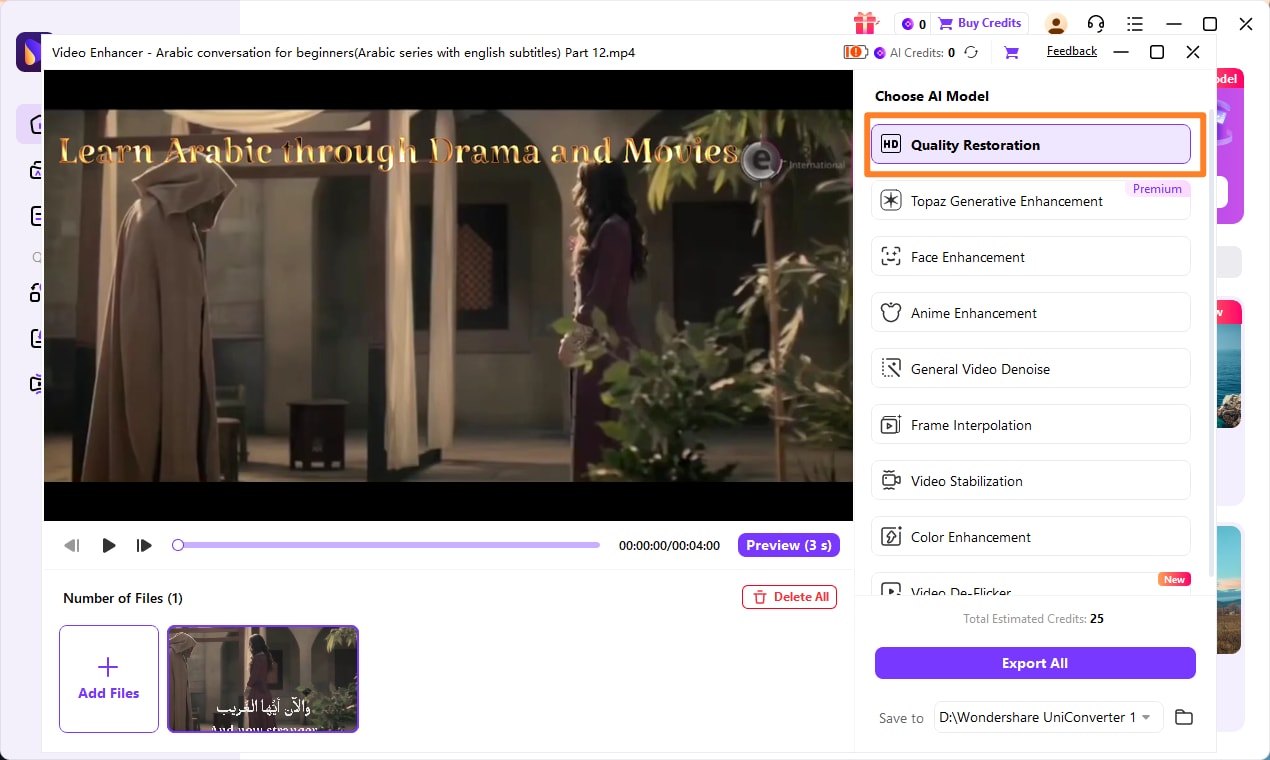
Step 3: Choose Enhancement Model
UniConverter offers various enhancement models. Select the desired enhancement feature, such as "Upscale Video," "Remove Noise," "Stabilize Video," or "Optimize Brightness and Contrast." Adjust specific parameters as needed.
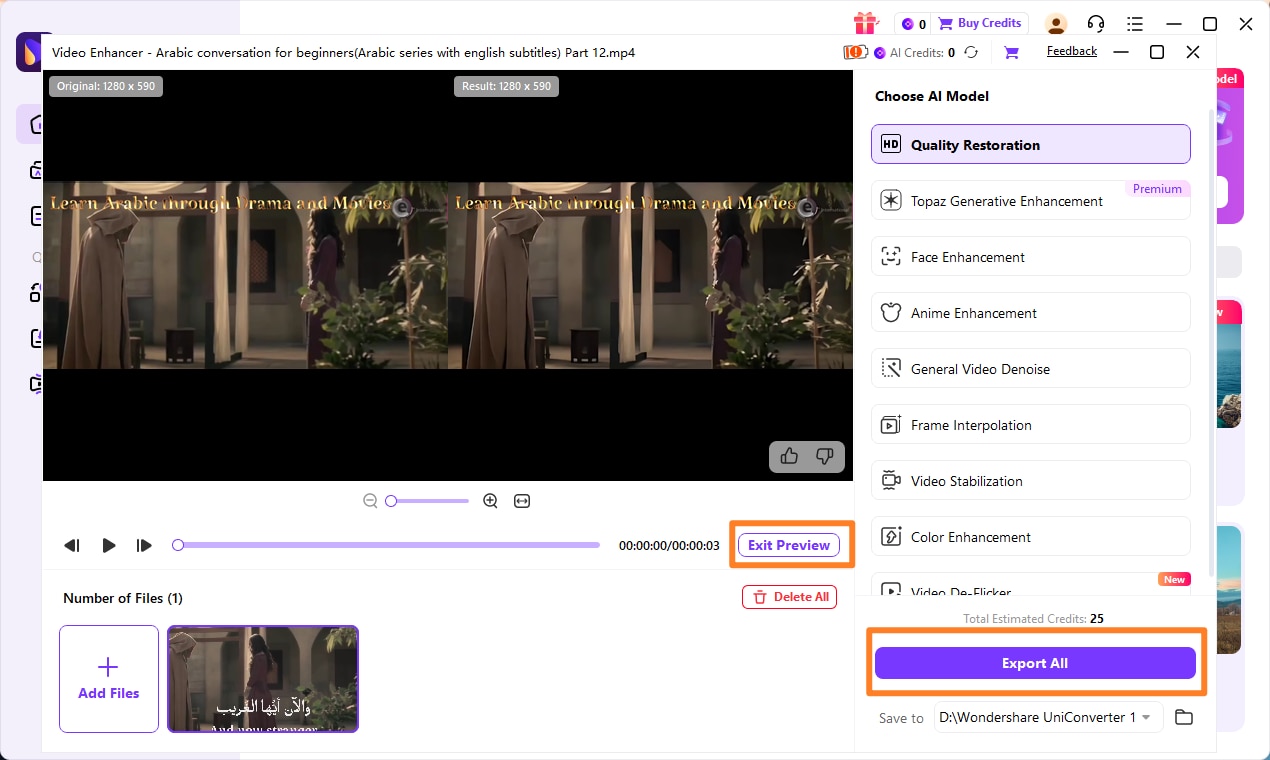
Step 4: Preview and Save the Enhanced Video
Preview the enhanced video to ensure the desired quality. Once satisfied, choose your output format and destination folder, then click "Enhance" or "Start All" to process and save your improved video.

Enhance Videos Beyond VLC's Capabilities
Part 7: Conclusion
In conclusion, this VLC Video Enhancer review reveals that while VLC Media Player is an exceptional media player, its video enhancement capabilities are rudimentary at best. It serves well for casual users seeking free, real-time, minor adjustments like brightness or contrast for personal viewing, especially on older hardware. However, for significant quality improvements, such as upscaling, advanced noise reduction, or professional color grading, VLC falls short due to its lack of sophisticated algorithms and AI integration. Dedicated tools like Topaz Video AI offer unparalleled AI-driven enhancement, while DaVinci Resolve provides professional-grade editing and color correction. For users seeking a balanced solution that combines ease of use with effective enhancement and a broader range of video tools, UniConverter presents a compelling alternative. Ultimately, the choice depends on the user's specific needs, technical proficiency, and budget, ranging from free basic tweaks to premium, powerful transformations.
Part 8: FAQs
-
1. Can VLC truly enhance video quality significantly?
No, VLC offers only basic filters for minor adjustments like brightness, contrast, and a simple sharpen/denoise. It cannot significantly enhance video quality in the way dedicated AI-powered tools can, especially for tasks like upscaling or complex noise reduction.
-
2. What are the best settings in VLC for video enhancement?
There aren't "best" universal settings, as they depend on the specific video. You can access enhancement settings via "Tools" > "Effects and Filters" > "Video Effects." Experiment with "Image adjust" for brightness/contrast/gamma and "Sharpen" or "Denoise" filters, but use them sparingly to avoid artifacts.
-
3. Is VLC safe to use for video enhancement?
Yes, VLC is generally safe to use. It's an open-source project with a strong community, meaning security vulnerabilities are usually identified and patched quickly. However, its safety pertains to its software integrity, not the quality of its enhancement results.
-
4. How does VLC compare to dedicated AI video enhancers?
VLC does not compare favorably to dedicated AI video enhancers. AI enhancers use machine learning to intelligently upscale, denoise, and restore videos, producing far superior and more natural-looking results. VLC's filters are basic algorithms that lack this intelligence.
-
5. Are there any hidden costs associated with using VLC for enhancement?
No, VLC is completely free and open-source, with no hidden costs, subscriptions, or in-app purchases for its features, including its basic enhancement tools.
