
- Value: VideoProc Converter AI breathes new life into old, low-quality videos with AI upscaling and noise reduction.
- Target User: Ideal for personal archiving and content creators needing straightforward, effective video enhancement.
- Comparison: Offers a user-friendly experience, but UniConverter provides broader features; Topaz AI excels in quality.
- Decision: Evaluate hardware and project needs; UniConverter is a robust alternative for efficient, stable enhancement.
In this article
- Part 1: What is VideoProc Converter AI Video Enhancer?
- Part 2: VideoProc Converter AI Video Enhancer: Core Features and Performance
- Part 3: Target Users and Usage Scenarios
- Part 4: VideoProc Converter AI Video Enhancer and Alternatives Comparison
- Part 5: Risks and Pitfalls to Consider
- Part 6: How to Use UniConverter to Efficiently Enhance Videos
- Part 7: Conclusion
- Part 8: FAQs
VideoProc Converter AI Video Enhancer: A Comprehensive Scenario-Based Review
The digital age has brought an explosion of video content, from cherished family memories captured decades ago to modern high-definition productions. However, not all videos are created equal, and many suffer from low resolution, noise, or poor quality. This is where AI video enhancement tools come into play, promising to breathe new life into old footage and elevate contemporary clips. This review delves into VideoProc Converter AI Video Enhancer, examining its capabilities, ideal use cases, and how it stacks up against its competitors. We will explore its core features, identify its strengths and weaknesses, and provide a clear understanding of who can benefit most from this software, ultimately guiding you to an informed decision.
Part 1: What is VideoProc Converter AI Video Enhancer?
VideoProc Converter AI Video Enhancer is a software solution designed to improve video quality using artificial intelligence. It aims to address common video imperfections such as low resolution, noise, and blur, making older footage look sharper and more vibrant, and enhancing newer content for a more polished appearance. This review seeks to provide a detailed analysis of its performance, user experience, and value proposition in the competitive landscape of video enhancement tools.
Market Background and User Pain Points:
* Legacy Footage Degradation: Many users possess old videos (e.g., VHS, camcorder footage) that have degraded over time, appearing blurry, grainy, or low-resolution on modern displays.
* Desire for Professional-Looking Content: Content creators and casual users alike want their videos to look professional and engaging, but often lack the technical skills or expensive equipment for high-quality production.
* Complexity of Traditional Editing Software: Traditional video editing software can be intimidating and time-consuming for users who primarily need to enhance video quality without extensive editing.
* Demand for Automated Solutions: The rise of AI has fueled a demand for automated tools that can achieve significant quality improvements with minimal user input.
Part 2: VideoProc Converter AI Video Enhancer: Core Features and Performance
VideoProc Converter AI Video Enhancer offers a robust set of features centered around AI-driven video improvement. Its core capabilities include AI upscaling, de-noising, de-interlacing, and stabilization, all designed to transform various video types. The software also boasts comprehensive format support, allowing users to process a wide array of video files without compatibility issues. Its intuitive interface simplifies the enhancement process, making it accessible even for those new to video editing. The performance, particularly with AI tasks, is generally efficient, though it can be resource-intensive for very high-resolution outputs.
Core Features:
* AI Upscaling: Intelligently increases video resolution without significant loss of detail.
* Noise Reduction: Effectively removes visual noise and grain from footage.
* Image Stabilization: Corrects shaky video, providing smoother playback.
* De-interlacing: Converts interlaced video to progressive scan for better display on modern screens.
* Extensive Format Support: Handles a vast range of video and audio formats for input and output.
Pros:
* AI-powered Upscaling for Vintage Footage Restoration: Excellent for bringing old, low-resolution videos up to modern standards.
* Intuitive Interface for Quick Video Processing: User-friendly design makes it easy for beginners to navigate and use.
* Comprehensive Format Support for Diverse Media Libraries: Ensures compatibility with almost any video file you might have.
Cons:
* Resource-Intensive for High-Resolution AI Processing: Requires a powerful computer for optimal performance, especially with 4K or 8K upscaling.
* Limited Advanced AI Customization Options: While effective, it offers less granular control over AI parameters compared to professional-grade tools.
Part 3: Target Users and Usage Scenarios
VideoProc Converter AI Video Enhancer is primarily designed for users who need a straightforward yet powerful solution for improving video quality without delving into complex professional editing suites. It caters well to individuals looking to enhance personal video collections, content creators aiming for better visual appeal, and small businesses needing to polish promotional materials. Its ease of use makes it particularly appealing to those with limited technical expertise.
Best Use Case: Revitalizing Old Family Videos for Digital Archiving
Imagine discovering a box of old VHS tapes or camcorder footage from family vacations and special events. These videos, while precious, often suffer from low resolution, color fading, and general degradation. VideoProc Converter AI Video Enhancer excels in this scenario. Its AI upscaling can transform blurry, pixelated footage into sharper, more vibrant digital files, making them enjoyable on modern screens. The noise reduction feature can clean up grainy images, and color correction can restore faded hues, ensuring these cherished memories are preserved and viewable for future generations. The intuitive interface means even non-technical users can achieve impressive results, making it ideal for personal archiving projects.
Limited Scenario: Professional Film Restoration Requiring Granular Control
While VideoProc Converter AI Video Enhancer is excellent for general enhancement, it falls short for professional film restoration projects that demand highly specialized and granular control over every aspect of the enhancement process. For instance, restoring historical film archives or high-budget cinematic productions often requires precise control over film grain emulation, artifact removal, and specific color grading profiles that go beyond the automated capabilities of VideoProc. Professionals in this field typically rely on advanced software like DaVinci Resolve Studio with specialized plugins or dedicated film restoration tools that offer extensive manual adjustments and custom algorithms to achieve historically accurate and artistically precise results. VideoProc's more automated approach, while convenient, lacks the depth of customization needed for such demanding tasks.
Part 4: VideoProc Converter AI Video Enhancer and Alternatives Comparison
| Feature/Scenario | VideoProc Converter AI Video Enhancer | UniConverter | Topaz Video AI | DaVinci Resolve Studio |
| Ease of Use for Beginners | High | High | Medium | Low |
| AI Upscaling Quality (General) | Good | Good | Excellent | Good (with plugins) |
| Processing Speed (Mid-range PC) | Moderate | Moderate | Fast | Moderate |
| Price Point | Mid-range | Mid-range | High | High (one-time purchase) |
| Advanced AI Customization | Limited | Limited | Extensive | Extensive |
| Customer Support | Responsive | Responsive | Good | Extensive Community/Paid Support |
| Security | High | High | High | High |
VideoProc Converter AI Video Enhancer excels in user-friendliness and broad format support for everyday users, offering a balanced approach to quality and accessibility. UniConverter provides a robust and equally user-friendly alternative, often praised for its comprehensive feature set beyond just enhancement. Topaz Video AI stands out with its superior AI upscaling quality and more advanced controls, making it a favorite for professionals prioritizing visual fidelity. DaVinci Resolve Studio, while having a steeper learning curve, offers a comprehensive suite of editing tools alongside enhancement capabilities, making it ideal for those needing an all-in-one post-production solution.
Part 5: Risks and Pitfalls to Consider
Using video enhancement software, especially those leveraging AI, comes with several potential risks and pitfalls that users should be aware of before committing their valuable footage. Understanding these can help manage expectations and prevent undesirable outcomes.
Potential Loss of Original Video Quality During Upscaling
While AI upscaling aims to improve resolution, aggressive or improper settings can sometimes lead to a "plastic" or over-smoothed look, where fine details are lost, and the video appears artificial. This is particularly true for very low-quality source material, where the AI might "invent" details that weren't originally present, leading to unnatural results rather than genuine enhancement. Always keep a backup of your original file.
High System Requirements for Optimal Performance
AI video enhancement is computationally intensive. Running these applications, especially for high-resolution output (4K, 8K), demands significant CPU, GPU, and RAM resources. Users with older or less powerful computers may experience extremely slow processing times, frequent crashes, or an inability to utilize the software's full potential, leading to frustration and wasted time.
Subscription Model vs. One-Time Purchase Value
Many advanced video enhancement tools, including some competitors, operate on a subscription model, which can become costly over time. While VideoProc Converter AI Video Enhancer offers both, users should carefully evaluate whether a perpetual license or a subscription best fits their long-term usage patterns and budget. A subscription might offer continuous updates, but a one-time purchase could be more economical for infrequent use.
Data Privacy Concerns with Cloud-Based AI Features
While VideoProc Converter AI Video Enhancer is primarily a desktop application, some AI tools or future features might involve cloud processing. If you use any cloud-based AI enhancement services, be mindful of data privacy policies. Uploading sensitive or personal video content to external servers could pose privacy risks if the service provider's security measures are not robust or their data handling policies are unclear.
Over-Processing Leading to Unnatural-Looking Results
The temptation to apply maximum enhancement settings can be strong, but over-processing is a common pitfall. Excessive noise reduction can remove legitimate film grain, making footage look overly smooth and sterile. Over-sharpening can introduce halos or artifacts around edges. The key to effective enhancement is subtlety; often, a moderate application of AI features yields the most natural and pleasing results.
Part 6: How to Use UniConverter to Efficiently Enhance Videos
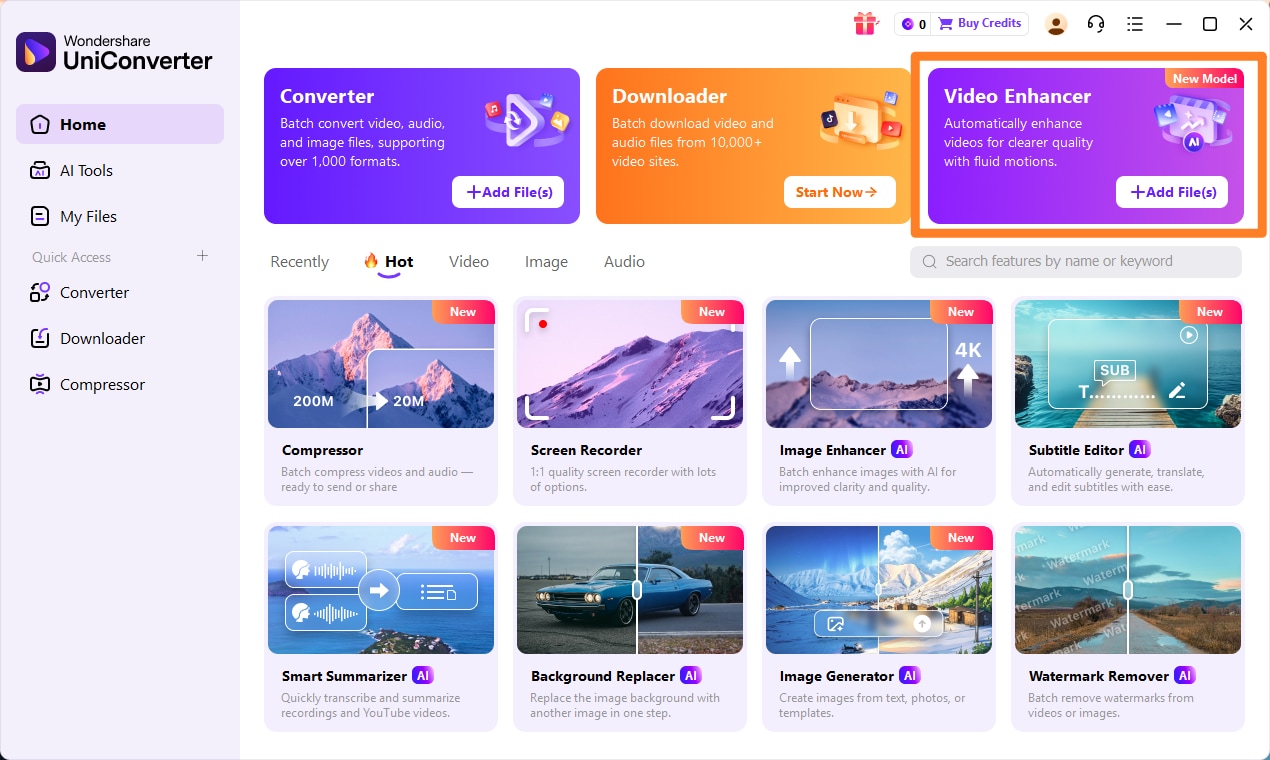
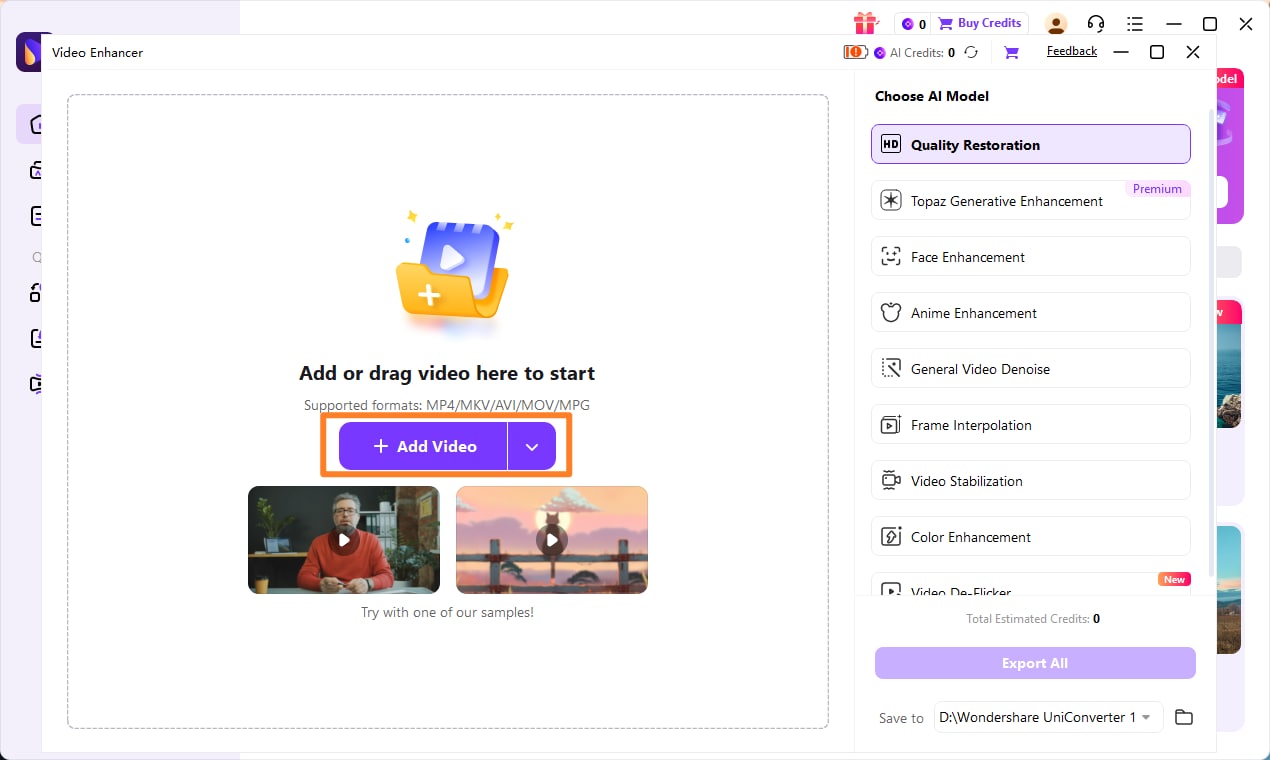
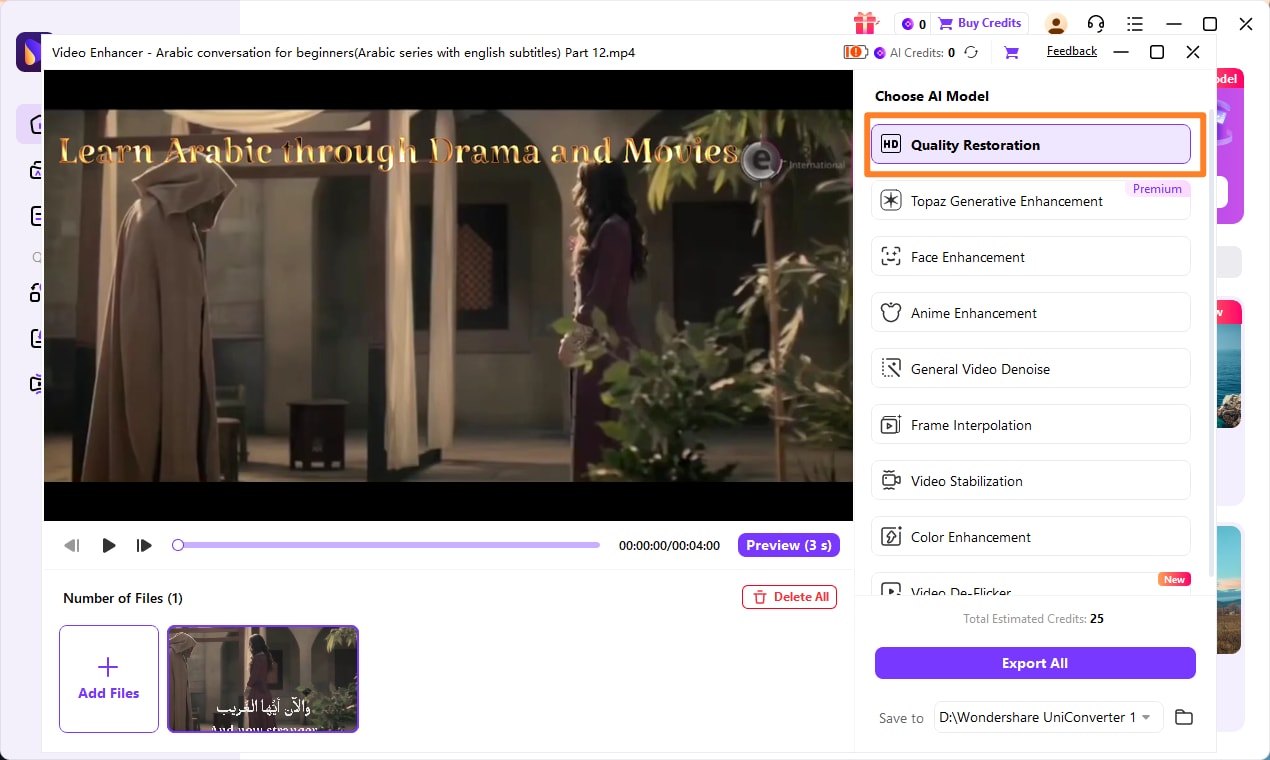
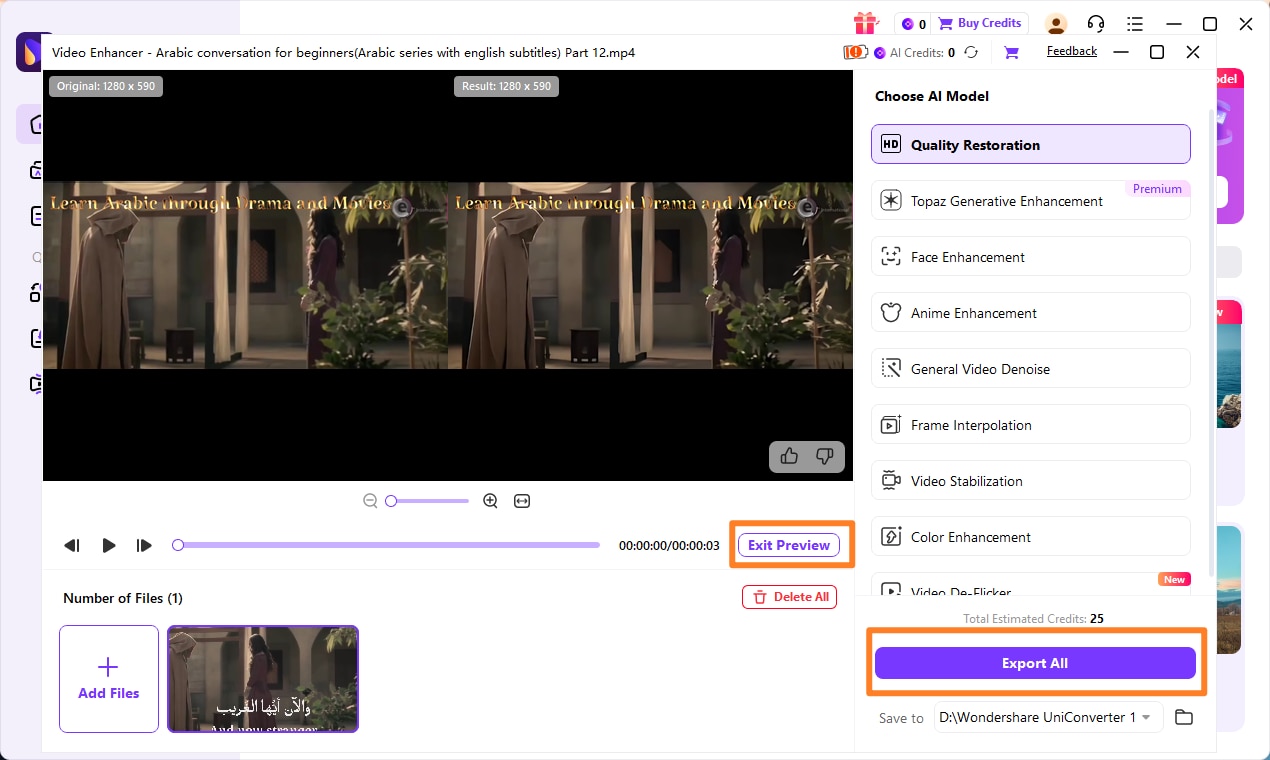
When other tools fall short in batch processing, stable enhancement, or delivering significant quality improvements, UniConverter emerges as a robust and user-friendly alternative for video enhancement and conversion. It avoids common issues like ads, offers extensive format support, leverages GPU acceleration for speed, ensures stable and lossless enhancement, and supports batch processing. For those looking to upscale video or fix pixelated videos, UniConverter is an all-in-one ultimate solution for your video processing needs.
Step 1: Open UniConverter and Choose Video Enhancer
Step 2: Upload the Videos
Step 3: Choose Enhancement Model
Step 4: Preview and Save the Enhanced Video

Seeking a VideoProc Converter AI Alternative?
Part 7: Conclusion
VideoProc Converter AI Video Enhancer presents itself as a highly capable and user-friendly tool for improving video quality, particularly for casual users and content creators. Its AI-powered upscaling and comprehensive format support make it an excellent choice for revitalizing old family videos or polishing new content without a steep learning curve. However, its resource-intensive nature for high-resolution tasks and limited advanced AI customization mean it may not be the ideal solution for professional film restoration or users requiring granular control over every enhancement parameter. When considering this software, evaluate your hardware capabilities and the specific demands of your projects. For those seeking quick, effective enhancements with an intuitive interface, VideoProc Converter AI Video Enhancer offers significant value. For more demanding professional workflows or when seeking a broader suite of video tools, alternatives like Topaz Video AI or DaVinci Resolve Studio might be more appropriate. Ultimately, the best choice depends on balancing ease of use, desired output quality, and budget constraints.
Part 8: FAQs
-
1. Does VideoProc Converter AI Video Enhancer support 8K upscaling?
Yes, VideoProc Converter AI Video Enhancer supports upscaling to 8K, but performance may vary depending on your hardware.
-
2. Is a subscription required for VideoProc Converter AI Video Enhancer?
VideoProc Converter AI Video Enhancer offers both perpetual licenses and subscription options.
-
3. Can I use VideoProc Converter AI Video Enhancer on a Mac?
Yes, VideoProc Converter AI Video Enhancer is compatible with both Windows and macOS.
-
4. How does VideoProc Converter AI Video Enhancer compare to free alternatives?
VideoProc Converter AI Video Enhancer generally offers superior AI algorithms and a more comprehensive feature set compared to most free alternatives, which often lack advanced AI capabilities or have significant limitations.
-
5. What are the minimum system requirements for VideoProc Converter AI Video Enhancer?
While specific requirements vary, a modern CPU (Intel i5 or equivalent), at least 8GB of RAM, and a dedicated GPU (NVIDIA GTX 1050 or AMD Radeon RX 560 or better) are highly recommended for optimal performance with AI features, especially for 4K or 8K processing.
