
- Veed AI Overview: Cloud-based, AI-powered video enhancer for easy quality improvement.
- Veed AI Pros: Intuitive interface, effective AI upscaling/noise reduction, cloud accessibility.
- Veed AI Cons: Limited customization, subscription-based, potential for over-processing.
- Target Audience: Best for social media creators and beginners needing quick, simple enhancements.
- Veed vs. Alternatives: Veed offers cloud convenience; UniConverter provides offline power, advanced AI, and control.
- Risks: Data privacy concerns, potential for unnatural results, internet dependency, subscription cost.
- UniConverter Value: Robust desktop solution for efficient, stable, lossless batch video/image enhancement.
- Decision Factor: Choose based on need for ease vs. control, cloud vs. offline, and budget.
In this article
- Part 1: What is Veed AI Video Enhancer?
- Part 2: Veed AI Video Enhancer: Core Features, Pros, and Cons
- Part 3: Target Audience and Use Cases for Veed AI Video Enhancer
- Part 4: Veed AI Video Enhancer and Alternatives: A Comparative Analysis
- Part 5: Risks and Pitfalls of Using Veed AI Video Enhancer
- Part 6: How to Use UniConverter for Efficient Video and Image Enhancement
- Part 7: Conclusion
- Part 8: FAQs
In the rapidly evolving digital landscape, high-quality video content has become paramount for businesses, creators, and individuals alike. The demand for visually stunning and professionally enhanced videos has spurred the development of numerous AI-powered tools. This article provides a comprehensive Veed AI Video Enhancer review, delving into its core features, strengths, and weaknesses. We will also conduct a detailed comparative analysis with leading competitors, offering insights into their respective advantages and disadvantages. Our goal is to equip you with the necessary information to make an informed decision, ensuring you choose the best video enhancement solution for your specific needs and budget.
Part 1: What is Veed AI Video Enhancer?
Veed AI Video Enhancer is a cloud-based tool designed to automatically improve video quality using artificial intelligence. It aims to simplify the often complex process of video enhancement, making it accessible to users without extensive editing experience. By leveraging AI algorithms, Veed promises to upscale resolutions, reduce noise, and correct colors, transforming ordinary footage into professional-looking content. This review will critically examine Veed's capabilities and compare it against other prominent solutions in the market.
The Growing Need for High-Quality Video Content
The proliferation of online platforms and the increasing consumption of video content have created a significant demand for high-quality visuals.
* Engagement: High-resolution, crisp videos capture audience attention more effectively.
* Professionalism: Enhanced videos convey a sense of professionalism, crucial for brands and businesses.
* Accessibility: AI tools democratize video enhancement, allowing more users to produce polished content.
* Content Volume: The sheer volume of video content being produced necessitates efficient and automated enhancement solutions.
Part 2: Veed AI Video Enhancer: Core Features, Pros, and Cons
Veed AI Video Enhancer positions itself as an accessible and efficient solution for improving video quality. Its core capabilities revolve around AI-driven processing, aiming to deliver professional results with minimal user input.
Core Features:
* AI Upscaling: Intelligently increases video resolution without significant loss of detail.
* Noise Reduction: Automatically removes visual noise and grain from footage.
* Color Correction: Enhances color vibrancy and accuracy for a more polished look.
* Stabilization: Reduces camera shake for smoother playback.
* Sharpening: Improves the clarity and definition of video elements.
Pros:
* Intuitive User Interface for Quick Enhancements: Veed's interface is remarkably user-friendly, allowing even beginners to navigate and apply enhancements with ease.
* AI-Powered Upscaling and Noise Reduction: The AI algorithms perform admirably in upscaling lower-resolution videos and effectively reducing unwanted noise.
* Cloud-Based Processing for Accessibility: Being cloud-based means users can access and enhance videos from any device with an internet connection, without needing powerful local hardware.
Cons:
* Limited Advanced Customization Options: For users seeking fine-grained control over enhancement parameters, Veed's options can feel restrictive.
* Subscription-Based Model for Full Features: Access to Veed's full suite of features and higher processing limits requires a paid subscription, which might be a barrier for some.
Part 3: Target Audience and Use Cases for Veed AI Video Enhancer
Veed AI Video Enhancer is primarily designed for users who prioritize ease of use and quick results over extensive customization. Its cloud-based nature and AI-driven features cater to a specific segment of the video creation market.
Best Use Case: Quick Social Media Content Enhancement for Beginners
Veed shines for social media creators, small businesses, and individuals who need to rapidly enhance short video clips for platforms like Instagram, TikTok, or YouTube Shorts. Its intuitive interface and automated enhancements allow users to quickly improve the visual quality of their content without needing advanced video editing skills or expensive software. It's ideal for those who want to make their casual footage look more professional with minimal effort.
Limited Use Case: Professional Filmmaking Requiring Granular Control
For professional filmmakers, videographers, or advanced editors working on high-stakes projects, Veed AI Video Enhancer may fall short. These users often require precise control over every aspect of the enhancement process, including specific color grading, advanced noise reduction algorithms, and detailed sharpening parameters. Veed's automated approach, while convenient, lacks the granular customization options necessary for achieving highly specific artistic visions or meeting stringent broadcast standards.
Part 4: Veed AI Video Enhancer and Alternatives: A Comparative Analysis
When evaluating video enhancement tools, it's crucial to consider how Veed AI Video Enhancer stacks up against its competitors. This comparison highlights key features and helps users identify the best fit for their needs.
| Feature/Tool | Veed AI Video Enhancer | Topaz Video AI | DaVinci Resolve | UniConverter |
| Ease of Use | High | Medium | Low | High |
| AI Enhancement | Good | Excellent | Good | Excellent |
| Customization | Basic | Advanced | Advanced | Moderate |
| Pricing | Subscription | One-time | Free/Studio | One-time/Subscription |
| Offline Use | No | Yes | Yes | Yes |
| Processing Speed | Cloud-dependent | Fast (GPU) | Fast (GPU) | Fast (GPU) |
| Output Quality | Good | Excellent | Excellent | Excellent |
| Customer Support | Email/Chat | Email/Forum | Forum/Docs | Email/Live Chat |
| Security | Cloud-based risks | Local processing | Local processing | Local processing |
Key Differentiators: Cloud Convenience vs. Offline Power
Veed AI Video Enhancer's primary differentiator is its cloud-based convenience, offering accessibility from anywhere with an internet connection. This is ideal for users who prioritize flexibility and don't want to invest in powerful local hardware. However, this comes with potential data privacy concerns and dependency on internet speed. In contrast, tools like Topaz Video AI, DaVinci Resolve, and UniConverter offer robust offline processing capabilities, leveraging local GPU power for faster and more secure enhancements. Topaz Video AI excels in advanced AI upscaling, while DaVinci Resolve offers comprehensive editing suites alongside enhancement. UniConverter strikes a balance, providing excellent AI enhancement with user-friendly controls and offline functionality.
Part 5: Risks and Pitfalls of Using Veed AI Video Enhancer
While Veed AI Video Enhancer offers convenience, users should be aware of potential risks and limitations, especially when dealing with cloud-based services and automated AI processes.
Data Privacy Concerns with Cloud Processing
Uploading sensitive or proprietary video content to a cloud-based platform like Veed AI raises legitimate data privacy questions. Users must trust the service provider's security measures to protect their data from unauthorized access or breaches. For businesses or individuals handling confidential footage, this can be a significant deterrent.
Potential for Over-Processed, Unnatural Results
AI enhancement, while powerful, isn't always perfect. Veed AI's automated algorithms can sometimes lead to an "over-processed" look, where videos appear artificially smooth, overly sharpened, or have distorted colors. This can strip away the natural aesthetic of the original footage, resulting in an unnatural and less authentic final product.
Dependency on Internet Connectivity
As a cloud-based tool, Veed AI Video Enhancer requires a stable and fast internet connection for both uploading and downloading video files. This dependency can be a major drawback in areas with unreliable internet access or for users working with very large video files, where upload and download times can become prohibitively long.
Subscription Cost vs. Value for Specific Needs
Veed AI operates on a subscription model, which means ongoing costs. For casual users or those with infrequent enhancement needs, the recurring expense might not justify the value, especially if their requirements are basic. It's crucial to assess whether the features and convenience offered align with the financial commitment.
Part 6: How to Use UniConverter for Efficient Video and Image Enhancement
When other tools fall short with batch processing, unstable enhancements, or weak results, UniConverter emerges as a robust solution. It bypasses common issues like intrusive ads, limited formats, and inconsistent quality, offering a comprehensive, ad-free experience with extensive format support, GPU acceleration, and stable, lossless batch enhancement. UniConverter is your all-in-one ultimate solution for superior video and image quality.
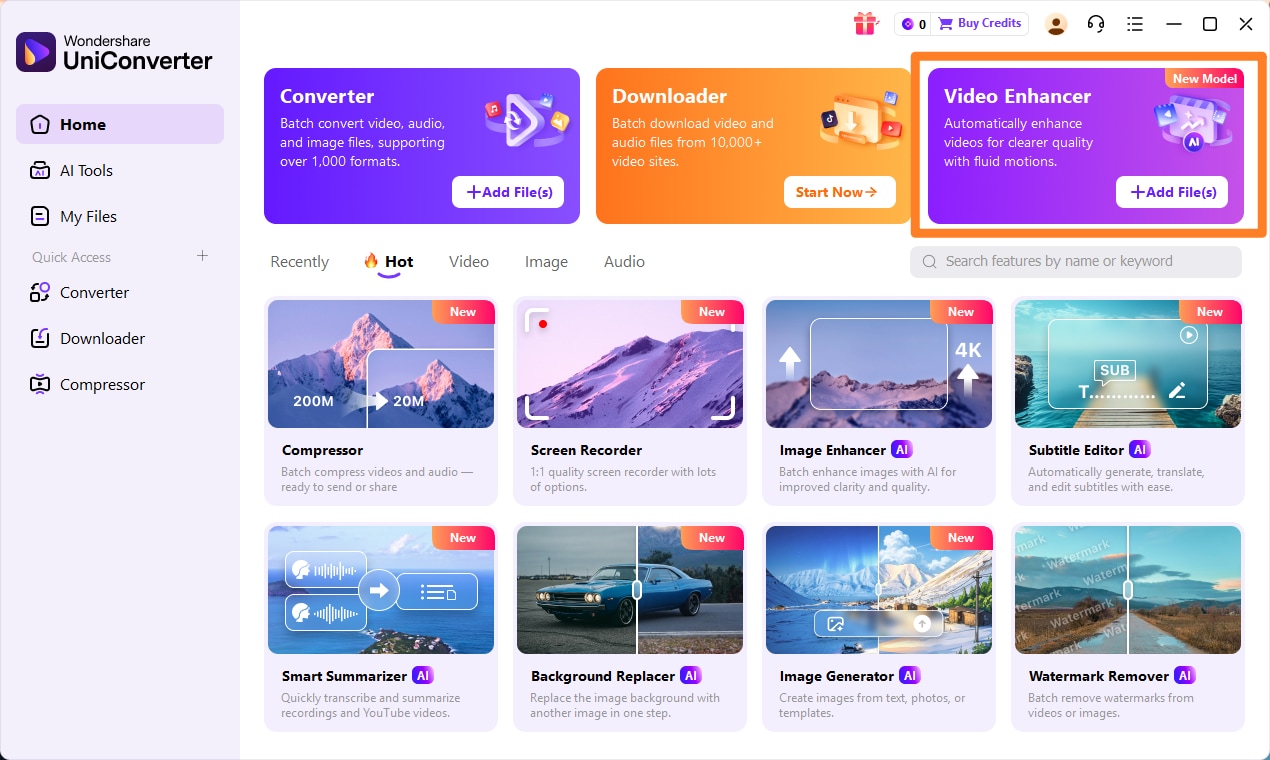
Step 1: Open UniConverter and Choose Video Enhancer
Launch UniConverter on your desktop. From the main interface, navigate to the "Toolbox" section and select the Video Enhancer feature.
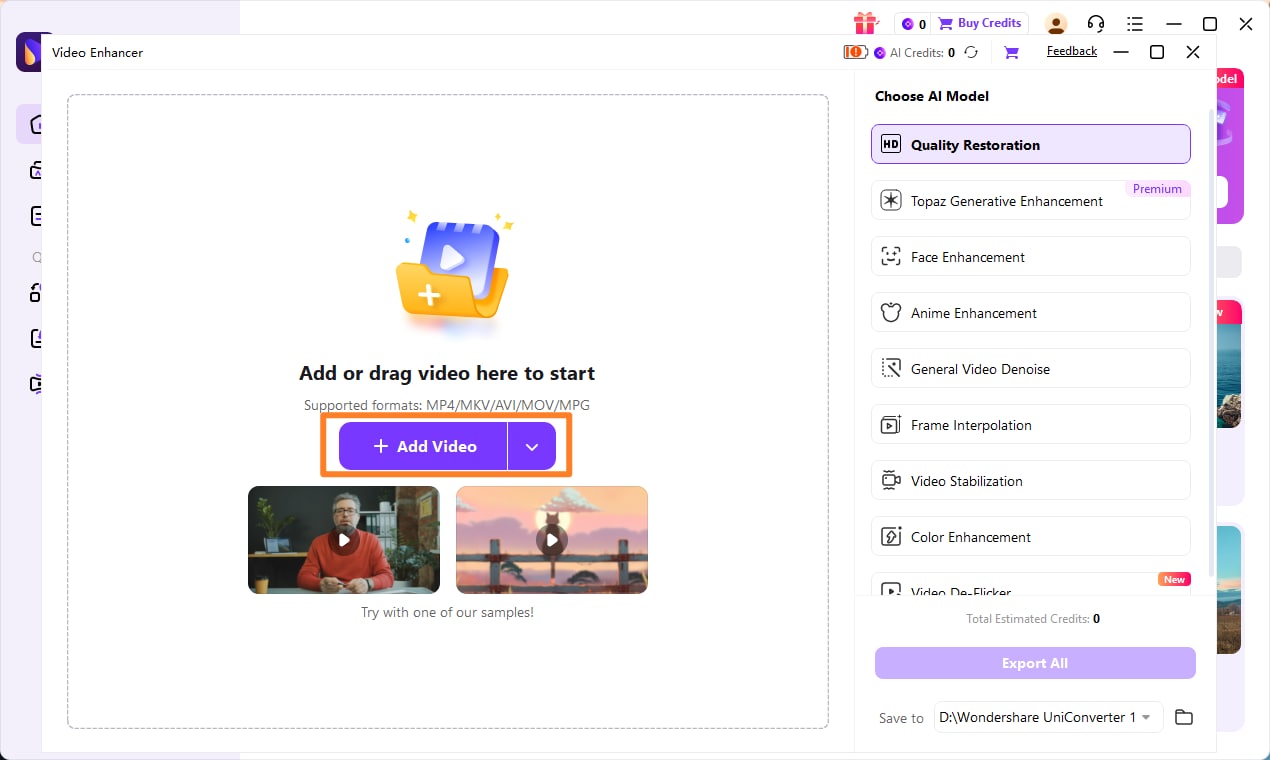
Step 2: Upload Your Video File
Click the "Add Files" button or drag and drop your video into the designated area. You can add multiple videos for batch processing.
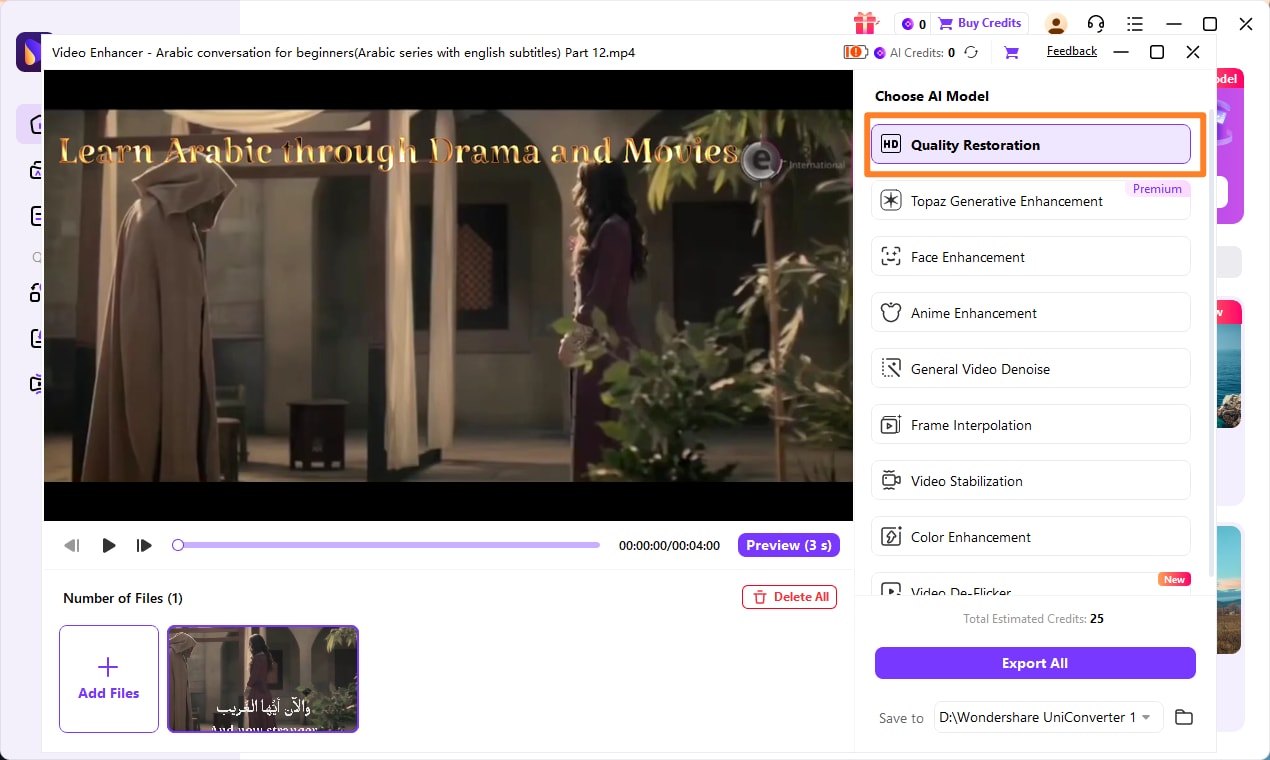
Step 3: Select Enhancement Features
Choose from various enhancement options such as AI Upscaling, Noise Reduction, Brightness/Contrast adjustment, and Stabilization. You can also select the desired output resolution. For instance, you might want to fix pixelated videos or unblur a video.
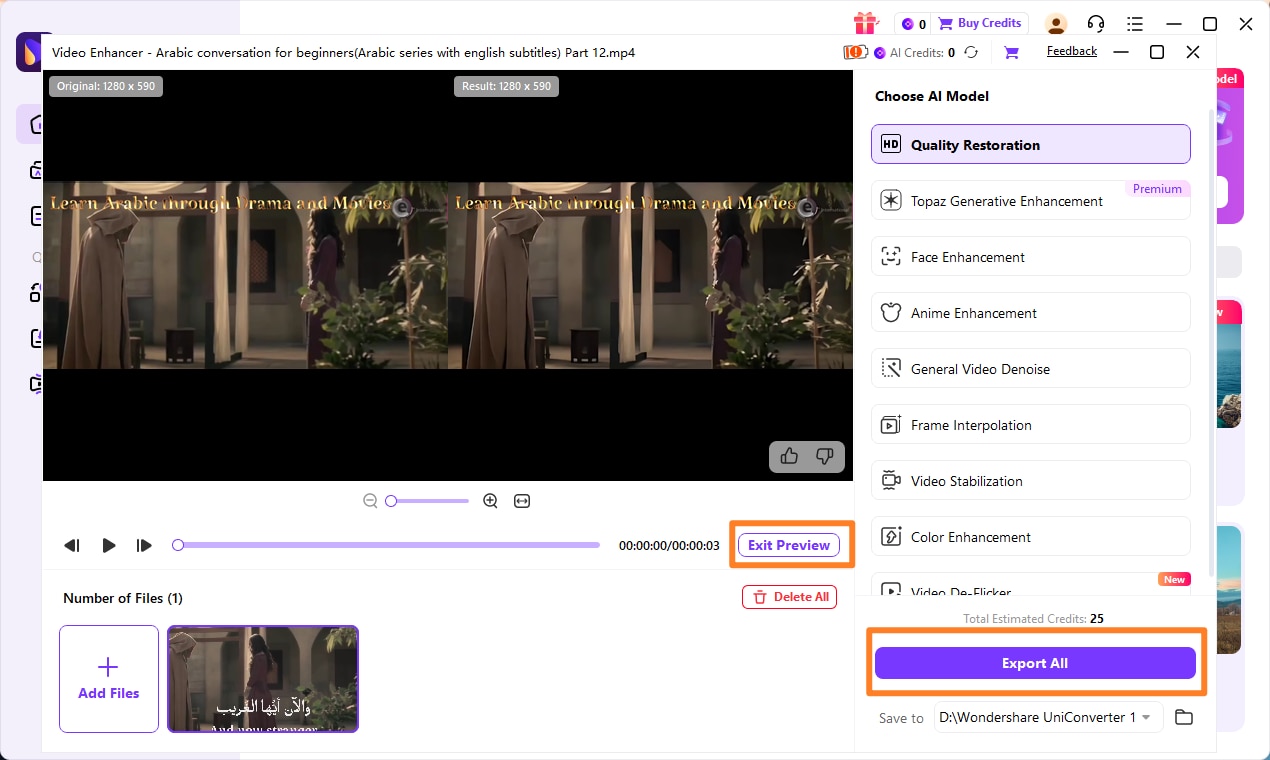
Step 4: Preview and Save the Enhanced Video
Preview the enhanced video to ensure satisfaction. Once ready, click the "Export" button to save your high-quality video to your desired location.

Seeking a Veed AI Video Enhancer Alternative?
Part 7: Conclusion
The Veed AI Video Enhancer review reveals it as a highly accessible and user-friendly tool, particularly well-suited for beginners and social media creators seeking quick, automated video enhancements. Its cloud-based nature offers convenience and ease of use, making it ideal for those who prioritize speed and simplicity over granular control. However, its limitations in advanced customization, reliance on internet connectivity, and potential data privacy concerns with cloud processing make it less suitable for professional filmmakers or users with highly specific enhancement needs. For individuals requiring comprehensive offline editing capabilities, advanced customization, and robust performance, desktop solutions like UniConverter or Topaz Video AI present stronger alternatives. Ultimately, the best choice hinges on your specific project requirements, technical proficiency, and budget. Carefully consider these factors to select the video enhancement tool that most effectively meets your demands.
Part 8: FAQs
-
1. Is Veed AI Video Enhancer free to use?
Veed AI Video Enhancer offers a free tier with limited features and watermarks. Full access to its capabilities and watermark-free exports requires a paid subscription.
-
2. Can Veed AI Video Enhancer improve old, low-resolution footage?
Yes, Veed AI is designed to upscale low-resolution footage and reduce noise, which can significantly improve the quality of older videos. However, the extent of improvement depends on the original footage quality.
-
3. What are the main differences between Veed AI and desktop video enhancers?
Veed AI is cloud-based, offering accessibility from any device and automated processing. Desktop enhancers like UniConverter or Topaz Video AI operate locally, often providing more granular control, faster processing (especially with GPU acceleration), and enhanced data security as files remain on your computer.
-
4. How secure is my video data when using cloud-based enhancers like Veed AI?
Cloud-based services like Veed AI employ various security measures, but data privacy remains a concern for some users. It's crucial to review their privacy policy and terms of service to understand how your data is handled and stored.
-
5. What kind of internet speed is recommended for using Veed AI Video Enhancer effectively?
A stable and fast internet connection is highly recommended for Veed AI, especially when uploading and downloading large video files. A minimum of 20-50 Mbps upload/download speed is advisable for a smooth experience.
