
- VanceAI Overview: AI-powered tool for video upscaling, noise reduction, and color enhancement.
- Target Audience: Ideal for casual users and content creators needing quick, accessible video quality improvement.
- Pros & Cons: User-friendly interface and strong AI, but subscription-based with potential artifacts.
- Key Comparison: VanceAI is fast and easy, UniConverter offers balanced features, Topaz Video AI is for pros.
- Risks to Consider: Data privacy (cloud), AI artifacts, and potential hidden subscription costs.
- UniConverter Advantage: Offers comprehensive, stable, and efficient video enhancement as a robust alternative.
In this article
- Part 1: What is VanceAI Video Enhancer?
- Part 2: VanceAI Video Enhancer: Core Features, Pros, and Cons
- Part 3: Target Users and Use Cases
- Part 4: VanceAI Video Enhancer and Alternatives Comparison
- Part 5: Risks and Pitfalls to Consider
- Part 6: How to Use UniConverter for Efficient Video Enhancement
- Part 7: Conclusion
- Part 8: FAQs
VanceAI Video Enhancer Review: A Deep Dive into AI-Powered Video Upscaling
The demand for high-quality video content has never been greater, driven by the proliferation of high-resolution displays and the increasing sophistication of digital media. From social media creators to professional videographers, everyone seeks tools that can elevate their visual storytelling. AI video enhancement technologies have emerged as a powerful solution, promising to transform low-resolution, blurry, or old footage into crisp, vibrant visuals. This VanceAI Video Enhancer review will delve into one such prominent tool, examining its features, comparing it against key competitors, and ultimately guiding users through an informed decision-making process. We will explore its strengths, weaknesses, ideal use cases, and potential pitfalls, providing a comprehensive analysis for anyone considering AI-powered video upscaling.
Part 1: What is VanceAI Video Enhancer?
VanceAI Video Enhancer is an AI-powered software designed to improve the quality of video footage. It leverages advanced artificial intelligence algorithms to upscale resolution, reduce noise, sharpen details, and enhance colors, effectively transforming lower-quality videos into a more visually appealing format. The tool aims to make professional-grade video enhancement accessible to a wider audience, from casual users looking to breathe new life into old home videos to content creators striving for higher production value. This review will address the core question of whether VanceAI Video Enhancer lives up to its promises and how it stacks up against other solutions in the market.
The Growing Need for High-Quality Video Content
The digital landscape is increasingly dominated by video, making quality a paramount concern.
* User Expectations: Viewers now expect high-definition or even 4K content as a standard.
* Platform Demands: Social media platforms and streaming services favor high-quality uploads.
* Archival Preservation: Old footage, often in lower resolutions, needs enhancement for modern viewing.
* Content Creation: Creators constantly seek tools to improve their output without extensive technical expertise.
Part 2: VanceAI Video Enhancer: Core Features, Pros, and Cons
VanceAI Video Enhancer is built around its AI-driven processing capabilities, aiming to deliver significant visual improvements. Its core strength lies in its ability to intelligently analyze and reconstruct video frames, rather than simply stretching pixels. The software offers various AI models tailored for different enhancement needs, such as general upscaling, noise reduction, and color correction. It supports common video formats like MP4 and MOV, making it versatile for most users. The interface is designed for simplicity, allowing users to quickly upload, process, and download their enhanced videos with minimal technical knowledge.
Pros:
* Advanced AI algorithms for significant quality improvement
* User-friendly interface for quick processing
* Batch processing capabilities for efficiency
Cons:
* Subscription-based model can be costly for infrequent users
* Potential for artifacts in highly compressed or very low-resolution footage
Part 3: Target Users and Use Cases
VanceAI Video Enhancer caters to a broad spectrum of users who need to improve video quality without deep technical knowledge of video editing. Its intuitive design makes it suitable for individuals and small businesses alike. The tool is particularly beneficial for those dealing with older, lower-resolution footage or content creators looking to quickly polish their videos before publishing.
Best Use Case: Revitalizing Archival Family Videos
Imagine discovering a box of old VHS tapes or digital files from years ago, filled with precious family memories. These videos are often low-resolution, grainy, and faded. VanceAI Video Enhancer can be a game-changer here. By uploading these videos, the AI can upscale them to modern resolutions, reduce visual noise, and even enhance colors, making them enjoyable on contemporary screens and preserving those moments with newfound clarity.
Limited Use Case: Professional Film Restoration Projects
While VanceAI Video Enhancer excels at general quality improvement, it falls short for highly specialized professional film restoration projects. These projects often require frame-by-frame manual adjustments, advanced color grading, scratch removal, and intricate artifact correction that go beyond the scope of automated AI enhancement. For such demanding tasks, dedicated professional software and expert human intervention are typically indispensable.
Part 4: VanceAI Video Enhancer and Alternatives Comparison
Understanding how VanceAI Video Enhancer stacks up against its competitors is crucial for making an informed decision. We'll compare it with two other prominent tools: Topaz Video AI and UniConverter, highlighting their key differences.
| Feature/Product | VanceAI Video Enhancer | Topaz Video AI | UniConverter | DaVinci Resolve (Free) |
| AI Upscaling Quality | Excellent | Exceptional | Very Good | Good (manual) |
| Speed | Fast | Moderate (GPU-dep.) | Fast | Varies (complex) |
| Pricing Model | Subscription | One-time purchase | One-time/Subscription | Free (paid Studio) |
| Ease of Use | High | Moderate | High | Low (steep learning) |
| Output Formats | MP4, MOV | MP4, MOV, ProRes, etc. | MP4, AVI, MKV, MOV, etc. | Many (professional) |
| Customer Support | Email, Forum | Email, Live Chat | Forum, Documentation | |
| Security | Cloud-based | Local processing | Local processing | Local processing |
VanceAI Video Enhancer stands out for its user-friendliness and fast processing, making it ideal for quick enhancements. Topaz Video AI offers superior quality, especially for professional-grade upscaling, but demands more powerful hardware and a steeper learning curve. UniConverter provides a balanced approach with good quality and extensive format support, while DaVinci Resolve, though free, requires significant expertise for video enhancement.
Part 5: Risks and Pitfalls to Consider
While AI video enhancement offers compelling benefits, users should be aware of potential risks and limitations, especially when relying on cloud-based services or expecting miracles from automated processes.
Data Privacy Concerns with Cloud-Based Processing
VanceAI Video Enhancer, being a cloud-based service, requires users to upload their video files to external servers. This raises legitimate concerns about data privacy and security, particularly for sensitive or confidential footage. Users should carefully review the service's privacy policy to understand how their data is handled, stored, and protected.
Over-reliance on AI for Critical Details
While AI is powerful, it's not infallible. Over-reliance on AI for critical details in video enhancement can sometimes lead to unintended consequences. The AI might "invent" details that weren't originally present, or misinterpret complex patterns, potentially altering the original intent or accuracy of the footage.
Potential for Unwanted Visual Artifacts
Despite advanced algorithms, AI video enhancers can sometimes introduce unwanted visual artifacts, especially with highly compressed, extremely low-resolution, or heavily damaged source material. These artifacts can manifest as "AI hallucinations," unnatural textures, or distorted edges, which might detract from the overall quality rather than enhance it.
Subscription Traps and Hidden Costs
Many AI enhancement tools operate on a subscription model. Users should be vigilant about understanding the full cost, including any hidden fees, renewal policies, and limitations on usage (e.g., video length, number of exports). Canceling subscriptions can sometimes be cumbersome, leading to unintended recurring charges.
Limited Output Format Flexibility
Some AI video enhancers, including VanceAI, might have limited options for output formats compared to comprehensive video editing suites. This can be a pitfall if your workflow requires specific codecs or container formats that are not supported, necessitating additional conversion steps.
Part 6: How to Use UniConverter for Efficient Video Enhancement
When other tools fall short in batch processing, stability, or enhancement quality, UniConverter emerges as a robust alternative. It provides a comprehensive, ad-free solution with extensive format support, GPU acceleration for speed, stable and lossless processing, and efficient batch enhancement capabilities, positioning itself as an all-in-one ultimate solution for video needs.
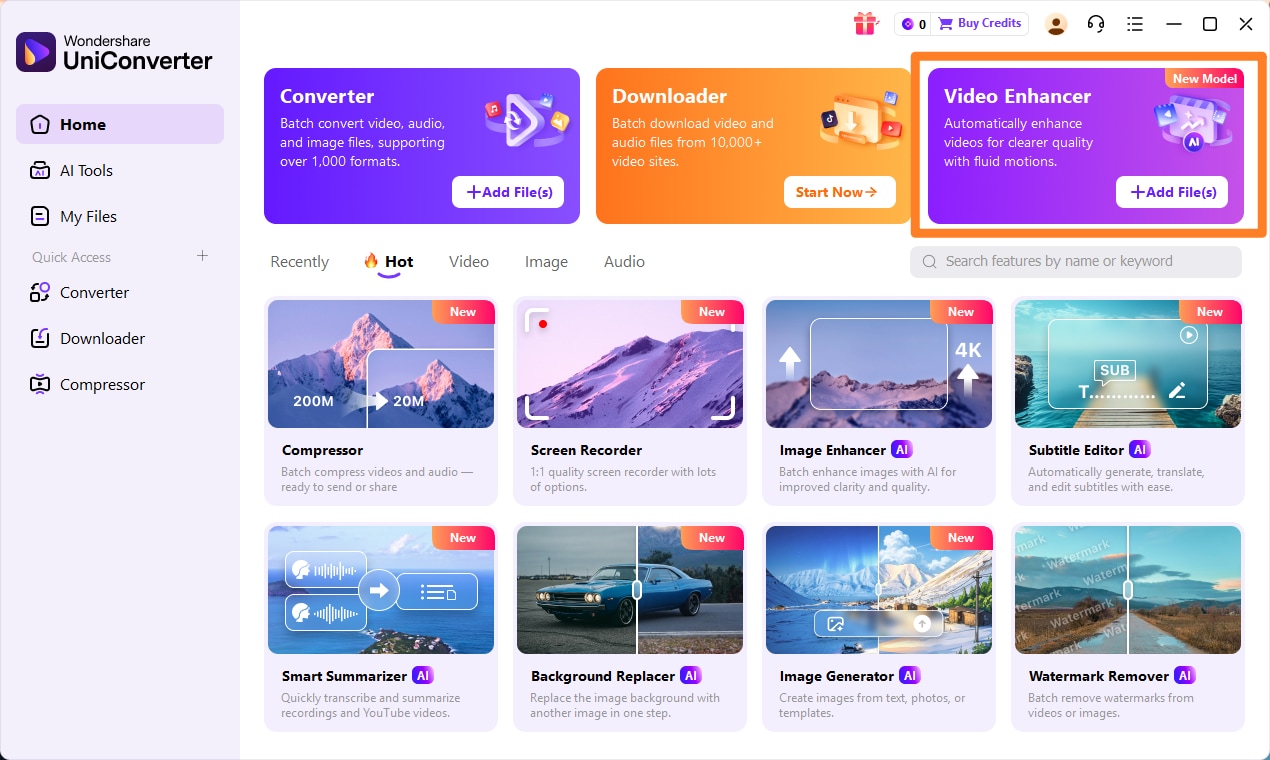
Step 1: Open UniConverter and Choose Video Enhancer
Launch UniConverter on your computer. Navigate to the "Toolbox" section and select the "Video Enhancer" feature from the available options.
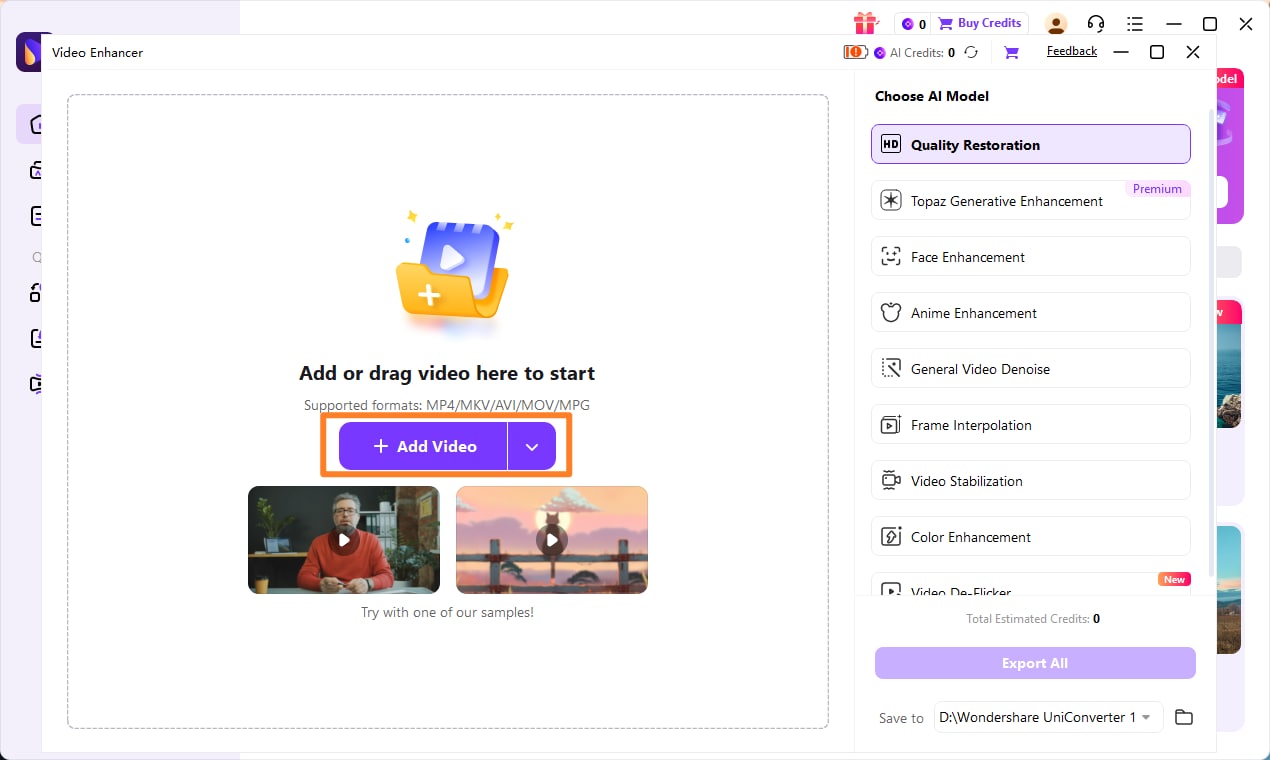
Step 2: Upload the Videos
Click the "Add Files" button or drag and drop the video files you wish to enhance into the UniConverter interface. You can add multiple videos for batch processing.
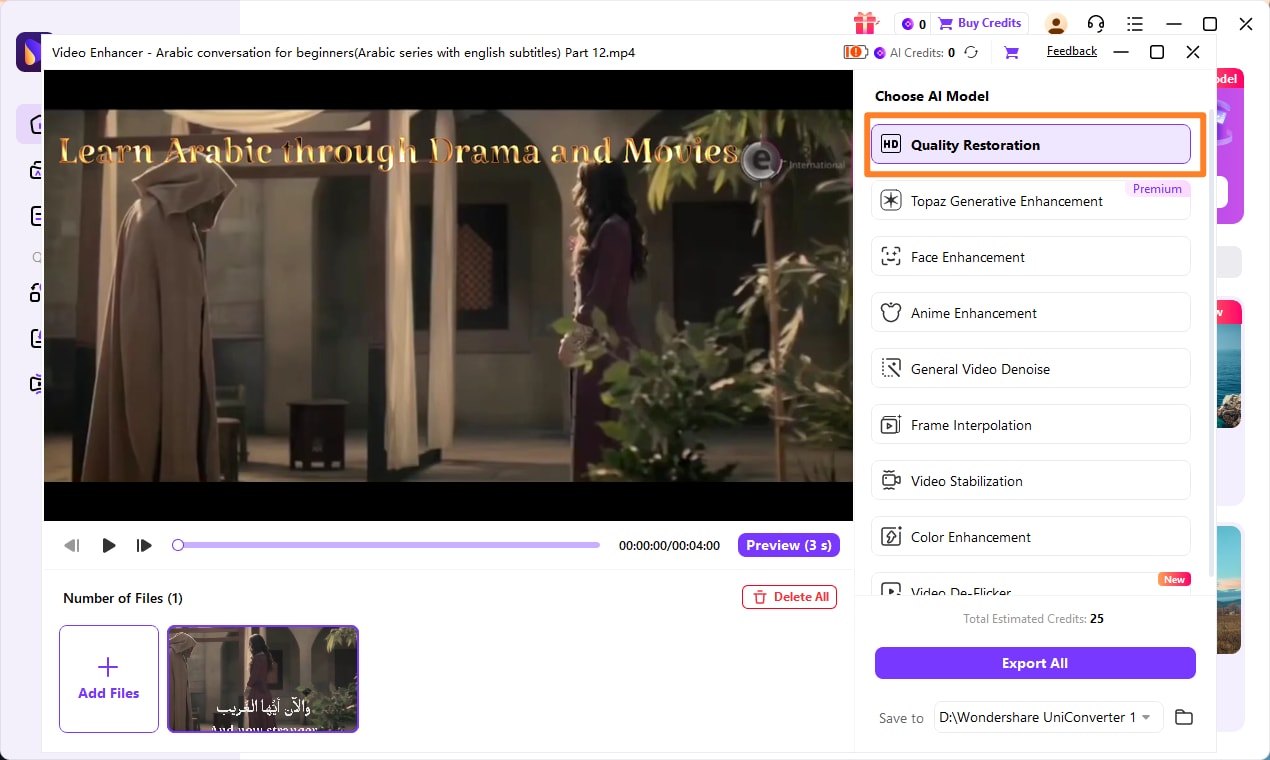
Step 3: Choose Enhancement Model
Select the desired enhancement options such as "Upscale Resolution," "Optimize Video Brightness and Contrast," "Denoise Video," or "Reduce Video Shaking." Adjust the output resolution and format as needed.
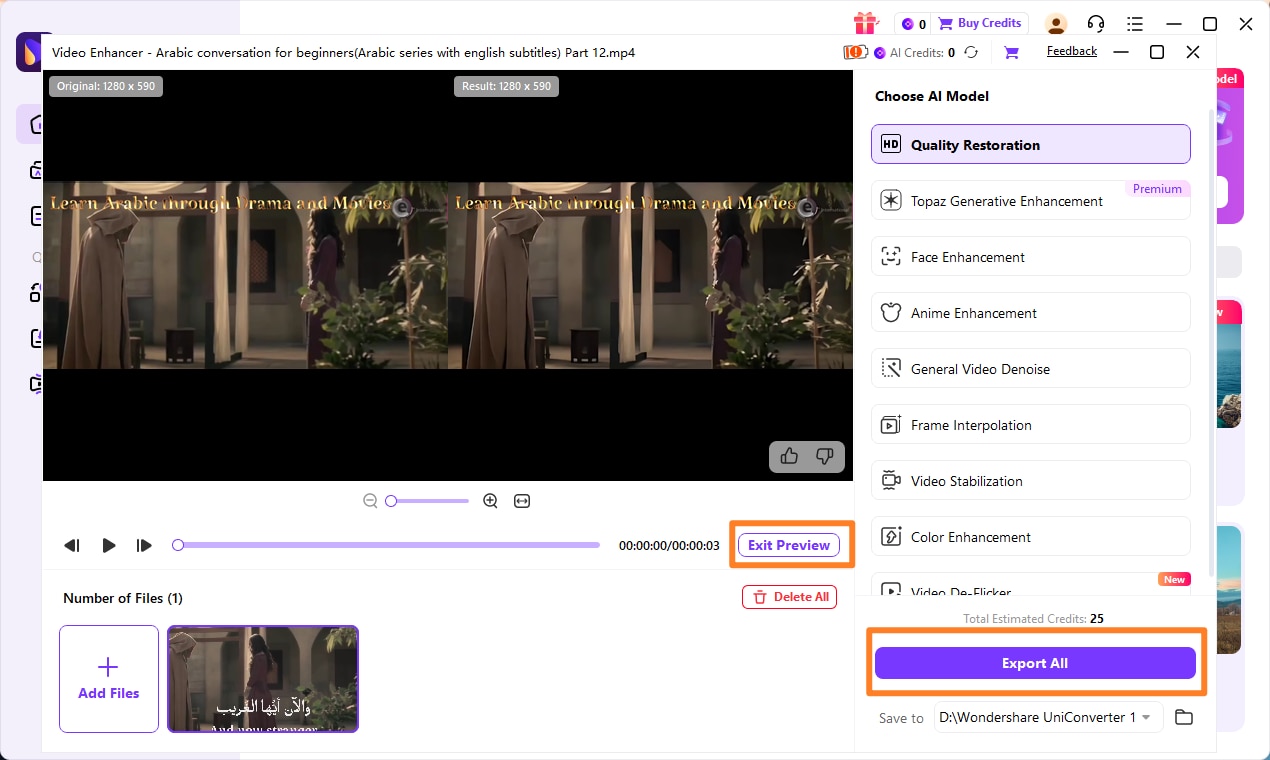
Step 4: Preview and Save the Enhanced Video
Click the "Preview" button to see a short snippet of the enhanced video. Once satisfied, click "Enhance" to start the process and save your high-quality video to the specified output folder.

Seeking a VanceAI Video Enhancer Alternative?
Part 7: Conclusion
This VanceAI Video Enhancer review has explored the capabilities, advantages, and limitations of this AI-powered tool, alongside a comparison with key alternatives. VanceAI Video Enhancer excels in providing an accessible and efficient solution for general video quality improvement, particularly for users seeking a straightforward experience. However, its subscription model and potential for artifacts in challenging footage are points to consider. For casual users and content creators, VanceAI offers a convenient way to elevate their video content without extensive technical knowledge. Small businesses and marketing teams might find its batch processing useful for consistent branding. Professional videographers and editors, while appreciating its ease of use, might require the more granular control and advanced features offered by tools like Topaz Video AI or the comprehensive suite of UniConverter for critical projects. Ultimately, the best choice depends on individual needs, budget, and the specific demands of the video enhancement task.
Part 8: FAQs
-
1. Is VanceAI Video Enhancer free to use?
VanceAI Video Enhancer typically offers a free trial with limited features or processing credits. Full access to its capabilities usually requires a subscription.
-
2. Can VanceAI Video Enhancer improve old, blurry videos?
Yes, VanceAI Video Enhancer is designed to improve old, blurry, and low-resolution videos by upscaling, denoising, and enhancing details, making them clearer and more vibrant.
-
3. What are the best alternatives to VanceAI Video Enhancer?
Top alternatives include Topaz Video AI for professional-grade enhancement, UniConverter for an all-in-one solution with broad format support, and DaVinci Resolve (free version) for those willing to invest time in learning a powerful editing suite.
-
4. Does VanceAI Video Enhancer support 4K upscaling?
Yes, VanceAI Video Enhancer supports upscaling videos to 4K resolution, allowing users to transform lower-resolution footage into high-definition content.
-
5. How long does it take to enhance a video with VanceAI?
The processing time depends on several factors, including the video's original length, resolution, the chosen enhancement settings, and your internet connection speed. Shorter, lower-resolution videos will process faster than long, high-resolution ones.
