
- Upscayl Review: This article provides a comprehensive review of Upscayl Video Enhancer, an open-source AI upscaling tool.
- Core Features: Upscayl offers AI-powered upscaling, noise reduction, and detail sharpening with a user-friendly interface.
- Ideal Users: Best for hobbyists and casual users revitalizing old home videos due to its free and open-source nature.
- Limitations: Lacks advanced customization for professional film restoration, and performance can be resource-intensive.
- Comparison: Upscayl is free, while Topaz Video AI and DaVinci Resolve Studio offer more features at a premium cost.
- UniConverter Advantage: UniConverter provides a user-friendly, robust alternative with efficient batch processing and stable enhancement.
- Risks: Be aware of potential AI artifacts, privacy concerns with cloud solutions, and misleading marketing claims.
- Hardware Needs: Video enhancement requires significant processing power, especially a strong GPU for faster results.
- Quality Expectations: Enhancers improve, but cannot create information; severely degraded footage may see limited improvement.
In this article
- Part 1: What is Upscayl Video Enhancer?
- Part 2: Upscayl Video Enhancer: Core Features, Pros, and Cons
- Part 3: Upscayl Video Enhancer: Ideal Users and Use Cases
- Part 4: Upscayl Video Enhancer and Alternatives Comparison
- Part 5: Risks and Pitfalls When Using Video Enhancers
- Part 6: How to Use UniConverter for Efficient Video Enhancement
- Part 7: Conclusion
- Part 8: FAQs About Video Enhancers
Upscayl Video Enhancer: A Comprehensive Scenario-Based Review
The digital age has brought an explosion of video content, from cherished home movies to professional productions. However, not all videos are created equal, and many suffer from low resolution, blurriness, or general lack of clarity. This is where video enhancement tools come into play, promising to breathe new life into old footage or improve the quality of new recordings. Upscayl Video Enhancer review delves into a promising open-source solution, examining its capabilities, limitations, and how it stacks up against its competitors. This review aims to provide a clear understanding of Upscayl's strengths and weaknesses, helping users make informed decisions about their video enhancement needs.
Part 1: What is Upscayl Video Enhancer?
Upscayl Video Enhancer is an AI-powered, open-source application designed to upscale and enhance video quality. Leveraging advanced machine learning models, it aims to improve resolution, reduce noise, and sharpen details in videos that might otherwise be deemed unusable. Born from the success of its image upscaling counterpart, Upscayl Video Enhancer extends the same powerful AI capabilities to the dynamic world of video. This review will address the core question of whether this free, community-driven tool can truly deliver professional-grade results and how it compares to established commercial alternatives.
The Growing Need for Video Enhancement Solutions
The demand for effective video enhancement tools is driven by several key factors:
* Archiving Legacy Footage: Many individuals possess old home videos or historical footage captured on lower-resolution devices, which benefit immensely from upscaling for modern displays.
* Improving User-Generated Content: With the proliferation of smartphones, a vast amount of video content is captured in less-than-ideal conditions, requiring enhancement for better viewing.
* Professional Post-Production: Even professional workflows sometimes encounter footage that needs a quality boost, whether for archival purposes or integration into higher-resolution projects.
* Accessibility to Advanced Technology: The desire for powerful enhancement tools that are both effective and affordable, or even free, is a constant market driver.
Part 2: Upscayl Video Enhancer: Core Features, Pros, and Cons
Upscayl Video Enhancer offers a focused set of features aimed at improving video quality through AI-driven processes. Its primary function revolves around upscaling, making lower-resolution videos suitable for larger screens or higher-definition playback. The tool is built on a foundation of open-source principles, fostering community contributions and transparency in its development.
Core Features:
* AI-powered upscaling: Utilizes machine learning models to intelligently increase video resolution.
* Noise reduction: Algorithms work to minimize visual noise and grain in footage.
* Detail sharpening: Enhances edges and fine details for a clearer image.
* User-friendly interface: Designed for ease of use, even for those new to video enhancement.
* Open-source development: Benefits from community contributions and continuous improvement.
Pros:
* AI-powered upscaling for improved video resolution
* Open-source and community-driven development
* User-friendly interface for quick enhancements
Cons:
* Limited advanced customization options for professional users
* Performance can be resource-intensive on older hardware
Part 3: Upscayl Video Enhancer: Ideal Users and Use Cases
Upscayl Video Enhancer is particularly well-suited for a specific demographic of users and a range of common video enhancement tasks. Its free and open-source nature makes it an attractive option for hobbyists and casual users who need to improve video quality without investing in expensive software.
Best Use Case: Revitalizing Old Home Videos for Digital Archiving
For individuals looking to digitize and enhance their personal archives of old home videos, often shot on camcorders or early digital cameras, Upscayl Video Enhancer shines. It can effectively upscale these lower-resolution clips, making them more presentable on modern HD or 4K displays. The simple interface allows users to quickly process their footage, preserving memories with improved clarity and detail, without needing extensive technical knowledge.
Limited Use Case: Professional Film Restoration Requiring Granular Control
While Upscayl Video Enhancer offers impressive upscaling, it falls short for professional film restoration projects that demand granular control over every aspect of the enhancement process. Professionals often require precise adjustments for color grading, artifact removal, stabilization, and specific film grain emulation, which Upscayl's streamlined interface does not provide. For such intricate tasks, dedicated industry-standard software with extensive customization options is indispensable.
Part 4: Upscayl Video Enhancer and Alternatives Comparison
When evaluating video enhancement tools, it's crucial to compare Upscayl Video Enhancer against its competitors to understand its position in the market. This comparison highlights key differences in features, cost, and target users.
| Feature/Scenario | Upscayl Video Enhancer | Topaz Video AI | DaVinci Resolve Studio | UniConverter |
| Ease of Use (Casual User) | Excellent | Good | Moderate | Excellent |
| AI Upscaling Quality (General) | Very Good | Excellent | Good (with plugins) | Very Good |
| Cost | Free | Premium | Premium | Premium (Free trial available) |
| Customization Options | Basic | Advanced | Extensive | Moderate |
| Hardware Requirements | Moderate | High | Very High | Moderate |
| Batch Processing | Limited | Excellent | Excellent | Excellent |
| Output Formats | Standard | Wide Range | Wide Range | Wide Range |
Upscayl Video Enhancer stands out for its accessibility and cost-effectiveness, being completely free and open-source. Its AI upscaling quality is commendable for a free tool, making it a strong contender for casual users. Topaz Video AI offers superior AI upscaling and advanced customization, but at a premium price, targeting more serious hobbyists and professionals. DaVinci Resolve Studio, while offering extensive features including video enhancement through plugins, is a full-fledged professional editing suite with a steep learning curve and high hardware demands. UniConverter strikes a balance, offering a user-friendly experience with robust enhancement features and excellent batch processing, making it a versatile choice for a wider audience.
Part 5: Risks and Pitfalls When Using Video Enhancers
While video enhancers promise to magically transform your footage, they come with their own set of risks and potential pitfalls that users should be aware of. Understanding these limitations is crucial for managing expectations and achieving satisfactory results.
Potential for "AI Artifacts" and Unnatural Results
One of the most common issues with AI-powered enhancement is the introduction of "AI artifacts." These can manifest as strange distortions, wobbly lines, or overly smooth, plastic-like textures that make the video look unnatural. While AI models are constantly improving, they can sometimes misinterpret details or over-process areas, leading to results that are worse than the original footage. It's essential to preview enhanced videos carefully to catch these anomalies.
Privacy Concerns with Cloud-Based Solutions
Many video enhancement services operate in the cloud, requiring users to upload their video files to external servers. This raises significant privacy concerns, especially for sensitive or personal footage. Users should carefully review the privacy policies of such services to understand how their data is stored, processed, and protected. Opting for desktop-based solutions, like Upscayl, can mitigate some of these risks as processing occurs locally.
Misleading Marketing Claims Regarding "Magic" Enhancements
The marketing surrounding video enhancers often exaggerates their capabilities, promising to turn low-resolution, blurry footage into pristine 4K masterpieces with a single click. In reality, while significant improvements are possible, these tools cannot create information that was never present in the original video. Users should approach these claims with skepticism and understand that "enhancement" is about intelligent interpolation and noise reduction, not true resolution creation.
Hardware Compatibility and Performance Bottlenecks
Video enhancement, particularly AI-driven upscaling, is incredibly resource-intensive. It demands significant processing power from both the CPU and, more critically, the GPU. Users with older or less powerful hardware may experience extremely slow processing times, crashes, or even an inability to run the software effectively. Checking system requirements and having realistic expectations about processing speed is vital.
Understanding Output Quality Limitations
Even with the best enhancement tools, there are inherent limitations to how much quality can be recovered or improved. Heavily compressed, extremely low-resolution, or severely damaged footage may only see marginal improvements, or the enhancement process might exacerbate existing flaws. It's important to understand that these tools are best for moderately flawed videos rather than attempting to salvage completely compromised material.
Part 6: How to Use UniConverter for Efficient Video Enhancement
When other tools fall short, struggling with batch processing, unstable enhancements, or simply delivering weak results, UniConverter emerges as a robust and reliable alternative. It offers a comprehensive suite of video tools, including powerful enhancement capabilities, all within a user-friendly interface. UniConverter stands out for its ad-free experience, extensive format support, GPU acceleration for faster processing, stable and lossless enhancement, and efficient batch processing, positioning it as an all-in-one ultimate solution for your video needs.
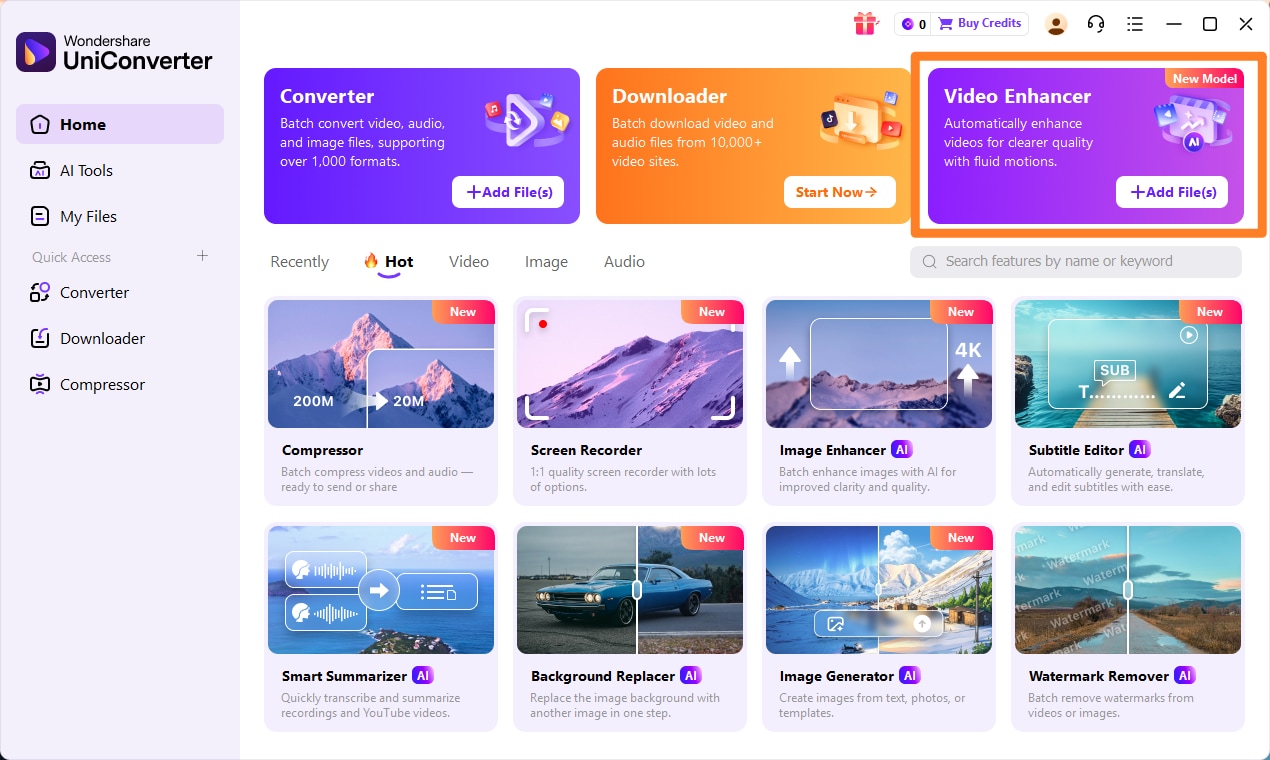
### Step 1: Open UniConverter and Choose Video Enhancer
Launch UniConverter on your computer. From the main interface, navigate to the "Toolbox" section and select the "Video Enhancer" option. This will open the dedicated enhancement module.
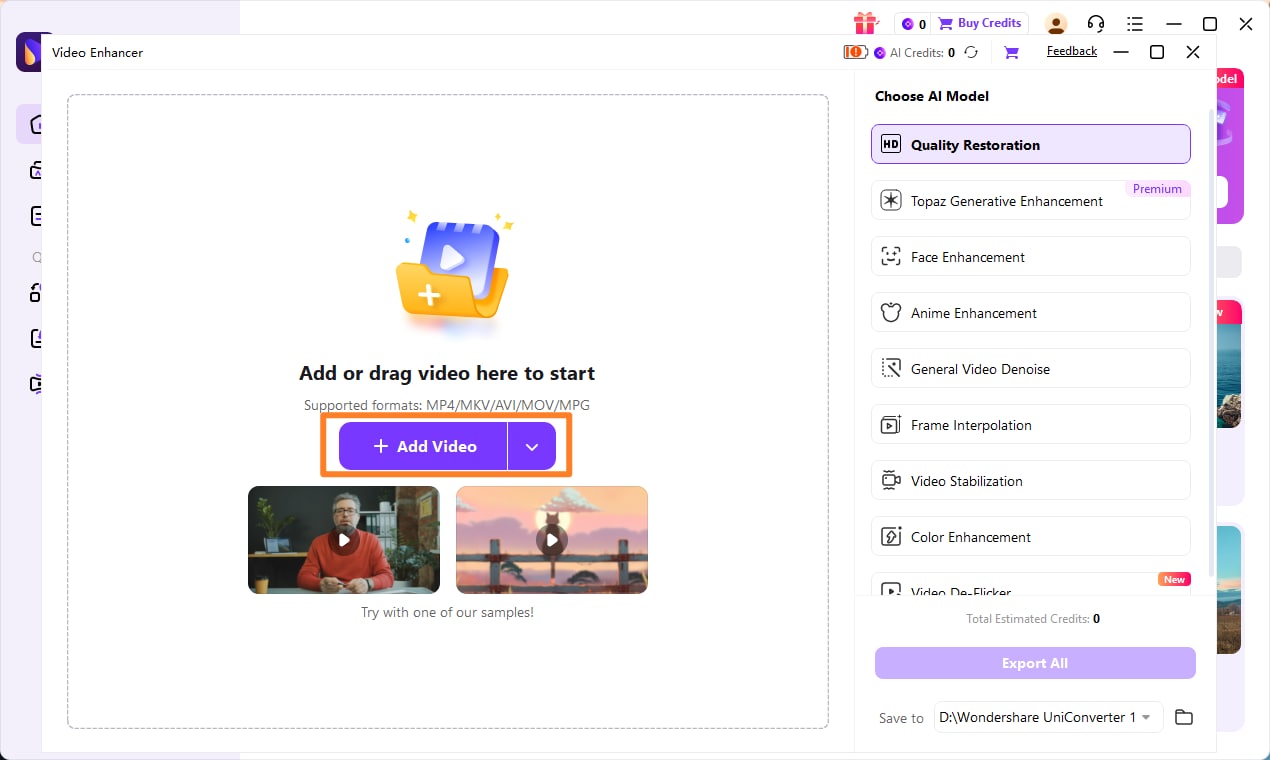
### Step 2: Upload the Videos
Click on the "Add Files" button or simply drag and drop the video files you wish to enhance into the UniConverter interface. You can add multiple videos for batch processing.
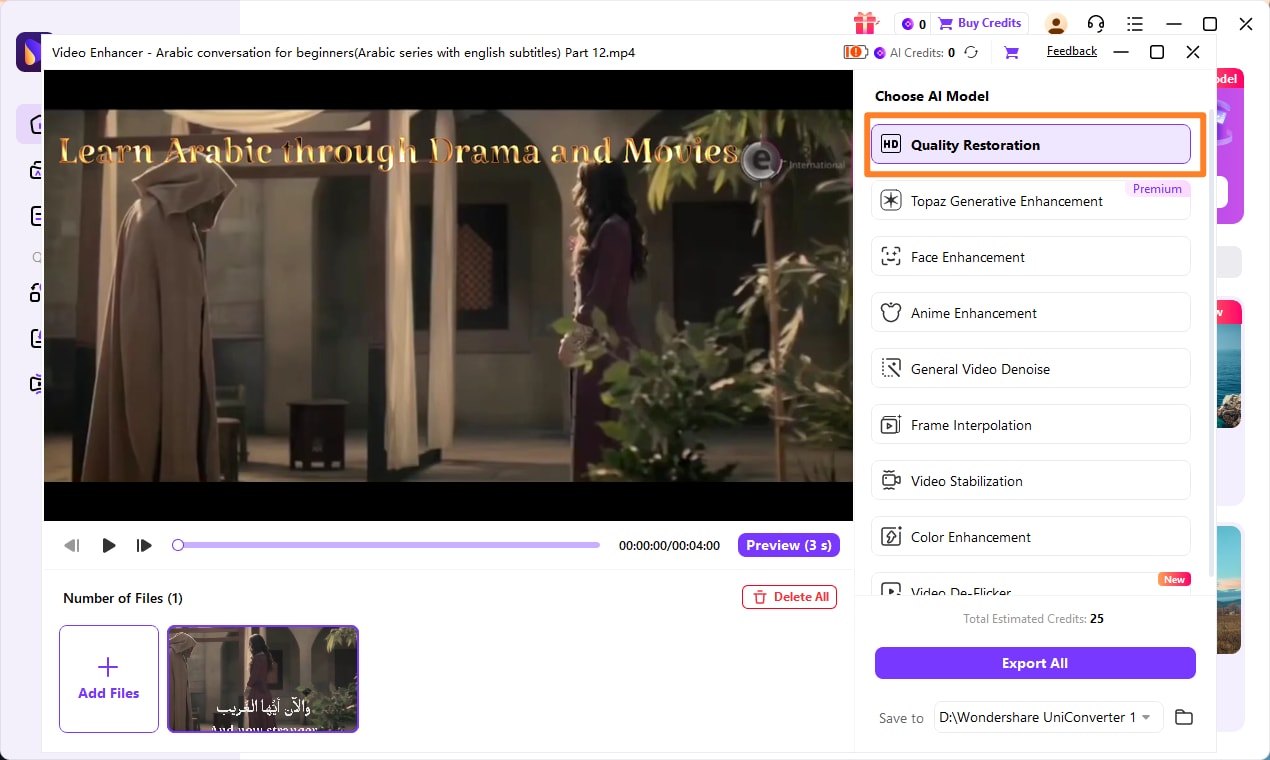
### Step 3: Choose Enhancement Model
UniConverter offers various enhancement options such as "Upscale Resolution," "Optimize Brightness and Contrast," "Remove Video Noise," and "Reduce Video Shaking." Select the desired enhancement models based on your video's needs. For instance, if you're looking to change the background of your video, UniConverter provides tools to achieve this seamlessly. You can also leverage its capabilities to remove background without losing quality for a cleaner look. Additionally, for those working with images, the SVG background remover feature can be particularly useful.
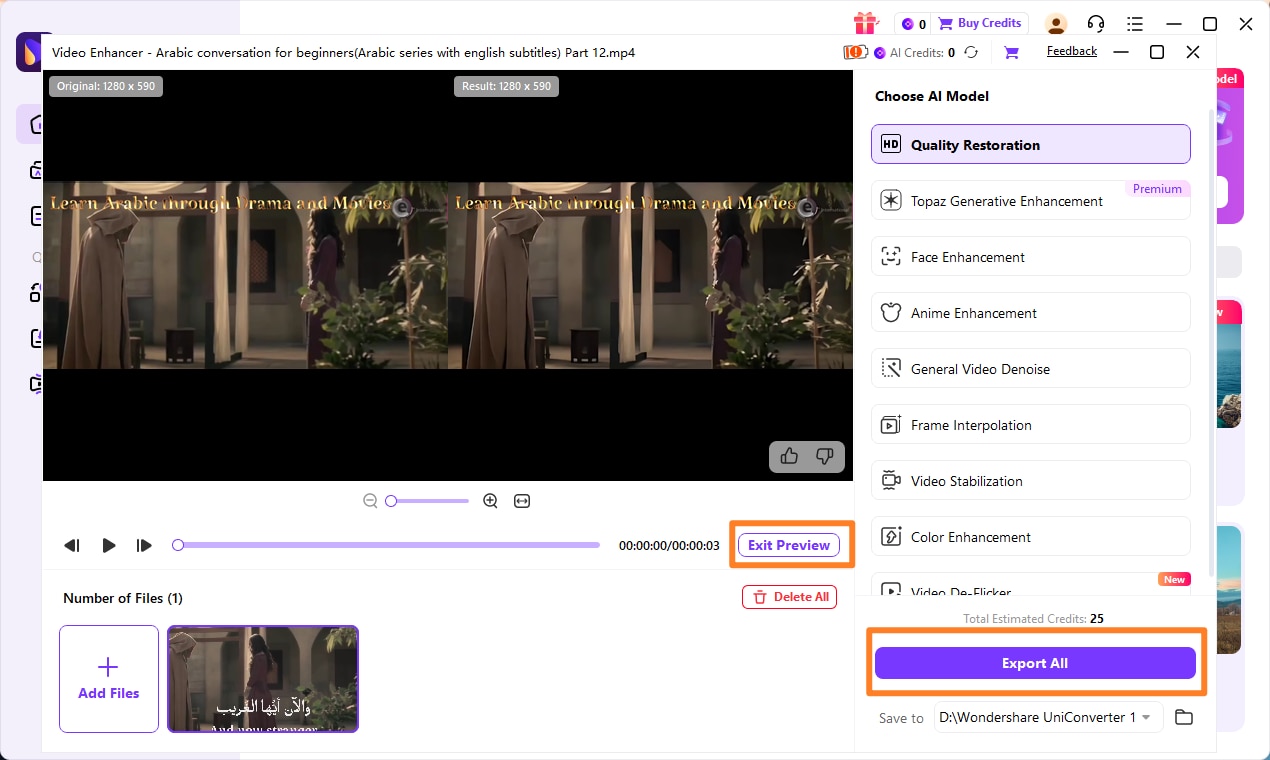
### Step 4: Preview and Save the Enhanced Video
After selecting your enhancement options, you can preview the changes to ensure they meet your expectations. Once satisfied, choose your desired output format and destination folder, then click "Enhance" or "Start All" to save your improved video. This includes options for high-definition background remover if you've utilized that feature.

Beyond Upscayl: Enhance Videos with More Control
Part 7: Conclusion
The Upscayl Video Enhancer review reveals a compelling open-source solution for video upscaling and enhancement. For casual users and hobbyists, its free nature and user-friendly interface make it an excellent starting point for improving old home videos or general low-resolution footage. It provides a valuable entry point into AI-powered video enhancement without any financial commitment. However, for content creators and small businesses requiring more control, advanced features, and consistent, high-quality output, exploring solutions with more granular customization and robust batch processing capabilities would be beneficial. Professional studios, with their demanding workflows and need for precise control over every aspect of video restoration and enhancement, should invest in industry-standard software like DaVinci Resolve Studio, which offers extensive features and plugins. Ultimately, the best tool depends on individual needs, technical expertise, and budget.
Part 8: FAQs About Video Enhancers
-
1. Can Upscayl Video Enhancer truly turn low-resolution video into 4K?
Upscayl can significantly improve perceived resolution by intelligently interpolating pixels and sharpening details, making a low-resolution video appear much better on a 4K screen. However, it cannot create information that wasn't originally present in the source footage. It's an "upscaling" process, not a "magic resolution creator" that generates entirely new, authentic 4K data.
-
2. Are there any free alternatives to Upscayl Video Enhancer?
While Upscayl is a prominent free and open-source option, other free alternatives exist, often with varying features and quality. Some online tools offer limited free trials or basic enhancement, but they might come with watermarks or restrictions. UniConverter offers a free trial with robust features, providing a good balance of capability and accessibility.
-
3. How much processing power do I need for video enhancement?
Video enhancement, especially AI-powered upscaling, is very demanding on hardware. A strong GPU (Graphics Processing Unit) with ample VRAM is highly recommended, as most AI models leverage GPU acceleration for faster processing. Sufficient RAM (16GB or more) and a capable CPU are also crucial for efficient performance and to prevent bottlenecks.
-
4. Will enhancing my video always improve its quality?
Not always. While video enhancers aim to improve quality, over-enhancement can introduce undesirable artifacts, excessive sharpening, or an unnatural, "plastic" look. If the original footage is severely degraded, enhancement might even exacerbate existing noise or compression artifacts. It's crucial to find a balance and always preview the results before finalizing to ensure the enhancement genuinely improves the video.
-
5. What's the difference between video upscaling and video restoration?
Video upscaling primarily focuses on increasing the resolution of a video, making it suitable for larger displays without appearing pixelated. Video restoration, on the other hand, is a broader process that aims to fix various issues like scratches, dust, color fading, noise, flickering, and stabilization problems in old or damaged footage. Some advanced tools combine both upscaling and restoration capabilities.
