
- UniFab AI Review: Unifab Video Enhancer AI uses advanced AI to upscale and enhance video quality.
- Core Features: UniFab excels in AI upscaling, noise reduction, and intuitive design, but needs high-end hardware.
- Ideal Use: Best for restoring vintage videos; less suitable for real-time live stream enhancement.
- Comparison: UniFab balances quality and ease-of-use, outperforming some rivals in detail preservation and noise reduction.
- Risks: Beware of over-processing, hardware demands, and potential cloud data privacy concerns.
- UniConverter Alternative: Wondershare UniConverter offers efficient, stable, and comprehensive AI video/image enhancement.
- Recommendation: UniFab is a strong choice for quality enhancement, balancing cost and performance for various users.
In this article
- Part 1: What is UniFab Video Enhancer AI
- Part 2: UniFab Video Enhancer AI: Core Features, Pros, and Cons
- Part 3: UniFab Video Enhancer AI: Ideal Users and Use Cases
- Part 4: UniFab Video Enhancer AI vs. Competitors: A Comparative Analysis
- Part 5: Risks and Pitfalls to Consider
- Part 6: How to Use UniConverter for Efficient Video and Image Enhancement
- Part 7: Final Verdict and Recommendations
- Part 8: FAQs
In the rapidly evolving digital landscape, the demand for high-quality video content has never been greater. From professional filmmakers to casual content creators, everyone seeks tools to elevate their visual narratives. This UniFab Video Enhancer AI review delves into a promising solution designed to meet this need. UniFab Video Enhancer AI positions itself as a cutting-edge software leveraging artificial intelligence to upscale and enhance video quality, promising to breathe new life into old footage and refine contemporary recordings. This review will provide a comprehensive analysis of its features, performance, and value proposition, comparing it against key competitors to help users make informed decisions in a crowded market.
Part 1: What is UniFab Video Enhancer AI
UniFab Video Enhancer AI is a sophisticated software application developed to address the pervasive challenge of low-resolution or poor-quality video footage. It utilizes advanced AI algorithms to intelligently upscale videos, improve clarity, reduce noise, and enhance overall visual fidelity. The core promise of UniFab is to transform standard or even sub-standard video inputs into high-definition or even 4K outputs, making them suitable for modern displays and platforms. This review aims to dissect its capabilities, evaluate its effectiveness, and determine its standing in the competitive landscape of AI video enhancement tools.
The Growing Demand for AI Video Enhancement
The surge in demand for AI video enhancement tools is driven by several factors:
* Legacy Content Preservation: A vast archive of valuable video content exists in lower resolutions, incompatible with today's high-definition screens. AI enhancement offers a path to modernize this content.
* User-Generated Content Quality: With the proliferation of smartphones and amateur videography, much of the content produced lacks professional quality. AI tools can bridge this gap, making amateur footage more appealing.
* Technological Advancements: The continuous development of AI and machine learning has made sophisticated video processing more accessible and effective than ever before.
* Platform Requirements: Modern streaming platforms and social media increasingly favor high-resolution content, pushing creators to seek enhancement solutions.
Part 2: UniFab Video Enhancer AI: Core Features, Pros, and Cons
UniFab Video Enhancer AI stands out with its dedicated focus on AI-driven video upscaling and enhancement. Its core capabilities revolve around intelligently analyzing video frames to reconstruct details, reduce artifacts, and improve overall visual quality. The software supports a wide array of input and output formats, ensuring flexibility for various user needs. It boasts features like noise reduction, deinterlacing, and color correction, all powered by its proprietary AI models. The user interface is designed for ease of use, making advanced video enhancement accessible to a broader audience.
Pros:
* Advanced AI Algorithms for Superior Upscaling in Low-Light Conditions: Excels at enhancing videos shot in challenging lighting, bringing out details often lost.
* Intuitive User Interface for Beginners and Professionals Alike: Simplifies complex enhancement processes, making it approachable for all skill levels.
* Comprehensive Format Support for Diverse Video Sources: Handles a wide range of video file types, ensuring compatibility with most projects.
Cons:
* Resource-Intensive Processing Requires High-End Hardware: Demands significant computational power, potentially slowing down older systems.
* Occasional Artifacts with Highly Compressed Source Footage: May introduce minor visual anomalies when processing extremely low-quality or heavily compressed videos.
Part 3: UniFab Video Enhancer AI: Ideal Users and Use Cases
UniFab Video Enhancer AI is particularly well-suited for individuals and organizations looking to significantly improve the visual quality of their video content without requiring extensive video editing expertise. Its AI-driven approach makes it an invaluable tool for tasks that traditionally demanded professional-grade software and significant manual effort.
Best Use Case: Restoring Vintage Family Videos for Modern Displays
Imagine a scenario where you possess decades-old family videos, perhaps recorded on VHS or early digital cameras, which now appear pixelated and faded on your 4K television. UniFab Video Enhancer AI can be a game-changer here. Its advanced AI algorithms can intelligently upscale these low-resolution videos, reduce analog noise, correct colors, and sharpen details, transforming them into crisp, vibrant footage suitable for modern high-definition screens. This allows families to relive cherished memories with unprecedented clarity, making it an ideal tool for archivists and sentimental users alike.
Limited Use Case: Real-time Live Stream Enhancement
While UniFab Video Enhancer AI excels at post-processing video enhancement, its resource-intensive nature and batch processing workflow make it less suitable for real-time applications such as live stream enhancement. The computational demands for AI upscaling are significant, and integrating this process into a live broadcasting pipeline without introducing considerable latency or requiring extremely powerful dedicated hardware is currently impractical. For live streamers, solutions focused on real-time encoding and basic visual adjustments are more appropriate, as UniFab's strength lies in meticulous, offline quality improvement.
Part 4: UniFab Video Enhancer AI vs. Competitors: A Comparative Analysis
When evaluating UniFab Video Enhancer AI, it's crucial to compare its performance against other prominent players in the market. This table provides a snapshot of how UniFab stacks up against two leading alternatives, Topaz Video AI and DaVinci Resolve, focusing on key performance indicators relevant to video enhancement.
| Feature/Product | UniFab Video Enhancer AI | Topaz Video AI | DaVinci Resolve | Wondershare UniConverter |
| AI Upscaling Quality | Excellent | Excellent | Good (with Studio version) | Very Good |
| Processing Speed | Moderate | Fast | Moderate | Fast |
| Price Point | Mid-Range | High | Free (Studio is High) | Mid-Range |
| Ease of Use | High | Moderate | Low | High |
| Output Formats | Extensive | Extensive | Extensive | Extensive |
Key Differentiators: UniFab's Edge in Detail Preservation and Noise Reduction
UniFab Video Enhancer AI distinguishes itself through its exceptional ability to preserve fine details while effectively reducing noise, particularly in challenging source footage. While Topaz Video AI also offers excellent upscaling, UniFab often provides a slightly more natural look, avoiding the "over-sharpened" appearance that some AI tools can produce. DaVinci Resolve, while a powerful professional editing suite, requires a steeper learning curve for its enhancement features and its free version has limitations. UniFab strikes a balance between quality and user-friendliness, making it a strong contender for users prioritizing detail and noise management.
Part 5: Risks and Pitfalls to Consider
While UniFab Video Enhancer AI offers significant advantages in video enhancement, users should be aware of potential risks and pitfalls that can impact their experience and the final output quality. Understanding these limitations is crucial for managing expectations and making informed decisions.
Potential for Over-Processing and Unnatural Results
One of the primary risks with any AI enhancement tool, including UniFab, is the potential for over-processing. Aggressive application of enhancement settings can lead to an unnatural, "plastic" look, where details are smoothed out excessively, or artificial textures are introduced. This can detract from the original aesthetic of the video, making it appear less authentic. Users must exercise caution and use the preview function extensively to find the right balance, as pushing the enhancement too far can yield undesirable, cartoon-like results.
Data Privacy Concerns with Cloud-Based AI Processing
While UniFab Video Enhancer AI is primarily a desktop application, some AI enhancement tools leverage cloud-based processing. If UniFab were to introduce cloud features in the future, or if users consider other cloud-based alternatives, data privacy becomes a significant concern. Uploading sensitive or proprietary video content to external servers for processing raises questions about data security, who has access to the footage, and how long it is stored. Users should always review the privacy policies of any cloud-based service before entrusting them with their data.
Subscription Model vs. One-Time Purchase Value
UniFab Video Enhancer AI, like many modern software solutions, may operate on a subscription model. While subscriptions offer continuous updates and support, they can accumulate significant costs over time compared to a one-time purchase. Users need to evaluate their long-term usage needs against the recurring expense. For infrequent users, a perpetual license (if available) or a more budget-friendly alternative might offer better value, whereas professionals requiring constant access to the latest features might find a subscription more appealing.
Hardware Requirements and Performance Bottlenecks
As highlighted in the cons, UniFab Video Enhancer AI is resource-intensive. This means users with older or less powerful hardware (e.g., integrated graphics cards, insufficient RAM, or slower processors) may experience significant performance bottlenecks. Processing times can be extremely long, rendering the software frustrating to use. This can lead to a poor user experience and may necessitate costly hardware upgrades, which is an indirect cost of using the software. Ensuring your system meets or exceeds the recommended specifications is vital for a smooth workflow.
Part 6: How to Use UniConverter for Efficient Video and Image Enhancement
When other tools fall short in batch processing, stability, or delivering consistent enhancement quality, UniConverter emerges as a robust alternative. It offers a comprehensive suite of video tools, including powerful AI enhancement capabilities, designed to overcome the limitations often found in specialized enhancers. UniConverter provides a seamless experience with no ads, extensive format support, GPU acceleration for faster processing, stable and lossless enhancement, and efficient batch processing for multiple videos or images. It truly stands as an all-in-one ultimate solution for your video enhancement needs.
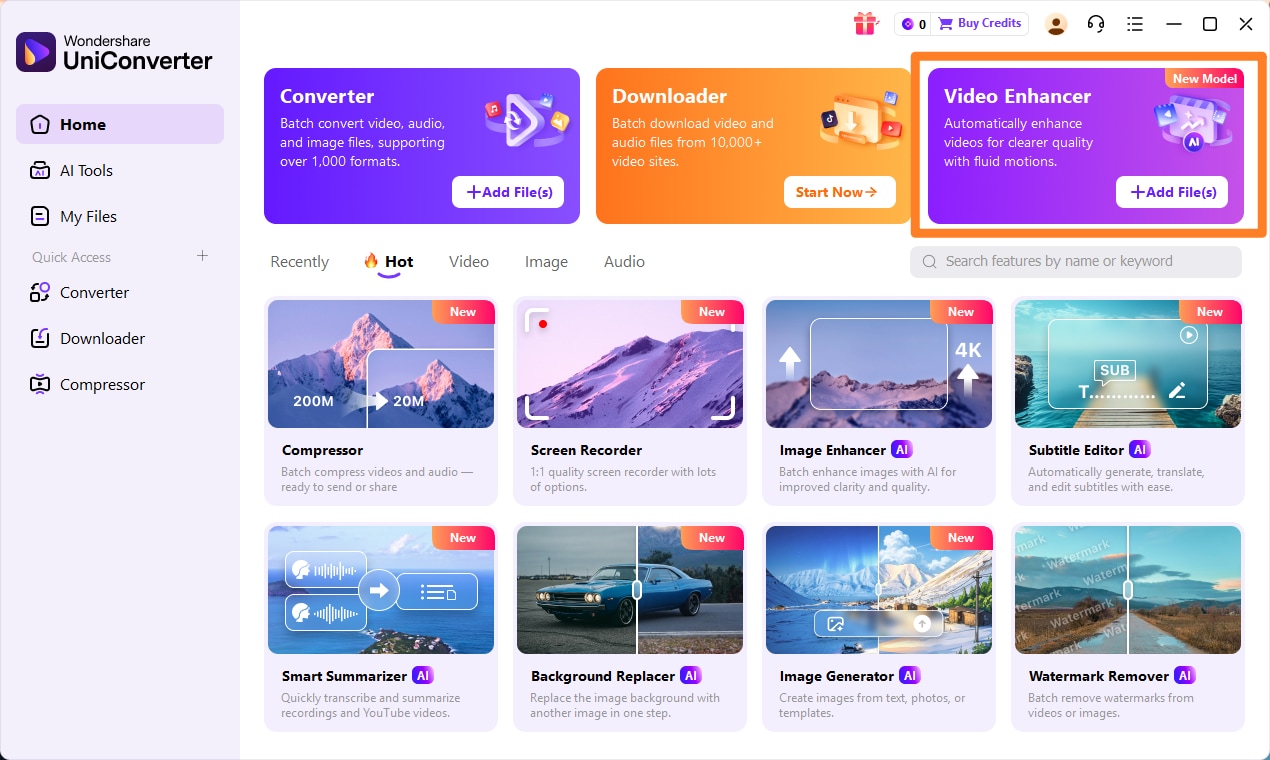
Step 1: Open UniConverter and Choose Video Enhancer
Launch UniConverter on your computer. From the main interface, navigate to the "AI Lab" section and select the "Video Enhancer" tool.
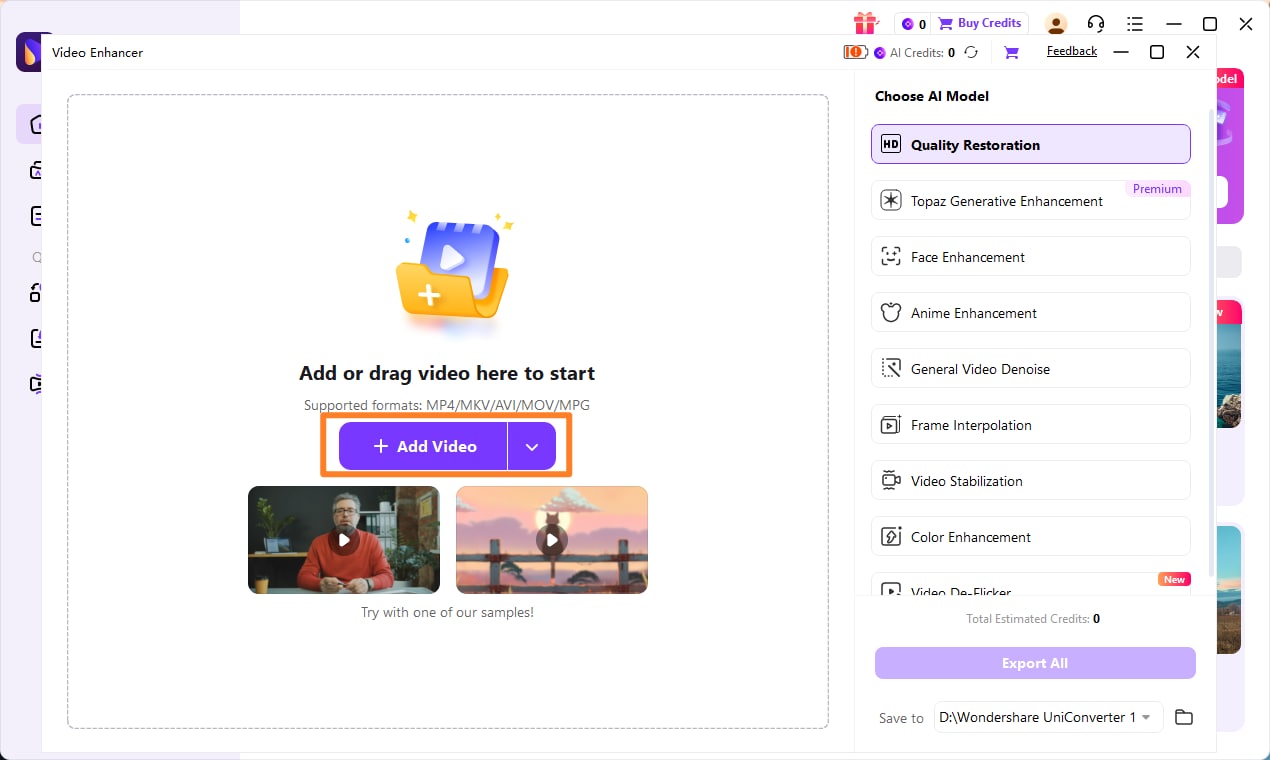
Step 2: Upload the Videos
Click on the "Add Files" button or drag and drop your video files into the UniConverter window. You can add multiple videos for batch processing.
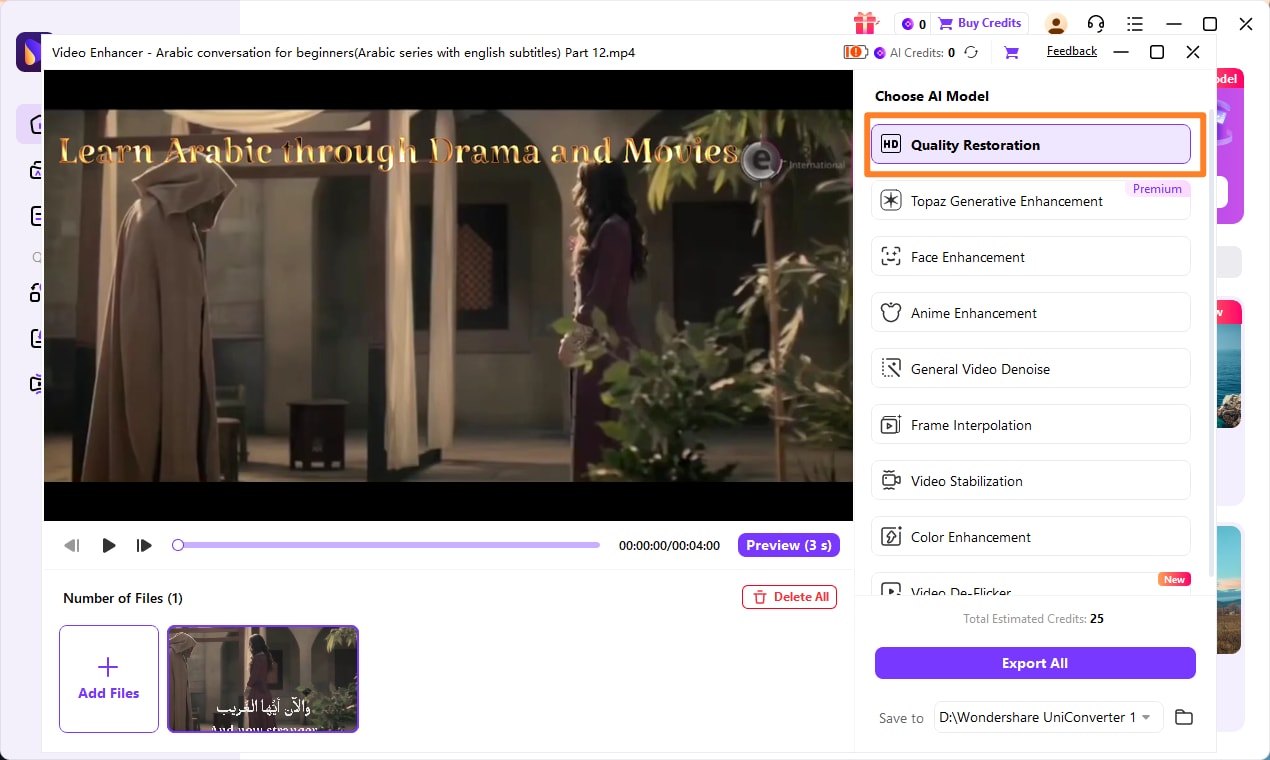
Step 3: Choose Enhancement Model
Select the desired AI enhancement model (e.g., AI Upscaling, AI Denoise, AI Color Correction) and configure the output resolution and format. For instance, if you're looking to change video background, UniConverter offers advanced features to achieve this with ease. You can also remove background without losing quality for a professional touch.
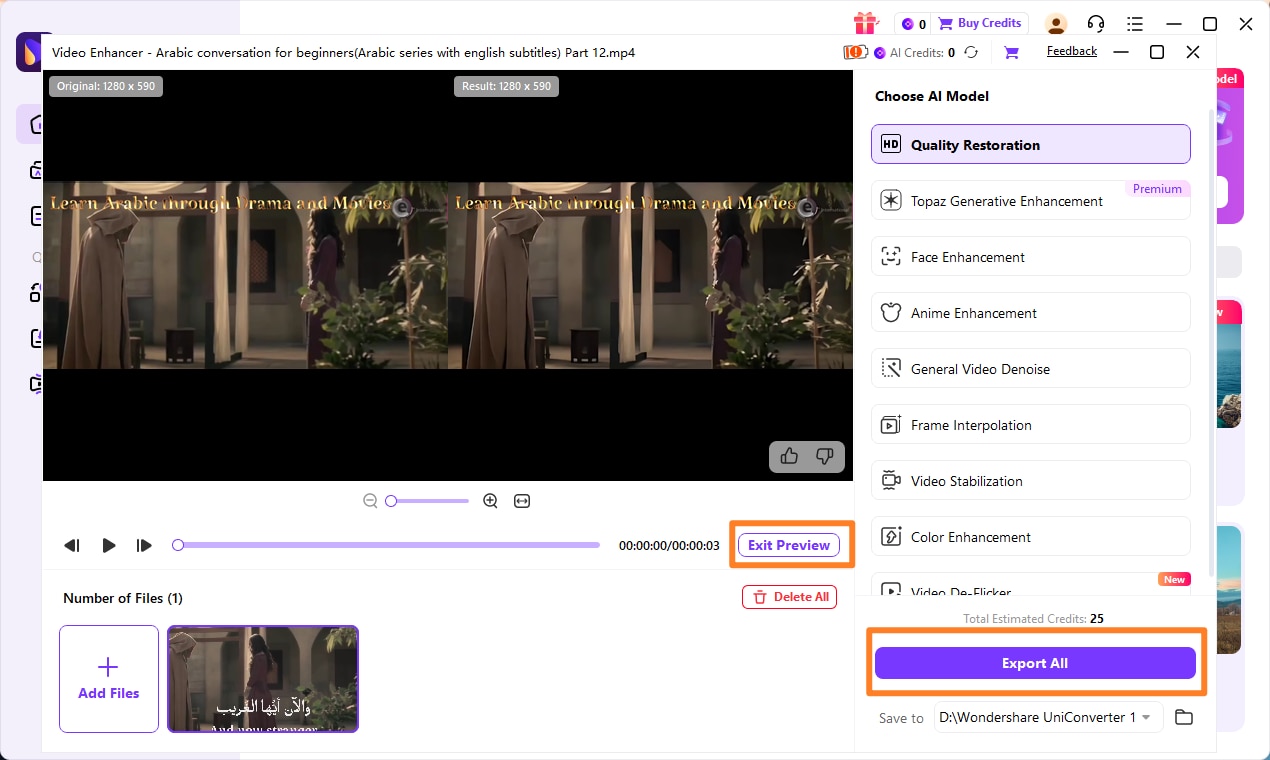
Step 4: Preview and Save the Enhanced Video
Preview the enhanced video to ensure satisfaction. Once ready, click the "Export" button to save your high-quality video. If you need to remove background from images or videos, UniConverter's background replacer tools are highly effective.

Seeking a Powerful UniFab Video Enhancer AI Alternative?
Part 7: Final Verdict and Recommendations
The UniFab Video Enhancer AI review reveals a powerful tool that effectively leverages artificial intelligence to significantly improve video quality. Its strengths lie in its advanced AI algorithms, particularly for low-light conditions, and its user-friendly interface. While it demands robust hardware and can occasionally produce artifacts with highly compressed sources, its ability to restore and enhance footage is commendable. For users prioritizing detailed preservation and noise reduction, UniFab offers a compelling solution.
For Professional Videographers and Archivists
Professional videographers and archivists will find UniFab Video Enhancer AI a valuable asset for breathing new life into old or lower-quality footage. Its ability to upscale and clean up videos makes it ideal for archival projects, documentary work, or preparing legacy content for modern distribution. However, they should be mindful of the processing time and ensure they have adequate hardware to handle large batches of high-resolution files.
For Casual Users and Content Creators
Casual users and content creators, especially those working with smartphone footage or older cameras, will appreciate UniFab's intuitive interface and the significant quality boost it can provide. It democratizes advanced video enhancement, allowing users without extensive technical knowledge to achieve professional-looking results. For those with less powerful systems, patience will be key, or they might consider alternatives with lower hardware demands.
Balancing Cost, Performance, and Quality
Ultimately, the decision to invest in UniFab Video Enhancer AI, or any similar tool, comes down to balancing cost, performance, and desired quality. UniFab sits in the mid-range price bracket, offering excellent quality at a moderate processing speed. Users on a tighter budget or with less powerful computers might explore options like UniConverter, which offers a broader suite of tools and efficient performance. For those seeking the absolute best quality regardless of cost and processing time, Topaz Video AI remains a strong contender. UniFab serves as an excellent middle-ground, delivering high-quality enhancements without the premium price tag of some competitors, provided your hardware can keep up.
Part 8: FAQs
-
1. What types of videos can UniFab Video Enhancer AI improve?
UniFab Video Enhancer AI can improve a wide range of videos, including low-resolution footage, old home videos, surveillance footage, and videos suffering from noise, blur, or poor lighting. It's designed to upscale and enhance clarity for almost any video source.
-
2. Is UniFab Video Enhancer AI suitable for commercial use?
Yes, UniFab Video Enhancer AI is suitable for commercial use. Its advanced enhancement capabilities make it a valuable tool for businesses, filmmakers, and content creators looking to improve the quality of their video assets for professional projects, marketing, or archival purposes.
-
3. How does UniFab Video Enhancer AI compare to free alternatives?
UniFab Video Enhancer AI generally offers significantly superior enhancement quality compared to most free alternatives. Free tools often lack the sophisticated AI algorithms for intelligent upscaling and noise reduction, frequently resulting in less natural or artifact-ridden outputs. UniFab's paid model supports continuous development and advanced features.
-
4. What are the minimum system requirements for UniFab Video Enhancer AI?
While specific requirements can vary with updates, UniFab Video Enhancer AI typically requires a modern multi-core processor (Intel i5 or equivalent), at least 8GB of RAM (16GB recommended), and a dedicated graphics card with at least 4GB of VRAM (NVIDIA GTX 1050 Ti or AMD Radeon RX 560 or better is often recommended for optimal performance).
-
5. Can UniFab Video Enhancer AI fix blurry videos?
UniFab Video Enhancer AI can help reduce blur and sharpen details in videos, especially those with minor blur or soft focus. However, it cannot magically restore severely out-of-focus or motion-blurred footage to perfect clarity, as AI enhancement relies on existing data to reconstruct details, not create them from scratch.
