
- TMPGEnc Overview: Learn about TMPGEnc Movie Studio Video Enhancer, a specialized tool for improving older, low-quality video footage.
- Core Features: Discover its AI upscaling, noise reduction, and stabilization capabilities, ideal for restoring legacy videos.
- Target Users: Understand if TMPGEnc suits your needs, especially for archiving family videos, not quick social media edits.
- Comparison: See how TMPGEnc stacks against UniConverter, Topaz Video AI, and DaVinci Resolve for informed decisions.
- Considerations: Be aware of potential pitfalls like learning curve, resource intensity, and output limitations before investing.
- UniConverter Alternative: Explore UniConverter for seamless, user-friendly, and efficient AI-powered video enhancement with batch processing.
In this article
- Part 1: What is TMPGEnc Movie Studio Video Enhancer
- Part 2: TMPGEnc Movie Studio Video Enhancer: Core Features, Pros, and Cons
- Part 3: Target Users and Usage Scenarios
- Part 4: TMPGEnc Movie Studio Video Enhancer and Alternatives Comparison
- Part 5: Potential Pitfalls and Considerations
- Part 6: How to Use UniConverter for Seamless Video Enhancement
- Part 7: Conclusion
- Part 8: FAQs
This TMPGEnc Movie Studio Video Enhancer review delves into a specialized software solution designed to breathe new life into older or lower-quality video footage. In an era dominated by high-definition content, many users possess valuable archives—from family home movies to historical recordings—that suffer from resolution limitations, noise, and other imperfections. This review aims to provide a comprehensive analysis of TMPGEnc Movie Studio Video Enhancer's capabilities, its position in the competitive market, and how it stacks up against alternatives. We will explore its core features, identify its ideal user base, and highlight potential pitfalls, ultimately guiding you toward an informed decision regarding your video enhancement needs.
Part 1: What is TMPGEnc Movie Studio Video Enhancer
TMPGEnc Movie Studio Video Enhancer is a dedicated software application developed by Pegasys Inc., renowned for its suite of video editing and encoding tools. This particular product focuses on the often-challenging task of improving the visual quality of existing video files, particularly those suffering from low resolution, digital noise, or compression artifacts. It leverages advanced algorithms to upscale footage, reduce unwanted grain, and restore detail, aiming to make older videos more palatable for modern viewing standards. This review will dissect its performance in real-world scenarios, assess its value proposition, and compare it with other prominent solutions in the market.
Market Background and User Pain Points:
* Proliferation of Legacy Footage: Many users have vast collections of standard-definition videos (e.g., VHS, MiniDV) that look poor on modern HD/4K displays.
* Desire for Quality Improvement: There's a strong demand to enhance these cherished memories without extensive professional knowledge or expensive hardware.
* Complexity of Traditional Editing Suites: General video editing software often lacks specialized, user-friendly enhancement tools, making the process daunting for average users.
Part 2: TMPGEnc Movie Studio Video Enhancer: Core Features, Pros, and Cons
TMPGEnc Movie Studio Video Enhancer is engineered with a suite of powerful tools aimed at transforming subpar video into watchable content. Its core capabilities revolve around intelligent upscaling, sophisticated noise reduction, and a range of color and detail correction features. The software boasts advanced algorithms that can intelligently interpolate pixels for higher resolutions and meticulously remove various forms of digital noise, from film grain to compression artifacts. It also integrates basic editing functionalities, allowing users to trim, crop, and apply color adjustments directly within the enhancement workflow.
Core Features:
* AI-Powered Upscaling: Utilizes advanced algorithms to intelligently increase video resolution without significant loss of detail.
* Comprehensive Noise Reduction: Offers multiple filters to combat various types of noise, including temporal, spatial, and mosquito noise.
* Image Stabilization: Corrects shaky footage, making handheld videos smoother and more professional.
* Color Correction & Grading: Provides tools to adjust brightness, contrast, saturation, and white balance for improved visual fidelity.
* Deinterlacing: Converts interlaced video (common in older formats) to progressive scan for better playback on modern displays.
Pros:
* Advanced Upscaling and Noise Reduction for Legacy Footage: Excels at improving the visual quality of old, low-resolution, or noisy videos, making them suitable for modern screens.
* Comprehensive Suite of Editing Tools Integrated: Beyond enhancement, it offers a range of basic editing functions, reducing the need for multiple software applications.
* Intuitive Interface for Video Enhancement Tasks: Despite its advanced capabilities, the user interface is designed to be relatively straightforward for dedicated enhancement workflows.
Cons:
* Steep Learning Curve for Beginners: The depth of features and technical terminology can be overwhelming for users new to video enhancement.
* Resource-Intensive Operations on Older Hardware: Processing high-resolution or heavily degraded footage requires significant CPU/GPU power, leading to slow performance on older machines.
Part 3: Target Users and Usage Scenarios
TMPGEnc Movie Studio Video Enhancer is primarily designed for users who are serious about video restoration and enhancement, bridging the gap between casual editors and professional archivists. Its robust feature set caters to individuals with a specific need to improve the quality of existing video assets, rather than those creating new content from scratch.
Best Use Case: Restoring and Enhancing Archival Family Videos
Imagine a user who has boxes of old VHS tapes or MiniDV cassettes filled with precious family memories. These videos are often plagued by low resolution, color fading, analog noise, and shaky footage. TMPGEnc Movie Studio Video Enhancer is the ideal tool for this scenario. Its advanced upscaling can bring these standard-definition videos closer to HD quality, while its sophisticated noise reduction filters can clean up the grainy appearance. The image stabilization feature can correct wobbly handheld shots from decades past, and color correction tools can revive faded hues. The user can meticulously restore these irreplaceable moments, making them enjoyable on modern televisions and preserving them for future generations with significantly improved visual fidelity.
Limited Use Case: Quick Social Media Video Edits on a Tight Deadline
For a user needing to quickly edit and enhance a short video clip for social media (e.g., Instagram Reels, TikTok) within minutes, TMPGEnc Movie Studio Video Enhancer would be overkill and inefficient. Its strength lies in deep, quality-focused enhancement, which often involves longer processing times and a more deliberate workflow. The software's learning curve and resource intensity make it unsuitable for rapid, on-the-fly edits where speed and simplicity are paramount. Casual users looking for quick fixes or stylistic filters for social media would find simpler, more lightweight mobile apps or online editors far more appropriate and time-efficient.
Part 4: TMPGEnc Movie Studio Video Enhancer and Alternatives Comparison
When evaluating video enhancement software, it's crucial to compare TMPGEnc Movie Studio Video Enhancer against its competitors to understand its unique strengths and weaknesses. While TMPGEnc excels in deep, quality-focused restoration, other tools offer different balances of features, ease of use, and price. This comparison highlights how TMPGEnc stands out in specific scenarios, particularly for users prioritizing meticulous quality over speed or simplicity.
| Feature/Scenario | TMPGEnc Movie Studio Video Enhancer | UniConverter | Topaz Video AI | DaVinci Resolve (Free) |
| Video Upscaling | Excellent (Algorithmic) | Very Good (AI) | Excellent (AI) | Good (Manual) |
| Noise Reduction | Very Good (Algorithmic) | Very Good (AI) | Excellent (AI) | Good (Manual) |
| Ease of Use | Moderate | High | Moderate | Low |
| Price | Premium (One-time) | Mid-Range (Subscription/Lifetime) | Premium (One-time) | Free (Premium Studio) |
| Target User | Enthusiasts/Semi-Pros | Casual/Prosumer | Prosumer/Professional | Professionals |
| Processing Speed | Moderate | Fast (GPU Accel.) | Fast (GPU Accel.) | Moderate (GPU Accel.) |
| Output Quality | High | High | Very High | High |
| Customer Support | Good | Excellent | Good | Forum-based |
| Security | High (Offline) | High (Offline) | High (Offline) | High (Offline) |
TMPGEnc Movie Studio Video Enhancer shines in its algorithmic approach to upscaling and noise reduction, offering a robust solution for users who prefer granular control. However, for AI-driven, often faster, and sometimes superior results, Topaz Video AI takes the lead, albeit at a higher price point and with a steeper learning curve for its advanced AI models. UniConverter offers a more balanced approach, providing excellent AI enhancement with a user-friendly interface and broader format support, making it ideal for prosumers seeking efficiency without compromising quality. DaVinci Resolve, while free, requires significant expertise and is primarily a full-fledged editing suite, with enhancement tools being more manual and less automated.
Part 5: Potential Pitfalls and Considerations
While TMPGEnc Movie Studio Video Enhancer offers powerful capabilities, users should be aware of potential pitfalls and considerations before committing to the software. These aspects can impact the overall user experience, the quality of the output, and the long-term value of the investment. Understanding these risks helps in setting realistic expectations and making an informed decision.
Data Privacy and Security Concerns
As a desktop application, TMPGEnc Movie Studio Video Enhancer generally poses fewer data privacy concerns than cloud-based solutions, as your video files are processed locally on your machine. However, users should always ensure they download the software from the official website to avoid pirated versions that might contain malware. Any online registration or activation process should be handled with standard security practices. The primary concern here is less about the software itself and more about the user's vigilance against unofficial sources.
Hidden Costs or Subscription Models
TMPGEnc Movie Studio Video Enhancer is typically sold as a one-time purchase. However, users should be mindful of potential upgrade costs for future major versions. While this avoids recurring subscription fees, it means that significant new features or compatibility updates might require another purchase. It's important to check the vendor's policy on minor updates versus major version upgrades to understand the long-term financial commitment. There are no hidden costs in terms of in-app purchases or feature unlocks once the full license is acquired.
Output Quality Limitations on Specific Formats
While the software is designed to enhance video quality, the extent of improvement can vary significantly based on the original footage's quality and format. Heavily compressed, extremely low-resolution, or severely damaged videos might not see dramatic improvements, and in some cases, aggressive enhancement settings can introduce artifacts or an "unnatural" look. Users should test various settings and understand that the software cannot magically create detail that was never present. Specific codecs or unusual video formats might also present compatibility or rendering challenges, potentially leading to inconsistent output quality.
Compatibility Issues with Newer Operating Systems
Like any software, TMPGEnc Movie Studio Video Enhancer requires regular updates to maintain full compatibility with the latest operating systems (e.g., Windows 11, macOS Sonoma). While Pegasys Inc. generally provides timely updates, there can be periods where new OS versions introduce unforeseen bugs or performance issues. Users upgrading their operating system should always check the software's official compatibility matrix or user forums to ensure a smooth transition and avoid potential crashes or functionality loss. Relying on older versions of the software on a brand-new OS might lead to instability.
Part 6: How to Use UniConverter for Seamless Video Enhancement
When other tools fall short in batch processing, stable enhancement, or delivering noticeable improvements, UniConverter emerges as a robust and user-friendly alternative. It provides a comprehensive, all-in-one solution for video enhancement, avoiding common issues like ads, watermarks, and limited format support. With GPU acceleration, UniConverter ensures stable, lossless, and efficient batch enhancement, making it an ideal choice for users seeking a reliable and powerful video toolkit.
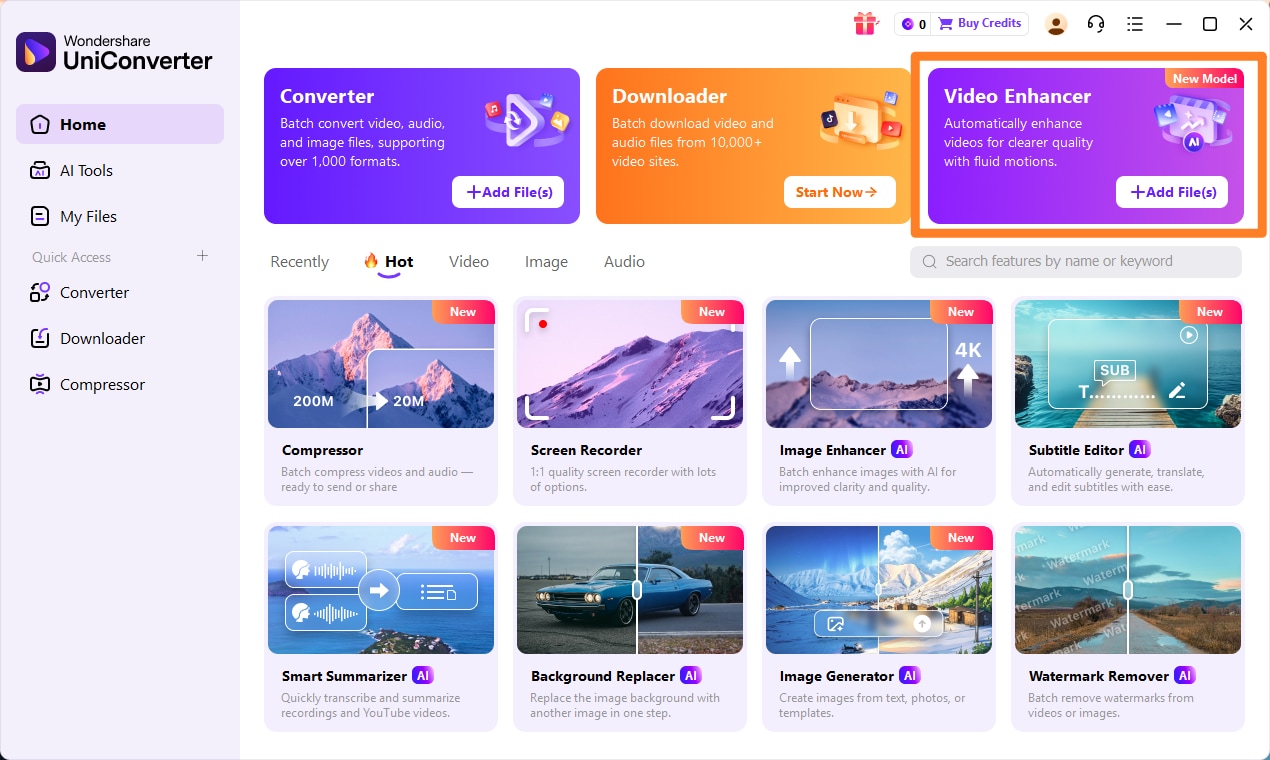
Step 1: Open UniConverter and Choose Video Enhancer
Launch UniConverter on your computer. From the main interface, navigate to the "AI Lab" section and select the "Video Enhancer" tool. This dedicated module is designed for intelligent video quality improvement.
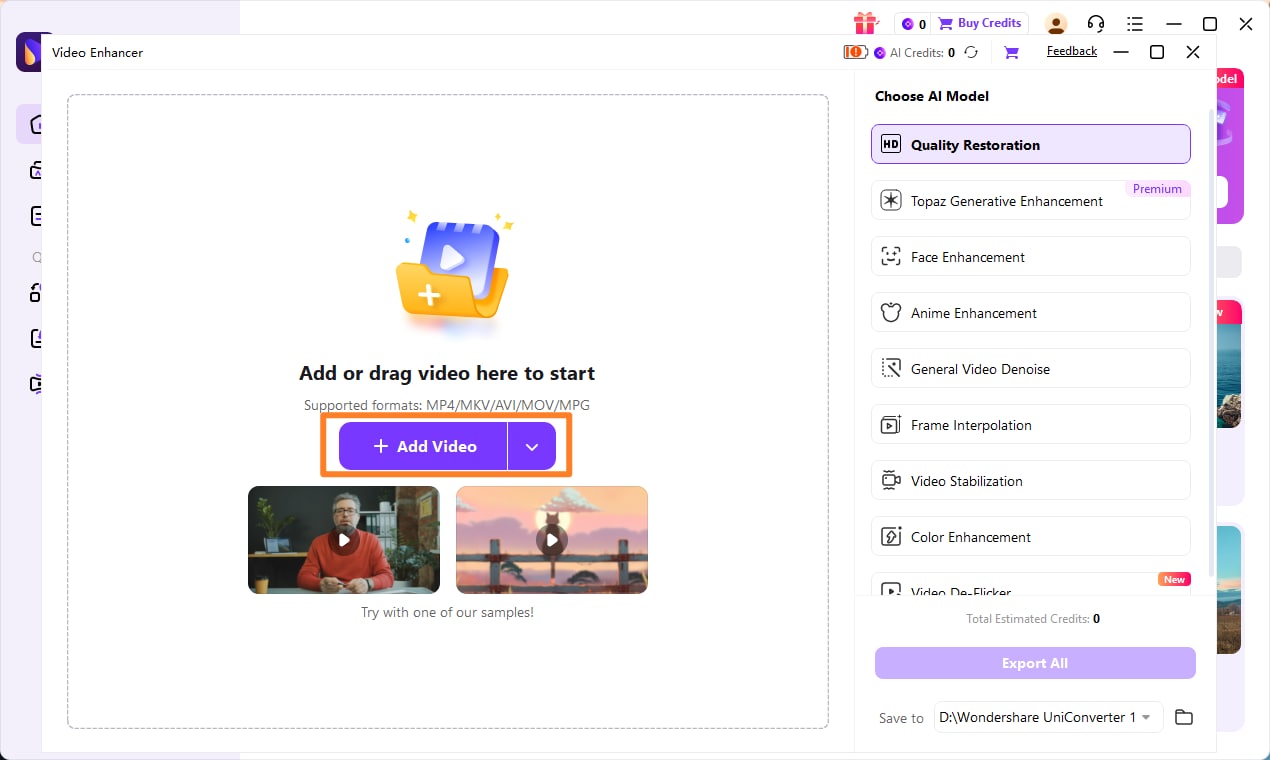
Step 2: Upload the Videos
Click the "Add Files" button or drag and drop your video files directly into the UniConverter Video Enhancer interface. You can add multiple videos for batch processing, saving significant time.
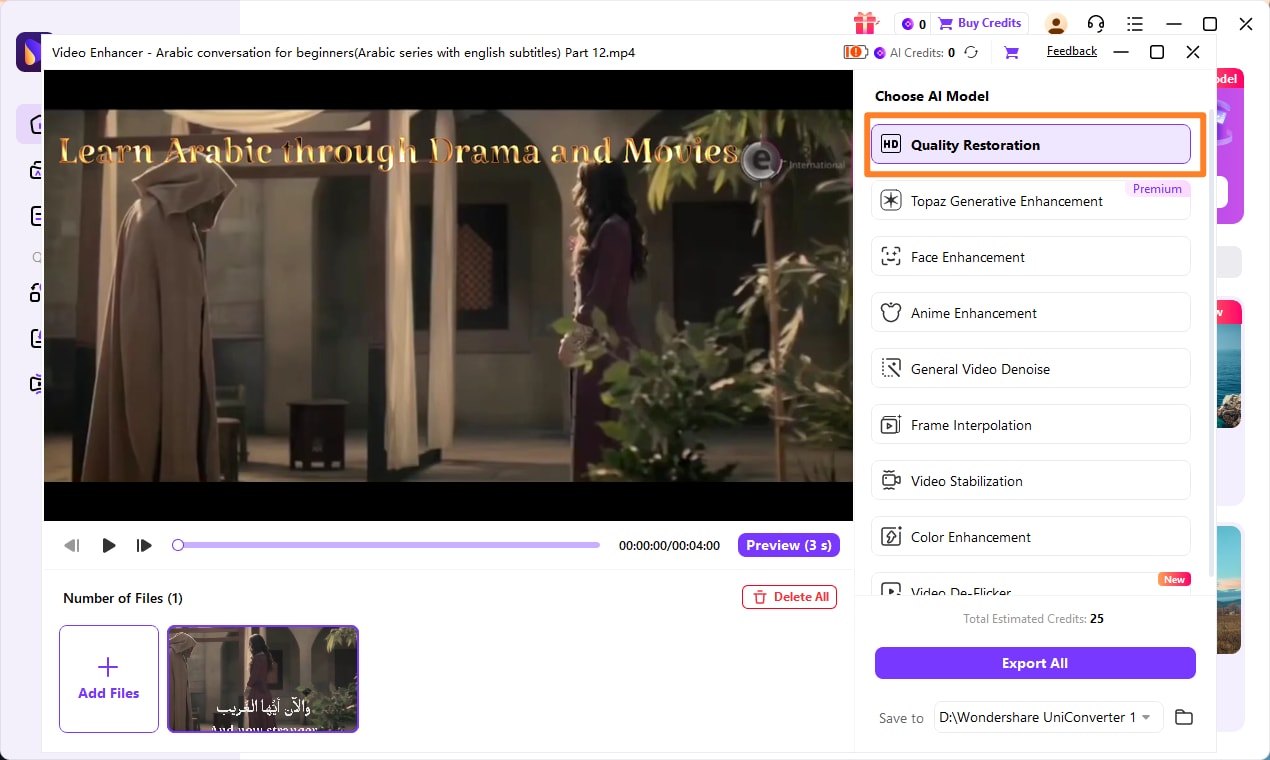
Step 3: Choose Enhancement Model
Once your videos are loaded, UniConverter will present various AI enhancement models. Select the model that best suits your needs, such as "AI Upscale" for resolution improvement, "AI Denoise" for removing grain, or "AI Stabilization" for shaky footage. You can also adjust parameters like output resolution and quality. For instance, if you're looking to change the background of your video or remove the background without losing quality, UniConverter offers advanced features to achieve a high-definition background remover. You can even explore options for an SVG background remover to refine your visuals.
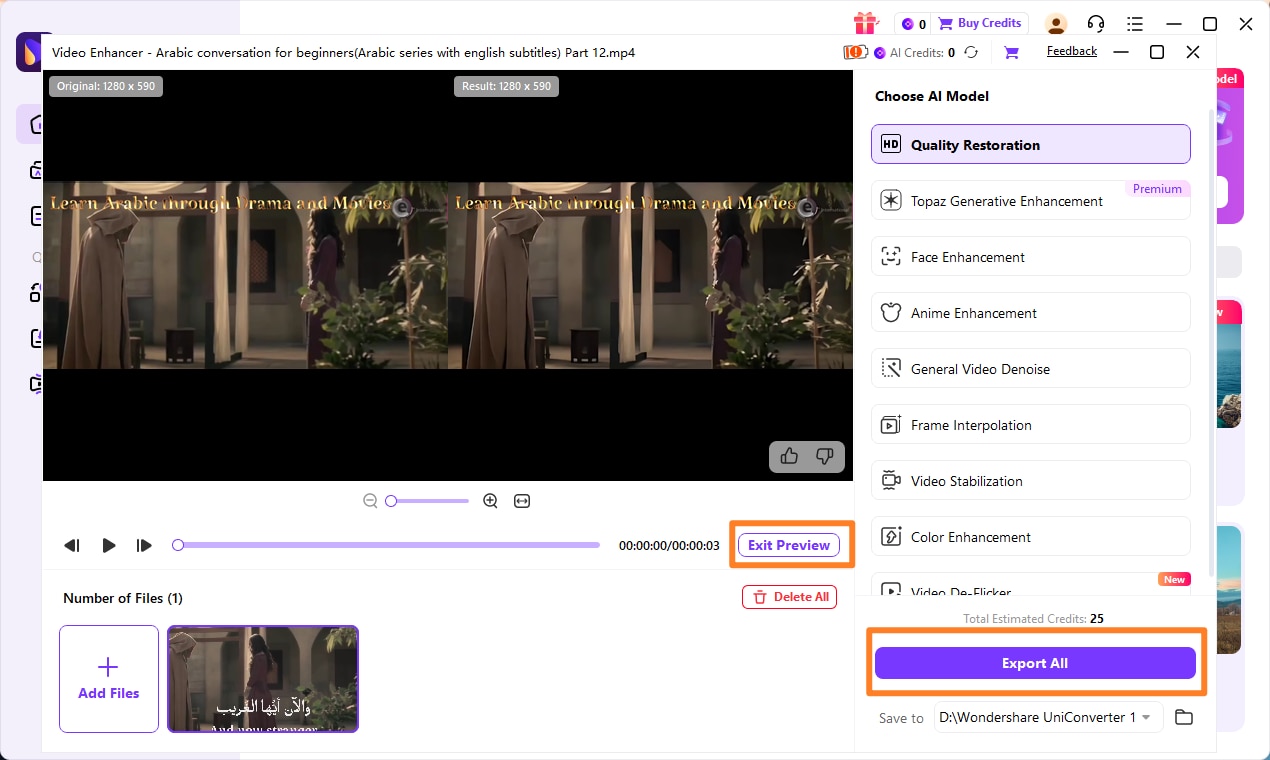
Step 4: Preview and Save the Enhanced Video
After selecting your enhancement options, click the "Preview" button to see a short segment of the enhanced video. If satisfied, choose your desired output format and destination folder, then click "Export" to save your high-quality, enhanced video.

Seeking a TMPGEnc Movie Studio Video Enhancer Alternative?
Part 7: Conclusion
This TMPGEnc Movie Studio Video Enhancer review has thoroughly examined its capabilities, market position, and comparative performance. It stands out as a powerful, dedicated solution for users committed to meticulously restoring and enhancing legacy video footage. Its advanced algorithmic upscaling and noise reduction are particularly beneficial for archivists and enthusiasts looking to breathe new life into old family videos or historical content. However, its steep learning curve and resource demands make it less suitable for quick, casual edits. For professional archivists and enthusiasts, TMPGEnc offers granular control and high-quality output, justifying its premium price. Casual users and social media creators, prioritizing speed and simplicity, would find more lightweight and intuitive tools, such as UniConverter, to be a better fit. Budget-conscious users should weigh the one-time purchase against potential future upgrade costs and consider free alternatives like DaVinci Resolve if they have the technical expertise. Ultimately, the best choice depends on the specific use case, technical proficiency, and desired balance between quality, speed, and cost.
Part 8: FAQs
-
1. What is the primary purpose of a video enhancer?
A video enhancer's primary purpose is to improve the visual quality of existing video footage by addressing issues like low resolution, noise, blur, and poor color, making it more watchable on modern displays.
-
2. Can TMPGEnc Movie Studio Video Enhancer improve heavily damaged footage?
While TMPGEnc Movie Studio Video Enhancer can significantly improve many forms of degradation, heavily damaged footage (e.g., extreme compression artifacts, severe physical damage to the source media) may only see limited improvement. It cannot create detail that was completely lost.
-
3. Is UniConverter a good alternative for beginners?
Yes, UniConverter is generally considered a good alternative for beginners due to its intuitive interface, AI-powered one-click enhancement options, and broad range of tools that simplify complex video tasks without requiring extensive technical knowledge.
-
4. What are the key factors to consider when choosing a video enhancer?
Key factors include the type of enhancement needed (upscaling, noise reduction, stabilization), ease of use, processing speed, output quality, supported formats, pricing model (one-time vs. subscription), and compatibility with your operating system and hardware.
-
5. Do video enhancers compromise original video quality?
Reputable video enhancers are designed to improve quality without compromising the original. However, if settings are applied too aggressively or incorrectly, artifacts can be introduced. It's always recommended to work with copies and preview results before finalizing.
