
- TensorPix Overview: TensorPix offers AI-powered, one-click image enhancement for quick fixes, ideal for casual users.
- Pros & Cons: Enjoy user-friendly, batch processing with TensorPix, but expect limited customization and potential over-processing.
- Ideal Users: Perfect for social media and quick edits; not suitable for professional photography requiring precise control.
- TensorPix vs. Alternatives: TensorPix is simple and fast (cloud-based); UniConverter balances quality and local processing for robust enhancement.
- Risks: Be aware of data privacy, aggressive upsells, potential quality loss, and subscription lock-in with cloud-based tools.
- UniConverter Solution: UniConverter offers stable, ad-free, local processing with GPU acceleration for superior, controlled image enhancement.
In this article
- Part 1: What is TensorPix Image Enhancer?
- Part 2: TensorPix Image Enhancer: Core Features, Pros & Cons
- Part 3: TensorPix Image Enhancer: Ideal Users & Use Cases
- Part 4: TensorPix Image Enhancer vs. Alternatives
- Part 5: Risks & Pitfalls to Consider
- Part 6: How to Use UniConverter for Efficient Image Enhancement
- Part 7: Conclusion
- Part 8: FAQs
When I first started exploring AI image enhancement, I was overwhelmed by the sheer number of tools promising magic. Among them, TensorPix image enhancer review kept popping up. This tool positions itself as a quick, AI-driven solution for common image problems, from blurriness to poor lighting. In this review, I'll dive deep into TensorPix, comparing it with other popular options and sharing my honest experience. My goal is to help you understand if TensorPix is the right fit for your needs, whether you're a casual user or someone looking for more professional results. We'll cover its features, ideal use cases, potential pitfalls, and even suggest a strong alternative.
Part 1: What is TensorPix Image Enhancer?
TensorPix Image Enhancer is an AI-powered online tool designed to automatically improve the quality of digital images. It leverages advanced algorithms to analyze and correct common photographic flaws, such as low resolution, blur, noise, and poor lighting. My initial impression was that it aimed to democratize image enhancement, making professional-looking results accessible to everyone, regardless of their editing skills. This review will tackle the core question: Does TensorPix deliver on its promise of effortless, high-quality image enhancement, especially when stacked against its competitors?
The Rise of AI Image Enhancement Tools
The demand for quick and effective image enhancement has exploded, driven by:
* Social Media's Visual Dominance: Everyone wants their photos to stand out online.
* Smartphone Photography Limitations: While convenient, phone cameras often struggle in challenging conditions.
* Nostalgia for Old Photos: A desire to revive and share cherished old memories.
* Accessibility for Non-Professionals: The need for tools that don't require a steep learning curve like Photoshop.
Part 2: TensorPix Image Enhancer: Core Features, Pros & Cons
From my experience, TensorPix's core strength lies in its simplicity. It offers a straightforward approach to image enhancement, making it very appealing for those who just want to get the job done without diving into complex settings.
Core Features:
* One-Click AI Enhancement: Automatically detects and corrects image flaws.
* Upscaling: Increases image resolution without significant quality loss.
* Noise Reduction: Cleans up grainy photos, especially those taken in low light.
* Color Correction: Balances colors and improves vibrancy.
* Sharpening: Enhances details and reduces blur.
Pros:
* AI-powered one-click enhancement for various image types, which is incredibly convenient.
* User-friendly interface, ideal for beginners who are intimidated by traditional editing software.
* Batch processing capabilities for efficiency, a real time-saver when you have many photos.
Cons:
* Limited advanced customization options for professional users, meaning less control over the final output.
* Potential for over-processing or artificial-looking results in some cases, which can be frustrating when you're aiming for a natural look.
Part 3: TensorPix Image Enhancer: Ideal Users & Use Cases
Based on my time with TensorPix, I've found it truly shines for certain types of users and scenarios, while falling short in others. If you're looking for a quick fix, it's great, but don't expect miracles for every image.
Best Use Case: Quick Social Media Post Preparation
For me, TensorPix is a go-to when I need to quickly spruce up photos for social media. Imagine you've just taken a decent photo with your phone, but the lighting wasn't perfect, or it's a bit blurry. Uploading it to TensorPix, hitting 'enhance,' and getting a noticeably better image in seconds is incredibly convenient. It's perfect for casual users, bloggers, or small business owners who need presentable images without spending hours on editing. I often use it for product shots for my online store or travel photos I want to share instantly.
Limited Use Case: Professional Photography Post-Production
However, if you're a professional photographer or someone who demands precise control over every pixel, TensorPix will likely disappoint. I tried using it for some of my RAW landscape photos, and while it did "enhance" them, the results often lacked the nuanced artistic touch I could achieve with dedicated editing software. The AI's interpretation of "enhancement" might not align with your specific creative vision, leading to a loss of original detail or an overly processed look. For high-stakes projects where image integrity and artistic intent are paramount, it's simply not robust enough.
Part 4: TensorPix Image Enhancer vs. Alternatives
When I look at the landscape of image enhancers, TensorPix image enhancer review wouldn't be complete without comparing it to its peers. Each tool has its niche, and understanding these differences is key to choosing the right one.
| Feature/Competitor | TensorPix | UniConverter | Topaz Photo AI | Luminar Neo |
| AI Enhancement | High | High | Very High | High |
| Ease of Use | High | High | Medium | Medium |
| Customization | Low | Medium | High | High |
| Batch Processing | Yes | Yes | Yes | Yes |
| Pricing Model | Freemium | Subscription/One-time | One-time purchase | Subscription/One-time |
| Processing Speed | Fast (Cloud) | Fast (Local/GPU) | Medium (Local/GPU) | Medium (Local/GPU) |
| Output Quality | Good | Excellent | Superior | Excellent |
| Customer Support | Email/Live Chat | Email/Forum | Email/Forum | |
| Security (Local vs. Cloud) | Cloud-based | Local Processing | Local Processing | Local Processing |
Key Differentiators:
TensorPix excels in simplicity and speed for casual users, especially with its cloud-based processing. UniConverter offers a fantastic balance, providing robust AI enhancement with the added security and speed of local processing, making it a strong all-rounder. Topaz Photo AI is the king of detail and noise reduction for professionals, while Luminar Neo offers extensive creative control with its AI-driven editing tools. If you just want a quick fix, TensorPix is fine. But if you value quality and control, UniConverter or the others offer more.
Part 5: Risks & Pitfalls to Consider
Using any online tool, especially free or freemium versions, comes with its own set of considerations. When I first started using tools like TensorPix, I quickly learned that convenience often comes with trade-offs. It's important to be aware of these before you commit.
Data Privacy Concerns with Cloud-Based Processing
This is a big one for me. Since TensorPix is primarily cloud-based, you're uploading your images to their servers. While they likely have privacy policies in place, it's crucial to understand what happens to your photos. Are they stored? For how long? Are they used to train their AI models? For sensitive or personal images, this can be a significant concern. I always recommend reading their privacy policy carefully, as I've seen instances where user data was less protected than I'd initially assumed.
Aggressive Upselling or In-App Advertisements
Many freemium tools, including TensorPix, use aggressive tactics to push you towards a paid subscription. This can manifest as constant pop-ups, limited daily enhancements, or watermarks on your output unless you upgrade. It can quickly turn a convenient experience into an annoying one. I've often found myself frustrated by these interruptions when all I wanted was a quick, clean enhancement.
Potential for Loss of Original Image Quality
While TensorPix aims to enhance, there's always a risk of unintended consequences. AI enhancement isn't perfect, and sometimes it can introduce artifacts, over-sharpen details, or alter colors in ways you didn't intend. If you don't keep your original image, you might end up with an "enhanced" version that's actually worse than what you started with. Always, always keep a backup of your originals.
Subscription Model Lock-in
The freemium model often leads to a subscription. Once you're used to the convenience, you might feel compelled to subscribe, even if the full features aren't exactly what you need. This can lead to recurring costs that might not be justified for your usage frequency. I've personally fallen into this trap, subscribing to a service I only used occasionally, simply because it was easier than finding an alternative.
Limited Offline Functionality
Being a web-based tool, TensorPix requires a stable internet connection. This means if you're working offline, traveling, or in an area with poor connectivity, you're out of luck. This limitation can be a real hindrance for those who need to work on images on the go or in environments without reliable internet access.
Part 6: How to Use UniConverter for Efficient Image Enhancement
Sometimes, online tools just don't cut it. Maybe you're tired of inconsistent enhancement, aggressive ads, or the lack of batch processing. That's where a robust desktop solution like UniConverter comes into play. I've found UniConverter to be an excellent alternative, offering a more stable, ad-free, and powerful experience for image enhancement, especially when dealing with multiple files or needing higher quality output. It's an all-in-one media solution that handles images with impressive efficiency, leveraging GPU acceleration for speed and ensuring lossless quality. If you're looking for a reliable, comprehensive tool that avoids the pitfalls of many online enhancers, UniConverter is a strong contender.
Step 1: Open UniConverter and Choose Image Enhancer
First, launch UniConverter on your computer. On the main interface, navigate to the "Toolbox" section. Within the Toolbox, you'll find the "Image Enhancer" option. Click on it to open the dedicated enhancement module.

Step 2: Upload the Images
Once the Image Enhancer module is open, you'll see an area to add your images. You can either drag and drop your photos directly into the window or click the "Add Files" button to browse and select them from your computer. UniConverter supports various image formats, making it versatile.

Step 3: Choose Enhancement Model
After uploading, UniConverter will display your images. Now, select the AI enhancement model that best suits your needs. You'll typically have options for general enhancement, noise reduction, sharpening, or upscaling. Choose the desired effect and adjust any available parameters if needed.
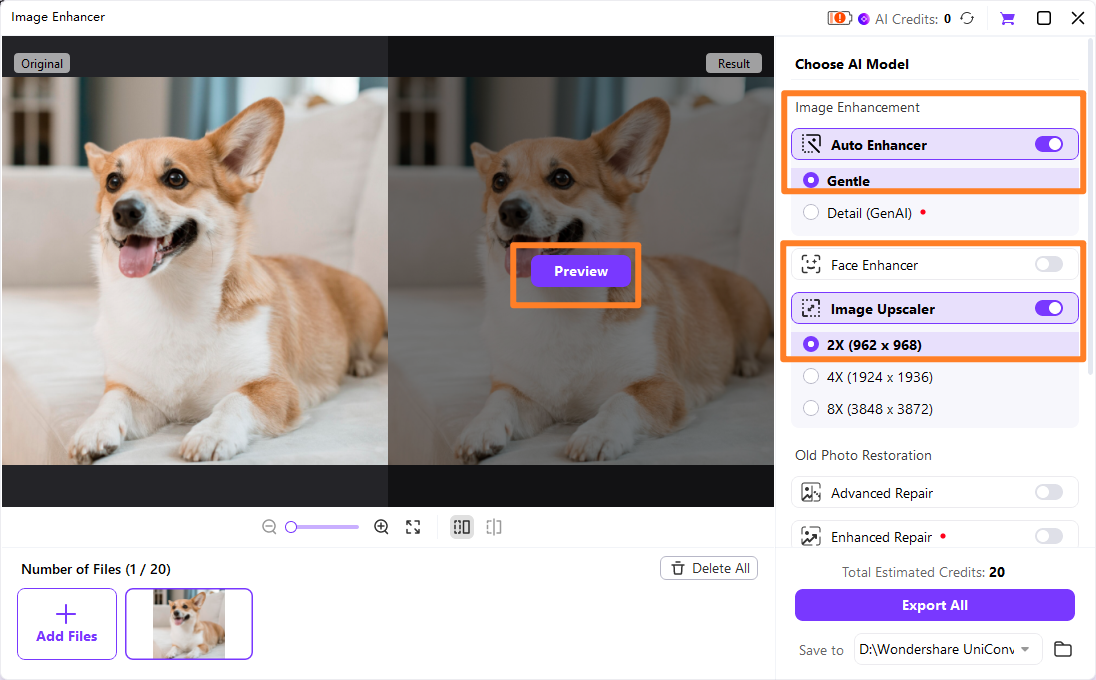
Step 4: Preview and Save the Enhanced Images
Before saving, UniConverter allows you to preview the enhanced image alongside the original. This side-by-side comparison is incredibly useful for assessing the changes. Once you're satisfied with the results, click the "Start" or "Enhance" button, and then choose your desired output folder to save your newly enhanced images.
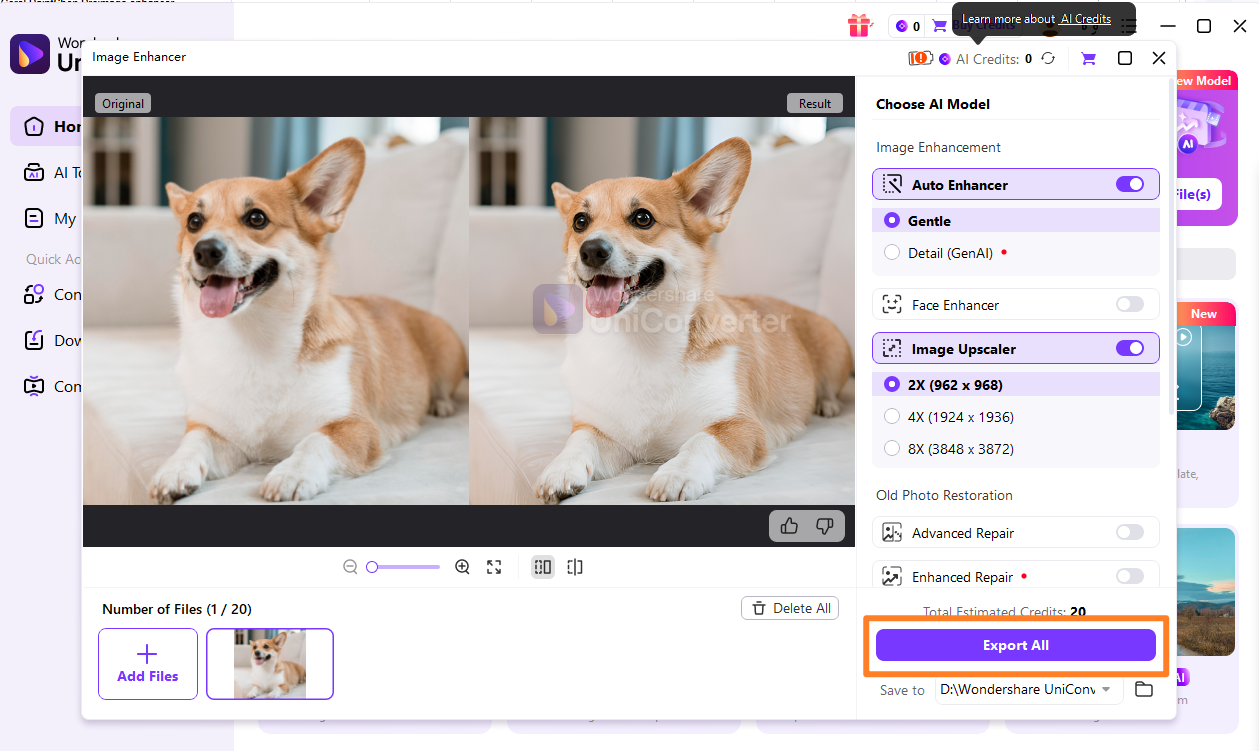

Seeking a TensorPix Alternative for Image Enhancement?
Part 7: Conclusion
After spending considerable time with TensorPix image enhancer review and its competitors, my final thoughts are clear: TensorPix is a fantastic tool for specific use cases, but it's not a one-size-fits-all solution. For casual users, social media enthusiasts, or anyone needing a quick, no-fuss image boost, its AI-powered one-click enhancement is incredibly convenient and often yields satisfying results. It's perfect for those moments when you just need to make a photo look a bit better before sharing it. However, if you're a professional photographer, a graphic designer, or someone who demands precise control, high-quality output, and robust features, you'll quickly find its limitations. The lack of advanced customization, potential for over-processing, and reliance on a cloud-based freemium model can be significant drawbacks. For those seeking a more comprehensive and reliable solution, especially for batch processing, local control, and superior output quality, alternatives like UniConverter offer a much more compelling package, providing a balance of ease of use and powerful capabilities without the common pitfalls of purely online tools. Ultimately, your choice should align with your specific needs, skill level, and the importance you place on image quality and data privacy.
Part 8: FAQs
-
1. Is TensorPix Image Enhancer free to use?
TensorPix offers a freemium model with limited features; full access requires a subscription.
-
2. Can TensorPix enhance old or blurry photos?
Yes, TensorPix is designed to improve the quality of various image types, including old and blurry photos, using AI algorithms.
-
3. How does TensorPix compare to Photoshop for image enhancement?
TensorPix offers a simpler, AI-driven approach for quick enhancements, while Photoshop provides comprehensive, manual control for professional-grade editing.
-
4. Are there any privacy concerns when using TensorPix?
As a cloud-based tool, users should review TensorPix's privacy policy regarding data handling and storage, especially for sensitive images.
-
5. What are the system requirements for TensorPix?
TensorPix is primarily a web-based tool, so it requires a stable internet connection. Some desktop versions or integrations might have specific system requirements, but the online version is browser-dependent.
