
- Value: TensorPix offers accessible AI video enhancement for old/low-quality footage, simplifying complex processes for non-experts.
- Comparison: TensorPix excels in automated, quick enhancements; UniConverter offers a comprehensive suite for diverse needs.
- Decision: Evaluate TensorPix for ease of use and quick fixes; consider UniConverter for versatile, stable, and offline enhancement.
- Limitations: TensorPix has limited customization and potential for 'AI artifacts' in highly degraded videos.
- Privacy: Cloud-based TensorPix raises data privacy concerns; UniConverter provides local processing for enhanced security.
- Cost: Weigh TensorPix's subscription model against UniConverter's one-time purchase for long-term value.
In this article
- Part 1: What is TensorPix AI Video Enhancer?
- Part 2: TensorPix AI Video Enhancer: Core Features, Pros & Cons
- Part 3: Who is TensorPix AI Video Enhancer For? Use Cases & Limitations
- Part 4: TensorPix AI Video Enhancer and Alternatives Comparison
- Part 5: Risks and Pitfalls to Consider
- Part 6: How to Use UniConverter for Efficient Video Enhancement
- Part 7: Final Verdict & Recommendations
- Part 8: FAQs
In this TensorPix AI Video Enhancer review, we delve into the capabilities of a tool designed to breathe new life into old and low-quality footage. As digital content creation and consumption continue to surge, the demand for effective video enhancement solutions has grown exponentially. TensorPix positions itself as an accessible AI-powered platform for users looking to improve video quality without extensive technical knowledge. This review will provide a detailed breakdown of its features, compare it against leading competitors, and offer insights into its ideal use cases and potential limitations, helping you make an informed decision about whether it's the right tool for your video enhancement needs.
Part 1: What is TensorPix AI Video Enhancer?
TensorPix AI Video Enhancer is a cloud-based service that leverages artificial intelligence to automatically improve the quality of video footage. It's designed to tackle common video issues such as low resolution, noise, blur, and poor color rendition, transforming subpar videos into clearer, more vibrant outputs. The platform aims to democratize video enhancement, making sophisticated AI algorithms accessible to a broader audience beyond professional studios. This review will explore its effectiveness in various scenarios and its standing against other tools in the market.
The Rise of AI Video Enhancement Tools
The proliferation of user-generated content and the increasing desire to preserve old memories have fueled the demand for AI video enhancement.
* Accessibility: AI tools simplify complex enhancement processes, making them available to non-experts.
* Efficiency: Automated processes save significant time compared to manual editing.
* Quality Improvement: AI can intelligently upscale and denoise, often surpassing traditional methods.
* Preservation: These tools are crucial for restoring and archiving historical or personal footage.
Part 2: TensorPix AI Video Enhancer: Core Features, Pros & Cons
TensorPix AI Video Enhancer is built around a set of powerful AI algorithms aimed at transforming video quality. Its core capabilities include intelligent upscaling, noise reduction, and color correction, all delivered through an intuitive interface. The platform supports a variety of input formats and focuses on delivering enhanced output suitable for various viewing platforms.
Core Features:
* AI-Powered Upscaling: Increases video resolution without significant loss of detail.
* Advanced Noise Reduction: Minimizes grain and digital noise for cleaner footage.
* Color Correction and Enhancement: Improves vibrancy and accuracy of colors.
* De-blurring Technology: Sharpens blurry footage to reveal more detail.
* Specialized AI Models: Tailored algorithms for different content types (e.g., anime, real-life, vintage).
Pros:
* Automated Upscaling and Noise Reduction for Vintage Footage
* Specialized AI Models for Diverse Content (e.g., Anime, Real-life)
* User-Friendly Interface for Quick Enhancements
Cons:
* Limited Customization Options for Advanced Users
* Potential for "AI Artifacts" in Highly Degraded Videos
Part 3: Who is TensorPix AI Video Enhancer For? Use Cases & Limitations
TensorPix AI Video Enhancer primarily targets individuals and small businesses seeking straightforward solutions for video quality improvement without the steep learning curve of professional software. It's particularly well-suited for those looking to breathe new life into personal archives or enhance content for social media.
Best Use Case: Revitalizing Old Home Videos and Archival Footage
TensorPix shines when it comes to enhancing old, low-resolution, or noisy footage. Imagine digitizing decades-old VHS tapes or camcorder recordings; TensorPix can upscale these videos, reduce analog noise, and improve color fidelity, making them more enjoyable to watch on modern displays. It's also ideal for content creators who occasionally need to enhance older clips for their projects or social media posts, offering a quick and effective solution without requiring deep video editing expertise.
Limited Use Case: Professional Color Grading and Complex VFX Workflows
While TensorPix can improve general video quality, it is not designed to replace professional-grade video editing suites like DaVinci Resolve or Adobe Premiere Pro for complex tasks. It lacks the granular control over color grading, advanced visual effects, and multi-track editing capabilities that professionals require. Users needing precise color correction, intricate compositing, or detailed frame-by-frame adjustments will find its customization options too restrictive for high-end production workflows.
Part 4: TensorPix AI Video Enhancer and Alternatives Comparison
Understanding how TensorPix stacks up against its competitors is crucial for making an informed decision. Here's a comparison with leading alternatives:
| Feature/Scenario | TensorPix AI Video Enhancer | Topaz Video AI | DaVinci Resolve Studio | UniConverter |
| Ease of Use for Beginners | Excellent | Good | Moderate | Excellent |
| AI Model Specialization | Good | Excellent | Limited (General) | Good |
| Output Quality (Upscaling) | Very Good | Excellent | Good (Manual) | Very Good |
| Customization Depth | Moderate | Excellent | Excellent | Moderate |
| Pricing Model | Subscription/Credits | One-time Purchase | One-time Purchase | One-time Purchase |
Key Differentiators:
TensorPix excels in automated, quick enhancements for general users, offering a user-friendly cloud-based experience. Topaz Video AI offers deeper AI model customization and superior output for professionals, particularly in upscaling and motion interpolation. DaVinci Resolve Studio provides a comprehensive suite for all post-production needs, including manual enhancement, color grading, and VFX, catering to advanced users. UniConverter stands out for its versatility, combining video enhancement with a broad range of video conversion and editing tools, making it a strong all-in-one solution for various user needs.
Part 5: Risks and Pitfalls to Consider
When opting for an AI video enhancement tool, especially a cloud-based one like TensorPix, it's essential to be aware of potential risks and limitations that could impact your experience and the final output.
Data Privacy and Cloud Processing
As a cloud-based service, TensorPix requires users to upload their video files to its servers for processing. This raises significant concerns regarding data privacy and security. Users must trust the platform's security protocols to protect their sensitive or personal footage from unauthorized access or breaches. It's crucial to review their privacy policy thoroughly and understand how your data is stored, processed, and eventually deleted.
Subscription Costs vs. One-Time Purchases
TensorPix typically operates on a subscription or credit-based model, which can accumulate costs over time, especially for frequent users or large projects. This contrasts with competitors like Topaz Video AI or DaVinci Resolve Studio, which often offer one-time purchase licenses. While subscriptions offer flexibility, the long-term cost can outweigh a one-time purchase, particularly if you anticipate continuous use. Budget-conscious users should carefully calculate their expected usage against the recurring fees.
Potential for Over-Processed or Unnatural Results
AI enhancement, while powerful, isn't always perfect. Highly degraded videos might suffer from "AI artifacts," where the algorithms attempt to generate missing information, leading to unnatural textures, distorted faces, or a "plastic" look. This over-processing can sometimes detract from the original footage's authenticity. Users should always preview enhanced videos critically to ensure the results meet their aesthetic expectations and don't introduce undesirable visual anomalies.
Hardware Requirements for Optimal Performance
Although TensorPix is cloud-based, the quality of your internet connection significantly impacts upload and download times, especially for large video files. For desktop alternatives, powerful hardware, particularly a strong GPU, is often required for optimal processing speeds. Users with slower internet or older computers might experience bottlenecks, even with cloud services, due to the sheer data volume involved in video enhancement.
Limited Offline Functionality
Being a cloud-based platform, TensorPix requires a constant internet connection to function. This means you cannot enhance videos offline, which can be a significant limitation for users working in environments with unreliable internet access or those who prefer to keep their processing local for privacy or speed reasons. This lack of offline capability restricts its utility in certain professional or remote work scenarios.
Part 6: How to Use UniConverter for Efficient Video Enhancement
When other tools fall short in batch processing, stable enhancement, or delivering noticeable improvements, UniConverter emerges as a robust alternative. It offers a comprehensive suite of video tools, including powerful enhancement capabilities, ensuring stable, lossless quality with GPU acceleration and extensive format support, all without intrusive ads. UniConverter provides an all-in-one solution for enhancing, converting, and editing videos efficiently.
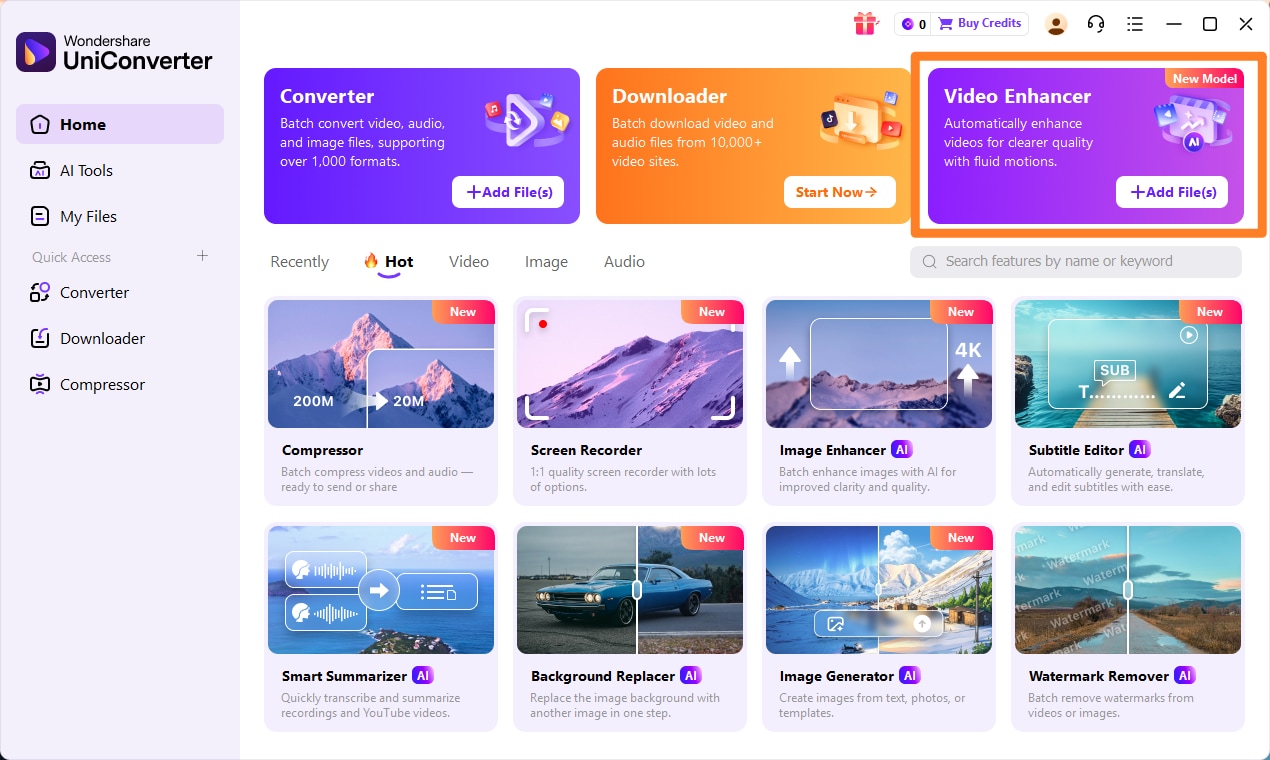
Step 1: Open UniConverter and Choose Video Enhancer
Launch UniConverter on your computer. From the main interface, navigate to the "Toolbox" tab and select the "Video Enhancer" option to begin.
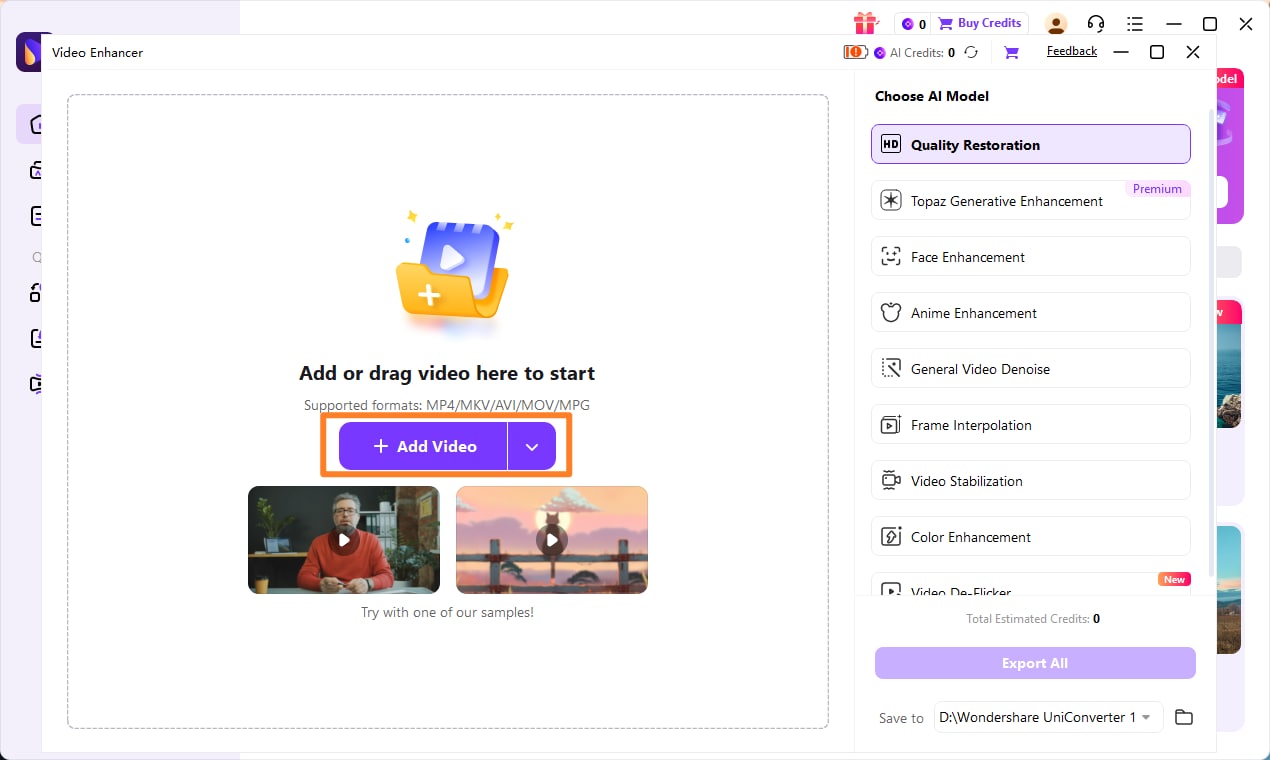
Step 2: Upload the Videos
Click on the "Add Files" button or drag and drop your video files directly into the UniConverter interface. You can add multiple videos for batch processing.
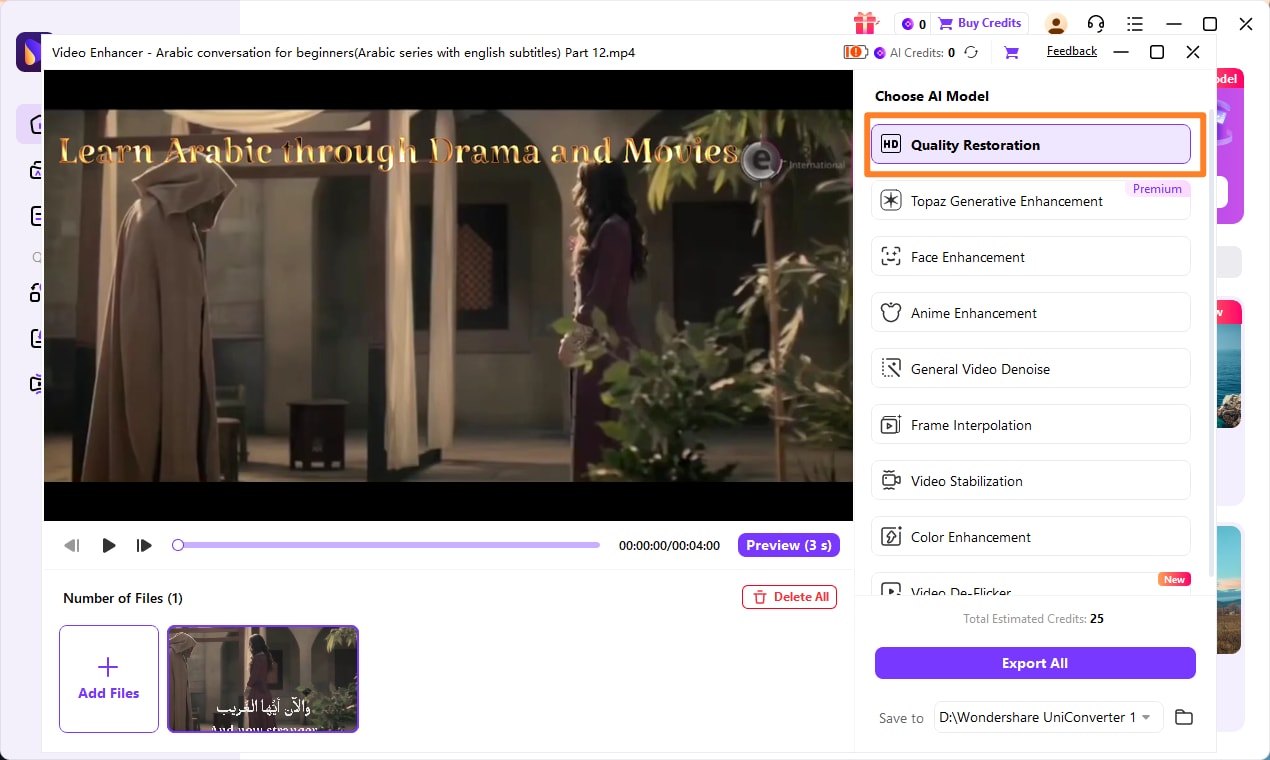
Step 3: Choose Enhancement Model
Select the desired enhancement options such as "Upscale Resolution," "Optimize Video Brightness and Contrast," "Denoise Video," and "DeShake Video." Adjust the output resolution and format as needed.
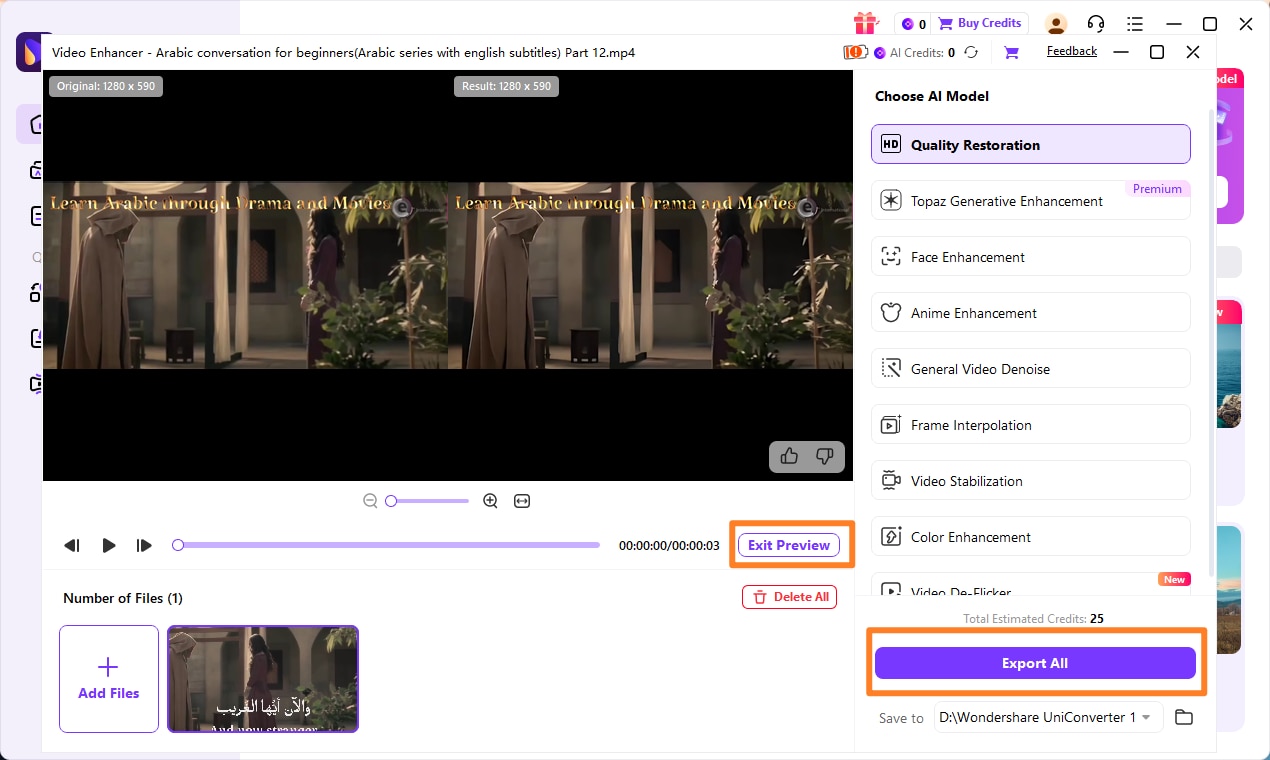
Step 4: Preview and Save the Enhanced Video
Click the "Preview" button to see a short clip of the enhanced video. Once satisfied, choose your output folder and click "Enhance" to start the process.

Seeking a TensorPix AI Video Enhancer Alternative?
Part 7: Final Verdict & Recommendations
The TensorPix AI Video Enhancer review reveals a compelling tool for specific user needs. It excels in providing an accessible, automated solution for general video enhancement, particularly for breathing new life into old or low-quality footage. Its cloud-based nature and specialized AI models make it a convenient option for users who prioritize ease of use and quick results over granular control. However, its limitations in customization and potential for AI artifacts in highly degraded videos mean it's not a one-size-fits-all solution. For casual users and those looking to revitalize personal archives, TensorPix offers significant value. Professionals requiring precise control, extensive color grading, or complex VFX will find its capabilities insufficient compared to dedicated software like DaVinci Resolve Studio or even Topaz Video AI. Budget-conscious users should weigh the recurring subscription costs against one-time purchase alternatives, while those prioritizing data privacy or offline functionality might need to consider desktop-based solutions. Ultimately, the best choice depends on your specific project requirements, technical proficiency, and budget constraints.
Part 8: FAQs
-
1. Can TensorPix AI Video Enhancer improve video quality from low-resolution sources?
Yes, it's designed to upscale and enhance low-resolution videos, but results vary based on original quality.
-
2. Is TensorPix AI Video Enhancer suitable for professional video editing?
While it can enhance footage, it's generally more suited for quick fixes and less demanding projects than dedicated professional tools.
-
3. What file formats does TensorPix AI Video Enhancer support?
It typically supports common video formats like MP4, MOV, AVI, and MKV.
-
4. Does TensorPix AI Video Enhancer require an internet connection?
Yes, as it's a cloud-based service, an internet connection is required for processing.
-
5. How does TensorPix AI Video Enhancer handle noise reduction?
It uses AI algorithms to intelligently identify and reduce various types of video noise while preserving details.
