
- StaxRip Review: Discover StaxRip's advanced features for professional video archiving and restoration, ideal for expert users.
- Core Features: Learn about StaxRip's high-quality encoding, upscaling, and extensive customization for precise video enhancement.
- User Suitability: Understand if StaxRip's steep learning curve and resource demands fit your professional needs, not casual edits.
- Comparison: See how StaxRip stacks up against UniConverter, Topaz Video AI, and DaVinci Resolve in features, ease, and cost.
- Risks: Be aware of StaxRip's potential configuration errors, time investment, and hardware requirements before committing.
- UniConverter Alternative: Explore UniConverter for intuitive, efficient video and image enhancement with batch processing and AI features.
In this article
- Part 1: What is StaxRip Video Enhancer?
- Part 2: StaxRip Video Enhancer: Core Features, Pros, and Cons
- Part 3: StaxRip Video Enhancer: Ideal Users and Usage Scenarios
- Part 4: StaxRip Video Enhancer and Alternatives Comparison
- Part 5: Risks and Pitfalls When Using StaxRip Video Enhancer
- Part 6: How to Use UniConverter to Efficiently Enhance Videos and Images
- Part 7: Conclusion
- Part 8: FAQs
In this StaxRip Video Enhancer review, we delve into the capabilities of a powerful, open-source tool designed for advanced video processing. StaxRip, while not a household name for casual users, stands out in the niche of professional video archiving, restoration, and encoding. This review will explore its core features, evaluate its market position, and conduct a scenario-based comparison against leading competitors. We aim to provide a comprehensive understanding of StaxRip's strengths and weaknesses, helping users determine if it's the right solution for their specific video enhancement needs, ultimately guiding purchasing or usage decisions with objective insights.
Part 1: What is StaxRip Video Enhancer?
StaxRip Video Enhancer is a highly versatile and open-source video encoding application primarily designed for advanced users who require granular control over their video processing workflows. It integrates a multitude of powerful tools and codecs, allowing for complex tasks such as video upscaling, deinterlacing, noise reduction, and format conversion with exceptional precision. Originating from the open-source community, StaxRip has evolved into a robust solution for those who prioritize customization and quality in their video projects. This review aims to dissect its functionalities, compare it with alternatives, and identify its ideal user base.
Market Position and Target Audience
* Niche Market: Primarily targets experienced videographers, archivists, and enthusiasts.
* Advanced Control: Appeals to users who need deep customization options beyond typical consumer software.
* Cost-Effective Solution: Offers professional-grade features without the associated commercial price tag.
* Community-Driven: Benefits from ongoing development and support from a dedicated user community.
Part 2: StaxRip Video Enhancer: Core Features, Pros, and Cons
StaxRip Video Enhancer offers a comprehensive suite of tools for advanced video manipulation and encoding. Its core capabilities revolve around providing users with unparalleled control over every aspect of the video enhancement process. Key features include support for a vast array of video and audio codecs, advanced filtering options for noise reduction and sharpening, precise frame rate and resolution adjustments, and robust upscaling algorithms. It also integrates with external tools like AviSynth and VapourSynth, significantly extending its processing power and flexibility.
Pros:
* Advanced Customization for Expert Users: Offers an extensive range of settings and filters, allowing for highly specific and tailored video enhancements.
* High-Quality Encoding and Upscaling Capabilities: Delivers superior output quality, especially for complex tasks like resolution upscaling and detailed video restoration.
* Open-Source Flexibility and Community Support: Being open-source, it's free to use and benefits from a vibrant community that contributes to its development and offers peer support.
Cons:
* Steep Learning Curve for Beginners: The sheer number of options and technical jargon can be overwhelming for new users.
* Resource-Intensive Processing: Demands significant CPU and GPU power, leading to longer processing times for large or high-resolution files.
Part 3: StaxRip Video Enhancer: Ideal Users and Usage Scenarios
StaxRip Video Enhancer is specifically tailored for a demographic that possesses a strong technical understanding of video processing and a desire for meticulous control. It's not a tool for quick fixes or casual users, but rather for those who are willing to invest time in learning its intricacies to achieve professional-grade results. Its ideal users are often professionals or dedicated enthusiasts in fields such as media archiving, film restoration, and high-quality content creation.
Best Use Case: Professional Video Archiving and Restoration
For professionals tasked with digitizing and restoring old film footage or preserving valuable video archives, StaxRip is an invaluable asset. Its advanced filtering options can effectively remove grain, scratches, and other artifacts, while its precise encoding capabilities ensure that the restored footage maintains the highest possible quality. For instance, a film archivist might use StaxRip to upscale standard definition historical footage to 4K, applying specific noise reduction filters to clean up aged source material, ensuring long-term preservation and enhanced viewing experience.
Limited Use Case: Quick Edits and Casual Enhancements
Conversely, StaxRip is a poor choice for users looking to perform quick edits or casual enhancements on their personal videos. If you simply want to brighten a video, crop a clip, or add a basic filter for social media, the complexity and time investment required by StaxRip would be overkill. Simpler, more user-friendly software like basic video editors or mobile enhancement apps would be far more efficient and appropriate for these scenarios. The learning curve alone makes it impractical for users who need immediate, straightforward results without delving into technical specifics.
Part 4: StaxRip Video Enhancer and Alternatives Comparison
| Feature/Scenario | StaxRip Video Enhancer | UniConverter | Topaz Video AI | DaVinci Resolve |
| Ease of Use (Beginner) | Low | High | Medium | Low |
| Advanced Customization | High | Medium | High | High |
| Processing Speed (Large Files) | Medium | High | Medium | High |
| Output Quality (Upscaling) | Excellent | Very Good | Excellent | Very Good |
| Cost | Free (Open Source) | Subscription | One-time Purchase | Free/Studio License |
| Customer Support | Community | Dedicated | Dedicated | Community/Dedicated |
| Security | Community Audited | High | High | High |
StaxRip excels in advanced customization and output quality, making it a top choice for experts who prioritize granular control and are comfortable with a steep learning curve. UniConverter, on the other hand, stands out for its ease of use and high processing speed, making it ideal for beginners and users needing quick, efficient video enhancements without compromising much on quality. Topaz Video AI offers excellent AI-driven upscaling and enhancement, balancing advanced features with a more accessible interface than StaxRip, though at a premium cost. DaVinci Resolve, while primarily a professional editing suite, includes powerful enhancement tools and offers a robust free version, suitable for users who need an all-in-one solution for editing and enhancement.
Part 5: Risks and Pitfalls When Using StaxRip Video Enhancer
Using StaxRip Video Enhancer, while offering unparalleled control and quality, comes with its own set of challenges and potential pitfalls that users, particularly those new to advanced video processing, should be aware of. These risks primarily stem from its complex nature and the high demands it places on both user expertise and hardware.
Potential for Configuration Errors
The extensive array of settings, codecs, and filters in StaxRip means there's a significant potential for misconfiguration. Incorrectly chosen settings can lead to suboptimal output quality, encoding errors, or even corrupted video files. For instance, applying the wrong deinterlacing filter or using an incompatible codec can result in artifacts, jerky playback, or a complete failure of the encoding process. Users must possess a solid understanding of video technical specifications to navigate these options effectively.
Time Investment for Optimal Results
Achieving the best possible results with StaxRip is not a quick process. It requires considerable time for experimentation, testing different settings, and rendering previews. The learning curve itself demands a substantial time investment to master the software's capabilities. For large video files or complex enhancement tasks, the entire workflow, from setup to final render, can span many hours or even days, making it unsuitable for urgent projects.
Hardware Requirements for Smooth Operation
StaxRip is a resource-intensive application, especially when performing high-quality upscaling or applying multiple complex filters. Running it effectively requires a powerful computer with a robust CPU, ample RAM, and often a dedicated GPU. Users with older or underpowered hardware may experience extremely slow processing times, frequent crashes, or an inability to handle high-resolution projects, leading to frustration and inefficiency.
Lack of Dedicated Customer Support
As an open-source project, StaxRip does not offer dedicated customer support in the traditional sense. While there is a community forum and online documentation, users facing specific issues might find themselves relying on peer advice, which can be inconsistent or slow. This lack of direct support can be a significant drawback for professionals who require reliable assistance for mission-critical projects.
Part 6: How to Use UniConverter to Efficiently Enhance Videos and Images
When other tools fall short in batch processing, stable enhancement, or delivering noticeable improvements, UniConverter emerges as a robust alternative. It addresses common issues like inconsistent quality, weak enhancement effects, and the lack of batch processing found in many free or less comprehensive tools. UniConverter offers a seamless, ad-free experience, supporting a vast array of formats, leveraging GPU acceleration for speed, and ensuring stable, lossless enhancements for both videos and images. For instance, its capabilities extend to advanced features like removing backgrounds without losing quality and even changing video backgrounds with high precision. It's an all-in-one ultimate solution for your multimedia needs, including high-definition background removal and other sophisticated background replacer functionalities.
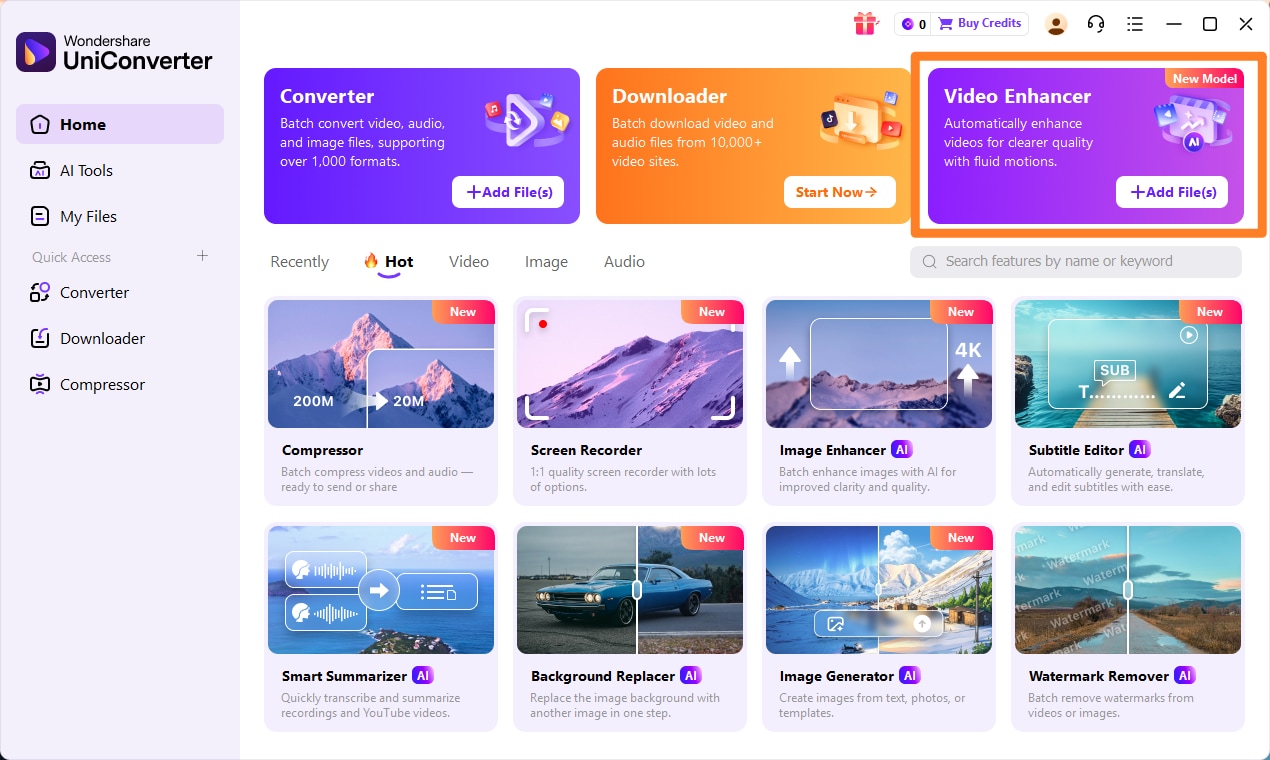
Step 1: Open UniConverter and Choose Video Enhancer
Launch UniConverter and navigate to the "AI Lab" section. Select the "Video Enhancer" tool to begin your enhancement process.
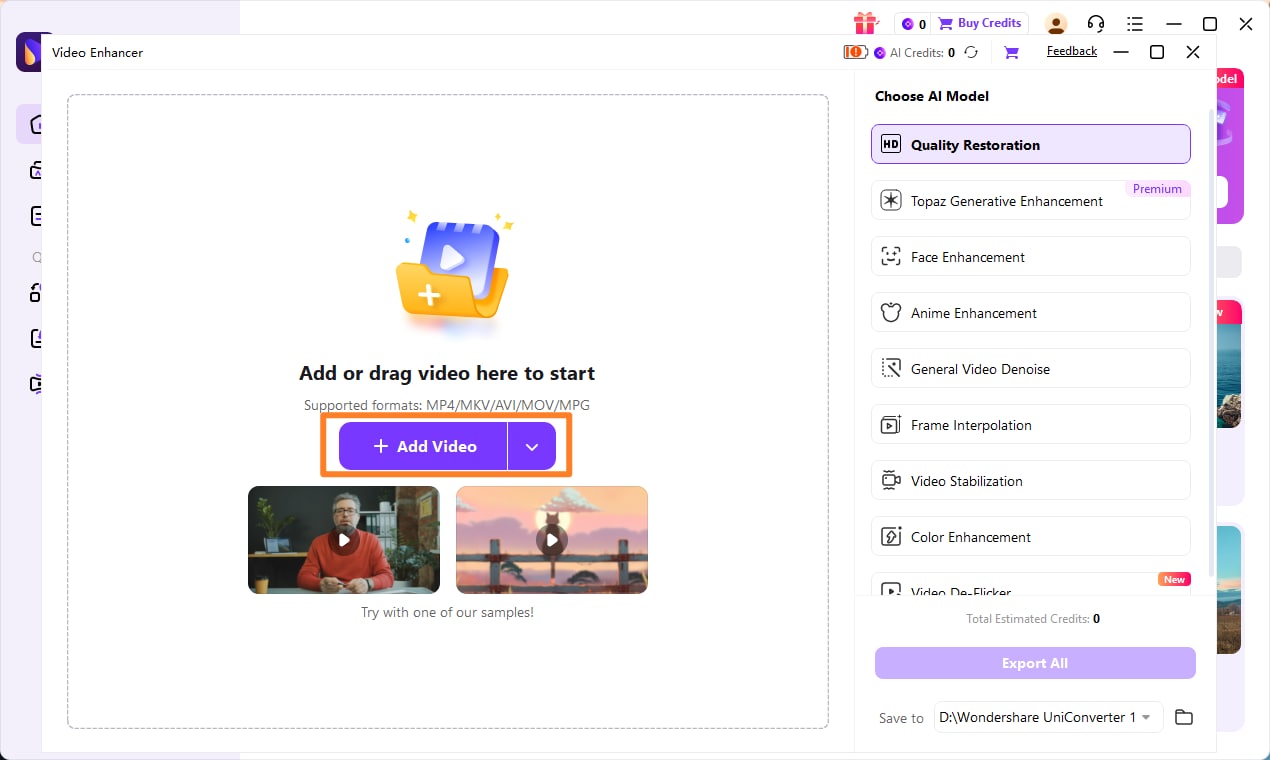
Step 2: Upload the Videos
Click on the "Add Files" button or drag and drop your video files into the UniConverter interface. You can upload multiple videos for batch processing.
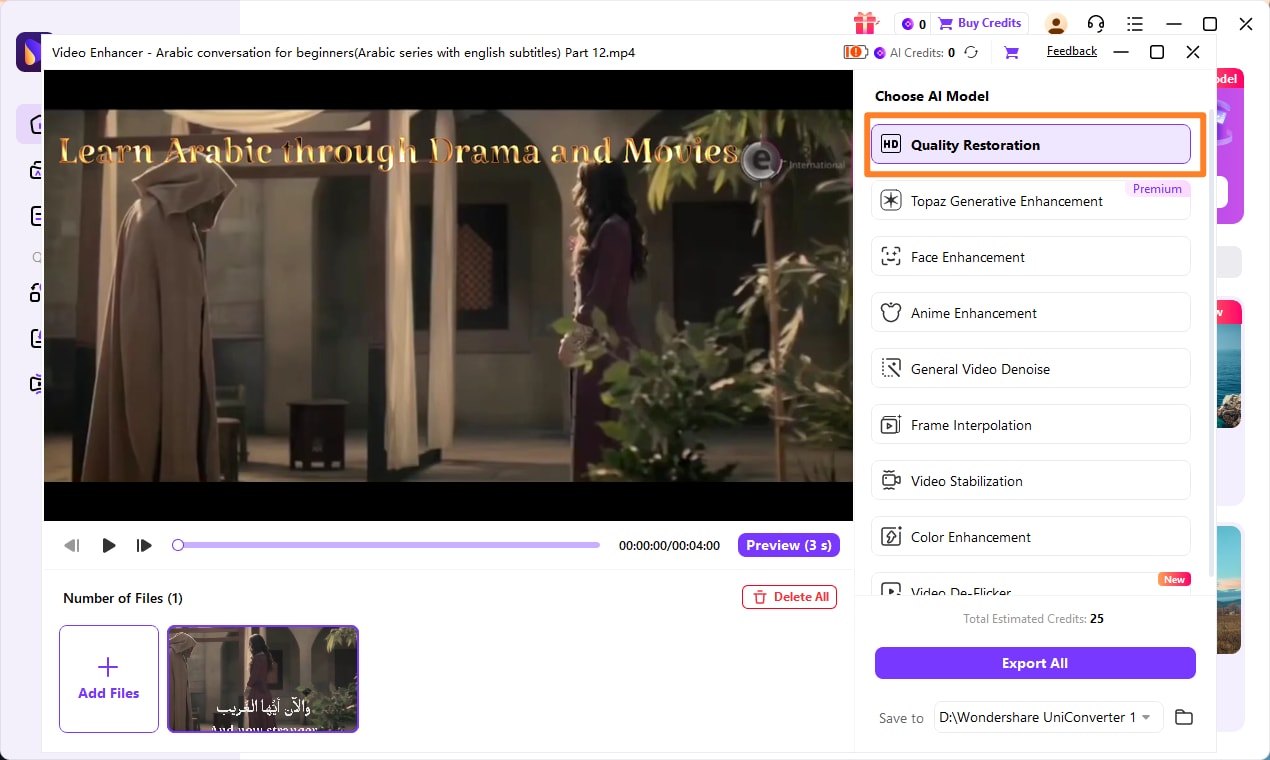
Step 3: Choose Enhancement Model
Once your videos are loaded, select the desired AI enhancement model. UniConverter offers various models tailored for different needs, such as noise reduction, upscaling, or color correction. Adjust any additional settings as required.
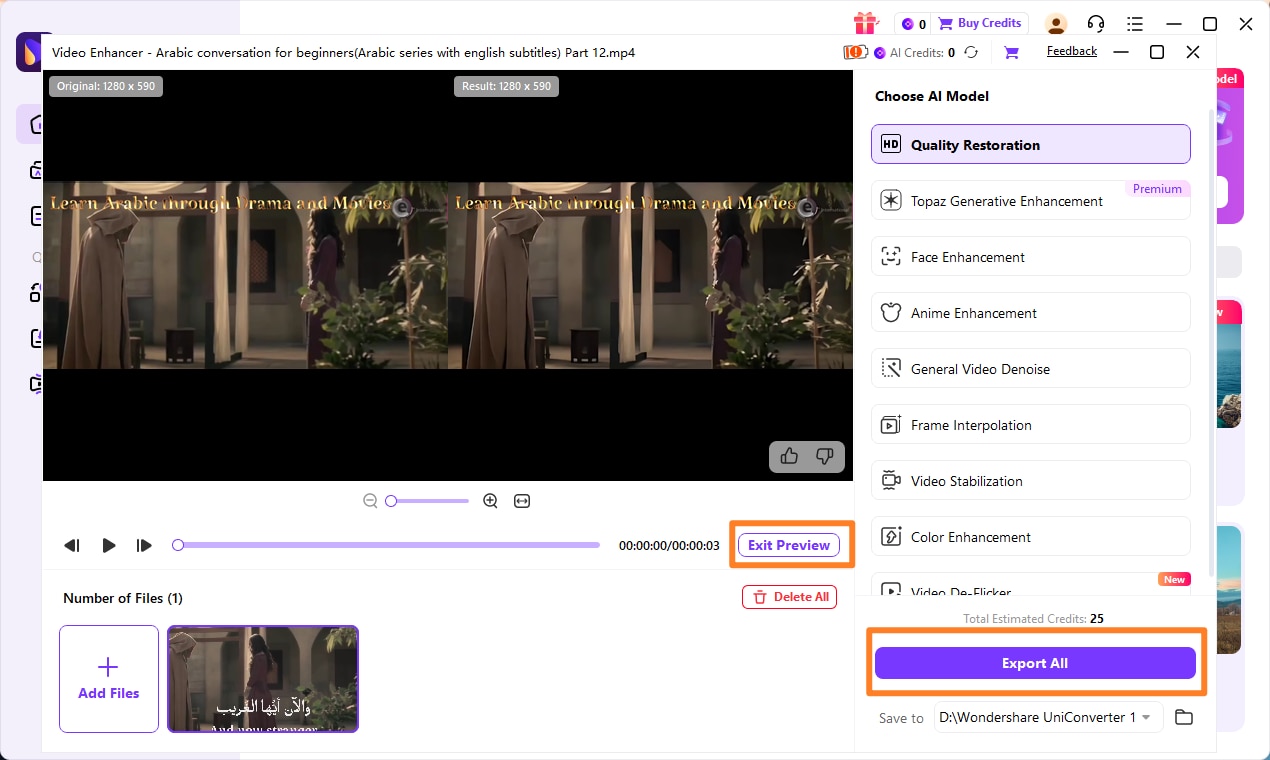
Step 4: Preview and Save the Enhanced Video
After selecting your settings, click "Preview" to see the enhanced result. If satisfied, choose your output format and destination folder, then click "Export" to save your enhanced video.

Seeking a StaxRip Video Enhancer Alternative?
Part 7: Conclusion
In conclusion, the StaxRip Video Enhancer review reveals a powerful, open-source tool best suited for advanced users and professionals seeking unparalleled control over video encoding and enhancement. Its strengths lie in deep customization, high-quality output, and community support, making it ideal for tasks like professional video archiving and restoration. However, its steep learning curve, resource-intensive processing, and lack of dedicated customer support make it less suitable for beginners or those needing quick, casual enhancements. For users prioritizing ease of use, faster processing, and comprehensive features without the technical complexity, alternatives like UniConverter, Topaz Video AI, or DaVinci Resolve offer compelling solutions. Ultimately, the choice depends on the user's technical proficiency, specific project requirements, and willingness to invest time in mastering a sophisticated tool versus opting for a more streamlined, user-friendly experience.
Part 8: FAQs
-
1. Is StaxRip Video Enhancer free to use?
Yes, StaxRip is an open-source application, meaning it is completely free to download and use.
-
2. What kind of video quality improvements can I expect from StaxRip?
You can expect significant improvements in video quality, including advanced noise reduction, sharpening, deinterlacing, and high-quality upscaling, especially when configured correctly by an expert user.
-
3. How does StaxRip compare to commercial video enhancers in terms of features?
StaxRip often surpasses many commercial enhancers in terms of granular control and advanced customization options, integrating a wide range of codecs and filters. However, it lacks the user-friendliness and dedicated support typically found in commercial products.
-
4. Do I need a powerful computer to run StaxRip effectively?
Yes, for optimal performance, especially with high-resolution videos or complex enhancement tasks, a powerful computer with a robust CPU, ample RAM, and a dedicated GPU is highly recommended.
-
5. Where can I find tutorials or support for StaxRip?
Support for StaxRip is primarily community-driven. You can find tutorials, guides, and peer support on its official forums and various online communities dedicated to video encoding and open-source software.
