
- SRMD NCNN Vulkan: Open-source AI video enhancer, excels in quality, but demands technical skill.
- Value Proposition: Free, powerful AI upscaling for vintage footage, leveraging GPU acceleration.
- Comparison: Outperforms many in quality, yet lacks user-friendliness of commercial alternatives.
- Decision Factor: Ideal for tech-savvy users with powerful GPUs seeking maximum control and quality.
- Alternative: UniConverter offers ease of use and broader features for less technical users.
- Risks: Steep learning curve, hardware demands, potential artifacts, and no official support.
In this article
- Part 1: What is SRMD NCNN Vulkan Video Enhancer?
- Part 2: SRMD NCNN Vulkan Video Enhancer: Core Features, Pros, and Cons
- Part 3: Target Audience and Use Cases for SRMD NCNN Vulkan Video Enhancer
- Part 4: SRMD NCNN Vulkan vs. Competitors: A Head-to-Head Comparison
- Part 5: Risks and Pitfalls to Consider
- Part 6: How to Use UniConverter to Seamlessly Enhance Videos
- Part 7: Final Verdict and Recommendations
- Part 8: FAQs
SRMD NCNN Vulkan Video Enhancer: A Comprehensive Review and Comparison
The landscape of video enhancement has been revolutionized by AI, offering unprecedented capabilities to breathe new life into old footage or elevate contemporary content. Among the myriad of tools emerging in this space, SRMD NCNN Vulkan Video Enhancer stands out as a powerful, open-source solution. This review delves deep into its core functionalities, benchmarks it against leading competitors, and provides a nuanced understanding of its strengths and limitations. We will explore its suitability for various user profiles and scenarios, helping you determine if this cutting-edge technology aligns with your video enhancement needs.
Part 1: What is SRMD NCNN Vulkan Video Enhancer?
SRMD NCNN Vulkan Video Enhancer is an open-source, AI-powered tool designed to upscale and enhance video quality. It leverages advanced deep learning models, specifically SRMD (Super-Resolution Multiple-Dictionary) for super-resolution and NCNN (a high-performance neural network inference framework) for efficient processing. The integration of Vulkan, a next-generation graphics and compute API, provides significant GPU acceleration, enabling faster and more efficient video enhancement. This tool primarily targets users looking to improve the resolution and visual fidelity of low-quality or older video content, often achieving results comparable to or even surpassing commercial alternatives.
The Rise of AI-Powered Video Enhancement
The demand for high-quality video content has surged, creating a significant need for effective video enhancement solutions. Traditional methods often fall short in addressing issues like low resolution, noise, and compression artifacts. AI-powered tools, like SRMD NCNN Vulkan, address these challenges by:
* Intelligently Reconstructing Missing Details: AI models can infer and generate missing pixel information, leading to sharper and more detailed images.
* Efficiently Removing Noise and Artifacts: Deep learning algorithms are adept at distinguishing between genuine image information and unwanted noise, resulting in cleaner footage.
* Adapting to Diverse Video Content: AI models can be trained on vast datasets, allowing them to perform well across various video types, from old home movies to modern digital recordings.
Part 2: SRMD NCNN Vulkan Video Enhancer: Core Features, Pros, and Cons
SRMD NCNN Vulkan Video Enhancer is a robust tool, primarily focused on delivering high-quality video upscaling and enhancement. Its core capabilities revolve around leveraging AI models for intelligent pixel reconstruction and noise reduction. The use of Vulkan ensures that these complex operations are executed with impressive speed, particularly on compatible hardware. It supports various input and output formats, though specific format support can depend on the underlying FFmpeg integration. Its strength lies in its ability to transform low-resolution, blurry, or artifact-ridden videos into much clearer and more detailed versions, making it a powerful asset for video restoration projects.
Pros:
* Exceptional Upscaling Quality for Low-Resolution Footage: Delivers remarkably sharp and detailed results, often exceeding expectations for older or low-quality source material.
* Real-time Processing with Vulkan Acceleration: Utilizes Vulkan API for significant GPU acceleration, leading to faster processing times compared to CPU-only solutions.
* Open-Source and Community-Driven Development: Benefits from active community contributions, ensuring continuous improvement and access to the latest advancements.
Cons:
* Steep Learning Curve for Non-Technical Users: Requires command-line interaction and familiarity with technical configurations, making it less accessible for beginners.
* Resource-Intensive, Requiring Powerful Hardware: Demands a high-end GPU with good Vulkan support for optimal performance, limiting its use on less powerful systems.
Part 3: Target Audience and Use Cases for SRMD NCNN Vulkan Video Enhancer
SRMD NCNN Vulkan Video Enhancer is ideally suited for a specific demographic: tech-savvy individuals, video enthusiasts, and professionals who possess a strong understanding of command-line interfaces and GPU acceleration. Its open-source nature appeals to those who enjoy tinkering with software and customizing their tools. The primary goal of users engaging with this software is often to achieve the highest possible video quality enhancement, especially when dealing with challenging source material. It's not a plug-and-play solution but rather a powerful engine for those willing to invest time in learning its intricacies.
Optimal Scenario: Restoring Vintage or Archival Video Content
SRMD NCNN Vulkan excels in scenarios where the primary goal is to restore and enhance vintage or archival video content. Imagine digitalizing old VHS tapes, low-resolution home movies, or historical footage. SRMD NCNN Vulkan can dramatically improve the resolution, reduce noise, and sharpen details that were previously lost, making these precious memories or historical records much more viewable and enjoyable. Its ability to intelligently reconstruct pixels makes it a superior choice for bringing clarity to inherently low-quality sources.
Limited Scenario: Quick, Casual Video Enhancements on Entry-Level Hardware
For users seeking quick, casual video enhancements on entry-level hardware, SRMD NCNN Vulkan might fall short. Its command-line interface and resource-intensive nature make it unsuitable for those who prefer a simple, graphical user interface or who do not possess a powerful dedicated GPU. Attempting to run it on integrated graphics or older hardware will result in extremely slow processing times, if it runs at all, making the user experience frustrating and inefficient for everyday, minor enhancements.
Part 4: SRMD NCNN Vulkan vs. Competitors: A Head-to-Head Comparison
When evaluating video enhancement tools, SRMD NCNN Vulkan Video Enhancer stands out for its open-source nature and powerful, hardware-accelerated processing. While it offers excellent quality, its technical demands can be a barrier. UniConverter, on the other hand, provides a user-friendly interface and a comprehensive suite of tools, making it accessible for a wider audience, albeit with potentially less granular control over the AI models. Topaz Video AI is a commercial powerhouse, known for its cutting-edge AI models and professional-grade results, but comes with a significant price tag. DaVinci Resolve Studio, while a full-fledged video editing suite, offers robust enhancement features, particularly for color grading and noise reduction, but its primary focus isn't solely on AI upscaling.
| Feature/Aspect | SRMD NCNN Vulkan | UniConverter | Topaz Video AI | DaVinci Resolve Studio |
| Upscaling Quality | Excellent | Very Good | Excellent | Good |
| Ease of Use | Difficult | Very Easy | Moderate | Moderate |
| Performance (Hardware) | High-end GPU required | Mid-range CPU/GPU | High-end GPU recommended | Mid-to-high-end GPU recommended |
| Price | Free (Open-source) | Paid License | Paid License | Free (Limited) / Paid Studio Version |
| Customization | High | Moderate | High | High |
| Processing Speed | Fast (with powerful GPU) | Moderate | Fast | Moderate |
| Output Formats | Wide (via FFmpeg) | Extensive | Wide | Extensive |
| Customer Support | Community | Dedicated | Dedicated | Dedicated |
| Security | User responsibility | High | High | High |
Key Differentiators:
SRMD NCNN Vulkan's open-source nature and community support offer unparalleled flexibility and cost-effectiveness for users with technical expertise. Its performance advantages are particularly evident on specific hardware configurations, especially those with powerful NVIDIA GPUs and Vulkan support. For those prioritizing a user-friendly experience and a broader toolset, UniConverter presents a compelling alternative. Topaz Video AI excels in delivering professional-grade results with a more polished interface than SRMD NCNN Vulkan, while DaVinci Resolve Studio integrates enhancement within a comprehensive editing environment.
Part 5: Risks and Pitfalls to Consider
While SRMD NCNN Vulkan offers powerful video enhancement capabilities, its open-source nature and technical demands come with several potential risks and pitfalls that users should be aware of before committing to its use. Understanding these challenges is crucial for a smooth and effective workflow.
Potential for Artifacts and Unnatural Results
Despite its advanced AI, SRMD NCNN Vulkan, like any upscaling tool, can sometimes introduce artifacts or unnatural-looking results, especially with highly compressed or extremely low-quality source footage. The AI might hallucinate details that weren't originally present, leading to a "plastic" or overly smooth appearance, or introduce strange patterns. Users need to carefully evaluate the output and be prepared for potential inconsistencies.
Hardware Compatibility and Driver Issues
SRMD NCNN Vulkan heavily relies on GPU acceleration via the Vulkan API. This means that hardware compatibility is paramount. Users might encounter issues with older GPUs, integrated graphics, or outdated drivers. Ensuring that your graphics card supports Vulkan and that you have the latest drivers installed is essential to avoid crashes, poor performance, or the inability to run the software at all. Troubleshooting these issues can be time-consuming for less experienced users.
Lack of Official Technical Support
As an open-source project, SRMD NCNN Vulkan does not offer official technical support. Users are reliant on community forums, GitHub issues, and their own problem-solving skills to overcome any challenges. This can be a significant hurdle for individuals who are not comfortable with self-help or who require immediate assistance for critical projects.
Privacy Concerns with Unverified Builds
Since SRMD NCNN Vulkan is open-source, it's possible to find various unofficial builds or forks online. Downloading and using unverified executables can pose security and privacy risks, as these builds might contain malware or be tampered with. Users should always strive to download the software from official repositories or trusted sources to mitigate these risks.
Steep Learning Curve and Time Investment
The command-line interface and numerous configuration options of SRMD NCNN Vulkan present a steep learning curve. Users will need to invest significant time in understanding the various parameters, models, and command syntax to achieve optimal results. This can be a deterrent for those looking for a quick and easy solution, or for professionals with tight deadlines who cannot afford extensive experimentation.
Part 6: How to Use UniConverter to Seamlessly Enhance Videos
When other tools fall short in batch processing, provide unstable enhancements, or deliver weak results, UniConverter emerges as a robust and user-friendly alternative. It bypasses the complexities of command-line interfaces and hardware compatibility issues, offering a streamlined experience for enhancing videos. UniConverter stands out with its intuitive design, comprehensive suite of video editing and conversion tools, and reliable performance across various hardware configurations. It’s an all-in-one solution that ensures stable, lossless, and high-quality video enhancement, even for batch operations, leveraging GPU acceleration for efficiency without the hassle of deep technical configurations.
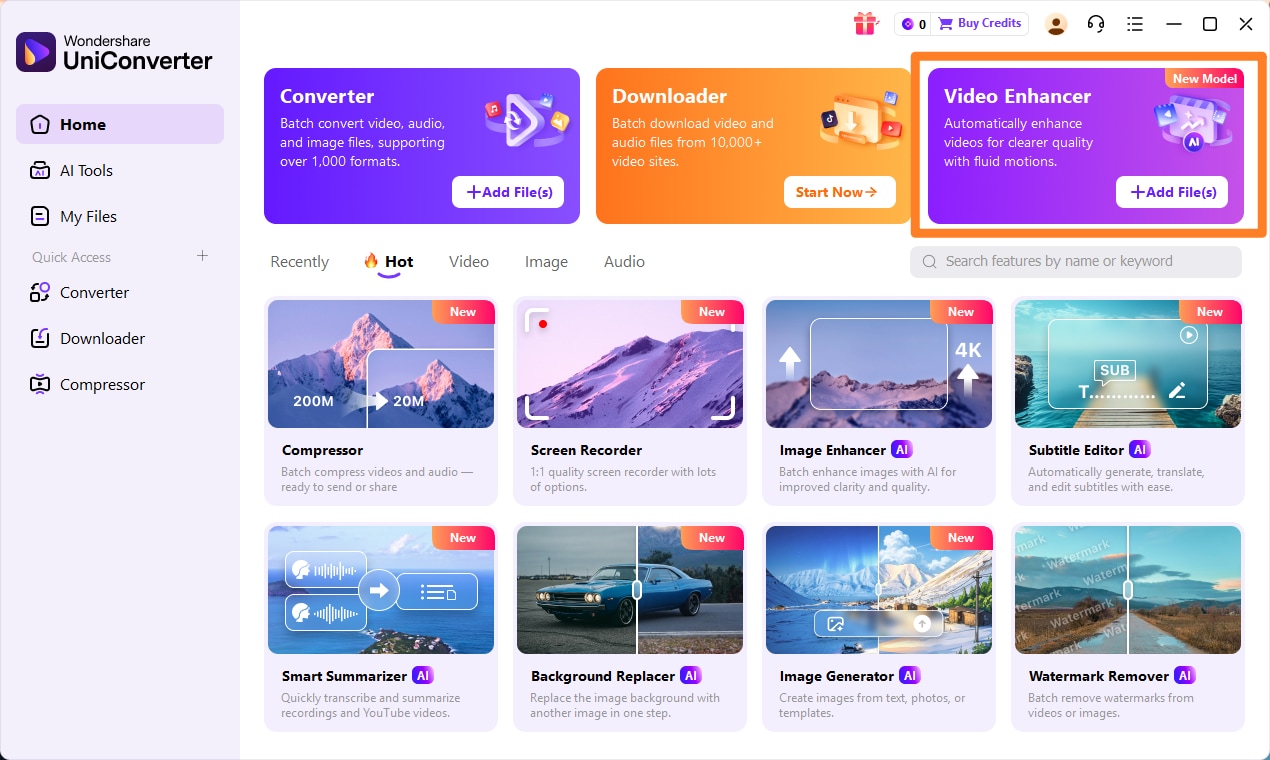
Step 1: Open UniConverter and Choose Video Enhancer
Launch UniConverter on your computer. From the main interface, navigate to the "Toolbox" section and select the "Video Enhancer" feature.
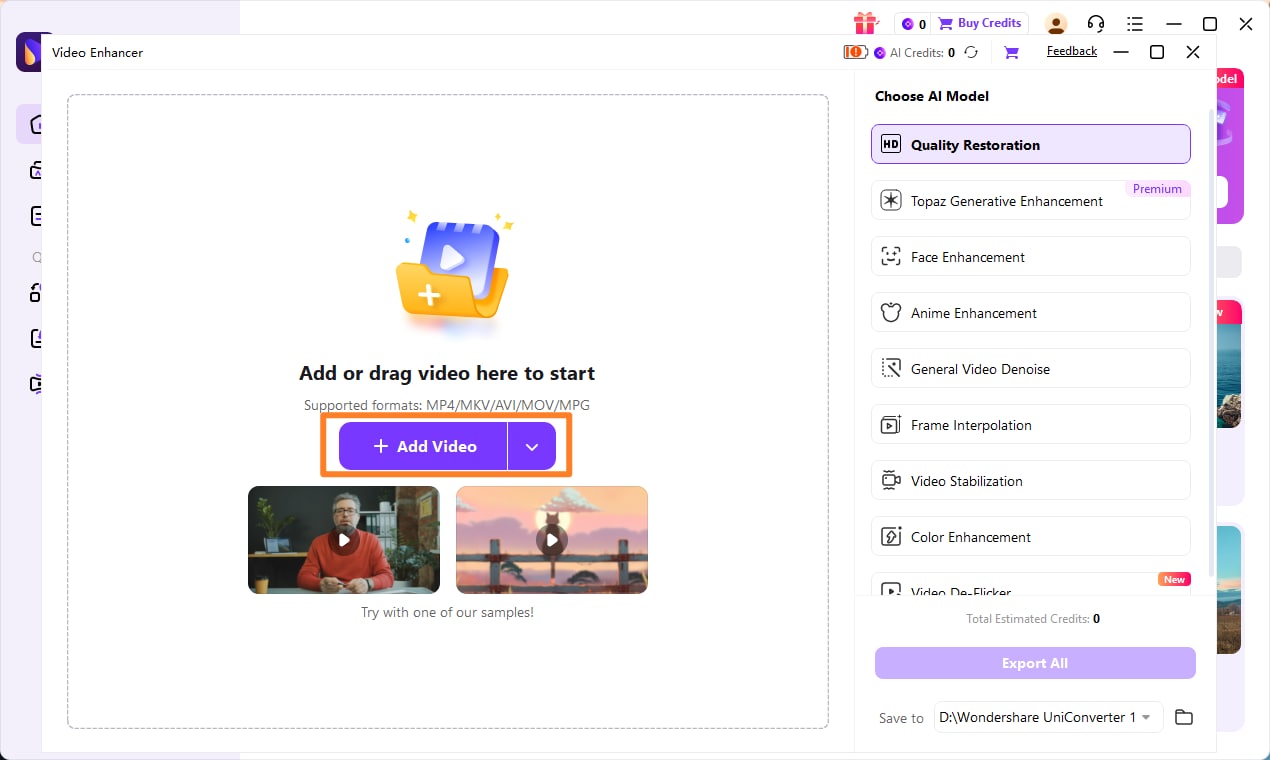
Step 2: Upload the Videos
Click on the "Add Files" button or drag and drop your video files into the designated area. You can add multiple videos for batch enhancement.
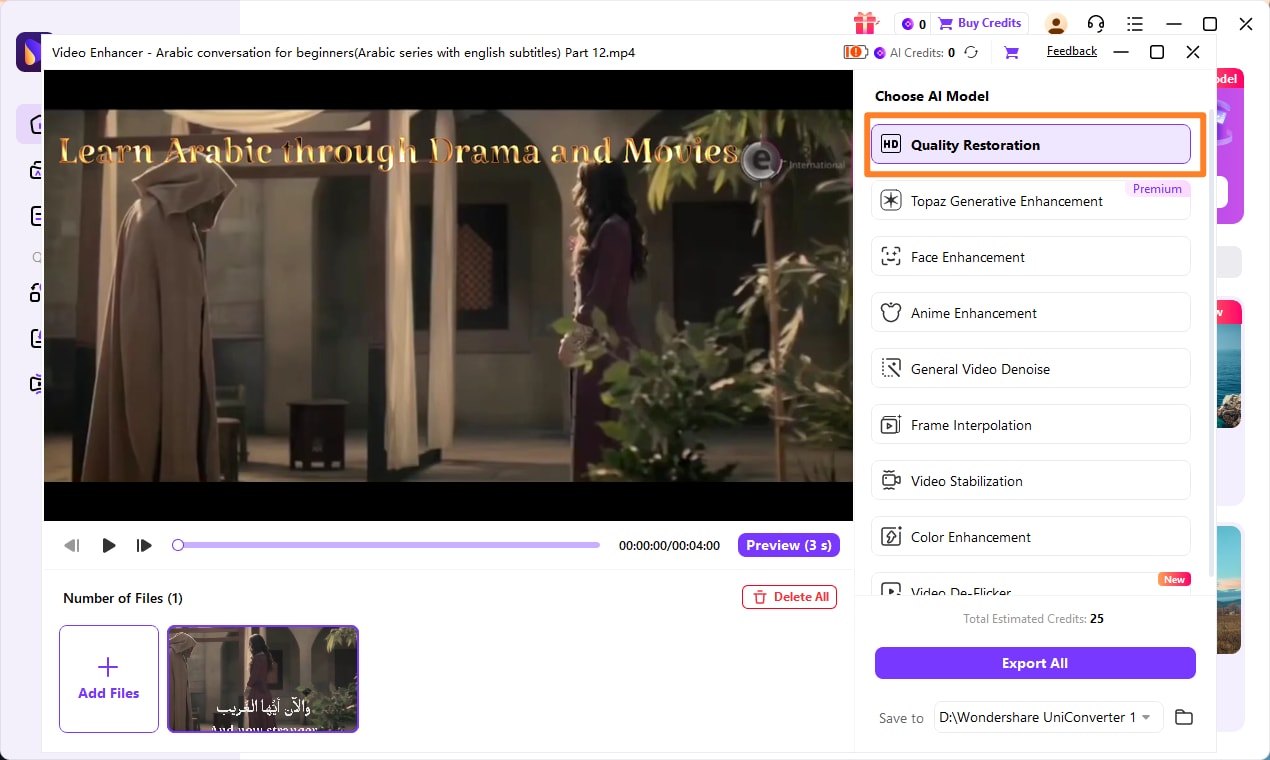
Step 3: Choose Enhancement Model
Select the desired enhancement options, such as "Upscale Video," "Optimize Brightness & Contrast," "Denoise Video," or "Reduce Video Shaking." Adjust the settings according to your needs. For advanced editing, consider exploring features like background replacer to further refine your visuals. You can also achieve a high-definition background remover for professional results.
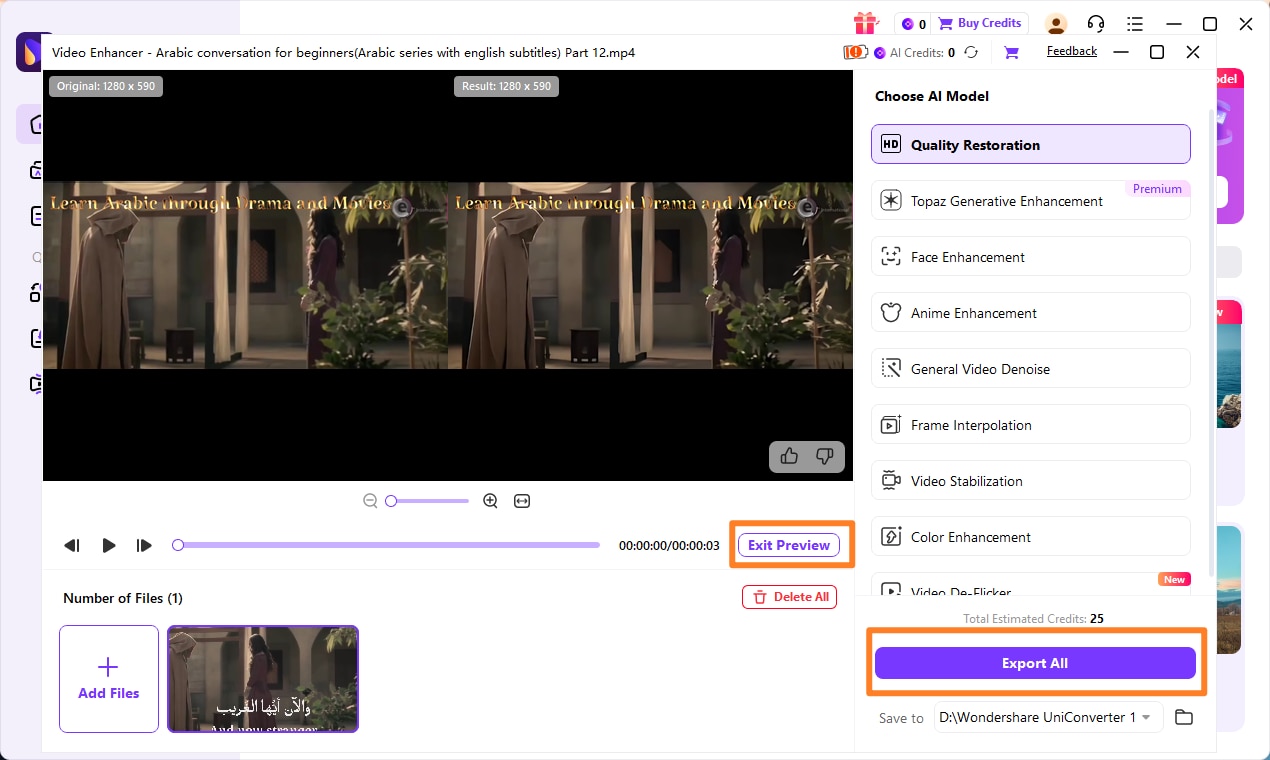
Step 4: Preview and Save the Enhanced Video
Preview the enhanced video to ensure satisfaction. Once ready, choose your output format and destination folder, then click "Enhance" to save your improved video. For those looking to remove background without losing quality, UniConverter offers precise tools to maintain video integrity.

Enhance Videos with SRMD NCNN Vulkan Alternative
Part 7: Final Verdict and Recommendations
The SRMD NCNN Vulkan Video Enhancer review reveals a powerful, open-source tool that excels in high-quality video upscaling and enhancement, particularly for restoring low-resolution or vintage footage. Its reliance on Vulkan for GPU acceleration delivers impressive performance, making it a compelling choice for those seeking cutting-edge AI enhancement without the commercial price tag. However, its command-line interface and demanding hardware requirements create a significant barrier for entry. For tech-savvy users and enthusiasts who are comfortable with technical configurations and possess powerful GPUs, SRMD NCNN Vulkan offers unparalleled control and potentially superior results for specific tasks. Professionals and content creators might find its lack of official support and steep learning curve challenging for time-sensitive projects, potentially preferring more user-friendly commercial alternatives like Topaz Video AI or the integrated tools within DaVinci Resolve Studio. Casual users and beginners, on the other hand, would be better served by intuitive, all-in-one solutions like UniConverter, which prioritize ease of use and a broader range of features over deep technical customization, ensuring a smooth and efficient video enhancement experience without the steep learning curve.
Part 8: FAQs
-
1. What is SRMD NCNN Vulkan Video Enhancer?
SRMD NCNN Vulkan Video Enhancer is an open-source, AI-powered tool that uses deep learning models (SRMD, NCNN) and Vulkan GPU acceleration to upscale and enhance video quality.
-
2. Is SRMD NCNN Vulkan free to use?
Yes, it is an open-source project, meaning it's free to download and use. However, it may require some technical knowledge to set up and operate.
-
3. What kind of hardware do I need to run SRMD NCNN Vulkan effectively?
It generally requires a powerful graphics card (GPU) with Vulkan support for optimal performance, as it's a resource-intensive application.
-
4. How does SRMD NCNN Vulkan compare to commercial video enhancers like Topaz Video AI?
While SRMD NCNN Vulkan can achieve comparable or even superior results in specific scenarios, commercial tools often offer a more user-friendly interface, dedicated support, and a broader range of features.
-
5. Can I use SRMD NCNN Vulkan for real-time video enhancement?
While it leverages Vulkan for accelerated processing, true real-time enhancement for live streams or very high-resolution videos might still be challenging depending on your hardware and the complexity of the enhancement.
