
- Value: Snapseed offers powerful, free mobile photo editing, balancing advanced tools with an intuitive interface.
- Comparison: Snapseed excels for quick mobile enhancements, while UniConverter is better for batch processing and advanced desktop needs.
- Decision: Choose Snapseed for casual mobile editing; opt for UniConverter for professional-grade, multi-image enhancement.
- Value: Snapseed's non-destructive editing and wide filter range enhance photos without permanent changes.
- Comparison: Unlike Snapseed, UniConverter provides robust desktop enhancement, GPU acceleration, and diverse format support.
- Decision: Use Snapseed for on-the-go edits; UniConverter is ideal for stable, lossless, and efficient batch enhancements.
- Value: Snapseed is perfect for social media and casual photography, offering quick, effective improvements.
- Comparison: Snapseed lacks batch processing and desktop versions, features UniConverter provides for comprehensive workflows.
- Decision: Select Snapseed for mobile convenience; UniConverter for advanced features, batch processing, and desktop integration.
In this article
- Part 1: What is Snapseed?
- Part 2: Snapseed Image Enhancer: Core Features, Pros, and Cons
- Part 3: Snapseed's Ideal Users and Use Cases
- Part 4: Snapseed Image Enhancer vs. Competitors
- Part 5: Risks and Pitfalls to Consider
- Part 6: How to Use UniConverter for Efficient Image Enhancement
- Part 7: Final Verdict and Recommendations
- Part 8: Frequently Asked Questions (FAQs)
When I first started dabbling in mobile photography, I quickly realized that a good shot often needs a little help to truly shine. That's where Snapseed image enhancer review comes in. It's a powerful and free mobile photo editing app developed by Google, designed to bring professional-grade editing tools right to your fingertips. This review aims to provide a comprehensive look at Snapseed's capabilities, comparing it against its main competitors to help you decide if it's the right tool for your image enhancement needs. We'll dive into its features, ideal use cases, and even some potential pitfalls, ensuring you make an informed decision about your mobile editing workflow.
Part 1: What is Snapseed?
Snapseed is a mobile photo editor that, for me, has always struck a fantastic balance between power and simplicity. It originated from Nik Software, a company renowned for its professional photo plugins, before being acquired by Google. This heritage is evident in its robust set of tools, which feel surprisingly professional for a free mobile app. My initial impression was that it might be overly complex, but I quickly found its interface to be incredibly intuitive. This review will address the core question: can Snapseed truly elevate your mobile photography, or are there better alternatives out there for specific needs?
The Mobile Photo Editing Landscape
* The Rise of Smartphone Photography: With everyone carrying a high-quality camera in their pocket, the demand for quick and effective mobile editing has exploded.
* The Need for Instant Gratification: Social media platforms thrive on visually appealing content, pushing users to enhance their photos before sharing.
* Balancing Simplicity and Power: Many apps either offer too few features or overwhelm users with complexity, leaving a gap for tools that do both well.
Part 2: Snapseed Image Enhancer: Core Features, Pros, and Cons
Snapseed's core strength lies in its ability to offer a wide array of editing capabilities without feeling cluttered. For me, the "Tune Image" tool is a daily driver, allowing precise adjustments to brightness, contrast, saturation, and ambiance. The "Details" tool, with its sharpening and structure options, can really bring out the textures in a photo. I also frequently use the "Healing" brush to remove unwanted elements, and the "Perspective" tool has saved many a crooked shot. The "Selective" adjustment is a game-changer, letting me fine-tune specific areas of an image with remarkable control.
Pros:
* Intuitive User Interface and Powerful Editing Tools: I found it incredibly easy to pick up and start editing effectively.
* Non-Destructive Editing Workflow: My original image is always safe, as edits are applied on top.
* Wide Range of Filters and Presets: Plenty of options to get a quick stylish look.
Cons:
* Limited Advanced Features for Professional Editors: For really complex tasks, it falls short.
* No Desktop Version Available: I sometimes wish I could continue my mobile edits on a larger screen.
Part 3: Snapseed's Ideal Users and Use Cases
From my experience, Snapseed truly shines for anyone who wants to quickly and effectively improve their photos on the go. If you're like me, constantly snapping pictures with your phone and wanting them to look their best before sharing, Snapseed is a fantastic companion. It's perfect for those who appreciate a clean interface and powerful tools without being overwhelmed by professional-grade complexities.
Best Use Case: Quick Enhancements for Social Media and Casual Photography
I find myself reaching for Snapseed constantly when I need to brighten a dim photo, correct colors, or add a subtle artistic touch before posting to Instagram or sharing with friends. Its speed and effectiveness make it ideal for these everyday scenarios. For example, I recently used it to rescue a sunset photo that looked a bit flat, bringing out the vibrant oranges and purples with just a few taps.
Limitations: Professional-Grade Image Manipulation and Batch Processing
However, if your goal is professional-grade image manipulation, like intricate compositing or extensive retouching, Snapseed will quickly hit its limits. I've also found it frustrating when I have a hundred photos from a trip that all need similar adjustments; Snapseed lacks any batch processing capabilities, meaning each photo has to be edited individually. This can be a real time-sink for larger projects.
Part 4: Snapseed Image Enhancer vs. Competitors
When I look at the mobile photo editing landscape, Snapseed holds its own, but it's important to understand where it stands against other popular apps.
| Feature/Scenario | Snapseed | Adobe Lightroom Mobile | VSCO | PicsArt |
| Ease of Use | Excellent | Good | Good | Fair |
| Advanced Editing | Moderate | Excellent | Moderate | Moderate |
| Filter Variety | Excellent | Good | Excellent | Excellent |
| Batch Processing | No | Yes | No | No |
| Subscription Model | Free | Freemium | Freemium | Freemium |
Key Differentiators: Mobile-First Simplicity vs. Professional Power
For me, Snapseed's biggest differentiator is its free, ad-free experience coupled with a surprisingly powerful toolset. While Adobe Lightroom Mobile offers superior advanced editing capabilities, especially with its cloud synchronization and RAW file support, it comes with a subscription cost for its full features. VSCO excels in its curated filter aesthetic and community, but its editing tools, while good, don't feel as robust as Snapseed's for precise adjustments. PicsArt, on the other hand, is a creative powerhouse with stickers, collages, and drawing tools, but its core image enhancement often feels less refined than Snapseed's. If you're prioritizing a seamless, free editing experience for general enhancements, Snapseed is a strong contender. However, if you're a professional needing advanced features and batch processing, Lightroom Mobile is likely a better fit, despite the cost.
Part 5: Risks and Pitfalls to Consider
While Snapseed is a fantastic tool, there are a few things I've learned to be wary of, especially when comparing it to other options. It's easy to get carried away with the powerful tools, and sometimes the results can look less than natural.
Data Privacy Concerns with Cloud-Based Editing
Although Snapseed itself processes images locally, many other popular editing apps rely on cloud storage or processing. This can raise questions about where your photos are stored and who has access to them. I always make sure to understand a service's privacy policy before uploading sensitive images.
Potential for Over-Processing and Unnatural Results
It's tempting to crank up the saturation or sharpness to the max, but I've found that this often leads to photos looking artificial or "over-edited." Snapseed's tools are powerful, and with great power comes the responsibility to use them subtly. Less is often more when it comes to image enhancement.
Lack of Cross-Device Synchronization
Since Snapseed is purely a mobile app without a desktop counterpart or cloud sync, any edits I make are confined to that specific device. If I switch phones or want to continue an edit on my tablet, I have to start from scratch. This can be a real pain point for me if I'm working on a series of photos across different devices.
Limited Support for RAW Files
While Snapseed can open and edit some RAW files, its capabilities are quite basic compared to dedicated RAW editors like Adobe Lightroom. I've noticed that the dynamic range and color depth preservation aren't as robust, meaning I might lose some valuable information from my RAW files if I rely solely on Snapseed for those edits.
Part 6: How to Use UniConverter for Efficient Image Enhancement
Sometimes, I find that even with Snapseed, I need something more robust, especially when dealing with batch processing, specific format conversions, or when the image enhancement in other tools feels a bit unstable or weak. That's where I turn to UniConverter. It's a comprehensive desktop solution that can handle a wide array of multimedia tasks, including surprisingly powerful image enhancement. It's great for avoiding the common pitfalls of mobile-only apps, offering a stable, lossless enhancement experience with GPU acceleration and support for various formats, all without ads. It truly feels like an all-in-one solution for when mobile apps fall short.
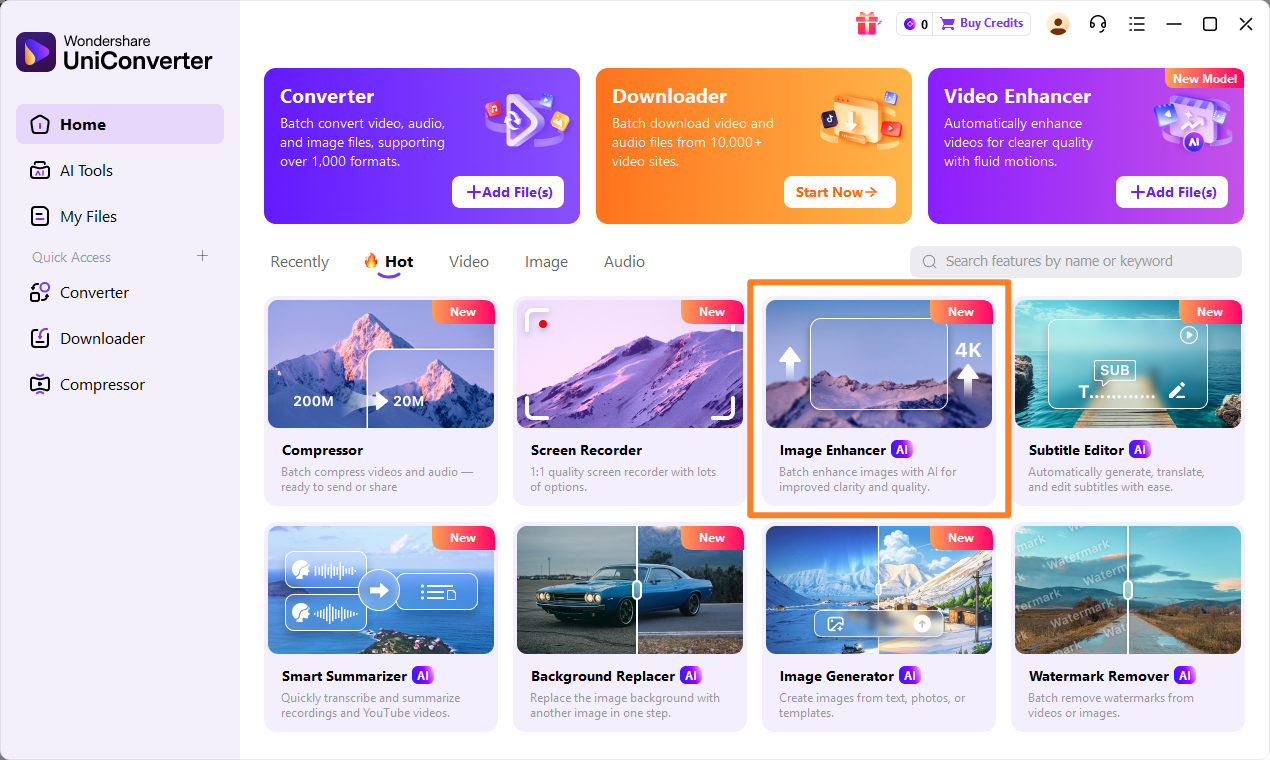
Step 1: Open UniConverter and Choose Image Enhancer
First, I launch UniConverter on my computer. On the main interface, I navigate to the "Toolbox" section and select the "Image Enhancer" feature. It's usually quite prominent and easy to find among the other tools.
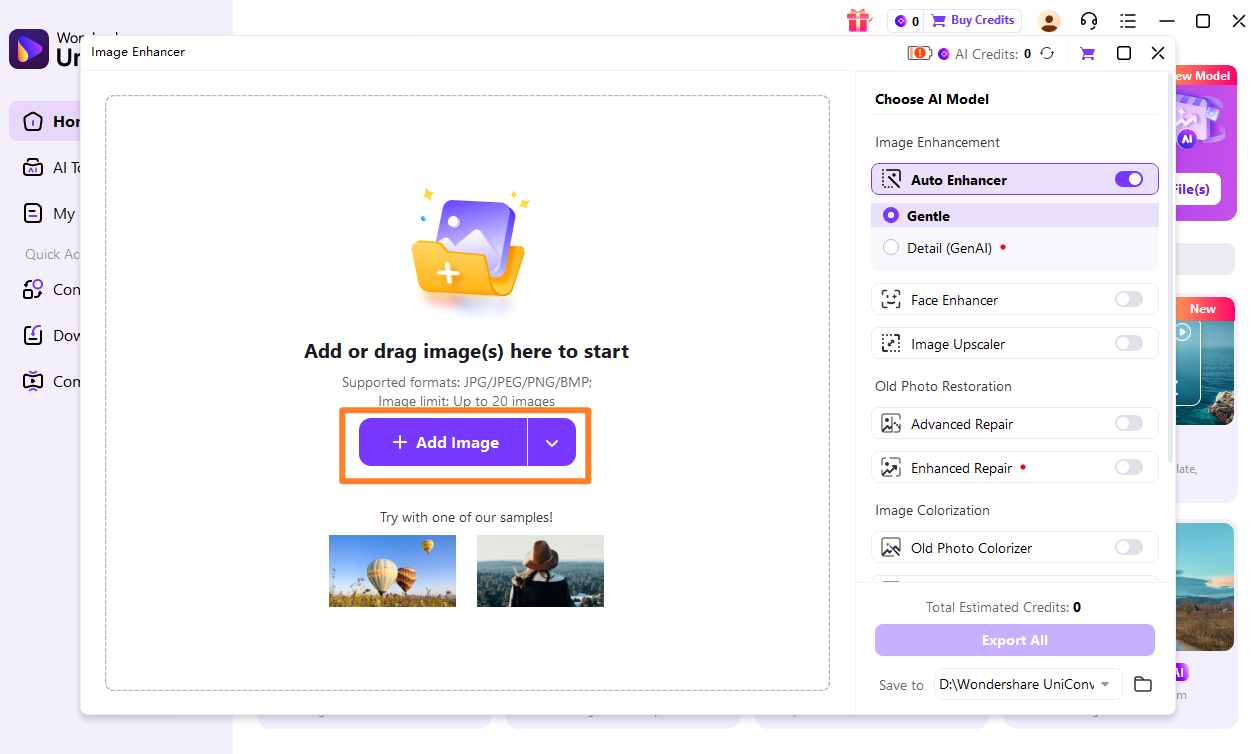
Step 2: Upload the Images
Next, I simply drag and drop the images I want to enhance into the UniConverter window. Alternatively, I can click the "Add Files" button and browse for them on my computer. This is where UniConverter really shines for me, as I can upload multiple images at once for batch processing.
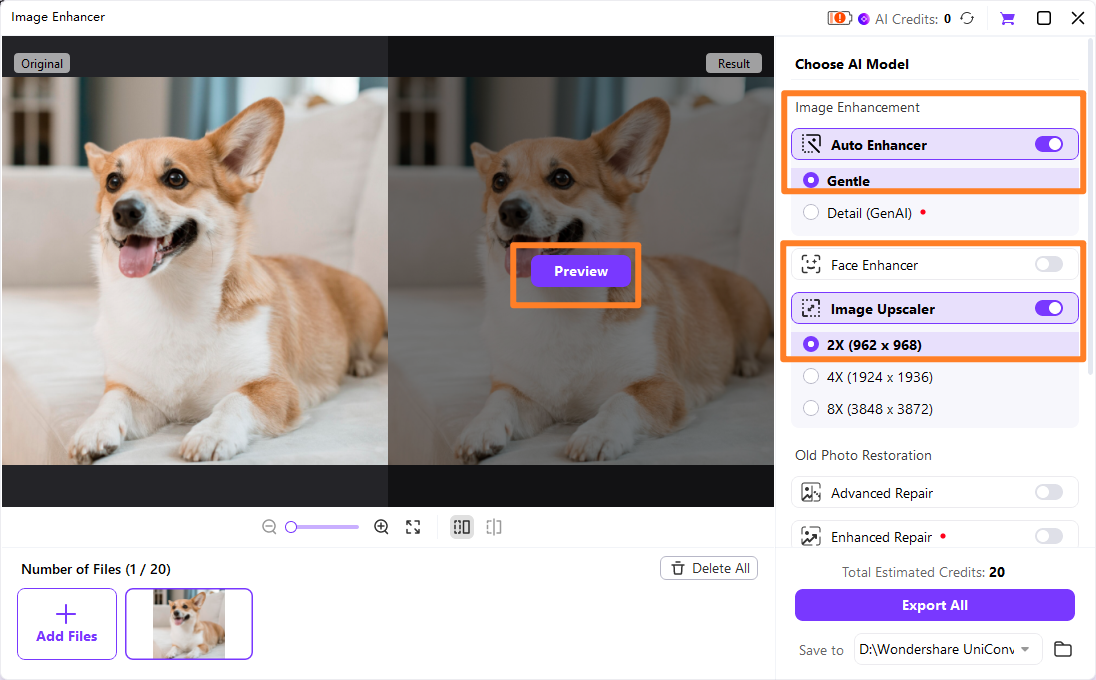
Step 3: Choose Enhancement Model
Once my images are loaded, UniConverter presents me with different enhancement models. I can choose the one that best suits my needs, whether it's for general improvement, noise reduction, or specific color correction. I appreciate having these options to fine-tune the enhancement process.
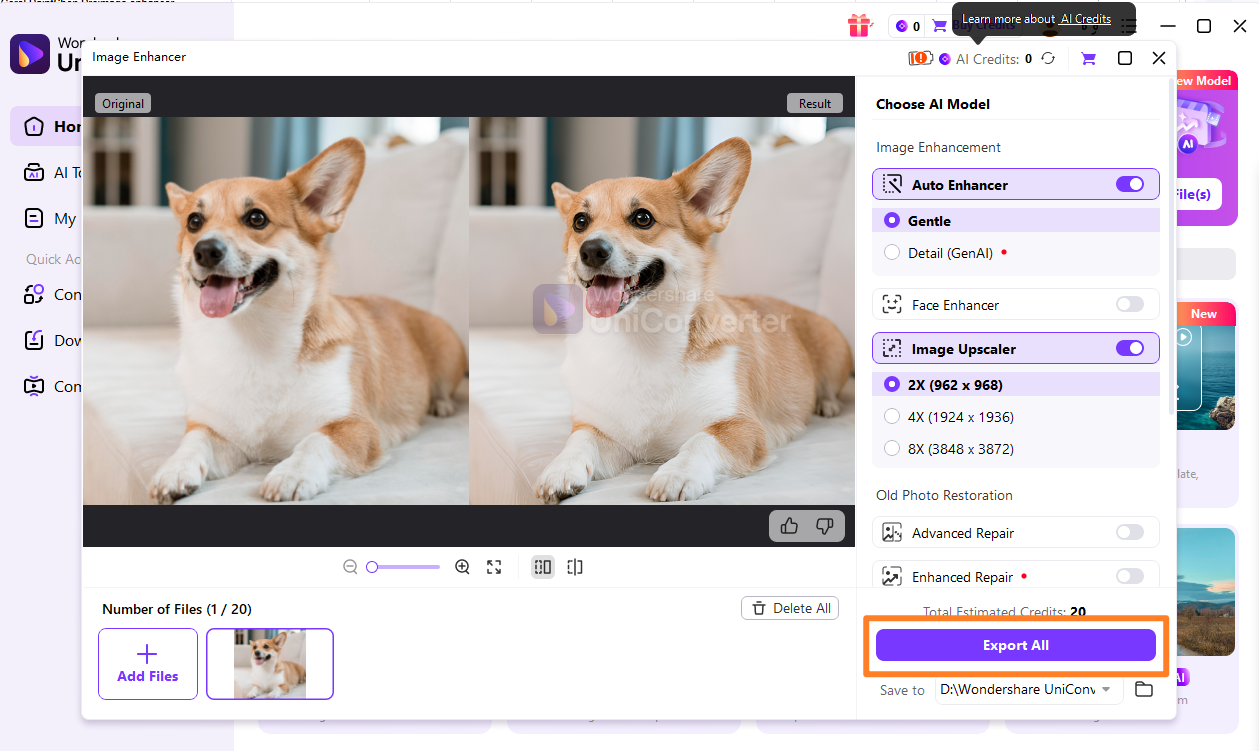
Step 4: Preview and Save the Enhanced Images
After selecting the model, UniConverter processes the images. I can then preview the enhanced versions alongside the originals to ensure I'm happy with the results. Once satisfied, I click "Save" or "Export" to download my enhanced images to my desired location.

Enhance Images Beyond Snapseed
Part 7: Final Verdict and Recommendations
After spending considerable time with Snapseed image enhancer review and its competitors, my conclusion is that it remains an indispensable tool for mobile photographers. Its intuitive interface, powerful editing tools, and non-destructive workflow make it a standout, especially considering it's completely free. However, its limitations in advanced features, batch processing, and desktop availability mean it's not a one-size-fits-all solution. For casual users and social media enthusiasts, Snapseed is an absolute must-have, offering everything needed to make photos pop without a steep learning curve or cost. Aspiring photographers and advanced editors will find it excellent for quick edits but will likely need to supplement it with more robust software like Adobe Lightroom Mobile or even desktop solutions like UniConverter for professional-grade work, RAW file handling, or batch processing. For those prioritizing data privacy and offline editing, being mindful of cloud-based alternatives is crucial. Ultimately, Snapseed excels in its niche, providing accessible yet powerful mobile image enhancement.
Part 8: Frequently Asked Questions (FAQs)
-
1. Is Snapseed completely free to use?
Yes, Snapseed is entirely free to download and use, with no in-app purchases or subscriptions required.
-
2. Can Snapseed enhance image resolution?
Snapseed can improve the perceived quality of an image through sharpening and detail enhancement, but it cannot genuinely increase the actual pixel resolution of an image.
-
3. How does Snapseed compare to Photoshop Express?
Snapseed generally offers a more robust and professional set of editing tools for fine-tuning images, while Photoshop Express focuses more on quick fixes, collages, and basic adjustments with a simpler interface.
-
4. Is Snapseed available on desktop?
No, Snapseed is exclusively a mobile application, available for both Android and iOS devices. There is no official desktop version.
-
5. What are the best alternatives to Snapseed for professional use?
For professional use, Adobe Lightroom Mobile (with a Creative Cloud subscription for full features) and desktop software like Adobe Photoshop or UniConverter (for batch processing and specific enhancements) are generally considered superior due to their advanced capabilities, RAW support, and workflow integration.
