
- Shotcut Overview: Free, open-source video editor for basic enhancements like color correction and stabilization.
- Value Proposition: Offers comprehensive free tools and cross-platform compatibility for budget-conscious creators.
- Limitations: Steep learning curve and lacks advanced AI-powered enhancement features found in specialized tools.
- Target Users: Ideal for hobbyists and small-scale creators needing fundamental video improvements, not professionals.
- Comparison: Shotcut is free but less powerful than paid alternatives like Topaz Video AI for advanced AI enhancements.
- Risks: Output quality limitations, performance issues on older hardware, and lack of dedicated customer support.
- UniConverter Alternative: Provides efficient, stable, and AI-powered video enhancement with batch processing capabilities.
In this article
- Part 1: What is Shotcut?
- Part 2: Shotcut Video Enhancer: Core Features, Pros, and Cons
- Part 3: Target Users and Usage Scenarios
- Part 4: Shotcut and Alternatives Comparison
- Part 5: Risks and Pitfalls When Using Shotcut for Video Enhancement
- Part 6: How to Use UniConverter for Efficient Video and Image Enhancement
- Part 7: Conclusion
- Part 8: FAQs About Shotcut Video Enhancer
In the vast digital landscape of video editing, free tools often promise professional-grade results without the hefty price tag. Shotcut, an open-source, cross-platform video editor, has garnered significant attention for its comprehensive feature set. This Shotcut video enhancer review delves into its capabilities for improving video quality, assessing its strengths and weaknesses when it comes to enhancing footage. We will explore its core functionalities, compare it against leading competitors, and identify the ideal scenarios where Shotcut truly shines, while also highlighting its limitations. This review aims to provide a clear, scenario-based analysis to help users make informed decisions about leveraging Shotcut for their video enhancement needs.
Part 1: What is Shotcut?
Shotcut is a free, open-source, and cross-platform video editor that supports a wide range of video, audio, and image formats. Developed by Meltytech, LLC, it has gained popularity among hobbyists and aspiring content creators due to its accessibility and robust feature set. Unlike many free editors, Shotcut offers a non-linear editing experience, allowing users to manipulate video clips, apply filters, and add effects with considerable flexibility. This Shotcut video enhancer review will specifically focus on its ability to improve video quality, addressing common user pain points regarding visual fidelity.
The Landscape of Free Video Editing Software
The demand for accessible video editing solutions has surged, driven by the rise of content creation. Users often face challenges such as:
* Limited Budgets: Many creators cannot afford expensive professional software.
* Complex Interfaces: Professional tools can be overwhelming for beginners.
* Basic Enhancement Needs: Users often require simple tools for color correction, stabilization, or noise reduction.
* Cross-Platform Compatibility: The need for software that works across different operating systems.
Part 2: Shotcut Video Enhancer: Core Features, Pros, and Cons
Shotcut offers a suite of tools that can be utilized for video enhancement. Its core capabilities include color grading, video stabilization, noise reduction filters, and various visual effects. Users can adjust brightness, contrast, saturation, and white balance to improve the overall look of their footage. The video stabilization feature helps to smooth out shaky handheld shots, while noise reduction filters aim to clean up grainy footage.
Pros:
* Comprehensive Free Toolkit for Basic Enhancements: Shotcut provides a wide array of filters and effects for color correction, stabilization, and basic visual improvements without any cost.
* Cross-Platform Compatibility for Diverse Workflows: Available on Windows, macOS, and Linux, Shotcut allows users to work on their projects regardless of their operating system.
* Active Community Support and Regular Updates: Being open-source, Shotcut benefits from a dedicated community that provides tutorials, troubleshooting, and contributes to its ongoing development and updates.
Cons:
* Steep Learning Curve for Advanced Enhancement Features: While powerful, mastering Shotcut's interface and advanced filters for optimal enhancement can be challenging for new users.
* Limited AI-Powered Enhancement Capabilities Compared to Dedicated Tools: Shotcut primarily relies on traditional algorithms; it lacks the sophisticated AI-driven upscaling, de-noising, and artifact removal found in specialized enhancement software.
Part 3: Target Users and Usage Scenarios
Shotcut's video enhancement features are best suited for individuals and small-scale creators who need to improve their video quality without investing in costly software. Its free nature and comprehensive basic toolkit make it an attractive option for those on a tight budget.
Best Use Case: Budget-Conscious Creators Needing Fundamental Video Improvements
Shotcut is ideal for hobbyists, students, and independent content creators who need to perform fundamental video enhancements such as color correction, basic stabilization, and noise reduction on their personal projects or social media content. For instance, a vlogger might use Shotcut to brighten underexposed footage, stabilize a slightly shaky clip, or apply a consistent color grade across their videos. It empowers them to achieve a polished look without professional-grade software.
Limited Scenario: Professionals Requiring Advanced AI-Driven Upscaling and Noise Reduction
For professional videographers, filmmakers, or studios working on high-stakes projects that demand pristine video quality, Shotcut's enhancement capabilities may fall short. Tasks requiring advanced AI-driven upscaling of low-resolution footage to 4K/8K, intelligent artifact removal, or sophisticated noise reduction for extremely challenging lighting conditions are beyond Shotcut's current scope. Professionals in these fields would likely find its tools insufficient for their rigorous quality standards.
Part 4: Shotcut and Alternatives Comparison
| Feature/Aspect | Shotcut Video Enhancer | DaVinci Resolve | HandBrake | Topaz Video AI |
| Price | Free | Free (Paid Studio Version) | Free | Paid |
| Ease of Use for Enhancement | Moderate | High | Moderate | Low |
| AI Enhancement | Basic/Manual | Advanced (Paid) | None | Advanced |
| Output Quality | Good | Excellent | Good | Superior |
| Learning Curve | Moderate | High | Low | Low |
Key Differentiators: Free Access vs. Advanced AI Power
Shotcut stands out for its completely free access to a broad range of enhancement tools, making it highly accessible. However, DaVinci Resolve (especially the Studio version) offers superior color grading and advanced features, albeit with a steeper learning curve. HandBrake is excellent for video compression and format conversion but lacks dedicated enhancement tools. Topaz Video AI is a specialized, paid solution that excels in AI-driven upscaling and noise reduction, delivering superior output quality for demanding users willing to invest.
Part 5: Risks and Pitfalls When Using Shotcut for Video Enhancement
While Shotcut offers a compelling free solution for video enhancement, users should be aware of potential risks and limitations, especially when aiming for professional-grade results. These pitfalls can impact the quality of the final output and the overall user experience.
Understanding Output Quality Limitations
Shotcut's enhancement tools, while effective for basic improvements, do not employ the same sophisticated algorithms as dedicated, often AI-powered, enhancement software. This means that for tasks like upscaling low-resolution video to 4K, significantly reducing heavy noise, or intelligently recovering lost detail, Shotcut may produce less impressive or even artifact-ridden results compared to specialized tools. Users might find that heavily processed videos can look artificial or lose fine details.
Managing Performance on Older Hardware
As a comprehensive video editor, Shotcut can be resource-intensive, particularly when applying multiple filters or working with high-resolution footage. Users with older or less powerful computers may experience slow preview playback, frequent crashes, or extremely long export times. This can severely hinder the workflow and make the enhancement process frustrating and inefficient.
Navigating the User Interface for Specific Enhancements
Shotcut's interface, while functional, can be less intuitive for specific enhancement tasks compared to more streamlined, single-purpose applications. Finding and effectively applying the right combination of filters for optimal results (e.g., balancing noise reduction with detail preservation) often requires a deep understanding of each filter's parameters and how they interact. This can lead to a steep learning curve and trial-and-error approach for users unfamiliar with video processing concepts.
Lack of Dedicated Customer Support for Enhancement Issues
As an open-source project, Shotcut does not offer dedicated customer support channels for specific enhancement problems. While there is an active community forum, getting immediate, personalized assistance for complex enhancement challenges or software bugs can be difficult. Users are largely reliant on community knowledge and self-troubleshooting, which might not be sufficient for urgent or highly technical issues.
Part 6: How to Use UniConverter for Efficient Video and Image Enhancement
When other tools fall short in batch processing, stable enhancement, or delivering noticeable improvements, UniConverter emerges as a robust solution. It bypasses common issues like unstable enhancements and weak effects, offering a reliable platform for boosting video and image quality. UniConverter stands out with its ad-free experience, extensive format support, GPU acceleration for speed, stable lossless processing, and powerful batch enhancement capabilities. It's an all-in-one ultimate solution for your media enhancement needs.
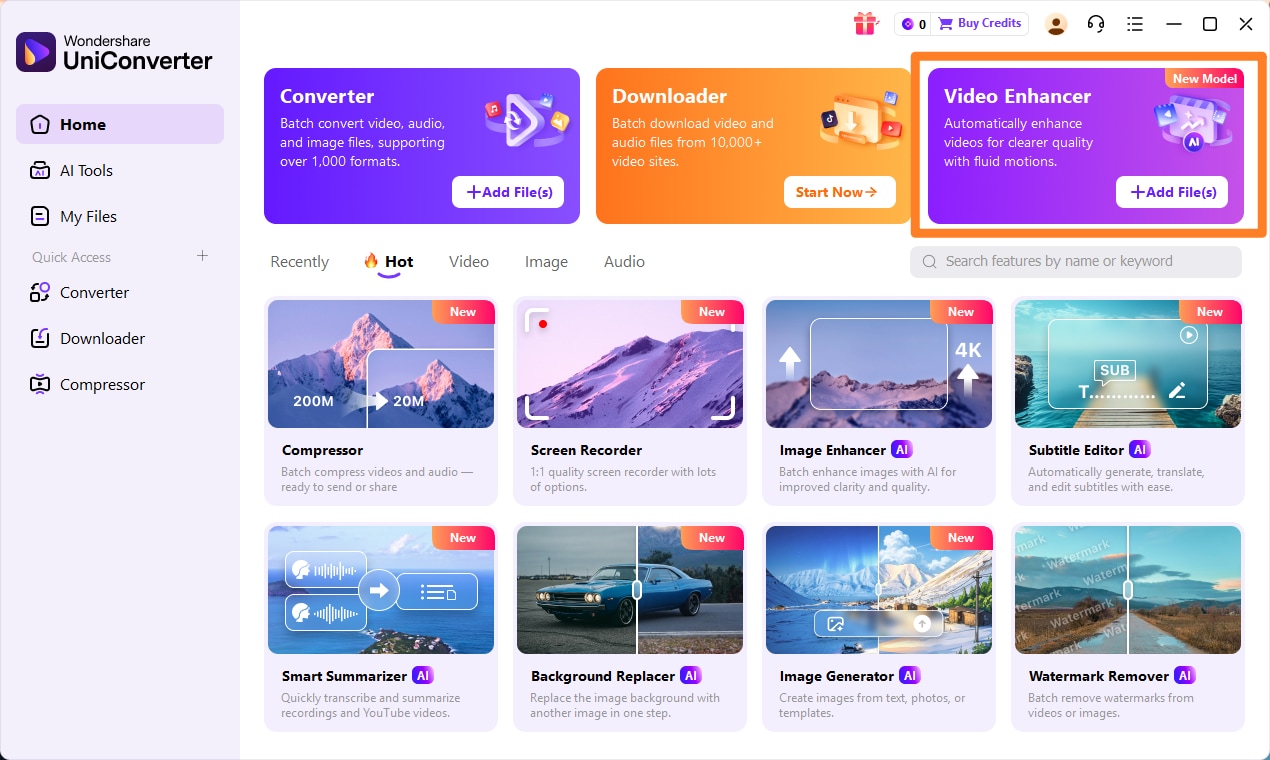
Step 1: Open UniConverter and Choose Video Enhancer
Launch UniConverter on your computer. From the main interface, navigate to the "AI Lab" section and select the "Video Enhancer" tool.
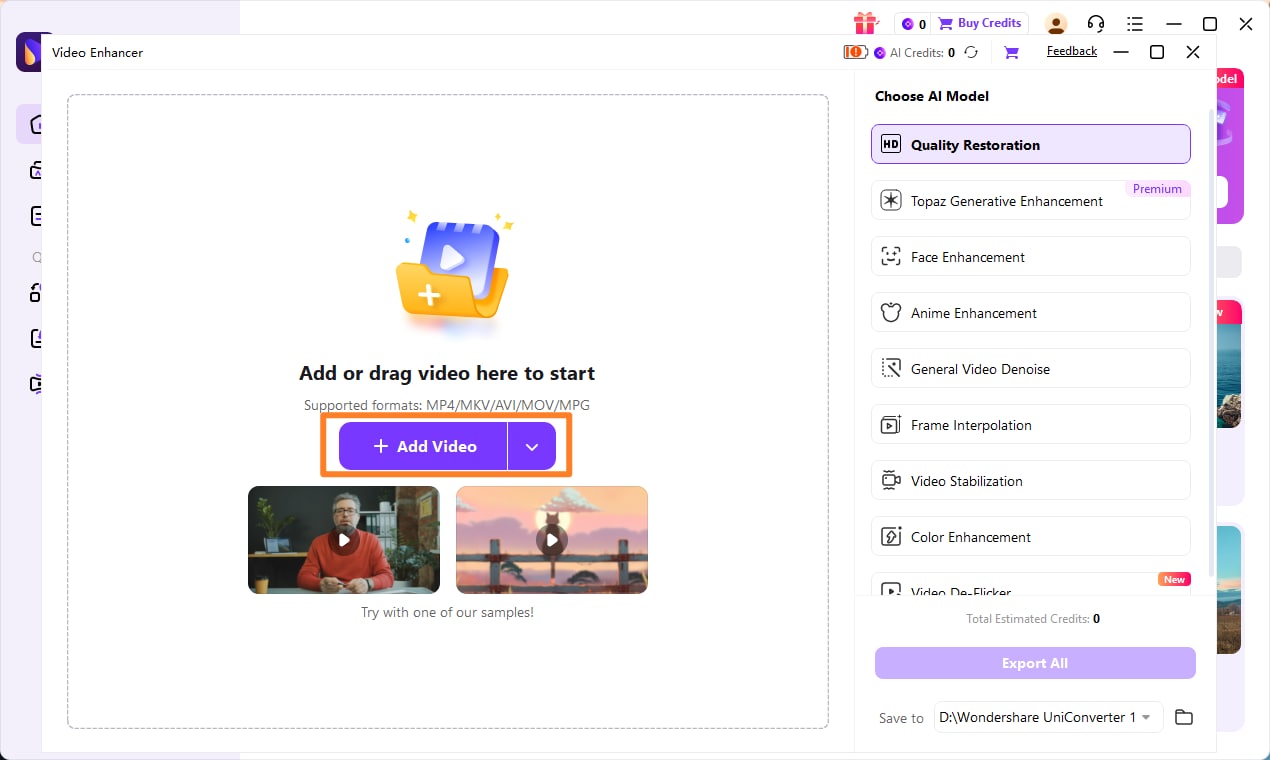
Step 2: Upload the Videos
Click on the "Add Files" button or drag and drop your video files directly into the UniConverter interface. You can add multiple videos for batch processing.
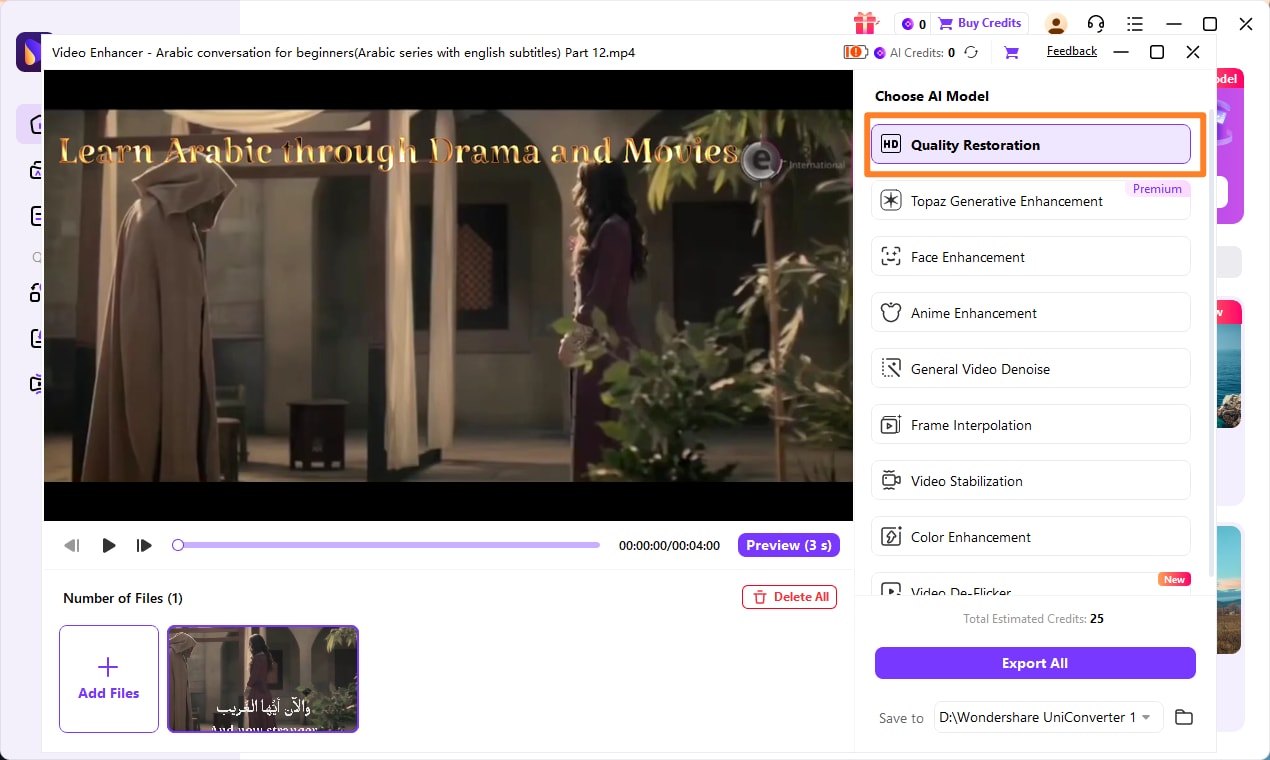
Step 3: Choose Enhancement Model
Select the desired enhancement model based on your needs, such as "AI Upscale," "AI Denoise," or "AI Deblur." Adjust parameters as needed. UniConverter also offers advanced features like background replacer for further customization. You can even remove background without losing quality from your videos and images. For those interested in dynamic visuals, the video background changer feature can transform your footage.
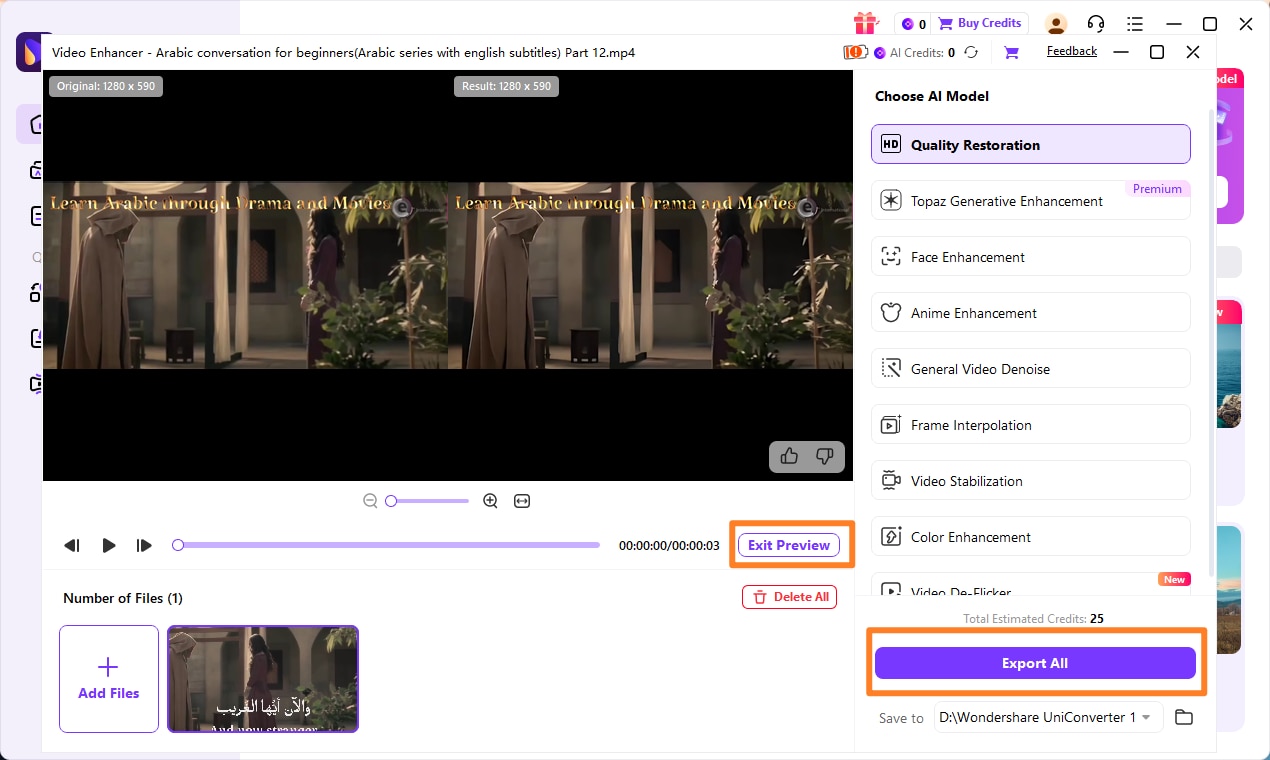
Step 4: Preview and Save the Enhanced Video
Preview the enhanced video to ensure satisfaction. Once ready, choose your output format and destination, then click "Export" to save your high-quality video. For high-definition results, consider using the high-definition background remover to perfect your visuals.

Seeking a Shotcut Alternative for Video Enhancement?
Part 7: Conclusion
This Shotcut video enhancer review highlights its position as a highly capable, free, and open-source video editor offering a solid foundation for basic video enhancements. While it provides essential tools for color correction, stabilization, and noise reduction, its capabilities are primarily rooted in traditional video processing. For hobbyists and beginners, Shotcut serves as an excellent starting point to improve their footage without financial investment. However, for advanced users or professionals requiring cutting-edge AI-driven upscaling, sophisticated noise reduction, or intelligent artifact removal, Shotcut's limitations become apparent. These users would benefit more from dedicated, often paid, enhancement software that leverages advanced algorithms. Ultimately, the choice between Shotcut and its alternatives hinges on balancing cost, desired output quality, and the complexity of enhancement tasks.
Part 8: FAQs About Shotcut Video Enhancer
-
1. Can Shotcut truly enhance video quality significantly?
Shotcut offers tools for basic enhancements like color correction, stabilization, and noise reduction, which can improve perceived quality. However, it lacks advanced AI-driven upscaling found in dedicated enhancers, meaning "significant" enhancement is relative to the original footage and the specific improvement needed.
-
2. Is Shotcut suitable for professional video enhancement projects?
For professional projects requiring high-end upscaling, advanced noise reduction, or AI-powered detail recovery, Shotcut's capabilities might be limited. It's more suited for fundamental improvements rather than the rigorous demands of professional-grade video enhancement.
-
3. What are the main differences between Shotcut and paid video enhancers?
The primary differences lie in the sophistication of enhancement algorithms (especially AI-driven), ease of use for complex tasks, and the level of output quality achievable, particularly for upscaling and artifact removal. Paid enhancers often offer more advanced features and better performance.
-
4. Does Shotcut offer any AI-powered video enhancement features?
Shotcut primarily relies on traditional video processing techniques for enhancement. It does not feature advanced AI-powered upscaling or intelligent noise reduction found in specialized AI video enhancers, which use machine learning to achieve more impressive results.
-
5. Are there any hidden costs or limitations when using Shotcut for video enhancement?
Shotcut is completely free and open-source, with no hidden costs. The main limitations are its learning curve for advanced features and the absence of cutting-edge AI enhancement technologies, which means it might not deliver the same level of quality as specialized paid software for certain tasks.
