
- Value: Shotcut Video Enhancer offers powerful, free, open-source video enhancement, ideal for budget-conscious creators.
- Comparison: It provides comprehensive features but demands a steeper learning curve and lacks advanced AI compared to paid alternatives like UniConverter.
- Decision: Choose Shotcut for cost-free, manual control; opt for UniConverter for AI-powered efficiency and ease of use.
- Consideration: Shotcut's performance can be demanding on hardware and lacks dedicated customer support, impacting professional workflows.
In this article
- Part 1: What is Shotcut Video Enhancer?
- Part 2: Shotcut Video Enhancer: Core Features, Pros, and Cons
- Part 3: Target Users and Usage Scenarios
- Part 4: Shotcut Video Enhancer and Alternatives Comparison
- Part 5: Risks and Pitfalls to Consider
- Part 6: How to Use UniConverter for Efficient Video Enhancement
- Part 7: Conclusion
- Part 8: FAQs
Shotcut Video Enhancer: A Comprehensive Scenario-Based Review
In the dynamic world of video content creation, the demand for high-quality visuals is ever-increasing. From casual vloggers to aspiring filmmakers, everyone seeks tools that can transform raw footage into polished, engaging videos. This Shotcut Video Enhancer review delves into one such popular tool, Shotcut, specifically focusing on its video enhancement capabilities. We will explore its features, evaluate its performance against key competitors, and provide scenario-based insights to help you determine if it's the right fit for your video editing workflow. Understanding its strengths and weaknesses in various contexts is crucial for making an informed decision in a crowded market of video enhancement solutions.
Part 1: What is Shotcut Video Enhancer?
Shotcut Video Enhancer refers to the suite of video enhancement tools and filters available within the Shotcut open-source video editor. It's not a standalone product but rather an integral part of the Shotcut application, allowing users to improve the visual and audio quality of their video footage. This review aims to dissect its effectiveness in various enhancement tasks, such as color correction, stabilization, and noise reduction, and to compare its offerings with other dedicated or integrated video enhancement solutions. The core problem this review addresses is helping users navigate the complex landscape of video enhancement, particularly for those on a budget or seeking a free, yet powerful, alternative.
The Landscape of Video Enhancement Tools
* Growing demand for high-quality content: Social media and streaming platforms have set a high bar for visual fidelity.
* Accessibility of sophisticated tools: Previously professional-grade features are now available to a wider audience.
* Balancing cost and capability: Users often struggle to find tools that meet their needs without breaking the bank.
* Ease of use vs. powerful features: The trade-off between a user-friendly interface and comprehensive functionality is a common dilemma.
Part 2: Shotcut Video Enhancer: Core Features, Pros, and Cons
Shotcut Video Enhancer, as part of the Shotcut editor, offers a robust set of functionalities designed to improve video quality. Its core capabilities include a wide array of filters for color grading, such as brightness, contrast, saturation, and white balance adjustments, along with more advanced options like color wheels and scopes. It also provides essential enhancement features like video stabilization to smooth out shaky footage, noise reduction to clean up grainy videos, and sharpening filters to improve detail. Audio enhancement tools are also integrated, allowing for noise gate, compressor, and equalizer adjustments. These features collectively empower users to significantly upgrade their video's aesthetic and auditory appeal.
- Pros:
- Comprehensive suite of video enhancement filters (e.g., color correction, stabilization, noise reduction).
- Open-source and free to use, offering significant cost savings.
- Cross-platform compatibility (Windows, macOS, Linux).
- Cons:
- Steep learning curve for beginners due to its extensive features and non-linear editing interface.
- Performance can be demanding on older or less powerful hardware, leading to slow rendering times.
Part 3: Target Users and Usage Scenarios
Shotcut Video Enhancer is particularly well-suited for individuals who are comfortable with a slightly steeper learning curve in exchange for powerful, free tools. It caters to a broad spectrum of users, from hobbyists and students to independent content creators who need professional-grade features without the recurring subscription costs. Its open-source nature also appeals to those who value community support and continuous development. However, its suitability diminishes when rapid, AI-driven enhancements or highly specialized professional workflows are required.
- Best Use Case: Budget-Conscious Content Creators Refining Home Videos
- Scenario: A vlogger wants to improve the visual quality of their travel footage shot on a smartphone, correcting exposure, stabilizing shaky shots, and reducing grain without investing in expensive software. Shotcut provides all the necessary tools to achieve a polished look, allowing them to upload high-quality content without financial burden.
- Limited Use Case: Professionals Needing Rapid Turnaround for Client Projects
- Scenario: A freelance videographer needs to quickly enhance a corporate interview for a client, requiring efficient batch processing, advanced AI-driven enhancements, and seamless integration with other professional tools. Shotcut's manual approach to enhancement and lack of advanced AI features would significantly slow down their workflow, making it an inefficient choice for time-sensitive, high-stakes projects.
Part 4: Shotcut Video Enhancer and Alternatives Comparison
Shotcut Video Enhancer offers a compelling package for its price (free), but it faces stiff competition from both free and paid solutions. For ease of use and AI-powered enhancements, UniConverter stands out, offering a streamlined experience. DaVinci Resolve, while having a free version, boasts professional-grade color grading and editing, making it a favorite among serious videographers. Adobe Premiere Pro remains an industry standard, offering unparalleled integration and advanced features for a subscription fee. The choice ultimately depends on the user's skill level, budget, and specific project requirements.
| Feature/Aspect | Shotcut Video Enhancer | DaVinci Resolve | Adobe Premiere Pro | UniConverter |
| Ease of Use | Moderate | High (for professionals) | Moderate (with learning) | Very High |
| Cost | Free | Free (basic) / Paid (Studio) | Paid (Subscription) | Paid (One-time/Subscription) |
| AI Enhancement | Limited | Advanced | Moderate | Advanced |
| Batch Processing | Manual | Efficient | Efficient | Highly Efficient |
| Output Quality | Good | Excellent | Excellent | Excellent |
| System Resources | High | Very High | High | Moderate |
Key Differentiators: Open-Source Flexibility vs. AI-Powered Efficiency
Part 5: Risks and Pitfalls to Consider
When opting for Shotcut Video Enhancer, users should be aware of several potential risks and pitfalls that might impact their workflow and project outcomes. While it offers significant advantages, particularly its cost-free nature, these drawbacks can be substantial for certain user profiles or project types. Understanding these limitations beforehand can help in setting realistic expectations and planning accordingly.
Potential for Steep Learning Curve and Time Investment
Shotcut's extensive feature set, while powerful, comes with a non-intuitive interface for newcomers. Unlike more streamlined editors, Shotcut requires users to invest considerable time in learning its specific workflows and filter applications. This can lead to frustration and prolonged project timelines, especially for those accustomed to simpler, more automated tools. The lack of guided tutorials within the software itself further exacerbates this issue.
Performance Bottlenecks on Underpowered Systems
Video enhancement, by its nature, is a resource-intensive task. Shotcut, despite being free, is no exception. Users with older computers or systems lacking dedicated graphics cards and ample RAM may experience significant performance issues. This includes slow preview playback, frequent crashes, and extremely long rendering times, making the editing process cumbersome and inefficient.
Lack of Dedicated Customer Support
As an open-source project, Shotcut does not offer dedicated customer support. Users must rely on community forums, online tutorials, and self-help resources to troubleshoot issues or learn new techniques. While the community is generally helpful, response times can vary, and complex problems might not always find immediate or satisfactory solutions, which can be a significant hurdle for urgent projects.
Limited Advanced AI-Driven Enhancement Features
Compared to modern, paid alternatives, Shotcut's video enhancement capabilities are largely manual and filter-based. It lacks the advanced AI-driven features found in some competitors, such as intelligent upscaling, automatic color grading based on content analysis, or sophisticated object removal. This means users must perform more manual adjustments, which can be time-consuming and may not yield the same level of precision or quality as AI-powered tools.
Output Quality Limitations for Professional-Grade Projects
While Shotcut can produce good quality output, it may not always meet the stringent requirements of professional-grade projects. The nuances of color grading, the effectiveness of noise reduction, and the overall fidelity of the enhanced video might fall short when compared to outputs from high-end professional software. This can be a critical limitation for videographers and filmmakers working on client projects where impeccable quality is paramount.
Part 6: How to Use UniConverter for Efficient Video Enhancement
When other tools fall short in batch processing, stable enhancement, or delivering consistent quality, UniConverter emerges as a robust alternative. It bypasses common issues like unstable enhancements, weak effects, and lack of batch processing, offering a streamlined, ad-free experience. UniConverter provides extensive format support, GPU acceleration for faster processing, and stable, lossless enhancement, positioning itself as an all-in-one ultimate solution for video and image enhancement. For those looking to upscale video or even fix pixelated videos, this tool offers a comprehensive suite of features.
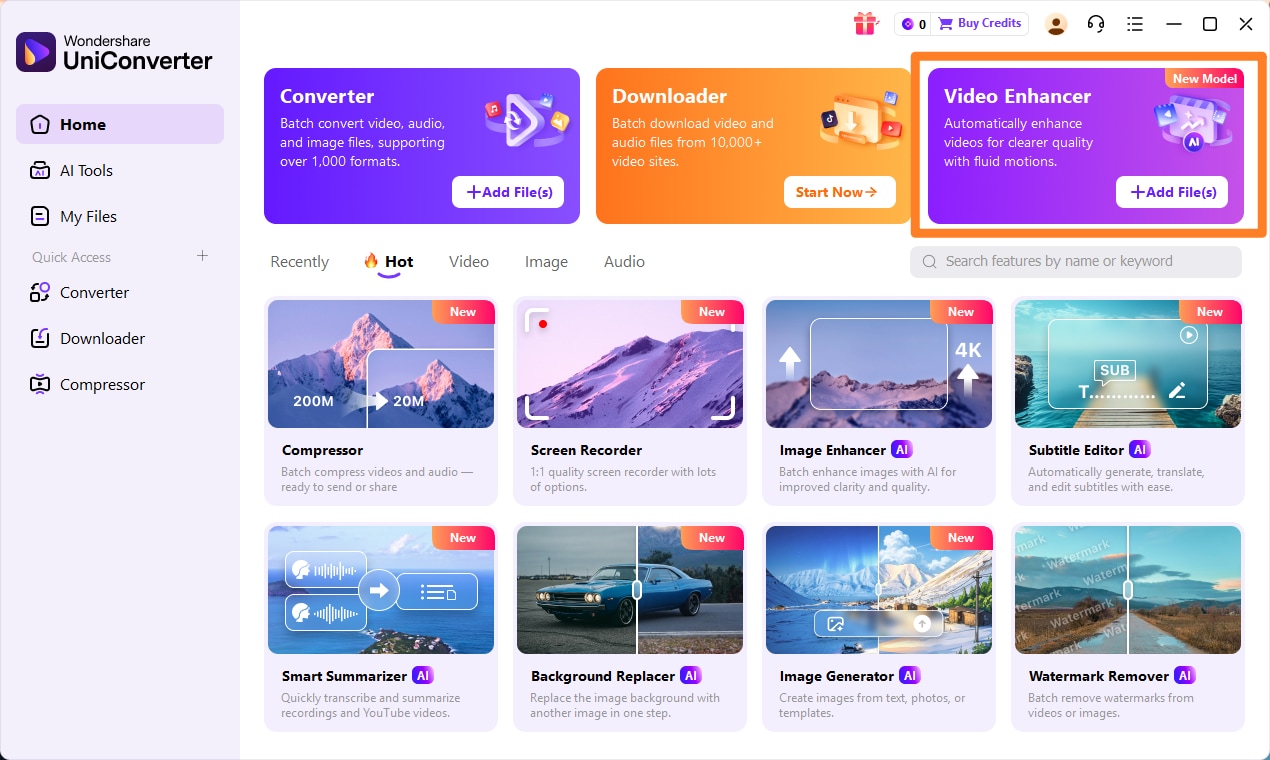
Step 1: Open UniConverter and Choose Video Enhancer
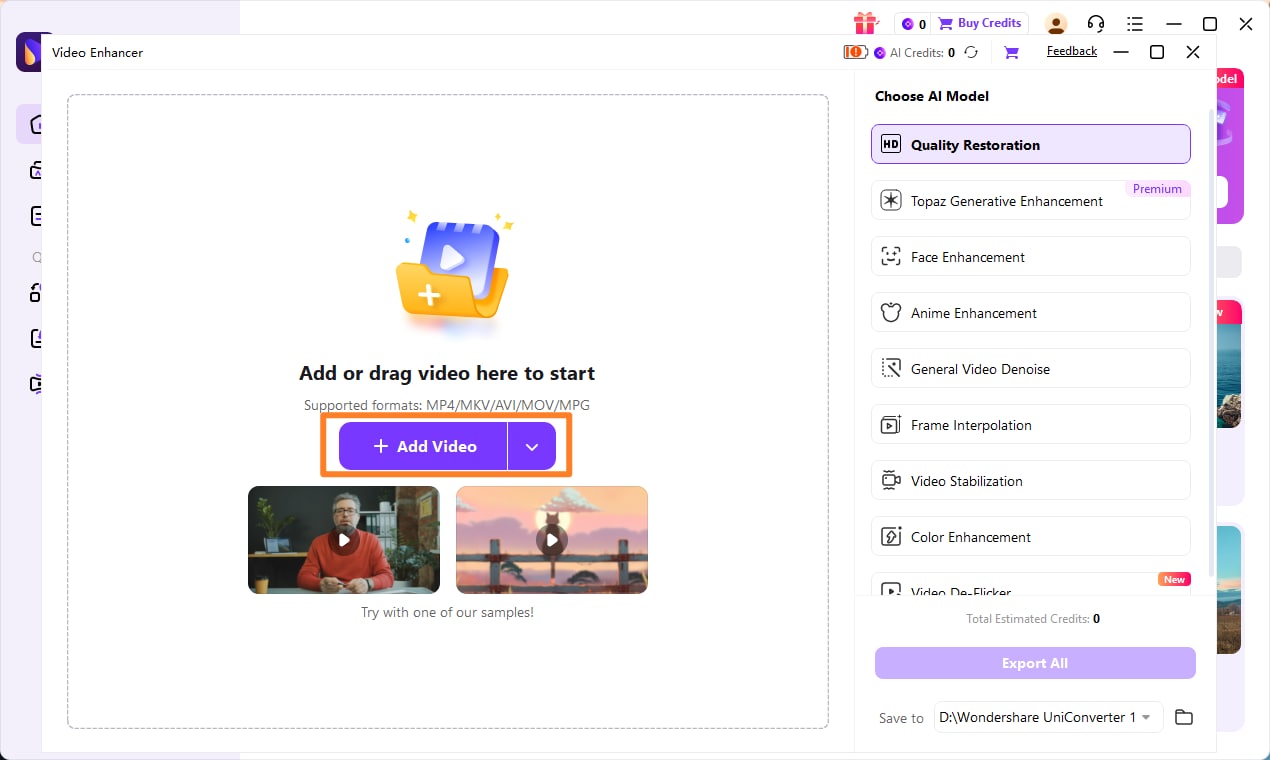
Step 2: Upload the Videos
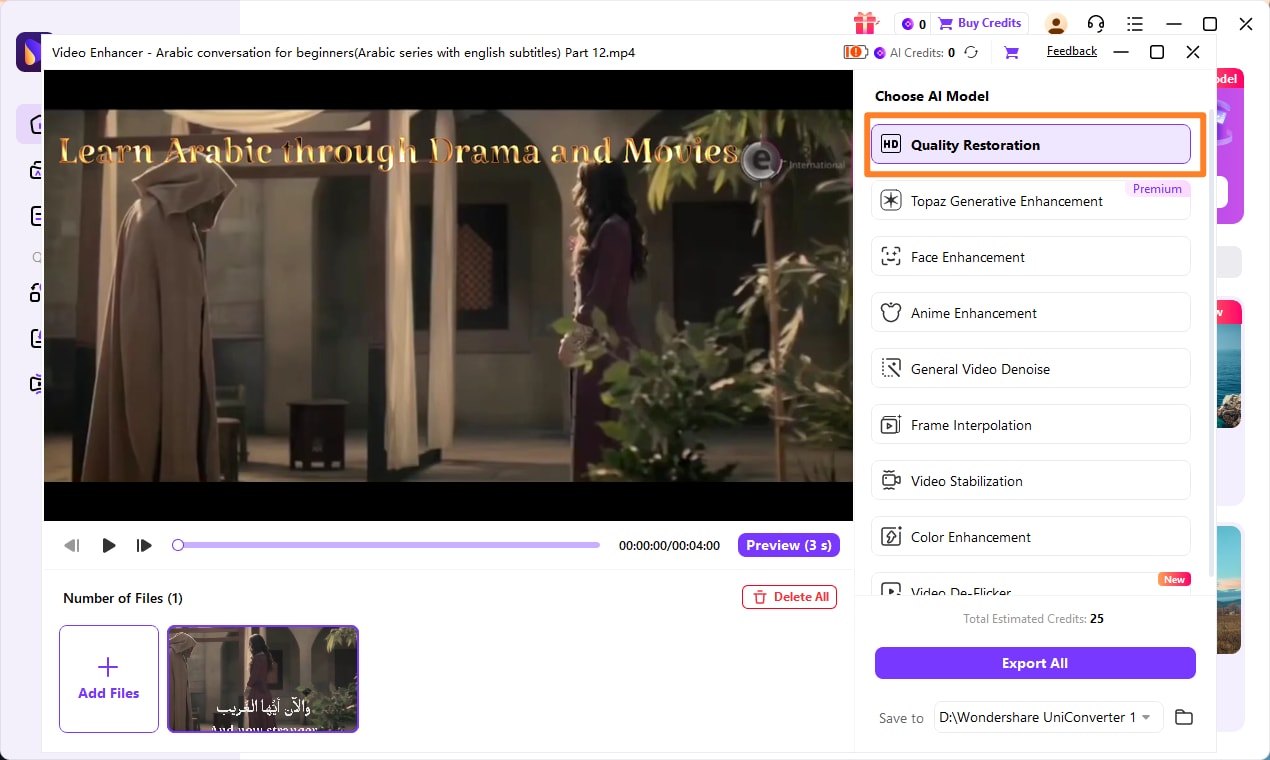
Step 3: Choose Enhancement Model
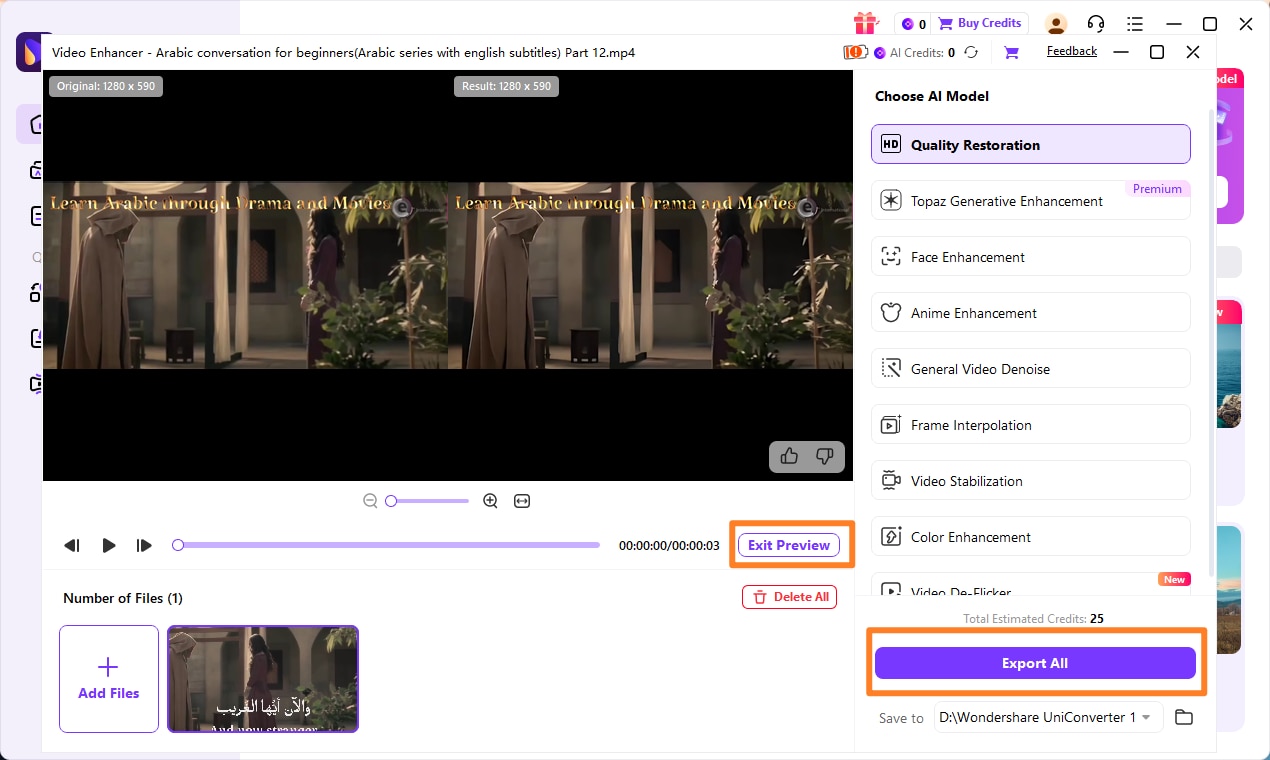
Step 4: Preview and Save the Enhanced Video

Seeking a Shotcut Video Enhancer Alternative?
Part 7: Conclusion
In conclusion, the Shotcut Video Enhancer review reveals a powerful, free, and open-source tool that offers a comprehensive suite of video enhancement features. It is an excellent choice for budget-conscious content creators, DIY enthusiasts, and individuals willing to invest time in learning its extensive capabilities. For these users, Shotcut provides an unparalleled value proposition, enabling significant improvements in video quality without financial outlay. However, for professionals requiring rapid turnaround, advanced AI-driven enhancements, or dedicated customer support, Shotcut's manual approach and resource demands might prove to be a bottleneck. In such scenarios, alternatives like UniConverter offer a more streamlined, AI-powered solution for speed and simplicity, while professional tools like DaVinci Resolve or Adobe Premiere Pro cater to high-end production needs. The ultimate choice depends on a careful balance between cost, learning curve, desired output quality, and specific project requirements.
Part 8: FAQs
-
1. Is Shotcut Video Enhancer truly free?
Yes, Shotcut is completely free and open-source, with no hidden costs or subscription fees.
-
2. Can Shotcut enhance video resolution?
Shotcut can upscale video resolution, but it primarily achieves this through interpolation, which may not result in true resolution enhancement and can sometimes lead to a softer image.
-
3. How does Shotcut compare to paid video enhancement software?
Shotcut offers many features found in paid software but often requires more manual effort and lacks the advanced AI-driven capabilities and dedicated support that come with premium tools.
-
4. What are the best alternatives to Shotcut for beginners?
For beginners, tools like UniConverter or even simpler mobile editing apps might be more approachable due to their intuitive interfaces and automated enhancement features.
-
5. Does Shotcut offer AI-powered video enhancement features?
No, Shotcut primarily relies on traditional filter-based and manual adjustments for video enhancement, lacking the advanced AI-powered features seen in some modern competitors.
