
- Value: Runway Video Upscaler excels for quick, AI-driven video enhancement, perfect for content creators.
- Comparison: It offers ease of use, while alternatives like Topaz AI provide granular control for professionals.
- Decision: Choose Runway for speed and simplicity; consider UniConverter for stable, all-in-one batch processing.
- Consideration: Be aware of potential 'AI artifacts' and data privacy concerns with cloud-based upscalers.
In this article
- Part 1: What is Runway Video Upscaler?
- Part 2: Runway Video Upscaler: Core Features, Pros, and Cons
- Part 3: Who Benefits Most from Runway Video Upscaler? (And Where It Falls Short)
- Part 4: Runway Video Upscaler and Alternatives Comparison
- Part 5: Potential Pitfalls and Considerations When Using Video Upscalers
- Part 6: How to Use UniConverter to Efficiently Enhance Videos
- Part 7: Conclusion
- Part 8: FAQs
Runway Video Upscaler Review: Elevating Your Footage
The demand for high-quality video content has never been greater, pushing creators and professionals alike to seek innovative solutions for enhancing their footage. Runway Video Upscaler Review delves into one such promising tool, an AI-powered solution designed to transform standard-definition videos into higher resolutions with remarkable detail. This review will explore its core features, analyze its performance against leading competitors, and help you determine if it's the right fit for your specific video enhancement needs, considering both its strengths and potential limitations in various production scenarios.
Part 1: What is Runway Video Upscaler?
Runway Video Upscaler is an advanced, cloud-based tool offered by RunwayML, a company at the forefront of AI-powered creative applications. It leverages sophisticated machine learning algorithms to intelligently increase the resolution of video footage, aiming to restore lost details and improve overall visual fidelity. Unlike traditional upscaling methods that merely interpolate pixels, Runway's AI analyzes frames to generate new information, effectively "reconstructing" the image at a higher resolution. This review aims to provide a comprehensive understanding of its capabilities and limitations, helping users make informed decisions in a rapidly evolving landscape of video enhancement technologies.
The Rise of AI-Powered Video Enhancement Tools
* Addressing Legacy Footage: AI upscalers breathe new life into archival footage, making it suitable for modern displays.
* Democratizing High-Quality Production: These tools allow independent creators to achieve professional-grade results without expensive equipment.
* Overcoming Production Constraints: When shooting in higher resolutions isn't feasible, AI upscaling offers a post-production solution.
* Meeting Audience Expectations: Viewers increasingly expect crisp, clear visuals, driving the need for effective enhancement tools.
Part 2: Runway Video Upscaler: Core Features, Pros, and Cons
Runway Video Upscaler stands out for its innovative approach to video enhancement, integrating seamlessly within the broader RunwayML ecosystem. Its core capability lies in its AI-driven engine, which intelligently processes video frames to reconstruct details and elevate resolution. This makes it a powerful tool for various video production tasks, from restoring old footage to preparing content for high-resolution displays.
Core Features:
* AI-Powered Upscaling: Utilizes deep learning models to intelligently enhance video resolution and detail.
* Cloud-Based Processing: All upscaling tasks are handled on Runway's powerful cloud infrastructure, freeing up local machine resources.
* Batch Processing: Supports upscaling multiple video files simultaneously, improving workflow efficiency.
* Various Output Resolutions: Offers options to upscale to 2x, 4x, or custom resolutions, catering to diverse project requirements.
* Integration with RunwayML Suite: Works in conjunction with other AI tools within the RunwayML platform for comprehensive video editing and generation.
Pros:
* AI-driven detail reconstruction for enhanced clarity
* Intuitive interface for quick upscaling tasks
* Integration with other RunwayML tools for a comprehensive workflow
Cons:
* Limited control over specific upscaling parameters
* Potential for "AI artifacts" in highly complex or low-quality source footage
Part 3: Who Benefits Most from Runway Video Upscaler? (And Where It Falls Short)
Runway Video Upscaler is designed to cater to a specific segment of the creative community, offering significant advantages for those prioritizing speed and ease of use. Its AI-powered capabilities make it particularly appealing for users who need to quickly improve video quality without deep technical knowledge of video processing. However, its streamlined approach might not satisfy the demands of every professional scenario.
Best-Fit Scenario: Independent Filmmakers and Content Creators on a Deadline
Independent filmmakers, YouTubers, and social media content creators often operate with limited budgets and tight deadlines. Runway Video Upscaler provides an accessible and efficient way to elevate the visual quality of their footage, making it more appealing to audiences. For instance, a vlogger who shot an interview on a smartphone can use Runway to upscale the footage to 1080p or even 4K, significantly improving its professional appearance for platforms like YouTube, where high resolution is a key engagement factor. Its intuitive interface means less time spent learning complex software and more time focusing on creative storytelling.
Limited-Fit Scenario: Professional Post-Production Studios Requiring Granular Control
While excellent for quick enhancements, Runway Video Upscaler's simplified controls can be a drawback for professional post-production studios. These studios often require granular control over every aspect of video processing, including specific noise reduction algorithms, sharpening parameters, and artifact suppression techniques. For a feature film or high-end commercial, where every pixel matters, the potential for "AI artifacts" and the lack of fine-tuning options in Runway might not meet the stringent quality standards. In such cases, dedicated software like Topaz Video AI or DaVinci Resolve's neural engine, which offer extensive customization, would be preferred for their ability to achieve precise, artifact-free results.
Part 4: Runway Video Upscaler and Alternatives Comparison
Choosing the right video upscaler depends heavily on your specific needs, balancing ease of use with the desire for granular control and ultimate output quality. Here's a head-to-head comparison of Runway Video Upscaler against some of its prominent competitors.
| Feature/Metric | Runway Video Upscaler | Topaz Video AI | DaVinci Resolve (Neural Engine) | Adobe Premiere Pro (Super Resolution) |
| Ease of Use | High | Medium | Medium | Medium |
| AI Upscaling Quality | Excellent | Superior | Excellent | Good |
| Customization Options | Limited | Extensive | Moderate | Limited |
| Integration | RunwayML Ecosystem | Standalone/Plugins | DaVinci Resolve Suite | Adobe Creative Cloud |
| Pricing Model | Subscription (Tiered) | One-time Purchase | Free (Studio version for AI) | Subscription (Creative Cloud) |
Key Differentiators: Ease of Use vs. Granular Control
Runway Video Upscaler excels in ease of use, making it ideal for quick, high-quality upscaling without a steep learning curve. Its cloud-based nature and integration with the RunwayML ecosystem further streamline workflows for creators already using their tools. Topaz Video AI, on the other hand, offers superior AI upscaling quality and extensive customization, making it the go-to for professionals who demand the absolute best and are willing to invest time in fine-tuning. DaVinci Resolve's Neural Engine provides excellent quality within a comprehensive editing suite, best for those already in the Resolve ecosystem. Adobe Premiere Pro's Super Resolution is a convenient addition for Creative Cloud subscribers, offering decent quality for quick enhancements within their existing workflow.
Part 5: Potential Pitfalls and Considerations When Using Video Upscalers
While video upscalers offer incredible potential for enhancing footage, users must be aware of several potential pitfalls and considerations. These tools, especially those leveraging AI and cloud processing, come with their own set of challenges that can impact output quality, data security, and overall project efficiency.
Data Privacy and Cloud Processing Concerns
Many advanced video upscalers, including Runway Video Upscaler, operate in the cloud. This means your video files are uploaded to remote servers for processing. For sensitive projects or proprietary content, this raises significant data privacy and security concerns. Users must carefully review the service provider's data handling policies, encryption standards, and terms of service to ensure their intellectual property is protected. The risk of data breaches or unauthorized access, though often low with reputable providers, is a factor to consider.
The "Uncanny Valley" Effect: When Upscaling Goes Wrong
AI upscaling attempts to intelligently reconstruct missing details, but this process isn't always perfect. In some cases, especially with very low-quality or highly compressed source footage, the AI might generate details that look unnatural or "fake." This phenomenon, often referred to as the "uncanny valley" effect, can result in faces that appear too smooth, textures that look artificial, or motion that seems slightly off. It's crucial to preview the upscaled footage thoroughly and be prepared to accept that some source material might not upscale perfectly without introducing undesirable artifacts.
Understanding Output Quality Limitations
Despite significant advancements, AI upscalers cannot magically create information that was never present in the original footage. While they can dramatically improve perceived resolution and sharpness, they are still interpolating and generating data. This means that a heavily pixelated or blurry video will likely never achieve the pristine quality of footage originally shot in 4K or 8K. Users should manage their expectations and understand that while enhancement is significant, there are inherent limitations to how much quality can be recovered from extremely poor source material.
Subscription Costs vs. One-Time Purchases
The pricing models for video upscalers vary widely. Cloud-based services often operate on a subscription model, with costs tied to usage or tiered features. Desktop applications might offer a one-time purchase. Users need to evaluate their long-term needs and budget. A subscription might be more flexible for occasional use but can become costly over time for frequent users. Conversely, a one-time purchase offers perpetual access but requires a larger upfront investment. Consider the total cost of ownership and whether the chosen model aligns with your project frequency and financial planning.
Part 6: How to Use UniConverter to Efficiently Enhance Videos
When other tools fall short with unstable enhancements, weak effects, or lack of batch processing, UniConverter emerges as a powerful and reliable alternative for video upscaling and enhancement. It provides a stable, ad-free experience with GPU acceleration, ensuring lossless quality and efficient batch processing, positioning itself as an all-in-one ultimate solution for your video needs.
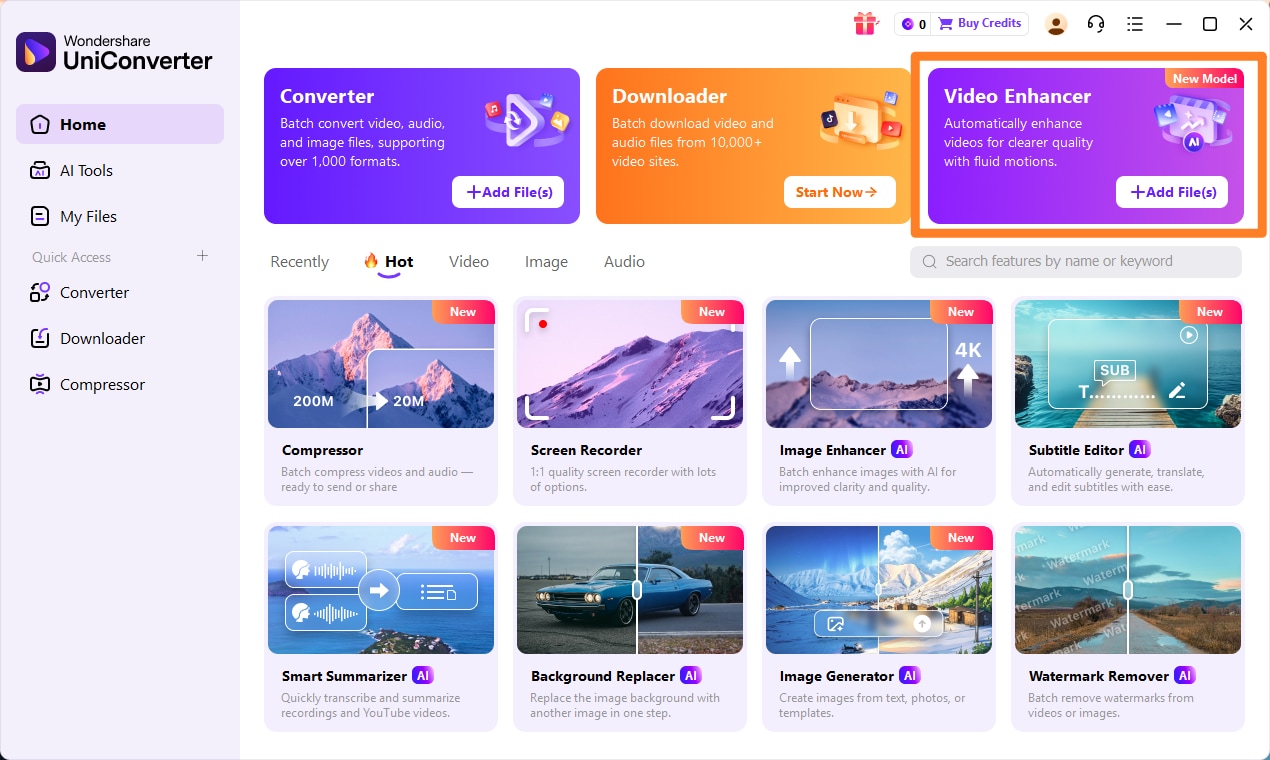
Step 1: Open UniConverter and Choose Video Enhancer
Launch UniConverter on your computer. From the main interface, navigate to the "Toolbox" section and select the Video Enhancer feature.
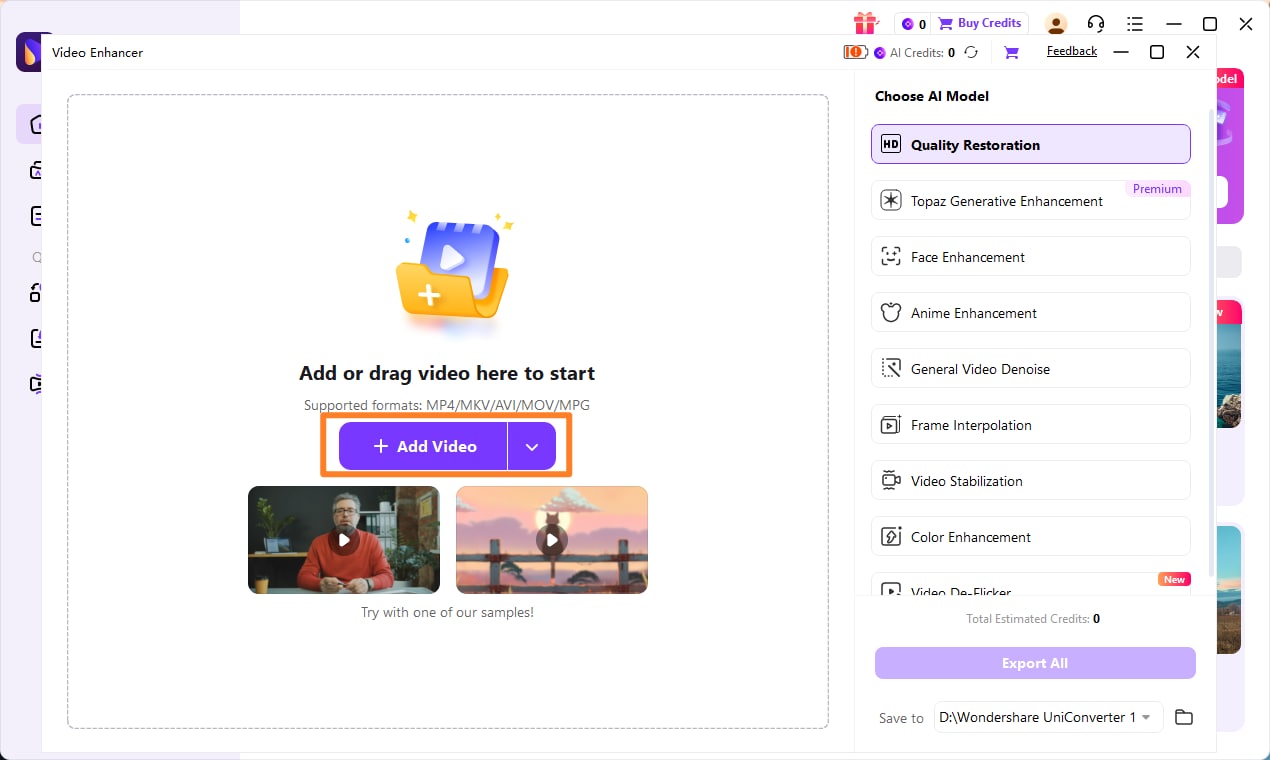
Step 2: Upload the Videos
Click on the "Add Files" button or drag and drop your video files directly into the UniConverter interface. You can add multiple videos for batch processing.
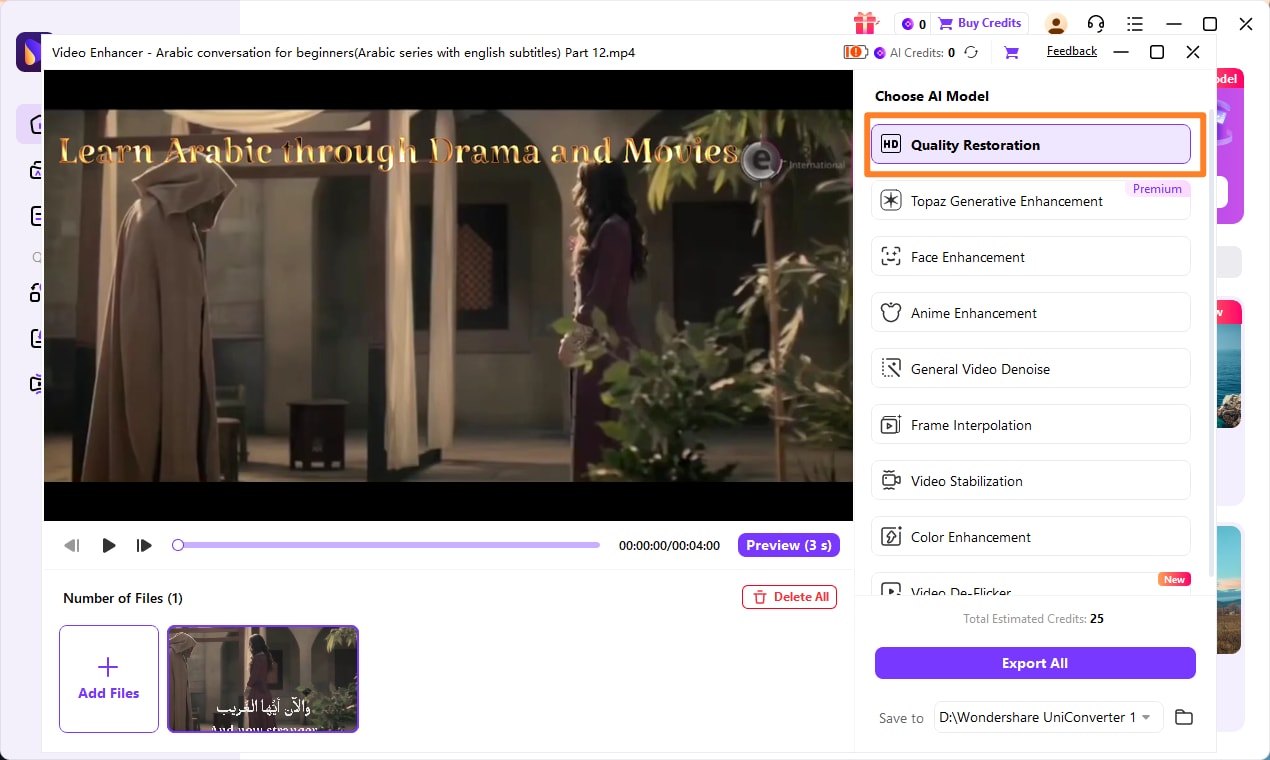
Step 3: Choose Enhancement Model
Once your video is loaded, UniConverter will present various enhancement options. Select the desired upscaling model, such as "AI Upscale," and configure other settings like "Deblur," "Denoise," or "Brightness/Contrast" adjustments as needed.
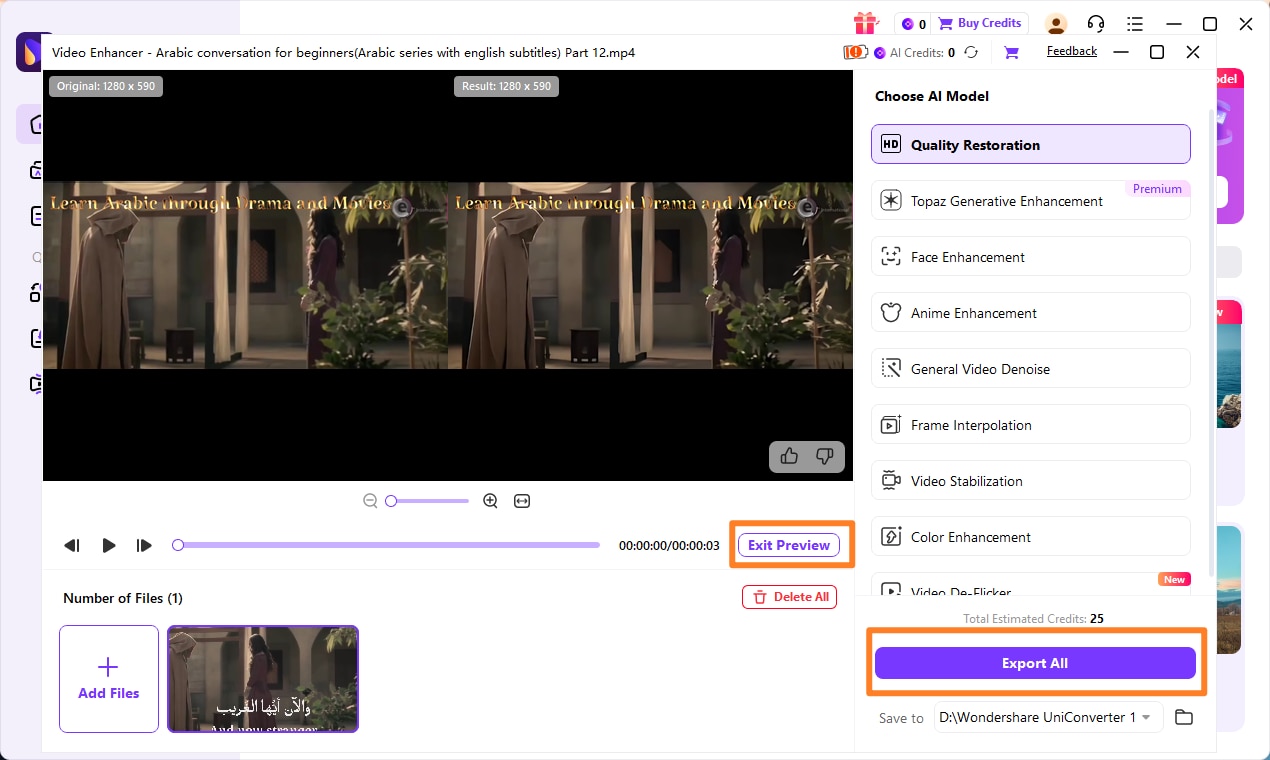
Step 4: Preview and Save the Enhanced Video
After selecting your enhancement options, click the "Preview" button to see a short segment of the enhanced video. If satisfied, choose your desired output format and destination folder, then click "Enhance" to start the process and save your high-quality video.

Seeking a Powerful Runway Video Upscaler Alternative?
Part 7: Conclusion
The Runway Video Upscaler Review reveals a powerful and user-friendly tool, particularly well-suited for independent creators and those needing quick, efficient video enhancements. Its AI-driven approach significantly improves resolution and detail, making it an excellent choice for breathing new life into standard-definition footage or preparing content for modern displays. However, its streamlined interface means less granular control, which might not satisfy professional post-production studios demanding precise adjustments and artifact-free results. For these users, alternatives like Topaz Video AI or DaVinci Resolve offer more extensive customization. Ultimately, the best video upscaler depends on individual needs: Runway for speed and simplicity, Topaz or Resolve for ultimate control, and UniConverter as a versatile all-in-one solution for stable, high-quality batch processing without ads or hidden costs.
Part 8: FAQs
-
1. Can Runway Video Upscaler truly turn low-resolution footage into 4K?
While it significantly enhances resolution and detail, true 4K quality from very low-res sources is not always achievable without some level of interpolation.
-
2. Is Runway Video Upscaler suitable for commercial projects?
Yes, it can be used for commercial projects, but always review their licensing terms for specific usage rights.
-
3. What are the main differences between AI upscaling and traditional upscaling?
AI upscaling uses machine learning to intelligently "guess" and reconstruct missing details, while traditional upscaling primarily interpolates pixels, often leading to blurrier results.
-
4. Are there any free alternatives to Runway Video Upscaler?
Some video editing software offers basic upscaling features, but dedicated AI upscalers often come with a cost due to their advanced technology.
-
5. How long does it take to upscale a video with Runway Video Upscaler?
Upscaling time depends on video length, resolution, and your internet connection speed, as processing often occurs in the cloud.
