
- AI Power: Runway ML Video Enhancer uses AI to upscale and refine videos, improving clarity and detail beyond traditional methods.
- Creative Edge: It integrates with Runway ML's ecosystem, offering a comprehensive suite for AI-driven video creation and enhancement.
- Best for Archival: Ideal for documentary filmmakers to revitalize low-resolution or damaged archival footage for modern screens.
- Consider Alternatives: Compare Runway ML's subscription, cloud-dependency, and potential AI artifacts against Topaz Video AI, DaVinci Resolve, and UniConverter.
- UniConverter's Value: UniConverter offers a stable, user-friendly, all-in-one solution for efficient video enhancement with batch processing and broad format support.
In this article
- Part 1: What is Runway ML Video Enhancer?
- Part 2: Runway ML Video Enhancer: Core Features, Pros, and Cons
- Part 3: Who Benefits Most? Use Cases and Limitations
- Part 4: Runway ML Video Enhancer and Alternatives Comparison
- Part 5: Risks and Pitfalls to Consider
- Part 6: How to Use UniConverter for Efficient Video Enhancement
- Part 7: Conclusion
- Part 8: FAQs
The landscape of video production is rapidly evolving, with artificial intelligence emerging as a transformative force. Among the pioneers in this space is Runway ML, a company at the forefront of integrating AI into creative workflows. Their Runway ML Video Enhancer review delves into a powerful tool designed to upscale and refine video footage, promising to breathe new life into everything from archival content to contemporary productions. This review will explore its core functionalities, compare it against leading competitors like Topaz Video AI and DaVinci Resolve Studio, and provide a comprehensive analysis of its strengths, weaknesses, and ideal use cases, helping users make informed decisions in their pursuit of high-quality video enhancement.
Part 1: What is Runway ML Video Enhancer?
Runway ML Video Enhancer is an AI-powered tool developed by Runway ML, a company renowned for its suite of creative AI applications. At its core, it leverages advanced machine learning algorithms to intelligently upscale video resolution, aiming to improve clarity, detail, and overall visual quality. Unlike traditional upscaling methods that often result in pixelation or blurriness, Runway ML's approach focuses on generating missing information and refining existing pixels, producing a more natural and visually appealing enhancement. This tool is part of a larger ecosystem of AI-driven creative tools offered by Runway ML, making it particularly appealing to users already integrated into their platform. The primary goal of this review is to assess its effectiveness in various real-world scenarios, identify its competitive advantages, and highlight potential drawbacks for different user segments.
The Rise of AI in Video Production
The increasing demand for high-quality video content, coupled with the challenges of working with diverse footage sources, has propelled AI to the forefront of video production.
* Addressing Legacy Content: AI offers a solution for revitalizing older, lower-resolution footage.
* Streamlining Workflows: Automating complex enhancement tasks saves time and resources.
* Democratizing High-End Production: Advanced tools become accessible to a broader range of creators.
* Pushing Creative Boundaries: AI enables new forms of visual manipulation and enhancement previously impossible.
Part 2: Runway ML Video Enhancer: Core Features, Pros, and Cons
Runway ML Video Enhancer is built upon a foundation of sophisticated AI models designed specifically for video upscaling and enhancement. Its core capabilities revolve around intelligently increasing resolution, reducing noise, and sharpening details, all while attempting to maintain the original aesthetic of the footage. The platform offers various enhancement models, allowing users to choose the best fit for their specific video content and desired outcome. Its cloud-based nature also facilitates accessibility and collaboration within the Runway ML ecosystem.
Pros:
* AI-driven upscaling for significant resolution improvement: Leverages advanced neural networks to intelligently reconstruct details, leading to noticeably sharper and clearer footage.
* Intuitive interface for creative professionals: Designed with user experience in mind, making complex AI processes accessible even to those without deep technical knowledge.
* Integration with the broader Runway ML ecosystem: Seamlessly connects with other AI tools for tasks like video generation, inpainting, and style transfer, offering a comprehensive creative suite.
Cons:
* Can be resource-intensive, requiring powerful hardware: While cloud-based, local processing for previews or specific tasks can still demand significant computational power.
* Subscription-based model might be costly for occasional users: The ongoing cost can be a barrier for individuals or small projects with infrequent enhancement needs.
Part 3: Who Benefits Most? Use Cases and Limitations
Runway ML Video Enhancer is particularly well-suited for creative professionals and content creators who frequently deal with diverse video sources and aim to achieve a polished, high-resolution output. Its AI-driven approach makes it a valuable asset for projects where traditional upscaling falls short.
Best Use Case: Revitalizing Archival Footage for Documentary Filmmakers
Documentary filmmakers often work with historical or archival footage that is inherently low-resolution, grainy, or damaged. Runway ML Video Enhancer can be a game-changer in this scenario, intelligently upscaling old 480p or 720p footage to 1080p or even 4K, significantly improving its visual quality for modern screens. The AI's ability to reduce noise and enhance subtle details can make previously unusable clips suitable for inclusion, breathing new life into historical narratives and enhancing the overall production value of a documentary.
Limited Use Case: Real-time Live Stream Enhancement
While powerful for post-production, Runway ML Video Enhancer is not designed for real-time live stream enhancement. Its processing, especially for significant upscaling, requires time and computational resources, making it unsuitable for instantaneous adjustments during a live broadcast. For live streaming, dedicated hardware encoders and real-time processing solutions are more appropriate, as the latency introduced by AI enhancement would be unacceptable.
Part 4: Runway ML Video Enhancer and Alternatives Comparison
| Feature/Scenario | Runway ML Video Enhancer | Topaz Video AI | DaVinci Resolve Studio (Neural Engine) | UniConverter |
| AI Upscaling Quality (General) | Excellent, especially for creative styles | Excellent, highly customizable | Good, integrated into editing workflow | Very Good, balanced quality |
| Ease of Use (Non-Experts) | High | Medium | Low | High |
| Integration with Other Tools | High (Runway ML Suite) | Standalone | High (DaVinci Resolve) | Standalone (all-in-one suite) |
| Pricing Model | Subscription | One-time purchase | One-time purchase (Studio) | One-time purchase/Subscription |
| Specific Scenario: Old Home Videos | Very effective, can add stylistic elements | Excellent for natural restoration | Requires more manual tweaking | Effective, user-friendly |
| Processing Speed | Cloud-based, varies with server load | Fast (GPU accelerated) | Fast (GPU accelerated) | Fast (GPU accelerated) |
| Output Formats | MP4, MOV, etc. | Wide range (MP4, MOV, ProRes, etc.) | Wide range (all professional formats) | Over 1000 formats |
| Customer Support | Email/Community | Email/Forum | Extensive documentation/Forum | 24/7 Email/Live Chat |
| Security | Cloud-based (standard protocols) | Local processing | Local processing | Local processing |
Key Differentiators:
- Runway ML's focus on creative AI tools beyond just enhancement offers a unique ecosystem for artists and filmmakers. - Topaz Video AI's granular control over enhancement parameters allows for highly customized and natural-looking restoration, appealing to users who need precise adjustments. - DaVinci Resolve's seamless integration within a professional editing suite makes its Neural Engine ideal for editors who want to enhance footage without leaving their primary workflow. - UniConverter stands out for its comprehensive feature set beyond just enhancement, offering a user-friendly, all-in-one solution for various video tasks.
Part 5: Risks and Pitfalls to Consider
When utilizing advanced AI video enhancement tools, especially those that are cloud-based or involve complex algorithms, several risks and pitfalls need to be carefully considered by users. Understanding these potential issues can help in making informed decisions and mitigating unforeseen problems during production.
Data Privacy Concerns with Cloud Processing
For cloud-based services like Runway ML, uploading sensitive or proprietary video footage to external servers raises significant data privacy concerns. Users must trust the provider's security protocols and data handling policies. There's always a risk, however small, of unauthorized access, data breaches, or the misuse of uploaded content. It's crucial to review the terms of service and privacy policy thoroughly, especially for commercial projects involving confidential material.
Potential for "AI Artifacts" in Enhanced Footage
While AI enhancement is powerful, it's not foolproof. The algorithms can sometimes generate "AI artifacts" – unnatural patterns, distortions, or an overly smooth, "plastic" look that wasn't present in the original footage. These artifacts can be subtle or glaring, detracting from the realism and professional quality of the video. Users need to carefully review the enhanced output frame by frame to identify and address such issues, which might require re-processing with different settings or even manual touch-ups.
Subscription Cost vs. Project Budget
Many advanced AI tools operate on a subscription model, which can quickly add up, especially for independent creators or small studios with limited budgets. The cost-benefit analysis needs to be thorough: is the enhancement quality worth the recurring expense for your specific project needs? Occasional users might find the subscription model economically unfeasible compared to one-time purchase alternatives or less advanced free tools.
Internet Dependency for Cloud-Based Features
Cloud-based AI enhancers are inherently dependent on a stable and fast internet connection. Slow or intermittent internet can severely hamper workflow, leading to long upload/download times, processing delays, and potential interruptions. This dependency can be a significant limitation for users working in remote locations or environments with unreliable internet infrastructure.
Learning Curve for Advanced Features
While some AI tools boast intuitive interfaces, mastering their advanced features and achieving optimal results often involves a learning curve. Understanding different AI models, parameters, and their impact on various types of footage requires experimentation and practice. Users might need to invest time in tutorials and documentation to fully leverage the tool's capabilities, which can be a barrier for those seeking quick, effortless solutions.
Part 6: How to Use UniConverter for Efficient Video Enhancement
When other tools fall short in batch processing, stability, or delivering consistent enhancement quality, UniConverter emerges as a robust and user-friendly alternative. It offers a comprehensive suite of video tools, including a powerful AI video enhancer, designed to provide stable, lossless, and high-quality results without the hassle of ads or complex interfaces. With GPU acceleration and support for over 1000 formats, UniConverter is an all-in-one ultimate solution for all your video enhancement needs, ensuring your footage looks its best every time. For those looking to upscale video or fix pixelated videos, this tool provides an efficient workflow.
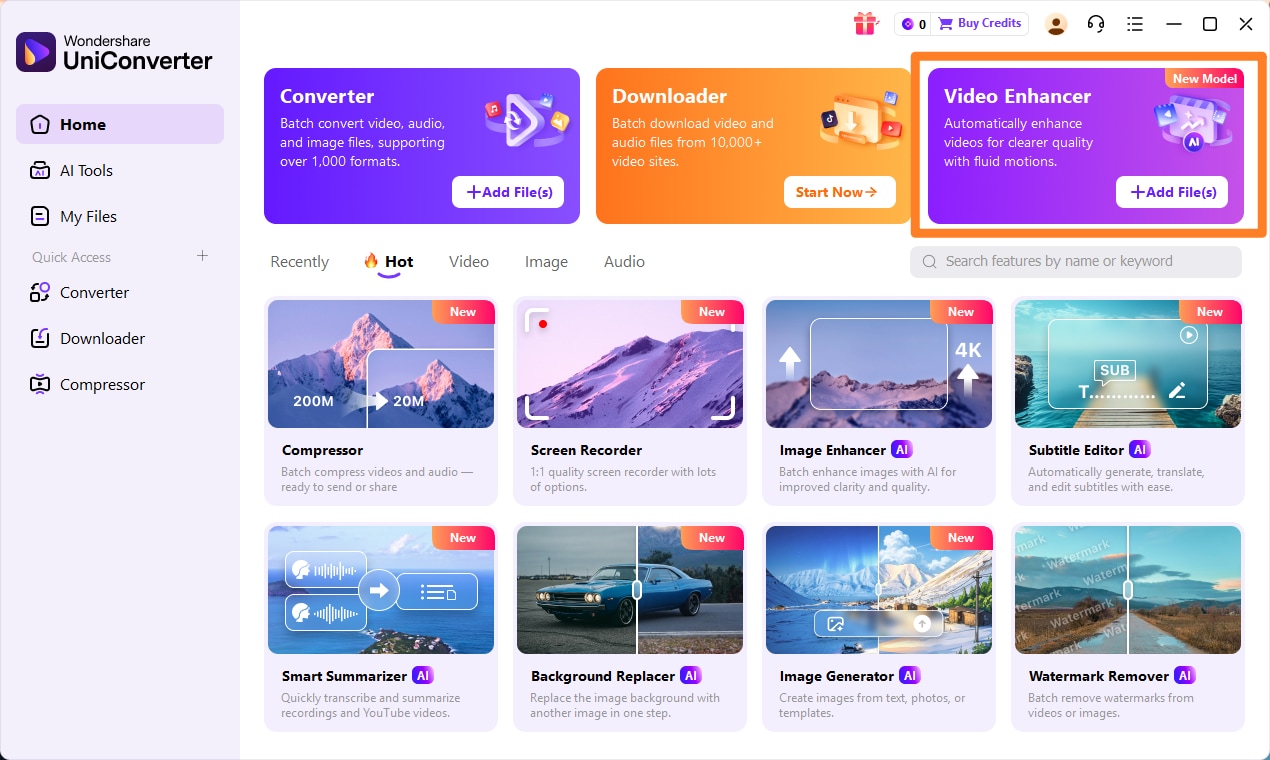
Step 1: Open UniConverter and Choose Video Enhancer
Launch UniConverter on your computer. From the main interface, navigate to the "Toolbox" section and select the "AI Lab" feature. Within the AI Lab, you will find the "Video Enhancer" option. Click on it to proceed.
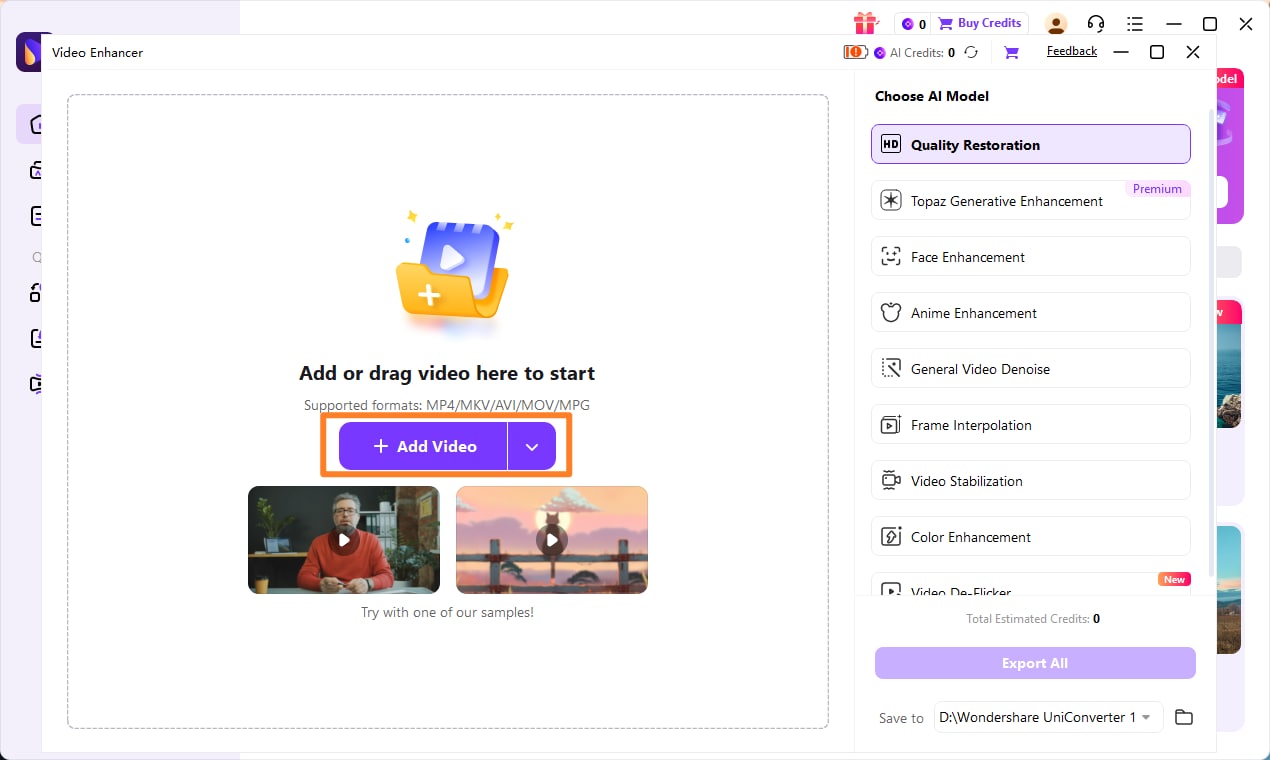
Step 2: Upload the Videos
In the Video Enhancer window, click on the "Add Files" button or simply drag and drop the video files you wish to enhance into the designated area. You can add multiple videos for batch processing.
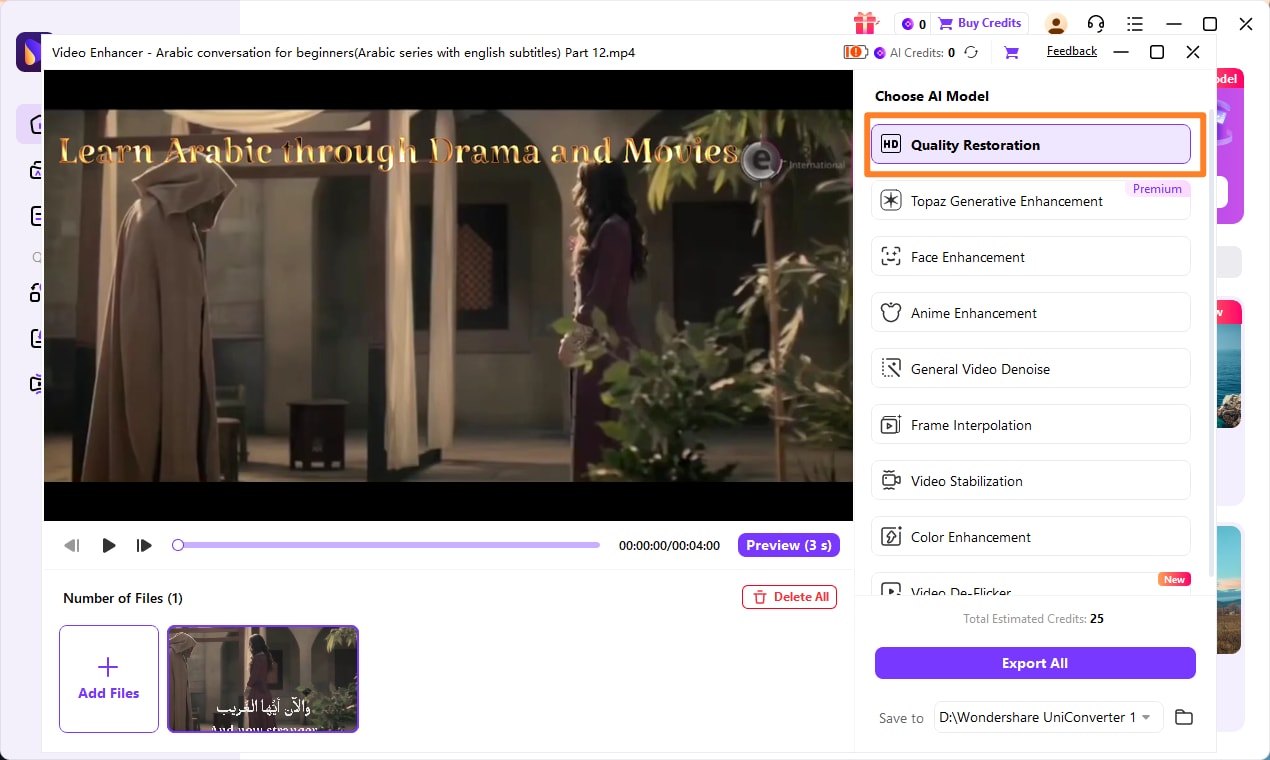
Step 3: Choose Enhancement Model
Once your videos are loaded, UniConverter will present various enhancement options. Select the desired AI enhancement model (e.g., AI Upscale, AI Denoise, AI Deblur, AI Deinterlace) and adjust any specific parameters like resolution output (e.g., 2x, 4x) or quality settings according to your needs.
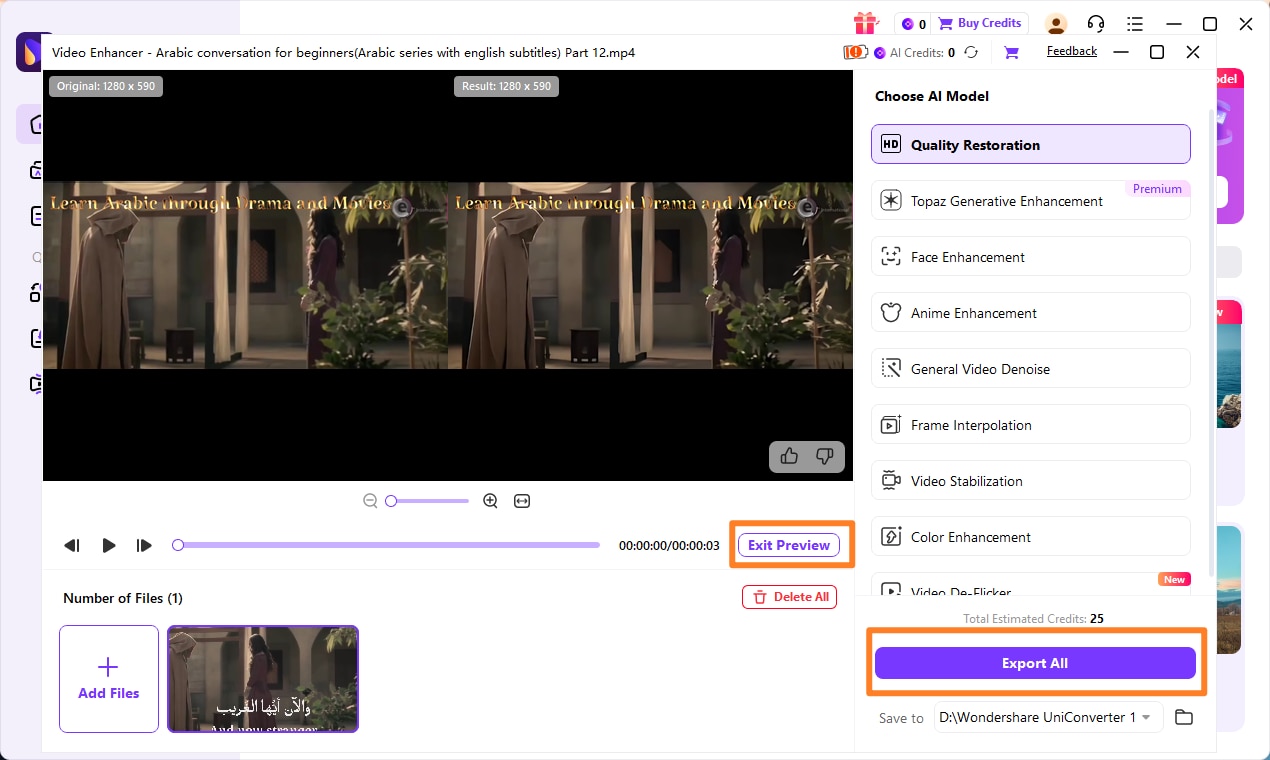
Step 4: Preview and Save the Enhanced Video
After configuring the settings, click the "Preview" button to see a short snippet of the enhanced video. If satisfied, choose your desired output format and destination folder, then click "Export" to save your high-quality, enhanced video.

Seeking a Powerful Runway ML Video Enhancer Alternative?
Part 7: Conclusion
The Runway ML Video Enhancer review reveals a powerful and innovative tool that leverages AI to significantly improve video quality, particularly excelling in upscaling and creative enhancement. Its intuitive interface and integration within the broader Runway ML ecosystem make it an attractive option for creative professionals and content creators who are already invested in AI-driven workflows. However, its subscription model, potential for AI artifacts, and cloud-based nature with associated privacy and internet dependency concerns warrant careful consideration. For professional filmmakers and content creators dealing with archival footage or requiring stylistic AI enhancements, Runway ML offers compelling capabilities. Hobbyists and occasional users might find the subscription cost prohibitive, potentially benefiting more from one-time purchase alternatives like Topaz Video AI or comprehensive solutions like UniConverter. Those prioritizing seamless integration within a professional editing suite will find DaVinci Resolve Studio's Neural Engine a strong contender. Ultimately, the best choice depends on individual project needs, budget, technical comfort, and the desired balance between AI-driven creativity and precise control.
Part 8: FAQs
-
1. Can Runway ML Video Enhancer improve low-light footage?
Yes, Runway ML Video Enhancer can help improve low-light footage by reducing noise and enhancing details, making the image clearer and more visible. However, it cannot magically create detail that isn't inherently present, and extreme low-light conditions may still yield limited improvements.
-
2. Is Runway ML Video Enhancer suitable for commercial projects?
Runway ML Video Enhancer is suitable for commercial projects, provided users adhere to its licensing terms and consider the potential for AI artifacts that might require additional post-production work. Data privacy for sensitive commercial footage should also be carefully reviewed given its cloud-based nature.
-
3. How does Runway ML handle different video codecs and formats?
Runway ML generally supports a wide range of common video codecs and formats for upload and download, including MP4, MOV, and others. However, specific limitations or optimal formats for best results might be outlined in their documentation, and it's always recommended to check their official support pages.
-
4. What are the minimum system requirements for Runway ML Video Enhancer?
As a cloud-based service, the primary requirement for Runway ML Video Enhancer is a stable and fast internet connection. While local processing for previews or specific tasks might benefit from a powerful GPU and CPU, the core enhancement is handled on Runway ML's servers, making it accessible from most modern computers.
-
5. Can I try Runway ML Video Enhancer before subscribing?
Runway ML typically offers a free tier or trial period that allows users to test some of its features, including potentially limited access to the Video Enhancer, before committing to a full subscription. It's advisable to check their official website for the most current trial offerings and pricing plans.
