
- Runway ML Overview: AI-powered, cloud-based image enhancer for quick quality improvements.
- Core Features: AI detail restoration, noise reduction, color optimization, upscaling, batch processing.
- Pros: Intuitive interface, advanced AI, seamless integration within Runway ML ecosystem.
- Cons: Limited customization, subscription-based model for full functionality.
- Target Audience: Ideal for content creators, social media managers needing rapid, effective enhancements.
- Use Cases: Excellent for social media, e-commerce product photos, blog images, presentations.
- Limitations: Not suitable for professional print production requiring granular control.
- Competitor Comparison: Excels in ease/speed; Photoshop offers control; Topaz specializes in upscaling.
- Risks: Data privacy (cloud-based), potential AI artifacts, subscription cost vs. usage, internet dependency.
- UniConverter Alternative: Offers robust, efficient batch image enhancement with lossless quality and GPU acceleration.
In this article
- Part 1: What is Runway ML Image Enhancer?
- Part 2: Runway ML Image Enhancer: Core Features, Pros, and Cons
- Part 3: Target Audience and Use Cases for Runway ML Image Enhancer
- Part 4: Runway ML Image Enhancer vs. Competitors
- Part 5: Risks and Pitfalls to Consider
- Part 6: How to Use UniConverter for Efficient Image Enhancement
- Part 7: Conclusion
- Part 8: FAQs
The digital age has ushered in an unprecedented demand for high-quality visual content, making image enhancement tools more crucial than ever. As someone deeply entrenched in the world of digital media, I've seen firsthand how AI-powered solutions are revolutionizing this space. This Runway ML image enhancer review dives deep into one such prominent tool, exploring its capabilities, comparing it with key competitors, and ultimately helping you decide if it's the right fit for your creative workflow. We'll navigate through its features, pinpoint its ideal use cases, and highlight potential pitfalls, offering a comprehensive look at what this technology brings to the table.
Part 1: What is Runway ML Image Enhancer?
Runway ML has emerged as a significant player in the AI creative tools landscape, and their image enhancer is a testament to their commitment to making advanced AI accessible. At its core, it's a cloud-based platform leveraging sophisticated machine learning algorithms to automatically improve image quality. My initial impression was that it would be just another generic filter tool, but I was pleasantly surprised by its ability to intelligently restore details and refine textures. This review aims to dissect its performance and help you understand where it fits in your creative arsenal.
The Evolving Landscape of Digital Image Processing
The need for efficient and effective image enhancement has never been greater, driven by several factors:
* Proliferation of Visual Content: From social media to e-commerce, high-quality images are paramount for engagement and conversion.
* Democratization of Content Creation: More people than ever are creating visual content, often without professional editing skills.
* Advancements in AI Technology: AI is making complex image manipulation tasks simpler and faster, offering solutions that were once exclusive to seasoned professionals.
Part 2: Runway ML Image Enhancer: Core Features, Pros, and Cons
Runway ML's image enhancer is designed to be a straightforward solution for improving image fidelity. I've found its primary strength lies in its ability to quickly process images, making them look sharper and more vibrant without requiring extensive manual adjustments. It’s not about deep, pixel-level manipulation, but rather broad, intelligent improvements.
* AI-Powered Detail Restoration: It intelligently sharpens edges and brings out finer details that might be lost in lower-resolution images.
* Noise Reduction: Effectively minimizes image noise, especially noticeable in photos taken in low-light conditions.
* Color and Contrast Optimization: Automatically adjusts color balance and contrast for a more pleasing aesthetic.
* Upscaling Capabilities: Can increase image resolution without significant loss of quality, which is a huge plus for older or smaller images.
* Batch Processing: For me, this is a lifesaver when I have multiple images needing the same treatment.
Pros:
* Intuitive Interface for Quick Enhancements: I found it incredibly easy to pick up and start using immediately. No steep learning curve here.
* Advanced AI Algorithms for Detail Restoration: The AI genuinely does a good job of making images look better, often surprising me with the subtle improvements.
* Seamless Integration with Other Runway ML Tools: If you're already in the Runway ML ecosystem, this tool slots in perfectly with other video and image AI features.
Cons:
* Limited Customization Options for Fine-Tuning: While great for quick fixes, I sometimes wished for more granular control over specific parameters.
* Subscription-Based Model for Full Functionality: To unlock its full potential, you'll need to commit to a subscription, which might not suit everyone.
Part 3: Target Audience and Use Cases for Runway ML Image Enhancer
From my experience, Runway ML's image enhancer shines brightest for individuals and teams who need quick, effective image improvements without diving into complex editing software. It’s not built for the meticulous demands of a professional retoucher, but rather for those who prioritize speed and efficiency.
Best Use Case: Rapid Prototyping and Social Media Content Creation
If you're a content creator, social media manager, or even a small business owner who needs to churn out visually appealing content quickly, this tool is a godsend. I often use it to give a quick polish to images before posting them online. The AI handles the heavy lifting, allowing me to focus on the creative message. It's perfect for:
* Boosting image quality for Instagram, Facebook, or Pinterest posts.
* Quickly enhancing product photos for e-commerce listings.
* Improving the visual appeal of blog post images or presentations.
Limited Use Case: Professional Print Production Requiring Granular Control
However, if your work involves high-stakes print production, where every pixel counts and color accuracy is paramount, Runway ML's enhancer might fall short. For projects demanding precise color grading, intricate retouching, or specific print profiles, I still lean on more robust, traditional software. It simply doesn't offer the level of control needed for such detailed work.
Part 4: Runway ML Image Enhancer vs. Competitors
When I look at the landscape of image enhancement tools, Runway ML stands out for its AI-driven simplicity. But how does it stack up against the titans and specialists in the field?
| Feature/Competitor | Runway ML Image Enhancer | Adobe Photoshop | Topaz Labs Gigapixel AI | UniConverter |
| Ease of Use | High | Moderate | Moderate | High |
| AI Enhancement Quality | Excellent | Good | Excellent | Excellent |
| Customization | Limited | Extensive | Moderate | Moderate |
| Price Model | Subscription | Subscription | One-time Purchase | One-time Purchase/Subscription |
| Integration | High (within Runway ML) | High (Adobe Ecosystem) | Standalone | Standalone/Integrated |
| Processing Speed | Fast | Moderate | Fast | Very Fast |
| Output Quality | High | Very High | Very High | High |
| Customer Support | Good | Excellent | Good | Excellent |
| Security | Standard Cloud | High | Local | High |
Key Differentiators:
Runway ML excels in speed and ease of use for general enhancements, making it my go-to for quick, impactful improvements. Adobe Photoshop, on the other hand, offers unparalleled control and integration for professional workflows; it's the industry standard for a reason, but it comes with a steeper learning curve. Topaz Labs Gigapixel AI specializes in extreme upscaling and detail recovery, often achieving results that feel almost magical for low-res images. UniConverter, as I'll discuss, offers a compelling balance of ease, quality, and versatility, especially for batch processing.
Part 5: Risks and Pitfalls to Consider
While AI image enhancement tools like Runway ML are incredibly powerful, it's crucial to be aware of the potential downsides. I've encountered a few issues myself that are worth highlighting.
Data Privacy Concerns with Cloud-Based Processing
Since Runway ML is a cloud-based platform, uploading your images means they are processed on their servers. For sensitive or proprietary images, this raises legitimate data privacy questions. While most reputable services have robust security measures, it's always something I consider before uploading confidential material. I always advise checking their privacy policy carefully.
Potential for "AI Artifacts" in Enhanced Images
AI isn't perfect. Sometimes, in its attempt to "improve" an image, it can introduce unnatural textures or patterns, often referred to as "AI artifacts." I've seen instances where skin tones look too smooth, or fine details become slightly distorted, especially when pushing the enhancement too far. It's not always noticeable at first glance, but for high-quality output, it can be a deal-breaker.
Subscription Cost vs. Usage Frequency
The subscription model is great if you're a heavy user, but if you only need to enhance images occasionally, the recurring cost can feel disproportionate to your actual usage. I've found myself questioning the value when I have a few weeks of low image enhancement needs. It's essential to weigh your anticipated usage against the monthly or annual fee.
Dependence on Internet Connectivity
Being a cloud-based tool, a stable internet connection is non-negotiable. If you're working offline or in an area with unreliable internet, Runway ML's image enhancer becomes unusable. This has been a minor frustration for me when I'm on the go and need to quickly touch up an image without Wi-Fi.
Output Quality Limitations for Specific Image Types
While generally good, I've noticed that the enhancement quality can vary depending on the original image's characteristics. For instance, highly complex images with intricate patterns or very noisy images might not always yield the desired "perfect" result. It's not a magic bullet for every single image type.
Part 6: How to Use UniConverter for Efficient Image Enhancement
Sometimes, when other tools fall short with batch processing, inconsistent results, or simply don't offer the robust features I need, I turn to UniConverter. It's a fantastic alternative, especially when I'm looking for a stable, high-quality, and efficient way to enhance multiple images without any of the common pitfalls like ads or watermarks. UniConverter offers a comprehensive suite of tools, and its image enhancement capabilities are surprisingly powerful, leveraging GPU acceleration for speed and ensuring lossless quality. It's become my go-to for an all-in-one solution.
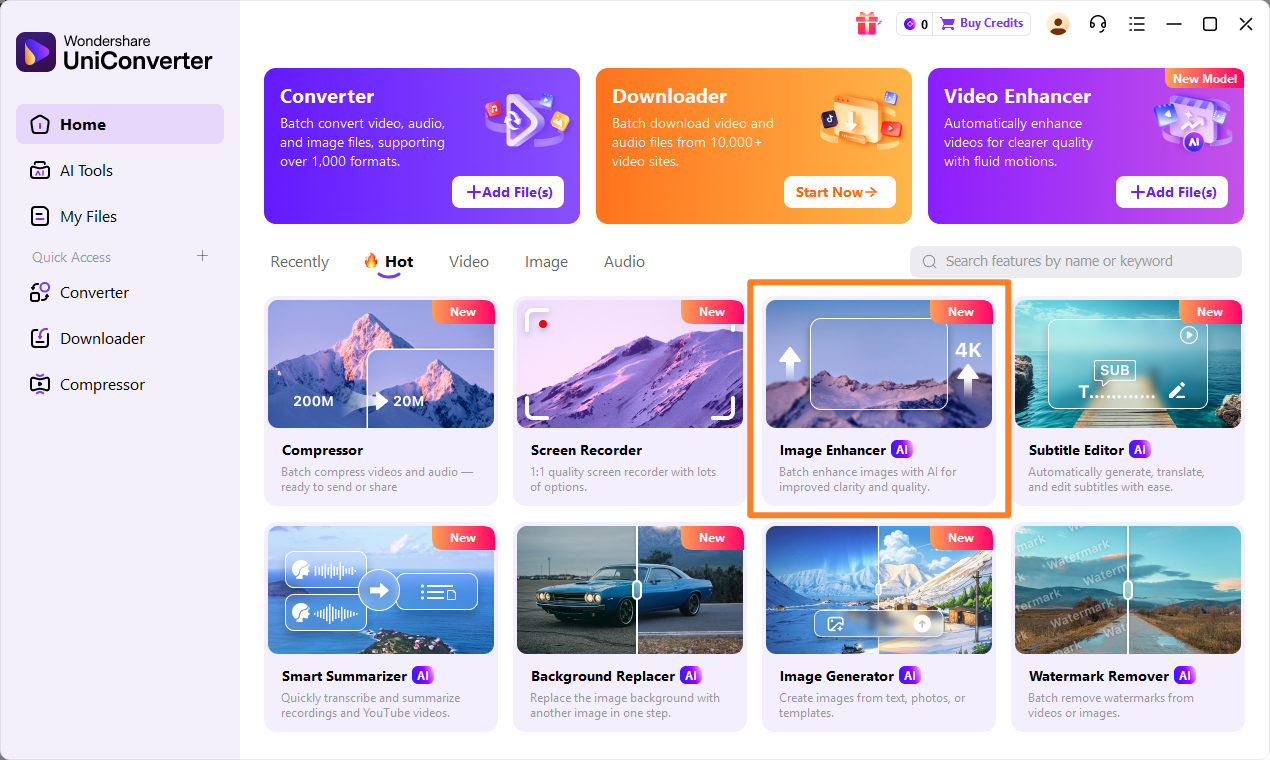
Step 1: Open UniConverter and Choose Image Enhancer
Launch UniConverter and navigate to the "Toolbox" section. From there, select the "Image Enhancer" option.
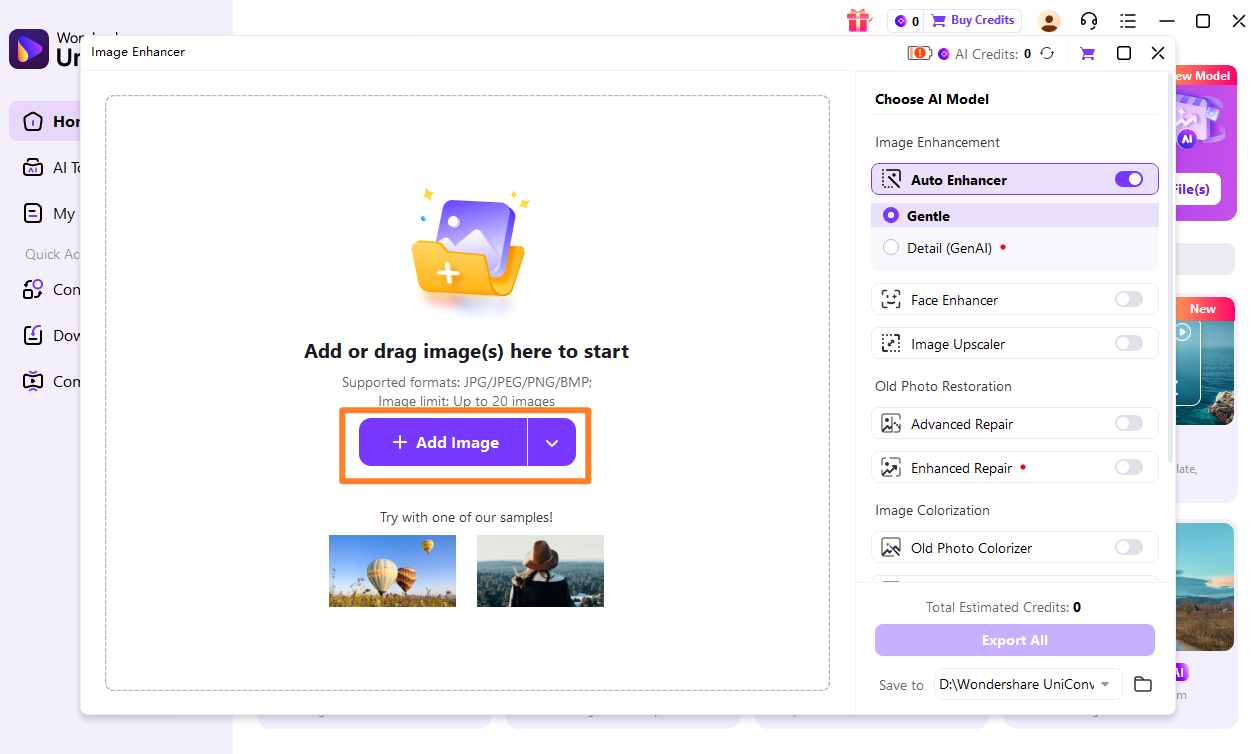
Step 2: Upload the Images
Click on the "Add Files" button or simply drag and drop the images you wish to enhance into the UniConverter interface. You can add multiple images for batch processing.
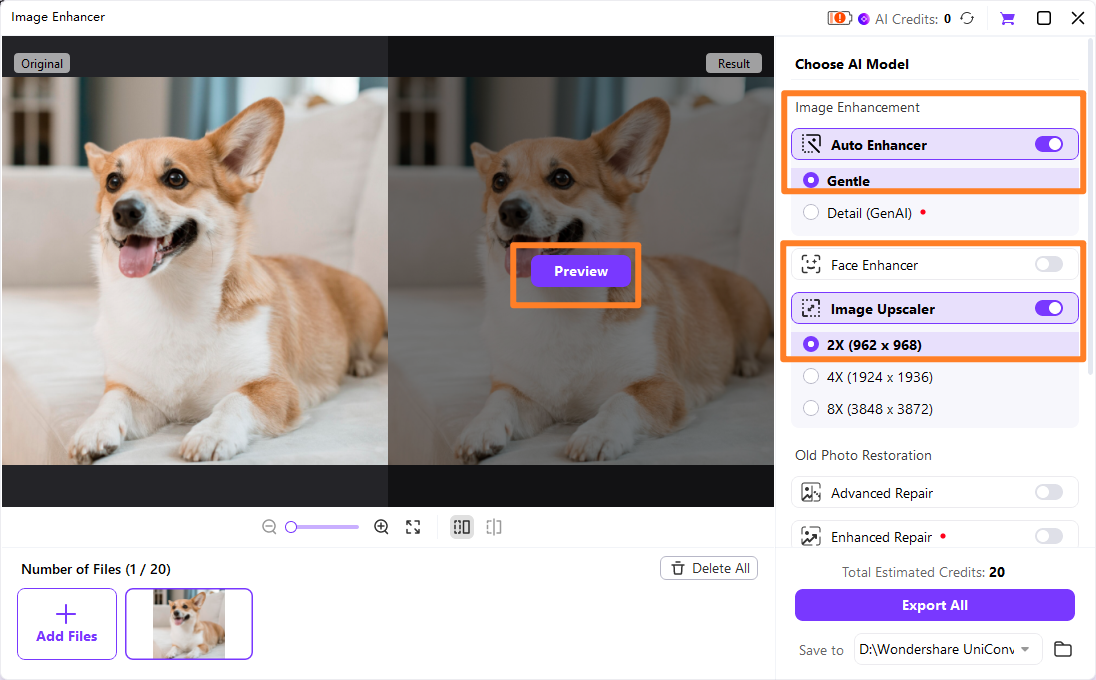
Step 3: Choose Enhancement Model
Once your images are loaded, you'll see various enhancement models. Select the one that best suits your needs, whether it's for general enhancement, noise reduction, or upscaling. You can also adjust parameters if available.
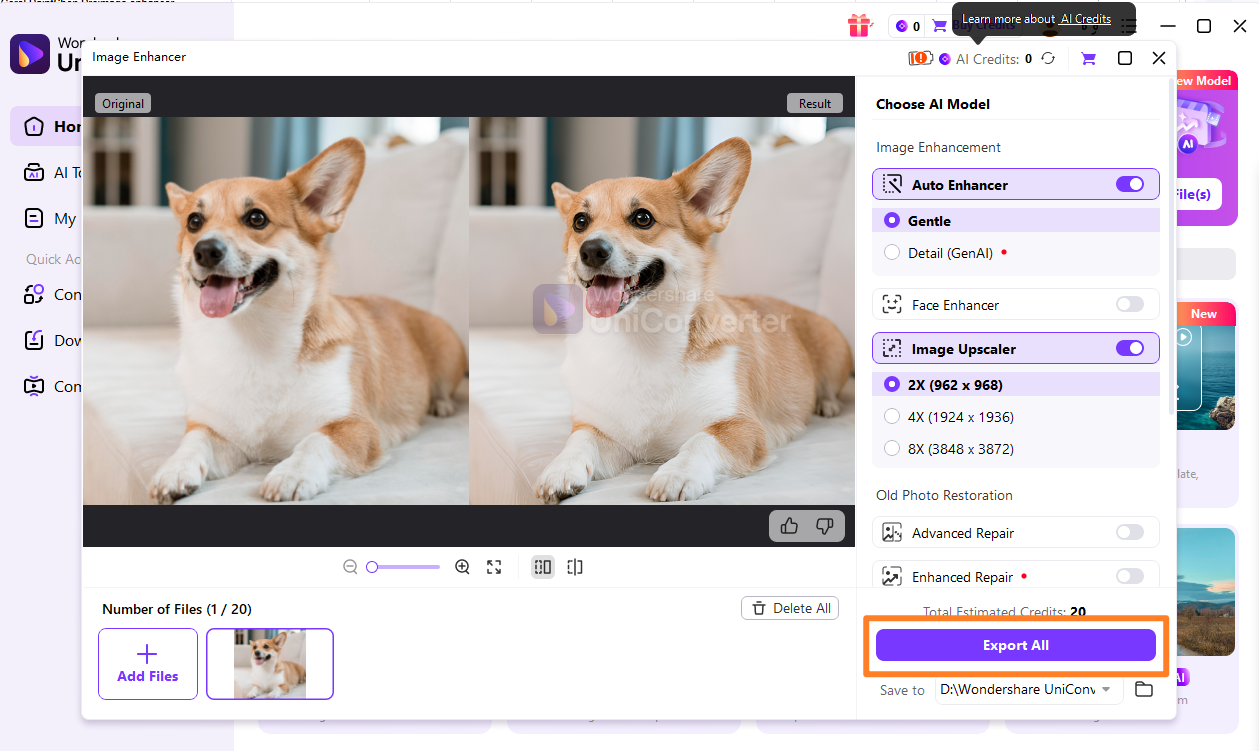
Step 4: Preview and Save the Enhanced Images
Preview the enhanced images to ensure they meet your expectations. Once satisfied, click the "Start" or "Enhance" button to process and save your improved images to your desired output folder.

Seeking a Runway ML Image Enhancer Alternative?
Part 7: Conclusion
After spending considerable time with the Runway ML image enhancer review, I can confidently say it's a powerful tool for specific use cases. It excels in providing quick, AI-driven enhancements, making it ideal for content creators, social media managers, and small businesses who need to rapidly improve visual content without deep technical knowledge. The intuitive interface and seamless integration within the Runway ML ecosystem are definite advantages. However, for high-end professional retouching, where granular control and pixel-perfect accuracy are paramount, it falls short. Similarly, the subscription model and dependence on cloud processing might not suit everyone, especially those with infrequent needs or strict data privacy requirements. Before committing, I recommend evaluating your specific workflow, budget, and the level of control you require. For those seeking a more versatile and robust solution, particularly for batch processing and offline capabilities, alternatives like UniConverter offer a compelling proposition.
Part 8: FAQs
-
1. Is Runway ML Image Enhancer free to use?
Runway ML offers a free tier with limited features, but full functionality, including higher resolution outputs and more processing time, requires a paid subscription.
-
2. Can Runway ML Image Enhancer improve severely blurry photos significantly?
While it can enhance details and reduce blur to some extent, severely blurry photos often have too little information to be dramatically improved by any AI enhancer, including Runway ML. Expect minor to moderate improvements, not a complete restoration.
-
3. How does Runway ML compare to traditional image editing software like Photoshop?
Runway ML focuses on AI-driven automation for quick, general enhancements, making it very user-friendly. Traditional software like Photoshop offers extensive manual control, layer-based editing, and a vast array of tools for professional-level manipulation, but with a steeper learning curve.
-
4. What file formats does Runway ML Image Enhancer support for input and output?
Runway ML typically supports common image formats such as JPG, PNG, and TIFF for both input and output. It's always a good idea to check their official documentation for the most up-to-date list.
-
5. Is UniConverter a good alternative for batch image enhancement, especially for different image types?
Yes, UniConverter is an excellent alternative for batch image enhancement. It's designed to handle various image types efficiently and offers robust batch processing capabilities, making it a strong choice when you need to enhance many images consistently.
