
- Value: RetouchMe excels for quick, AI-driven social media edits and casual use.
- Comparison: UniConverter offers superior control, quality, and batch processing for demanding tasks.
- Decision: Choose RetouchMe for ease; UniConverter for professional, high-quality, and efficient enhancements.
- Pitfalls: Be aware of RetouchMe's subscription costs, credit system, privacy concerns, and potential for over-retouching.
In this article
When I first stumbled upon RetouchMe image enhancer review, I was intrigued by the promise of effortless, AI-powered photo perfection. In an age where every social media post demands visual appeal, and our phones are overflowing with snapshots, the idea of an app that could magically fix imperfections seemed like a godsend. This review aims to cut through the marketing hype and provide a candid, scenario-based look at RetouchMe, comparing it with alternatives, and helping you decide if it's the right tool for your digital toolkit. We'll explore its features, weigh its pros and cons, and dive into specific use cases, all while keeping an eye on potential pitfalls and offering a robust alternative for more demanding tasks.
Part 1: What is RetouchMe?
RetouchMe positions itself as a personal photo editor in your pocket, leveraging AI and human retouchers to enhance your images. It's designed to take the complexity out of photo editing, offering a wide array of services from body slimming and facial adjustments to background removal and object deletion. My initial thought was, "Could it really be that simple?" The app aims to solve a common pain point for many of us: wanting professional-looking photos without the steep learning curve of traditional editing software.
The Rise of AI-Powered Photo Editing
The demand for quick, high-quality photo enhancements has surged, driven by:
* Social Media Culture: The constant pressure to share visually appealing content.
* Smartphone Photography: The ubiquity of high-quality cameras in our pockets, leading to an explosion of photos.
* Desire for Perfection: A general trend towards presenting an idealized self online.
This context makes tools like RetouchMe particularly appealing, promising to bridge the gap between amateur photography and professional results.
Part 2: RetouchMe's Core Features, Pros, and Cons
RetouchMe, from my experience, is packed with features designed to tackle almost any photo imperfection you can imagine. Its core strength lies in its specialized retouching options, which go beyond basic filters. I found myself using it for things like "fixing" a stray hair or subtly reshaping an outfit. The interface is quite intuitive, which was a pleasant surprise.
Pros:
* Effortless AI-powered enhancements for various photo types: I was genuinely impressed by how quickly it could analyze and suggest improvements.
* Wide range of specialized retouching options (e.g., body shaping, facial adjustments): This is where it truly shines; it's not just a one-trick pony.
* User-friendly interface for quick edits: Even for someone not tech-savvy, navigating the app is a breeze.
Cons:
* Subscription-based model can be costly for frequent use: I quickly realized that relying on it heavily would add up financially.
* Reliance on credits for certain features can be confusing: The credit system felt a bit like a dark pattern, making it hard to predict costs.
Part 3: Target Users and Use Cases
From my time with RetouchMe, it became clear who benefits most from this app. If you're looking for quick, impactful edits without diving deep into manual controls, this is probably for you.
Best Use Case: Quick Social Media Edits for Influencers and Casual Users
For influencers, content creators, or just anyone who wants their social media photos to pop, RetouchMe is a godsend. I found it perfect for those moments when I needed to quickly smooth skin, whiten teeth, or even subtly adjust my body shape before posting. It’s about getting that "perfect" shot with minimal fuss, making it ideal for Instagram, TikTok, or Facebook. It saves a ton of time compared to traditional editing software, and the results are usually quite convincing for a casual audience.
Limited Use Case: Professional-Grade Photo Manipulation for High-Resolution Prints
However, if your goal is professional-grade photo manipulation for high-resolution prints or commercial projects, RetouchMe falls short. I tried using it for a photo I intended to print large, and the limitations became apparent. While the AI is good, it's not a substitute for a skilled human retoucher or the granular control offered by professional software like Photoshop. The enhancements, while good for digital screens, can sometimes look a bit artificial or lose fidelity when magnified, making it unsuitable for tasks where absolute precision and naturalness are paramount.
Part 4: RetouchMe and Alternatives Comparison
When I started looking beyond RetouchMe, I realized there's a whole ecosystem of image enhancers out there. Here's how RetouchMe stacks up against some notable alternatives, including UniConverter, which I've found to be a surprisingly powerful tool for different needs, and two other popular choices.
| Feature/Scenario | RetouchMe | UniConverter | Adobe Photoshop Express | PicsArt |
| Ease of Use | Excellent | Good | Moderate | Good |
| AI Accuracy | High | High | Medium | Medium |
| Cost | Moderate | Low | Moderate | Moderate |
| Advanced Editing | Limited | Moderate | Extensive | Moderate |
| Privacy | Standard | High | Standard | Standard |
| Processing Speed | Fast | Very Fast | Medium | Fast |
| Output Quality | Good | Excellent | Excellent | Good |
Key Differentiators: AI-Driven Simplicity vs. Manual Control
RetouchMe excels in its AI-driven simplicity, offering quick fixes without much user input. UniConverter, on the other hand, offers a blend of AI enhancement with more control, especially for batch processing and format conversion, and I've found its output quality to be consistently excellent. Photoshop Express provides more manual control but can be less intuitive for beginners, while PicsArt offers a creative suite beyond just enhancement. If you're after pure ease and speed for specific touch-ups, RetouchMe is great. But if you need robust, high-quality enhancements, especially for multiple images or different formats, UniConverter often outperforms it, giving you more bang for your buck and better control over the final output.
Part 5: Risks and Pitfalls to Consider
Using any cloud-based photo editing service, including RetouchMe, comes with its own set of considerations that I've learned to be wary of. It's not just about getting a pretty picture; it's about understanding the implications.
Data Privacy Concerns with Cloud-Based Processing
My biggest concern with apps like RetouchMe is always data privacy. When I upload my photos, they're sent to their servers for processing. This means my personal images, which often contain sensitive information, are out of my direct control. While they have privacy policies, it still leaves me wondering about the security of my data and how it might be used or stored. It's a trade-off for convenience, but one I always weigh carefully.
Potential for Over-Retouching and Unnatural Results
I've definitely fallen into the trap of over-retouching with RetouchMe. It's so easy to keep tweaking that you can end up with an image that looks completely unnatural, almost like a caricature of yourself. What starts as a subtle enhancement can quickly turn into a plastic-looking, unrealistic photo. It's a fine line between enhancing and distorting, and the app's ease of use can sometimes encourage going too far.
In-App Purchase Fatigue and Credit System Confusion
The credit system in RetouchMe was a source of frustration for me. I'd start an edit, realize I needed more credits for a specific feature, and then have to go through the process of buying more. It felt like a constant drip-feed of microtransactions, leading to what I call "in-app purchase fatigue." It made the editing process feel disjointed and often more expensive than I initially anticipated.
Impact on Original Image Quality and Resolution
Another thing I noticed is that while RetouchMe enhances, it doesn't always preserve the original image quality perfectly, especially with higher resolution photos. Sometimes, after an enhancement, I'd find a slight degradation in sharpness or an introduction of artifacts, particularly if I was trying to zoom in on the edited areas. For casual social media posts, this might not be an issue, but for anything requiring high fidelity, it's a definite concern.
Part 6: How to Use UniConverter for Efficient Image Enhancement
Sometimes, when I've found other tools lacking in batch processing, struggling with inconsistent enhancements, or just not delivering the quality I need, I turn to UniConverter. It's been a reliable solution for those moments when I need robust, stable, and high-quality image enhancement without the fuss of ads or confusing credit systems. It truly stands out as an all-in-one solution for various multimedia needs, including image enhancement.
Why UniConverter Stands Out
UniConverter offers a powerful suite of tools that go beyond simple enhancements. For me, its biggest advantages are its ad-free experience, extensive format support, GPU acceleration for faster processing, stable and lossless enhancements, and the ability to batch process images. It’s a comprehensive tool that ensures your enhanced images maintain their quality and resolution, making it a far more professional option than many of the quick-fix apps out there. For those looking to enhance images using AI, UniConverter provides a seamless experience. If you need to upscale images to 4K, this tool can help achieve stunning results. Additionally, it can be used as an online video enhancer for quick adjustments. If you're dealing with pixelated videos, UniConverter offers solutions to improve their clarity.
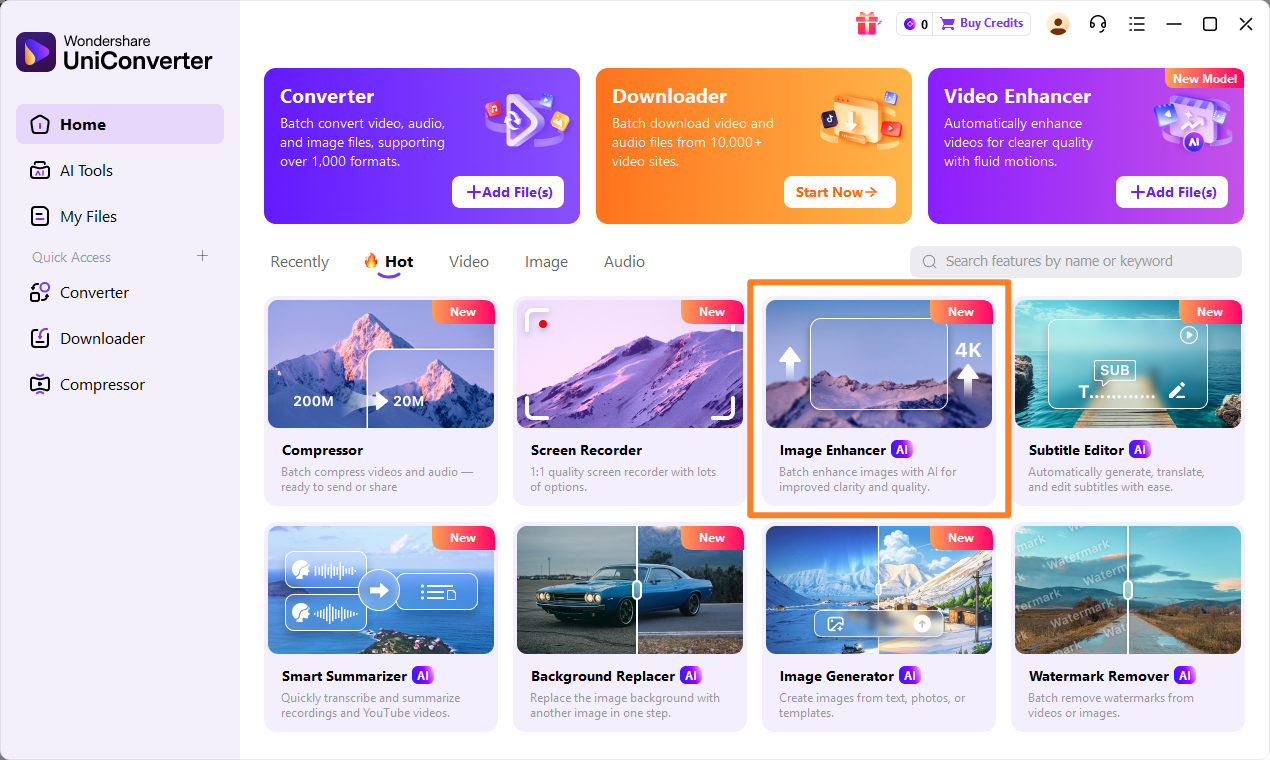
Step 1: Open UniConverter and Choose Image Enhancer
First, launch UniConverter on your computer. Navigate to the "Toolbox" section, and you'll find the "Image Enhancer" option. Click on it to open the dedicated enhancement module.
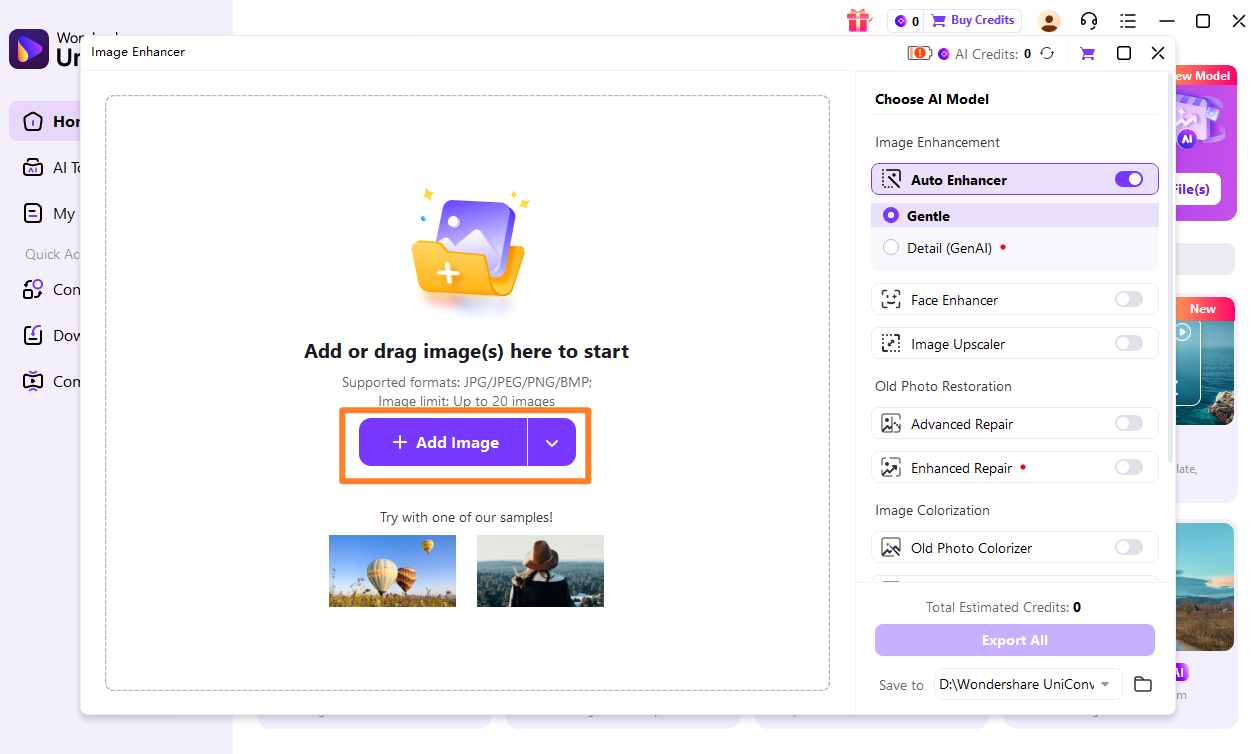
Step 2: Upload the Images
Next, you'll need to upload the images you wish to enhance. You can either drag and drop your files directly into the interface or click the "Add Files" button to browse and select them from your computer. UniConverter supports various image formats, making it very flexible.
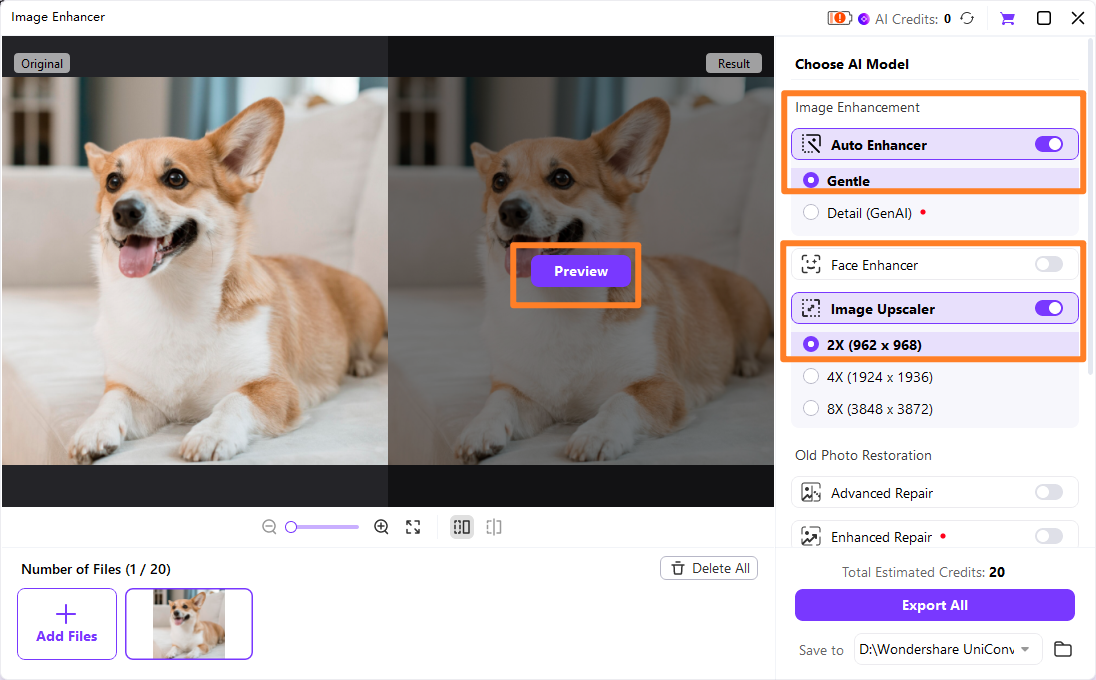
Step 3: Choose Enhancement Model
Once your images are loaded, UniConverter will present you with different enhancement models. Select the one that best suits your needs – whether it's for general improvement, noise reduction, or upscaling. You can often preview the effects before applying them fully.
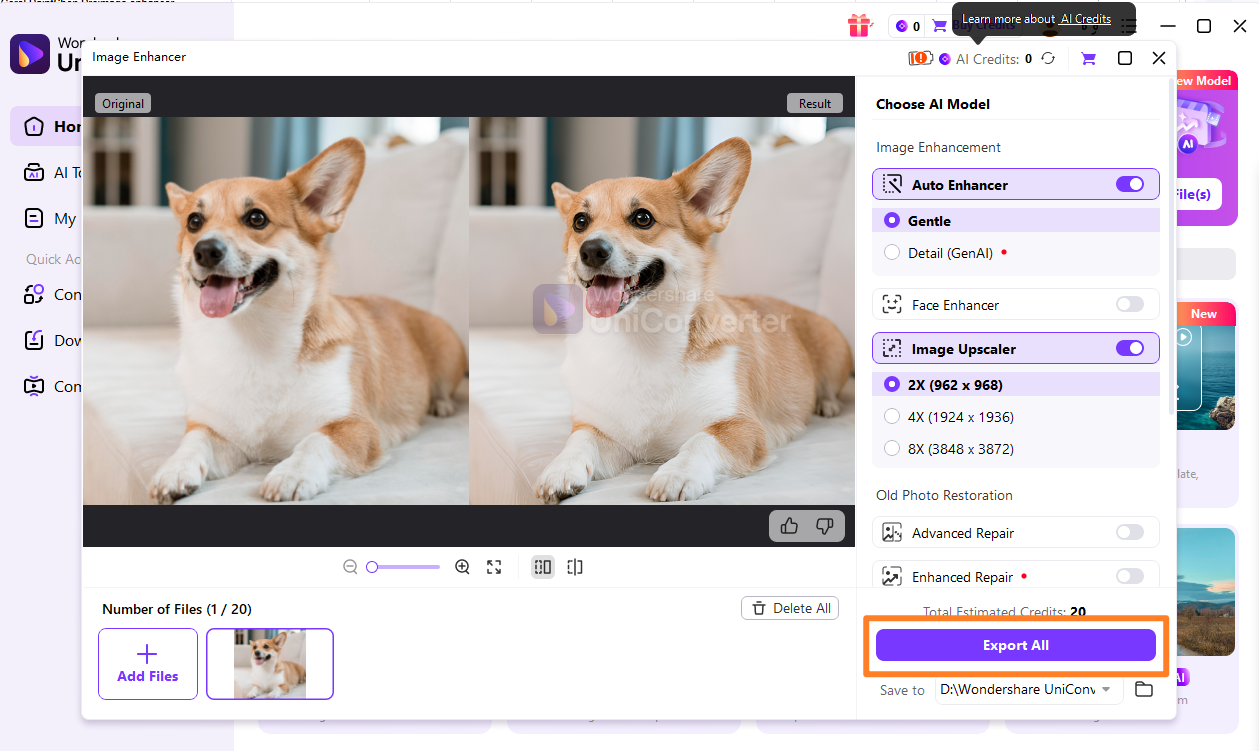
Step 4: Preview and Save the Enhanced Images
After selecting your enhancement model, UniConverter will process your images. You can then preview the enhanced versions alongside the originals to compare the results. Once satisfied, click the "Export" or "Save" button to download your high-quality, enhanced images to your desired location.

Seeking a RetouchMe Image Enhancer Alternative?
Part 7: Conclusion
After spending considerable time with RetouchMe image enhancer review and exploring its alternatives, my takeaway is clear: RetouchMe is an excellent tool for quick, AI-driven photo touch-ups, particularly for social media. Its ease of use and specialized features make it ideal for influencers and casual users who need fast, impactful edits. However, its subscription model, credit system, and potential for over-retouching can be drawbacks. For those requiring professional-grade manipulation, high-resolution output, or batch processing, dedicated software or a more comprehensive tool like UniConverter offers superior control and quality. Ultimately, the best choice depends on your specific needs, budget, and desired level of control over the editing process.
Part 8: FAQs
-
1. Is RetouchMe free to use?
RetouchMe offers a free trial, but most advanced features require credits or a subscription.
-
2. How accurate are RetouchMe's AI enhancements?
The AI is generally accurate for common enhancements, but results can vary based on image quality and complexity.
-
3. Can RetouchMe enhance video files?
No, RetouchMe is primarily designed for still image enhancement.
-
4. What are the privacy implications of using RetouchMe?
Like many cloud-based services, user data is processed on their servers, raising standard privacy considerations.
-
5. Is UniConverter a good alternative for professional photographers?
UniConverter offers robust features suitable for many professional tasks, especially for batch processing and format conversion, but dedicated photo editing software might be preferred for highly specialized retouching.
