
- Value: Remaker AI excels in quick, automated image enhancements, perfect for revitalizing old photos for social media.
- Comparison: While Remaker AI offers simplicity, UniConverter provides superior local processing, GPU acceleration, and consistent high-quality results, especially for batch tasks.
- Decision: Choose Remaker AI for casual, fast enhancements; opt for UniConverter for privacy, professional-grade batch processing, and reliable output.
- Value: Understand that cloud-based tools like Remaker AI have data privacy implications, unlike UniConverter's secure local processing.
- Comparison: Remaker AI has limited customization; professional tools like Topaz Photo AI or Luminar Neo offer more control but with a steeper learning curve.
- Decision: Evaluate your usage frequency; a subscription for infrequent Remaker AI use might be less cost-effective than a one-time purchase for a robust alternative like UniConverter.
In this article
- Part 1: What is Remaker AI Image Enhancer?
- Part 2: Remaker AI Image Enhancer: Core Features, Pros & Cons
- Part 3: Target Audience & Use Cases for Remaker AI Image Enhancer
- Part 4: Remaker AI and Alternatives Comparison
- Part 5: Risks & Pitfalls to Consider
- Part 6: How to Use UniConverter to Efficiently Enhance Images
- Part 7: Conclusion
- Part 8: FAQs
The digital age has ushered in an unprecedented demand for high-quality visuals, yet many of our cherished memories remain trapped in low-resolution or faded formats. This is where AI image enhancers step in, promising to breathe new life into old photos and elevate everyday snapshots. Today, I'm diving deep into the Remaker AI image enhancer review, a tool that's been making waves for its promise of effortless image transformation. My goal is to provide a comprehensive, scenario-based comparison, helping you navigate the crowded market of AI enhancement tools and decide if Remaker AI is the right fit for your needs.
Part 1: What is Remaker AI Image Enhancer?
Remaker AI Image Enhancer is a cloud-based tool designed to automatically improve image quality using artificial intelligence. It's built to tackle common image problems like blurriness, low resolution, and lack of detail, aiming to deliver sharper, clearer, and more vibrant results. When I first heard about it, I was curious if it could really live up to the hype, especially for those old, precious photos I have tucked away. This review will focus on its practical application, comparing it against other prominent tools in various real-world scenarios.
The Rise of AI in Digital Imaging
The integration of AI into digital imaging has been a game-changer, addressing several key user pain points:
* Revitalizing Legacy Content: Many of us have digital archives filled with photos taken on older cameras or phones, suffering from low resolution and poor quality. AI offers a lifeline to these memories.
* Simplifying Complex Editing: Traditional image editing software often requires a steep learning curve. AI tools aim to democratize high-quality image enhancement, making it accessible to everyone.
* Meeting Social Media Demands: With platforms like Instagram and TikTok dominating visual content, there's a constant need for eye-catching, high-resolution images, even from less-than-perfect originals.
Part 2: Remaker AI Image Enhancer: Core Features, Pros & Cons
Remaker AI positions itself as a straightforward solution for anyone looking to quickly improve their images. Its core capabilities revolve around upscaling, de-noising, and sharpening. I've spent some time putting it through its paces, and here's what I've found regarding its performance.
Its core abilities include:
* AI Upscaling: Significantly increases image resolution without pixelation.
* Detail Recovery: Brings back lost textures and fine elements in blurry images.
* Color Correction: Automatically adjusts colors for a more natural and vibrant look.
* Noise Reduction: Cleans up grainy photos, especially those taken in low light.
* Face Enhancement: Specifically targets and refines facial features for clearer portraits.
Pros:
* Exceptional detail recovery for low-resolution images: I was genuinely impressed with how it handled some really old, small photos, bringing out details I thought were lost forever.
* User-friendly interface for quick enhancements: You just upload and click; it's that simple. There's no complex menu diving, which is a huge plus for casual users.
* Batch processing capability for efficiency: For someone with a large collection of photos, this feature is a lifesaver. I could process dozens of images without individual intervention.
Cons:
* Limited advanced customization options: If you're a professional looking for granular control over every aspect of the enhancement, Remaker AI might feel a bit restrictive. It's more of a "set it and forget it" tool.
* Occasional artifacts with highly complex images: While generally good, I noticed some strange distortions or "AI hallucinations" in very busy or abstract images, especially when pushed to extreme enhancement levels.
Part 3: Target Audience & Use Cases for Remaker AI Image Enhancer
Based on my experience, Remaker AI Image Enhancer shines in specific scenarios and caters to a particular user base. It's not a one-size-fits-all solution, and understanding its strengths and limitations is key to deciding if it's right for you.
Best Use Case: Revitalizing Old Photos for Social Media
This is where Remaker AI truly excels. I've used it to enhance scanned photos from decades ago, and the results were often astonishing. For sharing family memories on Facebook or Instagram, where perfection isn't the goal but clarity and vibrancy are appreciated, Remaker AI is fantastic. It quickly transforms faded, blurry snapshots into shareable content, making those cherished moments look much better on a modern screen. If you're just looking to spruce up your personal photo collection or make old memories pop online, this tool is incredibly effective and easy to use.
Limited Use Case: Professional Print Production Requiring Precise Color Calibration
Here's where Remaker AI hits its limits. If your goal is to prepare images for high-quality print, especially for commercial use where color accuracy and absolute fidelity are paramount, you'll likely find it lacking. The automated enhancements, while generally good, don't offer the precise control needed for professional color management. I wouldn't trust it for a client's brochure or a gallery print where every pixel and hue needs to be perfect and consistent across different output devices. For these tasks, tools with extensive manual controls and color calibration features are indispensable.
Part 4: Remaker AI and Alternatives Comparison
When it comes to AI image enhancement, Remaker AI is one player in a growing field. I've put it side-by-side with some other popular tools to see how it stacks up, especially considering different needs and budgets.
| Feature/Scenario | Remaker AI | UniConverter | Topaz Photo AI | Luminar Neo |
| Processing Speed | Fast | Very Fast (GPU) | Moderate | Moderate |
| Output Quality | Good | Excellent | Excellent | Excellent |
| Ease of Use | Excellent | Excellent | Good | Good |
| Customer Support | Email/Live Chat | |||
| Security | Cloud-based | Local Processing | Local Processing | Local Processing |
Remaker AI offers a quick and easy solution, especially for those who prioritize simplicity and speed for casual use. However, for more demanding tasks or if you're concerned about data privacy with cloud processing, UniConverter truly stands out with its local processing and GPU acceleration, delivering excellent quality at impressive speeds. Topaz Photo AI and Luminar Neo, while offering professional-grade results and extensive features, often come with a steeper learning curve and a higher price tag, making them more suited for dedicated photographers and editors.
Part 5: Risks & Pitfalls to Consider
While AI image enhancers like Remaker AI offer incredible convenience, it's crucial to be aware of potential downsides. From my experience, jumping into these tools without understanding the risks can lead to unexpected frustrations or even compromise your data.
Data Privacy Concerns with Cloud-Based Processing
Since Remaker AI is a cloud-based service, you're uploading your images to their servers. This immediately raises questions about data privacy. What happens to your photos after they're processed? Are they stored? Who has access to them? For sensitive or personal images, this is a significant concern. I always recommend reviewing their privacy policy thoroughly before uploading anything you wouldn't want potentially exposed. It's a trade-off for the convenience of not needing powerful local hardware.
Potential for Over-Processing and Unnatural Results
The "AI" in AI enhancement means the tool makes decisions for you. While often beneficial, this can sometimes lead to images that look overly processed, artificial, or even cartoonish. I've seen instances where skin textures become too smooth, or fine details are replaced with AI-generated approximations that don't quite look right. It's like the AI tries too hard to "fix" things, resulting in an image that loses its natural feel. Always review the enhanced image critically; sometimes less is more.
Subscription Model Value for Infrequent Users
Remaker AI operates on a freemium model, with full features requiring a subscription. If you only need to enhance a few images occasionally, paying a monthly or annual fee might not be cost-effective. For infrequent users, the value proposition diminishes significantly. You might end up paying for a service you barely use, making free alternatives or one-time purchase software a better choice. It's worth calculating your potential usage before committing to a subscription.
Output Quality Consistency Across Different Image Types
I've noticed that the performance of Remaker AI can vary quite a bit depending on the original image. It might do wonders for a blurry portrait but struggle with a complex landscape or an image with fine text. The AI models are trained on specific datasets, and if your image falls outside their optimal range, the results can be inconsistent. Don't expect the same level of improvement for every single photo you throw at it. It's a tool that performs best with certain types of images.
Integration Limitations with Existing Workflows
For professionals or even serious hobbyists, image enhancement is often just one step in a larger workflow. Remaker AI, being a standalone web application, doesn't integrate seamlessly with popular photo editing suites like Adobe Photoshop or Lightroom. This means extra steps: downloading the enhanced image, then importing it into your primary editor. This can be a minor inconvenience for casual users but a significant bottleneck for those with high-volume or complex editing routines.
Part 6: How to Use UniConverter to Efficiently Enhance Images
Sometimes, cloud-based tools or basic enhancers just don't cut it, especially when you're dealing with batch processing, inconsistent quality, or privacy concerns. That's where a robust desktop solution like UniConverter comes into play. If you're finding that other tools are lacking in batch processing, unstable in their enhancements, or simply not delivering the quality you need, UniConverter is an excellent alternative. It avoids many of the pitfalls of online tools, offering a stable, high-quality, and private enhancement experience. For me, it's become an all-in-one multimedia solution, handling image and video tasks with ease, all without ads, with rich format support, GPU acceleration, stable lossless processing, and powerful batch enhancement capabilities.
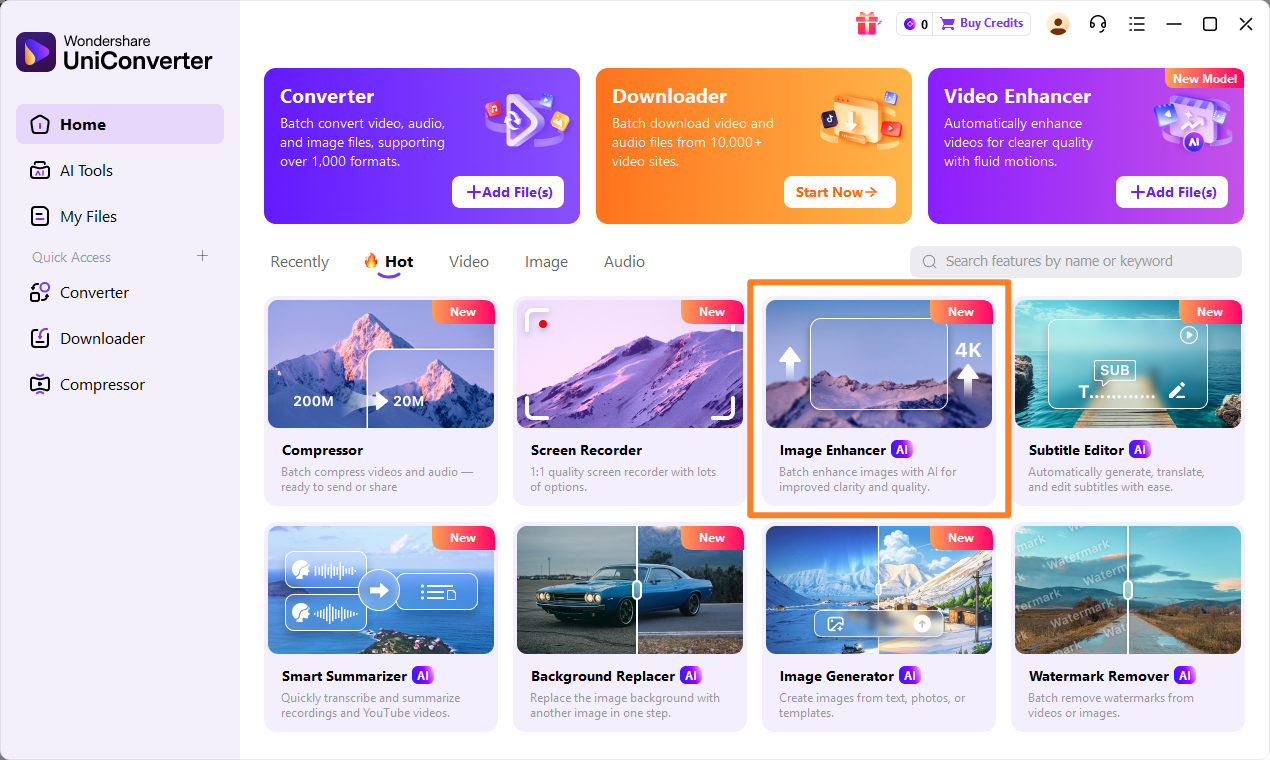
Step 1: Open UniConverter and Choose Image Enhancer
Launch UniConverter on your desktop. On the main interface, navigate to the "Toolbox" section and select the Image Enhancer feature.
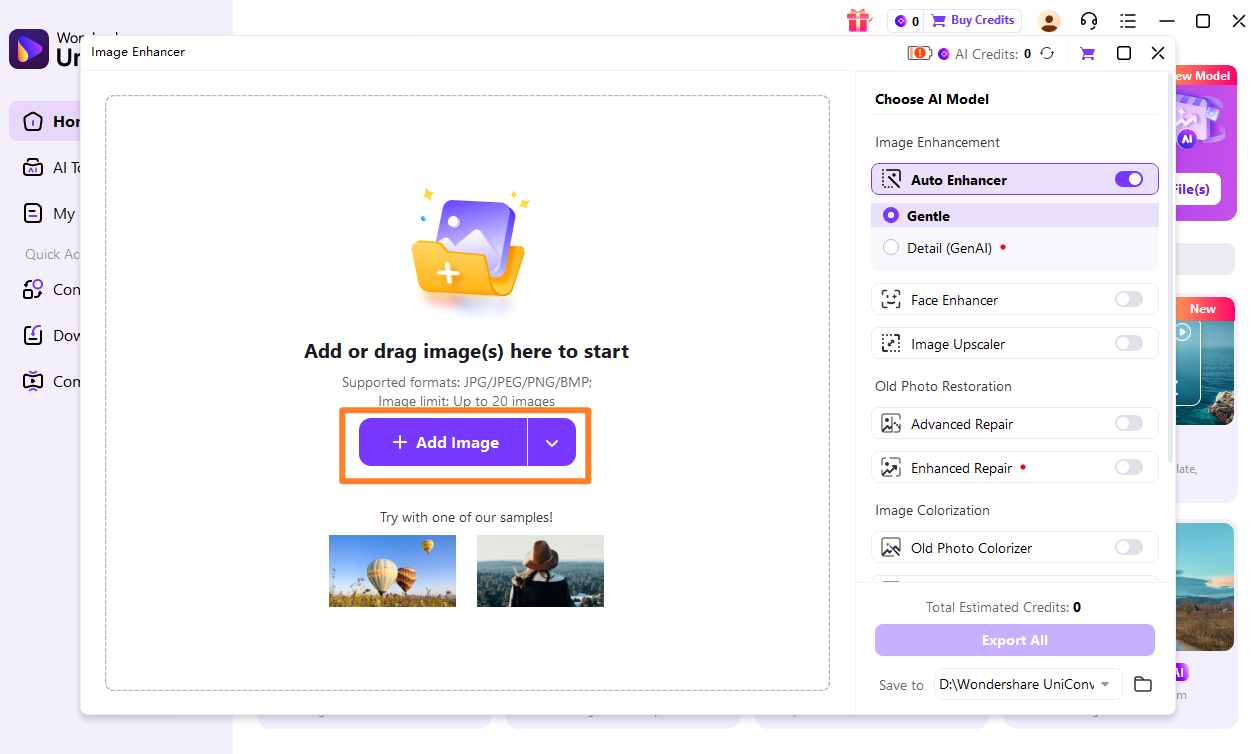
Step 2: Upload the Images
Click on the "Add Files" button or simply drag and drop the images you wish to enhance into the UniConverter window. You can add multiple images for batch processing.
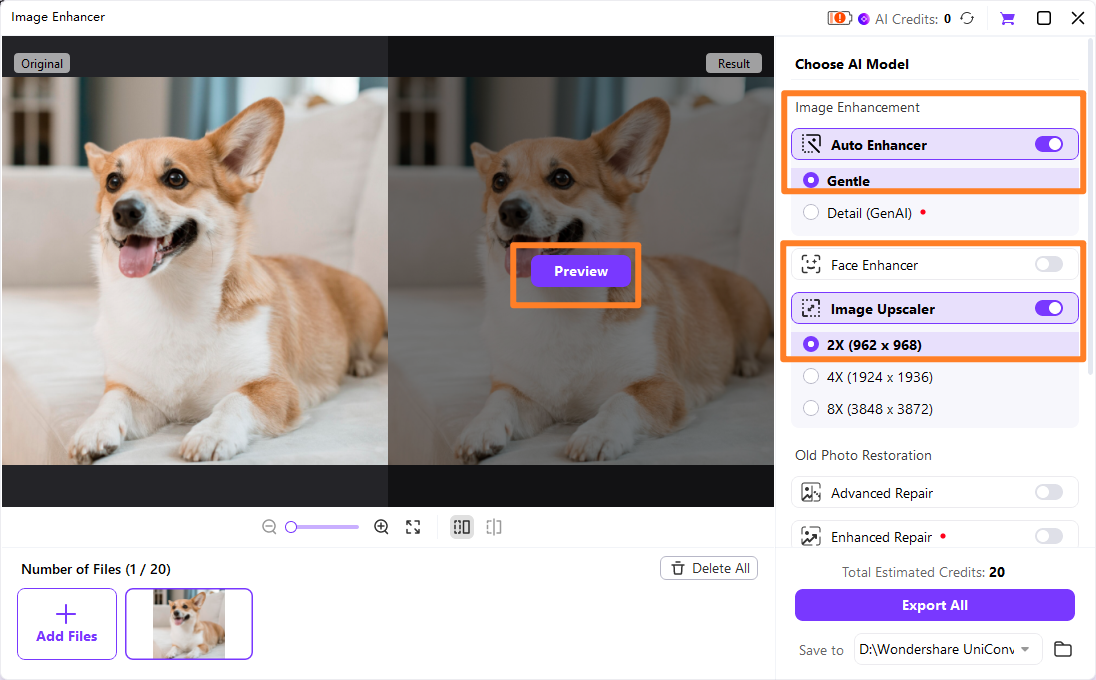
Step 3: Choose Enhancement Model
Select the AI enhancement model that best suits your needs. UniConverter offers various options for different types of image improvements, such as upscaling, de-noising, or sharpening. Adjust any additional settings as required.
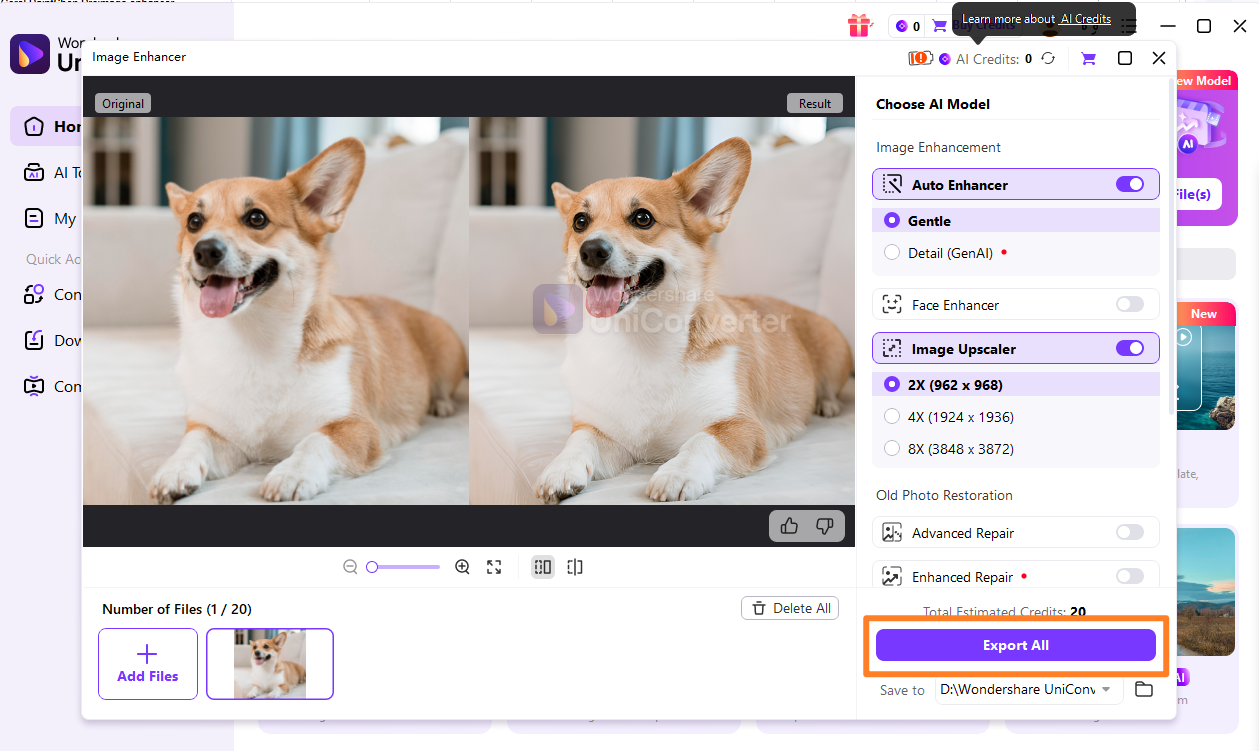
Step 4: Preview and Save the Enhanced Images
Preview the enhanced images to ensure they meet your expectations. Once satisfied, click the "Start" or "Export" button to save your high-quality, enhanced images to your desired location.

Remaker AI Alternative: Enhance Images with Ease
Part 7: Conclusion
In conclusion, the Remaker AI image enhancer review reveals a tool that excels in simplicity and speed, making it a fantastic option for casual users and social media enthusiasts looking to quickly improve their photos. Its ability to revitalize old, low-resolution images for online sharing is particularly impressive. However, for those requiring advanced customization, precise color control for professional print, or robust integration into complex workflows, its limitations become apparent. While it offers a convenient freemium model, infrequent users might find the subscription value questionable. For small businesses and content creators, it can be a valuable asset for quick, impactful visual improvements. Professional photographers and graphic designers, however, will likely need more comprehensive tools like Topaz Photo AI or Luminar Neo for their intricate demands. Ultimately, for users seeking an all-in-one multimedia solution that prioritizes privacy, local processing, and consistent high-quality results across various image and video tasks, UniConverter emerges as a compelling and versatile alternative.
Part 8: FAQs
-
1. Is Remaker AI Image Enhancer free to use?
Remaker AI offers a freemium model with limited features; full access requires a subscription.
-
2. How does Remaker AI compare to Photoshop for image enhancement?
Remaker AI excels in automated, quick enhancements, while Photoshop offers more granular control for professional editing and a wider range of tools.
-
3. Can Remaker AI improve the quality of highly pixelated images?
While it can significantly improve, extremely pixelated images may still show limitations in quality recovery, and some artifacts might appear.
-
4. What are the privacy implications of using Remaker AI?
Users should review Remaker AI's privacy policy regarding data storage and usage, especially for sensitive images, as it is a cloud-based service.
-
5. Is UniConverter a good alternative for batch image enhancement?
Yes, UniConverter offers robust batch processing capabilities for various image and video tasks, including AI enhancement, with the added benefit of local processing and GPU acceleration.
