
- RawTherapee Value: Free, open-source, professional RAW editor for meticulous image control.
- Core Features: Non-destructive editing, advanced color management, and detailed recovery for photographers.
- Ideal Users: Best for professionals and enthusiasts seeking granular control over every pixel.
- Learning Curve: Requires significant time investment; not for quick edits or casual users.
- Performance: Resource-intensive; demands modern hardware for smooth operation with large files.
- Support: Relies on community forums; lacks dedicated customer service found in commercial tools.
- Comparison: Offers deep control, unlike simpler tools, but less polished than commercial alternatives.
- UniConverter Alternative: Provides effortless, AI-powered image enhancement for quick, high-quality results.
- Decision Point: Choose RawTherapee for ultimate control, UniConverter for speed and simplicity.
In this article
- Part 1: What is RawTherapee?
- Part 2: RawTherapee: Core Features, Pros, and Cons
- Part 3: RawTherapee: Ideal Users and Use Cases
- Part 4: RawTherapee and Alternatives Comparison
- Part 5: Risks and Pitfalls to Consider
- Part 6: How to Use UniConverter for Effortless Image Enhancement
- Part 7: Conclusion and Recommendations
- Part 8: FAQs
RawTherapee Image Enhancer: A Comprehensive Scenario-Based Review
When I first delved into the world of digital photography, I quickly realized that the images coming straight out of my camera, especially RAW files, were just the starting point. They held immense potential, but unlocking it required a powerful tool. That's where RawTherapee image enhancer review comes in. It’s a free, open-source application that promises professional-grade image processing. In this review, I'll share my personal journey and insights into using RawTherapee, comparing it with other popular options, and helping you decide if it’s the right fit for your workflow. We'll explore its core features, ideal use cases, potential pitfalls, and even suggest an alternative for those seeking a simpler approach.
Part 1: What is RawTherapee?
RawTherapee is an incredibly powerful, open-source RAW image processing program. It’s not just a simple editor; it’s a full-fledged darkroom for your digital negatives, designed to give you meticulous control over every aspect of your image. My initial impression was that it looked a bit intimidating, but I soon discovered its depth. It’s built by photographers, for photographers, which means it prioritizes quality and control above all else. This review aims to cut through the complexity and help you understand if this robust tool aligns with your image enhancement needs.
The Quest for Perfect Image Enhancement: Addressing Common Pain Points
* Unlocking RAW File Potential: Many tools only scratch the surface of what RAW files can offer, leaving much of the dynamic range and detail untapped.
* Cost-Effective Professional Tools: High-quality image editing software often comes with a hefty price tag, making it inaccessible for many enthusiasts.
* Granular Control Over Edits: Sometimes, you need more than just basic sliders; you need precise adjustments to achieve your artistic vision.
* Performance with Large Files: Processing high-resolution RAW files can be a drag on less optimized software, slowing down the entire workflow.
Part 2: RawTherapee: Core Features, Pros, and Cons
RawTherapee, in my experience, is a beast when it comes to image manipulation. Its core strength lies in its non-destructive editing workflow, meaning your original RAW files are always safe. I’ve found its color management tools to be exceptional, allowing for incredibly accurate and nuanced adjustments. The level of detail recovery you can achieve, especially in shadows and highlights, is truly impressive. It’s like having a digital darkroom with an endless supply of specialized chemicals.
Core Capabilities:
* Advanced Non-Destructive Editing: All your adjustments are stored separately, preserving the original image data.
* Extensive Color Management: Fine-tune colors with precision, including advanced white balance, color grading, and channel mixer tools.
* Detail Recovery and Sharpening: Powerful algorithms to bring out hidden details and apply intelligent sharpening.
* Noise Reduction: Effective tools to clean up noisy images, especially in low-light conditions.
* Highly Customizable Interface: You can arrange panels and tools to suit your preferred workflow.
Pros
* Advanced Non-Destructive Editing Capabilities: This is a huge one for me; I can experiment endlessly without fear of ruining my original shot.
* Extensive Color Management and Detail Recovery Tools: The control I get over color and detail is unparalleled in a free tool.
* Highly Customizable Interface and Workflow: I can set it up exactly how I like, which really speeds up my editing process once I get the hang of it.
Cons
* Steep Learning Curve for Beginners: I won't lie, it took me a while to get comfortable with all the options and understand what each slider does.
* Resource-Intensive, Especially with Large Files: My older laptop definitely struggles when I'm working with high-resolution RAW files, leading to some frustrating slowdowns.
Part 3: RawTherapee: Ideal Users and Use Cases
From my perspective, RawTherapee isn't for everyone. If you're just looking to quickly slap a filter on your selfie for Instagram, you'll find it overkill and frustrating. This tool truly shines for those who want to get their hands dirty with every pixel. I’ve found it indispensable for my landscape photography, where subtle color shifts and precise detail recovery can make or break an image.
Best Use Case: Professional Photographers and Enthusiasts Seeking Granular Control
If you're like me and you love diving deep into the nuances of an image, meticulously adjusting every curve, color channel, and detail slider, then RawTherapee is your playground. It's perfect for professional photographers who need to extract every last bit of quality from their RAW files for large prints or client work. For serious enthusiasts, it offers an unparalleled learning experience in advanced image processing without the subscription cost. I use it extensively for my fine-art prints, where every detail matters.
Limited Use Case: Quick Edits for Social Media or Casual Users
Honestly, if your goal is just to brighten a photo, crop it, and maybe add a vignette for social media, RawTherapee is probably not the tool you need. The time it takes to learn and navigate its extensive features would far outweigh the benefits for such simple tasks. For quick, casual edits, I often reach for something much simpler, as RawTherapee’s power comes with a certain level of commitment.
Part 4: RawTherapee and Alternatives Comparison
When I started my journey with RawTherapee, I also explored other options, and here’s how I see it stacking up against some popular alternatives. It’s not just about features on paper; it’s about how they perform in real-world scenarios.
| Feature/Scenario | RawTherapee | Adobe Lightroom | DxO PhotoLab | UniConverter (Image Enhancer) |
| Advanced Color Grading | Excellent | Very Good | Excellent | Basic (Preset-based) |
| Noise Reduction | Good | Excellent | Superior | Good (AI-powered) |
| Ease of Use | Moderate | High | High | Very High |
| Cost | Free | Subscription | One-time | One-time/Subscription |
| Performance (Large Files) | Moderate | High | High | High |
| Customer Support | Community Forums | Dedicated | Dedicated | Dedicated |
| Security (Data) | Local Processing | Cloud/Local | Local | Local Processing |
| Batch Processing | Yes | Yes | Yes | Yes |
| Output Quality | Professional | Professional | Professional | Very Good |
Key Differentiators: Open-Source Flexibility vs. Commercial Polish
From my experience, RawTherapee offers an incredible amount of flexibility due to its open-source nature. I can tweak almost anything, and there's a vibrant community constantly pushing its capabilities. However, this comes at the cost of commercial polish and dedicated customer support that you get with Lightroom or DxO PhotoLab. Lightroom, with its cloud integration, is fantastic for photographers who work across multiple devices and need seamless synchronization. DxO PhotoLab, on the other hand, truly excels in noise reduction and optical corrections, often giving me cleaner results straight out of the gate, especially with its proprietary lens profiles. UniConverter, while not a full-fledged RAW editor, is a godsend for quick, AI-powered enhancements and batch processing when I just need a good-looking image without deep editing.
Part 5: Risks and Pitfalls to Consider
While I absolutely love RawTherapee for its power and flexibility, it's not without its quirks and potential frustrations. I’ve definitely hit a few roadblocks along the way that I think you should be aware of before diving in.
Performance Bottlenecks on Older Hardware
This is a big one for me. I initially tried running RawTherapee on an older laptop, and it was a painful experience. Processing high-resolution RAW files, especially with multiple complex adjustments, can really bog down your system. The previews would lag, and exporting took ages. If you're serious about using RawTherapee, I'd strongly recommend a modern multi-core processor, at least 8GB of RAM, and a decent graphics card. Otherwise, you'll spend more time waiting than editing.
Community Support vs. Dedicated Customer Service
Because RawTherapee is open-source, there's no dedicated customer service line to call when you're stuck. You rely heavily on community forums and online documentation. While the community is generally very helpful and knowledgeable, getting a quick, personalized answer to a specific problem can sometimes be a challenge. I’ve spent hours sifting through forum posts to find solutions, which can be frustrating when you're on a deadline.
Potential for Inconsistent Results Without Proper Calibration
RawTherapee offers an incredible amount of control over color, but with great power comes great responsibility. If your monitor isn't properly calibrated, or if you don't understand color management principles, you might find that your images look fantastic on your screen but completely different when printed or viewed on another device. I learned this the hard way with a few prints that came back looking off. It requires a commitment to understanding color science for truly consistent results.
Learning Curve Frustration for New Users
I remember my first few weeks with RawTherapee. It felt like trying to fly a spaceship without a manual. The interface, while customizable, is packed with options, and many of the terms and sliders aren't immediately intuitive, especially if you're coming from simpler editors. It takes patience and a willingness to learn to truly master it. If you're easily discouraged by complex software, this might be a significant hurdle.
Part 6: How to Use UniConverter for Effortless Image Enhancement
Sometimes, RawTherapee's deep dive into every pixel is more than I need. When I'm facing a stack of images that just need a quick, intelligent boost without getting bogged down in endless sliders, or when other tools are struggling with batch processing or inconsistent results, I turn to UniConverter. It's not a RAW editor, but for fast, high-quality image enhancement, it's incredibly efficient. It avoids the performance issues and steep learning curve of more complex software, offering a streamlined experience with impressive AI-powered results. Plus, it handles various formats and leverages GPU acceleration for speed, ensuring stable and lossless enhancements. For those looking to enhance image resolution or fix pixelated videos, this tool provides a robust solution.
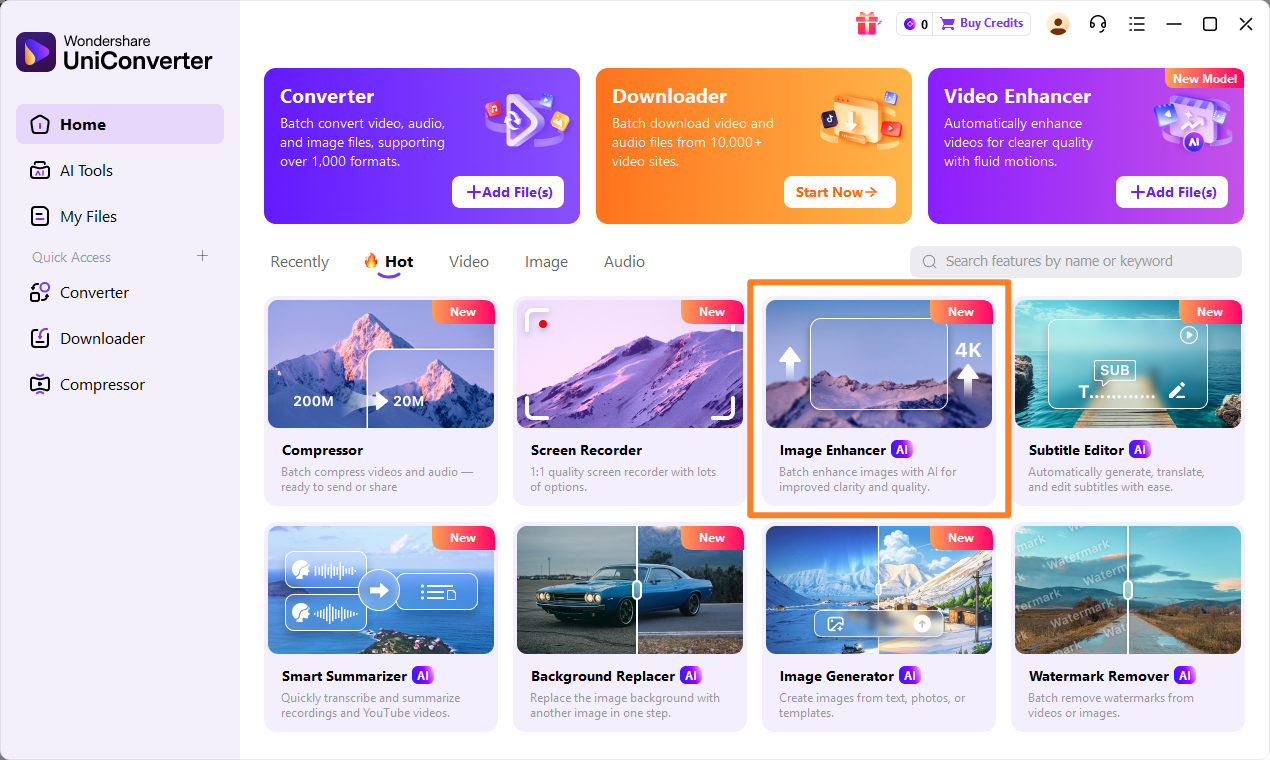
Step 1: Open UniConverter and Choose Image Enhancer
First, I launch UniConverter and navigate to the "AI Lab" section. Within that, I select the "Image Enhancer" tool. It's usually prominently displayed, making it easy to find.
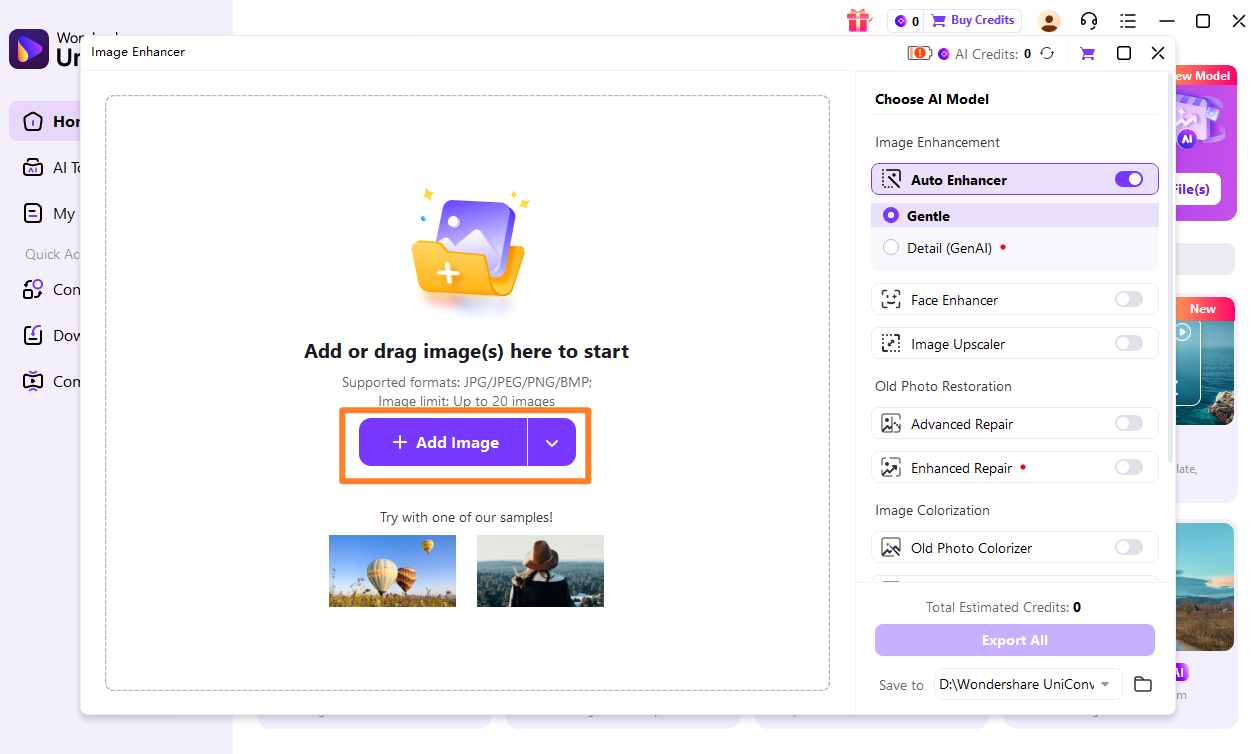
Step 2: Upload the Images
Next, I simply drag and drop the images I want to enhance directly into the UniConverter interface. It supports various image formats, which is super convenient.
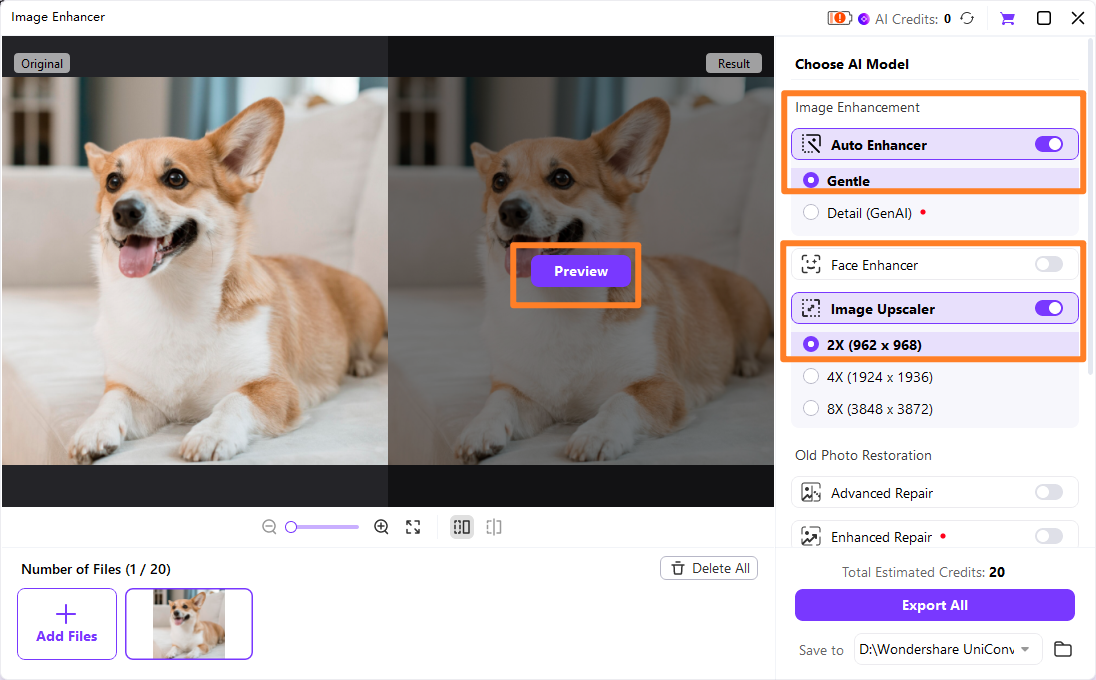
Step 3: Choose Enhancement Model
UniConverter offers different AI enhancement models. I usually try a few to see which one best suits my image – whether it's for general improvement, noise reduction, or sharpening. I can also adjust the enhancement intensity.
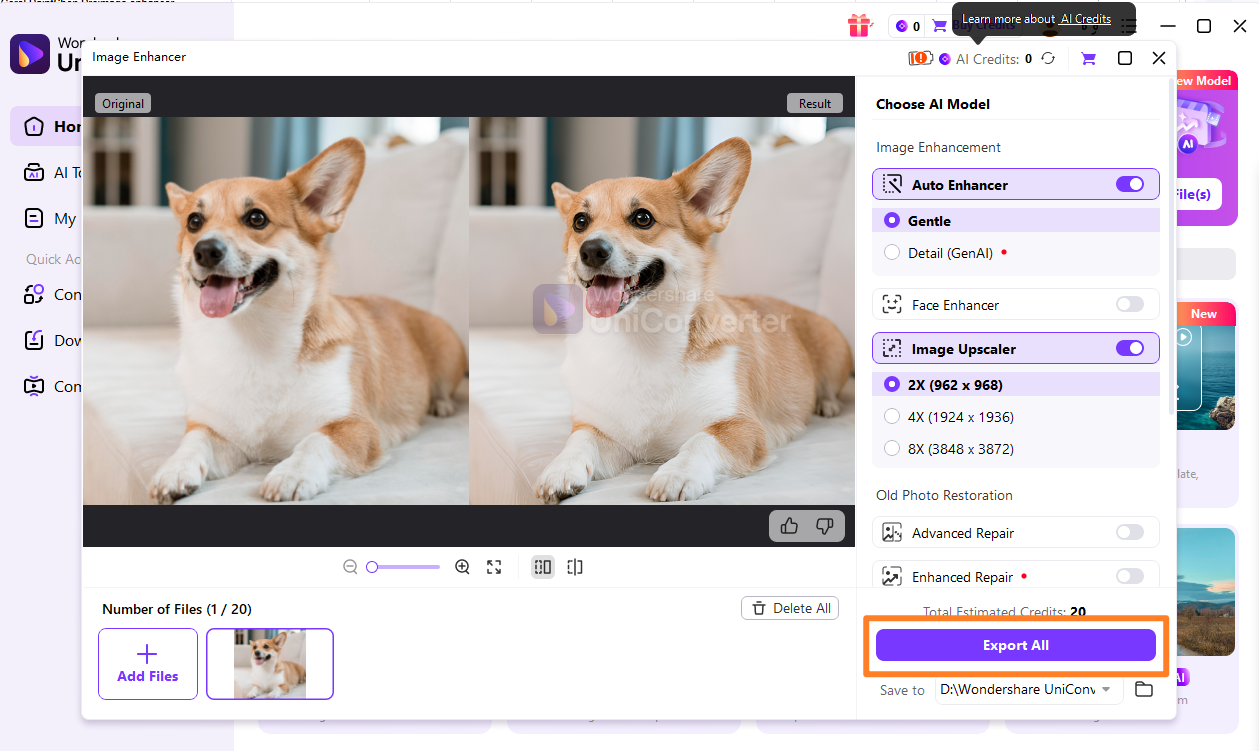
Step 4: Preview and Save the Enhanced Images
Before saving, I always use the preview feature to compare the original and enhanced versions side-by-side. Once I'm happy with the results, I click "Export" to save my perfectly enhanced images.

Enhance Images Beyond RawTherapee
Part 7: Conclusion and Recommendations
After spending considerable time with RawTherapee image enhancer review, I can confidently say it’s an exceptional tool for those who demand ultimate control over their images. It’s a powerful, free, and open-source alternative to commercial software, offering advanced non-destructive editing, extensive color management, and granular detail recovery. However, its steep learning curve and resource-intensive nature mean it’s best suited for professional photographers and serious enthusiasts who are willing to invest the time to master it. If you're someone who thrives on meticulous adjustments and wants to squeeze every last bit of quality from your RAW files, RawTherapee is an invaluable asset. For quick, effortless enhancements, especially for social media or when dealing with a large batch of photos that need a general uplift, UniConverter offers a fantastic, user-friendly alternative. Ultimately, the best tool depends on your specific needs and workflow. Choose RawTherapee for deep, artistic control, and UniConverter for speed and simplicity.
Part 8: FAQs
-
1. Is RawTherapee truly free?
Yes, RawTherapee is open-source software and completely free to use. You can download and use it without any cost or subscription.
-
2. Can RawTherapee enhance JPEG images?
While primarily designed for RAW files, RawTherapee can also process and enhance JPEG images. It offers many of the same powerful tools for JPEGs, though with less flexibility than RAWs.
-
3. How does RawTherapee compare to Photoshop for image enhancement?
RawTherapee excels in non-destructive RAW processing and color management, focusing on the initial development of an image. Photoshop offers broader graphic design and manipulation capabilities, including compositing, retouching, and advanced layer-based editing. They serve different primary purposes, though there's some overlap.
-
4. Is there a mobile version of RawTherapee?
No, RawTherapee is a desktop application and does not have an official mobile version. It requires the processing power and screen real estate of a desktop computer for optimal use.
-
5. What are the system requirements for RawTherapee?
RawTherapee requires a modern multi-core processor, at least 4GB of RAM (8GB recommended for large files), and a decent graphics card for optimal performance, especially with complex edits and high-resolution images.
